Introductıon to World Cıvılızatıons (ENG) - Tüm Sorular
Ünite 1
Soru 1
I. Each civilization has a cause and purpose.
II. A society’s most important task is to create a religion.
III. Mergers between civilizations lead to chaos, disintegration, and decay.
Which one or ones above does Feliks Koneczny include in the Triple Law that differentiates civilizations?
II. A society’s most important task is to create a religion.
III. Mergers between civilizations lead to chaos, disintegration, and decay.
Which one or ones above does Feliks Koneczny include in the Triple Law that differentiates civilizations?
Seçenekler
A
I
B
II
C
III
D
I and III
E
II and III
Açıklama:
According to Feliks Koneczny, the Triple Law differentiates civilizations;
• The first law; each civilization has a cause and purpose.
• The second law; to endure, each civilization must harmonize interrelations among categories of existence and laws. Otherwise, a civilization may vanish.
• The third law; mergers between civilizations lead to chaos, disintegration, and decay.
An English historian Arnold Toynbee (1889-1975) believed that societies thrive best in response to challenges and that a society’s most important task is to create a religion.
The correct answer is D.
• The first law; each civilization has a cause and purpose.
• The second law; to endure, each civilization must harmonize interrelations among categories of existence and laws. Otherwise, a civilization may vanish.
• The third law; mergers between civilizations lead to chaos, disintegration, and decay.
An English historian Arnold Toynbee (1889-1975) believed that societies thrive best in response to challenges and that a society’s most important task is to create a religion.
The correct answer is D.
Soru 2
Civilization for him is a process rather than a temporarily stabilized construct. He perceives one civilization as a human continuum or, depending upon the context, he may recognize hundreds of civilizations (for example, “Roman Civilization” or “Industrial Civilization”).
Who does the paragraph refer to?
Who does the paragraph refer to?
Seçenekler
A
Fernand Braudel
B
Alfred Louis Kroeber
C
Pitirim Sorokin
D
Arnold Toynbee
E
Masaki Miyaki
Açıklama:
A French historian Fernand Braudel (1902-1985) was a “structuralist” who perceived human development to occur in three historical structures (“measures of time”): the quasi-immobile structure (la longue durée), the intermediate scale of “conjectures,” (rarely longer than a few generations), and the rapid time-scale of events. In his book, A History of Civilizations (French edition 1987, American edition 1993), he assumes that the history of human development is the history of civilization. Civilization for him is a process rather than a temporarily stabilized construct. He perceives one civilization as a human continuum or, depending upon the context, he may recognize hundreds of civilizations (for example, “Roman Civilization” or “Industrial Civilization”). The correct answer is A.
Soru 3
Different thoughts about civilizations and writes of these thoughts are matched below. Which matching is wrong?
Seçenekler
A
A process of change is neither rigid nor single in any society- Carroll Quigley
B
Civilizations are not cultural groups but rather sociopolitical groups or polycultures - Masaki Miyaki
C
Societies, which have achieved self-differentiation can be called “civilized.”- Felipe Fernández-Armesto
D
The largest historic framework is a “culturesystem,” called a Culture or Civilization by many - Lee D. Snyder
E
Civilizations are large and complex cultures, which can control their environments - Matthew Melko
Açıklama:
David Wilkinson proposes to analyze only one Central Civilization, not several ones. For him, civilizations are not cultural groups but rather sociopolitical groups or polycultures. His civilizations are social units, larger than states integrated by political interest. The correct answer is B.
Soru 4
Which statements below is wrong about civilizations?
Seçenekler
A
The world civilization as a continuum never dies - only evolves from one stage to another.
B
Autonomous civilizations rose in a response to physical challenges of nature (ecosystem).
C
In the Egyptian and Japanese Civilizations, it is possible to differentiate more than one culture.
D
There are about 26 to 29 main autonomous civilizations.
E
Technology drives the development of infrastructural civilizations.
Açıklama:
In most autonomous civilizations one can differentiate more than one culture, except for the Egyptian, Hittite, and Japanese Civilizations, which are monocultural
Soru 5
Below are autonomous civilizations with their respective emergence dates.
Which pairing is accurate?
Which pairing is accurate?
Seçenekler
A
Sinic - about 4000 BCE
B
Indus (Harrapan) - about 5000 BCE
C
Mesopotamian Civilization - about 2,000 BCE.
D
Beriberi-Carthaginian Civilization - about 4500 BCE.
E
Mesoamerican Civilization - 1000 BCE
Açıklama:
The first autonomous civilization was the Mesopotamian Civilization (including Sumerian), which emerged in the valley of Euphrates-Tigris rivers in the Middle East, about 4,000 BCE. In the Far-East, the first autonomous civilizations rose inland: Indus (Harrapan) about 2,500 BCE, and Sinic about 2,000 BCE. In Africa, the initial civilization was the Beriberi-Carthaginian Civilization around 600 BCE. In South America, early autonomous civilizations included the Andean Civilization that emerged about 1500 BCE. In Central America, the first autonomous civilization was the Mesoamerican Civilization which rose about 1000 BCE. Both civilizations fell about 1600 AD. The correct answer is E.
Soru 6
I. Technology drives the development of infrastructural civilizations. II. Religion is the main tool of cultural control in cultural civilizations. III. Cultural civilizations evolve into infrastructural civilizations. IV. The Mycenae Civilization is an infrastructural civilization. Which of the statements above are correct?
Seçenekler
A
I and II
B
II and III
C
I, II and III
D
II, III and IV
E
I, III and IV
Açıklama:
Ever since religion was transformed from beliefs in magic to beliefs in poly-gods and then to a monogod, the cultural civilization has applied religion as the main tool of cultural control. The cultural civilization evolves into a civilization with challenges generated by intracivilizational and inter-civilizational issues of war and peace. These types of issues have been managed by technological means of domination. We will call such a civilization the infrastructural civilization. The infrastructural civilization’s purpose is to expand spheres of influence with the means of technology. Technology drives the development of infrastructural civilizations. The prime target of technology applications has been a war machine which supports the main values of a given civilization. By-products of military applications of technology affect the civilian part of its infrastructure. Among eight infrastructural civilizations, one can recognize the Sinic Civilization 2000 BCE, the Hindu Civilization 600 BCE, the Japanese Civilization 650 CE, the Western Civilization 800 CE, the Eastern Civilization 350 CE, the Buddhist Civilization 600 CE, the Islamic Civilization 632 CE, and the African Civilization since 1847 CE.
The correct answer is C.
The correct answer is C.
Soru 7
Which of the following categories is considered as a human entity?
Seçenekler
A
Religion
B
Language
C
Art
D
Society
E
Literature
Açıklama:
Religion, Language, Art and Literature are components of culture while society is a human entity.
Soru 8
" A crosswhole-national entity, which removes states’ borders in a formal sense and in a sense of economic and political barriers" To which term does the definition above belong to?
Seçenekler
A
A transnational community
B
Empire
C
Hegemonic power
D
A supra-national community
E
Political society
Açıklama:
A hegemonic power is a state, which dominates the world politically, militarily, economically, and scientifically.
An empire is a state of large size exercising political dominion over others, with or without latter’s consent.
A transnational community is a regional entity, which organizes itself against the challenges of the global economy
A political society is a multi-ethnic entity which evolves from a nation
A supra-national community is a crosswhole-national entity, which removes states’ borders in a formal sense and in a sense of economic and political barriers The correct answer is D.
An empire is a state of large size exercising political dominion over others, with or without latter’s consent.
A transnational community is a regional entity, which organizes itself against the challenges of the global economy
A political society is a multi-ethnic entity which evolves from a nation
A supra-national community is a crosswhole-national entity, which removes states’ borders in a formal sense and in a sense of economic and political barriers The correct answer is D.
Soru 9
I. A nation must share a common territory. II. A nation has a common language and culture. III. The concept of a nation began to emerge early in the 8th century. IV. The American and French Revolution played an important role in the emergence of the concept of a nation. Which of the following statements are correct about a nation?
Seçenekler
A
I and II
B
II and IV
C
III and IV
D
I and IV
E
I, II and IV
Açıklama:
In the 19th century, just after the American Revolution (1775-1783) and the French Revolution (1789-99), the concept of a nation began to emerge. A Frenchman and an American no longer served a king but the French or American “nation” (patrie). A nation is an entity which has a common language, culture, memory of historic events, and “national consciousness.” It does not mean that the nation must share a common territory. This condition is applied toward a state rather than toward a nation. In this model, a state is a category of a power infrastructure. However, the state creates the nation. It means that emigrants from the nation-state may claim the origin of their nationality from the nation-state, which may be thousands of miles away.
Soru 10
I. The Right of Man to Freedom and Reason II. The Historical Success of a Country’s Harmon III. The Ability of Man to Develop IV. The Law of Conscious Historical Evolution Which of the laws above are considered as the Grand Laws of World Civilization?
Seçenekler
A
I and II
B
II and III
C
III and IV
D
I, II and III
E
I, II, III and IV
Açıklama:
From studies of the fate of the world in the last 6000 years, three rather important laws result:
1.The First Grand Law of the World Civilization is the Ability of Man to Develop.
2. The Second Grand Law of the World Civilization is the Right of Man to Freedom and Reason
3. The Third Grand Law of the World Civilization is the Law of Conscious Historical Evolution
4. The Fourth Grand Law of the World Civilization is the Historical Success of a Country’s Harmony
1.The First Grand Law of the World Civilization is the Ability of Man to Develop.
2. The Second Grand Law of the World Civilization is the Right of Man to Freedom and Reason
3. The Third Grand Law of the World Civilization is the Law of Conscious Historical Evolution
4. The Fourth Grand Law of the World Civilization is the Historical Success of a Country’s Harmony
Soru 11
Which of the following philosophers published a book on The Decline of the West?
Seçenekler
A
Masaki Miyaki
B
Fukuzawa Yukichi
C
Oswald Spengler
D
Arnold Toynbee
E
Pitirim Sorokin
Açıklama:
A German philosopher Oswald Spengler (1880-1936) published a book on The Decline of the West, 1918-22, where he reflects the pessimistic atmosphere in Germany after World War I.
Soru 12
Which of the following authors defined civilization as "comforts man physically and elevates him spiritually"?
Seçenekler
A
Masaki Miyaki
B
Fukuzawa Yukichi
C
Oswald Spengler
D
Arnold Toynbee
E
Pitirim Sorokin
Açıklama:
Fukuzawa Yukichi (1835-1901) in Japan, defined it as follows: “civilization comforts man physically and elevates him spiritually…Civilization advances the well-being and dignity of man, since man acquires these benefits through knowledge and virtue.”
Soru 13
Which of the following historians believed that societies thrive best in response to challenges and that a society’s most important task is to create a religion?
Seçenekler
A
Pitirim Sorokin
B
Oswald Spengler
C
Masaki Miyaki
D
Fukuzawa Yukichi
E
Arnold Toynbee
Açıklama:
An English historian Arnold Toynbee (1889-1975) published his greatest work in the twelve-volume A Study of History (1934-1961). He compared the history of twentysix different civilizations, which everyone follows a similar pattern of evolution through a cyclical pattern of growth, maturity, and decay. He believed that societies thrive best in response to challenges and that a society’s most important task is to create a religion.
Soru 14
Which of the following historians discovered that there is no one linear history of Mankind?
Seçenekler
A
Arnold Toynbee
B
Pitirim Sorokin
C
Feliks Koneczny
D
Alfred Louis Kroeber
E
Fernand Braude
Açıklama:
A Polish historian Feliks Koneczny (1862-1949) wrote three books on the theory of civilizations: On the Plurality of Civilizations (London 1962), For an Order in History, (only Polish edition, London 1977), and History Laws (only Polish edition, London 1982). He was an empirical theoretician who discovered (in contrast to Spengler’s a priori model) that there is no one linear history of Mankind.
Soru 15
Which of the following professors discovered a pattern of recurrent fluctuation between “sensate” and “ideational” value systems?
Seçenekler
A
Pitirim Sorokin
B
Arnold Toynbee
C
Oswald Spengler
D
Masaki Miyaki
E
Fukuzawa Yukichi
Açıklama:
A Russian-American Pitirim Sorokin (1889-1969), professor at Harvard, in his Social and Culture Dynamics (1937-41, four volumes) quantified all conceivable components of a culturefromGreco-Roman to Western. He collected data spanning a period of 2,500 years and discovered a pattern of recurrent fluctuation between “sensate” and “ideational” value systems.
Soru 16
Which of the following antropologists' point of view is about the natural history of culture, with strong emphasis on; humanistic factors, particularly silent ones, classification of cultures, cultural phenomenon?
Seçenekler
A
Alfred Louis Kroeber
B
Fernand Braudel
C
Feliks Koneczny
D
Pitirim Sorokin
E
Arnold Toynbee
Açıklama:
An American anthropologist Alfred Louis Kroeber (1876-1960), the father of American anthropology, was (among other topics) interested in historical synthesis at the world scope level, particularly in the history of civilized societies, both ancient and modern. The basis of Kroeber’s point of view is about the natural history of culture, with strong emphasis on;
• Humanistic factors, particularly silent ones,
• Classification of cultures,
• Cultural phenomenon
• Humanistic factors, particularly silent ones,
• Classification of cultures,
• Cultural phenomenon
Soru 17
Which of the following factors is under entertaining culture?
Seçenekler
A
Art
B
Literature
C
Music
D
Technology
E
Knowledge
Açıklama:
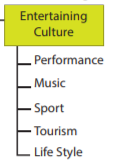
Soru 18
Which of the following factors is under diffusing culture?
Seçenekler
A
Art
B
Literature
C
Customs
D
Education
E
Technology
Açıklama:
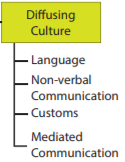
Soru 19
Which of the following is under human entity?
Seçenekler
A
Individual
B
Religion
C
Political
D
Societal
E
Economic
Açıklama:
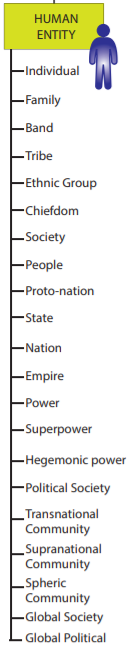
Soru 20
Which of the following is under strategizing culture?
Seçenekler
A
Language
B
Mediated communication
C
Customs
D
Religion
E
Music
Açıklama:
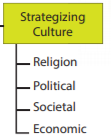
Soru 21
Which of the following scholars defines civilization as “a product; historical; including ideas, patterns, and values; selective; learned, based upon symbols, and an abstraction from behavior and the product of behavior”?
Seçenekler
A
Kroeber
B
Braudel
C
Sokorin
D
Koneczny
E
Toynbee
Açıklama:
Kroeber defines civilization as “a product; historical; including ideas, patterns, and values; selective; learned, based upon symbols, and an abstraction from behavior and the product of behavior”. Thus, the correct answer is the option A.
Soru 22
I. Society
II. Language
III. Culture
IV. Infrastructure
V. Chiefdom
Which of the elements above constitute the internal system of civilization?
II. Language
III. Culture
IV. Infrastructure
V. Chiefdom
Which of the elements above constitute the internal system of civilization?
Seçenekler
A
I, II and III
B
II, IV and V
C
I, III and IV
D
III, IV and V
E
I, II and V
Açıklama:
The correct answer is C in that society (I), culture (III) and infrastructure (IV) constitute the elements of internal system of civilization.
Soru 23
Who defines civilization as ‘a process rather than a temporarily stabilized construct’?
Seçenekler
A
Sokorin
B
Braudel
C
Miyaki
D
Kroeber
E
Yukichi
Açıklama:
Braudel defines civilization as ‘a process rather than a temporarily stabilized construct’. Thus, the correct answer is the option B.
Soru 24
I. It is a cross-whole-national entity.
II.It removes states’ borders in a sense of economic and political barriers.
III. European Union is an example of this entity.
What kind of a community does have these features above?
II.It removes states’ borders in a sense of economic and political barriers.
III. European Union is an example of this entity.
What kind of a community does have these features above?
Seçenekler
A
Spherical
B
Political
C
Transnational
D
Supra-national
E
Global
Açıklama:
Supra-national community has these features indicated in I, II, and III options in the question. Therefore, the correct answer is the option D.
Soru 25
Which of the following is the most recent civilization?
Seçenekler
A
Virtual
B
Mesopotamian
C
American
D
Minoan
E
Eastern
Açıklama:
It is mentioned in the course book that during the last 6000 years, about 29 civilizations were developed and transformed into 9-10 major civilizations today. These civilizations are Chinese, Hindu, Japanese, Buddhist, African, Western, Eastern, Islamic, and Global and just emerging Virtual (Targowski 2015). Thus, the correct answer is the just emerging and the recent Virtual civilization. The correct option is A.
Soru 26
Which of the Grand Laws of the World Civilization emphasizes a sphere of conscious culture that directs the rest of the spheres of social life?
Seçenekler
A
First Grand Laws of the World Civilization
B
Second Grand Laws of the World Civilization
C
Third Grand Laws of the World Civilization
D
Fourth Grand Laws of the World Civilization
E
Fifth Grand Laws of the World Civilization
Açıklama:
Third Grand Laws of the World Civilization stresses a sphere of conscious culture that directs the rest of the spheres of social life. Thus, the correct answer is the option C.
Soru 27
Which of the following attributes is the main concern of human struggle and is emphasized by the Second Grand Law of World Civilization?
Seçenekler
A
Political and Social Harmony
B
Ability to develop
C
Conscious Historical Evolution
D
Ideas and Values
E
Freedom and Reason
Açıklama:
The Second Grand Law of the World Civilization is the Right of Man to Freedom and Reason. People constantly aim for freedom; the range of this freedom and reason depends on the level of a nation’s knowledge, communication ability and the knowledge of the international community. Considering this, the correct answer is Freedom and Reason and the option E.
Soru 28
Which of the following attributes is not included in the composite definition of civilization?
Seçenekler
A
Cycle-driven
B
Technology-driven
C
Autonomous fuzzy reification
D
Small society
E
Communication driven
Açıklama:
Civilization is not small but a large society living in an autonomous fuzzy reification which is not a part of a larger one. Thus, the correct answer is given in the option D. All the other options are included in the composite definition of civilization.
Soru 29
________ is a society of calm and stagnation or perhaps even the beginning of civilization death.
Seçenekler
A
Utopia
B
Spherical community
C
Chiefdom
D
Orientation
E
Transnationalism
Açıklama:
Utopia is a society of calm and stagnation or perhaps even the beginning of civilization death. At first glance it seems to be a desired state of the world civilization but it may just be its end. Thus, the correct answer is A.
Soru 30
Which of the following term-definition matchings is FALSE?
Seçenekler
A
Hegemonic power - State dominating the world politically, scientifically, economically and militarily
B
Superpower - State having a politically powerful military arsenal with atomic bombs
C
Transnational community - Regional entity organizing itself against the challenges of global economy
D
Political society - Multi-ethnic entity evolving from a nation
E
Chiefdom - A few dozen people moving continuously in the search for food
Açıklama:
Chiefdom is defined as an autonomous, socio-political unit which consists of several villages or communities under the permanent control of a chief with aristocratic ethos, but without formal, legal apparatus of forceful repression and without the capacity to prevent fission. Thus, the definition given for chiefdom in the option E does not correspond to the term 'chiefdom'. The definition “A few dozen people moving continuously in the search for food” corresponds to the definition of the term ‘band’. Therefore, the correct answer is E.
Soru 31
How many civilizations were developed and transformed into 9-10 major civilizations during the last 6000 years?
Seçenekler
A
29
B
28
C
27
D
26
E
25
Açıklama:
During the last 6000 years, about 29 civilizations were developed and transformed into 9-10 major civilizations today
Soru 32
Which of the following is an oriental histography researcher?
Seçenekler
A
Oswald Spengler
B
Fukuzawa Yukichi
C
Arnold Toynbee
D
Feliks Koneczny
E
Pitirim Sorokin
Açıklama:
Fukuzawa Yukichi is one of the earliest oriental researcher who defined it as follows: “civilization comforts man physically and elevates him spiritually…Civilization advances the well-being and dignity of man, since man acquires these benefits through knowledge and virtue.” In his opinion, “morals had remained almost unchanged throughout history, but intellect had shown marked growth and progress.”
Soru 33
What does “BCE” stand for?
Seçenekler
A
Broad Common Era
B
Before Cold Era
C
Before Common Era
D
Broad Current Era
E
Before Christian Era
Açıklama:
BCE stands for “Before Common Era,” or “Before Current Era.”
Soru 34
Which of the following is the first autonomous civilization?
Seçenekler
A
Beriberi-Carthaginian Civilization
B
Indus (Harrapan) Civilization
C
Andean Civilization
D
Mezopotamian Civilization
E
Mezoamerican Civilization
Açıklama:
The first autonomous civilization was the Mesopotamian Civilization (including Sumerian), which emerged in the valley of Euphrates-Tigris rivers in the Middle East, about 4,000 BCE.
Soru 35
Which of the following is different than other civilizations in terms of culture?
Seçenekler
A
The Hellenic Civilization
B
The Hindu Civilization.
C
The Buddhist Civilization
D
The Hellenistic Civilization
E
The Egyptian Civilization
Açıklama:
In most autonomous civilizations one can differentiate more than one culture, except for the Egyptian, Hittite, and Japanese Civilizations, which are monocultural.
Soru 36
Which of the below component CANNOT be found under the Culture element of the Tri-Element Model?
Seçenekler
A
Tribe
B
Religion
C
Language
D
Art
E
Music
Açıklama:
According to Tri-Element Model (TEM) Tribe belongs to the Human element. Others can be found under Culture element of the model.
Soru 37
“A group of (especially primitive) families or communities, linked by social, economic, religious, or blood ties, and usually having common customs, dialect, and a recognized, informal leader. A tribe can be considered a segmented society devoted to horticulture or pastoralism rather than hunting and gathering.”
Which of the following is defined by the above definition?
Which of the following is defined by the above definition?
Seçenekler
A
A band
B
A tribe
C
An ethnic group
D
A chiefdom
E
A family
Açıklama:
A tribe is a group of (especially primitive) families or communities, linked by social, economic, religious, or blood ties, and usually having common customs, dialect, and a recognized, informal leader. A tribe can be considered a segmented society devoted to horticulture or pastoralism rather than hunting and gathering.
Soru 38
A hegemonic power is ………..
Which of the following definition completes the above sentence?
Which of the following definition completes the above sentence?
Seçenekler
A
is a state of large size exercising political dominion over others, with or without latter’s consent.
B
is a state, which is militarily or economically strong.
C
is a state, which dominates the world politically, militarily, economically, and scientifically
D
is a state, which in its military arsenal has atomic bombs and is politically very influential.
E
is a multi-ethnic entity which evolves from a nation.
Açıklama:
A hegemonic power is a state, which dominates the world politically, militarily, economically, and scientifically. For example, at the beginning of the 21st century, the U.S. plays such a role in the world (so called Rome III).
Soru 39
Which of the following attributes is the subject of human aspirations reflected in the Grand Law I of Civilization?
Seçenekler
A
Knowledge
B
Wisdom
C
Writing
D
Peace
E
Personal development
Açıklama:
Since The First Grand Law of the World Civilization is the Ability of Man to Develop: People have seen themselves as entering the world with a potential of many gifts, and they hope to fulfill these gifts in the development of their own lives, personal development goes under this law.
Soru 40
Which is the oldest researcher of oriental history writing?
Seçenekler
A
Feliks Koneczny
B
Pitirim Sorokin
C
Arnold Toynbee
D
Fukuzawa Yukichi
E
Oswald Spengler
Açıklama:
In Oriental historiography one of the earliest
researchers of civilization were:
• Fukuzawa Yukichi (1835-1901) in Japan,
who defined it as follows: “civilization
comforts man physically and elevates him
spiritually…Civilization advances the
well-being and dignity of man, since man
acquires these benefits through knowledge
and virtue.” In his opinion, “morals had
remained almost unchanged throughout
history, but intellect had shown marked
growth and progress.”
researchers of civilization were:
• Fukuzawa Yukichi (1835-1901) in Japan,
who defined it as follows: “civilization
comforts man physically and elevates him
spiritually…Civilization advances the
well-being and dignity of man, since man
acquires these benefits through knowledge
and virtue.” In his opinion, “morals had
remained almost unchanged throughout
history, but intellect had shown marked
growth and progress.”
Soru 41
Who is the author of A Study of History (1934-1961)?
Seçenekler
A
Feliks Koneczny
B
Arnold Toynbee
C
Fukuzawa Yukichi
D
Oswald Spengler
E
Pitirim Sorokin
Açıklama:
An English historian Arnold Toynbee
(1889-1975) published his greatest work in
the twelve-volume A Study of History (1934-
1961). He compared the history of twentysix
different civilizations, which everyone
follows a similar pattern of evolution
through a cyclical pattern of growth,
maturity, and decay. He believed that societies
thrive best in response to challenges and that
a society’s most important task is to create
a religion. He never defined civilization
clearly. Though he saw the Western
Civilization to be in its decay phase, he
saw hope for the future formation of one
spiritually oriented world community.
(1889-1975) published his greatest work in
the twelve-volume A Study of History (1934-
1961). He compared the history of twentysix
different civilizations, which everyone
follows a similar pattern of evolution
through a cyclical pattern of growth,
maturity, and decay. He believed that societies
thrive best in response to challenges and that
a society’s most important task is to create
a religion. He never defined civilization
clearly. Though he saw the Western
Civilization to be in its decay phase, he
saw hope for the future formation of one
spiritually oriented world community.
Soru 42
Who wrote The Origin of Civilized Societies (1959)?
Seçenekler
A
Rushton Coulbourne
B
David Wilkinson
C
Carroll Quigley
D
Lee D. Snyder
E
Matthew Melko
Açıklama:
Rushton Coulbourne in his book The
Origin of Civilized Societies (1959) debates
a very difficult question concerning origins
of civilized societies and addresses two
questions;
• Is there a distinction between civilized
and primitive societies?
• Were civilized societies of single or
multiple origin?
Origin of Civilized Societies (1959) debates
a very difficult question concerning origins
of civilized societies and addresses two
questions;
• Is there a distinction between civilized
and primitive societies?
• Were civilized societies of single or
multiple origin?
Soru 43
Which is the most important book of Immanuel Wallerstein?
Seçenekler
A
The Nature of Civilizations
B
In The Modern World-System
C
The Evolution of Civilization
D
The Origin of Civilized Societies
E
Macro History-A Theoretical Approach to Comparative World History
Açıklama:
Immanuel Wallerstein
understood this very well and offered the world-system concept as
a new approach in analyzing human development. In The Modern
World-System (1974), he offered a tool on how to recognize the
most useful interpretation of what happened historically. In his
interpretation, “units of analysis” are “world-systems,” which
mean something other than the modern nation-state, something
larger than the nation-state, and something that was defined
by the boundaries of an effective, ongoing division of labor
understood this very well and offered the world-system concept as
a new approach in analyzing human development. In The Modern
World-System (1974), he offered a tool on how to recognize the
most useful interpretation of what happened historically. In his
interpretation, “units of analysis” are “world-systems,” which
mean something other than the modern nation-state, something
larger than the nation-state, and something that was defined
by the boundaries of an effective, ongoing division of labor
Soru 44
"Electronic civilization (2001), which how civilization has moved from print to electronic culture, and its ideals have changed from the classic “truth, beauty, and good” to an elusive element called rhythm (the energy and control of the individual and of human society); and how self-consciousness (concentrating on ourselves), enemy of rhythm, underlies the complexity of modern life."
This book and idea belong to whom?
This book and idea belong to whom?
Seçenekler
A
Felipe Fernández-Armesto
B
Immanuel Wallerstein
C
Lewis Mumford
D
William McGaughey
E
Neil Postman
Açıklama:
A sign of this role is indicated in William McGaughey’s book on
electronic civilization (2001), which shows how civilization has moved from print to electronic culture, and
its ideals have changed from the classic “truth, beauty, and good” to an elusive element called rhythm
(the energy and control of the individual and of human society); and how self-consciousness (concentrating
on ourselves), enemy of rhythm, underlies the complexity of modern life
electronic civilization (2001), which shows how civilization has moved from print to electronic culture, and
its ideals have changed from the classic “truth, beauty, and good” to an elusive element called rhythm
(the energy and control of the individual and of human society); and how self-consciousness (concentrating
on ourselves), enemy of rhythm, underlies the complexity of modern life
Soru 45
"Civilization had been growing gradually along with the cultural and industrial development of Man as homo sapiens for the last 200,000 years. About 40,000-50,000 years ago, humans underwent a very important genetic mutation, when the ........ gene was developed that encodes the dopamine neurotransmitter.
Which of the following completes the sentence above?
Which of the following completes the sentence above?
Seçenekler
A
DRD3
B
RNA
C
tRNA
D
DRD4
E
DRD2-7R
Açıklama:
Civilization had been growing gradually along with the cultural and industrial development of Man as homo sapiens for the last 200,000 years. About 40,000-50,000 years ago, humans underwent a very important genetic mutation, when the DRD4 gene was developed that encodes the dopamine neurotransmitter. It is this neurotransmitter which is responsible for human personality traits (Ding et al). In such a way, humans become more intellectually alert, and as a result develop increasing capacities for leadership and socializing. Fortunately, the climate changes that occurred around 40,000-30,000 BCE helped humans demonstrate their more developed societies, allowing them to migrate across continents and form the beginnings of infrastructure."
Soru 46
In years between............. BCE, sheep, pigs, cattle, and other livestock were domesticated and more people were settling in the Euphrates and Tigris rivers valley, called Mesopotamia (contemporary Iraq).
Which of the following completes the sentence above?
Which of the following completes the sentence above?
Seçenekler
A
4,000-5,000
B
8,000-6,000
C
2,000-6,000
D
9,000-2,000
E
10,000-8,000
Açıklama:
About 10,000 BCE people became farmers, animal breeders, and pottery makers. When the Ice Age ended in 9,000 BCE, the warmer climate was friendlier for humans and their civilizing processes. In years between 8,000-6,000 BCE, sheep, pigs, cattle and other livestock were domesticated and more people were settling in the uphrates and Tigris rivers valley, called Mesopotamia (contemporary Iraq). About 7,500 BCE, villages were growing in nearby Anatolia (contemporary Turkey).
Soru 47
How many cultural civilizations are identifiable?
Seçenekler
A
17
B
12
C
16
D
20
E
22
Açıklama:
Ever since religion was transformed from beliefs
in magic to beliefs in poly-gods and then to a monogod,
the cultural civilization has applied religion
as the main tool of cultural control. Religious
and military forces were the foundations of the
power apparatus that maintained the society as a
governed entity. These forces civilized the society
and moved it into higher levels of organization.
Among cultural civilizations one can recognize
about 16 cases, such as:
• the Egyptian Civilization 3100 BCE,
• the Minoan 2700 BCE,
• the Sinic Civilization 2000 BCE,
• the Mycenae Civilization 1500 BCE,
• the Canaanite Civilization 1100 BCE,
• the Hellenic Civilization 750 BCE,
• the Hindu Civilization 600 BCE,
• the Hellenistic Civilization 323 BCE
• the Roman Civilization 31 BCE,
• the Eastern Civilization 350 CE,
• the Ethiopian Civilization 400 CE,
• the Buddhist Civilization 600 CE,
• the Islamic Civilization 632 CE.
• the Sub-Saharan Civilization 800 CE,
• the Western Civilization 800 CE,
• the Maghrebian Civilization 1000 CE.
in magic to beliefs in poly-gods and then to a monogod,
the cultural civilization has applied religion
as the main tool of cultural control. Religious
and military forces were the foundations of the
power apparatus that maintained the society as a
governed entity. These forces civilized the society
and moved it into higher levels of organization.
Among cultural civilizations one can recognize
about 16 cases, such as:
• the Egyptian Civilization 3100 BCE,
• the Minoan 2700 BCE,
• the Sinic Civilization 2000 BCE,
• the Mycenae Civilization 1500 BCE,
• the Canaanite Civilization 1100 BCE,
• the Hellenic Civilization 750 BCE,
• the Hindu Civilization 600 BCE,
• the Hellenistic Civilization 323 BCE
• the Roman Civilization 31 BCE,
• the Eastern Civilization 350 CE,
• the Ethiopian Civilization 400 CE,
• the Buddhist Civilization 600 CE,
• the Islamic Civilization 632 CE.
• the Sub-Saharan Civilization 800 CE,
• the Western Civilization 800 CE,
• the Maghrebian Civilization 1000 CE.
Soru 48
An empire is a state of large size exercising political dominion over others, with or without latter’s consent. Thus, ................ was ruling over other nations during almost 5 centuries, from 1453 till 1920.
Which of the following completes the sentence above?
Which of the following completes the sentence above?
Seçenekler
A
The Byzantine Empire
B
The Ottoman Empire
C
The Maurya Empire
D
The Macedonian Empire
E
The Tang Dynasty
Açıklama:
An empire is a state of large size exercising political dominion over others, with or without latter’s consent. Thus, the Ottoman Empire was ruling over other nations during almost 5 centuries, from 1453 till 1920.
Soru 49
Which of the following cannot be one of the characteristics of "Targowski's unified civilization ideal"?
Seçenekler
A
Large society
B
Space and Time
C
Infrastructural system, technology-driven
D
Cycle-driven
E
Uniformity
Açıklama:
Perhaps it is time to combine early and
contemporary definitions of civilizations
(Targowski, 2009b) by emphasizing these following
important attributes:
1) Large society
a. Specializing in labor
b. Self-differentiating
c. Sharing the same knowledge system
2) Space and Time
a. Autonomous fuzzy reification
b. Distinguished and extended area or
period
c. Reification not a part of a larger entity
3) Cultural system, values and symbol driven
a. Communication driven (e.g.: literate
and electronic media)
b. Religion, wealth, and power driven
4) Infrastructural system, technology-driven
by, first, at least one of the following:
a. Urban infrastructure
b. Agricultural Infrastructure
c. Other infrastructures (Industrial,
Information and so forth)
5) Cycle-driven
a. Rising, growing, declining, and falling
over time
contemporary definitions of civilizations
(Targowski, 2009b) by emphasizing these following
important attributes:
1) Large society
a. Specializing in labor
b. Self-differentiating
c. Sharing the same knowledge system
2) Space and Time
a. Autonomous fuzzy reification
b. Distinguished and extended area or
period
c. Reification not a part of a larger entity
3) Cultural system, values and symbol driven
a. Communication driven (e.g.: literate
and electronic media)
b. Religion, wealth, and power driven
4) Infrastructural system, technology-driven
by, first, at least one of the following:
a. Urban infrastructure
b. Agricultural Infrastructure
c. Other infrastructures (Industrial,
Information and so forth)
5) Cycle-driven
a. Rising, growing, declining, and falling
over time
Soru 50
By which of the following scholars, the book of “Historical capitalism” was written?
Seçenekler
A
Immanuel Wallerstein
B
Felipe Fernandez Armesto
C
Lee D. Snyder
D
Matthew Melko
E
Carroll Quigley
Açıklama:
Authour of “Historical capitalism” is Immanuel Wallerstein.
Right answer is “A”.
Right answer is “A”.
Soru 51
By which of the following scholars, the book of “Global Civilization in the 21st Century” was written?
Seçenekler
A
Marylouise Kroker
B
Lewis Mumford
C
Andrew Targowski
D
Neil Postman
E
Immanuel Wallerstein
Açıklama:
Authour of “Global Civilization” is Andrew Targowski. Right answer is “C”.
Soru 52
In which country are the ruins of Gobeklitepe (Potbelly Hill) located?
Seçenekler
A
Greece
B
Türkiye
C
Egypt
D
Peru
E
Mexico
Açıklama:
Gobekli Tepe (Potbelly Hill) is in Türkiye. Right answer is “B”.
Soru 53
Historically, when did the Hellenic Civilization originate?
Seçenekler
A
in 1100 BCE
B
in 600 BCE
C
in 350 CE
D
in 750 BCE
E
in 600 CE
Açıklama:
The Hellenic Civilization dates 750 BCE. Right answer is "D".
Soru 54
When did the Roman Civilization originate?
Seçenekler
A
in 350 CE
B
in 400 CE
C
in 600 CE
D
in 323 BCE
E
in 31 BCE
Açıklama:
The Roman Civilization dates 31 BCE. Right answer is “E”
Soru 55
Which elements constitute the universe system?
Seçenekler
A
Humans
B
Humans- Nature
C
Humans- Civilization
D
Humans-Nature-Civilization
E
Civilization-Nature
Açıklama:
The Universe system is composed of three subsystems: humans, nature (ecosystem), and civilization. Right answer is “D
Soru 56
Which of the following is not one of the elements of human entity?
Seçenekler
A
Individual
B
Family
C
Tribe
D
Society
E
Religion
Açıklama:
Religion is one of the element of culture. İt is not one of the element of human entity. Right answer is “E”.
Soru 57
What concept is “an entity which has a common language, culture, memory of historic events and national consciousness”?
Seçenekler
A
Religion
B
Nation
C
Community
D
Native
E
Citizen
Açıklama:
Nation is an entity which has a common language, culture, memory of historic events and “natinal consciousness”. Right answer is “B".
Soru 58
What is Utopia?
Seçenekler
A
It is a society of calm and stagnation or perhaps even the beginning of civilization death
B
It is an entity of several nations from the same civilization.
C
It is the entity which emerges from the development of a global economy and global culture.
D
It is an entity that may emerge from the global society. An example of this entity is G7+ group of the most developed nations that promote a common economic policy.
E
It is a state, which dominates the world politically, militarily, economically, and scientifically.
Açıklama:
Utopia is a society of calm and stagnation or perhaps even the beginning of civilization death. Right answer is “A”.
Soru 59
What is concept of “a large society living in an autonomous, fuzzy reification (invisible-visible) which is not a part of larger one and exists over an extended period” ?
Seçenekler
A
Community
B
Civilization
C
Society
D
Culture
E
System
Açıklama:
Civilization is a large society living in an autonomous, fuzzy reification (invisible-visible) which is not a part of larger one and exists over an extended period. Right answer is “B”.
Soru 60
Which scientific discipline cannot be counted in the study of human development?
Seçenekler
A
Mathematics
B
Geography
C
Economics
D
Art and literature
E
Anthropology
Açıklama:
The study of human development involves several scientific disciplines such as anthropology, archeology, geography, history, sociology, political science, economics, art and literature, cybernetics, and so forth. Each of these disciplines develops its own methods of analysis and synthesis; however, only a few attempts exist toward the formulation of grand models of human development.
Soru 61
Which author wrote the book “A Study of History”?
Seçenekler
A
Pitirim Sorokin
B
Arnold Toynbee
C
Oswald Spengler
D
Felix Koneczny
E
Fernand Braudel
Açıklama:
An English historian Arnold Toynbee (1889-1975) published his greatest work in the twelve-volume A Study of History (1934- 1961).
Soru 62
Which of the below authors define civilizations as “an area or as a period distinguished, in the mind of the person using the term, by striking continuities in ways of life and thought and feelings”?
Seçenekler
A
Carrol Quigley
B
Matthew Melko
C
Felipe Fernandez-Armesto
D
Lee D. Snyder
E
David Wilkinson
Açıklama:
Felipe Fernández-Armesto (2001) defines “a civilization” as an area or as a period distinguished, in the mind of the person using the term, by striking continuities in ways of life and thought and feelings. He recognizes “barbaric,” or “savage” or primitive” societies. Societies, which have achieved self-differentiation can be called “civilized.”
Soru 63
Who offered the “world-concept system” to analyze human development?
Seçenekler
A
Pitirim Sorokin
B
Arnold Toynbee
C
Immanuel Wallerstein
D
Matthew Melko
E
Felipe Fernandez-Armesto
Açıklama:
Immanuel Wallerstein understood this very well and offered the world-system concept as a new approach in analyzing human development. In The Modern World-System (1974), he offered a tool on how to recognize the most useful interpretation of what happened historically.
Soru 64
What is the term used to define how technology surrounds culture?
Seçenekler
A
Techography
B
Technology
C
Techculture
D
Technophony
E
Technopoly
Açıklama:
We, who live today, feel a strong presence of technology in our modus operandi; hence, technology can be considered as one of those world Figure 1.3 One of Wallerstein’s books, Historical Capitalism. The Civilization Approach to Human Development systems. Neil Postman (1993) even insists that we live in “technopoly”, which surrounds culture with technology.
Soru 65
What does BCE stand for?
Seçenekler
A
Before Common Era
B
Before Christian Era
C
Bold Christians’ Era
D
Bold Common Era
E
Before Current Energy
Açıklama:
BCE stands for “Before Common Era,” or “Before Current Era.”
Soru 66
Which one of the following is the first autonomous civilization?
Seçenekler
A
Indus
B
Mesopotamian
C
Sinic
D
Beriberi-Carthigianian
E
Andean
Açıklama:
The first autonomous civilization was the Mesopotamian Civilization (including Sumerian), which emerged in the valley of Euphrates-Tigris rivers in the Middle East, about 4,000 BCE.
Soru 67
Among sixteen cultural civilizations, which one of the following is not listed?
Seçenekler
A
The Egyptian Civilization
B
The Sinic Civilization
C
The Mesopotamian Civilization
D
The Hindu Civilization
E
The Roman Civilization
Açıklama:
Cultural civilizations are the ones that have applied religion as the main tool of cultural control. Thus Mesopotamian civilization is not listed among sixteen cultural civilizations. The listed cultural civilizations are : Among cultural civilizations one can recognize
about 16 cases, such as:
• the Egyptian Civilization 3100 BCE,
• the Minoan 2700 BCE,
• the Sinic Civilization 2000 BCE,
• the Mycenae Civilization 1500 BCE,
• the Canaanite Civilization 1100 BCE,
• the Hellenic Civilization 750 BCE,
• the Hindu Civilization 600 BCE,
• the Hellenistic Civilization 323 BCE
• the Roman Civilization 31 BCE,
• the Eastern Civilization 350 CE,
• the Ethiopian Civilization 400 CE,
• the Buddhist Civilization 600 CE,
• the Islamic Civilization 632 CE.
• the Sub-Saharan Civilization 800 CE,
• the Western Civilization 800 CE,
• the Maghrebian Civilization 1000 CE
about 16 cases, such as:
• the Egyptian Civilization 3100 BCE,
• the Minoan 2700 BCE,
• the Sinic Civilization 2000 BCE,
• the Mycenae Civilization 1500 BCE,
• the Canaanite Civilization 1100 BCE,
• the Hellenic Civilization 750 BCE,
• the Hindu Civilization 600 BCE,
• the Hellenistic Civilization 323 BCE
• the Roman Civilization 31 BCE,
• the Eastern Civilization 350 CE,
• the Ethiopian Civilization 400 CE,
• the Buddhist Civilization 600 CE,
• the Islamic Civilization 632 CE.
• the Sub-Saharan Civilization 800 CE,
• the Western Civilization 800 CE,
• the Maghrebian Civilization 1000 CE
Soru 68
Which group of civilizations is different from others in terms of culture?
Seçenekler
A
Roman, Sinic, Hindu
B
Hellenic, Roman, Islamic
C
Sub-saharan, Western
D
Egyptian, Hittite, and Japanese
E
Western, Sinic, Hindu
Açıklama:
In most autonomous civilizations one can differentiate more than one culture, except for the Egyptian, Hittite, and Japanese Civilizations, which are monocultural.
Soru 69
Which of the below category cannot go under culture component of civilization?
Seçenekler
A
Strategizing
B
Diffusing
C
Enlightening
D
Entertaining
E
Core
Açıklama:
Since the core category is found under infrastructure, it is not one of the components of culture.
Soru 70
i.Civilisation is a physical comfort for man
ii.Civilisation elevates man spiritually
iii.Civilisation increases the well being of man.
iv.Civilisation causes moral values to change
Which of the ideas above belong to Yukichi?
ii.Civilisation elevates man spiritually
iii.Civilisation increases the well being of man.
iv.Civilisation causes moral values to change
Which of the ideas above belong to Yukichi?
Seçenekler
A
İ-ii-iii
B
İ-ii-iv
C
İi-iii-iv
D
İii-iv
E
İ-iii-iv
Açıklama:
Early approaches to defining civilisation
According to Yukich Civilisation is a physical comfort for man, Civilisation elevates man spiritually and increases the well being of man.
According to Yukich Civilisation is a physical comfort for man, Civilisation elevates man spiritually and increases the well being of man.
Soru 71
According to Alfred Louis Kroeber, which of the following statements best reflects his definition of culture?
Seçenekler
A
Culture is an innate biological instinct shared across all human societies.
B
Culture emerges only through written records and formal education.
C
Culture is identical in all regions and unchanging over time.
D
Culture is a historical product that includes ideas, patterns, and values, and is learned through symbols.
E
Culture is based on technological advancement and political power.
Açıklama:
This matches Kroeber’s definition of culture, which emphasizes that culture is a product, is historical, includes ideas, patterns, and values, is selective, learned, symbol-based, and is an abstraction from behavior.
Soru 72
Which of the following is NOT part of Alfred Louis Kroeber’s understanding of culture?
Seçenekler
A
Culture is learned.
B
Culture is a historical product.
C
Culture is based on symbols.
D
Culture is an inherited biological instinct.
E
Culture includes ideas, values, and patterns.
Açıklama:
Alfred Louis Kroeber explicitly defines culture as something that is learned, symbol-based, and historical, involving ideas, patterns, and values. He does not consider culture to be a biological instinct-in fact, his definition emphasizes that it is not innate, but acquired through social and symbolic learning.
Soru 73
Which of the following is the first autonomous civilisation in the middle east?
Seçenekler
A
Mesopotamian
B
Syrian
C
Iraquian
D
Anatolian
E
Mexican
Açıklama:
Emergence of civilisation
The first autonomous civilization was the Mesopota mian Civilization (including Sumerian), which emerged in the valley of Euphrates-Tigris rivers in the Middle East, about 4,000 BCE.
The first autonomous civilization was the Mesopota mian Civilization (including Sumerian), which emerged in the valley of Euphrates-Tigris rivers in the Middle East, about 4,000 BCE.
Soru 74
Which of the following is the first autonomous civilisation in the far east?
Seçenekler
A
Indus
B
Mesopotamian
C
Syrian
D
Iraquian
E
Anatolian
Açıklama:
Types of civilisation 10
the first autonomous civilisation in the far east is : Indus
the first autonomous civilisation in the far east is : Indus
Soru 75
6. i.İnternal structure ii.Family formation iii.Food production iv.Exchangeable services
Which of the above were the threats for societal civilisations?
Which of the above were the threats for societal civilisations?
Seçenekler
A
. İ-ii
B
İ-iii
C
İi-iii
D
İi-iv
E
İii-iv
Açıklama:
İnternal structure and Family formation were the threats for societal civilisations.
Soru 76
"Cultural manipulation manage the societal civilizations when they evolve into more complex entities".
What type of civilisation is explained above?
What type of civilisation is explained above?
Seçenekler
A
The Cultural civilisation
B
The Societal civilization
C
The infrastructural civilization
D
The monocultural civilization
E
The Mycenae civilization
Açıklama:
Types of civilisations 11
As societal civilizations evolved into more complex entities, cultural manipulation managed them. We will name this type of autonomous civilization the cultural civilization. By culture, we understand a value and symbolsdriven patterned behavior of a human entity.
As societal civilizations evolved into more complex entities, cultural manipulation managed them. We will name this type of autonomous civilization the cultural civilization. By culture, we understand a value and symbolsdriven patterned behavior of a human entity.
Soru 77
i. Egyptian
ii. Hittite
iii. Buddhist
iv.roman
v. Japanese
Which of the above are among monocultural autonomous civilisations?
ii. Hittite
iii. Buddhist
iv.roman
v. Japanese
Which of the above are among monocultural autonomous civilisations?
Seçenekler
A
İ-ii-v
B
İi-iii-v
C
i-İii-iv
D
İ-ii-iv
E
İii-iv-v
Açıklama:
i. Egyptian ii. Hittite v. Japanese are among monocultural autonomous civilisations?
Soru 78
"……………… is a regional entity, which organizes itself against the challenges of the global economy".
Which of the following correctly fills the blank in the sentence above?
Which of the following correctly fills the blank in the sentence above?
Seçenekler
A
A transnational community
B
A superpower
C
A political society
D
An advanced society
E
A chiefdom
Açıklama:
Civilizing society and the types of human entity 14
transnational community fills the blank in the sentence above?
transnational community fills the blank in the sentence above?
Soru 79
Which of the following is the first autonomous civilization?
Seçenekler
A
Egyptian civilization
B
Mesopotamian civilization
C
Indu civilization
D
Roman civilization
E
Anatolian cvilization
Açıklama:
The first autonomous civilization was the Mesopotamian civilization (including Sumerians).
Soru 80
Which of the following is one of the early autonomous civilizations in South America?
Seçenekler
A
Indus civilization
B
Sinic civilization
C
Andean civilization
D
Beriberi-Carthaginian civilization
E
Sumerian
Açıklama:
Andean civilization is one of the early autonomous civilizations in South America.
Soru 81
Civilizations in which the society provided exchangeable and specialized services such as food production, house building, road construction, transportation, health care, and so forth which led to the formation of cities are called ...............................
Which of the following correctly fills the blank in the sentence above?
Which of the following correctly fills the blank in the sentence above?
Seçenekler
A
societal civilizations
B
cultural civilizations
C
environmental civilizations
D
religious civilizations
E
infrastructural civilization
Açıklama:
The defined civilization is the societal civilization in which the so-called services and growing human communication led towards the formation of cities.
Soru 82
I. Religious and military forces civilized the society and moved it into higher levels of organization.
II. Its purpose is to expand spheres of influence with the means of technology.
III. It has applied the religion as the main tool of cultural control.
IV. The main purpose is to provide specialized services such as health care and transportation.
Which of the above is/are true about cultural civilizations?
II. Its purpose is to expand spheres of influence with the means of technology.
III. It has applied the religion as the main tool of cultural control.
IV. The main purpose is to provide specialized services such as health care and transportation.
Which of the above is/are true about cultural civilizations?
Seçenekler
A
Only II
B
I and III
C
Only III
D
II and IV
E
I-II and IV
Açıklama:
Statements I and III are true about cultural civilizations.
Soru 83
Which of the following is an example to monocultural civilizations?
Seçenekler
A
The Minoan civilization
B
The Buddhist civilization
C
The Hellenic civilization
D
The Japanese civilization
E
The Roman civilization
Açıklama:
The Japanese civilization is a monocultural civilization whereas the others include multicultural elements.
Soru 84
Which of the following defines the technology-driven additive process of acquiring and applying materials through civilization and beyond?
Seçenekler
A
Society
B
Culture
C
Infrastructure
D
Civilization
E
Community
Açıklama:
Infrastructure is the technology-driven additive process of acquiring and applying materials through civilization and beyond.
Soru 85
..........................an organized group of people on the same territory to support their own existence through the exchange of specialized, civilizational services. The society shares a common interest and responds to challenges.
Which of the following correctly fills the blank in the sentence above?
Which of the following correctly fills the blank in the sentence above?
Seçenekler
A
Tribe
B
Transnational community
C
Chiefdom
D
Advanced society
E
Spherical community
Açıklama:
An advanced society is an organized group of people on the same territory to support their own existence through the exchange of specialized, civilizational services. This type of society shares a common interest and responds to challenges.
Soru 86
....................is an entity of several nations from the same civilization. Examples of this entity are three states, U.S., Canada, and Mexico that are united by the NAFTA (The North American Free Trade Agreement) treaty.
Which of the following correctly fills the blank in the sentence above?
Which of the following correctly fills the blank in the sentence above?
Seçenekler
A
The global society
B
A supra-national community
C
A spherical community
D
A political society
E
A hegemonic power
Açıklama:
The defined concept is a spherical community.
Soru 87
Which of the following attributes of a composite definition of civilization belongs to its cultural system?
Seçenekler
A
Religion, wealth and power
B
Urban infrastructure
C
A society in an extended area or period
D
A society specialized in the same labor
E
A civilization arising and falling over time
Açıklama:
Religion, wealth and power are among the attributes that belong to the cultural system of civilization.
Soru 88
Which of the following is the consequence of the violation of the fourth law of civilization "the Historical Success of a Country’s Harmony"?
Seçenekler
A
The members of the country will lose their freedom.
B
There will be chaos followed by a collapse.
C
The members of the country will migrate.
D
There will be a democratic system composed of multicultural entities.
E
There will be a decline in technological developments.
Açıklama:
When the fourth law is violated there will be a chaos and eventually a collapse as in the example of Poland.
Soru 89
Which researcher argues that "civilization comforts man physically and elevates him spiritually"?
Seçenekler
A
Fukuzawa Yukichi
B
Masaki Miyaki
C
Oswald Spengler
D
Arnold Toynbee
E
Pitirim Sorokin
Açıklama:
Fukuzawa Yukichi (1835-1901) in Japan, defined civilization as follows: “civilization comforts man physically and elevates him spiritually…Civilization advances the well-being and dignity of man, since man acquires these benefits through knowledge and virtue.”
Soru 90
Which scholar argued that "in the Knowledge Society, people look mostly for artificial intelligence in profit-driven data mining and robotics, and they neglect moral values of natural intelligence"?
Seçenekler
A
Fukuzawa Yukichi
B
Masaki Miyaki
C
Oswald Spengler
D
Arnold Toynbee
E
Pitirim Sorokin
Açıklama:
Masaki Miyaki (2004) argued that in “the Knowledge Society, people look mostly for artificial intelligence in profit-driven data mining and robotics, and they neglect moral values of natural intelligence."
Soru 91
Which scholar insisted that civilizations are independent from external influences and predicted a phase of “Caesarism” in the future development of Western Culture?
Seçenekler
A
Fukuzawa Yukichi
B
Masaki Miyaki
C
Oswald Spengler
D
Arnold Toynbee
E
Pitirim Sorokin
Açıklama:
Oswald Spengler (1880-1936) published a book on The Decline of the West, 1918-22, where he reflects the pessimistic atmosphere in Germany after World War I. Spengler maintained that history has a natural development, in which every culture is a distinct organic form that grows, matures, and decays. He insisted that civilizations are independent from external influences. He predicted a phase of “Caesarism” in the future development of Western Culture, which he believed was in its last stage.
Soru 92
Which scholar believed that societies thrive best in response to challenges and that a society’s most important task is to create a religion?
Seçenekler
A
Fukuzawa Yukichi
B
Masaki Miyaki
C
Oswald Spengler
D
Arnold Toynbee
E
Pitirim Sorokin
Açıklama:
An English historian Arnold Toynbee (1889-1975) published his greatest work in the twelve-volume A Study of History (1934-1961). He compared the history of twentysix different civilizations, which everyone follows a similar pattern of evolution through a cyclical pattern of growth, maturity, and decay. He believed that societies thrive best in response to challenges and that a society’s most important task is to create a religion.
Soru 93
Which empirical theoretician aimed to find factors differentiating civilizations and argued that there is no one linear history of Mankind?
Seçenekler
A
Masaki Miyaki
B
Oswald Spengler
C
Arnold Toynbee
D
Feliks Koneczny
E
Pitirim Sorokin
Açıklama:
A Polish historian Feliks Koneczny (1862-1949) wrote three books on the theory of civilizations: On the Plurality of Civilizations (London 1962), For an Order in History, (only Polish edition, London 1977), and History Laws (only Polish edition, London 1982). He was an empirical theoretician who discovered (in contrast to Spengler’s a priori model) that there is no one linear history of Mankind. A civilization for him is a method of collective life’s regime. His main inquiry was to find factors differentiating civilizations.
Soru 94
Which professor quantified all conceivable components of a culture from Greco-Roman to Western?
Seçenekler
A
Oswald Spengler
B
Arnold Toynbee
C
Feliks Koneczny
D
Alfred Louis Kroeber
E
Pitirim Sorokin
Açıklama:
A Russian-American Pitirim Sorokin (1889-1969), professor at Harvard, in his Social and Culture Dynamics (1937-41, four volumes) quantified all conceivable components of a culture from Greco-Roman to Western.
Soru 95
Who is the author of "Configurations of Culture Growth"?
Seçenekler
A
Alfred Louis Kroeber
B
Fernand Braudel
C
Feliks Koneczny
D
Pitirim Sorokin
E
Arnold Toynbee
Açıklama:
Alfred Louis Kroeber is the author of Configurations of Culture Growth.
Soru 96
Which scholar assumes that the history of human development is the history of civilization?
Seçenekler
A
Alfred Louis Kroeber
B
Fernand Braudel
C
Rushton Coulbourne
D
David Wilkinson
E
Carroll Quigley
Açıklama:
Fernand Braudel assumes that the history of human development is the history of civilization. Civilization for him is a process rather than a temporarily stabilized construct.
Soru 97
Which scholar thinks that civilizations are large and complex cultures, which can control their environments?
Seçenekler
A
Rushton Coulbourne
B
Lee D. Snyder
C
Carroll Quigley
D
David Wilkinson
E
Matthew Melko
Açıklama:
Matthew Melko in his book The Nature of Civilizations (1969) defines some elements of a basic model of civilizations, such as their components (outlook, aesthetics, society, economics, government, international) and developmental stages (crystallization, transition), complete disintegration, ossification (a freezing at a crystal stage) and developmental macro-phases of feudal system, state system, imperial system, which he analyzes separately from stages. He thinks that civilizations are large and complex cultures, which can control their environments.
Soru 98
Who is the author of the book titled "Historical Capitalism"?
Seçenekler
A
Immanuel Wallerstein
B
Matthew Melko
C
Lee D. Snyder
D
Neil Postman
E
Felipe Fernández-Armesto
Açıklama:
Immanuel Wallerstein is the author of the book titled "Historical Capitalism."
Soru 99
What type of society consists of a few dozen people who move continuously in the search for food, associated with a hunting and gathering subsistence economy?
Seçenekler
A
State
B
Family
C
Band
D
Ethnic group
E
Clan
Açıklama:
-
Band is consists of a few dozen people who move continuously in the search for food, associated with a hunting and gathering subsistence economy
Band is consists of a few dozen people who move continuously in the search for food, associated with a hunting and gathering subsistence economy
Ünite 2
Soru 1
Which one of the following is not among the innovations The Mesopotamian Civilization brought in human history?
Seçenekler
A
The invention of the wheel
B
The invention of fire
C
The planting of the first cereal crop
D
Mathematics
E
Astronomy
Açıklama:
The invention of fire was much earlier than the occurence of the Mesopotamian Civilization. The Mesopotamian Civilization brought forth some of the most important developments in human history. The innovations of these industrious people included:
• the invention of the wheel,
• the planting of the first cereal crops,
• the development of cursive script,
• mathematics,
• astronomy, and
• agriculture
• the invention of the wheel,
• the planting of the first cereal crops,
• the development of cursive script,
• mathematics,
• astronomy, and
• agriculture
Soru 2
Which one of the following river pairs determines the boundaries of the Mesopotamian Civilization?
Seçenekler
A
Tigris - Euphrates
B
Volga - Tuna
C
Nile - Gange
D
Danube - Yangzte
E
Rhine - Indus
Açıklama:
The Tigris -Euphrates rivers have their point of origin within 80 km of each other in eastern Turkey and they mainly determine the boundaries of the civilization
Soru 3
Which one of the following is not among the key characteristics which set Sumer apart from earlier human habitations?
Seçenekler
A
Advanced cities
B
Specialized workers
C
Complex institutions
D
Advanced breeding
E
Improved technology
Açıklama:
There are five key characteristics that set its city, Sumer, apart from earlier human habitations, according to the World History Library (library 07.com):
• Advanced cities (commencing at 4000
BCE),
• Specialized workers,
• Complex institutions,
• Record keeping in writing, and
• Improved technology (the wheel)
• Advanced cities (commencing at 4000
BCE),
• Specialized workers,
• Complex institutions,
• Record keeping in writing, and
• Improved technology (the wheel)
Soru 4
I. The universe was controlled by gods and goddesses
II. There were no myths and legends about these gods and goddesses
III. Human beings were meant to serve the gods
Which one(s) of these was/were among the religious beliefs of the people of Mesopotamia?
II. There were no myths and legends about these gods and goddesses
III. Human beings were meant to serve the gods
Which one(s) of these was/were among the religious beliefs of the people of Mesopotamia?
Seçenekler
A
Only I
B
Only II
C
I-II
D
II-III
E
I-III
Açıklama:
The people of Mesopotamia believed that the universe was controlled by gods and goddesses who had to be obeyed and worshipped with prayers and offerings. There were many myths and legends about these gods and goddesses. For the Sumerians and their neighbors, the main purpose conveyed by religion was that human beings were meant to serve the gods and follow their divine orders.
Soru 5
Which one of the following is not among the people who followed The Mesopotamian Civilization?
Seçenekler
A
The Sumerians
B
The Akkadians
C
The Egyptians
D
The Babylonians
E
The Assyrians
Açıklama:
The Mesopotamian Civilization was the first complex civilization. There followed on the same ground the following people who dominated this civilization’s development, activities, and fall and built subsequent ones: The Sumerians, The Akkadians, The Persians, The Assyrians, The Babylonians
Soru 6
Which one of the following refers to the temple of ancient Mesopotamia that takes the form of a stepped pyramid or tower?
Seçenekler
A
Ziggurat
B
Hammurabi
C
Etemenanki
D
Cuneiform
E
Babylonian
Açıklama:
A ziggurat is a temple of ancient Mesopotamia (they were built since 2000 BCE) that takes the form of a stepped pyramid or tower
Soru 7
I. Nobles II. Commoners III. Traders IV. Slaves Which ones above are the basic categories of the society in the Mesopotamia Civilization?
Seçenekler
A
I-II
B
II-III-IV
C
I-II-IV
D
III-IV
E
I-II-III-IV
Açıklama:
Sumerian society was based on a complex arrangement of freedom and dependence. It was divided in four categories:
• Nobles,
• Free clients of the nobility,
• Commoners, and
• Slaves
• Nobles,
• Free clients of the nobility,
• Commoners, and
• Slaves
Soru 8
Which one of the following developed the first form of writing in human history?
Seçenekler
A
The Persians
B
The Sumerians
C
The Akkadians
D
The Babylonians
E
The Assyrians
Açıklama:
Among their stupendous achievements is the fact that the ancient Sumerians developed the first form of writing; that clearly constitutes the greatest contribution of Mesopotamian Civilization
Soru 9
Which one of the following is not among the points that were determined through the examination and inspection of the symptoms of a patient based on the Diagnostic Handbook?
Seçenekler
A
The patient’s disease
B
Its etiology
C
Its future development
D
The chances of the patient’s recovery
E
The possibility of the patient's death
Açıklama:
Their Diagnostic Handbook was based on a logical set of maxims and assumptions, including the modern view that through the examination and inspection of the symptoms of a patient, it is possible to determine:
• the patient’s disease,
• its etiology,
• its future development, and
• the chances of the patient’s recovery
• the patient’s disease,
• its etiology,
• its future development, and
• the chances of the patient’s recovery
Soru 10
When did the Mesopotamia become a part of the Persian Empire?
Seçenekler
A
539 BCE
B
117 BCE
C
637 BCE
D
226 BCE
E
141 BCE
Açıklama:
539 BCE: Mesopotamia becomes a part of the Persian Empire
Soru 11
Which of the following can be a more suitable remark for the Sumerian cities of Ur and Lagash in terms of beginning of civilization?
Seçenekler
A
Their foundation marks the official beginning of civilization
B
These constituted the largest cities in the world
C
Sumerians founded them at the mouth of the Euphrates
D
There were smaller cities before that time
E
People were settling in villages or towns
Açıklama:
About 4000 BCE, the Sumerians founded the cities of Ur and Lagash, at the mouth of the Euphrates river. These constituted the largest cities in the world. From our perspective, this marks the official beginning of civilization (although, some smaller ones could have existed before that time).
The other options are also valid but the most remarkable one is: their foundation marks the official beginning of civilization.
The other options are also valid but the most remarkable one is: their foundation marks the official beginning of civilization.
Soru 12
Which of the following is not an innovation of the Mesopotamian Civilization?
Seçenekler
A
Planting of the first cereal crops
B
The development of cuneiform script
C
Mathematics
D
Astronomy
E
Agriculture
Açıklama:
The Mesopotamian Civilization brought forth some of the most important developments in human history. The innovations of these industrious people included (quizlet.com):
Except for the option B which is related to Hittites, an Anatolian Civilization, the rest are related to Mesopotamian Civilization
- the invention of the wheel,
- the planting of the first cereal crops,
- the development of cursive script,
- mathematics,
- astronomy, and
- agriculture
Except for the option B which is related to Hittites, an Anatolian Civilization, the rest are related to Mesopotamian Civilization
Soru 13
Which of the following was the first civilization that recorded their system of law?
Seçenekler
A
The Akkadians
B
The Assyrians
C
The Babylonians
D
The Sumerians
E
The Persians
Açıklama:
The Babylonians (2004-1595 BCE and 625-539 BCE) established the city of Babylon, which became the most influential city in Mesopotamia. At times the Babylonians would form vast empires that ruled much of the Middle East. The Babylonians were the first to record their system of law.
Soru 14
Which of the following is the god of heaven in Sumerian belief?
Seçenekler
A
Enlil
B
Enki
C
Ki
D
An
E
Polytheistic pantheon
Açıklama:
There were many myths and legends about these gods and goddesses. Sumerian religion evolved out of a polytheistic pantheon whose principal deities were the god of air (Enlil), water (Enki), earth (Ki), and heaven (An). There were also gods of the sun, moon, and planets, of rivers, lakes, winds, even personal gods.
Enlil (god of air)
Enki (god of water)
Ki (god of earth)
Polytheistic pantheon
Enlil (god of air)
Enki (god of water)
Ki (god of earth)
Polytheistic pantheon
Soru 15
Which of the following is not a category of a complex arrangement of freedom and dependence which the Sumerian society based on?
Seçenekler
A
Nobles
B
Free clients of the nobility
C
Commoners
D
Slaves
E
Teachers
Açıklama:
Sumerian society was based on a complex arrangement of freedom and dependence. It was divided in four categories: S 31
Except for the option in E, the rest are categories of a complex arrangement of freedom and dependence which the Sumerian society based on
- Nobles,
- Free clients of the nobility,
- Commoners, and
- Slaves.
Except for the option in E, the rest are categories of a complex arrangement of freedom and dependence which the Sumerian society based on
Soru 16
What is the most remarkable importance of Code of Hammurabi for mankind?
Seçenekler
A
The first important set of laws was fashioned by Hammurabi
B
There were 282 laws in Hammurabi’s code
C
They covered everything that seemed likely to be important
D
The Code of Hammurabi seems brutal by our standards
E
it was the beginning of mankind’s attempt to codify law. The other options reflect its features
Açıklama:
The first important set of rules or code of laws was fashioned by Hammurabi, the King of Babylon around 2000 BCE. They were 282 laws in Hammurabi’s code and they covered everything that seemed likely to be important. There were laws on witchcraft, robbery, buying and selling, hiring, debt, inheritance, divorce, adoption, rates of wages, and compensation for loss or injury.
The Code of Hammurabi seems brutal by our standards, but it was the beginning of mankind’s attempt to codify law.
The Code of Hammurabi seems brutal by our standards, but it was the beginning of mankind’s attempt to codify law.
Soru 17
Who developed the first form of writing in Mesopotamian Civilization?
Seçenekler
A
Babylonians
B
Persians
C
Assyrians
D
Sumerians
E
Akkadians
Açıklama:
Among their stupendous achievements is the fact that the ancient Sumerians developed the first form of writing; that clearly constitutes the greatest contribution of Mesopotamian Civilization.
Soru 18
Which of the following is related to art and craftsmanship of Mesopotamian Civilization?
Seçenekler
A
Sumerians began to use picture symbols marked into clay tablets to keep their records
B
Boxing and wrestling feature frequently in art
C
Sumerians made jewelry and small statues from gold and lapis
D
Mesopotamian society was ruled by a ‘council of elders
E
Most people were buried in family graves under their houses
Açıklama:
The people of Sumer, who lived in southern Mesopotamia, “worked in gold and lapis as well as clay and wood. They made jewelry and small statues from gold and lapis. They also built intricate chairs from wood and reeds. They made musical instruments. They made unbelievable pottery, samples of which are depicted below. And they made mosaics.
Sumerians began to use picture symbols marked into clay tablets to keep their records (writing)
Boxing and wrestling feature frequently in art (games)
Mesopotamian society was ruled by a ‘council of elders’ (family life)
Most people were buried in family graves under their houses (Burials)
Sumerians began to use picture symbols marked into clay tablets to keep their records (writing)
Boxing and wrestling feature frequently in art (games)
Mesopotamian society was ruled by a ‘council of elders’ (family life)
Most people were buried in family graves under their houses (Burials)
Soru 19
Which of the following is not feature of the Diagnostic Handbook?
.
.
Seçenekler
A
It introduced the concepts of diagnosis, prognosis, physical examination, and prescriptions
B
Religous clerks checked the patients
C
It introduced the methods of therapy and etiology
D
It contains a list of medical symptoms and often detailed empirical observations
E
It contained detailed empirical observations
Açıklama:
Except for the option in B, the rest are related to Diagnostic Handbook. Medicine was advanced by the Babylonians, who introduced the concepts of diagnosis, prognosis, physical examination, and prescriptions. “In addition, the Diagnostic Handbook introduced the methods of therapy and etiology and the use of empiricism, logic, and rationality in diagnosis, prognosis and therapy. The text contains a list of medical symptoms and often detailed empirical observations, along with logical rules used in combining observed symptoms on the body of a patient with its diagnosis and prognosis” (Lindh, 2017).
Soru 20
Which of the following is not an innovative component of the irrigation systems in Mesopotamia?
Seçenekler
A
River flow
B
Canals
C
Gated ditches
D
Levees
E
Gates
Açıklama:
Except for the option in A, the rest are related to the irrigation systems in Mesopotamia. The irrigation systems in Mesopotamia, unlike those of more modern vintage, had several major innovative components: canals, gated ditches, levees, and gates.
Soru 21
The Mesopotamian Civilization is thought to be the founding civilization in world history. That is, its first settlers ........ BCE stand out as the earliest, surely in the Western world, to form a civilization.
Seçenekler
A
4500 BCE
B
500 BCE
C
4000 BCE
D
5000 BCE
E
5500 BCE
Açıklama:
The Mesopotamian Civilization is thought to be the founding civilization in world history. That is, its first settlers (5000 BCE) stand out as the earliest, surely in the Western world, to form a civilization.
Soru 22
When will the developed cities start in Mesopotamia?
Seçenekler
A
500 BCE
B
440 BCE
C
4000 BCE
D
5000 BCE
E
3000 BCE
Açıklama:
Advanced cities (commencing at 4000 BCE),
Soru 23
What was the religious belief of the people of Mesopotamia?
Seçenekler
A
They were Muslims
B
They only believed in nature
C
They were atheists
D
They believed in Gods and Goddesses
E
They were irreligious
Açıklama:
The people of Mesopotamia believed that the universe was controlled by gods and goddesses who had to be obeyed and worshipped with prayers and offerings.
Soru 24
Which civilization did not exist in Mesopotamia?
Seçenekler
A
Sumerian
B
Assyria and Babylon
C
Akkadian
D
Elam
E
Aboriginals
Açıklama:
Aboriginals lived in Australia
Soru 25
Which laws were applied in Sumerian society?
Seçenekler
A
Code of Hammurabi
B
Urgakina Laws
C
Code of Civil Rights
D
Egyptian Laws
E
Nature laws
Açıklama:
Sumerian society was based on a complex
arrangement that combined freedom with
its opposite, dependence. It was ruled by law
(developed by Hammurabi) and ready for frequent
wars.
arrangement that combined freedom with
its opposite, dependence. It was ruled by law
(developed by Hammurabi) and ready for frequent
wars.
Soru 26
Which innovation below did not belong to the Mesopotamian people?
Seçenekler
A
The planting of the first cereal crops
B
Astronomy
C
Nano technology
D
Mathematics
E
Agriculture
Açıklama:
The Mesopotamian Civilization brought
forth some of the most important developments
in human history. The innovations of these
industrious people included (quizlet.com):
• the invention of the wheel,
• the planting of the first cereal crops,
• the development of cursive script,
• mathematics,
• astronomy, and
• agriculture.
forth some of the most important developments
in human history. The innovations of these
industrious people included (quizlet.com):
• the invention of the wheel,
• the planting of the first cereal crops,
• the development of cursive script,
• mathematics,
• astronomy, and
• agriculture.
Soru 27
When did the migration to Mesopotamia take place?
Seçenekler
A
2500BCE
B
2300BCE
C
2800BCE
D
3300BCE
E
1300BCE
Açıklama:
The Mesopotamian Civilization was gradually absorbed by the Semitic people, who migrated from Arabia around 2300BCE andwho founded the great empires of Assyria (Syria today), and Babylonia (Iraq today).
Soru 28
When was the city of Babylon established?
Seçenekler
A
(2334 - 2193 BCE)
B
(5000-2300 BCE)
C
(539-323 BCE)
D
2004-1595 BCE and 625-539 BCE
E
(870-612 BCE)
Açıklama:
The Babylonians (2004-1595 BCE and 625-539 BCE) established the city of Babylon, which became the most influential city in Mesopotamia.
Soru 29
what is the name of the biggest ziguratan of babylon?
Seçenekler
A
Persian
B
Chogha Zanbil
C
Marduk (Etemenanki)
D
Uruk ziggurat
E
White ziggurat
Açıklama:
In Sumerian, the word for the great ziggurat of Babylon was Etemenanki, which means “temple of the foundation of heaven and earth.”
Soru 30
which is not a social class of Sumerian society?
Seçenekler
A
Nobles
B
Free clients of the nobility
C
Commoners
D
Slaves
E
Warrior
Açıklama:
Sumerian society was based on a complex arrangement of freedom and dependence. It was divided in four categories:Sumerian society was based on a complex arrangement of freedom and dependence. It was divided in four categories:• Nobles,• Free clients of the nobility,• Commoners, and• Slaves.
Soru 31
Which one of the five key characteristics of Sumer is correct.
Seçenekler
A
Advanced cities
B
Slavery
C
Simple buildings
D
Oral record keeping
E
No technology at all.
Açıklama:
There are five key characteristics that set its city, Sumer, apart from earlier human habitations, according to the World History Library (library 07.com): • Advanced cities (commencing at 4000 BCE), • Specialized workers, • Complex institutions, • Recordkeeping in writing, and • Improved technology (the wheel).
Soru 32
The period, in which herding and agriculture came into widespread employment, is called by scholars as the _________________.
Seçenekler
A
Stone age
B
New Stone Age
C
Bronze Age
D
Palaeolithic Age
E
Mesolithic Age
Açıklama:
The period, in which herding and agriculture came into widespread employment, is called by scholars the “New Stone Age” or (drawing from the Latin) the “Neolithic Age.” Our species of the Family of Man, Homo sapiens, which had been increasing very slowly, its numbers having reached - possibly - as many as 5 million in the world.
Soru 33
Where is Tigris-Euphrates Valley today?
Seçenekler
A
Turkey
B
Egypt
C
Iraq
D
Greece
E
Iran
Açıklama:
In about 5000 BCE, a group of people called the Sumerians engaged in the search for a good. The Civilization Approach to Human Development climate and productive soil; they began to settle in the Tigris-Euphrates valley, where Iraq is located today.
Soru 34
Which one below is not one of the innovations made by the people of Mesopotamia?
Seçenekler
A
The invention of the wheel
B
Planting of the first cereal crops
C
Mathematics
D
Astrology
E
Agriculture
Açıklama:
The Mesopotamian Civilization brought forth some of the most important developments in human history. The innovations of these industrious people included (quizlet.com): • the invention of the wheel, • the planting of the first cereal crops, • the development of cursive script, • mathematics, • astronomy, and • agriculture.
Soru 35
What does Al-Jazirah mean in English?
Seçenekler
A
The Moon
B
The Book
C
The River
D
The Lake
E
The Island
Açıklama:
During their middle courses they gradually approach each other, as a result forming the boundaries of a triangle of mainly barren limestone land known as Al-Jazīrah (Arabic: “The Island”) in eastern Turkey, northern Iraq, and extreme northeastern Syria. This “island” has fertile soil. It was the early magnet for the settlers.
Soru 36
Which civilization was formed after Sumerians?
Seçenekler
A
Akkadians
B
Babylonians
C
Assyrians
D
Persians
E
Greeks
Açıklama:
The Mesopotamian Civilization was the first complex civilization. There followed on the same ground the following people who dominated this civilization’s development, activities, and fall and built subsequent ones: Sumerians (5000-2300 BCE), Akkadians (2334 - 2193 BCE), so forth.
Soru 37
What is “Enlil”?
Seçenekler
A
Ancient Mesopotamian Temple
B
God of Air
C
God of Water
D
God of Earth
E
God of Heaven
Açıklama:
There were many myths and legends about these gods and goddesses. Sumerian religion evolved out of a polytheistic pantheon whose principal deities were the god of air (Enlil), water (Enki), earth (Ki), and heaven (An).
Soru 38
What do Mesopotamians use as money?
Seçenekler
A
Pound
B
Coin
C
Shekels of Silver
D
Gold coins
E
Stones
Açıklama:
In Hammurabi’s rules people committing some certain crimes have to pay with shekels of silver.
Soru 39
Who was the first person to write social laws?
Seçenekler
A
Alexander the Great
B
Amon Ra
C
Julius Ceasar
D
Hammurabi
E
Hattushili
Açıklama:
The first important set of rules or code of laws was fashioned by Hammurabi, the King of Babylon around 2000 BCE. They were 282 laws in Hammurabi’s code and they covered everything that seemed likely to be important. There were laws on witchcraft, robbery, buying and selling, hiring, debt, inheritance, divorce, adoption, rates of wages, and compensation for loss or injury.
Soru 40
What numeral system did Mesopotamian Mathematics and science based on?
Seçenekler
A
Hexadeciamal
B
Pentadeciamal
C
Monodeciamal
D
Tetradecimal
E
Sexadecimal
Açıklama:
“Mathematics and science (as noted) were based on a sexagesimal (base 60) numeral system. This is the source of the contemporary 60-minute hour, the 24-hour day, and the 360-degree circle. The Sumerian calendar was based on a seven-day week. This form of mathematics was instrumental in early map-making”
Soru 41
What does Mesopotamia mean in ancient Greek?
Seçenekler
A
The land connecting east and west
B
Two rivers flowing to south
C
The land between rivers
D
The cradle of civilization
E
The center point of earth
Açıklama:
Since the highly productive soil of the Tigris-Euphrates valley can be described in ancient Greek as “the Land Between the Rivers,” this valley has been known as Mesopotamia. The correct answer is C.
Soru 42
Which of the following invented writing?
Seçenekler
A
Assyrians
B
Persians
C
Akkadians
D
Sumerians
E
Babylonians
Açıklama:
The Sumerians (5000-2300 BCE) were the first humans known to form a civilization. They invented city, government, and writing - the frame of civilization. The correct answer is D.
Soru 43
The Sumerian god Enki was the god of …
Seçenekler
A
water
B
earth
C
air
D
sun
E
heaven
Açıklama:
There were many myths and legends about these gods and goddesses. Sumerian religion evolved out of a polytheistic pantheon whose principal deities were the god of air (Enlil), water (Enki), earth (Ki), and heaven (An). TThe correct answer is A.
Soru 44
Which of the following is false about ziggurats?
Seçenekler
A
The base could be rectangular, oval or square.
B
The core was built of adobe - sun-dried bricks.
C
They were places where public acts and ceremonies were held.
D
They were considered the dwellings of gods.
.
.
E
Seven levels represented the seven skies or planes of existence.
Açıklama:
The ziggurats were not a place where public acts or ceremonies were performed, but were considered the dwelling place of the gods. Thanks to the ziggurat, people could be close to the gods. Each city had its own god or goddess, and the priests of that city had access to the interior of the ziggurat. There, attended to the needs of the gods, which made the priests a powerful element of society. The correct answer is C.
Soru 45
Around when did Hammurabi develop the first code of laws?
Seçenekler
A
1000 BCE
B
2000 BCE
C
3000 BCE
D
4000 BCE
E
5000 BCE
Açıklama:
The first important set of rules or code of laws was fashioned by Hammurabi, the King of Babylon around 2000 BCE. The correct answer is B.
Soru 46
What was the punishment for a person who was caught committing robbery according to Hammurabi’s laws?
Seçenekler
A
Paying two shekels of silver
B
Putting him to death
C
Cutting off his hand
D
Paying ten shekels for the loss
E
Knocking off his teeth
Açıklama:
According to Hammurabi’s laws, if anyone is committing robbery and is caught, then he shall be put to death. The correct answer is B.
Soru 47
What was the original reason for the development of writing in Sumerians?
Seçenekler
A
To record business transactions
B
To provide education for all citizens
C
To keep track of religious ceremonies
D
To record major historical events
E
To make cultural information exchanges
Açıklama:
As Sumerian towns grew into cities, the people needed a way to keep track of business transactions, ownership rights, and government records. Around 3300 BCE the Sumerians began to use picture symbols marked into clay tablets to keep their records. The correct answer is A.
Soru 48
Which of the following contributed to the time units we use today?
Seçenekler
A
The invention of the wheel
B
The use of irrigation canals for agriculture
C
The creation of cities and urbanization
D
The domestication of some animals
E
The use of sexagesimal numeral system
Açıklama:
Mathematics and science were based on a sexagesimal (base 60) numeral system. This is the source of the contemporary 60-minute hour, the 24-hour day, and the 360-degree circle. The Sumerian calendar was based on a seven-day week. Mesopotamian astronomers worked out a 12-month calendar based on the cycles of the moon. The correct answer is E.
Soru 49
Which was the most common practice about the family members who died?
Seçenekler
A
They were cremated and their ash was preserved in a jar.
B
They were buried in family graves under their houses.
C
They were left into the river on a boat with possessions.
D
They were buried in common graveyards under ziggurats.
E
They were buried under big piles of earth called tumulus.
Açıklama:
In the city of Ur, most people were buried in family graves under their houses, along with some possessions. A few of the deceased have been found wrapped in mats and carpets. Deceased children were put in big jars or urns, which were placed in the family chapel. Other remains have been found buried in common city graveyards. The correct answer is B.
Soru 50
Which choice is correct about the order of the domination of Mesopotamia by different people?
Seçenekler
A
Akkadians - Sumerians - Persians - Assyrians - Babylonians
B
Sumerians - Assyrians - Akkadians - Persians - Babylonians
C
Persians - Assyrians - Babylonians - Akkadians - Sumerians
D
Sumerians - Akkadians - Babylonians - Assyrians - Persians
E
Babylonians - Persians - Assyrians - Sumerians - Akkadians
Açıklama:
The Mesopotamian Civilization was the first complex civilization. There followed on the same ground the following people who dominated this civilization’s development, activities, and fall and built subsequent ones. The Sumerians (5000-2300 BCE) were the first humans known to form a civilization. The Akkadians (2334 - 2193 BCE) came next. Then the Babylonians (2004-1595 BCE and 625-539 BCE) established the city of Babylon, which became the most influential city in Mesopotamia and they dominated the territory. The Assyrians (870-612 BCE) came from the northern part of Mesopotamia. They were a warrior society. They also reigned much of the Middle East at different periods over the history of Mesopotamia. The Persians (539-323 BCE) laid an end to the rule of the Assyrians and the Babylonians. They conquered much of the Middle East including Mesopotamia. The correct answer is D.
Soru 51
- Which of the following are among the characteristics of the mesopotamian cities? i. Specialized workers ii. complex institutions iii. Keeping written records iv. improved technology
Seçenekler
A
- İ-ii-iii-iv
B
- İ-ii
C
- İii-iv
D
- İ-ii-iv
E
- İi-iii-iv
Açıklama:
There were Specialized workers, complex institutions and improved technology in mesopotamian cities and written records were kept.
Soru 52
2. Which of the following ideas explain neolithic age? i. Starting of Agriculture ii. Domestication of Dog iii. Domestication of Goat iv. Increase in Hunting v.No permanent settlement
Seçenekler
A
a. İ-ii-iii
B
b. İi-iii-iv
C
c. İii-iv-vd
D
d. İ-iv-v
E
e. İi-ii-iv
Açıklama:
They had permanent settlement so tey could Start Agriculture and Domesticate Dog and Goat. as a result the hunting act decreased.
Soru 53
3. Which of the following are among the contributions of Mesopotamian civilization? i. invention of the Wheel ii. Cultivation of cereals iii.improvements in mathematics iv.improvements in astronomy
Seçenekler
A
a. i-ii-iii-iv
B
b. i-ii-iii
C
c. ii-iii-iv
d. i-ii-iv
e. i-ii
d. i-ii-iv
e. i-ii
D
d. i-ii-iv
E
e. i-ii
Açıklama:
All of them (i. -ii -iii -iv) were among the contributions.
Soru 54
What did the people living in Mesopotamia use to build houses?
Seçenekler
A
Mud brick
B
Stone
C
Wood
D
Cement
E
Marble
Açıklama:
They used mud brick.
Soru 55
5. Which of the following explain ziggurats? i. It was a place where public ceremonies were performed. ii. It was a home for the gods and goddesses. iii. Priests had access into these places iv. They were considered as cosmic axis betweeen heaven and earth.
Seçenekler
A
a. İi.iii.iv
B
b. İi.iii
C
c. İ-ii
D
d. İ-ii-iii
E
e. İii-iv
Açıklama:
It was not a place for public so ii-iii-iv are correct.
Soru 56
6. Which of the following statements explain the categories of Sumerian society?
i. Nobles were the group consisting of king and his family, the chief priest and high place officers ii. Clients were free men and women who were dependant on nobility. iii. Clients received large amounts of land in return for their labor. iv. Commoners were free citizens who were dependent on nobility. v. Commoners had a voice in political affairs.
i. Nobles were the group consisting of king and his family, the chief priest and high place officers ii. Clients were free men and women who were dependant on nobility. iii. Clients received large amounts of land in return for their labor. iv. Commoners were free citizens who were dependent on nobility. v. Commoners had a voice in political affairs.
Seçenekler
A
a. İ-ii-v
B
b. İ-ii-iv-v
C
c. İii-iv-v
D
d. İi-iii-iv
E
e.İ-iv-v
Açıklama:
the correct options are : Nobles were the group consisting of king and his family, the chief priest and high place officers and Clients were free men and women who were dependant on nobility and Commoners had a voice in political affairs.
the wrong points are: Clients received large amounts of land in return for their labor (they received small priors of land) and Commoners were free citizens who were dependent on nobility (they were independent of mobility).
the wrong points are: Clients received large amounts of land in return for their labor (they received small priors of land) and Commoners were free citizens who were dependent on nobility (they were independent of mobility).
Soru 57
7. Which of the following are true about Hammurabi and his laws? i. One of his chief concerns was that every wrong act should be punished. ii. He made 282 laws. iii. Laws about witchcraft , robbery, buying and selling were among the laws he made. iv. What is important about Hammurabi laws is that though they seem brutal they are the first of mankind’s attempts to codify law. v.According to him the man who suffered should not be paid.
Seçenekler
A
a. İ-ii-iii-iv
B
b. İ-ii-iii
C
c. İi-iii-iv-v
D
d. İ-ii-iii-iv -v
E
e. İii-iv-v
Açıklama:
i. One of his chief concerns was that every wrong act should be punished. ii. He made 282 laws. iii. Laws about witchcraft , robbery, buying and selling were among the laws he made. iv. What is important about Hammurabi laws is that though they seem brutal they are the first of mankind’s attempts to codify law. the wrong one is : v.According to him the man who suffered should not be paid, because he gave importance to paying the one who suffered.
Soru 58
8. Which of the following statements are true for Assyrians? i. They were considered to be among the first superpowers of the ancient world. ii. The cities within the borders of their land were Ninevah,Ashur,Ardabil. iii. They had effective and well organized military system iv. Their military system was like the later Romans.
Seçenekler
A
a. İ-ii-iii-iv
B
b. İ-ii
C
c. İii-iv
D
d. İi-iv
E
e. İ-ii-iii
Açıklama:
All of the four statements are true for assrians.
Soru 59
9. Which of the following is true for sumerian writing system? i. The initial writing of Sumerians used pictures and pictograms ii. Their writing was cuneiform writing. iii. The Sumerian system of writing was used for a short period in Mesopotamia.
iv. This writing system did not include signs for numbers
iv. This writing system did not include signs for numbers
Seçenekler
A
a. İ-ii
B
b. İi-iii
C
c. İii-iv
D
d. İ-iii
E
e. İi-iv
Açıklama:
statements iii and iv are NOT correct because sumerian writing lasted very long and it consisted signs for numbers.
Correct answer is (i-ii).
Correct answer is (i-ii).
Soru 60
10. Which of the following explain the infrastructure of Mesopotamian civilization?
i. Urban planning was developed. ii. Major cities had stone- paved streets.
iii. Wheel was first used for transpotation. iv. Canal system was underdeveloped
v. World’s first boats were built.
i. Urban planning was developed. ii. Major cities had stone- paved streets.
iii. Wheel was first used for transpotation. iv. Canal system was underdeveloped
v. World’s first boats were built.
Seçenekler
A
a. İ-ii-iii-v
B
b. İ-ii-iii-iv
C
c. İi-iii-iv
D
d. İi-iv
E
e. İ-iv
Açıklama:
i. Urban planning was developed. ii. Major cities had stone- paved streets.
iii. Wheel was first used for transpotation.
v. World’s first boats were built. These were the characteristics of the infra structure but not iv. Canal system was underdeveloped because they could sail their boats along the canals and carried out trade.
iii. Wheel was first used for transpotation.
v. World’s first boats were built. These were the characteristics of the infra structure but not iv. Canal system was underdeveloped because they could sail their boats along the canals and carried out trade.
Soru 61
I. Advanced Cities II. Democratic system III. Complex institutions IV. Improved technology Which of the above is/are true about the Mesopotamian Civilization?
Seçenekler
A
Only I
B
Only II
C
I-II and III
D
I-III and IV
E
III and IV
Açıklama:
Statements I-III and IV are true about the Mesopotamian Civilization
Soru 62
I. Advanced irrigation system
II. Record keeping in writing
III. Developed infrastructure
IV. System of time calculation
Which of the above is/are true about the Mesopotamian Civilization that makes it special for the study of world civilizations?
II. Record keeping in writing
III. Developed infrastructure
IV. System of time calculation
Which of the above is/are true about the Mesopotamian Civilization that makes it special for the study of world civilizations?
Seçenekler
A
Only I
B
Only III
C
I and IV
D
II and III
E
I-II-III and IV
Açıklama:
All the statements are true facts about the Mesopotamian Civilization that makes it special for the study of civilizations.
Soru 63
Which of the following can be considered as the official beginning of civilization?
Seçenekler
A
Foundation of the cities of Ur and Lagash by the Sumerians.
B
Cultivation of grains such as wheat and barley by the Akkadians.
C
Domestication of the dog and the goat by the Babylonians.
D
Development of the writing systems by the Persians that made it possible to record history.
E
Advancement of agriculture by Assyrians which helped to find a good climate and productive soil.
Açıklama:
Foundation of the cities of Ur and Lagash by the Sumerians marked the official beginning of civilization
Soru 64
I. Invention of the wheel
II. Invention of the sun clock
III. Mathematics
IV. Astronomy
Which of the above is/are among the innovations of the Mesopotamian Civilization?
II. Invention of the sun clock
III. Mathematics
IV. Astronomy
Which of the above is/are among the innovations of the Mesopotamian Civilization?
Seçenekler
A
Only I
B
Only III
C
I-III and IV
D
II and III
E
I and IV
Açıklama:
Statements I-III and IV are among the innovations of the Mesopotamian Civilization.
Soru 65
Which of the following indicates the geographical boundary of the Mesopotamian Civilization?
Seçenekler
A
The region between the Persian Gulf and the Caspian Sea.
B
The lands between the Tigris and the Euphrates rivers.
C
The lands from the Eastern Anatolia to the Persian Sea.
D
The region between the Nile and the Persian Gulf.
E
The lands covering the Caspian Sea and the shores of the Mediterranean Sea.
Açıklama:
The lands between the Tigris and the Euphrates rivers mark the geographical boundary of the Mesopotamian Civilization.
Soru 66
I. People feared the flood
II. Clay was used as a primary building material
III. People dwelled into a nomadic culture for food
IV. Fish was the major component of people's diet
Which of the above is/are the consequences of the foundation of the Mesopotamian Civilization between the Tigris and the Euphrates Rivers?
II. Clay was used as a primary building material
III. People dwelled into a nomadic culture for food
IV. Fish was the major component of people's diet
Which of the above is/are the consequences of the foundation of the Mesopotamian Civilization between the Tigris and the Euphrates Rivers?
Seçenekler
A
Only I
B
Only III
C
I-II and III
D
I-II and IV
E
III and IV
Açıklama:
Statements I-II and IV indicate the consequences of the foundation of the Mesopotamian Civilization between the Tigris and the Euphrates Rivers.
Soru 67
Which of the following is the warrior society that came from the northern part of Mesopotamia and ruled the region between 870-612 BCE?
Seçenekler
A
Assyrians
B
Sumerians
C
Akkadians
D
Persians
E
Babylonians
Açıklama:
Assyrians were the warrior society that came from the northern part of Mesopotamia and ruled the region between 870-612 BCE.
Soru 68
I. It has nine levels indicating levels in heaven and earth.
II. Uruk Temple is an example of it.
III. It is a temple devoted to gods and goddesses.
IV. It takes the form of a stepped pyramid.
Which of the above is/are true about the Ziggurat?
II. Uruk Temple is an example of it.
III. It is a temple devoted to gods and goddesses.
IV. It takes the form of a stepped pyramid.
Which of the above is/are true about the Ziggurat?
Seçenekler
A
Only I
B
Only IV
C
I and II
D
II-III and IV
E
I and III
Açıklama:
Statements II-III and IV include true information about the ancient temple Ziggurat.
Soru 69
I. Priests
II. Commoners
III. Slaves
IV. Nobles
Which of the above belong(s) to the categories of societal organization in the Mesopotamian Civilization?
II. Commoners
III. Slaves
IV. Nobles
Which of the above belong(s) to the categories of societal organization in the Mesopotamian Civilization?
Seçenekler
A
Only I
B
Only III
C
II-III and IV
D
I and II
E
III and IV
Açıklama:
Statements II-III and IV define the categories of societal organization in the Mesopotamian Civilization.
Soru 70
Which of the following is the Babylonian text that introduced the methods of therapy and etiology?
Seçenekler
A
Hammurabi Laws
B
Diagnostic Handbook
C
Oriental Despotism
D
Dialogue of Pessimism
E
Etemenanki
Açıklama:
Diagnostic Handbook is the Babylonian text that introduced the methods of therapy and etiology.
Soru 71
Which of the following civilizations has the earliest recorded system of law?
Seçenekler
A
Greeks
B
Akkadians
C
Persians
D
Assyrians
E
Babylonians
Açıklama:
The Babylonians (2004-1595 BCE and 625-539 BCE) established the city of Babylon, which became the most influential city in Mesopotamia. At times the Babylonians would form vast empires that ruled much of the Middle East. The Babylonians were the first to record their system of law. The correct answer is E.
Soru 72
Who were the first humans known to form a civilization?
Seçenekler
A
Babylonians
B
Assyrians
C
Persians
D
Akkadians
E
Sumerians
Açıklama:
The Sumerians (5000-2300 BCE) were the first humans known to form a civilization. They invented city, government, and writing -- the frame of civilization. The correct answer is E.
Soru 73
Who shaped the first united empire?
Seçenekler
A
Babylonians
B
Assyrians
C
Persians
D
Akkadians
E
Sumerians
Açıklama:
The Akkadians (2334 - 2193 BCE) came next. They shaped the first united empire and thus the city-states of Sumer were united under one ruler. The Akkadian language replaced the Sumerian language during this time and later became the language of Mesopotamia. The correct answer is D.
Soru 74
Where did the Sumerians found the cities of Ur and Lagash?
Seçenekler
A
at the mouth of the Euphrates river,
B
in the Tigris-Euphrates valley,
C
in Mesopotamia,
D
in Ashur,
E
in Uruk,
Açıklama:
About 4000 BCE, the Sumerians founded the cities of Ur and Lagash, at the mouth of the Euphrates river. These constituted the largest cities in the world. Doğru yanıt " A " dır.
Soru 75
Who were the first humans known to form a civilization?
Seçenekler
A
The Akkadians,
B
The Babylonians,
C
The Sumerians,
D
The Assyrians,
E
The Persians,
Açıklama:
The Sumerians (5000-2300 BCE) were the first humans known to form a civilization. They invented city, government, and writing -- the frame of civilization. Doğru yanıt " C " dir.
Soru 76
What is a ziggurat?
Seçenekler
A
The people of Mesopotamia,
B
The centers of religious activities,
C
Most aspects of daily life,
D
A temple of ancient Mesopotamia,
E
The main purpose of life,
Açıklama:
A ziggurat is a temple of ancient Mesopotamia (they were built since 2000 BCE) that takes the form of a stepped pyramid or tower. Doğru yanıt " D " dir.
Soru 77
Which one of the followings is not of the categories which was based on a complex arrangement of freedom and dependence in Sumerian society?
Seçenekler
A
• Nobles,
B
• Free clients of the nobility,
C
• Commoners,
D
• Slaves,
E
• Complex society,
Açıklama:
Sumerian society was based on a complex arrangement of freedom and dependence. It was divided in four categories:
• Nobles,
• Free clients of the nobility,
• Commoners,
• Slaves. Doğru yanıt " E " dir.
• Nobles,
• Free clients of the nobility,
• Commoners,
• Slaves. Doğru yanıt " E " dir.
Soru 78
Who invented the first law system in the world?
Seçenekler
A
Hammurabi,
B
Perikles,
C
Ramses,
D
Caesar,
E
Confucius,
Açıklama:
The first important set of rules or code of laws was fashioned by Hammurabi, the King of Babylon around 2000 BCE. They were 282 laws in Hammurabi’s code and they covered everything that seemed likely to be important. Doğru yanıt " A " dır.
Soru 79
Who made the world’s first boats, using the canal system?
Seçenekler
A
The Phoenicians,
B
The Mesopotamians,
C
The Sumerians,
D
The Spartanians,
E
The Carians,
Açıklama:
The Mesopotamians made the world’s first boats, using the canal system, for easy water borne transportation of people, goods, and cattle. They also engaged in deep-water seafaring, however, using a variety of ships to reach faraway lands in search of metals, rare woods, and other materials. Doğru yanıt " B " dir.
Soru 80
What happened between 334 and 328 BCE?
Seçenekler
A
The Assyrians (from the north) dominate Mesopotamia.
B
The Babylonians (from the middle) dominate Mesopotamia.
C
The Persian Empire, including Mesopotamia, is conquered by the Macedonian king Alexander the Great.
D
The Persian (Iranian) king Mithradates I, conquers Mesopotamia and makes it a part of the Parthian Empire.
E
Mesopotamia becomes a part of the Persian Empire.
Açıklama:
334 - 328 BCE: The Persian Empire, including Mesopotamia, is conquered by the Macedonian king Alexander the Great. He dies in Babylon (middle part of Mesopotamia) in 323 BCE. The Mesopotamian Civilization merges with the Hellenic Civilization into the Hellenistic Civilization. Doğru yanıt " C " dir.
Soru 81
How did Ottoman Empire rule end with?
Seçenekler
A
World War 2,
B
Independence War,
C
Iran - Iraq War,
D
World War 1,
E
Gulf War,
Açıklama:
Ottoman Empire rule ended with World War I, and Iraq came to be administered by the British Empire as Mandatory Iraq until the establishment of the Kingdom of Iraq in 1933; France ruled Syria in the period from 1917 to 1946. A republic was established in 1958 following a coup d’état. Doğru yanıt " D " dir.
Soru 82
How many new civilizations are rising in the 21st century?
Seçenekler
A
6
B
5
C
4
D
3
E
2
Açıklama:
After 6,000 years of world civilizational development, in the 21st century two new civilizations are rising:
• Global Civilization is transforming the Western Civilization and the global economy.
• Virtual Civilization is emerging as the extension of Global Civilization.
Doğru yanıt " E " dir.
• Global Civilization is transforming the Western Civilization and the global economy.
• Virtual Civilization is emerging as the extension of Global Civilization.
Doğru yanıt " E " dir.
Soru 83
Which one is not one of the characteristics that set Sumer apart from earlier habitations?
Seçenekler
A
Advanced cities
B
Specialized workers
C
Complex institutions
D
Story telling
E
Improved technology
Açıklama:
There are five key characteristics that set its city, Sumer, apart from earlier human habitations, according to the World History Library (library 07.com):
• Advanced cities (commencing at 4000 BCE),
• Specialized workers,
• Complex institutions,
• Record keeping in writing,
• Improved technology (the wheel).
The correct answer is D.
• Advanced cities (commencing at 4000 BCE),
• Specialized workers,
• Complex institutions,
• Record keeping in writing,
• Improved technology (the wheel).
The correct answer is D.
Soru 84
I. the invention of the wheel
II. the development of cursive script
III. the planting of the first cereal crops
IV. mathematics
Which one(s) above are among the innovations brought forth by the Mesopotamian Civilization?
II. the development of cursive script
III. the planting of the first cereal crops
IV. mathematics
Which one(s) above are among the innovations brought forth by the Mesopotamian Civilization?
Seçenekler
A
I
B
III
C
I and II
D
I, II and III
E
I, II, III and IV
Açıklama:
The Mesopotamian Civilization brought forth some of the most important developments in human history. The innovations of these industrious people included (quizlet.com):
• the invention of the wheel,
• the planting of the first cereal crops,
• the development of cursive script,
• mathematics,
• astronomy, and
• agriculture.
The correct answer is E.
• the invention of the wheel,
• the planting of the first cereal crops,
• the development of cursive script,
• mathematics,
• astronomy, and
• agriculture.
The correct answer is E.
Soru 85
Which one below was the first to record their system of law?
Seçenekler
A
Sumerians
B
Akkadians
C
Babylonians
D
Assyrians
E
Persians
Açıklama:
The Babylonians were the first to record their system of law. The correct answer is C.
Soru 86
Which one below is the Sumerian god of water?
Seçenekler
A
Enlil
B
Enki
C
Ki
D
An
E
Ur
Açıklama:
Sumerian religion evolved out of a polytheistic pantheon whose principal deities were the god of air (Enlil), water (Enki), earth (Ki), and heaven (An).
The correct answer is B.
The correct answer is B.
Soru 87
The Societal Organization of Mesopotamia is divided into four categories. Which one below is not one of these categories?
Seçenekler
A
Nobles
B
Free clients of the nobility
C
Priests
D
Commoners
E
Slaves
Açıklama:
Sumerian society was based on a complex arrangement of freedom and dependence. It was divided in four categories:
• Nobles,
• Free clients of the nobility,
• Commoners, and
• Slaves.
The correct answer is C.
• Nobles,
• Free clients of the nobility,
• Commoners, and
• Slaves.
The correct answer is C.
Soru 88
I. Commoners were independent of the nobility, but they could not rival the nobility in social status and political power.
II. Commoners typically belonged to large patriarchal families who owned plots of land in their own right.
III. Commoners did not have a voice in the political affairs of the city.
IV. The law did little to protect the commoners.
Which ones are true about the commoners in Sumerians?
II. Commoners typically belonged to large patriarchal families who owned plots of land in their own right.
III. Commoners did not have a voice in the political affairs of the city.
IV. The law did little to protect the commoners.
Which ones are true about the commoners in Sumerians?
Seçenekler
A
I and II
B
I and III
C
II and IV
D
I, II and III
E
I, II, III and IV
Açıklama:
Commoners were free citizens. They were independent of the nobility, but they could not rival the nobility in social status and political power. Commoners typically belonged to large patriarchal families who owned plots of land in their own right. They could sell their land, if their family accepted, but even the king could not take their land without their consent. Commoners had a voice in the political affairs of the city and were granted the full protection of the law.
The correct answer is A.
The correct answer is A.
Soru 89
Which one below developed the first form of writing?
Seçenekler
A
Assyrians
B
Babylonians
C
Akkadians
D
Persians
E
Sumerians
Açıklama:
Among their stupendous achievements is the fact that the ancient Sumerians developed the first form of writing; that clearly constitutes the greatest contribution of Mesopotamian Civilization.
The correct answer is E.
The correct answer is E.
Soru 90
Which craft did people of Sumer did best?
Seçenekler
A
Murals
B
Pottery
C
Jewelry
D
Statutes
E
Woodcraft
Açıklama:
The people of Sumer, who lived in southern Mesopotamia, “worked in gold and lapis as well as clay and wood. They made jewelry and small statues from gold and lapis. They also built intricate chairs from wood and reeds. They made musical instruments. They made unbelievable pottery, samples of which are depicted below. And they made mosaics. Archaeologists have found partial remains of some of these mosaics, which appear to be portraits of animals and people as well as geometric patterns. The craft that they did best, however, was pottery. Their pottery was so good that they used it as a money system, trading pottery for food and other items” (mrdonn.org).
The correct answer is B.
The correct answer is B.
Soru 91
I. Mesopotamian society was ruled by a ‘council of elders’ in which men and women were equally represented, but over time, as the status of women fell, that of men increased.
II. Only royal offspring and sons of the rich and professionals, such as scribes, physicians, temple administrators, went to school.
III. Women in Mesopotamia did not have right. They couldn't own property or they couldn't get a divorce unless their husbands demand it.
Which statement(s) below can be said the Mesopotamian society?
II. Only royal offspring and sons of the rich and professionals, such as scribes, physicians, temple administrators, went to school.
III. Women in Mesopotamia did not have right. They couldn't own property or they couldn't get a divorce unless their husbands demand it.
Which statement(s) below can be said the Mesopotamian society?
Seçenekler
A
I
B
II
C
III
D
I and II
E
I, II and III
Açıklama:
“Mesopotamian society was ruled by a ‘council of elders’ in which men and women were equally represented, but over time, as the status of women fell, that of men increased” (gutenberg.org). “As for schooling, only royal offspring and sons of the rich and professionals, such as scribes, physicians, temple administrators, went to school. Most boys were taught their father’s trade or were apprenticed out to learn a trade. Girls had to stay home with their mothers to learn housekeeping and cooking, and to look after the younger children. Some children would help with crushing grain or cleaning birds. Unusual for that time in history, women in Mesopotamia had rights. They could own property and, if they had good reason, get a divorce” (gutenberg.org; Harris, 2000).
The correct answer is D.
The correct answer is D.
Soru 92
I.Urbanization
II. The wheel
III.Writing
IV. Astronomy
V. Irrigation
Which ones above come from the Mesopotamian Civilization?
II. The wheel
III.Writing
IV. Astronomy
V. Irrigation
Which ones above come from the Mesopotamian Civilization?
Seçenekler
A
I and III
B
I, II and III
C
II and IV
D
II, III and IV
E
I, II, III, IV and V
Açıklama:
Urbanization, the wheel, writing, astronomy, mathematics, wind power, irrigation, agricultural developments, animal farming, and the narratives which would eventually be re-written as the Hebrew Scriptures and form the Christian Old Testament - all these came from the land of Mesopotamia” (ancient.eu) (Also see Mark, 2009).
The correct answer is E.
The correct answer is E.
Soru 93
Which of the following civilizations put an end to the rule of the Assyrians and the Babylonians?
Seçenekler
A
Sumerians
B
Akkadians
C
Persians
D
Greeks
E
Mongolians
Açıklama:
The Persians (539-323 BCE) laid an end to the rule of the Assyrians and the Babylonians. They conquered much of the Middle East including Mesopotamia. The correct answer is C.
Soru 94
Who developed the first form of writing?
Seçenekler
A
Babylonians
B
Assyrians
C
Sumerians
D
Persians
E
Akkadians
Açıklama:
Among their stupendous achievements is the fact that the ancient Sumerians developed the first form of writing; that clearly constitutes the greatest contribution of Mesopotamian Civilization. The correct answer is C.
Soru 95
Which of the following is false about the Mesopotamian society?
Seçenekler
A
Men and women were equally represented in the ‘council of elders’.
B
Both boys and girls attended the school.
C
Children helped with crushing grain and cleaning birds.
D
Women had a right to get a divorce.
E
Women in Mesopotamia had rights and could own property.
Açıklama:
Mesopotamian society was ruled by a ‘council of elders’ in which men and women were equally represented, but over time, as the status of women fell, that of men increased” (gutenberg.org). “As for schooling, only royal offspring and sons of the rich and professionals, such as scribes, physicians, temple administrators, went to school. Most boys were taught their father’s trade or were apprenticed out to learn a trade. Girls had to stay home with their mothers to learn housekeeping and cooking, and to look after the younger children. Some children would help with crushing grain or cleaning birds. Unusual for that time in history, women in Mesopotamia had rights. They could own property and, if they had good reason, get a divorce” (gutenberg.org; Harris, 2000). The correct answer is B.
Soru 96
What is a ziggurat?
Seçenekler
A
Transportation system
B
Temple building
C
Irrigation system
D
Agricultural tool
E
School of science
Açıklama:
A ziggurat is a temple of ancient Mesopotamia (they were built since 2000 BCE) that takes the form of a stepped pyramid or tower.
The ziggurat design goes from a simple base with a temple on top, to with several terraces topped with a temple.The base could berectangular, oval, or square. The core of the ziggurat - the part not exposed to the weather - was built of sun-dried brick (adobe), while the outside was lined with cooked bricks, which could also be provided in different colors.
Access to the top was via stairs located on the sides of the ziggurat or spiraling up to the top. An example of a simple ziggurat is the white Uruk Temple, in ancient Sumer. The ziggurat itself is only the base upon which the white temple rises. The purpose is to bring the temple to the sky, which is accessed from ground level by stairs. The correct answer is B.
The ziggurat design goes from a simple base with a temple on top, to with several terraces topped with a temple.The base could berectangular, oval, or square. The core of the ziggurat - the part not exposed to the weather - was built of sun-dried brick (adobe), while the outside was lined with cooked bricks, which could also be provided in different colors.
Access to the top was via stairs located on the sides of the ziggurat or spiraling up to the top. An example of a simple ziggurat is the white Uruk Temple, in ancient Sumer. The ziggurat itself is only the base upon which the white temple rises. The purpose is to bring the temple to the sky, which is accessed from ground level by stairs. The correct answer is B.
Soru 97
Which of the following statements about the "commoners" in Mesopotamian society is false?
Seçenekler
A
They could rival the nobility in social status.
B
They were free citizens.
C
They were independent of the nobility.
D
They could sell their land.
E
They had a voice in the political affairs of the city.
Açıklama:
Commoners were free citizens. They were independent of the nobility, but they could not rival the nobility in social status and political power. Commoners typically belonged to large patriarchal families who owned plots of land in their own right. They could sell their land, if their family accepted, but even the king could not take their land without their consent. Commoners had a voice in the political affairs of the city and were granted the full protection of the law. The correct answer is A.
Soru 98
In Sumerian religion, who was the god of air?
Seçenekler
A
Enlil
B
Enki
C
Ki
D
An
E
Kibele
Açıklama:
There were many myths and legends about these gods and goddesses. Sumerian religion evolved out of a polytheistic pantheon whose principal deities were the god of air (Enlil), water (Enki), earth (Ki), and heaven (An). The correct answer is A.
Soru 99
Which of the following statement is false about ziggurats?
Seçenekler
A
They were in the form of a stepped pyramid or tower.
B
They were places where public acts or ceremonies were performed.
C
They were considered to be the dwelling place of the gods.
D
The priests of the city had access to the interior of the ziggurat.
E
The base of a ziggurat could be rectangular, oval, or square.
Açıklama:
A ziggurat is a temple of ancient Mesopotamia (they were built since 2000 BCE) that takes the form of a stepped pyramid or tower. The ziggurat design goes from a simple base with a temple on top, to with several terraces topped with a temple.The base could berectangular, oval, or square. The core of the ziggurat - the part not exposed to the weather - was built of sun-dried brick (adobe), while the outside was lined with cooked bricks, which could also be provided in different colors.
Access to the top was via stairs located on the sides of the ziggurat or spiraling up to the top. An example of a simple ziggurat is the white Uruk Temple, in ancient Sumer. The ziggurat itself is only the base upon which the white temple rises. The purpose is to bring the temple to the sky, which is accessed from ground level by stairs.
These ziggurats were a type of common temple for the people of Sumer, and then for the Babylonians and the Assyrians. The ziggurats were not a place where public acts or ceremonies were performed, but were considered the dwelling place of the gods.
Thanks to the ziggurat, people could be close to the gods. Each city had its own god or goddess, and the priests of that city had access to the interior of the ziggurat. There, attended to the needs of the gods, which made the priests a powerful element of society. The correct answer is B.
Access to the top was via stairs located on the sides of the ziggurat or spiraling up to the top. An example of a simple ziggurat is the white Uruk Temple, in ancient Sumer. The ziggurat itself is only the base upon which the white temple rises. The purpose is to bring the temple to the sky, which is accessed from ground level by stairs.
These ziggurats were a type of common temple for the people of Sumer, and then for the Babylonians and the Assyrians. The ziggurats were not a place where public acts or ceremonies were performed, but were considered the dwelling place of the gods.
Thanks to the ziggurat, people could be close to the gods. Each city had its own god or goddess, and the priests of that city had access to the interior of the ziggurat. There, attended to the needs of the gods, which made the priests a powerful element of society. The correct answer is B.
Soru 100
In about 5000 BCE where did the Sumerians settle, hence urbanization came forward?
Seçenekler
A
The Caspian Sea
B
The Tigris-Euphrates valley
C
The Far East
D
The Eastern Mediterranean Sea
E
Modern day Americas
Açıklama:
In about 5000 BCE, a group of people called the Sumerians engaged in the search for a good climate and productive soil; they began to settle in the Tigris-Euphrates valley, where Iraq is located today.
Soru 101
Which of these places is called the Cradle of Civilization?
Seçenekler
A
The Caspian Sea
B
Anatolia
C
Mesopotamia
D
Egypt
E
The Mediterranean
Açıklama:
Because of all these developments, Mesopotamia, the Land Between the Rivers, may be called the Cradle of Civilization.
Soru 102
Which one was the first humans known to form a civilization which invented city, government, and writing?
Seçenekler
A
The Babylonians
B
The Assyrians
C
The Akkadians
D
The Persians
E
The Sumerians
Açıklama:
The Sumerians (5000-2300 BCE) were the first humans known to form a civilization. They invented city, government, and writing -- the frame of civilization.
Soru 103
Which one shaped the first united empire and united city-states under one ruler?
Seçenekler
A
The Persian
B
The Babylonians
C
The Assyrians
D
The Akkadians
E
The Sumerians
Açıklama:
The Akkadians (2334 - 2193 BCE) came next. They shaped the first united empire and thus the city-states of Sumer were united under one ruler. The Akkadian language replaced the Sumerian language during this time and later became the language of Mesopotamia.
Soru 104
Which empire was the first to record their system of law?
Seçenekler
A
The Assyrians
B
The Sumerians
C
The Babylonians
D
The Akkadians
E
The Persians
Açıklama:
The Babylonians (2004-1595 BCE and 625-539 BCE) established the city of Babylon, which became the most influential city in Mesopotamia. At times the Babylonians would form vast empires that ruled much of the Middle East. The Babylonians were the first to record their system of law
Soru 105
Which warrior society came from the northern part of Mesopotamia and reigned much of the Middle East at different periods over the history of Mesopotamia?
Seçenekler
A
The Sumerians
B
The Assyrians
C
The Persians
D
The Babylonians
E
The Akkadians
Açıklama:
The Assyrians (870-612 BCE) came from the northern part of Mesopotamia. They were a warrior society. They also reigned much of the Middle East at different periods over the history of Mesopotamia.
Soru 106
Which empire laid an end to the rule of the Assyrians and the Babylonians and conquered much of the Middle East including Mesopotamia?
Seçenekler
A
The Sumerians
B
The Akkadians
C
The Persians
D
The Romans
E
The Greeks
Açıklama:
The Persians (539-323 BCE) laid an end to the rule of the Assyrians and the Babylonians. They conquered much of the Middle East including Mesopotamia
Soru 107
- The invention of the wheel
- The development of the cursive script
- The planting of the first cereal crops
- Astronomy
Seçenekler
A
I, II and III
B
I, II and IV
C
II, III and IV
D
I, III and IV
E
I, II, III and IV
Açıklama:
The Mesopotamian Civilization brought forth some of the most important developments in human history. The innovations of these industrious people included (quizlet.com): • the invention of the wheel, • the planting of the first cereal crops, • the development of cursive script, • mathematics, • astronomy, and • agriculture.
Soru 108
- Nobles
- Free clients of the nobility
- Commoners
- Slaves
Seçenekler
A
I, II and III
B
I, III and IV
C
II, III and IV
D
I, II and IV
E
I, II, III and IV
Açıklama:
Sumerian society was based on a complex arrangement of freedom and dependence. It was divided in four categories: • Nobles, • Free clients of the nobility, • Commoners, and • Slaves.
Soru 109
Which empire did Hammurabi, the first king to set a code of law in the history, reign over?
Seçenekler
A
The Babylonians
B
The Sumerians
C
The Akkadians
D
The Persians
E
The Assyrians
Açıklama:
When the king of one city conquered others, he would want to make sure that all the people in all the cities knew what to do, how to act appropriately. He wanted them to follow the rules and live peacefully together. The first important set of rules or code of laws was fashioned by Hammurabi, the King of Babylon around 2000 BCE. They were 282 laws in Hammurabi’s code and they covered everything that seemed likely to be important. There were laws on witchcraft, robbery, buying and selling, hiring, debt, inheritance, divorce, adoption, rates of wages, and compensation for loss or injury
Soru 110
Which of the following is NOT a key characteristic that sets Sumer apart from earlier human habitations?
Seçenekler
A
Use of fire
B
Specialized workers
C
Complex institutions
D
Record keeping in writing
E
Improved technology (the wheel)
Açıklama:
There are five key characteristics that set its city, Sumer, apart from earlier human habitations, according to the World History Library (library 07.com):
• Advanced cities (commencing at 4000 BCE),
• Specialized workers,
• Complex institutions,
• Record keeping in writing, and
• Improved technology (the wheel).
Use of fire is not among these characteristics.
• Advanced cities (commencing at 4000 BCE),
• Specialized workers,
• Complex institutions,
• Record keeping in writing, and
• Improved technology (the wheel).
Use of fire is not among these characteristics.
Soru 111
Approximately when did people develop the knowledge of how to cultivate grains?
Seçenekler
A
5000 BCE
B
6000 BCE
C
7000 BCE
D
8000 BCE
E
9000 BCE
Açıklama:
Sometime about 8,000 BCE, in what is now northern Iraq, people developed the knowledge of how to cultivate grains, which we know today as wheat and barley.
Soru 112
When did the Sumerians begin to settle in the Tigris-Euphrates valley, where Iraq is located today?
Seçenekler
A
5000 BCE
B
6000 BCE
C
7000 BCE
D
8000 BCE
E
9000 BCE
Açıklama:
In about 5000 BCE, a group of people called the Sumerians engaged in the search for a good climate and productive soil; they began to settle in the Tigris-Euphrates valley, where Iraq is located today.
Soru 113
When did the Sumerians found the cities of Ur and Lagash?
Seçenekler
A
3000 BCE
B
3500 BCE
C
4000 BCE
D
4500 BCE
E
5000 BCE
Açıklama:
About 4000 BCE, the Sumerians founded the cities of Ur and Lagash, at the mouth of the Euphrates river.
Soru 114
Which of the following innovations is NOT among those introduced by the Mesopotamian Civilization?
Seçenekler
A
The invention of the wheel
B
The development of cursive script
C
Mathematics
D
Astronomy
E
Trigonometry
Açıklama:
The Mesopotamian Civilization brought forth some of the most important developments in human history. The innovations of these industrious people included (quizlet.com):
• the invention of the wheel,
• the planting of the first cereal crops,
• the development of cursive script,
• mathematics,
• astronomy, and
• agriculture.
Trigonometry is NOT one of these innovations.Trigonometry was introduced by the Greeks. Hipparchus (c. 190-120 BCE) was the first to construct a table of values for a trigonometric function.
• the invention of the wheel,
• the planting of the first cereal crops,
• the development of cursive script,
• mathematics,
• astronomy, and
• agriculture.
Trigonometry is NOT one of these innovations.Trigonometry was introduced by the Greeks. Hipparchus (c. 190-120 BCE) was the first to construct a table of values for a trigonometric function.
Soru 115
Which of the following is not true regarding ancient Mesopotamian society?
Seçenekler
A
Women in Mesopotamia had certain rights.
B
The Babylonians were primarily known for sculpture.
C
The Babylonian astronomers were good at mathematics.
D
Most people of Ur were buried in family graves under their houses.
E
Babylonian thought had some influence on early Greek philosophy.
Açıklama:
-
The Babylonians were primarily known for their advanced cities and law, not for their sculpture.
The Babylonians were primarily known for their advanced cities and law, not for their sculpture.
Ünite 3
Soru 1
Which one of the following is not among the major aspects that identify the historical characteristics of pre-dynastic Egyptian civilization?
Seçenekler
A
Its genesis and uniqueness
B
Its roots in the Nile
C
Its longevity
D
Its roots in the the Rift Valley of Africa
E
Its ethnic origins
Açıklama:
In broader perspectives, there are three aspects of Egyptian civilization that clearly identify its historical characteristics:
• Its genesis and uniqueness,
• Its roots in the Nile and the Rift Valley of Africa,
• Its longevity
• Its genesis and uniqueness,
• Its roots in the Nile and the Rift Valley of Africa,
• Its longevity
Soru 2
I. Libya
II. Egypt
III. Ethiopia
IV. Algeria
Whose inhabitants probably belong the same race since pre-historic times?
II. Egypt
III. Ethiopia
IV. Algeria
Whose inhabitants probably belong the same race since pre-historic times?
Seçenekler
A
II-III
B
III-IV
C
I-II-III
D
I-III-IV
E
I-II-III-IV
Açıklama:
According to Erman (1971: 32), “The inhabitants of Libya, Egypt, and Ethiopia
have probably belonged to the same race since prehistoric times; in physical stature, they are still Africans
have probably belonged to the same race since prehistoric times; in physical stature, they are still Africans
Soru 3
Which one of the following is not among the economic activites in Egyptian Civilization at the post-Neolithic period?
Seçenekler
A
Cultivation of land
B
Collection of harvests
C
Engaging in bartering
D
Developing advantageous trade
E
Advanced breeding
Açıklama:
Their economic activities involved cultivation of land, collection of harvests, engaging in bartering and acquiring the aptitude and practicalities of comparative advantage trade at their lowest levels.
Soru 4
Which one of the following is the god of the underworld, afterlife and the dead in Egyptian Civilization?
Seçenekler
A
Ra
B
Osiris
C
Horus
D
Isis
E
Amun
Açıklama:
The older folks prepared for sleep by praying to one of their gods, in the Egyptian case, the sun god Ra or god of the underworld, afterlife and the dead Osiris, or variants of the relations of the gods.
Soru 5
Which one of the following united the Upper and Lower Egypt?
Seçenekler
A
Menes
B
Djoser
C
Tutankhamen
D
Sekemket
E
Peripsen
Açıklama:
Under the leadership of Menes, Upper and Lower Egypt were united, ensuring the unity of Egypt, consolidating the cumulative advances of both regions and launching Egypt into a time of prosperity and advancement.
Soru 6
Which of the following is not among the pharaohs of the Old Kingdom?
Seçenekler
A
Djoser
B
Khufu
C
Khaffa
D
Menes
E
Menkaura
Açıklama:
Some of the great pharaohs of the Old Kingdom were: Khufu 2589-2566 BCE, Khaffa 2558- 2532 BCE, and Menkaura 2532-2503 BCE and the great Pharaoh Djoser.
Soru 7
Which one of the following refers to the timeline of Early Pre-dynasty Period?
Seçenekler
A
5000 - 4500 BCE
B
3150 - 2680 BCE
C
2686 - 2181 BCE
D
2181 - 2040 BCE
E
1570 - 1070 BCE
Açıklama:
Early Pre-dynasty Period is between 5000 - 4500 BCE.
Soru 8
I. They were only male II. They were human III. They were not divine or supernatural Which of these are among the features of the pharaohs in Egyptian Civilization?
Seçenekler
A
Only I
B
Only II
C
I-III
D
II-III
E
I-II
Açıklama:
Often historians will say that the pharaohs, both female and male, were regarded as gods, but it is likely that this is a religious means of worship that has been misunderstood by scholars. The pharaohs were human; they were not divine or supernatural.
Soru 9
Who was the Great Pyramid of Giza built for?
Seçenekler
A
Pharaoh Menes
B
Pharaoh Khufu
C
Pharaoh Djoser
D
Pharaoh Pepi I
E
Pharaoh Pepi II
Açıklama:
In early dynastic period the Great Pyramid of Giza was built, erected for the great Pharaoh Khufu in ways so complex and technically ingenious that no one, even today, is yet able to determine how it was built.
Soru 10
Which of the following refers to the timeline of The First Founding Pharaohs?
Seçenekler
A
5000 - 4500 BCE
B
2686 - 2181 BCE
C
3150 - 2680 BCE
D
1570 - 1070 BCE
E
1069 - 332 BCE
Açıklama:
The timeline of The First Founding Pharaohs is 3150 - 2680 BCE
Soru 11
Cheikh Anta Diop is an African scholar who feels convinced that Egyptian civilization is an African civilization. Which one below is NOT among the evidential facts that he relies on?
Seçenekler
A
Race
B
Language
C
Religion
D
Political traditions
E
Intellectual behavior
Açıklama:
Cheikh Anta Diop is an African scholar who feels convinced that Egyptian civilization is an
African civilization. To stand his intellectual grounds, and claim an intellectual confidence, he relates Egypt to Africa by weaving evidential facts about race, language, religion, political traditions at the village and community level and forcefully arguing that ancient Egypt is an integral family of the West, South, and East African civilizations. Both Toynbee and Diop acknowledge that ancient Egypt emerged in Africa, but they differ in their intellectual behavior. The correct answer is E.
African civilization. To stand his intellectual grounds, and claim an intellectual confidence, he relates Egypt to Africa by weaving evidential facts about race, language, religion, political traditions at the village and community level and forcefully arguing that ancient Egypt is an integral family of the West, South, and East African civilizations. Both Toynbee and Diop acknowledge that ancient Egypt emerged in Africa, but they differ in their intellectual behavior. The correct answer is E.
Soru 12
Complete the sentence with the correct location. Diop, in his detailed analysis, states that ancient Egypt emerged from _______.
Seçenekler
A
Nubia
B
Abyssinia
C
Western Africa
D
Central Africa
E
Sudan
Açıklama:
Diop, in his detailed analysis, states that ancient Egypt emerged from Nubia, in the modern map of Southern Egypt and the entire Sudan. The correct answer is A.
Soru 13
It is often found on the tombs; “I was one beloved of his father,praised of his mother, whom his brothers andsisters loved.” Which period does this statement belong to? Which feature of the people can it show?
Seçenekler
A
the Paleolithic period-immortality
B
the pre-dynastic Egyptian civilization-mortality
C
the dynastic Egyptian civilization-consciousness
D
the early dynastic Egyptian civilization-ability to select
E
the Old Kingdom-ability to invent
Açıklama:
The family in ancient Egypt, as it was transitioning to the Dynastic period, was systematically organized to render wholesome family life. Breasted (1909: 85) gives detailed analysis of the family life:
".....and we often find on the tombs the statement, ‘I was one beloved of his father, praised of his mother, whom his brothers and sisters loved."
The statement was before the Dynastic period, therefore it belongs pre-dynastic period. The statement uses past tense, indicating once upon a time they were alive. It indicates that now they are dead. So it shows the mortality feature of the human. The correct answer is B.
".....and we often find on the tombs the statement, ‘I was one beloved of his father, praised of his mother, whom his brothers and sisters loved."
The statement was before the Dynastic period, therefore it belongs pre-dynastic period. The statement uses past tense, indicating once upon a time they were alive. It indicates that now they are dead. So it shows the mortality feature of the human. The correct answer is B.
Soru 14
The initial makings of the Egyptian Civilization are attributed to the prehistoric eras around 5,000 BCE. The entire region now known as the Sahara. Around that time, that region, the Sahara, was characterized by similarities of race, language, and material culture. What items can that material culture NOT include?
Seçenekler
A
Pottery
B
Fishing lines
C
Baskets
D
War implements
E
Dugouts
Açıklama:
J. G. Sutton catalogues that the entire region now known as the Sahara was wet and strewn with
lakes and rivers. He further argues that around that time, that region, the Sahara, was characterized by similarities of race, language, and material culture. These items of “material culture” included pottery, fishing lines, baskets, canoes, rafts, dugouts, and war implements made from sticks and stones. The correct answer is B.
lakes and rivers. He further argues that around that time, that region, the Sahara, was characterized by similarities of race, language, and material culture. These items of “material culture” included pottery, fishing lines, baskets, canoes, rafts, dugouts, and war implements made from sticks and stones. The correct answer is B.
Soru 15
Fill in the blank with the correct location.
Like nearly all ancient civilizations, the ancient
Egyptian civilization began ________.
Like nearly all ancient civilizations, the ancient
Egyptian civilization began ________.
Seçenekler
A
in Kaaba, Mekkah
B
in Qudus
C
in Nubia
D
in Sudan
E
in the Nile River valley
Açıklama:
Like nearly all ancient civilizations, the ancient
Egyptian civilization began in the Nile River valley.
Egyptian civilization began in the Nile River valley.
Soru 16
The ancient Egyptians were creative, industrious
and hard working. Which situation can be seen as a disadvantage but ended with more hard work?
and hard working. Which situation can be seen as a disadvantage but ended with more hard work?
Seçenekler
A
Their land was dry except on the banks of the Nile.
B
Nubia, in modern day Sudan, has been found to have experienced intimate contact with Egypt as early as before
2,300 BCE.
2,300 BCE.
C
Egyptian and Nubian civilizations overlap in their material features.
D
The existence of farming, hunting, and fishing communities on both banks of the River Nile.
E
With the conquest of Alexander the Great, the Roman Empire injected its own values.
Açıklama:
The ancient Egyptians were creative, industrious and hard working. Their land was dry except on the banks of the Nile. They were not constrained by harsh environment. They labored hard in irrigation, land and water management. The correct answer is A.
Soru 17
In broader perspectives, there are main aspects ofEgyptian civilization that clearly identify its historicalcharacteristics. Which one is NOT among these characteristics?• Its genesis and uniqueness,• Its roots in the Nile and the Rift Valley ofAfrica,• Its longevity.
Seçenekler
A
Its genesis
B
Its uniqueness
C
Its roots in the Nile and the Rift Valley of Africa
D
Environmental determinism
E
Its longevity
Açıklama:
In broader perspectives, there are three aspects of Egyptian civilization that clearly identify its historical characteristics:
• Its genesis and uniqueness,
• Its roots in the Nile and the Rift Valley of Africa,
• Its longevity.
The term environmental determinism is not among these characteristics.
The correct answer is D.
• Its genesis and uniqueness,
• Its roots in the Nile and the Rift Valley of Africa,
• Its longevity.
The term environmental determinism is not among these characteristics.
The correct answer is D.
Soru 18
Which one is not one of the Horus Kings?
Seçenekler
A
Djoser
B
Pepi II
C
Sekemket
D
Pepe
E
Peripsen
Açıklama:
The Horus Kings were each identified with a particular god. Among these kings were Djoser, Pepi I, Pepi II, Sekemket, and
Peripsen.
Peripsen.
Soru 19
Which of the following cannot be among the criteria which describe Egyptian civilization?
Seçenekler
A
language
B
Land
C
People
D
Culture
E
Religion
Açıklama:
We describe Egypt in terms of the land, people, culture, religion, and system of government.
Except for the option A, options in B, C, D, and E are the criteria which describe Egyptian civilization
Except for the option A, options in B, C, D, and E are the criteria which describe Egyptian civilization
Soru 20
Which of the following cannot be a term of habitat in terms of Egyptian civilization?
Seçenekler
A
The fauna
B
The animal kingdom
C
Justice
D
The waterways
E
Socio economic and political systems
Açıklama:
Looked at from the geopolitical perspectives, African civilization gives a discernable thread of consistency that links geographic borders with civilizational factors. These civilizational factors are expressions of the habitat. The term habitat itself is a collective description embodying the human environment, their socio-economic and political systems, the fauna, the animal kingdom, the waterways, and the means of communication.
Except for the option C, the rest are related to habitat
Except for the option C, the rest are related to habitat
Soru 21
Which of the following is an Africanist view that argue that ancient Egyptian Civilization was originated in Africa?
Seçenekler
A
They look at African and Egyptian material civilization
B
They articulate their views with vocabulary items
C
They constitute cultural appropriation
D
They constitute intellectual oversight
E
They tend to rely on material facts
Açıklama:
Some scholars argue that ancient Egyptian Civilization originated in Africa. Often, they are referred to Africanists, Afro-centrists, and, in the opinion of some Western scholars, revisionists.
To deny that Egyptian civilization does not belong to Africa constitutes cultural appropriation. To deny that Egyptian civilization has not been influenced by other civilizations is intellectual oversight impaired by subjectivity.
Cultural appropriation and intellectual oversight or subjectivity are the critical controversies in the analysis of Egyptian civilization and its parental roots in Africa and in the Nile Valley, in particula
Options A and B are related to Afro-centrists
Options C and D are to deny that Egyptian civilization does not belong to Africa
- Africanists look at Egypt and tend to rely on material facts and let their research lead them to the objective outcomes of their research.
- Afro-centrists also look at African and Egyptian material civilizations and articulate their views with vocabularies laced with ideology.
To deny that Egyptian civilization does not belong to Africa constitutes cultural appropriation. To deny that Egyptian civilization has not been influenced by other civilizations is intellectual oversight impaired by subjectivity.
Cultural appropriation and intellectual oversight or subjectivity are the critical controversies in the analysis of Egyptian civilization and its parental roots in Africa and in the Nile Valley, in particula
Options A and B are related to Afro-centrists
Options C and D are to deny that Egyptian civilization does not belong to Africa
Soru 22
Which of the following is not a common characteristics of Egyptologists?
Seçenekler
A
They are unmatched for their energy
B
They are unmatched for their coherent outcomes
C
They are unmatched for their dedication
D
They are unmatched for their intellectual force
E
They are unmatched for their utility of research
Açıklama:
The study of Egyptology is a field of study that has inspired many intellectual positions with conflicting outcomes. These intellectual positions clash with each other and make knowledge a reflection of intellectual persuasion instead of scientifically objective and undeniable fact. Egyptologists have always been at the forefront of excellence in research. They are unmatched for their energy, dedication, intellectual force, and utility of research.
Except for the option B, the rest are common characteristics of Egyptologists
Except for the option B, the rest are common characteristics of Egyptologists
Soru 23
When the task of pyramid building was accelerated?
Seçenekler
A
Islamic Egypt and the end of Egyptian Civilization: 642 to present
B
Greece and Roman civilizations in Egypt: 332 BCE - 641 CE
C
The Old Kingdom: 2686-2181 BCE
D
Early dynastic period: 3100-2650 BCE
E
Early Pre-dynasty Period: 5000 - 4500 BCE
Açıklama:
The gargantuan task of pyramid building took off during the Second, Third, and the Fourth Dynasties. These kings ruled between 2890-2560 BCE. They carried forward the task of building with added vitality and accelerated speed.
Early dynastic period: 3100-2650 BCE
The correct answer is D.
Early dynastic period: 3100-2650 BCE
The correct answer is D.
Soru 24
Which of the following is a common characteristics of Egyptian and Nubian civilizations?
Seçenekler
A
Both have been greatly influenced by the civilizations of invaders
B
Both have been greatly influenced by the Assyrians
C
Both have been greatly influenced by the Persians
D
Both civilizations overlap in their material features
E
Both have been greatly influenced by the Hyksos (marginally)
Açıklama:
It is apparent that the Egyptian and Nubian civilizations overlap in their material features. Both also have been marginally, but not substantially, influenced by the civilizations of invaders, such as the Assyrians, the Persians, and the Hyksos. With respect to ancient Egypt, the only aspects of the Egyptian Civilization that have elements of outside influences were notable during the political intrusions from outside, such as Assyria, Hebrew/ Judaic, Hyksos, Persia, and the Greco-Roman incursions. S 56
The centuries when the Egyptian Civilization started to decline can be conclusively determined with the conquest of Alexander the Great. The Roman Empire injected its own values, but it was crippled and morally wounded in ways that paralyzed the glorious Egyptian Civilization. Islam delivered the terminal end of Egyptian civilization with the conquest of Islam between 639-43 A. D.
the ideas given in options A, B, C and E must be read as they have been marginally, not greatly influenced
The centuries when the Egyptian Civilization started to decline can be conclusively determined with the conquest of Alexander the Great. The Roman Empire injected its own values, but it was crippled and morally wounded in ways that paralyzed the glorious Egyptian Civilization. Islam delivered the terminal end of Egyptian civilization with the conquest of Islam between 639-43 A. D.
the ideas given in options A, B, C and E must be read as they have been marginally, not greatly influenced
Soru 25
Who was the youngest pharaoh of the Egyptian civilization?
Seçenekler
A
Pepi II
B
Khaffa
C
Khufu
D
Menkaura
E
King Popy II
Açıklama:
The Sixth Dynasty began under a boy pharaoh, King Popy II. He started his rule at the age of six and ruled for 94 years.
The correct answer is E.
The correct answer is E.
Soru 26
Which of the following is not an aspect of ancient Egyptian civilization?
Seçenekler
A
Its genesis
B
Its uniqueness
C
Its roots in the Nile and the Rift Valley of Africa
D
Its longevity
E
Its untraditionality
Açıklama:
In broader perspectives, there are three aspects of Egyptian civilization that clearly identify its historical characteristics: Its genesis and uniqueness, Its roots in the Nile and the Rift Valley of Africa,
its longevity. The process of environmental stimulation and work innovation can be looked at from the perspectives of modernization and development theory. It is instructive to note that W. W. Rostow’s stages of modernization can be applied to the evolution of the recurrent Egyptian civilizations. In this case, the post-Neolithic era of Egyptian civilization can be identified as roughly resembling the traditional society (Rostow, 1960).
Its traditionality, genesis, uniqueness, roots in the Nile and the Rift Valley of Africa and longevity are aspects of ancient Egyptian civilization
its longevity. The process of environmental stimulation and work innovation can be looked at from the perspectives of modernization and development theory. It is instructive to note that W. W. Rostow’s stages of modernization can be applied to the evolution of the recurrent Egyptian civilizations. In this case, the post-Neolithic era of Egyptian civilization can be identified as roughly resembling the traditional society (Rostow, 1960).
Its traditionality, genesis, uniqueness, roots in the Nile and the Rift Valley of Africa and longevity are aspects of ancient Egyptian civilization
Soru 27
Which of the following is not a characteristics of pharaohs?
Seçenekler
A
They impersonated themselves as divine gods
B
They were sophisticated in the art of leadership
C
They were outdated and unimaginative
D
They were inventive, innovative and visionary
E
They possessed an aura of legitimacy
Açıklama:
Among the pharaohs or rulers who impersonated themselves as divine gods were the Pre-dynasty and Early Dynasty pharaohs. These pharaohs planted the foundation for the subsequent Egyptian glory. They were sophisticated in the art of leadership as much as they were in all aspects of civil society. Most significantly, they were inventive, innovative, and visionary. They possessed an aura of legitimacy that was eventually institutionalized in a blend of political/secular and divine/sacred political culture. The political culture they generated endured for thousands of years until its indigenous elements were attenuated by the influences of Persian, Greek, Roman, and Islamic civilizations.
The next category of Egyptian Pharaohs were the mighty builders. These kings took advantage of the blueprint that the Founders have bequeathed them and they made the best of their forefathers’ wisdom and excelled, to the pride of their ancestors. They called themselves the Horus Kings,
except for the option C, the rest are common characteristics of pharaohs
The next category of Egyptian Pharaohs were the mighty builders. These kings took advantage of the blueprint that the Founders have bequeathed them and they made the best of their forefathers’ wisdom and excelled, to the pride of their ancestors. They called themselves the Horus Kings,
except for the option C, the rest are common characteristics of pharaohs
Soru 28
Which of the following is not a characteristics of Egyptianism?
Seçenekler
A
Its cultural appropriation
B
Its cultural value
C
Its political institutions
D
Its religious order
E
Its rich soil
Açıklama:
The importance of this series of dynasties is that they excelled in nation-building and state-building as well as in making the superlatives of Egyptianism (being identified with Egypt, its cultural values, its political institutions, its religious order, and its rich soil) symbols of unmatched excellence and magnificent national civilizations. Its overriding important contribution was generating the feeling of unity, of nationalism encompassing southern and northern Egypt. S 64
Cultural appropriation and intellectual oversight or subjectivity are the critical controversies in the analysis of Egyptian civilization and its parental roots in Africa and in the Nile Valley, in particular.
Except for the the option A, the rest are characteristics of Egyptianism
Cultural appropriation and intellectual oversight or subjectivity are the critical controversies in the analysis of Egyptian civilization and its parental roots in Africa and in the Nile Valley, in particular.
Except for the the option A, the rest are characteristics of Egyptianism
Soru 29
Saqqara pyramid was built for pharaoh _____
Seçenekler
A
Khufu
B
Khaffa
C
Menkaura
D
Djoser
E
Menes
Açıklama:
Imhotep, a “Renaissance Man,” was a gifted friend of the Pharaoh he followed; he was commissioned to build Djoser’s grave. Djoser made a wise choice by placing the future management of his dead body in the hands of Imhotep, who made sure that he glorified and honored his lord by building a most spectacular burial place, the Saqqara pyramid in Memphis.
Soru 30
The Great Pyramid of Giza was erected for pharaoh _________
Seçenekler
A
Djoser
B
Khufu
C
Khaffa
D
Menkaura
E
Menes
Açıklama:
During this period was built the Great Pyramid of Giza, erected for the great Pharaoh Khufu in ways so complex and technically ingenious that no one, even today, is yet able to determine how it was built.
Soru 31
Where did Egyptian civilization first appear?
Seçenekler
A
Africa
B
Greece
C
Turkey
D
Arabia
E
Asia
Açıklama:
Like nearly all ancient civilizations, the ancient Egyptian civilization began in the Nile River valley whose length from Lake Tana, in the high lands of Ethiopia, and from Lake Victoria, in Eastern Africa, is over 4000 miles as it reaches Alexandria, Egypt in North Africa. Right answer is A.
Soru 32
Which of the following is not one of the civilizations that the Nordic race contributes to?
Seçenekler
A
The Hellenic
B
The Indic
C
the Western
D
The Russian Orthodox Christian
E
The Iranic
Açıklama:
The Nordic have contributed to four, possibly five: the Indic, the Hellenic, the Western, the Russian Orthodox Christian, and possibly the Hittite. Right answer is “E”.
Soru 33
Which of the following is not one of the civilizations that the Alphine race contributes to?
Seçenekler
A
The Sumeric
B
The Hellenic
C
The Indic
D
The Western
E
The Iranic
Açıklama:
The Alpine have contributed to seven, possibly nine: the Sumeric, the Hittite, the Hellenic, the Western, both the Russian offshoot and the main body of the Orthodox Christian, the Iranic and possibly the Egyptiac and Minoan. Righ answer is “C”.
Soru 34
Which of the following is not one of the civilizations that the Mediterrian race contributes to?
Seçenekler
A
The Western
B
The Sumeric
C
The Minoan
D
The Syriac
E
The Indic
Açıklama:
The Mediterranean have contributed to ten: the Egyptiac, the Sumeric, the Minoan, the Syriac, the Hellenic, the Western, the main body of the Orthodox Christian, the Iranic, the Arabic and the Babylonic. Right answer is “E”.
Soru 35
What is the name of the philosopher stated that “Africa is not an historical part of the World... and has no movement or development to show.”?
Seçenekler
A
Karl Marx
B
Hegel
C
Kant
D
Platon
E
Aristo
Açıklama:
Hegel who, in the 1830s, said that
“Africa is not an historical part of the World... and
has no movement or development to show.” Right answer is “B”.
“Africa is not an historical part of the World... and
has no movement or development to show.” Right answer is “B”.
Soru 36
Who was the Great Pyramid of Giza built for?
Seçenekler
A
Pharaoh Khufu
B
Pharaoh Djoser
C
Pharaoh Khaffa
D
Pharaoh Menkaura
E
Imhotep
Açıklama:
During this period was built the Great Pyramid of Giza, erected for the great Pharaoh Khufu in ways so complex and technically ingenious that no one, even today, is yet able to determine how it was built. Right answer is “A”.
Soru 37
When was Rozetta Stone discovered?
Seçenekler
A
1799
B
1780
C
1781
D
1782
E
1783
Açıklama:
Egyptologists before the discovery of the Rosetta Stone (found in 1799) were unable to decipher the hieroglyphic writings of the Egyptians. Right answer is “A”
Soru 38
What body of water played a major role in the development of the Ancient Egyptian civilization?
Seçenekler
A
Mediterranean Sea
B
Red Sea
C
Indian Ocean
D
Nile River
E
Victoria Lake
Açıklama:
Like nearly all ancient civilizations, the ancient Egyptian civilization began in the Nile River valley whose length from Lake Tana, in the high lands of Ethiopia, and from Lake Victoria, in Eastern Africa, is over 4000 miles as it reaches Alexandria, Egypt in North Africa. Geographers and anthropologists can go back around 9,000 BCE and affirm the existence of farming, hunting, and fishing communities on both banks of the River Nile. Right answer is “D”.
Soru 39
What major part of the Ancient Egyptian culture played a significant role in the government?
Seçenekler
A
Art
B
Religion
C
Food
D
Science
E
Storytelling
Açıklama:
Horizontal religious order created outreach mechanisms so that spatial communication between religious leaders and villages, hamlets, and larger communities (nomes) were shepherded and served as faithful followers of the faith and obedient to the teachings of the clergy. Right answer is “B”.
Soru 40
What other civilization or civilizations conquered Ancient Egypt?
Seçenekler
A
Rome
B
Greece
C
Persia
D
Assyria
E
All of the above
Açıklama:
“Ethnologists, classifying White men in accordance with their physical types, long heads and round heads, fair skins and drake skins, and all the rest of it, have sorted out three main White “races,” which they call Nordic, Alpine, and Mediterranean. For what is worth, we will reckon up the number of civilizations which each of these has made a positive contribution. Right answer is "E".
Soru 41
What is the common religion in Egypt?
Seçenekler
A
Islam
B
Christianity
C
Buddhism
D
Atheism
E
Deism
Açıklama:
Some ask: is Egypt African, Middle Eastern, or European? In the thinking of Egyptians of all walks of life, modern Egypt is an Islamic state with a history of identities, ones that have fluctuated between European and Islamic Middle Eastern cultural and religious identities.
Soru 42
What is the origin of Egypt?
Seçenekler
A
Western
B
African
C
European
D
Middle Eastern
E
American
Açıklama:
The simple and plausible answer to these questions is that the center of Egyptian civilization is in Africa, but its geographical reaches cover vast areas of Africa and the Middle East.
Soru 43
What separated Middle East and Africa?
Seçenekler
A
The River Nile
B
The Red Sea
C
The Suez Canal
D
The Mediterranean Sea
E
The Eastern Desert
Açıklama:
Before the digging of the Suez Canal, Africa and the Middle East were connected through the northeastern section of Africa. This geographical feature of Africa is as essential a component of the eastern, western, southern and northern parts of Africa as any other feature.
Soru 44
“The thought process that influences the outcome of scholarly research” is called___________.
Seçenekler
A
Skepticism
B
Intellectualism
C
Intellectual Belief
D
Intellectual Behavior
E
Intellect
Açıklama:
Here it is essential to first clarify what intellectual behavior is: Intellectual behavior is the thought process that influences the outcome of scholarly research. The scholar who is dedicated to intellectual integrity is an explorer of the unknown.
Soru 45
What makes knowledge authentic?
Seçenekler
A
Conjectures
B
Assumptions
C
Probabilities
D
Speculations
E
Facts
Açıklama:
Knowledge is authentic when it is based on proven and tangible facts. Conjectures, assumptions, probabilities, and speculations may provide a path to the discovery of authentic knowledge, but they are not facts and they are not knowledge. They can also lead to false conclusions.
Soru 46
J.G. Sutton catalogs that in ancient times Sahara was ________.
Seçenekler
A
Wet
B
Green
C
Desert
D
Under the sea
E
A Volcano
Açıklama:
G. Sutton catalogues that the entire region now known as the Sahara was wet and strewn with lakes and rivers.
Soru 47
How many “white” races have been classified by ethnologists?
Seçenekler
A
2
B
3
C
4
D
5
E
6
Açıklama:
“Ethnologists, classifying White men in accordance with their physical types, long heads and round heads, fair skins and drake skins, and all the rest of it, have sorted out three main White “races,” which they call Nordic, Alpine, and Mediterranean.
Soru 48
In the Post-Neolithic Age, what did people living in the place where Egypt is used stick and stone tools for?
Seçenekler
A
Making art
B
Trading
C
Fishing and Hunting
D
Making food
E
Building houses
Açıklama:
Ancient Egypt emerged in the Pre-Dynasty period in the distant post-Neolithic Age. The culture of survival at that era was based on the use of stone and stick tools improvised for hunting, fishing, cutting wood, and cultivating.
Soru 49
“Man’s geographical environment is a strong stimulus to the human abilities to craft means of survival” is _________.
Seçenekler
A
Traditional society
B
Political structures
C
Survival mode
D
Environmental determinism
E
Ethnocentrism
Açıklama:
Harold H. Sprout and Margaret Sprout speak of environmental determinism to argue that man’s geographical environment is a strong stimulus to the human abilities to craft means of survival.
Soru 50
Which Pharaoh was Gisa pyramid built for?
Seçenekler
A
Ra
B
Tutankhamen
C
Djoser
D
Pepi I
E
Khufu
Açıklama:
During this period was built the Great Pyramid of Giza, erected for the great Pharaoh Khufu in ways so complex and technically ingenious that no one, even today, is yet able to determine how it was built.
Soru 51
Which of the following suggests that Egyptian Civilization originated in Africa?
I-Africanists
II- Revisionists
III- Ecocentrists
IV- Egyptologists
V- Afro-centrists
VI- Eastern scholars
I-Africanists
II- Revisionists
III- Ecocentrists
IV- Egyptologists
V- Afro-centrists
VI- Eastern scholars
Seçenekler
A
I - III - IV
B
II - V - VI
C
I - II - V
D
III - V - VI
E
I - III - V
Açıklama:
Some scholars argue that ancient Egyptian Civilization originated in Africa. Often, they are referred to Africanists, Afrocentrists, and, in the opinion of some Western scholars, revisionists. Africanists look at Egypt and tend to rely on material facts and let their research lead them to the objective outcomes of their research. Afro-centrists also look at African and Egyptian material civilizations and articulate their views with vocabularies laced with ideology. The correct answer is C.
Soru 52
A scholar whose research is based on objectivity will accept the research outcome as irrefutable, even if the outcome is unpleasant or varies from the assumptions at the initiation of the research. This is called ___ .
Seçenekler
A
common law
B
intellectual behavior
C
material culture
D
alienation
E
environmental determinism
Açıklama:
Intellectual behavior is the thought process that influences the outcome of scholarly research. The scholar who is dedicated to intellectual integrity is an explorer of the unknown. When his/her research leads them to an outcome, the scholar embraces the outcome based on the premises on which their own scientific standards are rooted. The behavior of the scholar whose research is based on objectivity will accept the research outcome as irrefutable, even if the outcome is unpleasant or varies from the assumptions at the initiation of the research. The correct answer is B.
Soru 53
What is the main subject of discussion among scholars such as Toynbee, Ali Mazrui, and Cheikh Anta Diop?
Seçenekler
A
Whether Egyptian pharaohs were gods or not
B
Whether geographical factors supported farming
C
Whether there was equality between genders
D
Whether Egyptian civilization was African or not
E
Whether Egyptians were a warrior society or not
Açıklama:
Egypt’s geographical location has been a source of confusion and an expression of psychological mindset among intellectuals and laymen. Some ask: is Egypt African, Middle Eastern, or European? Mazrui in his article entitled “On the Concept We are All Africans” stated that Africa is whatever the mind determines it to be; it is a state of mind or “the quality of thinking of oneself as an African” (Mazrui, 1963: 88-97). Egypt is an African land, but the greatness of its golden civilizations of the past is so gargantuan that it can only be described as an amorphous geographical entity encompassing the entire continent, but also containing the Western part of the Middle East, and the Sinai Peninsula. Cheikh Anta Diop on Ancient Egypt stated “Egyptian antiquity is to African culture what GrecoRoman antiquity is to Western culture. The building up of a corpus of African humanities should be based on that fact (Diop, 1990: 31). Arnold J. Toynbee on Ancient Egypt wrote “This notable society emerged in the lower valley of the Nile during the fourth millennium B. C. and it was without ‘parents’ and without offspring; no living society can claim it as an ancestor (Toynbee, 1947:30). The correct answer is D.
Soru 54
Where did the ancient Egyptian civilization begin?
Seçenekler
A
In the Nile River valley
B
On the Sinai peninsula
C
By the Red Sea
D
In Eritrea
E
In Cairo
Açıklama:
Like nearly all ancient civilizations, the ancient Egyptian civilization began in the Nile River valley whose length from Lake Tana, in the high lands of Ethiopia, and from Lake Victoria, in Eastern Africa, is over 4000 miles as it reaches Alexandria, Egypt in North Africa. Geographers and anthropologists can go back around 9,000 BCE and affirm the existence of farming, hunting, and fishing communities on both banks of the River Nile. The correct answer is A.
Soru 55
Under whose reign were Upper and Lower Egypt unified?
Seçenekler
A
Khufu
B
Popy II
C
Pepi I
D
Djoser
E
Menes
Açıklama:
Under the leadership of Menes, the unity of Egypt was assured: he brought Lower Egypt (the northernmost region of Egypt, from the mouth of the Nile River south to Memphis, below today’s Cairo) into union with Upper Egypt. This union consolidated the cumulative advances that Egypt was embarking upon from its traditional society phase to the take-off stage. The correct answer is E.
Soru 56
Which of the following enabled Egyptologists to decipher hieroglyphic writings?
Seçenekler
A
The Sun Stone
B
The Destiny Stone
C
The Black Stone
D
The Rosetta Stone
E
The Elgin Stone
Açıklama:
Egyptologists before the discovery of the Rosetta Stone (found in 1799) were unable to decipher the hieroglyphic writings of the Egyptians. They could read and translate other civilization’s records, but the enigmatic Egyptian hieroglyphics were obscured for many years. The correct answer is D.
Soru 57
Who was the Great Pyramid of Giza built for?
Seçenekler
A
Pepi II
B
Imhotep
C
Sekemket
D
Peripsen
E
Khufu
Açıklama:
Bu ünitenin tamamı ile ilgili görüş ve düzeltmelerimi e-posta olarak göndereceğim. Buradaki karakter sınırı yetmiyor. Elinize ulaşmazsa adkeser@anadolu.edu.tr adresime haber verebilir misiniz lütfen?
During the period between 2890-2560 BCE the Great Pyramid of Giza was erected for the great Pharaoh Khufu. It was so complex and technically ingenious that no one, even today, is yet able to determine how it was built. The correct answer is E.
During the period between 2890-2560 BCE the Great Pyramid of Giza was erected for the great Pharaoh Khufu. It was so complex and technically ingenious that no one, even today, is yet able to determine how it was built. The correct answer is E.
Soru 58
Who was the pyramid in the photo built for?
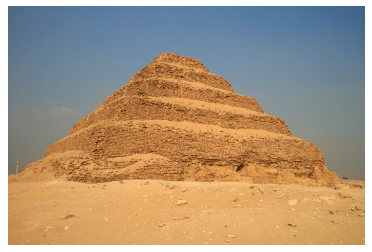
Seçenekler
A
Djoser
B
Ramses II
C
Menes
D
Menkaura
E
Narmer
Açıklama:
Imhotep, a “Renaissance Man,” was a gifted friend of the Pharaoh Djoser; he was commissioned to build his grave. Djoser made a wise choice by placing the future management of his dead body in the hands of Imhotep, who made sure that he glorified and honored his lord by building a most spectacular burial place, the Step Pyramid in Saqqara in Memphis. The correct answer is A.
Soru 59
Despite identifying themselves with a particular god each, a group of Egyptian Pharaohs who were mighty builders (e.g. Djoser, Pepi I, Pepi II, Sekemket, and Peripsen) called themselves kings of a certain god. Who was this deity?
Seçenekler
A
Hathor
B
Ra
C
Horus
D
Anubis
E
Isis
Açıklama:
A group of Egyptian Pharaohs were the mighty builders. These kings took advantage of the blueprint that the Founders have bequeathed them and they made the best of their forefathers’ wisdom and excelled, to the pride of their ancestors. They called themselves the Horus Kings, each identifying with a particular god. Among these kings were Djoser, Pepi I, Pepi II, Sekemket, and Peripsen. The correct answer is C.
Soru 60
Which of the following was the god of the underworld, afterlife and the dead?
Seçenekler
A
Ra
B
Osiris
C
Nephthys
D
Thoth
E
Amun
Açıklama:
During their daily lives, the older folks prepared for sleep by praying to one of their gods, in the Egyptian case, the sun god Ra or god of the underworld, afterlife and the dead Osiris, or variants of the relations of the gods. The correct answer is B.
Soru 61
I. Greeks
II. Persians
III. Romans
IV. Europe and Asia civilizations
Which of the following are influenced by Egyptians and influenced them?
II. Persians
III. Romans
IV. Europe and Asia civilizations
Which of the following are influenced by Egyptians and influenced them?
Seçenekler
A
IV
B
III
C
II
D
I
E
I-II
Açıklama:
They effected and were effected by all the civilizations that lived in Asia and Europe.
Soru 62
- Which of the following terms does the description of ‘habitat’ cover? i.Human environment ii. socio-economic systems of the environment iii. The fauna of the environment iv. The animal kingdom
Seçenekler
A
- İ-ii-iii-iv
B
b.İi-iii-iv
C
c.İ-iii-iv
D
d. İ-iv
E
e. İ-ii
Açıklama:
Habitat means i.Human environment ii. socio-economic systems of the environment iii. The fauna of the environment iv. The animal kingdom
Soru 63
I. They both look at material facts.
II. They both express their views objectively.
III. Both of them state their views ideologically.
IV. Both of them look at Egypt.
According to some western scholars which of the following ideas is/are wrong to explain Africanist look and Afro-centrist look?
II. They both express their views objectively.
III. Both of them state their views ideologically.
IV. Both of them look at Egypt.
According to some western scholars which of the following ideas is/are wrong to explain Africanist look and Afro-centrist look?
Seçenekler
A
I-IV
B
I-II-III
C
I-II-IV
D
II-III
E
III-IV
Açıklama:
According to some western scholars explain Africanist look and Afro-centrist look that they both look at material facts of Egypt however Africanists express their views objectively whereas Afro centrists express their views ideologically.53
Soru 64
What is "cultural appropriation"?
Seçenekler
A
Egyptian civilization does not belong to Africa.
B
Egyptian civilization has not been influenced by other civilizations.
C
Egyptian civilization has its parental roots in Africa.
D
Egyptian civilization has its roots in the Nile Valley.
E
Egyptian civilization is integral part of West, South and East African civilizations.
Açıklama:
Cultural appropriation means Egyptian civilization does not belong to Africa.
Soru 65
I. Creative
II. Industrious
III. Working hard in water management
IV. Alienated
Which of the following attributes describe ancient Egyptians?
II. Industrious
III. Working hard in water management
IV. Alienated
Which of the following attributes describe ancient Egyptians?
Seçenekler
A
I-II-III
B
I-II-IV
C
II-III-IV
D
III-IV
E
II-IV
Açıklama:
They were Creative, industrious and Working hard in water management
Soru 66
Which of the White ‘races’ have made contribution to Egyptian civilization?
Which of the White ‘races’ has contributed to Egyptian civilization?
Which of the White ‘races’ has contributed to Egyptian civilization?
Seçenekler
A
Both The Alpine and The Mediterranean
B
Both The Nordic and The Mediterranean
C
The Alpine
D
The Mediterranean
E
- The Nordic
Açıklama:
Both The Alpine and The Mediterranean
Soru 67
Which of the following statements explain the driving force of pre-dynastic Egyptian civilization?
Seçenekler
A
Making the best of its environment
B
Having a colorful nightlife
C
Giving importance to the family life
D
Being sophisticated in the art of leadership
E
Being mighty builders
Açıklama:
Their aim was to survive so the aim of making the best of its environment is the correct answer.
Soru 68
Which of the following describe the pharaonic governmental structure of Ancient Egypt?
i.They gave orders as spokespersons of their divine creator. ii.They were the ultimate ruler of the country. iii. They did not deal with the task of technical administration. iv. Give directives for the head of the government and attendant institutions.
i.They gave orders as spokespersons of their divine creator. ii.They were the ultimate ruler of the country. iii. They did not deal with the task of technical administration. iv. Give directives for the head of the government and attendant institutions.
Seçenekler
A
- İ-ii-iii-iv
B
- İ-ii-iii
C
- İi-iii-iv
D
- İii-iv
E
- İ-iii
Açıklama:
In pharaonic governmental structure of Ancient Egypt
Paharos gave orders as spokespersons of their divine creator, they were the ultimate ruler of the country, They did not deal with the task of technical administration but they gave directives for the head of the government and attendant institutions.
Paharos gave orders as spokespersons of their divine creator, they were the ultimate ruler of the country, They did not deal with the task of technical administration but they gave directives for the head of the government and attendant institutions.
Soru 69
- Which of the following expressions describe king Menes? i. Powerful ii.traditionalist iii. Nationalist iv. Progressive v. İnnovator
Seçenekler
A
İ-ii-iii-v
B
İ-ii-iii-iv
C
- İ-ii-iii
D
- İi-iii-iv-v
E
İi-iv-v
Açıklama:
i. Powerful ii.traditionalist iii. Nationalist e v. İnnovator
Soru 70
I.Products for health and beauty were produced.
II.Physics, chemistry, geometry, and calculus were employed.
III. Timeless monuments, pyramids were built.
IV. The Lower and Upper Egypt were united.
What are the main characteristics of ancient Egypt?
II.Physics, chemistry, geometry, and calculus were employed.
III. Timeless monuments, pyramids were built.
IV. The Lower and Upper Egypt were united.
What are the main characteristics of ancient Egypt?
Seçenekler
A
I-II-III
B
I-II-IV
C
II-III-IV
D
III-IV
E
II-IV
Açıklama:
Products for health and beauty were peoduced ii.Physics, chemistry geometry and calculus were employed. iii.Timeless monuments, pyramids were built. iv.The Lower and the upper Egypt were united during the government of Menes.
Soru 71
Which of the following civilizations does not have a notable influence on the Egyptian Civilization?
Seçenekler
A
Assyrian
B
Persian
C
Mayan
D
Roman
E
Greek
Açıklama:
Mayan Civilization does not have a notable influence on the Egyptian civilization.
Soru 72
Which of the following is the Egyptian god of the afterlife and the dead?
Seçenekler
A
Osiris
B
Ares
C
Ra
D
Hera
E
Odin
Açıklama:
Osiris is the Egyptian god of the afterlife and the dead.
Soru 73
I. Ethiopia
II. Morocco
III. Chad
IV. Sudan
Which of the above is/are among the countries where the river Nile passes through?
II. Morocco
III. Chad
IV. Sudan
Which of the above is/are among the countries where the river Nile passes through?
Seçenekler
A
Only I
B
Only II
C
I-II and III
D
I and IV
E
II and III
Açıklama:
Ethiopia and Sudan are among the countries where the river Nile passes through.
Soru 74
Which of the following is true about life in ancient Egypt?
Seçenekler
A
People have monotheist views
B
There are episodes of famine
C
There are no outside intruders
D
There is an everlasting peaceful atmosphere
E
Pharaohs build an egalitarian society
Açıklama:
People in ancient Egypt were fighting against adversaries and there were episodes of famine and wars.
Soru 75
Which of the following adjectives best describes the kingship of Menes in the Early Dynastic period?
Seçenekler
A
Innovator
B
Egalitarian
C
Humanitarian
D
Democratic
E
Narrow-minded
Açıklama:
Menes was an innovator, traditionalist and nationalist ruler.
Soru 76
Which of the following is true for the Early Dynastic period?
Seçenekler
A
Pharaoh Djoser was the great ruler of this period.
B
Egypt brought Libya and Nubia as part of its empire during the ruling of Khaffa.
C
The Sixth Dynasty began under a boy pharaoh, King Popy II in this period.
D
The Great Pyramid of Giza was built in this period.
E
Islam was accepted as the official religion of Egypt in this period.
Açıklama:
The Great Pyramid of Giza was built in the Early Dynastic period.
Soru 77
Who is Imhotep?
Seçenekler
A
The great Pharaoh of Egypt
B
An important scientist and priest in the Old Kingdom period
C
Greek Emperor who invaded Egypt
D
The Persian Sultan who raided North Africa
E
An Asian traveller who brought many inventions to Egypt
Açıklama:
Imhotep was an important scientist and priest in the Old Kingdom period
Soru 78
Which of the following marks the deciphering of the hieroglyphic writings of the Egyptians?
Seçenekler
A
The tomb of King Menes in the Nile valley
B
Engravings in the Cheops Pyramid
C
The Temple of Imhotep
D
The Great Pyramid of Giza
E
The Rosetta Stone
Açıklama:
With the discovery of the Rosetta Stone, archeologists were able to decipher the writings of the ancient Egyptians.
Soru 79
Which of the following marks the beginning of the Sixth Dynasty in the Old Kingdom period?
Seçenekler
A
Discovery of the Rosetta Stone
B
Building of the Cheops Pyramid
C
The ruling of boy pharaoh King Popy II
D
Death of the Great Ramses II
E
The union of the Upper and Lower Egypt
Açıklama:
The ruling of boy pharaoh King Popy II marks the beginning of the Sixth Dynasty in the Old Kingdom period.
Soru 80
Which of the following is among the mighty builder pharaohs who are called the Horus Kings?
Seçenekler
A
Djoser
B
Imhotep
C
Menkaura
D
Osiris
E
Memphis
Açıklama:
Djoser is among the mighty builder pharaohs who are called as the Horus Kings.
Soru 81
Who said that "Africa is not an historical part of the World... and has no movement or development to show".
Seçenekler
A
Frederick Hegel
B
Arnold Toynbee
C
C. Anta Diop
D
Ali Mazrui
E
Karl Marx
Açıklama:
-
Hegel claimed that Africa is not an historical part of the World... and has no movement or development to show.
Hegel claimed that Africa is not an historical part of the World... and has no movement or development to show.
Soru 82
Saqqara Pyramid was built by ..................... for Pharaoh ....................
Which of the following words should fill in the blank in the above expression?
Which of the following words should fill in the blank in the above expression?
Seçenekler
A
Imhotep, Ramses
B
Imhotep, Djoser
C
Khufu, Imhotep
D
Imhotep, Menes
E
Menkaura, Djoser
Açıklama:
-
Imhotep, an incomparable scientist and architect, was commissioned to build Djoser’s grave.
Imhotep, an incomparable scientist and architect, was commissioned to build Djoser’s grave.
Soru 83
Which of the following statements does NOT align with Arnold J. Toynbee's perspective on ancient Egypt?
Seçenekler
A
Ancient Egypt emerged in the lower valley of the Nile.
B
Ancient Egyptian civilization has deep African roots.
C
Ancient Egypt was without 'parents' and offspring.
D
No living society can claim ancient Egypt as an ancestor.
E
Ancient Egypt is located in Africa.
Açıklama:
-
The statement of "Ancient Egyptian civilization has deep African roots" does not align with Arnold J. Toynbee's perspective on ancient Egypt.
The statement of "Ancient Egyptian civilization has deep African roots" does not align with Arnold J. Toynbee's perspective on ancient Egypt.
Soru 84
The ancient Egyptians were known for their creative, industrious, and hardworking nature, particularly excelling in _______________, land management, and water control due to their reliance on the Nile Rive.
Which of the following correctly completes the sentence above?
Which of the following correctly completes the sentence above?
Seçenekler
A
Mining
B
Agriculture
C
Metalworking
D
Trade
E
Pottery
Açıklama:
-
The ancient Egyptians were known for their creative, industrious, and hardworking nature, particularly excelling in __Agriculture_____________, land management, and water control due to their reliance on the Nile River.
The ancient Egyptians were known for their creative, industrious, and hardworking nature, particularly excelling in __Agriculture_____________, land management, and water control due to their reliance on the Nile River.
Soru 85
What were the consequences of environmental stimulation and work innovation in ancient Egypt?
Seçenekler
A
The decline of Egyptian civilization
B
The isolation of Egyptian communities
C
The development of advanced technology
D
The elevation of Egyptian society into a captivating civilization.
E
The migration of Egyptians to other regions
Açıklama:
-
Environmental stimulation and work innovation in ancient Egypt elevated Egyptian society into a captivating civilization.
Environmental stimulation and work innovation in ancient Egypt elevated Egyptian society into a captivating civilization.
Soru 86
What was the role of horizontal religious integration in ancient Egypt?
Seçenekler
A
It separated religious and secular institutions completely.
B
It encouraged the worship of multiple gods in each village.
C
It created and increased the development of vertical religious order.
D
It facilitated communication among religious leaders and communities.
E
It discouraged religious practices at public places.
Açıklama:
-
It facilitated communication between religious leaders and communities.
It facilitated communication between religious leaders and communities.
Soru 87
How did the ancient Egyptians respond to adversities and challenges?
Seçenekler
A
They abandoned their civilization and migrated to other regions.
B
They relied on foreign aid for survival.
C
They overcame challenges with ingenuity, innovation, and moral strength.
D
They blamed their rulers and neighbors for all adversities.
E
They became isolationist and refrained from confronting challenges.
Açıklama:
-
They overcame with ingenuity, innovation, and moral strength.
They overcame with ingenuity, innovation, and moral strength.
Soru 88
What is the main reason for the enduring appeal of ancient Egyptian civilization?
Seçenekler
A
Its advanced technology and industry
B
Its exclusive focus on religious practices
C
Its rich cultural heritage and creativity
D
Its isolation from other civilizations
E
Its preference for secularism over spirituality
Açıklama:
-
Its rich cultural heritage and creativity
Its rich cultural heritage and creativity
Soru 89
Originating as a local civilization rooted in the African soil, ancient Egypt evolved into a cosmopolitan empire, shaping and being shaped by the influences of Asia and Europe.
What is the meaning of the term "cosmopolitan empire" in the given sentence?
What is the meaning of the term "cosmopolitan empire" in the given sentence?
Seçenekler
A
An empire with diverse cultural influences
B
An empire with a focus on astrology
C
An empire that spans multiple continents
D
An empire characterized by isolationism
E
An empire under the influence of a single dominant culture
Açıklama:
-
A cosmopolitan empire" in the given sentence means an empire with diverse cultural influences.
A cosmopolitan empire" in the given sentence means an empire with diverse cultural influences.
Ünite 4
Soru 1
Which settlement, given below, is the oldest habitation for the Paleolithic Period in Anatolia?
Seçenekler
A
Çatalhöyük
B
Yarımburgaz Cave
C
Hacılar
D
Karain Cave
E
Öküzini Cave
Açıklama:
The oldest habitation in Anatolia dates to the Paleolithic Period; it is Yarımburgaz Cave. Karain Cave is a significant prehistoric
place in Anatolia. By the way as we know Çatalhöyük is the most well-known of the Early Neolithic Age settlements.
place in Anatolia. By the way as we know Çatalhöyük is the most well-known of the Early Neolithic Age settlements.
Soru 2
I. The Anatolians made weapons and decorative items from bronze. II. The Anatolians started to live in village-type settlements. III. During this period non-religious and religious objects were fashioned. IV. Troia was the most important location of Stage I of the First Bronze Age in Anatolia. Which items, given above, are correct about the Early Bronze Age?
Seçenekler
A
I-II
B
II-III
C
III-IV
D
I-II-III
E
I-III-IV
Açıklama:
The Anatolians made weapons, pots and decorative items from bronze, while treating gold, copper and silver; at the same time, non-religious and religious objects were fashioned. The village - type settlements first transformed into towns and then into cities. They already had village type settlements. The most important location of Stage I of the First Bronze Age in Anatolia is Troia.
Soru 3
I. He made the city of Hattusa the capital of that kingdom.
II. He expanded the borders as far as the seas.
III. He made a successful military expedition to Halep and Babylon.
IV. Attacks by the Hurrians resulted in chaos within the country.
Which items ,given above, happened during the reign of Murshili I in Hittite Civilization?
II. He expanded the borders as far as the seas.
III. He made a successful military expedition to Halep and Babylon.
IV. Attacks by the Hurrians resulted in chaos within the country.
Which items ,given above, happened during the reign of Murshili I in Hittite Civilization?
Seçenekler
A
I-II
B
I-IV
C
II-III
D
III-IV
E
II-IV
Açıklama:
Hattushili made the city of Hattusa the capital of that kingdom. After Hattushili I, a new king arose: Murshili I (1630 - 1600 BCE). He ruled the state in peace and tranquility, expanding its borders as far as the seas. He made a successful military expedition to Halep and Babylon. But the king was murdered. Then his successor Hantili I came to the throne. Around this time, attacks by the Hurrians resulted in chaos within the country.
Soru 4
Which king in Hittite Kingdom declared a law to bring an end to dynastic succession conflicts?
Seçenekler
A
Ammuna
B
Huzziya
C
Hattushili I
D
Telipinu
E
Zidanta I
Açıklama:
Telipinu's first major challenge was to bring an end to dynastic succession conflicts. Therefore, he declared a law which concluded that the first male child born from the first wife of the king would designated to ascend to the throne, primogeniture; if such a child was not available, then the next male child would become the king. If a king had no male child at all, then his eldest daughter’s son would become the subsequent king.
Soru 5
Which king of the Hittite made the country reach a power equaling that of Babylon and Egypt?
Seçenekler
A
Telipinu
B
Shuppiluliuma
C
Arnuvanda II
D
Huzziya
E
Hattushili I
Açıklama:
The great empire ruled by Shuppiluliuma I reached a power equaling that of Babylon and Egypt. For example, He established subsidiary states as far away as along the borders of Syria and Palestine, thus reasserting the power of the Hittite
state. He ensured the loyalty of bordering states such as Ugarit in Syria and the kingdoms of Kizzuvatna and Amurru in the south, through competent diplomacy.
state. He ensured the loyalty of bordering states such as Ugarit in Syria and the kingdoms of Kizzuvatna and Amurru in the south, through competent diplomacy.
Soru 6
Which of the following statements about the Hittite civilization is false?
Seçenekler
A
As Shuppiluliuma II didn't have any children, the Hittite civilization collapsed.
B
The Battle of Kadesh took place between Hittites and Egyptians.
C
The Treaty of Kadesh is assumed to be the first international agreement in the history.
D
Internal treats and attacks by the Kashgans caused the collapse of the Hittite civilization.
E
The most advanced branch in Hittite art is architecture.
Açıklama:
The most advanced branch in Hittite art is architecture. The Hittite form of architecture, which is used in lower sections in Anatolia and which involves gigantic stones, continued during the New Hittite Kingdom Period. It was in 1286 BCE during the reign in Egypt of Ramses II, that war with Egypt finally broke out. Fighting took place on the plane to the south of the city of Kadesh and The Treaty of Kadesh is assumed to be the first international agreement in the history. Internal threats, attacks by the Kashgans from the north and the Aegean Migrations of the Sea Peoples to the Levant were the main reasons for the collapse of the Hittite civilization. Arnuvanda III did not have a child, so his brother Shuppiluliuma II become the king between the years of 1200 - 1190 BCE ans the collapse is not because of the lack of successor.
Soru 7
I. They made Gordion their capital.
II. King Midas was the first eastern king who had relations with Greeks.
III. Gordios is the first king of the Phrygians.
IV. They came to Anatolia after the Trojan War.
Which statements, given above, are correct about Phrygian Civilization?
II. King Midas was the first eastern king who had relations with Greeks.
III. Gordios is the first king of the Phrygians.
IV. They came to Anatolia after the Trojan War.
Which statements, given above, are correct about Phrygian Civilization?
Seçenekler
A
II-IV
B
I-III
C
I-III-IV
D
I-II-III
E
II-III-IV
Açıklama:
Homer talks about the Phrygians while enumerating the subsidiary forces assisting in the Trojan War. Given that the Trojan War took place around 1200 BCE, it is apparent that the Phrygians lived in Anatolia around this date. They made Gordion their capital and their first king was Gordios. Morover Midas is the first eastern king who had relations with the Greeks.
Soru 8
Which of the following statements is false about Phrygian Culture?
Seçenekler
A
The Phrygian language was developed from the Phoenician alphabet.
B
In Phrygian culture The Mother Goddess symbolized soil,
abundance and fertility.
abundance and fertility.
C
The Phrygians reached a high level in metal workmanship.
D
The name of the world-famous Phrygian rug is Pankush.
E
The development of Phrygian art is divided into three stages.
Açıklama:
The name of Hittite Council of Nobles is Pankush. The name of the world-famous Phrygian rug is Tapestes. The development of Phrygian art is divided into three stages:
Early, Transition, and Mature. The Phrygian language was developed from the Phoenician alphabet, and it later played an influential role in the Greek alphabet.
Early, Transition, and Mature. The Phrygian language was developed from the Phoenician alphabet, and it later played an influential role in the Greek alphabet.
Soru 9
I. Persians is the reason for the end of the Lydian Civilization. II. First coins minted by the Lydians. III. Spring pins and safety pins were technological inventions of the Lydians. IV.Thanks to Croesus's wealth many neighbours admired them. Which of the statements given above are correct for the Lydians?
Seçenekler
A
I-IV
B
II-III
C
I-II-IV
D
II-III-IV
E
I-III-IV
Açıklama:
Spring pins and safety pins were technological inventions of the Phrygians. Because of Persians, the Lydians collapsed. The most important contribution of the Lydians was the coin system. Croesus was a very rich king. His wealth helped a lot.
Soru 10
When did the Battle of Kadesh take place?
Seçenekler
A
1286 BCE
B
1280 BCE
C
1282 BCE
D
1276 BCE
E
1278 BCE
Açıklama:
In 1286 BCE, during the reign of Ramses II in Egypt that war finally broke out between Egyptians and the Hittites. The battle took place on the plane to the south of the city of Kadesh.
Soru 11
In which of the following civilizations can we discern the early historical period of Anatolia?
Seçenekler
A
Assyrian Colonies
B
The Hittite Civilization
C
The Urartian Civilization
D
Phrygian Civilization
E
Lydian Civilization
Açıklama:
It is in the age of the Assyrian Colonies (1950 - 1750 BCE) that we can discern the early, almost historical period of Anatolia.
Soru 12
The art of the Hittite civilization was most dramatically characterized by the development of architecture, especially in the form of ___
Seçenekler
A
trading posts
B
irrigation channels
C
metal workmanship
D
rock-cut tombs
E
castles and monumental city gates
Açıklama:
The art of the Hittite civilization was most dramatically characterized by the development of architecture, especially in the form of castles and monumental city gates.
A seçeneği Assyrian colonies
B seçeneği the Urartian Civilization
C seçeneği the Urartian Civilization
D seçeneği the Phrygians
A seçeneği Assyrian colonies
B seçeneği the Urartian Civilization
C seçeneği the Urartian Civilization
D seçeneği the Phrygians
Soru 13
Which of the following is one of the oldest habitation in Anatolia in Paleolithic Period?
Seçenekler
A
Karain Cave
B
Yarımburgaz Cave
C
Öküzini Cave
D
Beldibi Cave
E
Belbaşı Cave
Açıklama:
The oldest habitation in Anatolia dates to this age (Paleolithic Period); it is Yarımburgaz Cave near Küçükçekmece Lake (İstanbul).
Soru 14
In which of the following period does evidence show that village life started?
Seçenekler
A
The Mesolithic Period
B
The Chalcolithic Period
C
Paleolithic Period
D
The Neolithic Period
E
The Early Bronze Age
Açıklama:
In the Neolithic Age (New Stone Age) (10,000 - 5,500 BCE), during which fundamental changes occurred in the life and subsistence of mankind, evidence shows that village life started while multiplication of beneficent plant and animal breeds introduced agriculture and animal husbandry.
Soru 15
Which of the following was the most important feature of Age of Assyrian Trade Colonies?
Seçenekler
A
Unsystematic trade
B
Dependent trade
C
Organized trade
D
Unsophisticated
E
Disorganized
Açıklama:
This was a period of organized trade that is called the Age of Assyrian Trade Colonies. Trading, which had previously taken place in an unsystematic manner, was made systematic through the formation of independent trading colonies, established in Anatolia, known as karum, trading posts that flourished from the 20th to the 18the centuries BCE.
Soru 16
Which of the following was one of the characteristics of Hittite architecture?
Seçenekler
A
involved gigantic stones
B
established their castles and cities on high rocky areas
C
made architectural coverings from cooked earth
D
used ivory carvings
E
built strong castles
Açıklama:
The most advanced branch in Hittite art is architecture. The Hittite form of architecture, which is used in lower sections in Anatolia and which involves gigantic stones, continued during the New Hittite Kingdom Period. Castles built of adobe walls on stone foundations, surrounded by defense posts, are typical examples of military architecture.
B Urartians
C Phrygians
D Lydians
E Urartians
B Urartians
C Phrygians
D Lydians
E Urartians
Soru 17
Which of the following is the best example of embossed ceramic type in Hittite culture?
Seçenekler
A
Rhyton vase
B
Sphinx gate
C
Bitik vase
D
Beak-mouthed jugs
E
Teshup
Açıklama:
The best example of this type of embossed ceramic is the embossed vase known as Bitik Vase. A holy marriage ceremony is pictured at the top section, with a feast in the middle section and the heads of humans in the bottom section.
A (Animal- shaped embossed vases)
E male deity who represented the sky
A (Animal- shaped embossed vases)
E male deity who represented the sky
Soru 18
Which of the following is not a Hittite Period art form continued into the Late Hittite City States?
Seçenekler
A
Traditional style
B
Late Hittite style
C
Assyrian style
D
Urartian style
E
Arami and Phoenician style
Açıklama:
The art forms of the Hittite Period continued into the Late Hittite city states, varying in nature according to the regions where they existed and the ethnic groups that populated them. Four main artistic styles have been detected in these city states: 1. Traditional style, 2. Late Hittite style, 3. Assyrian style and 4. Arami and Phoenician style.
Except for the option D, Traditional style, Late Hittite style, Assyrian style and Arami and Phoenician style are Hittitie period art
Except for the option D, Traditional style, Late Hittite style, Assyrian style and Arami and Phoenician style are Hittitie period art
Soru 19
Which of the following is an example of mastery of the Urartians in metal workmanship?
Seçenekler
A
Temples
B
Belt buckles
C
Dams
D
Irrigation channels
E
Castles
Açıklama:
Cauldrons, belt buckles, shields, offering plates for vows, and harnesses uncovered during expeditions all testify to the mastery of the Urartians in metal workmanship. Castles, temples, palaces, dams and irrigation channels, as well as open air temples carved in stone, are all evidence of the monumental architecture achievements of the Urartians.
Cauldrons, belt buckles, shields, offering plates for vows, and harnesses uncovered during expeditions all testify to the mastery of the Urartians in metal workmanship. Castles, temples, palaces, dams and irrigation channels, as well as open air temples carved in stone, are all evidence of the monumental architecture achievements of the Urartians.
Cauldrons, belt buckles, shields, offering plates for vows, and harnesses uncovered during expeditions all testify to the mastery of the Urartians in metal workmanship. Castles, temples, palaces, dams and irrigation channels, as well as open air temples carved in stone, are all evidence of the monumental architecture achievements of the Urartians.
Soru 20
Which of the following civilization minted first coins?
Seçenekler
A
Hittites
B
Urartians
C
Phrygians
D
Assyrians
E
Lydians
Açıklama:
The Lydian King Alyattes started to forge coins during this peace period. The first coins were made from electrum, an alloy of 55 % gold, 45 % silver and a small amount of bronze. Since the Stream of Gediz and the Stream of Pactolus running through Sardis were rich in gold content, the Lydians collected this gold and became a rich nation. These coins began to be used for trading and became widespread, bringing in trade via coins instead of animals. The coins of Lydia had various animal pictures on their front sides. There is a lion figure on the coins stamped in Sardis.
Soru 21
Match the periods below with their characteristic areas in Anatolia. What is the order of the letters?
1. Chalcolithic period (5500 to 3000 BCE) a) Hacılar
2. Bronze Age (3000 - 2000 BCE) b) Kanesh(Kültepe)
3. The age of the Assyrian Colonies
(1950 - 1750 BCE) c) The cities of Troy
and Alacahöyük
1. Chalcolithic period (5500 to 3000 BCE) a) Hacılar
2. Bronze Age (3000 - 2000 BCE) b) Kanesh(Kültepe)
3. The age of the Assyrian Colonies
(1950 - 1750 BCE) c) The cities of Troy
and Alacahöyük
Seçenekler
A
a, c, b
B
a, b, c
C
b, a, c
D
b, c, a
E
c, b, a
Açıklama:
1. a) One must begin more solid history with the Chalcolithic period (5500 to 3000 BCE). That was a time when people moved from caves to villages and first mined copper. Hacılar is one of the most important centers for the period.
2. c) The second stage was the Bronze Age (3000 - 2000 BCE); it was during this era that the term “state” may begin to be applied. Further, there developed social classes, complicated economic activities and organized religion. The cities of Troy and Alacahöyük offer us good examples from the Bronze Age.
3. b) It is in the age of the Assyrian Colonies (1950 - 1750 BCE) that we can discern the early, almost historical period of Anatolia. Kanesh (Kültepe) reveals one of the best examples for this era.
The correct answer is A.
2. c) The second stage was the Bronze Age (3000 - 2000 BCE); it was during this era that the term “state” may begin to be applied. Further, there developed social classes, complicated economic activities and organized religion. The cities of Troy and Alacahöyük offer us good examples from the Bronze Age.
3. b) It is in the age of the Assyrian Colonies (1950 - 1750 BCE) that we can discern the early, almost historical period of Anatolia. Kanesh (Kültepe) reveals one of the best examples for this era.
The correct answer is A.
Soru 22
The Hittite Civilization centered on the first powerful, organized state to be established in Anatolia (1650 - 1200 BCE). The history of the Hittites can be divided into periods. Sequence the periods of Hittites history.
Seçenekler
A
The Great Hittite Kingdom, the Old Kingdom and the Late Hittite City States period
B
The Great Hittite Kingdom, the Late Hittite City States period and the Old Kingdom
C
The Late Hittite City States period, the Great Hittite Kingdom and the Old Kingdom
D
the Old Kingdom, the Great Hittite Kingdom and the Late Hittite City States period
E
The Old Kingdom, the Late Hittite City States period and the Great Hittite Kingdom
Açıklama:
It starts with the time of Old Kingdom, we see
the founding of Hattusa, the capital city of the Hittites. The Great Hittite Kingdom started with the reign of Shuppiluliuma I. The Hittites became one of the most powerful civilizations. After the collapse of the Hittite Empire, some city states appeared in southeastern Anatolia. This period is called the Late Hittite City States period and it lasted from 1200 to 650 BCE. The correct answer is D.
the founding of Hattusa, the capital city of the Hittites. The Great Hittite Kingdom started with the reign of Shuppiluliuma I. The Hittites became one of the most powerful civilizations. After the collapse of the Hittite Empire, some city states appeared in southeastern Anatolia. This period is called the Late Hittite City States period and it lasted from 1200 to 650 BCE. The correct answer is D.
Soru 23
The Hittites became one of the most powerful civilizations, a state equal to those of ancient Egypt or Babylonia. A new balance of power brought major wars, one of which occurred between the Hittites and the Egyptians. What did this war result in?
Seçenekler
A
polytheistic religion of the Hittites
B
special ceramic works and transportation of these goods outside of Hittite borders
C
the Treaty of Kadesh, first international treaty
D
developed social classes
E
the successful military campaigns of Hattushili against Babylonia
Açıklama:
A new balance of power brought major wars, one of which
occurred between the Hittites and the Egyptians. This war resulted in the Treaty of Kadesh, first international treaty ever signed between major powers. The correct answer is C.
occurred between the Hittites and the Egyptians. This war resulted in the Treaty of Kadesh, first international treaty ever signed between major powers. The correct answer is C.
Soru 24
What is the sequence of these cultures' rule in Anatolia?
a) The Lydian civilization
b) The Late Hittite City States
c) The Hittite Civilization
d) The Urartian Civilization
e) The culture of the Phrygians
a) The Lydian civilization
b) The Late Hittite City States
c) The Hittite Civilization
d) The Urartian Civilization
e) The culture of the Phrygians
Seçenekler
A
a, b, c, d, e
B
b, c, a, d, e
C
c, b, d, e, a
D
d, e, a, b, c
E
e, c, b, d, a
Açıklama:
c) The Hittite Civilization centered on the first powerful, organized state to be established in Anatolia (1650 - 1200 BCE).
b) The Late Hittite City States period and it lasted from 1200 to 650 BCE.
d) The Urartian Civilization flourished from 860 to 590 BCE and played an important role in Eastern Anatolia.
e) Phrygian tribes moved into Anatolia around 1200 BCE.
a) Finally, the Lydian civilization flourished in the western part of Anatolia after the collapse of the Phrygian civilization in the seventh century BCE.
The correct answer is C.
b) The Late Hittite City States period and it lasted from 1200 to 650 BCE.
d) The Urartian Civilization flourished from 860 to 590 BCE and played an important role in Eastern Anatolia.
e) Phrygian tribes moved into Anatolia around 1200 BCE.
a) Finally, the Lydian civilization flourished in the western part of Anatolia after the collapse of the Phrygian civilization in the seventh century BCE.
The correct answer is C.
Soru 25
It is said that the first coinage system was introduced by Lydians. Whose accomplishment was it?
Seçenekler
A
King Gyges
B
Croesus
C
King Alyattes
D
King Midas
E
King Gordios
Açıklama:
The most important accomplishment of King Alyattes was the introduction of the first coinage system (called the electrum). The correct answer is C.
Soru 26
The oldest habitation in Anatolia dates to the Paleolithic Period, also known as the Old Stone Age. Where is the location of the oldest habitation in Anatolia?
Seçenekler
A
Yarımburgaz Cave
B
Kars Çamuşlu
C
Beldibi Cave in Antalya
D
Çatalhöyük on Konya Plain
E
Söğüt Tarlası in Şanlıurfa Bozova
Açıklama:
The oldest habitation in Anatolia dates to this age; it is Yarımburgaz Cave
near Küçükçekmece Lake (İstanbul).
The correct answer is A.
near Küçükçekmece Lake (İstanbul).
The correct answer is A.
Soru 27
It is in the age of the Assyrian Colonies (1950 - 1750 BCE) that the establishment of independent trading colonies, in other words trading posts made trading systematic. What are these locations called? What was the name of the leading one?
Seçenekler
A
Fortresses, Hattusa (Boğazköy)
B
Cuneiform, Kültepe
C
Tankard, Kanlıgeçit (Kırklareli)
D
Karum, Kanesh (Kültepe)
E
Solar Disc, Alacahöyük
Açıklama:
This was a period of organized trade that is called the Age of Assyrian Trade Colonies. Trading, which had previously taken place in an unsystematic manner, was made systematic through the formation of independent trading colonies, established in Anatolia, known as karum, trading posts that flourished from
the 20th to the 18the centuries BCE.
An Assyrian governor administered about 10 karums or trading posts in Anatolia, residing in Kanesh which was the leading karum and located near the modern Kayseri.
The correct answer is D.
the 20th to the 18the centuries BCE.
An Assyrian governor administered about 10 karums or trading posts in Anatolia, residing in Kanesh which was the leading karum and located near the modern Kayseri.
The correct answer is D.
Soru 28
Many Hittites, displaced from their homeland, were forced to migrate to the territories in the south which previously had been under their rule. Thus, this mass of people moved across the Taurus mountains and went down to the Upper Euphrates Basin, into Northern Syria, and settled in cities which had previously been established here.
Which event resulted in this situation?
Which event resulted in this situation?
Seçenekler
A
the reign of the Assyrian King Sargon II
B
the fall of the Hittites
C
the Treaty of Kadesh
D
the Battle of Kadesh
E
the Edict of Telipinu
Açıklama:
After the fall of the Hittites, a period began when the region was taken by the Assyrians; this was in the 8th Century BCE, a time now named the Late Hittite City States Period. The correct answer is B.
Soru 29
Which of these civilizations was the first powerful and organized state in Anatolia?
Seçenekler
A
Hittites
B
Urartians
C
Lydians
D
Phrygians
E
Polynesians
Açıklama:
The Hittite Civilization centred on the first powerful, organized state to be established in Anatolia (1650 - 1200 BCE).
Soru 30
Which of the below places is the oldest inhabited place in Anatolia?
Seçenekler
A
Karain Cave
B
Yarımburgaz Cave
C
Öküzini cave
D
Beldibi Cave
E
Belbaşı Cave
Açıklama:
Yarımburgaz Cave is the oldest inhabited place in Anatolia
Soru 31
The name for “New Stone Age” is:
Seçenekler
A
Paleolithic Period
B
Mesolithic Period
C
Neolithic Period
D
Chalcolithic Period
E
Early Bronze Age
Açıklama:
In the Neolithic Age (New Stone Age), during which fundamental changes occurred in the life and subsistence of mankind, evidence shows that village life started while multiplication of beneficent plant and animal breeds introduced agriculture and animal husbandry.
Soru 32
What was the name of the leading karum?
Seçenekler
A
Alişar
B
Kusshara
C
Zalpa
D
Kanesh
E
Hacılar
Açıklama:
An Assyrian governor administered about 10 karums or trading posts in Anatolia, residing in Kanesh which was the leading karum and which is located near the modern Kayseri. This town was also the center of the Nesha principality, Hattusa (Boğazköy) and Purushanda.
Soru 33
Which of the following was the capital city of Mighty Hittite Civilization?
Seçenekler
A
Nesha
B
Zalpa
C
Mama
D
Purushanda
E
Hattusha
Açıklama:
From a bilingual text obtained in Boghazköy and originally written in the Akkadian language, we find that the first ruler of the Old Kingdom Dynasty was Hattushili I, who ruled from 1660 to l630 BCE and who transformed a relatively small princely state into an actual kingdom. He made the city of Hattusa the capital of that kingdom.
Soru 34
How did edict of Telipinu end dynastic succession conflicts?
Seçenekler
A
Firstborn male child from the first wife would be the king.
B
Firstborn child from the first wife would be the King.
C
Firstborn male child from the king’s daughter would be the king.
D
The king himself had the right to choose which son would be the king.
E
The king’s first-born daughter had the right to choose the king.
Açıklama:
He declared a law (known to history as the Edict of Telipinu) which concluded that the first male child born from the first wife of the king would be designated to ascend to the throne, primogeniture; if such a child was not available, then the next male child would become the king.
Soru 35
Which two powers signed the treaty of Kadesh which is also known as the first international agreement in history?
Seçenekler
A
Hittites - Assyrians
B
Hittites - Egyptians
C
Trojans - Greeks
D
Hittites - Urartians
E
Trojans - Hittites
Açıklama:
Puduhepa placed her seal on many official documents either on her own account or together with the king. Having followed a smart policy, Hattushili III signed a peace agreement with the Egyptians in 1270 BCE, the name of which is the Treaty of Kadesh, and he ensured a continuity of the peace between the two large states.
Soru 36
Which city, given below, in Turkey is the first settlement of Urartian Civilization?
Seçenekler
A
Batman
B
Çanakkale
C
Van
D
Erzurum
E
Urfa
Açıklama:
It was in 840 BCE that Sarduri I gathered these tribes under his leadership and established the Urartu state, making Tushpa (Van) the capital.
Soru 37
Which civilization, given below, is the one Urartians fought most?
Seçenekler
A
Hittite
B
Assyrian
C
Phrygian
D
Lydian
E
Cimmerians
Açıklama:
The Assyrian kings struggled with these tribes and their confederation until
the middle of the ninth century BCE, failing to hold this region under their subjugation due to its mountainous nature.
The Urartians defeated the Assyrians during a war fought in 753 BCE, thus opening the Mediterranean trade route for their land.
The Urartians defeated the army of their old enemies, the Assyrians, in 705 BCE,
killing the Assyrian King Sargon.
Therefore, the civilization they fought most is Assyrians. The correct answer is B.
the middle of the ninth century BCE, failing to hold this region under their subjugation due to its mountainous nature.
The Urartians defeated the Assyrians during a war fought in 753 BCE, thus opening the Mediterranean trade route for their land.
The Urartians defeated the army of their old enemies, the Assyrians, in 705 BCE,
killing the Assyrian King Sargon.
Therefore, the civilization they fought most is Assyrians. The correct answer is B.
Soru 38
Which of the following kings was the ruler of Phyrigians?
Which of the following were among the socalled Horus Kings of ancient Egypt?
Which of the following were among the socalled Horus Kings of ancient Egypt?
Seçenekler
A
Hattushili
B
Sarduri
C
Ramses II
D
Midas
E
Lydos
Açıklama:
It is known that after the king Gordios died, his son Midas ascended to the Phrygian throne. Midas is cited in many historical and archaeological sources and is better known for his legendary character.
Soru 39
Which civilization, given below, minted coins and used them in trade?
Seçenekler
A
Urartians
B
Hittites
C
Greeks
D
Assyrians
E
Lydians
Açıklama:
The Lydian King Alyattes started to forge coins during this peace period. The first coins were made from electrum, an alloy of 55 % gold, 45 % silver and a small amount of bronze. Since the Stream of Gediz and the Stream of Pactolus running through Sardis were rich in gold content, the Lydians collected this gold and became a rich nation. These coins began to be used for trading and became widespread, bringing in trade via coins instead of animals.
Soru 40
Which civilization is considered as the ancestors of today’s Turkish rugs?
Seçenekler
A
Phrygian
B
Lydian
C
Urartian
D
Hittite
E
Egyptian
Açıklama:
Phrygians were also famous for their textiles and especially for their rugs, the ancestors of today’s Turkish rugs. That Central Anatolian sheep had high-quality wool must have had an impact on the development of weaving.
The correct answer is A.
The correct answer is A.
Soru 41
Which of the following is the date of the Chalcolithic Period?
Seçenekler
A
250,000 - 15,000 BCE
B
15,000 - 10,000 BCE
C
10,000 - 5,500 BCE
D
5,500 - 3,000 BCE
E
3,000 - 2,000 BCE
Açıklama:
The Chalcolithic Age, also known as the Late Village Period, ran between the first half of the sixth millennium BCE and the end of the fourth millennium BCE. The Chalcolithic Age dates
5,500 - 3,000 BCE. Right answer is “D”.
5,500 - 3,000 BCE. Right answer is “D”.
Soru 42
Which one, given below, is the oldest inhabited place in Anatolia?
Seçenekler
A
Yarımburgaz Cave
B
Göbeklitepe
C
Nevali Çori
D
Yumuktepe
E
Gözlükule
Açıklama:
Yarımburgaz Cave is the oldest inhabited place in Anatolia. Right answer is “A".
Soru 43
In what period, given below, has the hand-shaped clay first appeared?
Seçenekler
A
Paleolithic Period
B
The Mesolithic Period
C
The Neolithic Period
D
The Chalcolithic Period
E
The Early Bronze Age
Açıklama:
The earliest stages of this period are seen at Biris Cemetery and at Söğüt Tarlası in Şanlıurfa. One of the most important stages here is the production of pottery made by hand-shaped clay.
Right answer is “C”.
Right answer is “C”.
Soru 44
When was the Treaty of Kadesh signed?
Seçenekler
A
1250 BCE
B
1270 BCE
C
1275 BCE
D
1282 BCE
E
1288 BCE
Açıklama:
Having followed a smart policy, Hattushili III signed a peace agreement with the Egyptians in 1270 BCE, the name of which is the Treaty of Kadesh, and he ensured a continuity of the peace between the two large states. Right answer is “ B”.
Soru 45
Which of the following ruins does not belong to the Hittite period?
Seçenekler
A
Yazılıkaya Open Air Temple
B
The Sphinx Gate
C
Bitik Vase
D
Blessed Gods” from the Open-Air Temple
E
Troy
Açıklama:
The Early Bronze Age is studied under three stages, designated Stage I, Stage II and Stage III. The most important location of Stage I of the First Bronze Age in Anatolia is Troia (Troy). Right answer is “E”.
Soru 46
Where were Assyrian merchants settled in Anatolia?
Seçenekler
A
Kanesh (Kültepe)
B
Alacahöyük
C
Çatalhöyük
D
Çukurova
E
Lake Van
Açıklama:
The Assyrian merchants who resided in the great settlement of Kanesh (Kültepe), the center of trading, were subjects of the Assyrian king and laws. Right answer is “A”.
Soru 47
Which one of the following is not one of the Hittite city states?
Seçenekler
A
Kingdom of Tabal
B
Kingdom of Kummuh
C
Kingdom of Que
D
Kingdom of Hilakku
E
Kingdom of Lydian
Açıklama:
Ldyian kingdom is not Hittite city. Right answer is "E".
Soru 48
What civilization, given below, was the first coin made?
Seçenekler
A
Urartian Civilization
B
Phrygian Civilization
C
Hittite Civilization
D
Lydian Civilization
E
Lycia Civilization
Açıklama:
First coins minted by the Lydians. Right answer is “D”.
Soru 49
Which of the following civilizations influenced the Greek alphabet?
Seçenekler
A
Phrygian Civilization
B
Urartian Civilization
C
Hittite Civilization
D
Lydian Civilization
E
Lycia Civilization
Açıklama:
The Phrygian language was developed from the Phoenician alphabet, and it later played an influential role in the Greek alphabet. Right answer is “A”.
Soru 50
Which civilization's capital was Gordion?
Seçenekler
A
Phrygian Civilization
B
Urartian Civilizationn
C
Hittite Civilization
D
Lydian Civilization
E
Lycia Civilization
Açıklama:
Formerly organized as separate principalities, they established a strong state and made Gordion their capital. Right answer is “A”.
Soru 51
Which settlement, given below, is the oldest center for the Chalcolithic period in Anatolia?
Seçenekler
A
Hacılar
B
Troy
C
Alacahöyük
D
Kanesh (Kültepe)
E
Hattusa
Açıklama:
One must begin more solid history with the Chalcolithic period (5500 to 3000 BCE). That was a time when people moved from caves to villages and first mined copper. Hacılar is one of the most important centers for the period.
Soru 52
Which civilization started to use a coinage system first?
Seçenekler
A
Urartians
B
Lydians
C
Assyrians
D
Hittites
E
Phrygians
Açıklama:
Wealth, the coinage system, and art all made the capital city of Sardis a brilliant center of the ancient world. Furthermore, the capital played a significant role in the advancement of the arts, thanks to the presence there of the School of Sardis in Lydia.
Soru 53
What is the oldest habitation in Anatolia?
Seçenekler
A
Karain cave (Antalya)
B
Öküzini cave (Antalya)
C
Yarımburgaz cave (Istanbul)
D
Beldibi cave (Antalya)
E
Palanlı (Adıyaman)
Açıklama:
The oldest habitation in Anatolia dates to this age; it is Yarımburgaz Cave near Küçükçekmece Lake (İstanbul). Very primitive flint stones and mammal bones found in this cave, consisting of 16 layers, are important artifacts of the Lower Paleolithic Age.
Soru 54
In which period village life started in Anatolia?
Seçenekler
A
Paleolithic period
B
Mesolithic period
C
Chalcolithic period
D
Neolithic period
E
Bronze age
Açıklama:
In the Neolithic Age (New Stone Age), during which fundamental changes occurred in the life and subsistence of mankind, evidence shows that village life started while multiplication of beneficent plant and animal breeds introduced agriculture and animal husbandry. The earliest stages of this period are seen at Biris Cemetery and at SöğütTarlası in Şanlıurfa. One of the most important stages here is the production of pottery made by hand-shaped clay
Soru 55
What was the name of independent trading colonies established by Assyrian tradesmen called?
Seçenekler
A
Nesha
B
Kanesh
C
Hattusa
D
Zalpa
E
Karum
Açıklama:
This was a period of organized trade that is called the Age of Assyrian Trade Colonies. Trading, which had previously taken place in an unsystematic manner, was made systematic through the formation of independent trading colonies, established in Anatolia, known as karum, trading posts that flourished from the 20th to the 18the centuries BCE.
Soru 56
Which king in Hittites regulated the dynastic succession conflicts?
Seçenekler
A
Telipinu
B
Hattushili
C
Murshili I
D
Shuppiluliuma
E
Tuthalia II
Açıklama:
There arose a reformer king, Telipinu, who finished the civil war and took the throne in 1535 BCE. His first major challenge was to bring an end to dynastic succession conflicts. Therefore, he declared a law (known to history as the Edict of Telipinu) which concluded that the first male child born from the first wife of the king would be designated to ascend to the throne, primogeniture; if such a child was not available, then the next male child would become the king. If a king had no male child at all, then his eldest daughter’s son would become the subsequent king. This law, which King Telipinu issued with the approval of the Pankush, the Hittite Council of Nobles, was applied henceforth and it regulated Hittite ascension to the throne.
Soru 57
Who fought against Hittites in the battle of Kadesh?
Seçenekler
A
Sumerians
B
Egyptians
C
Urartians
D
Lydians
E
Phrygians
Açıklama:
Egyptian pharaohs had come with their powerful fighting forces as far north, toward the Hittites, as the vicinity of the city of Kadesh (located in today’s Syria and at the time of the Egyptian moves a great Hittite center of commerce), in a general effort to repulse Hittite incursions upon what they considered Egyptian land.
Soru 58
Where was Urartian Civilization settled in Anatolia?
Seçenekler
A
Erzurum
B
Konya
C
Van
D
Kütahya
E
Eskişehir
Açıklama:
It was in 840 BCE that Sarduri I gathered these tribes under his leadership and established the Urartu state, making Tushpa (Van) the capital. On the north-western flank of the Van Castle, there is an epitaph showing this construction.
Soru 59
How did King Midas commit suicide?
Seçenekler
A
Stabbing himself with a silver knife
B
Hanging himself on the ceiling of his castle
C
Suffocating in the river Sardis
D
Drinking the blood of a bull
E
Jumping off a cliff around the battle site
Açıklama:
Having lost the war, Midas fell with grief and committed suicide by drinking the blood of a bull.
Soru 60
Which of the cities below was the capital of Phyrigian Civilization?
Seçenekler
A
Tushpa
B
Hattusa
C
Troy
D
Miletus
E
Gordion
Açıklama:
Formerly organized as separate principalities, they established a strong state and made Gordion their capital.
Soru 61
Where is this Late Hittite City State work of art located today?
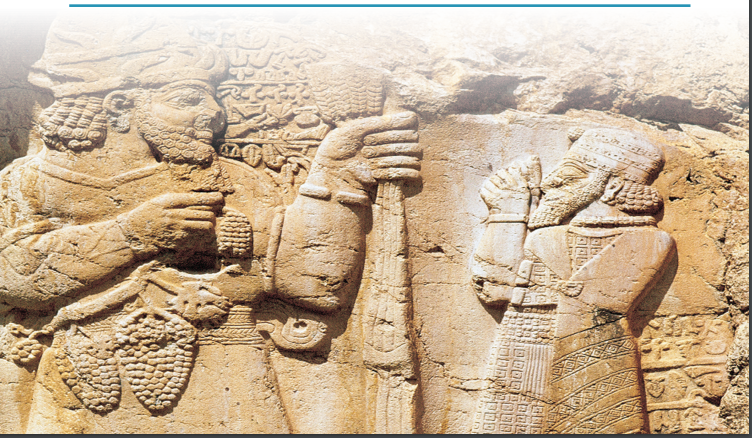
Seçenekler
A
Bor
B
Çatak
C
Muradiye
D
Ivriz
E
Arslantaş
Açıklama:
One of the most important works of art of the Late Hittite City States is the stele of Ivriz, created in 730 BCE. Here, Varpalavas, the King of Tuvana, is shown praying in front of Tarkhu, the sky god of the Hittites, on the work measuring 4.30 m. The fact that the sky god holds in his hand a Virgo and grapes symbolizes abundance. The correct answer is D.
Soru 62
Which period does Hacılar settlement date back to?
Seçenekler
A
Paleolithic period
B
Mesolithic period
C
Neolithic period
D
Chalcolithic period
E
Early Bronze Age
Açıklama:
One must begin more solid history with the Chalcolithic period (5500 to 3000 BCE). That was a time when people moved from caves to villages and first mined copper. Hacılar is one of the most important centers for the period. Hacılar in the Lakes Region portrays the brightest culture of the Early Chalcolithic Age. Nine settlement layers and three cultural eras were revealed by excavations which have taken place here. Hacılar II was the best-known settlement of the period and it has been fully excavated. The correct answer is D.
Soru 63
Whose writing system has NOT been deciphered yet?
Seçenekler
A
Phrygian
B
Urartian
C
Hittite
D
Lydian
E
Late Hittite City State
Açıklama:
The Phrygian language was developed from the Phoenician alphabet, and it later played an influential role in the Greek alphabet. However, it has not been yet deciphered. Approximately 300 epitaphs written in Phrygian have been found in Anatolia. The word ‘Mater’ in these epitaphs has been decoded; it was used by the Phrygians to refer to their mother goddess, which is none other than Kubaba - the mother goddess of Anatolia. The correct answer is A.
Soru 64
Which animals were found in the Hittite solar discs and statuettes in royal tombs?
Seçenekler
A
Lion and horse
B
Eagle and sheep
C
Bull and deer
D
Turtle and cat
E
Tiger and dog
Açıklama:
The gifts for the dead included a disc peculiar to the Hattis. This is called the “Hittite Solar Disc.” It was produced by a casting and wrought technique and bulls and deer were drawn on it. Furthermore, sculptures of bulls and deer epitomizing the gods were also found in tombs. In the royal tombs of Alacahöyük, Mahmatlar and Horoztepe, deer and bull statuettes -- which were considered sacred -- have been obtained. These statuettes are of the same style as the solar discs in terms of embellishment. The bull represents the god of the sky, whereas the deer represents the mother goddess. The correct answer is C.
Soru 65
What ended the Assyrian Trade Colonies period?
Seçenekler
A
Wars between the Assyrians and Hattians
B
Decrease in the number of caravans reaching the karum
C
People's loss of interest in the goods delivered by Assyrians
D
Conflicts among the leading karum and different karums
E
Unrest of the highly indebted local people and high interest rates
Açıklama:
Assyrian merchants became increasingly rich because of trading and the local officials were content, whereas the ordinary people became increasingly poor and fell short in the ability to pay their debts. Thus, money was obtained by loans at high interest. As a natural outcome of this, the elite was caught in various conflicts, and in the end, many places were reduced to ashes, thus ending the era of the Assyrian Period of trade colonies. The correct answer is E.
Soru 66
Which of the following is not one of the names of the goddess Kybele?
Seçenekler
A
Teshup
B
Magna Mater
C
Hepat
D
Arinna
E
Kubaba
Açıklama:
Magna Mater (or Kybele) was the famous fertility goddess of the Phrygians; she was well known among the ancient Greeks and the Romans, as well. For the Hittites, the greatest male deity was Teshup, who represented the sky, whereas the head of all the goddesses was Hepat. Hepat, who was the solar goddess of Arinna, continued to be worshipped in Anatolia as Kubaba during the Late Hittite period, and as Kybele later. The correct answer is A.
Soru 67
Which one was an Urartian capital city?
Seçenekler
A
Sardes
B
Midas
C
Gordion
D
Tushpa
E
Carhemish
Açıklama:
Urartian tribes were organized by King Sarduri I and subsequently formed the Urartian Kingdom, with its capital city of Tushpa; the city is believed to have served this function from the middle of the ninth century BCE onward. The correct answer is D.
Soru 68
Which Lydian king ordered to forge the first coins?
Seçenekler
A
Lydos
B
Canduales
C
Gyges
D
Croesus
E
Alyattes
Açıklama:
The Lydian King Alyattes started to forge coins. The first coins were made from electrum, an alloy of 55 % gold, 45 % silver and a small amount of bronze.The correct answer is E.
Soru 69
As reported by Herodotus, when did Croesus say “No one is crazy enough to choose war rather than peace. During peace, sons lay the fathers into the grave; whereas during war, the fathers lay the sons in the grave.”
Seçenekler
A
Before he went to the battle in Cappadocia
B
When he became captive to the Persian King Cyrus
C
When he funded the Temple of Artemis
D
When he acquired the throne after Alyattes died
E
When he launched expeditions to Ephesus
Açıklama:
Near Sardis the Lydian and Persian armies engaged in a battle. When the Lydian army lost, Babylonian documents report that Croesus was killed after being held captive, and a picture on a vase depicts Croesus as being burnt on top of wood. Regardless of whether Cyrus killed the Lydian king right away or befriended him, as Herodotus (who lived sixty years after Croesus) reports, these philosophically beautiful words were written by the Greek: “When asked by Cyrus, “Croesus, who advised you to attack my territories and meet me as an enemy not a friend?” Croesus said, “King, this is because of your good and my bad luck. The god of the Greeks is to blame, who gave me the arrogance to attack you. No one is crazy enough to choose war rather than peace. During peace, sons lay the fathers into the grave; whereas during war, the fathers lay the sons in the grave…” These answers appealed to Cyrus and he sat beside him and loosened his ties. The correct answer is B.
Soru 70
Which of the following is true about Puduhepa?
Seçenekler
A
She was the Phrygian mother goddess.
B
She was the wife of King Murshili I.
C
She caused conflicts with the Egyptians.
D
She was a famous Hittite tavananna.
E
She had little interest in political affairs.
Açıklama:
Hattushili III (1275 - 1250 BCE) ascended to the throne with Queen Puduhepa, who became one of the famous women in Hittite history. This couple alluded to divine powers in their acts. They made great use of religion in politics. Puduhepa placed her seal on many official documents either on her own account or together with the king, e.g. on the Treaty of Kadesh. Hattushili also attached importance to royal marriages and he had his elder daughter marry Ramses II of Egypt. Tuthalia IV (1250 - 1220 BCE) succeeded to the throne after his death; he was the son of Hattushili III and Puduhepa. A seal proves that the queen also continued to hold her title as the ruling queen (tavananna) during the reign of her son. This seal imprint is the only example wherein the name of the mother is given along with the name of the king. Diplomatically, there were good relations between the Hittites and the Egyptians. The most important problem of this period was a famine which broke out because of a severe drought. And this problem was solved thanks to the aid of the Egyptians. The correct answer is D.
Soru 71
I. The capital city is Hattusa.
II. The Great Hittite Kingdom started with the reign of Shuppiluliuma I.
III. They signed the Treaty of Kadesh with the Assyrians.
IV. Their legendary kings were Gordios and Midas.
Which of the above is/are true for the Hittite Civilization?
II. The Great Hittite Kingdom started with the reign of Shuppiluliuma I.
III. They signed the Treaty of Kadesh with the Assyrians.
IV. Their legendary kings were Gordios and Midas.
Which of the above is/are true for the Hittite Civilization?
Seçenekler
A
Only I
B
Only III
C
I and II
D
III and IV
E
I-III and IV
Açıklama:
The statements I and II are true for the Hittite Civilization.
Soru 72
I. The Lydian civilization flourished in the eastern part of Anatolia.
II. Gordion was the capital city of the Phrygian Civilization.
III. King Sarduri I formed the Urartian Civilization.
IV. The Edict of Telipinu was an example of public policy formed by the Assyrians.
Which of the above is/are true about the Anatolian Civilizations?
II. Gordion was the capital city of the Phrygian Civilization.
III. King Sarduri I formed the Urartian Civilization.
IV. The Edict of Telipinu was an example of public policy formed by the Assyrians.
Which of the above is/are true about the Anatolian Civilizations?
Seçenekler
A
Only II
B
Only IV
C
I-II and III
D
II and III
E
I and IV
Açıklama:
Statements II and III are true about the Anatolian Civilizations.
Soru 73
Which of the following belongs to the Paleolithic Period?
Seçenekler
A
Karain Cave
B
Gordion
C
Sardes
D
Troia
E
Karum
Açıklama:
Karain Cave is an ancient site that belongs to the Paleolithic Period.
Soru 74
Independent trade colonies in the Assyrian Civilization are called ............
Seçenekler
A
tumulus
B
mater
C
virgo
D
teisheba
E
karum
Açıklama:
Independent trade colonies in the Assyrian Civilization are called karum.
Soru 75
Which of the following is a king of the Hittite Civilization?
Seçenekler
A
Midas
B
Shuppiluliuma
C
Sarduri
D
Sargon
E
Candaules
Açıklama:
Shuppiluliuma is a king of the Hittite Civilization
Soru 76
I. They used Akkadian language in their political correspondence.
II. They used animal-shaped embossed vases, known as Rhyton.
III. They used the cuneiform script.
IV. They formed great tumulus for their kings.
Which of the above is/are true about the Hittite Civilization?
II. They used animal-shaped embossed vases, known as Rhyton.
III. They used the cuneiform script.
IV. They formed great tumulus for their kings.
Which of the above is/are true about the Hittite Civilization?
Seçenekler
A
II, IV
B
I, III, IV
C
III and IV
D
I-II and III
E
II-III and IV
Açıklama:
Statements I, II and III are true about the Hittite Civilization.
Soru 77
I. Main three gods were the chief god Haldi, the sky god Teisheba, and the solar god Sivini.
II.They established their castles and cities on high rocky areas and used the level grounds for agricultural purposes.
III. Sarduri I established the Urartu state, making Tushpa (Van) the capital.
IV. They subjugated all Western Anatolia from the seventh century on.
Which of the above is/are true about the Urartian Civilization?
II.They established their castles and cities on high rocky areas and used the level grounds for agricultural purposes.
III. Sarduri I established the Urartu state, making Tushpa (Van) the capital.
IV. They subjugated all Western Anatolia from the seventh century on.
Which of the above is/are true about the Urartian Civilization?
Seçenekler
A
Only I
B
Only IV
C
I and IV
D
I-II and III
E
III and IV
Açıklama:
Statements I-II and III are true about the Urartian Civilization.
Soru 78
Which of the following is the capital city of the Phrygian Civilization?
Seçenekler
A
Gordion
B
Sardes
C
Tushba
D
Hattusa
E
Kef
Açıklama:
Gordion is the capital city of the Phrygian Civilization
Soru 79
I. Croesus used his profound wealth well and granted aid to the holy places.
II. Its capital city was Gordion.
III. They worshipped Mater as the goddess of abundance and fertility.
IV. Yazılıkaya was an important place for worshipping gods.
Which of the above is/are true about the Lydian Civilization?
II. Its capital city was Gordion.
III. They worshipped Mater as the goddess of abundance and fertility.
IV. Yazılıkaya was an important place for worshipping gods.
Which of the above is/are true about the Lydian Civilization?
Seçenekler
A
Only I
B
Only III
C
II and IV
D
I and III
E
I and IV
Açıklama:
Only statement I is true about the Lydian Civilization.
Soru 80
Which of the following is the famous king of the Phrygian Civilization?
Seçenekler
A
Lydos
B
Gordios
C
Croesus
D
Argishti
E
Tuthalia
Açıklama:
Gordios is the famous king of the Phrygian Civilization.
Soru 81
- When was tools such as needles were made? i.Mesolithic period ii.upper Paleolithic Age
Seçenekler
A
İi
B
İ
C
İii
D
İv
E
İii-iv
Açıklama:
Mesolithic period is the correct answer
Soru 82
Which of the following is the oldest habitation in Anatolia? i. Yarımburgaz cave
ii. Karain cave iii. Beldibi cave
iv.Şarklı cave
ii. Karain cave iii. Beldibi cave
iv.Şarklı cave
Seçenekler
A
İ
B
ii
C
iii-iv
D
i-ii
E
iv
Açıklama:
Yarımburgaz cave is the oldest habitation
Soru 83
Which of the following happened during Mesolithic period? i. New weapons like bows and arrows are made. ii. Grain was sowed. İii. Grain was reaped iv. People obtained their food by hunting
Seçenekler
A
i-ii-iii
B
İ-ii-iv
C
iii-iv
D
i-iii
E
iv
Açıklama:
New weapons like bows and arrows are made.
Soru 84
4. Which of the following statements describe great Hitite period? i. Treaty of kadesh was signed ii. Kadesh was signed between Hitites Urartians iii. They established the first centralised empire in Anatolia. iv. They were mainly settled in eastern Anatolia.
Seçenekler
A
i-iii
B
i-ii
C
İi-iii
D
İi-iv
E
İii-iv
Açıklama:
i. Treaty of kadesh was signed iii. They established the first centralised empire in Anatolia. these are correct however ii. Kadesh was signed between Hitites Urartians iv. They were mainly settled in eastern Anatolia. are incorrect because kadesh was signed between hitites and egyptians and they mainly settled in central anatolia.
Soru 85
5. Where were late Hittite City States settled? i. Southeastern Anatolia ii.Northern Anatolia iii. Western Anatolia iv. Eastern Anatolia
Seçenekler
A
İ
B
İi
C
İii
D
İv
E
İii-iv
Açıklama:
they were settled in Southeastern Anatolia
Soru 86
6. Which of the following describe Urartian civilization? i. They were settled in eastern Anatolia. ii. They built channels for irrigation iii. Their art was based on the metal work iv. They dwelled in caves.
Seçenekler
A
İ-ii-iii
B
İi-iii-iv
C
İ-iii
D
İv
E
İi-iv
Açıklama:
i. They were settled in eastern Anatolia. ii. They built channels for irrigation iii. Their art was based on the metal work
Soru 87
7. Where did Phrygians come from ?
Seçenekler
A
Macedonia
B
Eastern Anatolia
C
Italy
D
Southern Anatolia
E
Central Anatolia
Açıklama:
Macedonia is the correct answer.
Soru 88
8. Which of the following describe Phrygians? i. They settled in western Anatolia. ii.They were involved in political developments in eastern Anatolia. iii. They were skillful in architecture. iv. They were famous for their rugs.
Seçenekler
A
İi-iii-iv
B
İ-ii-iii
C
İ-iii-iv
D
İi-iii
E
İ-iv
Açıklama:
ii.They were involved in political developments in eastern Anatolia. iii. They were skillful in architecture. iv. They were famous for their rugs.
Soru 89
9. When did Lydian civilization appear in western Anatolia?
Seçenekler
A
After the collapse of Phrygians.
B
Before the Phrygians were established.
C
During the period Phrygian civilization continued
D
Before the Urartian civilization.
E
After the end of Hitite city states period.
Açıklama:
they settled there after the collapse of Phrygians.
Soru 90
10. Which of the following describe Lydians? i. Lydians were involved in political developments in the east. ii. They were very good at textiles and ceramics. iii.They became rich because of the natural resources found in their kingdom. iv.They established economic and cultural relations with Greeks. v. They introduced the first coin system.
Seçenekler
A
İ-iii-iv-v
B
İi-iii-iv-v
C
İ-iii-iv
D
İ-ii-iii
E
İv-v
Açıklama:
i. Lydians were involved in political developments in the east. iii.They became rich because of the natural resources found in their kingdom. iv.They established economic and cultural relations with Greeks. v. They introduced the first coin system.
Soru 91
Which of the following is true about the Urartian Civilization?
- They established their castles and cities on high rocky areas.
- The Urartians used cuneiform script.
- They were highly developed in science and technology.
- They were very successful in adapting to the harsh geographical conditions of Eastern Anatolia.
- They had good relationships with Assyrians.
Seçenekler
A
I, II
B
II, III, IV
C
I, II, III
D
I, II,IV
E
II, III, V
Açıklama:
-
Urartians were established in Eastern Anatolia, they were used cuneiform script and were very good at building monumental castle, waterworks and etc.
Urartians were established in Eastern Anatolia, they were used cuneiform script and were very good at building monumental castle, waterworks and etc.
Soru 92
The ___________ Kingdom became rich and powerful thanks to its natural resources, especially the presence of gold in many rivers.
Which of the following best completes the sentence above?
Which of the following best completes the sentence above?
Seçenekler
A
Phrygian
B
Urartian
C
Egypt
D
Hittite
E
Lydian
Açıklama:
-
The __Lydian_________ Kingdom became rich and powerful thanks to its natural resources, especially the presence of gold in many rivers.
The __Lydian_________ Kingdom became rich and powerful thanks to its natural resources, especially the presence of gold in many rivers.
Soru 93
Who commissioned the writing of annals, providing scholars with valuable information about the Hittite civilization?
Seçenekler
A
Shuppiluliuma I
B
Hattushili I
C
Murshili II
D
Tuthalia IV
E
Telipinu
Açıklama:
-
Murshili II commissioned the writing of annals, providing scholars with valuable information about the Hittite civilization.
Murshili II commissioned the writing of annals, providing scholars with valuable information about the Hittite civilization.
Ünite 5
Soru 1
Which period of ancient Greek history labels the period between the death of Alexander and Rome’s conquest of Greece?
Seçenekler
A
The Hellenistic Civilization
B
The Hellenic Civilization
C
Classical Greece
D
Ancient Greece
E
Golden Age of Greece
Açıklama:
The Hellenistic Civilization which labels the period between the death of Alexander and Rome’s conquest of Greece (323 - 146 - 31 BCE).
Soru 2
Which of the following descriptions is NOT TRUE about the concept of democracy in the Hellenic civilization?
Seçenekler
A
It was a radical concept in the world of monarchy.
B
It became a dominant model in the world once it started in ancient Greece.
C
It was the most significant concept from the Hellenic model.
D
It was a non-customary mode of governance.
E
It was the concept that political governance should come from the people rather than being imposed by a leader.
Açıklama:
It was not a dominant world model until the middle of the 20th Century, some 2,500 years later.
Soru 3
What is a “polis” in the Hellenic civilization?
Seçenekler
A
A city-state
B
A person who defends his/her city against raids
C
A non-citizen resident
D
A citizen- soldier
E
A person who works in slave-like conditions
Açıklama:
Many local agricultural villages or poleis (plural.) [polis single] formed the basic sociological, political and military patterns of Greece throughout its earliest history and extended into the Classic Greek Age.
Soru 4
According to the ancient Greek religion, which god was the city of Thrace associated with?
Seçenekler
A
Zeus
B
Hera
C
Athens
D
Apollo
E
Ares
Açıklama:
Some city-states allied themselves with specific gods, erecting temples in their honor, and calling on them for help when their situations became dire. Athens was associated with Athens; Apollo with Delphi; and Ares with Thrace.
Soru 5
According to Greek mythology, which god would raise storms at sea and sink the ships of those who displeased him?
Seçenekler
A
Athena
B
Artemis
C
Poseidon
D
Apollo
E
Zeus
Açıklama:
The mythology provided an explanation for natural phenomena: destructive storms were the result of Zeus’s anger at man’s impieties; Poseidon would raise storms at sea and sink the ships of those who displeased him.
Soru 6
Which of the following statement is TRUE about the role of women in the Hellenic civilization?
Seçenekler
A
They lived better lives than men did.
B
They were able to join in sport activities in Sparta.
C
They took part in fights against the enemies.
D
They were not allowed to handle the necessities of the household.
E
They were taught how to read and write in all cities.
Açıklama:
Apart from Sparta, women were forbidden to participate in communal sports.
Soru 7
What were the shopping areas called in the ancient Greece?
Seçenekler
A
Polis
B
Acropolis
C
Gymnasium
D
Agora
E
Temple
Açıklama:
The shopping centers (agoras) literally meant “gathering place” or “assembly".
Soru 8
Which of the following statement is TRUE about the ancient Greek philosopher, Plato?
Seçenekler
A
He examined almost each topic of the world’s nature and human life.
B
He investigated the natural world, including the composition of animals.
C
He was put to death for allegedly inventing new gods.
D
He claimed that ideas control the life.
E
He escaped from Athens and avoided Socrates’ fate.
Açıklama:
Plato argued that ideas control the life.
Soru 9
What was the proof of the importance of the Olympic games in the ancient Greece?
Seçenekler
A
The city-states stopped all their battles.
B
Merchants traveled to the games to sell food and other items.
C
The Roman emperor Theodosius banned the games.
D
They were part of a religious festival to honor Zeus.
E
They were held in the religious sanctuary of Olympia.
Açıklama:
The Olympics were so important to Greek culture that the city-states stopped all their battles and observed a special truce for a full month before the games started.
Soru 10
Which Greek mathematician developed a theory of numbers, classifying them into various categories?
Seçenekler
A
Thales
B
Euclid
C
Pythagoras
D
Hippocrates
E
Aristotle
Açıklama:
Pythagoras developed a theory of numbers, classifying them into various categories, such as odd, even, prime, composite, perfect and so on.
Soru 11
Which one of the following is not among the notable fields emanating from the Classic Age?
Seçenekler
A
political governance
B
philosophy
C
recorded history
D
agriculture
E
medicine
Açıklama:
The most significant concept from the Hellenic model was the political governance of recognized citizens. Other notable fields emanating from the Classic Age were philosophy (Socrates, Plato and Aristotle), recorded history (Thucydides, Herodotus), theater (Sophocles, Aeschylus, Aristophanes, and Euripides), medicine (Hippocrates), and statecraft (Pericles).
Soru 12
Which one of the following events is accepted as the end date of the Hellenic era?
Seçenekler
A
The death of Alexander the Great
B
Arrival of the Greek in Greece
C
Peloponnesian War
D
Rome’s conquest of Greece
E
The rise of Macedonian Empire
Açıklama:
The accepted end of the Hellenic Era is dated at the death of Alexander the Great in 323 BCE, the Greek empire continued, albeit in a disintegrated state.
Soru 13
I. The religion was polytheistic. II. The gods were mortal. III. Gods shared many of the characteristics of humans. Which of the above is/are among the features of religious beliefs in Hellenic Civilization?
Seçenekler
A
Only I
B
Only II
C
Only III
D
II-III
E
I-III
Açıklama:
The religion of ancient Greece was polytheistic, that is, having many gods and goddesses, who reflected life as it was lived in the land. The gods were immortal, but shared many of the characteristics of humans, including their vices.
Soru 14
Which of the following is wrong regarding the features of civilizing society in Hellenic Civilization?
Seçenekler
A
Only men could be full citizens.
B
Apart from Sparta, women were forbidden to participate in communal sports.
C
Education was the same for boys and girls.
D
Most households had slaves to carry out the menial tasks.
E
Men were the warriors that protected the polis.
Açıklama:
Education was different for boys and girls. Boys were educated to become good citizens and take part in the public life of the city-state, whereas girls were taught housekeeping and how to care for the family.
Soru 15
I. Agricultural trade was of particular importance. II. 80% of the Greek population was employed in farming and animal husbandry. III. Taxes were important revenue streams for citystate government. Which one(s) above reflect(s) the feature(s) of economy in Hellenic Civilization?
Seçenekler
A
I-II-II
B
I-II
C
I-III
D
II-III
E
Only I
Açıklama:
The economy of Hellenic Civilization was defined largely by the region’s dependence on imported goods. Since agriculture was labor-intensive, 80% of
the Greek population was employed in farming and animal husbandry. Taxes were important revenue streams for citystate governments and were levied on houses, slaves, herds and flocks, wines, and hay, among other things.
the Greek population was employed in farming and animal husbandry. Taxes were important revenue streams for citystate governments and were levied on houses, slaves, herds and flocks, wines, and hay, among other things.
Soru 16
Which one of the following refers to the center of the athletic, artistic, spiritual
and political life of the city in Hellenic civilization?
and political life of the city in Hellenic civilization?
Seçenekler
A
Hoplite
B
Agora
C
Phalanx
D
Odyssey
E
Corinthian
Açıklama:
The shopping centers (agoras) literally meant “gathering place” or “assembly”. The agora was the center of the athletic, artistic, spiritual and political life of the city
Soru 17
Which one of the following is not among the famous philosophers in Hellenic Civilization?
Seçenekler
A
Thales
B
Socrates
C
Kant
D
Aristotle
E
Plato
Açıklama:
Immanuel Kant was a German philosopher who was an important figure in modern philosophy.
Soru 18
Which one of the following is probably the most important literary work of the Hellenic Civilization?
Seçenekler
A
City Dionysia
B
Library of Alexandria
C
The Academy
D
Iliad and Odyssey
E
Lyceum
Açıklama:
The greatest literatures of the early Greek period were the Homeric Epics, Iliad and Odyssey.
Soru 19
Which of the following is accepted as the father of medicine whose credo was “Every disease has a natural cause, and without natural causes, nothing ever happens"?
Seçenekler
A
Thales
B
Hippocrates
C
Anaximander
D
Pythagoras
E
Empedocles
Açıklama:
More important was the work of Hippocrates in the 5th and 4th centuries BCE. He is regarded as the Father of Medicine.
Soru 20
Which one of the following refers to the timeline of the classical age of the Hellenic Civilization?
Seçenekler
A
2000-1100 BCE
B
800-500 BCE
C
1100-800 BCE
D
338-31 BCE
E
500-338 BCE
Açıklama:
Classical Age
(500-338 BCE)
• Rise of drama and historical writing
• Persian Wars
• Growth of the Athenian Empire
• Peloponnesian War
• Spartan and Theban hegemonies
• 338 BCE - Conquest of Greece by Philip
of Macedon
• 338 BCE - The fall of Greece
(500-338 BCE)
• Rise of drama and historical writing
• Persian Wars
• Growth of the Athenian Empire
• Peloponnesian War
• Spartan and Theban hegemonies
• 338 BCE - Conquest of Greece by Philip
of Macedon
• 338 BCE - The fall of Greece
Soru 21
Which one of the following places is not included in The Hellenic Civilization of ancient Greece?
Seçenekler
A
The Greek mainland
B
Crete
C
The islands of the Greek archipelago
D
Baltic islands
E
The coast of Asia Minor
Açıklama:
The Hellenic Civilization of ancient Greece consisted of the Greek mainland, Crete, the islands of the Greek archipelago, and the coast of Asia Minor mainly
Soru 22
Which one of the following refers to the main difference between Athens and Sparta?
Seçenekler
A
Governance model
B
Social facilities
C
Trading
D
Economy
E
Military
Açıklama:
There were variations within the poleis, especially as they became formalized as “city-states.” The two notable city-states, in the Classic Period, Athens and Sparta, had significantly different governance models, reflecting their different social mores.
Soru 23
I. There was a hierarchy among the gods
II. There was an almighty leader of all gods
III. The gods had their fields of domain
Which one(s) of the statement(s) above reflect(s) the features of the gods in Hellenic Civilization?
II. There was an almighty leader of all gods
III. The gods had their fields of domain
Which one(s) of the statement(s) above reflect(s) the features of the gods in Hellenic Civilization?
Seçenekler
A
Only I
B
Only II
C
I-II
D
I-III
E
I-II-III
Açıklama:
There was a hierarchy among the gods, but there was no almighty leader, who could control the actions of the rest. The gods had their fields of domain.
Soru 24
Which one of the following mixed breeds in Greek Mythology would turn any human who looked at it into stone?
Seçenekler
A
Satyrs
B
Centaurs
C
Gorgons
D
Tree nymphs
E
Sea nymphs
Açıklama:
Sometimes the mixed breeds were particularly antagonistic towards the human side of their heritage, notably the Gorgons, whose snake-haired visage would turn any human who looked at them into stone!
Soru 25
I. Education was different for boys and girls
II. Education was the same in each polis
III. Military training was highly emphasized
Which one(s) of the statement(s) reflect(s) the features of education in Hellenic civilization?
II. Education was the same in each polis
III. Military training was highly emphasized
Which one(s) of the statement(s) reflect(s) the features of education in Hellenic civilization?
Seçenekler
A
Only I
B
Only II
C
I-II
D
I-III
E
II-III
Açıklama:
Education differed for boys and girls. The education of Greek children differed in each polis and Military training was highly emphasized
Soru 26
Which one of the following is not included in Aristotle's categorization of Greek governments?
Seçenekler
A
Monarchies
B
Aristocracies
C
Oligarchies
D
Tyrannies
E
democracies
Açıklama:
The Greek philosopher Aristotle divided Greek governments into monarchies, oligarchies, tyrannies and democracies, and most historians still use these categories
Soru 27
Which one of the following terms refers to the able bodied men of the polis who provided the manpower for militia force?
Seçenekler
A
Agoras
B
Gordons
C
Spartans
D
Hoplites
E
Phalanx
Açıklama:
The city-states had no standing armies but relied the citizenry to provide the manpower for what was a militia force. These citizen-soldiers, or Hoplites, (the word derived from hoplon for shield, or item of armor) were the able bodied men of the polis, whose “day jobs” were as farmers and artisans.
Soru 28
I. Ancient Greece
II. The Roman Empire
III. Christianity
Which one(s) of these factors above is said to have remarkably influenced the formation of traditional Western Culture?
II. The Roman Empire
III. Christianity
Which one(s) of these factors above is said to have remarkably influenced the formation of traditional Western Culture?
Seçenekler
A
Only I
B
I-II
C
I-III
D
II-III
E
I-II-III
Açıklama:
Traditional Western Culture is said to have been created by three main historical factors: ancient Greece, the Roman Empire, and Christianity.
Soru 29
Which one of the following terms refers to the set of stories about the gods, goddesses, heroes, and rituals of Ancient Greeks?
Seçenekler
A
Philosophy
B
Mythology
C
Odyssey
D
Corinthian
E
Polis
Açıklama:
Greek Mythology is the set of stories about the gods, goddesses, heroes, and rituals of Ancient Greeks.
Soru 30
Which one of the following refers to the term that is used to describe a tight-knit, small community of ancient Greek citizens who agreed on certain rules and customs?
Seçenekler
A
Doric
B
Ionic
C
Polis
D
Agora
E
Phalanx
Açıklama:
Polis is a term that is used to describe a tight-knit, small community of ancient Greek citizens who agreed on certain rules and customs.
Soru 31
When did the Hellenistic period end?
Seçenekler
A
When Alexander the Great died.
B
When Hellens conquered the world.
C
When Rome conquered Hellens
D
When Hellens accepted democracy
E
When Greece was conquered by the Ottoman Empire
Açıklama:
The Hellenic Civilization is a term which refers to that period of ancient Greek history between 507 BCE (the date of the first democracy in Athens) and 323 BCE (the death of Alexander the Great). This period is also defined as the age of Classical Greece and should not be confused with the Hellenistic Civilization which labels the period between the death of Alexander and Rome’s conquest of Greece (323 - 146 - 31 BCE).
Soru 32
What was the greatest achievement of Hellens?
Seçenekler
A
Astronomy
B
Philosophy
C
Mathematics
D
Art
E
Architecture
Açıklama:
“The Hellenes profited greatly from the knowledge and achievement of other countries about astronomy, chronology, and mathematics (but it was through their own native abilities that they made their greatest achievements) in becoming the founders of European philosophy and science.”
Soru 33
Which of the following names is well-known for recorded history in “classic age of Greece”?
Seçenekler
A
Plato
B
Sophodes
C
Herodotus
D
Aristophanes
E
Hippocrates
Açıklama:
Other notable fields emanating from the Classic Age were philosophy (Socrates, Plato and Aristotle), recorded history (Thucydides, Herodotus), theater (Sophocles, Aeschylus, Aristophanes, and Euripides), medicine (Hippocrates), and statecraft (Pericles).
Soru 34
Which one of the following was the major merchandise used for trade in ancient Greece ?
Seçenekler
A
Wheat
B
Grapes
C
Cereal
D
Wine
E
Bread
Açıklama:
The mountainous topography in most of the peninsula did not lend itself to growing grains for bread, making wheat a major import. Grapes and olives, however, flourished on the slopes of the mountains, therefore wine and olive oil were plentiful and available for trade.
Soru 35
What does polytheistic mean?
Seçenekler
A
Having more than one wife
B
Having more than one job
C
Having more than one slave
D
Having more than one husband
E
Having more than one god and goddess
Açıklama:
The religion of ancient Greece was polytheistic, that is, having many gods and goddesses, who reflected life as it was lived in the land.
Soru 36
What is Half-man Half-horse creature in Greek Mythology called?
Seçenekler
A
Centaur
B
Satyr
C
Nymph
D
Hubris
E
Propylon
Açıklama:
There were lesser creatures with shared attributes such as half man- half goat (satyrs), half-man half-horse (centaurs), tree nymphs and sea nymphs who often caused more disruption than fun.
Soru 37
At what age did the education for boys start and end in Ancient Greece?
Seçenekler
A
6-16
B
7-14
C
7-18
D
6-14
E
7-12
Açıklama:
The boys started school at the age of 7 and stayed until they were about 14.
Soru 38
What was the other name for the citizen-soldiers?
Seçenekler
A
Agoras
B
Nymphs
C
Hoplites
D
Temenos
E
Propylon
Açıklama:
The city-states had no standing armies but relied the citizenry to provide the manpower for what was a militia force. These citizen-soldiers, or Hoplites, (the word derived from hoplon for shield, or item of armor) were the able bodied men of the polis, whose “day jobs” were as farmers and artisans.
Soru 39
What does the term "Phalanx" stand for?
Seçenekler
A
A Greek God
B
A gathering place
C
A name given to money
D
A battle formation
E
A name for unmarried women
Açıklama:
The battle formation was the Phalanx or massed infantry formation where each Hoplite held his shield on his left arm, protecting the right side of his comrade on his left at the risk of his own possible injury, relying on the Hoplite to his left to protect his right side.
Soru 40
When did the first Olympic games take place?
Seçenekler
A
In 772 BCE
B
In 773 BCE
C
In 774 BCE
D
In 775 BCE
E
In 776 BCE
Açıklama:
In 776 B.C.E, about 3000 years ago, the first Olympic Games took place.
Soru 41
When did the Hellenistic period begin?
Seçenekler
A
When Alexander the Great died.
B
When Hellens conquered the world.
C
When Rome conquered Hellens
D
When Hellens accepted democracy
E
When Greece was conquered by the Ottoman Empire
Açıklama:
The Hellenic Civilization is a term which refers to that period of ancient Greek history between 507 BCE (the date of the first democracy in Athens) and 323 BCE (the death of Alexander the Great). This period is also defined as the age of Classical Greece and should not be confused with the Hellenistic Civilization which labels the period between the death of Alexander and Rome’s conquest of Greece (323 - 146 - 31 BCE).
Soru 42
What was the greatest achievement of Hellens?
Seçenekler
A
Astronomy
B
Philosophy
C
Mathematics
D
Art
E
Architecture
Açıklama:
“The Hellenes profited greatly from the knowledge and achievement of other countries about astronomy, chronology, and mathematics (but it was through their own native abilities that they made their greatest achievements) in becoming the founders of European philosophy and science.”
Soru 43
Which of the following names "recorded history" in “classic age of Greece”?
Seçenekler
A
Plato
B
Sophodes
C
Herodotus
D
Aristophanes
E
Hippocrates
Açıklama:
Other notable fields emanating from the Classic Age were philosophy (Socrates, Plato and Aristotle), recorded history (Thucydides, Herodotus), theater (Sophocles, Aeschylus, Aristophanes, and Euripides), medicine (Hippocrates), and statecraft (Pericles).
Soru 44
Which one of the following was the major merchandise ancient Greece used for trade?
Seçenekler
A
Wheat
B
Grapes
C
Olive
D
Wine
E
Bread
Açıklama:
The mountainous topography in most of the peninsula did not lend itself to growing grains for bread, making wheat a major import. Grapes and olives, however, flourished on the slopes of the mountains, therefore wine and olive oil were plentiful and available for trade.
Soru 45
What does polytheistic mean?
Seçenekler
A
Having more than one wife
B
Having more than one job
C
Having more than one slave
D
Having more than one husband
E
Having more than one god and goddess
Açıklama:
The religion of ancient Greece was polytheistic, that is, having many gods and goddesses, who reflected life as it was lived in the land.
Soru 46
What is half-man half-horse creature in Greek Mythology called?
Seçenekler
A
Centaur
B
Satyr
C
Nymph
D
Hubris
E
Propylon
Açıklama:
There were lesser creatures with shared attributes such as half man- half goat (satyrs), half-man half-horse (centaurs), tree nymphs and sea nymphs who often caused more disruption than fun.
Soru 47
At what age the education for boys started and ended in Ancient Greece?
Seçenekler
A
6-16
B
7-14
C
7-18
D
6-14
E
7-12
Açıklama:
The boys started school at the age of 7 and stayed until they were about 14.
Soru 48
What was the other name for the citizen-soldiers ?
Seçenekler
A
Agoras
B
Nymphs
C
Hoplites
D
Temenos
E
Propylon
Açıklama:
The city-states had no standing armies but relied the citizenry to provide the manpower for what was a militia force. These citizen-soldiers, or Hoplites, (the word derived from hoplon for shield, or item of armor) were the able bodied men of the polis, whose “day jobs” were as farmers and artisans.
Soru 49
Phalanx was the name for......................
Seçenekler
A
a Greek God
B
a gathering place
C
a name given to money
D
a battle formation
E
a name for unmarried women
Açıklama:
The battle formation was the Phalanx or massed infantry formation where each Hoplite held his shield on his left arm, protecting the right side of his comrade on his left at the risk of his own possible injury, relying on the Hoplite to his left to protect his right side.
Soru 50
When did the first Olympic games take place?
Seçenekler
A
In 772 BCE
B
In 773 BCE
C
In 774 BCE
D
In 775 BCE
E
In 776 BCE
Açıklama:
In 776 B.C.E, about 3000 years ago, the first Olympic Games took place.
Soru 51
What is the difference between Hellenic Civilization and Hellenistic Civilization?
Seçenekler
A
their period
B
their utterance inside and abroad
C
their religion
D
their locations
E
one's ending and the other's beginning
Açıklama:
The Hellenic Civilization is a term which refers to that period of ancient Greek history between 507 BCE (the date of the first democracy in Athens) and
323 BCE (the death of Alexander the Great). This period is also defined as the age of Classical Greece and should not be confused with the Hellenistic Civilization which labels the period between the death of Alexander and Rome’s conquest of Greece (323 - 146 - 31 BCE).
The correct answer is A.
323 BCE (the death of Alexander the Great). This period is also defined as the age of Classical Greece and should not be confused with the Hellenistic Civilization which labels the period between the death of Alexander and Rome’s conquest of Greece (323 - 146 - 31 BCE).
The correct answer is A.
Soru 52
What is the most significant concept inherited from Hellenic Civilization to modern Europe?
Seçenekler
A
philosophy
B
the political governance
C
the military patterns
D
the agricultural villages
E
the sociological patterns
Açıklama:
The most significant concept from the Hellenic model was the political governance of recognized citizens participating in a limited democracy in the face of the prevalent governing model of a powerful monarchy with the support of the national religion, ruling its subjects from above.
The correct answer is B.
The correct answer is B.
Soru 53
There were eminents from Hellenic civilization in various fields. Which of the following is not one of them?
Seçenekler
A
Socrates
B
Plato
C
Thucydides
D
Augustus
E
Hippocrates
Açıklama:
Other notable fields emanating from the Classic Age were philosophy (Socrates, Plato and Aristotle), recorded history (Thucydides, Herodotus), theater (Sophocles, Aeschylus, Aristophanes, and Euripides), medicine (Hippocrates), and statecraft (Pericles).
Being from Roman civilization Augustus is not one of these people.
The correct answer is D.
Being from Roman civilization Augustus is not one of these people.
The correct answer is D.
Soru 54
Which event mainly led Hellenistic civilization to the Dark Age of Greece?
Seçenekler
A
external invasion of Dorians
B
the political structure of the polies
C
the new age of metallurgy
D
colonization
E
the character of the land
Açıklama:
A catastrophic decline, caused by external invasion or internal strife. What has been described as the “Dark Age of Greece “descended on the peninsula, during which time it was invaded by indigenous peoples from the north, the Dorians. The influx of Dorians set off a wave of emigration of the local peoples. The correct answer is A.
Soru 55
The following are related to the Gods in the Ancient Greek and their domains. Which one of them is not correct?
Seçenekler
A
Zeus-The lord of the sky
B
Poseidon-Storms at sea
C
Athena-Battle
D
Artemis-Hunting
E
Hera-Politics
Açıklama:
Zeus was recognized as king, and his wife, Hera, as queen. Her field was marriage. The correct answer is E.
Soru 56
What field dominated the education of Greek children in Sparta?
Seçenekler
A
philosophy
B
reading and writing
C
military
D
poems
E
voting
Açıklama:
The education of Greek children differed in
each polis. In Sparta, boys from the age of 7 were taken from their families to live a communal life in a military school barracks. Weapons training dominated their days, and their recreation was learning poems and songs that glorified battle and sacrifice. Reading and writing was unimportant. Boys learned to be good fighters. In Athens, citizens had to be educated to take part in voting in the Assembly.
The correct answer is C.
each polis. In Sparta, boys from the age of 7 were taken from their families to live a communal life in a military school barracks. Weapons training dominated their days, and their recreation was learning poems and songs that glorified battle and sacrifice. Reading and writing was unimportant. Boys learned to be good fighters. In Athens, citizens had to be educated to take part in voting in the Assembly.
The correct answer is C.
Soru 57
The education of Greek children differed in each polis. In Athens, which field of study was not included in education?
Seçenekler
A
marriage
B
fitness
C
military training
D
wrestling
E
javelin
Açıklama:
The education of Athenian boys included fitness classes emphasizing sports that had embedded military training, e.g. javelin, shot put, discus and wrestling, for the army which was composed of citizen-soldiers, (Hoplites). The correct answer is A.
Soru 58
The growth of trade in ancient Greece led to the development of financial techniques. What was the most significant one?
Seçenekler
A
interest
B
merchandise
C
harvesting
D
taxes
E
slavery
Açıklama:
Most merchants, lacking sufficient cash assets, resorted to borrowing to finance all or part of their expeditions. A typical loan for a large venture in 4th century BCE Athens, was generally a large sum of cash (usually less than 2,000 drachmas), lent for a short time (the length of the voyage, a matter of several weeks or months), at a high rate of interest (often 12% but reaching levels as high as 100%).
The correct answer is A.
The correct answer is A.
Soru 59
Which of the following describes long poems characterized with a culturally important serious topic and without any rhyme ?
Seçenekler
A
drama
B
Homeric epics
C
Epic poems
D
infantry formation
E
obelisks
Açıklama:
Epic poems are long poems, which do not rhyme, and describe a serious topic, which is culturally important. Homeric Epics described the great deeds of the warriors of Greece, who led the war against Troy. The correct answer is C.
Soru 60
Which one was the preferred means of transportation in ancient Greece?
Seçenekler
A
wagons
B
carriages
C
carts
D
chariots
E
boat
Açıklama:
Traveling via sea was not as complicated as land travel in ancient Greece, and it was actually the preferred mode of transportation whenever possible. The ancient Greeks were highly skilled both in navigation and shipbuilding, and actively colonized and traded across the Mediterranean. Greece’s geography was optimal for boat travel, encircled by the Mediterranean and the Aegean seas, and with population centers concentrated near its coastlines and on its array of islands. The correct answer is E.
Soru 61
Which of the followings were almost always included in a typical meal in ancient Greece?
I.Wine
II.Bread
III.Olive Oil
I.Wine
II.Bread
III.Olive Oil
Seçenekler
A
II and III
B
I and III
C
I, II and III
D
I and II
E
Only III
Açıklama:
A typical meal in ancient Greece almost always included bread, wine and olive oil.
Soru 62
Which of these events marks the end of the Hellenic Civilization and the beginning of the Hellenistic Civilization?
Seçenekler
A
Greek migrations within the Agean Sea
B
The death of Alexander the Great
C
The rise of Sparta
D
Persian Wars
E
Peloponnesian War
Açıklama:
The Hellenic Civilization is a term which refers to that period of ancient Greek history between 507 BCE (the date of the first democracy in Athens) and 323 BCE (the death of Alexander the Great). This period is also defined as the age of Classical Greece and should not be confused with the Hellenistic Civilization which labels the period between the death of Alexander and Rome’s conquest of Greece (323 - 146 - 31 BCE). The correct answer is B.
Soru 63
Which of the following is the most significant concept from the Hellenic model?
Seçenekler
A
Democracy
B
Philosophy
C
Mathematics
D
Theater
E
Medicine
Açıklama:
The most significant concept from the Hellenic model was the political governance of recognized citizens participating in a limited democracy in the face of the prevalent governing model of a powerful monarchy with the support of the national religion, ruling its subjects from above. The correct answer is A.
Soru 64
Who invaded the Greek peninsula during the period of “Dark Age of Greece”?
Seçenekler
A
Mycenaean
B
Spartans
C
Dorians
D
Helots
E
Romans
Açıklama:
Mycenaean, in the southern part of the peninsula, flourished from about 1900 BCE to about 1200 BCE. It was a monarchy that occupied the central area of Greece. For reasons that are unclear, it had a catastrophic decline, caused by external invasion or internal strife. What has been described as the “Dark Age of Greece “descended on the peninsula, during which time it was invaded by indigenous peoples from the north, the Dorians. The influx of Dorians set off a wave of emigration of the local peoples to the east, towards the settlements founded on the Aegean Islands, and some venturing further east to the western shores of Asia Minor. The correct answer is C.
Soru 65
Which of the following offspring of god and human parents had half goat-half man attributes?
Seçenekler
A
Tree nymphs
B
Centaurs
C
Satyrs
D
Sea nymphs
E
Gorgons
Açıklama:
As a result of the progeny of divine and human parentage, there were lesser creatures with shared attributes such as half man- half goat (satyrs), half-man half-horse (centaurs), tree nymphs and sea nymphs who often caused more disruption than fun. Sometimes the mixed breeds were particularly antagonistic towards the human side of their heritage, notably the Gorgons, whose snake-haired visage would turn any human who looked at them into stone. The correct answer is C.
Soru 66
For which god or goddess was the Parthenon Temple built?
Seçenekler
A
Posiedon
B
Zeus
C
Hera
D
Apollo
E
Athena
Açıklama:
At the beginning, sacred sites were just modest altars in designated areas, but over time massive temples were built to honor a particular god. These usually housed a cult statue of the deity, two of the most famous were that of Athena in the Parthenon of Athens and Zeus at Olympia. The correct answer is E.
Soru 67
Which famous Greek personality asked his students leading questions to show that people hold many contradictory opinions, and his question-answer approach to teaching became known by his name?
Seçenekler
A
Aristotle
B
Plato
C
Homer
D
Socrates
E
Thales
Açıklama:
Socrates encouraged his students to examine their beliefs. He asked them a series of leading questions to show that people hold many contradictory opinions. This question-answer approach to teaching is known as the Socratic method. The correct answer is D.
Soru 68
Who ended the Ancient Olympic Games in 393 CE after they were held over a thousand years?
Seçenekler
A
Theodosius
B
Zeus
C
Alexander the Great
D
Tyrants
E
Philip of Macedon
Açıklama:
The Ancient Olympic Games were held for over a thousand years and ended in 393 CE when the Roman emperor Theodosius banned them. He had outlawed the worship of the ancient gods because of new beliefs in Christianity. The buildings were eventually torn down and the city was buried under earthquakes and floods. The correct answer is A.
Soru 69
Which of the following Greek architectural order does the column in the picture belong to?
Seçenekler
A
Doric
B
Corinthian
C
Lydian
D
Ionic
E
Mycenaean
Açıklama:
The Corinthian order is a lot like the Ionic order, but the capitals are even more elaborately decorated, usually with leaves and floral pattern. The correct answer is B.
Soru 70
“The city had a point, usually elevated, which in early period was a place of refuge. On it, stood the temples, altar, public monuments, and various dedications to the gods.” Which part of a city is being decribed?
Seçenekler
A
Polis
B
Agora
C
Phalanx
D
Acropolis
E
Hoplite
Açıklama:
The city had a point, usually elevated called the “acropolis,” and a public square or marketplace (agora). On the acropolis, which in early period was a place of refuge, stood the temples, altar, public monuments, and various dedications to the gods of the polis. The correct answer is D.
Soru 71
Since mythology provided an explanation for natural phenomena, how was a victory won in a battle explained?
Seçenekler
A
Athena’s pleasure
B
Poseidon’s revenge
C
Artemis’s guidance
D
Hera’s jealousy
E
Zeus’s anger
Açıklama:
The mythology provided an explanation for natural phenomena: destructive storms were the result of Zeus’s anger at man’s impieties; Poseidon would raise storms at sea and sink the ships of those who displeased him. In the same manner, victory in battle was evidence of Athena’s pleasure, and a successful hunt was the result of Artemis guiding the hunter’s hand. With the earthly domains of the gods and goddesses being a part of human existence, even skeptical persons would hedge their bets through a ritual observance to ensure success. The correct answer is A.
Soru 72
Which of the following is not one of the Major city-states in the Hellenic Civilization?
Seçenekler
A
Delphi
B
Sardines
C
Ithaca
D
Argos
E
Sparta
Açıklama:
Sardines is not one of the Major city-states in the Hellenic Civilization.
Soru 73
I. Big towns have gymnasiums for training for the Olympics.
II. Temples and town council buildings are among the architectural features.
III. Every Greek town has an open-air theatre.
IV. People make their living from farming and mining.
Which of the following define(s) characteristics of the ancient Greek world?
II. Temples and town council buildings are among the architectural features.
III. Every Greek town has an open-air theatre.
IV. People make their living from farming and mining.
Which of the following define(s) characteristics of the ancient Greek world?
Seçenekler
A
Only I
B
Only IV
C
II and III
D
I and IV
E
I-II and III
Açıklama:
Statements I-II and III define characteristics of the ancient Greek world.
Soru 74
The Hellenic Civilization is also known as the ...........................
Seçenekler
A
Era of Achievement
B
Great Civilizations Era
C
Classic Age of Greece
D
Golden Age of the World
E
Ancient Historical Era of Europe
Açıklama:
The Hellenic Civilization is also known as the Classic Age of Greece.
Soru 75
Which of the following defines the religion of ancient Greece?
Seçenekler
A
Polytheistic
B
Monotheistic
C
Deistic
D
Atheistic
E
Proteistic
Açıklama:
the religion of ancient Greece is polytheistic.
Soru 76
I. It provided an explanation for natural phenomena such as destructive storms.
II. It was based on monotheic religious beliefs.
III. Actions of gods and goddesses constituted the underlying tenet of daily life.
III. It adopted myths from Roman Civilization.
Which of the above is/are true about Greek mythology to define the religion of the Hellenic Civilization?
II. It was based on monotheic religious beliefs.
III. Actions of gods and goddesses constituted the underlying tenet of daily life.
III. It adopted myths from Roman Civilization.
Which of the above is/are true about Greek mythology to define the religion of the Hellenic Civilization?
Seçenekler
A
Only II
B
I and III
C
II and IV
D
III and IV
E
Only IV
Açıklama:
Statements I and III are true about Greek mythology to define the religion of the Hellenic Civilization
Soru 77
I. Girls were mainly trained in law.
II. Boys started school at the age of 7.
III. Boys from wealthy families had a chance to get education on philosophy.
IV. Both boys and girls were trained in various sports.
Which of the above is/are true for education in the Hellenic Civilization?
II. Boys started school at the age of 7.
III. Boys from wealthy families had a chance to get education on philosophy.
IV. Both boys and girls were trained in various sports.
Which of the above is/are true for education in the Hellenic Civilization?
Seçenekler
A
Only I
B
Only II
C
II and III
D
I and IV
E
I-II-III and IV
Açıklama:
Statements II and III are true about education in the Hellenic Civilization.
Soru 78
I. The majority of the population was employed in fine arts.
II. Deposits of metal ore were common in Greece.
III. The economy largely depended on imported goods.
IV. Trade craftsmanship was one of the important aspects of Greek economy.
Which of the above is/are true about the economy of the Hellenic Civilization?
II. Deposits of metal ore were common in Greece.
III. The economy largely depended on imported goods.
IV. Trade craftsmanship was one of the important aspects of Greek economy.
Which of the above is/are true about the economy of the Hellenic Civilization?
Seçenekler
A
Only I
B
Only III
C
I and IV
D
II-III and IV
E
I-II and III
Açıklama:
Statements II-III and IV are true about the economy of the Hellenic Civilization
Soru 79
Which of the following is the gathering place which was the center of the artistic, spiritual and political life of the city in ancient Greece?
Seçenekler
A
Agora
B
Polis
C
Hoplite
D
Gymnasium
E
City Council
Açıklama:
Agora is the gathering place which was the center of the artistic, spiritual and political life of the city in ancient Greece
Soru 80
I. The Greeks were essentially materialist who regarded the world in physical terms.
II. Theatre, music, and dancing were important aspects of Greek culture.
III. Homeric Epics were among the great literary productions in ancient Greece.
IV. Ancient Greek philosophy provided the roots for the Western intellectual tradition.
Which of the above is/are true about the culture of the Hellenic Civilization?
II. Theatre, music, and dancing were important aspects of Greek culture.
III. Homeric Epics were among the great literary productions in ancient Greece.
IV. Ancient Greek philosophy provided the roots for the Western intellectual tradition.
Which of the above is/are true about the culture of the Hellenic Civilization?
Seçenekler
A
Only I
B
Only III
C
I and IV
D
II and III
E
I-II-III and IV
Açıklama:
Statements I-II-III and Iv are true about the culture of the Hellenic Civilization.
Soru 81
Who was the first of the Greeks who was interested in biology and developed a theory of organic evolution?
Seçenekler
A
Aristotle
B
Platon
C
Euclid
D
Anaximander
E
Platon
Açıklama:
Anaximander was the first of the Greeks who was interested in biology and developed a theory of organic evolution.
Soru 82
- What was the most significant aspect of Hellenic model?
Seçenekler
A
a. Political governance of recognized citizens
B
b. Keeping Citizens away from governmental issues.
C
c. Governing model of monarchy
D
d. Support of national religion
E
e. political governance of people from any rank and status.
Açıklama:
yanıt 'Political governance of recognized citizens' dır. Yani üst katmandan belli kişilerin idari işlere katılımına izin verilmektedir.
Soru 83
2. Which of the following are among the notable fields of Classical Greek age?
i.Philosophy ii. Medicine iii. recorded history iv. theater
i.Philosophy ii. Medicine iii. recorded history iv. theater
Seçenekler
A
a. i-ii-iii-iv
B
b. i-ii-iii
C
c. ii-iii-iv
D
d. ii-iv
E
e. iii-iv
Açıklama:
All of the areas given were among the fields in classical age. Bütün verilenler doğru.
Soru 84
3. Which of the following explain New Greek age? i.Bronze was replaced with iron ii. Invasion by indigenous people from North iii. catastrophic decline started in this age
Seçenekler
A
a. i
B
b. ii
C
c. iii
D
d. ii-iii
E
e. i-ii
Açıklama:
bronze was replaced by iron
Soru 85
4. Which of the following explain religion of Hellenic civilization?
i.The religion was polytheistic
ii.The religion was monotheistic
iii.The gods were immortal
iv.The gods shared many characteristics of humans
v.Since the gods shared human characteristics they were considered mortal
i.The religion was polytheistic
ii.The religion was monotheistic
iii.The gods were immortal
iv.The gods shared many characteristics of humans
v.Since the gods shared human characteristics they were considered mortal
Seçenekler
A
a. İ-iii-iv
B
b. iv-v
C
c.i-iv-v
D
d.i-iii
E
e. ii
Açıklama:
The religion was polytheistic (there were many gods) , The gods were immortal
yet The gods shared many characteristics of humans.
yet The gods shared many characteristics of humans.
Soru 86
5. Which of the following statements are true for religous acts in hellenic period?
i. Priest orchestrated the rituals
ii. Women and men attended all religious rituals together
iii. Women and men always attended most religious rituals together
iv. Individuals could visit a temple at any time they wanted
i. Priest orchestrated the rituals
ii. Women and men attended all religious rituals together
iii. Women and men always attended most religious rituals together
iv. Individuals could visit a temple at any time they wanted
Seçenekler
A
a. İ-iii-iv
B
b. ii-iii-iv
C
c. iii-iv
D
d. i-iv
E
e. ii-iv
Açıklama:
Priest orchestrated the rituals, Women and men always attended most religious rituals together, Individuals could visit a temple at any time they wanted.
Soru 87
6. What was the status of men and women in Hellenic civilization?
Seçenekler
A
a.Men lived better life than women did.
B
b. Women were allowed to participate in communal sports
C
c. Women were taught reading and writing.
D
d. Women were taught how to protect themselves.
E
e. Both men and women were considered to be full citizens.
Açıklama:
men had better life than the women did is the correct answer. Only men were accepted as full citizens. the other opportunities eg. reading writing, were given to Spartan women.
Soru 88
7. Which of the following explain ‘agora’?
i. center of the athletic life of the city
ii. center of artistic, spiritual life of the city.
iii. Center of political life of the city.
iv. It is a gathering place
i. center of the athletic life of the city
ii. center of artistic, spiritual life of the city.
iii. Center of political life of the city.
iv. It is a gathering place
Seçenekler
A
a. i-ii-iii-iv
B
b. ii-iii-iv
C
c. i-ii
D
d. ii-iii
E
e. iii-iv
Açıklama:
yanıt hepsini kapsamaktadır. Agora is a i.center of the athletic life of the city ii.center of artistic, spiritual life of the city.
iii. Center of political life of the city.
iv. It is a gathering place
iii. Center of political life of the city.
iv. It is a gathering place
Soru 89
8. Match the main themes on the right with the Greek philosophers on the left.
i.Aristotle x.topics on political thoughts, ethics,epistemology
ii.socrates y.treatises on each topic of nature and human life
iii.plato z. İnquiry into ethical matters and search for truth
i.Aristotle x.topics on political thoughts, ethics,epistemology
ii.socrates y.treatises on each topic of nature and human life
iii.plato z. İnquiry into ethical matters and search for truth
Seçenekler
A
a. i-y; ii-z; iii-x
B
b. i-z; ii-y; iii-x
C
c. i-y; ii-x; iii-z
D
d. i-x; ii-z; iii-y
E
e. i-z; ii-x; iii-y
Açıklama:
yanıt- i-y; ii-z; iii-x
Soru 90
9. Which part of the house was usually taken by women in ancient Greece?
Seçenekler
A
They had the back and upstairs part.
B
They had the part around courtyard.
C
They had the part on the ground floor.
D
They had front part of the house.
E
They had the front part close to the kitchen.
Açıklama:
They had the back and upstairs part of the house.
Soru 91
10. Which of the following comes after Hellenistic period?
Seçenekler
A
The Roman Period
B
The Classical Period
C
The Byzantine Period
D
The Archaic Period
E
The Dark Age
Açıklama:
The Roman Period is the correct answer.
Soru 92
Which of the following is not one of the best-known works of Greek architecture?
Seçenekler
A
Amphitheaters
B
Stadiums
C
Temples
D
Castles
E
Town council buildings
Açıklama:
-
The Greek architecture is best known for its temples, amphitheaters, town council buildings, town squares and stadiums.
The Greek architecture is best known for its temples, amphitheaters, town council buildings, town squares and stadiums.
Ünite 6
Soru 1
Roman Empire divided in two as Eastern and Western Roman Empire. Western Roman Empired fell in 476 CE. About how long did the Eastern Roman Empire last?
Seçenekler
A
200 years
B
500 years
C
700 years
D
900 years
E
1000 years
Açıklama:
Eastern Rome came into being in 395 CE and stood till 1453, when Turks conquered Istanbul. Eastern Roman Empire stood for 1008 years.
Soru 2
After defeating which of the below did Rome add Spain and Northern Africa to its lands?
Seçenekler
A
France
B
Carthaginians
C
Babylonians
D
Greece
E
Macedonians
Açıklama:
Rome defeated Carthage and added Spain and Northern Africa to its lands. The defeat of the old enemy Carthage brought Spain and northern Africa under Roman control.
Soru 3
The Roman Empire is remembered for its different religion stages. During which Emperor's reing did Christianity become the official religion of the Roman Empire?
Seçenekler
A
Constantine
B
Julius Caesar
C
Augustus
D
Marcus Antonius
E
Flavius Theodosius
Açıklama:
In 380 CE, Christianity became the sole authorized official religion of Rome and its empire. Roughly a decade after that, in 391 CE, Emperor eodosius forbade the practice of all religions except Christianity.
Soru 4
Looking at the remains from the Roman Era, we can see S.P.Q.R written on some of them. What does S.P.Q.R stand for?
Seçenekler
A
Long Live Rome
B
Rome is An Empire
C
God is With Rome
D
The Roman Senate and People
E
Long Live Caesar
Açıklama:
The importance of the Senate for Roman history cannot be emphasized enough; look around Roman monuments that still survive and one will see stamped on them SPQR - Senatus Populusque Romanus (the Roman Senate and People).
Soru 5
In the Roman Empire, people were divided into two as Patricians(leadership class) and Plebeians(non-aristoratic folk). How much of the population made up the non-aristocratic class in the early years of Roman Empire?
Seçenekler
A
90
B
80
C
70
D
60
E
50
Açıklama:
Who were the people of Rome, in addition to the leadership class of patricians? In the early years, roughly 80 % of the citizens were not patricians but rather plebeians, the lower classes.
Soru 6
Which nation did Romans fight in the Punic Wars?
Seçenekler
A
The Ottomans
B
The Persian
C
The Carthagians
D
The Spanish
E
The Greeks
Açıklama:
The Punic Wars together amounted to a long-lasting con ict between Rome and Carthage, a powerful rival city- state and society to the south, founded originally by the Phoenicians, that arose in what is now Tunisia, on the southern coast of the Mediterranean.
Soru 7
Who lead the Roman armies that defeated the famous Carthaginian general Hannibal at the battle of Zama in 202 BCE?
Seçenekler
A
Publius Cornelius Scipio
B
Julius Caesar
C
Marcus Antonius
D
Pompei
E
Augustus
Açıklama:
The battle was joined and Hannibal was confronted by a young man later considered to be one of the greatest military geniuses of all time: Publius Cornelius Scipio. e Romans pressed their might under Scipio’s leadership, and they defeated Hannibal at the battle of Zama, not far from his home city of Carthage, in 202 BCE. ere was a brief truce, and negotiations commenced, but they failed.
Soru 8
Which Roman emperor was a Stoic who believed in private virtue and continuous publice service as he famously said "Men must always do their duty"?
Seçenekler
A
Marcus Aurelius
B
Luvcretius
C
Julius Caesar
D
Tiberus Graachus
E
Scipio
Açıklama:
Emperor Marcus Aurelius was a Stoic who believed in private virtue and continuous public service. He wrote that men must always do their duty. Our role is to live each day as if it were our last, “without agitation, without torpor, without pretense.”
Soru 9
Caesar won the Gallic Wars and was called back to Rome to face artifical charges as the Senate feared his public popularity. Which river did Caesar cross when he said his famous words "Let the die be cast"?
Seçenekler
A
Rubicon
B
Po
C
Tiberis
D
Danube
E
Euprathes
Açıklama:
Senate, with its many jealous and competing factions, feared his public popularity, so it called him back to face artificial charges relating to his time as consul. He returned in 49 BCE, but accompanied by his army. As Caesar went back into Italy, he crossed the Rubicon River, as depicted below, declaring “let the die be cast!” and marching to Rome.
Soru 10
After further victories in the East, which Roman Emperor said "I came, I saw, I conquered. (Veni, vidi, vici.)"?
Seçenekler
A
Augustus
B
Julius Caesar
C
Marcus Antonius
D
Flavius Theodosius
E
Konstantin
Açıklama:
The next year, 47 BCE, Julius Caesar had further victories in the east. In response to one of them, he famously proclaimed: veni, vidi, vici - I came, I saw, I conquered.
Soru 11
Where was the main origin of Romans recorded?
Seçenekler
A
The Aeneid
B
The Romulus
C
The Remus
D
The Aesops Tales
E
The Holy Bible
Açıklama:
Their main legend of origin was recorded in the great work The Aeneid, written by Virgil (70 - 19 BCE).
Soru 12
What did Romans teach the mankind throughout the western world that enabled the rise of western civilizations?
Seçenekler
A
Philosophy and mathematics
B
Engineering and science
C
Astrology and astronomy
D
Agriculture and medicine
E
Medicine and astrology
Açıklama:
Rome taught mankind throughout the Western world how to establish the rule of law, advance engineering and science, and create a powerful military force, thus generating practical details, which enabled the rise of Western civilization.
Soru 13
What language did Romans use?
Seçenekler
A
English
B
German
C
Latin
D
Italian
E
Russian
Açıklama:
Some also ascribe a part of Roman origin to the more ancient and distant influence of Indo European forbears. This, they claim, is seen in the Roman language, Latin, which has clear ties to the languages the Indo-Europeans spoke.
Soru 14
Which philosopher theorized “organic solidarity” which meant individuals specializing in what they do: fishermen, farmers, administrators, medicine men, and soldiers?
Seçenekler
A
Cicerot
B
Platon
C
Descartes
D
Emile Durkheim
E
Hegel
Açıklama:
Humanity in civilization has invented a formal knowledge system, with individuals able to speak and exchange ideas, constituting an enclosed group, a single cultural organism, a community. According to the French philosopher Émile Durkheim, men started off with “mechanical solidarity.” This meant that each could substitute in work for the other. Gradually, he theorized, humanity moved to a new form of organization, “organic solidarity,” with individuals specializing in what they do: fishermen, farmers, administrators, medicine men, and soldiers.
Soru 15
Which Roman god was Poseidon in Greek Mythology?
Seçenekler
A
Jupiter
B
Mars
C
Apollo
D
Mercury
E
Neptune
Açıklama:
Among the prominent gods of the later Republic years were six male gods: Jupiter, the all important sky god, resembled the Zeus of Greece. Other male gods included Neptune (Poseidon to the Greeks), Mars (Ares to the Greeks), Apollo (he had the same name in both cultures), Vulcan (Hephaistos to the Greeks), and Mercury (Hermes to the Greeks).
Soru 16
Which goddess belongs to Roman Mythology?
Seçenekler
A
Venus
B
Athena
C
Artemis
D
Hera
E
Demeter
Açıklama:
There were also six female gods, starting with Juno, who, based on the Etruscan belief, was a moon goddess and originally stood as a representation of women but evolved to become more like the Greek Hera, wife of Zeus. Joining her were Minerva (Athena to the Greeks), Venus (Aphrodite to the Greeks), Diana (Artemis), Vesta (Hestia to the Greeks), and Ceres (Demeter to the Greeks).
Soru 17
Which famous king said “Veni, Vidi, Vici (I came, I saw, I conquered)”?
Seçenekler
A
Napolion Bonaparte
B
Julius Ceasar
C
Pompey The Great
D
Marcus Aurelius
E
Lucretius
Açıklama:
The next year, 47 BCE, Caesar had further victories in the east. In response to one of them, he famously proclaimed: veni, vidi, vici - I came, I saw, I conquered. A year later, he arrived back in Rome with even more conquests and military triumphs.
Soru 18
Which of the following Roman writers was the last Roman to write a full history from the origins of the Roman Republic through 9 BCE in Latin?
Seçenekler
A
Horace
B
Juvenile
C
Livy
D
Lucretius
E
Marcus Aurelius
Açıklama:
Livy was the last Roman to write a full history from the origins of the Roman Republic through 9 BCE in Latin.
Soru 19
Who was ruling Rome before the Roman republic was established?
Seçenekler
A
The Ottoman Empire
B
The African Kings
C
The Lydian Kings
D
The Etruscans
E
The German Kings
Açıklama:
Originally a market town dominated by the Etruscans, migrants who most likely were originally from Anatolia, the city state in 509 BCE overthrew the last of the ruling Etruscan kings and created the Roman Republic as a replacement
Soru 20
What was the Roman innovation in architecture and sculpture that is found all around the world?
Seçenekler
A
Temples
B
Paved roads
C
Polished sculptures
D
Hot water baths
E
Round arch
Açıklama:
The Roman Innovations in Architecture and Sculpture include one that is found throughout the world - the round arch.
Soru 21
Which of the following is the first civilization to help form the Western civilzation?
Seçenekler
A
The Roman
B
The Egyptian
C
The Mesopotamian
D
The Hittite
E
The Lydain
Açıklama:
The answer is A
Soru 22
Romans found their end with...
Seçenekler
A
the conquest of Constantinople by Turks.
B
the development of cursive script by Sumerians.
C
Persians bringing the end of Babylonians.
D
the recording of system of law of Babylonians.
E
the first coins minted by the Lydians.
Açıklama:
The answer is A. The last part of Romans was the Byzantine Empire and lasted till the conquest of Constantinople.
Soru 23
- Cyprus
- Syria
- South Africa
- Moldaiva
Seçenekler
A
I-II-III
B
I-III-IV
C
II-III-IV
D
I-II
E
I-IV
Açıklama:
The answer is D.
Soru 24
"...who, based on the Etruscan belief, was a moon goddess and originally stood as a representation of women but evolved to become more like the Greek Hera, wife of Zeus."
Which of the following completes the sentence above the best?
Which of the following completes the sentence above the best?
Seçenekler
A
Juno
B
Venus
C
Diana
D
Vesta
E
Minerva
Açıklama:
The answer is A.
Soru 25
Which of the following is NOT one of the beliefs the Romans supported religiously?
Seçenekler
A
Judaism
B
Astrology
C
Ancient Myths
D
Mithraism
E
Cristianity
Açıklama:
The asnwer is A.
Soru 26
- He could arranage marriages for his children.
- He could sell his children into slavery.
- He ruled the household including slavery.
- He ensured all officers acted correctly.
Seçenekler
A
I-II-III
B
I-II-IV
C
II-III-IV
D
I-III-IV
E
Only III
Açıklama:
The anwwer is A.
Soru 27
Which of the following is NOT among the great Roman writers?
Seçenekler
A
Livy
B
Juvenal
C
Horace
D
Cicero
E
Homer
Açıklama:
The answer is E.
Soru 28
- examined matters of everyday life in a gentle and amusing, ironic manner
- was a leading lyric poet,
- wrote at least two books of satire,
- Among the expressions of him that we still use are “carpe diem”
Seçenekler
A
Horace
B
Virgil
C
Cicero
D
Juvenal
E
Homer
Açıklama:
The answer is A.
Soru 29
Which of the following ancient Roman poets recounted Rome's origin as follows?: Aeneas was a warrior of Troy and son of a prince of Troy. Aeneas was a valiant fighter for the doomed city of Troy, but when the city finally fell to its besiegers, he led a band of his people westward to found, eventually and after much wandering, the city of Rome, a new homeland for his divine nation with its godly origins.
Seçenekler
A
Virgil
B
Horace
C
Ovid
D
Catullus
E
Juvenal
Açıklama:
The Romans used to believe that they were descended from the Ancient Greece, the major civilization that prevailed before them in Europe and the Middle East. Their main legend of origin was recounted by Virgil (70 - 19 BCE) in the great work, The Aeneid. According to this epic poem, Rome arose in the wake of the Trojan War. The poet Virgil writes of Aeneas, a warrior of Troy and son of a prince of Troy and the goddess Athena. Virgil recounts how Aeneas was a valiant fighter for the doomed city of Troy, but when the city finally fell to its besiegers, he led a band of his people westward to found, eventually and after much wandering, the city of Rome, a new homeland for his divine nation with its godly origins. The correct answer is A.
Soru 30
Which of the following is not one of the social and political implications of Rome's origins?
Seçenekler
A
With their advanced engineering and science, and powerful military force, they contributed to the rise of Western civilization.
B
Romans taught the Western world how to establish the rule of law.
C
The Roman language, i.e. Latin, has been a mother to dozens of Romance languages spoken today.
D
Ancient Rome was born in an environment in which many peoples, from a variety of origins, mingled.
E
As predecessors of Greek people, the Romans paved the way for the establishment of Greek civilization.
Açıklama:
Rome was based in part on the older civilization of Greece. The ancient Greeks gave the world philosophy, cultivation of the world of the mind, and love of learning and logic; the Romans added to this a set of structures for organizing government and society efficiently and effectively. Rome taught mankind throughout the Western world how to establish the rule of law, advance engineering and science, and create a powerful military force, thus generating practical details which enabled the rise of Western civilization.
Settling on Greek lands, Romans were influenced by the Greek culture. The Greeks first settled in Italy by 600 BCE and their influence was profound throughout the region. So, the builders of the Roman civilization certainly were exposed to many of the ideas, the institutions, and the culture of ancient Greece, especially via the culture of the Etruscans. Thus, the correct answer is E.
Settling on Greek lands, Romans were influenced by the Greek culture. The Greeks first settled in Italy by 600 BCE and their influence was profound throughout the region. So, the builders of the Roman civilization certainly were exposed to many of the ideas, the institutions, and the culture of ancient Greece, especially via the culture of the Etruscans. Thus, the correct answer is E.
Soru 31
Which of the following geographic information is not true about the Romans during and after the huge second Punic War?
Seçenekler
A
The war meant that Rome had also become embroiled in Greek affairs, since some of the Greek cities were allied with Carthage.
B
The defeat of the old enemy Carthage brought Spain and northern Africa under Roman control.
C
Mesopotamia remanined under control of the Romans for decades.
D
Rome never effectively penetrated far to the south in Africa.
E
Around the time of Julius Caesar, just before the empire replaced the republic, military conquests had expanded the reach of Rome.
Açıklama:
The Roman occupation of Mesopotamia after the Punic War was not too long. It lasted only about three years. The correct answer is C.
Soru 32
Which of the following options includes the six male gods of the Roman civilization?
Seçenekler
A
Jupiter-Neptune-Mars-Apollo-Vulcan-Mercury
B
Jupiter-Neptun-Mars-Juno-Minerva-Hera
C
Apollo-Vulcan-Mercury-Venus-Vesta-Ceres
D
Juno-Minerva-Hera-Venus-Vesta-Ceres
E
Jupiter-Juno-Vesta-Ceres-Mars-Mercury
Açıklama:
By the third century BCE, as the Republic aged, the public religion grew to absorb more cosmopolitan, especially Greek, ideas of the deities. Among the prominent gods of the later Republic years were six male gods: Jupiter, the all-important sky god, resembled the Zeus of Greece. Other male gods included Neptune (Poseidon to the Greeks), Mars (Ares to the Greeks), Apollo (he had the same name in both cultures), Vulcan (Hephaistos to the Greeks), and Mercury (Hermes to the Greeks). The correct answer is A.
Soru 33
This is a cult that entered the Roman life just after 200 BCE, based on the belief that the goddess had ensured victory at Zama, ending the Second Punic War, because she protected those who were besieged. She was worshipped by acts of ecstasy, including dancing or self-mutilation. Over time, the cult engaged in ever more licentious behavior. In addition, she offered the prospect of an afterlife - very attractive to many people.
Which of the following Roman goddesses is described above?
Which of the following Roman goddesses is described above?
Seçenekler
A
Isis
B
Venus
C
Hera
D
Cybele
E
Ceres
Açıklama:
The cult of Cybele entered the Roman life just after 200 BCE, based on the belief that the goddess had ensured victory at Zama, ending the Second Punic War, because she protected those who were besieged. She was worshipped by acts of ecstasy, including dancing or self-mutilation. As time went by, the cult engaged in ever more licentious behavior. In addition, she offered the prospect of an afterlife - very attractive to many people. The correct answer is D.
Soru 34
In the ancient Romans, he gained eternal fame, for (1) his selfless devotion to the Republic when it needed him at a time of crisis and for (2) his willingness to give up power as soon as the crisis had ebbed. In 458 BCE, he was working on a small farm when the call from his country came. Although he questioned why he was being chosen, he accepted the request of delegates and was appointed temporary dictator so that he could rescue an army that had been surrounded by the enemy. He formed his army, engaged the enemy, and defeated it.
Which of the following figures is defined above?
Which of the following figures is defined above?
Seçenekler
A
Dionysos
B
Cincinnatus
C
Homer
D
Julius Caesar
E
Scipio
Açıklama:
To the ancient Romans, civic virtue was central. Citizens were expected to serve their country temporarily, when needed. An example of this was Lucius Quinctius Cincinnatus, who gained eternal fame, however, for (1) his selfless devotion to the Republic when it needed him at a time of crisis and for (2) his willingness to give up power as soon as the crisis had ebbed. He was famously depicted as a model for all the Romans to emulate, “Cincinnatus at the Plow” by the prominent Roman orator Cicero.
In 458 BCE Cincinnatus was working on a small farm when the call from his country came. Although he questioned why he was being chosen, he accepted the request of delegates and was appointed temporary dictator so that he could rescue an armythat had been surrounded by the enemy.Cincinnatus formed his army, engaged the enemy, and defeated it - all in fifteen days.
The correct answer is B.
In 458 BCE Cincinnatus was working on a small farm when the call from his country came. Although he questioned why he was being chosen, he accepted the request of delegates and was appointed temporary dictator so that he could rescue an armythat had been surrounded by the enemy.Cincinnatus formed his army, engaged the enemy, and defeated it - all in fifteen days.
The correct answer is B.
Soru 35
It played a significant role in underlying Rome’s expansion to include societies east and west. Of all the wars involving Rome, none were more important than the three on-and-off outbursts of fighting. This series of battles began in 264 BCE and ended almost a century later, in 146 BCE. They were a long-lasting conflict between Rome and Carthage, a powerful rival city-state and society to the south, founded originally by the Phoenicians on the southern coast of the Mediterranean.
Which of the following events in the ancient Roman history is defined above?
Which of the following events in the ancient Roman history is defined above?
Seçenekler
A
Caesar's Civil War
B
The Battle of Actium
C
Fall of ancient Rome
D
Punic Wars
E
Third Servile War
Açıklama:
The Punic Wars were the most important institution underlying Rome’s expansion to include societies east and west. Of all the wars involving Rome, none were more important than the three on-and-off outbursts of fighting known collectively as the Punic Wars. This series of battles began in 264 BCE and ended almost a century later, in 146 BCE. The Punic Wars together amounted to a long-lasting conflict between Rome and Carthage, a powerful rival city-state and society to the south, founded originally by the Phoenicians on the southern coast of the Mediterranean. The correct answer is D.
Soru 36
Which of the following is not one of the major innovations introduced by the Romans?
Seçenekler
A
New physical theories
B
An elaborate legal system
C
Construction of arches and domes
D
Principle of justice for all
E
Advances in public health and hygiene
Açıklama:
Law, science and technology, and architecture and sculpture were the main domains of innovation in the ancient Rome. An elaborate legal system, principle of justice for all, advances in public health and hygiene, and use of arches and domes in architecture were among these innovations. However, the development of new physical theories was not one of the innovations that marked the history of Romans. The correct answer is A.
Soru 37
He was the last Roman to write a full history from the origins of the Roman Republic through 9 BCE in Latin. Although his account was not always accurate, and was influenced by myths, his history quickly became a classic and inspired many others to attempt history. The history is so extensive that he is said to have written three full books per year. His main point was that it was Rome’s moral qualities which had kept it a great civilization.
Which of the following Roman writers is described above?
Which of the following Roman writers is described above?
Seçenekler
A
Virgil
B
Livy
C
Horace
D
Cicero
E
Juvenal
Açıklama:
Livy was the last Roman to write a full history from the origins of the Roman Republic through 9 BCE in Latin. Although his account was not always accurate, and was influenced by myths, his history quickly became a classic and inspired many others to attempt history. The history is so extensive that he is said to have written three full books per year. His main point was that it was Rome’s moral qualities which had kept it a great civilization. The correct answer is B.
Soru 38
Which of the following was not one of the factors underlying the fall of Rome?
Seçenekler
A
Greed for power
B
Civil war that broke out because of inequality in life
C
Overweening personal ambition
D
Maldistribution of wealth
E
Strong bonds with the ancient Greek culture
Açıklama:
There was a series of factors underlying the disintegration in the Roman Republic. Inequality in the distribution of wealth, unfair treatment in the society and personal ambition for wealth and power were among these factors. However, building bonds with the ancient Greek culture was not a factor that accelerated the fall of Rome. The correct answer is E.
Soru 39
The King built a temple honoring the god Janus and then declared that any person entering the temple would be entitled to asylum in the city. What was the result of this action?
Seçenekler
A
Rome became the center of arts.
B
Rome became a city of refuge for those seeking a new life.
C
Rome prospered and had great economic resources.
D
Slavery in Rome was abolished.
E
Rome became a religious destination for pilgrims.
Açıklama:
The new city attracted a great many settlers, in part because the king built a temple honoring the god Janus and then declared that any person entering the temple would be entitled to asylum in the city. So, Rome became a city of refuge for those seeking a new life.
Soru 40
When did Rome start to expand throughout Greek areas?
Seçenekler
A
After the fall of the Etruscans
B
At the time of Julius Caesar
C
At the height of the Nazi regime
D
At the defeat of the old enemy Carthage
E
At the occupation of Mesopotamia
Açıklama:
After the fall of the Etruscans, Rome began to expand its reach, incorporating neighboring areas. In the process of the huge second Punic War, Rome expanded its direct control over much of Italy. Moreover, the war meant that Rome had also become embroiled in Greek affairs, since some of the Greek cities were allied with Carthage and others opposed. Those in opposition to Carthage called to Rome for help. Soon, as a result, Rome was expanding throughout these Greek areas, as well.
Soru 41
Which of the following Roman emperors was called as 'three headed monster' by his enemies and proclaimed 'veni, vidi, vici - I came, I saw, I conquered' after one of his triumphs?
Seçenekler
A
Marcus Aurelius
B
Arcadius
C
Honorius
D
Julius Caesar
E
Tiberius Gracchus
Açıklama:
The second of the two contestants was Julius Caesar, a young consul; he was elected as part of a triumvirate with Pompey and another man, Crassus in 60 BCE. Enemies called this a “three headed monster.” Caesar had victories in the east. In response to one of them, he famously proclaimed: veni, vidi, vici - I came, I saw, I conquered.
Soru 42
Which of the following Roman writers famously said 'we should seek a sound mind in a sound body' and wrote poems denouncing pride?
Seçenekler
A
Livy
B
Horace
C
Cicero
D
Virgil
E
Juvenal
Açıklama:
Juvenal wrote poems denouncing pride, and he satirically examined the vanity of human wishes. He famously said that we should seek “a sound mind in a sound body.” Writing during a particularly offensive reign (when Rome was very corrupt), he said that he wrote satire because vice, crime, and the misuse of wealth had so ruled society that it was impossible not to write satire.
Soru 43
Which one of the following categories is not among the Great Roman Institutional Innovations?
Seçenekler
A
Architecture
B
Law
C
Science
D
Sculpture
E
Philosophy
Açıklama:
Three Great Roman Institutional Innovations are as follows:
Rome, while not a cultural desert, did not innovate in art, drama, or philosophy.
- Roman Law:This innovation was indeed an institutional advance. Roman jurists built an elaborate legal system.
- Science and Technology:The Romans, always practical, made few theoretical innovations but applied across their empire advances in public health and hygiene.
- Architecture and Sculpture:The Romans advanced arches to the barrel vault, a series of arches that could provide a ceiling for huge public buildings.
Rome, while not a cultural desert, did not innovate in art, drama, or philosophy.
Soru 44
Which one of the following religions in the Roman Empire was brought back to Rome by soldiers who traveled to the east and perhaps related to astrology; only men were admitted as members?
Seçenekler
A
Mithraism
B
Christianity
C
Worshipped Spirits
D
Male Gods
E
Vestal Virgins
Açıklama:
Mithraism was brought back to Rome by soldiers who traveled to the east and perhaps related to astrology; only men were admitted as members. The cult believed in a powerful god who could move the heavens, it advanced the idea of fatalism and avowed a lack of personal responsibility for what happens in life. Bulls were slaughtered at the Mithraic ceremonies and in the caves where the followers met are found depictions of scorpions, dogs, snakes, and lots of blood.
Soru 45
Why did the Roman Empire turn against Christianity?
Seçenekler
A
Minor persecutions of Romans followed Christianity.
B
Christians refused to pay homage to Roman gods.
C
Christians were killed and tortured to death.
D
Eternal life was only offered to a number of Romans.
E
Jewish religion became more popular.
Açıklama:
Most important of all for civilizational history was the arrival of Christianity, an offshoot of the Jewish religion, destined to become a major world religion via Rome. In the beginning, the Romans were tolerant toward Christianity. But when the Christians, like the Jews, refused to pay homage to Roman gods and the dead emperors, now seen as gods by the Romans, the empire turned against them and advocating Christianity was punishableby death.
Soru 46
When did all free subjects of the empire obtain Roman citizenship in the Roman Empire?
Seçenekler
A
232 CE
B
226 CE
C
212 CE
D
315 CE
E
312 CE
Açıklama:
Those who lived in lands that allied with Rome often received grants of citizenship. Gradually, most who lived in Northern or Southern Italy were named Roman citizens and over the centuries many migrated to Rome to live, generating a cosmopolitan atmosphere there as well as across many parts of the empire. Later, during the empire period, the Senate continued simultaneously to appoint Romans to high positions while extending Roman citizenship to yet additional subjects. Finally, in 212 CE all free subjects of the empire obtained Roman citizenship.
Soru 47
Which landscape did the Punic Wars together amount to a long-lasting conflict with Rome?
Seçenekler
A
Carthage
B
Alps
C
Syracuse
D
Sardinia
E
Sicily
Açıklama:
The Punic Wars were the most important institution underlying Rome’s expansion to include societies east and west. Of all the wars involving Rome, none were more important than the three on-and-off outbursts of fighting known collectively as the Punic Wars. This series of battles began in 264 BCE and ended almost a century later, in 146 BCE. The Punic Wars together amounted to a long-lasting conflict between Rome and Carthage, a powerful rival citystate and society to the south, founded originally by the Phoenicians, that arose in what is now Tunisia, on the southern coast of the Mediterranean.
Soru 48
How many years did the social, political, and ethical institutions of the Roman Republic last in Rome?
Seçenekler
A
About 100 years
B
About 200 years
C
About 300 years
D
About 400 years
E
About 500 years
Açıklama:
The social, political, and ethical institutions of the Roman Republic lasted in Rome for about 500 years (or more, as a shadow of itself ). But the ideas of the republic - governmental checks and balances, social stratification, leadership class balanced with rights for all, civic virtue, and military prowess - have since been imitated in one form or another all around the world.
Soru 49
The Romans liked to believe that they were ___________ the major civilization that prevailed before them in Europe and the Middle East.
Which of the following completes the sentence above?
Which of the following completes the sentence above?
Seçenekler
A
descended in a direct line from ancient Greece
B
descended in an indirect line from ancient Greece
C
arisen in the wake of the Trojan War
D
arisen extensive wars against Carthage
E
seen in huge portions of Europe and the Middle East
Açıklama:
The Romans liked to believe that they were descended in a direct line from Ancient Greece, the major civilization that prevailed before them in Europe and the Middle East.
The Romans liked to believe that they were descended in a direct line from Ancient Greece, the major civilization that prevailed before them in Europe and the Middle East.
The Romans liked to believe that they were descended in a direct line from Ancient Greece, the major civilization that prevailed before them in Europe and the Middle East.
Soru 50
The power of Western Roman Empire vanished when the last emperor was forced by a Germanic leader in ___________.
Which of the following completes the sentence above?
Which of the following completes the sentence above?
Seçenekler
A
475 CE
B
476 CE
C
477 CE
D
478 CE
E
479 CE
Açıklama:
The empire was split in two, and under attack by barbarians, the power of the mighty Western Roman Empire vanished when the last emperor was forced by a Germanic leader, Odoacer, to abdicate in 476 CE. Romans themselves liked to believe that their ancient city had entered onto the world’s stage as an important place in 753 BCE, or perhaps 509 BCE, and most today would argue that ultimately it left that stage about 476 CE, a thousand years later, when the city was taken over by barbarians.
Soru 51
According to many legends, the city of Rome was founded in___________.
Which of the following completes the sentence above?
Which of the following completes the sentence above?
Seçenekler
A
750 BCE
B
751 BCE
C
752 BCE
D
753 BCE
E
754 BCE
Açıklama:
the city of Rome itself was founded, according to many of the legends, in 753 BCE. Rome (or Roma, as it was originally and as it is still named in modern Italian) was said to have been ruled at first by Romulus, an Etruscan who crowned himself king.
There are many legends - the most ingrained, two founders suckling as babes on a mother wolf. And then there is the truth. Thus, the city of Rome itself was founded, according to many of the legends, in 753 BCE.
There are many legends - the most ingrained, two founders suckling as babes on a mother wolf. And then there is the truth. Thus, the city of Rome itself was founded, according to many of the legends, in 753 BCE.
Soru 52
Which of the following cannot be a true statement about the social and philosophical implications of Rome’s origin?
Seçenekler
A
Rome was based in part on the older civilization of Greece.
B
There had been ancient Greek settlements, especially in Sicily.
C
Italy was invaded by Etruscans, a Germanic tribe.
D
A part of Roman origin is ascribed to Indo-European forbears.
E
Ancient Rome was born in an environment where many peoples from a variety of origins mingled.
Açıklama:
The Social and Philosophical Implications of Rome’s Origins
While the beautifully written story of the wanderings of Aeneas from Troy to Rome is probably not at all true, the fact is that the implications of it might well be. How? History is complex, and all observers see it a bit differently: Rome was based in part on the older civilization of Greece. The ancient Greeks gave the world philosophy, cultivation of the world of the mind, and love of learning and logic; the Romans added to this a set of structures for organizing government and society efficiently and effectively. Perhaps the story of Aeneas is in fact a subtle modification or transmutation of the more likely invasion of Italy by those famous and successful foreign warriors, the Etruscans. They, too, probably came from Asia Minor, where the doomed city of Troy was located. In addition, there had been ancient Greek settlements throughout what is today southern Italy, especially in Sicily. Third, some also ascribe a part
Doğru seçenek C, Etruscans are believed to be from Asia Minor
While the beautifully written story of the wanderings of Aeneas from Troy to Rome is probably not at all true, the fact is that the implications of it might well be. How? History is complex, and all observers see it a bit differently: Rome was based in part on the older civilization of Greece. The ancient Greeks gave the world philosophy, cultivation of the world of the mind, and love of learning and logic; the Romans added to this a set of structures for organizing government and society efficiently and effectively. Perhaps the story of Aeneas is in fact a subtle modification or transmutation of the more likely invasion of Italy by those famous and successful foreign warriors, the Etruscans. They, too, probably came from Asia Minor, where the doomed city of Troy was located. In addition, there had been ancient Greek settlements throughout what is today southern Italy, especially in Sicily. Third, some also ascribe a part
Doğru seçenek C, Etruscans are believed to be from Asia Minor
Soru 53
Which of the following cannot be a criterion for Ancient Rome to be considered as a civilization?
Seçenekler
A
They built infrastructure for public to be used.
B
They settled down in close communities and cities.
C
They built a complex society and culture.
D
They domesticated animals and planted crops on a regular basis.
E
They continued hunter-gatherer lifestyle.
Açıklama:
However, at one point most of your ancestors left off following the hunter-gatherer lifestyle. Instead, they started living in settled communities, becoming part of what we may label civilization. They have settled down in centralized, generally somewhat more urban areas. The civilized life was made possible by the first and no doubt greatest revolution in all history: the agricultural revolution.
Once in a civilization, people built a complex society and culture. They domesticated animals and planted crops on a regular basis, enabling them to live with some predictability as to the source of their nourishment. They were protected from the dangers that afflicted them previously, when they lived in the wild and were hunter-gatherers.
Hunter-gatherer lifestyle was a lifestyle before establishing a civilization.
Once in a civilization, people built a complex society and culture. They domesticated animals and planted crops on a regular basis, enabling them to live with some predictability as to the source of their nourishment. They were protected from the dangers that afflicted them previously, when they lived in the wild and were hunter-gatherers.
Hunter-gatherer lifestyle was a lifestyle before establishing a civilization.
Soru 54
Which of the following names is not cited in the legends or accounts of the origin of the city Rome?
Seçenekler
A
Romulus and Remus
B
Aeneas
C
Etruscans
D
Ancient Greek
E
Arabs
Açıklama:
Among the many legends, the most ingrained is about the two founders who are represented as suckling as babes on a mother wolf. Rome was said to have been ruled at first by one of these brothers, Romulus, an Etruscan who crowned himself king. Romans believed that he and his twin brother Remus had been born the sons of a Vestal Virgin. Another view is that the Romans liked to believe that they were descended in a direct line from Ancient Greece, the major civilization that prevailed before them in Europe and the Middle East. Their main legend of origin was recorded in the great work The Aeneid, written by Virgil (70 - 19 BCE). According to this epic poem, Aeneas, a warrior of Troy and son of a prince of Troy and the goddess Athena, was a valiant fighter for the doomed city of Troy, but when the city finally fell to its besiegers, he led a band of his people westward to found, eventually and after much wandering, the city of Rome, a new homeland for his divine nation with its godly origins. Historically, Rome was originally a market town dominated by the Etruscans, migrants who most likely were originally from Anatolia. As a result, the names in all choices except Choice E - Arabs appear in recounts of the origin of the city Rome. The correct answer is E.
Soru 55
Which of the following lands were not among the ones occupied by the Romans?
I- Mesopotamia
II- Spain
III- South Africa
IV- North Africa
V- Some parts of Britain
VI- Gallia (France)
VII- Cyprus
VIII- Anatolia
IX- China
X- Carthage
I- Mesopotamia
II- Spain
III- South Africa
IV- North Africa
V- Some parts of Britain
VI- Gallia (France)
VII- Cyprus
VIII- Anatolia
IX- China
X- Carthage
Seçenekler
A
I, IV, and VII
B
II, VI and VIII
C
I, II, V, and X
D
III and IX
E
Only X
Açıklama:
Rome expanded to all of these territories except South Africa and China. Some of these possessions lasted short. For instance, Mesopotamia remained only for three years under the control of the Roman Empire. Much of what is shown the southern frontier of the empire runs into the unoccupied desert. Around the time of Julius Caesar, just before the empire replaced the republic, military conquests had expanded the reach of Rome. At that point, all of Gallia (today’s France and Belgium and parts of Western Germany) was within it, more of North Africa (but not that much) near Carthage, Cyrene (now in Eastern Libya), Syria, Cyprus, the Cilicia region, and the Bithynia region of Northwest Anatolia. Rome never effectively penetrated far to the south in Africa, so only the coastal regions in the north. As for Carthage, in 146 BCE, the siege after the second Punic War proved to be too much for the unfortunate Carthaginians; the destruction of the city of Carthage led to the final scene of the third Punic War. Out of an estimated half a million people in Carthage, only 50,000 survived. They were taken away as slaves by the Romans. The city was burnt to the ground and the ruins ploughed over. A new Roman province, named Africa, was created in the area. To sum up, China and South Africa were not Roman territories. The correct answer is D.
Soru 56
What was the Roman name for the Greek goddess Athena?
Seçenekler
A
Minerva
B
Diana
C
Vesta
D
Ceres
E
Juno
Açıklama:
There were six female gods, starting with Juno, who, based on the Etruscan belief, was a moon goddess and originally stood as a representation of women but evolved to become more like the Greek Hera, wife of Zeus. Joining her were Minerva (Athena to the Greeks), Venus (Aphrodite to the Greeks), Diana (Artemis), Vesta (Hestia to the Greeks), and Ceres (Demeter to the Greeks). Thus, the correct answer for Athena is choice A - Minerva.
Soru 57
Who was the first Roman emperor who converted to Christianity and ensured tolerance for Christians with his Edict of Milan?
Seçenekler
A
Nero
B
Diocletian
C
Constantine
D
Galerius
E
Julius Caesar
Açıklama:
When Christians refused to pay homage to Roman gods and the dead emperors, seen as gods by the Romans, the empire turned against them and advocating Christianity was punishable by death. When in 64 CE the city burned, the Emperor Nero unfairly blamed the Christians; many Christians were killed based on the false charge. Major persecutions of Christians followed in the early fourth century, led by the co-emperors Diocletian and Galerius, who saw Christianity as a threat to their rule. In 306 CE, Constantine converted to Christianity and became the Roman emperor. In 314, his Edict of Milan ensured tolerance for Christians throughout the Roman Empire. Julius Caesar lived before the emergence of Christianity (born 100 or 102 BCE). The correct answer is C.
Soru 58
Which of the following stamps/encryptions can be commonly found on Roman monuments that still survive today?
Seçenekler
A
Veni, vidi, vici
B
SPQR (Senatus Populusque Romanus)
C
Sic transit Gloria Mundi
D
Pax Romana
E
Three-headed monster
Açıklama:
Rome was led by Senators who legislated. The city was not to be ruled based on arbitrary decisions taken by a king, an autocrat, but rather on deliberation. The leaders themselves came from a group of advisers that Romulus supposedly had formed to guide him; their descendants became known as the patricians. They became the leading class of Roman citizens, a subgroup of about five percent of the population, and would ultimately constitute the men who were to serve at the helm of Rome for five hundred years during the Republic and, subsequently, the Empire. The importance of the Senate for Roman history cannot be emphasized enough; when looking around Roman monuments that still survive one will see stamped on them SPQR - Senatus Populusque Romanus (the Roman Senate and People). It can be found on coins, weapons, and anything possessed by the state. The correct answer is B.
Soru 59
Which of the following is the term used for lower class citizens?
Seçenekler
A
Patricians
B
Praetors
C
Questors
D
Plebeians
E
Latifundia
Açıklama:
The plebeians were the non-aristocratic, ordinary class. In the early years, roughly 80 % of the citizens were not patricians but rather plebeians, the lower classes. The plebeians themselves were gradually differentiated by stratification. Those who could not afford to serve as soldiers because they did not have the money to purchase weaponry were called the proletarians. Below them were the poorest of the plebeians, simply considered as numbers, without families or money. The correct choice is D.
Soru 60
Which of the following public duty role was given by the Roman republic to citizens for six months in the event of a crisis to guarantee stability while enabling Rome to handle crises?
Seçenekler
A
Dictator
B
Proletarian
C
Consul
D
Pontifex Maximus
E
General
Açıklama:
An interesting feature of the Roman government was the post of dictator. If there was a crisis at hand, the Romans could appoint a dictator, but his power could only last for six months. This, combined with the allocation of powers to plebeians as well as patricians, helped to guarantee stability while enabling Rome to handle crises. As an example, in 458 BCE Cincinnatus, a poor patrician was working on a small farm when the call from his country came. Although he questioned why he was being chosen, he accepted the request of delegates and was appointed temporary dictator so that he could rescue an army that had been surrounded by the enemy. Cincinnatus formed his army, engaged the enemy, and defeated it - all in fifteen days, seeing Rome through the emergency. He then resigned and returned to the farm, interested only in doing his duty, public service, not in grabbing political power or becoming rich or powerful. The correct answer is A.
Soru 61
Who was Hannibal?
Seçenekler
A
A senate member of Rome
B
A Roman soldier who was successful in Egypt
C
A great Roman writer
D
An infamous Roman criminal
E
A Carthaginian general
Açıklama:
Hannibal was a Carthaginian general who became important in Roman history with the second Punic War. Carthaginian victory in Spain was followed by a dramatic drive of the great general, Hannibal, sweeping on from Iberia up through the south of France. He led his army in a huge attack on Italy, flanking the Roman heartland from the west and north. Hannibal brought with him an immense military force, complete with elephants, crossing the Alps. He then descended into Italy, winning huge victories at Lake Trasimene and Cannae, where he destroyed a Roman army twice his size. Rome barely survived because the military cleverly attacked Hannibal’s supply lines back in Spain and France - stretched thin as they already were - and disrupted those lines, keeping reinforcements from reaching Hannibal in Italy. The correct answer is E.
Soru 62
Which of the following was not a field that Romans set highly significant or innovative examples for the civilized world?
Seçenekler
A
Architecture
B
Drama
C
Administration system
D
Law
E
Sculpture
Açıklama:
Rome, while not a cultural desert, did not innovate in art, drama, or philosophy. However, Romans were leading in architecture by building beautiful cities and buildings, massive water works, roads that ran long distances, bathhouse, arches and domes. There also came the Roman rule of law, a gift that keeps on giving to civilized humanity to the present day. A uniform system of administration came with the spread of Rome’s domains, bringing tax collectors and others over the huge distances that often separated the capital from the provinces. Similarly, Roman sculpture was frequently found, especially in busts connected with worship of the emperors. The Romans imitated Greek sculpture but wound up with a unique mix, reflecting the huge growth of the empire. Some of their creations of stone and bronze were of the first rank. As Rome grew, did its sculpture, with ever larger works. They grew to be immense and often out of proportion. So, while the Roman civilization did not advance architecture or sculpture notably, it brought construction on a huge scale and built upon Greek and other antecedents, bringing beauty, form and function to the masses. The correct answer is B - Drama.
Soru 63
Which of the following was the main way of entertaining the lower-class masses and keeping them busy?
Seçenekler
A
Politics
B
Literature
C
Bread and circuses
D
Art
E
Hippodrome chariot races
Açıklama:
The leading citizens were able to exclude masses from politics. Besides fighting foreign wars, the masses could be kept occupied, entertained, with the horrible public displays of savagery that occurred in the Circus. There, the masses were appeased through “bread and circuses,” matches in which people were thrown to fight for their lives against wild beasts; or contests in which gladiators fought to the death or were viciously murdered in front of the crowds, often because of a frivolous gesture by spectators; or displays in which conquered people were killed in the public. The correct answer is C.
Soru 64
Which event gave way to Rome to extend its direct control over much of Italy?
Seçenekler
A
Second Punic war
B
Fall of the Etruscans
C
Occupation of Mesopotamia
D
The defeat of Carthage
E
Occupation of Gallia
Açıklama:
After the fall of the Etruscans, Rome began to expand its reach, incorporating neighboring areas. In the process of the huge second Punic War, Rome expanded its direct control over much of Italy. Moreover, the war meant that Rome had also become embroiled in Greek affairs, since some of the Greek cities were allied with Carthage and others opposed. Those in opposition to Carthage called to Rome for help. Soon, as a result, Rome was expanding throughout these Greek areas, as well.
The defeat of the old enemy Carthage brought Spain and northern Africa under Roman control. And, following the rule of the Emperor Augustus, additional provinces were subjected to the thumb of Rome.
The Second Punic war gave way to Rome to extend its direct control over much of Italy. The correct answer is A.
The defeat of the old enemy Carthage brought Spain and northern Africa under Roman control. And, following the rule of the Emperor Augustus, additional provinces were subjected to the thumb of Rome.
The Second Punic war gave way to Rome to extend its direct control over much of Italy. The correct answer is A.
Soru 65
Which of the following is a religious event related to the first stage when we consider the three major stages that Roman religion went through?
Seçenekler
A
The public religion grew to absorb ideas of the deities
B
Gods were worshipped for specific purposes
C
Romans believed in ancient myths
D
Astrology became a very popular belief system
E
The cult of Cybele entered Roman life
Açıklama:
First, in the early years of the Republic, Romans believed in ancient myths and worshipped spirits that they thought governed their households. Generally, the deities were agricultural in nature, such as Robigo, the averter of plant rust. There were two interesting classes of Roman deities:
The correct answer is C. A and B are about the second stage whereas D and E are related to the third stage.
The correct answer is C. A and B are about the second stage whereas D and E are related to the third stage.
Soru 66
When did Christianity become the sole authorized official religion of Rome?
Seçenekler
A
In 1st Century CE
B
In 4th Century CE
C
In 7th Century CE
D
In 15th Century CE
E
In 2nd Century BCE
Açıklama:
The tables were eventually turned when in 306 CE Constantine, who converted to Christianity, became the Roman emperor. In 314, seven years later, his Edict of Milan ensured tolerance for Christians throughout the Roman Empire. In 330 CE Constantine renamed Byzantium the New Rome and made it his capital. And then, in 380 CE, Christianity became the sole authorized official religion of Rome and its empire. Roughly a decade after that, in 391 CE, Emperor Theodosius forbade the practice of all religions except Christianity. No longer was the Roman Empire to tolerate all non-threatening religions.
Christianity become the sole authorized official religion of Rome in 380 CE, which is in 4th Century CE.
Christianity become the sole authorized official religion of Rome in 380 CE, which is in 4th Century CE.
Soru 67
Which of the following cannot be attributed to the Plebeians?
Seçenekler
A
They composed 80% of the citizens and represented lower classes
B
All Plebeians were citizens but could not check the power of the patricians
C
They threatened to secede from Rome when patricians had seized too much power
D
They threatened Rome to establish a rival colony when patricians had seized too much power
E
Plebeians were granted the right to elect tribunes to represent their interests in the government
Açıklama:
The Plebeians
Who were the people of Rome, in addition to the leadership class of patricians? In the early years, roughly 80 % of the citizens were not patricians but rather plebeians, the lower classes. Excluded were slaves who did not matter for republican purposes and who were treated with a savagery that modern man would condemn totally.
When in the fifth century BCE the plebeians felt that the patricians had seized too much power, they threatened to secede from Rome and establish a rival colony. As a result, they were granted the right to elect tribunes to represent their interests in the government. These men could interfere in government, with the right to veto measures that they thought unfair.
The plebeians themselves were gradually differentiated by stratification. Those who could not afford to serve as soldiers because they did not have the money to purchase weaponry were called the proletarians. Below them were the poorest of the
The correct answer is B: "They could check the power of the patricians."
Who were the people of Rome, in addition to the leadership class of patricians? In the early years, roughly 80 % of the citizens were not patricians but rather plebeians, the lower classes. Excluded were slaves who did not matter for republican purposes and who were treated with a savagery that modern man would condemn totally.
When in the fifth century BCE the plebeians felt that the patricians had seized too much power, they threatened to secede from Rome and establish a rival colony. As a result, they were granted the right to elect tribunes to represent their interests in the government. These men could interfere in government, with the right to veto measures that they thought unfair.
The plebeians themselves were gradually differentiated by stratification. Those who could not afford to serve as soldiers because they did not have the money to purchase weaponry were called the proletarians. Below them were the poorest of the
The correct answer is B: "They could check the power of the patricians."
Soru 68
Which Roman writer presented the mythical origins of Rome in the work, the Aeneid?
Seçenekler
A
Cicero
B
Horace
C
Juvenal
D
Livy
E
Virgil
Açıklama:
Virgil caught the spirit of the Roman civilization. He adopted Rome’s mission, was a true patriot, and sought to bring the farmer back as the foundation of Roman society. Of course, in his masterwork, The Aeneid, he not only presented the (mythical) origins of Rome but foresaw a beautiful future for his beloved city.
The correct answer is E: "Virgil".
The correct answer is E: "Virgil".
Soru 69
Which of the folks listed are the origins of the Romans?
Seçenekler
A
Etruscans
B
Germans
C
Vikings
D
Gauls
E
Celts
Açıklama:
The city of Rome was born at a ford upstream from where Italy’s Tiber River empties into the Mediterranean Sea. Originally a market town dominated by the Etruscans, migrants who most likely were originally from Anatolia, the city state in 509 BCE overthrew the last of the ruling Etruscan kings and created the Roman Republic as a replacement.
Soru 70
What is the origin of the leader Odoacer, who ended Western Roman Empire?
Seçenekler
A
Gaulish
B
German
C
Saxon
D
Celt
E
Viking
Açıklama:
Western Roman Empire vanished when the last emperor was forced by a Germanic leader, Odoacer, to abdicate in 476 CE. Rome fell.
Soru 71
Which language is not a Latin-origin language?
Seçenekler
A
Rhacto
B
Spanish
C
Catalan
D
Amazigh
E
French
Açıklama:
Latin went on to become mother to dozens of Romance languages spoken to this day (such as Italian, French, Spanish, Portuguese, Catalan, Rhaeto-Romansch, Romanian, and Ladino); it is also related, if distantly, to other Indo-European languages such as Russian and other Slavic languages, and such as Sanskrit and its offshoots across South Asia. "Amazigh" is not one of these Latin-rooted languages.
Soru 72
Which one is the probable origins of Roman folk?
Seçenekler
A
Greek
B
European
C
Scandinavian
D
Anatolian
E
North African
Açıklama:
The Etruscans were a people with probable origins in Anatolia, in Asia, perhaps migrating west at the end of the Hittite empire, but of whom little is known to this day.
Soru 73
Which event brought Roman Empire the control of Spanish and North African lands?
Seçenekler
A
Viking War
B
Anatolia Campaign
C
Greece Campaign
D
Carthage Victory
E
Saxon Campaign
Açıklama:
The defeat of the old enemy Carthage brought Spain and northern Africa under Roman control. And, following the rule of the Emperor Augustus, additional provinces were subjected to the thumb of Rome.
Soru 74
What is the name of Roman deity which averts the plant rust?
Seçenekler
A
Rugaru
B
Robigo
C
Ragnar
D
Rodega
E
Roveron
Açıklama:
First, in the early years of the Republic, Romans believed in ancient myths and worshipped spirits that they thought governed their households. Generally, the deities were agricultural in nature, such as Robigo, the averter of plant rust.
Soru 75
What is the name of the cult believed in a powerful god who could move the heavens, it advanced the idea of fatalism?
Seçenekler
A
Mithraism
B
Judaism
C
Paganism
D
Zionism
E
Animism
Açıklama:
Mithraism, probably brought back to Rome by soldiers who traveled to the east and perhaps related to astrology; only men were admitted as members. The cult believed in a powerful god who could move the heavens, it advanced the idea of fatalism and avowed a lack of personal responsibility for what happens in life. Bulls were slaughtered at the Mithraic ceremonies and in the caves where the followers met are found depictions of scorpions, dogs, snakes, and lots of blood.
Soru 76
Which emperor declared Christianism as the official religion?
Seçenekler
A
Maximus Desidus
B
Horatius
C
Constantine
D
Gla
Constantine
dius
Constantine
dius
E
Commodus
Açıklama:
In 314, seven years later, his Edict of Milan ensured tolerance for Christians throughout the Roman Empire. In 330 CE Constantine renamed Byzantium the New Rome and made it his capital. And then, in 380 CE, Christianity became the sole authorized official religion of Rome and its empire. Roughly a decade after that, in 391 CE, Emperor Theodosius forbade the practice of all religions except Christianity. No longer was the Roman Empire to tolerate all non-threatening religions.
Soru 77
Which of the war were the most important institution underlying Rome’s expansion to include societies east and west?
Seçenekler
A
Pax Romana
B
Mesopotamia Victory
C
Viking Crusades
D
Barbarian invasions
E
Punic Wars
Açıklama:
Certainly, the Punic Wars were the most important institution underlying Rome’s
expansion to include societies east and west. Of all the wars involving Rome, none were more important than the three on-and-off outbursts of fighting known collectively as the Punic Wars. This series of battles began in 264 BCE and ended almost a century later, in 146 BCE.
expansion to include societies east and west. Of all the wars involving Rome, none were more important than the three on-and-off outbursts of fighting known collectively as the Punic Wars. This series of battles began in 264 BCE and ended almost a century later, in 146 BCE.
Soru 78
What is the name famous lawyer and Stoic philosopher who translated ancient Greek text to elegant Latin?
Seçenekler
A
Horace
B
Juvenal
C
Livy
D
Maximus Desidus
E
Cicero
Açıklama:
Cicero, who held political and legal positions at an early age, was a prolific writer. A successful and courageous lawyer, in his speeches, letters, and treatises he drew upon Greek Stoic thought, arguing that pursuing justice was the highest public duty; further,
we are to live in accordance with nature and duty, virtue and service. Able to translate Greek philosophy into elegant Latin, his command of prose, his well-organized and clear writing, set a high level for students of philosophy that lasted generations.
we are to live in accordance with nature and duty, virtue and service. Able to translate Greek philosophy into elegant Latin, his command of prose, his well-organized and clear writing, set a high level for students of philosophy that lasted generations.
Soru 79
Which of the following is the epic poem written by Virgil which tells the origins of the Roman Empire?
Seçenekler
A
The Illiad
B
Odyssey
C
Aeneid
D
The Romus
E
Punic Wars
Açıklama:
Aeneid was written by Virgil telling the origins of the Roman Empire.
Soru 80
Which of the following is the most accepted legend explaining arisal of Roman civilisation?
I. One of the twins brought up by a wolf ruled the city of Rome which was founded in 753 BC.
II. Greeks in Sicily were the first invaders and they mingled with others.
III. The city was taken over by the barbarians.
IV. The king of Troy conquered Rome.
I. One of the twins brought up by a wolf ruled the city of Rome which was founded in 753 BC.
II. Greeks in Sicily were the first invaders and they mingled with others.
III. The city was taken over by the barbarians.
IV. The king of Troy conquered Rome.
Seçenekler
A
I
B
II
C
III
D
IV
E
I-III
Açıklama:
One of the twins brought up by a wolf ruled the city of Rome which was founded in 753 BC.
Soru 81
According to Durkheim what is mechanical solidarity?
Seçenekler
A
Each worker could replace the other.
B
Each worker worked in different specialized areas.
C
Each worker was left alone.
D
Each worker would be able to hunt.
E
Groups like farmers, fishermen were established.
Açıklama:
It means 'each worker could replace the other'.
Soru 82
According to Durkheim, what is organic solidarity?
Seçenekler
A
Each worker worked in different specialized areas.
B
Each worker was left alone.
C
Each worker would be able to hunt.
D
Each worker could replace the other.
E
All the groups collaborated with each other.
Açıklama:
Each worker worked in different specialized areas.
Soru 83
When were Spain and northern Africa brought under the control of Romans?
Seçenekler
A
After the defeat of Carthage
B
After the Second Punic War
C
After the First Punic War.
D
Around the time of Caesar.
E
After the invasion of Syria and Cyprus.
Açıklama:
After the defeat of Carthage.
Soru 84
Which of the following indicate one of the stages Roman religion went through in the early years?
Seçenekler
A
Romans believed in ancient myths.
B
Religion was more cosmopolitan.
C
Religion was under Greek effect.
D
Romans believed Mars was the god of war.
E
Gods were worshipped for specific purposes.
Açıklama:
Romans believed in ancient myths.
Soru 85
Which of the following phrases define Rome after Etruscan Monarchy was overthrown?
I. A large city state
II. New form of self-rule
III. Rested on the rule of law
IV.Understood constitution
I. A large city state
II. New form of self-rule
III. Rested on the rule of law
IV.Understood constitution
Seçenekler
A
a. İ-ii-iii-iv
B
b. İ-ii
C
c. İii-iv
D
d. İi-iii
E
e. İi-iv
Açıklama:
i. A large city state ii. new form of self rule iii. Rested on the rule of law iv.understood constitution.
Soru 86
Which of the following were the great institutional innovations of Romans?
I. Roman law
II. Architecture
III. Sculpture
IV. Science and technology
V. Animal domestication
I. Roman law
II. Architecture
III. Sculpture
IV. Science and technology
V. Animal domestication
Seçenekler
A
I-II-III-IV
B
I-II-III-V
C
II-III-V
D
III-IV-V
E
I-III-IV
Açıklama:
i. Roman law ii. architecture iii.sculpture iv. Science and technology
Soru 87
Which of the following explain the difference between Roman and Greek architecture?
I. The round arch
II. The constructions for practical needs
III. Advanced motifs
IV. Use of columns
I. The round arch
II. The constructions for practical needs
III. Advanced motifs
IV. Use of columns
Seçenekler
A
I-II-III
B
I-III-IV
C
II-III-IV
D
I-IV
E
III-IV
Açıklama:
i. The round arch ii.the constructions for practical needs iii. Advanced motifs
Soru 88
10. Which of the following led to the collapse of The Roman Republic?
i. Roman culture wasn’t faithful to its origins.
ii. All social classes were not satisfied.
iii. The excess of wealth.
iv. The greed for power.
i. Roman culture wasn’t faithful to its origins.
ii. All social classes were not satisfied.
iii. The excess of wealth.
iv. The greed for power.
Seçenekler
A
a. İ-ii-iii-iv
B
b.i-ii-iii
C
c.i-ii
D
ii-iii-iv
E
e. iii-iv
Açıklama:
i. Roman culture wasn’t faithful to its origins.
ii. All social classes were not satisfied.
iii. The excess of wealth
iv. The greed for power
ii. All social classes were not satisfied.
iii. The excess of wealth
iv. The greed for power
Soru 89
Which of the following is the legend that recites the story of the founders of Rome?
Seçenekler
A
Romulus and Remus
B
The Illiad
C
Marcus Antonius
D
The Etruscan
E
Tiberinus
Açıklama:
The legend that recites the story of the founders of Rome is Romulus and Remus
Soru 90
Which of the following is one of the six male gods that resembled the Zeus of Greece?
Seçenekler
A
Neptune
B
Apollo
C
Jupiter
D
Mercury
E
Ceres
Açıklama:
Jupiter is one of the six male gods that resembled the Zeus of Greece
Soru 91
................. is the Roman religion related to astrology and advanced the idea of fatalism avowing a lack of personal responsibility for what happens in life.
Seçenekler
A
Roman Catholism
B
Kabbalah
C
Bacchanalia
D
Mithraism
E
Christianity
Açıklama:
Mithraism is the Roman religion related to astrology and advanced the idea of fatalism avowing a lack of personal responsibility for what happens in life.
Soru 92
Who brought Christianity to the Roman Empire and renamed Byzantium the New Rome?
Seçenekler
A
Nero
B
Virgil
C
Marcus Antonius
D
Julius Caesar
E
Constantine
Açıklama:
Emperor Constantine brought Christianity to the Roman Empire and renamed Byzantium the New Rome
Soru 93
In the early years of the Roman Empire, the majority of the citizens belonged to the lower class which was called ....................
Seçenekler
A
peasants
B
plebeians
C
proletarians
D
republicans
E
patricians
Açıklama:
In the early years of the Roman Empire, the majority of the citizens belonged to the lower class which was called plebeians.
Soru 94
Which of the following is one of the most famous military heroes of Rome who gained fame due to his selfless devotion to the Republic?
Seçenekler
A
Cicero
B
Virgil
C
Cincinnatus
D
Theodosius
E
Diocletian
Açıklama:
Cincinnatus is one of the most famous military heroes of Rome who gained fame due to his selfless devotion to the Republic.
Soru 95
Which of the following is one of the outstanding physicians and medical philosophers of history, and became an expert on anatomy, physiology, pathology and pharmacology?
Seçenekler
A
Galen
B
Cicero
C
Horace
D
Juvenal
E
Livy
Açıklama:
Galen is one of the outstanding physicians and medical philosophers of history and became an expert on anatomy, physiology, pathology and pharmacology.
Soru 96
Who is the last Roman to write a full history from the origins of the Roman Republic through 9 BCE in Latin?
Seçenekler
A
Juvenal
B
Virgil
C
Homer
D
Livy
E
Cicero
Açıklama:
Livy is the last Roman to write a full history from the origins of the Roman Republic through 9 BCE in Latin.
Soru 97
Which of the following is the author of “On the Nature of Things”?
Seçenekler
A
Cicero
B
Horace
C
Ovid
D
Marcus Aurelius
E
Lucretius
Açıklama:
Lucretius is the author of “On the Nature of Things”.
Ünite 7
Soru 1
In exchange of what did the small farmers join in the military service in the Byzantine society?
Seçenekler
A
Gold
B
Land
C
Wheat
D
Silver
E
Salt
Açıklama:
Byzantine society consisted of both wealthy landowners and small farmers, the latter of whom were often drafted into military service in exchange for land from the government.
Soru 2
Which dictator transformed the Roman Republic into the Roman Empire in 44 BCE?
Seçenekler
A
Diocletian
B
Augustus
C
Julius Caesar
D
Constantine
E
Arcadius
Açıklama:
The Roman Republic transformed into the mighty Roman Empire with the dictatorship of Julius Caesar in 44 BCE and the ascension to power of Augustus Caesar in 31 CE.
Soru 3
In 528 CE, what practice did Justinian force upon all pagans?
Seçenekler
A
Prohibition of Pagan symbolism
B
To own a Bible
C
To attend Christians churches
D
To wear Christian garments
E
To undergo Christian Baptism
Açıklama:
The influence of ancient Greece and its culture was immense, and thus many residents of Constantinople continued to worship the old Greek gods. Emperor Justinian put a stop to this in 528 CE, when he forced all pagans to undergo Christian baptism.
Soru 4
What controversial religious policy did Emperor Leo III introduce in 726 CE?
Seçenekler
A
Abolition of collective prayer
B
Abolition of image worship
C
The acceptance of Christ being both human and divine
D
Prohibition of Latin Bibles
E
Abolition of Pagan ceremonies
Açıklama:
Emperor Leo III was convinced that idol worship was sinful. In 726 CE, he implemented a policy which sought to abolish image worship.
Soru 5
Which Emperor ruled the Eastern Empire after being divided in 395 CE?
Seçenekler
A
Constantine
B
Julius Caesar
C
Honorius
D
Diocletian
E
Arcadius
Açıklama:
Arcadius ruled the Eastern Empire from 395 to 408 CE and his brother Honorius served as Western Roman Emperor from 393 to 423.
Soru 6
For what reason did Emperor Justinian move the university in Athens to Constantinople in the sixth century?
Seçenekler
A
The threat of war
B
Economic difficulties
C
Concern over the pagan traditions of Athens
D
Concern over decreased enrolment
E
For political gain
Açıklama:
Much of the population was educated. In the early years of the empire the greatest university was at Athens. The university was moved from Athens to Constantinople by Emperor Justinian in the sixth century because of his concern over the strong pagan traditions of Athens.
Soru 7
The Codex Justinianus, later known as the Code of Justinian was originally published in what language?
Seçenekler
A
Latin
B
Arabic
C
Italian
D
Persian
E
Greek
Açıklama:
The immense work of codification resulted in the Codex Justinianus, later known as the Code of Justinian or, after a printed edition of 1583, appeared as the Corpus Juris Civilis. This became the basis for civil law throughout Western Europe. It was written and distributed in Latin.
Soru 8
Santa Sophia, originally built by the Emperor Constantius in 360 CE was destroyed in 404 CE and rebuilt by Emperor Theodosius II in 415 CE. What caused its destruction?
Seçenekler
A
Flooding
B
Fire
C
Earthquake
D
Riots
E
Hurricane
Açıklama:
Justinian’s church Santa Sophia was not the first to be erected on the site. The original building was set in place by the Emperor Constantius in 360 CE. The church burned in 404 CE and was rebuilt by the Emperor Theodosius II in 415 CE.
Soru 9
What was the name of The city of Byzantium’s half-mythical founder?
Seçenekler
A
Byzantius
B
Byzatia
C
Constantine
D
Byzas
E
Julius Caesar
Açıklama:
The city of Byzantium was named after its half mythical founder, Byzas.
Soru 10
Which group defeated the imperial armies in 1071 allowing them to capture Emperor Romanus IV?
Seçenekler
A
The Hungarians
B
The Turks
C
The Persians
D
The Greeks
E
The Normans
Açıklama:
The Normans drove out the Byzantines from southern Italy; the Hungarians conducted raids throughout the Balkan region; and the Turks defeated the imperial armies in 1071 and captured the Emperor Romanus IV.
Soru 11
As a result of which did the Commonwealth of Byzantium fall?
Seçenekler
A
The attack by Ottoman Turks
B
The built of New Rome by Constantine
C
The division of Roman Empire as West and East
D
The ascension to power of Augustus Caesar
E
The dictatorship of Julius Caesar
Açıklama:
Only when the capital city was attacked and defeated by the Ottoman Turks in 1453 CE did the Commonwealth of Byzantium fall. Doğru cevap A'dır.
Soru 12
The emperor at Constantinople played two roles simultaneously: the role of the emperor and the role of pope.
Which following notion does the situation above explain?
Which following notion does the situation above explain?
Seçenekler
A
iconoclasm
B
latifundia
C
caesaropapism
D
monophysites
E
teoism
Açıklama:
The emperor at Constantinople played two roles simultaneously: the role of the emperor and the role of pope. This became known as “caesaropapism”. Doğru cevap C’dir.
Soru 13
Which of the following groups of people have not continued their religious practices as Monophysites to this day?
Seçenekler
A
Egyptians
B
Syrians
C
Ethiopians
D
Armenian Christians
E
African Americans
Açıklama:
To this day, the Egyptian, Syrian, Ethiopian, and Armenian Christians continue their religious practices as Monophysites, not the African Americans. Doğru cevap E’dir.
Soru 14
Which one of the following is not true about the culture of Byzantine civilization?
Seçenekler
A
Books were widely read among the Byzantines.
B
Much of the Byzantine population was educated.
C
The men who filled the ranks of the empire’s bureaucracy were learned graduates.
D
The cultural emphasis was on physics and biology.
E
In the early years of the empire the greatest university was at Athens.
Açıklama:
Books were widely circulated and read among the Byzantines. Much of the population was educated. In the early years of the empire the greatest university was at Athens. The university was moved from Athens to Constantinople by Emperor Justinian in the sixth century because of his concern over the strong pagan traditions of Athens. Further, the men who filled the ranks of the empire’s bureaucracy, of the Byzantine church and of the court system, generally were learned graduates, men who had studied at the university. The cultural emphasis, as seen in the literature, was on philosophy, astronomy, geometry, rhetoric, music, literature, grammar, law, medicine, and arithmetic. Doğru cevap D’dir.
Soru 15
Which one of the following is not a chariot-racing faction in the Byzantine era?
Seçenekler
A
The Reds
B
The Blues
C
The Greys
D
The Greens
E
The Whites
Açıklama:
In the Byzantine era, the term was used to refer to one of four chariot-racing factions, the Reds, the Blues, the Greens, and the Whites. Doğru cevap C’dir.
Soru 16
By which emperor was Santa Sophia church, which is known today by the appellation Hagia Sophia dedicated in 537 CE?
Seçenekler
A
Theophilus
B
Justinian
C
Constantine
D
Leo III
E
Diocletian
Açıklama:
In Constantinople, the Church called Santa Sophia, which is known today by the appellation Hagia Sophia - or Divine Wisdom - was dedicated by the Emperor Justinian in 537 CE. Doğru cevap B’dir.
Soru 17
The Byzantine capital, Constantinople was purposely situated at the crossroads of trade routes going east and west as well as north and south. The city was either a terminus or a port of call to which ships came from around the globe. Where were “furs and hides, grain, salt and wine” coming from?
Seçenekler
A
India
B
Syria
C
Africa
D
Scandinavia
E
the Black Sea
Açıklama:
The city was either a terminus or a port of call to which ships came from around the globe. From the Black Sea came furs and hides, grain, salt and wine. From India, Ceylon, Syria and Arabia came spices, precious stones, and silk. From Africa, and from Scandinavia and Russia, came slavery and ivory, and from the West, especially Italy, came merchants to buy these products. Doğru cevap E’dir.
Soru 18
How long did The Byzantine Empire last for?
Seçenekler
A
11 centuries
B
13 centuries
C
15 centuries
D
17 centuries
E
19 centuries
Açıklama:
The Byzantine Empire, an extension of the old Roman Empire, lasted for eleven centuries. Doğru cevap A’dır.
Soru 19
Who succeeded Diocletian as the emperor of the old Roman Empire In 306 CE and re-united the Western and the Eastern Roman empire?
Seçenekler
A
Theophilus
B
Justinian
C
Constantine
D
Theodosius
E
Leo III
Açıklama:
In 306 CE Constantine succeeded Diocletian as the emperor of the old Roman Empire. In so doing he re-united the Western and the Eastern Roman empire and became the sole emperor of both. Doğru cevap C’dir.
Soru 20
When did Heraclius become emperor and temporarily possessed Mesopotamia?
Seçenekler
A
In 330
B
In 476
C
In 610
D
In 726
E
In 1014
Açıklama:
In 610 Heraclius became emperor and temporarily possessed Mesopotamia. Doğru cevap C’dir.
Soru 21
Which of the following emperors moved the capital city from Rome to the old fortress city by the Bosphorus, called Byzantium at the time?
Seçenekler
A
Diocletian
B
Constantine
C
Julius Caesar
D
Justinian
E
Augustus
Açıklama:
In 306 CE, Constantine became emperor of the entire Roman empire, east and west, and decided to move the capital city from Rome to an old fortress city on the Bosphorus, then called Byzantium. He wanted it to be called New Rome but the city gradually adopted the name of Constantinople in his honor. The correct choice is B.
Soru 22
The Byzantine society was divided into political factions which were seen especially at chariot races. Which of the following represented the social group consisting of the wealthy, aristocratic and supporters of Orthodoxy?
Seçenekler
A
The Purples
B
The Greens
C
The Blues
D
The Reds
E
The Whites
Açıklama:
Society was divided into political factions and these were seen especially at chariot races where the Blues, representing the wealthy and supporters of Orthodoxy in religion, raced against the Greens, representing the rest of the population, mostly heterodox in religion. The correct answer is C.
Soru 23
Which of the following refers to the system in which the emperor was absolute ruler of both the church (Christianity) and the state?
Seçenekler
A
Iconoclasm
B
Theme
C
Patriarchy
D
Exarchate
E
Caesaropapism
Açıklama:
Unlike in the old Roman Empire, in the Byzantine Empire the emperor was absolute ruler of both church (Christianity) and state under a system called “caesaropapism.” The emperor himself presided over major theological debates and conferences, such as the Council of Nicaea. The correct answer is E.
Soru 24
Which of the following was the main issue discussed in the Council of Nicaea (İznik) summoned by Constantine?
Seçenekler
A
Whether the Roman emperors should be accepted as gods and be worshipped
B
Whether the Catholic church is more superior than the Orthodox church
C
Whether the Arian belief that Jesus is a human, separate from God himself is true
D
Which version of the Bible is the most accurate and should be used as a basis for reference
E
Whether Christianity should become the official religion and others should be banished
Açıklama:
The Council of Nicaea (Iznik) was a meeting to which bishops and other leaders from all the major churches of the Christian faith and as far away as Britain were invited in 325 CE to resolve a theological dispute. The issue under debate was the church attitude toward the views of a group, the Arians, followers of a priest from Alexandria named Arius (250- 336 CE) who emphasized the uniqueness of God the Father and maintained that Jesus had been a man like all other men, not a part of God himself. Opposed to that view was one which maintained that Jesus Christ had been simultaneously both human and divine. The Council of Nicaea attendees decided to opt for the latter view, ruling that God was coeternal and begotten from the same substance as God the Father. The correct answer is C.
Soru 25
Which of the following is not one of the main sources of conflicts that damaged the Byzantine Empire?
Seçenekler
A
Theological controversies such as abolishing iconoclasm or Arianism
B
Latifundia lands owned by wealthy cultivators
C
The decreasing number of free military peasants available
D
The use of Greek language over time instead of Latin
E
The private armies owned by powerful landowners
Açıklama:
The controversy over the nature of Christ, the relationship between what was human and what divine in Christ caused disputes in the Byzantine world. It weakened permanently the Byzantine society’s cohesiveness. This contributed to weakening of the imperial defenses against the Muslims. The new theological controversies, which ran from the fourth century CE to the late seventh century CE, eventually led to the loss of the eastern provinces of the empire. As for choices B, C, and E, even though the latifundia system worked well at the beginning, it caused the landowners to gain excess power while the number of free military peasants decreased since the latter became serfs to rich land owners. Hence, the military of the empire weakened as soldiers became workers for the rich. The armies possessed by the wealthy posed a threat to the throne. On the other hand, even though Latin was the official language of early Constantinople, as it was of the entire Roman Empire, that language was replaced by Greek after the sixth century CE. Greek, which had long been the vernacular in Constantinople anyway, became the language of government in Byzantium. The Byzantine Empire was profoundly influenced by the Greek language, religious elements, literature and classical culture. As time went by Byzantine scholars and religious figures did not have to, nor did they tend to, learn to read Latin. While Greek culture had been central to the ancient Romans, and while the pagan religion of the Greeks had been adopted almost wholesale by the Romans, as Greek speakers located near Greece, the Byzantines were inspired much more deeply by the philosophy and literature of classical Greece than they were affected by the thinking and writing of classical Rome. Over time, Greek became the main language used. The Byzantines called themselves Romans but the language that was the medium in their empire became Greek. Therefore, although it had begun its work in the Latin language, it moved to Greek without causing major conflicts. The correct answer is D.
Soru 26
What does Haghia Sophia mean?
Seçenekler
A
Divine Wisdom
B
Holy Trinity
C
Spiritual Leader
D
Jesus’s Mother
E
Pilgrim Sophie
Açıklama:
The church called Santa Sophia is known today by the appellation Hagia Sophia, which means ‘Divine Wisdom.’
Soru 27
Which of the following nations contributed to the transmission of the world knowledge of great Greek thinkers such as Socrates, Plato, and Aristotle by copying their writings by hand and passing them down to generations?
Seçenekler
A
Arabs
B
Turks
C
French
D
Egyptians
E
Germans
Açıklama:
The Arabs served the world as great transmitters of knowledge. The Byzantines preserved world knowledge of Socrates, Plato, Aristotle, Homer, Aeschylus, Sophocles, Euripides, and other great Greek thinkers; their writings were copied by hand through generations and then passed down to us via the Arabs. The correct choice is A.
Soru 28
Which one referred to the re-compilation efforts (528-533 CE) of the laws and covered the legal works since the reign of Hadrian laying the foundations for future civil law throughout Western Europe?
Seçenekler
A
Digest
B
Pax Romana
C
Basilics
D
Demes
E
Codex Justinianus
Açıklama:
The Digest was a codification of laws before Hadrian. Pax Romana means Roman Peace. Basilics was a new collection of laws at a later period (896-912 CE) under Leo, initiated by Leo’s father Basilius. Demes were the two rival parties the Blues an d the Greens. The correct answer is E, Codex Justinianus. This immense work of codification named Codex Justinianus, later known as the Code of Justinian or, after a printed edition of 1583, appeared as the Corpus Juris Civilis. This became the basis for civil law throughout Western Europe.
Soru 29
What was the reason for the Niki revolt in 532 CE?
Seçenekler
A
Latifundia owners wanted special favors about the taxes they paid to the empire.
B
Justinianus refused to be merciful to two escaped criminals from two demes.
C
Jusitinianus forced pagans to convert to Christianity stopping the worshipping of Greek gods.
D
Justinianus used up almost all resources of the state treasury to build Hagia Sophia.
E
Most peasant and urban people did not have any or very little formal education.
Açıklama:
While all of the facts in the choices were true for the Byzantine Empire, the reason for the Niki revolt was that the members of the Blues and the Greens had come together in the Hippodrome to compel Emperor Justinian to be merciful to two escaped criminals. Emperor Justinian would not agree to the request. The crowds rose in revolt against the emperor; they burned down many public buildings in the city, including Saint Sophia. Peasants who had fled their farms as result of heavy taxation joined that day with the demes in what became a major crowd movement, a sort of revolution. The correct answer is B.
Soru 30
Which of the following were the manufactured commodities which the Byzantine emperors maintained a monopoly upon until the eleventh century?
- I- fur
- II- salt
- III- silk textiles
- IV- spices
- V- gold embroidery
- VI- ivory
- VII- purple dye
Seçenekler
A
I, III and IV
B
III, V and VII
C
II, V and VI
D
I, IV and V
E
II, IV and VI
Açıklama:
The city Constantinople was a port where ships came from around the globe. From the Black Sea came furs and hides, grain, salt and wine. From India, Ceylon, Syria and Arabia came spices, precious stones, and silk. From Africa, and from Scandinavia and Russia, came slavery and ivory. The emperors maintained a monopoly on the manufacture and sale of silk textiles, gold embroidery and purple dye until the eleventh century. The correct answer is B.
Soru 31
Nearly how long did the Byzantine Empire last?
Seçenekler
A
10 centuries
B
11 centuries
C
12 centuries
D
13 centuries
E
14 centuries
Açıklama:
He wanted it to be called New Rome but the city gradually adopted the name of Constantinople in his honor. Politics dictated that soon the east and west would separate again, and the western portion of the Roman Empire fell to the Germanic tribes in 476 CE. Thereupon, the eastern portion became known as the Byzantine Empire, a civilization and polity which lasted eleven hundred years.
Doğru seçenek B
Byzantine Empire, a civilization and polity, which lasted eleven hundred years
Doğru seçenek B
Byzantine Empire, a civilization and polity, which lasted eleven hundred years
Soru 32
In what way was Constantine’s form of Christianity different from the early Christianity of the old Roman Empire?
Seçenekler
A
All pagans underwent Christian baptism
B
Byzantine religion escaped the implications of classical Greek assumptions
C
Byzantium Christianity attached itself to its western Roman counterpart
D
They disagreed with the Roman clerics on matters of doctrine, ritual, and church authority
E
There was also a glaring similarity in the relationship of the Church between the West and the East
Açıklama:
From these debates arose what is called to this day Orthodox Christianity. Byzantium church officials did not agree with the Roman clerics on matters of doctrine, ritual, and church authority.
Doğru seçenek D
Doğru seçenek D
Soru 33
Which of the following is not an issue in caesropapism?
Seçenekler
A
Emperor could impose new religious dogma
B
The church was a department of the state
C
Emperor was the head for all practical purposes
D
The emperor in Constantinople played the role of pope
E
The emperor in Constantinople played the role of emperor
Açıklama:
In the Byzantine structure of government and religion, the church was a department of the state and, thus, for all practical purposes the emperor was the head. In fact, one of the emperor’s titles was “Equal to the Apostles.” Thus, the emperor at Constantinople played two roles simultaneously: the role of the emperor and the role of pope. This became known as “caesaropapism”. The emperor, although absolute in his powers, could not impose new religious dogma without church support, however. So, the emperors at Byzantium maintained close working relationships with church leaders.
Doğru seçenek A
The emperor, although absolute in his powers, could not impose new religious dogma without church support, however.
Doğru seçenek A
The emperor, although absolute in his powers, could not impose new religious dogma without church support, however.
Soru 34
Which of the following does not continue their religious practices as Monophysites?
Seçenekler
A
Egyptian Christians
B
Syrian Christians
C
Bulgarian Christians
D
Ethiopian Christians
E
Armenian Christians
Açıklama:
One result of the theological controversies that arose from the spirit behind Arianism was the development within Byzantine civilization of a religious orientation known as the “Monophysites.” The Monophysites have been those who believe that Christ was both human and divine. To this day, the Egyptian, Syrian, Ethiopian, and Armenian Christians continue their religious practices as Monophysites.
Doğru seçenek C
Doğru seçenek C
Soru 35
Which of the following gave way to the peasants to own small holdings which they could farm?
Seçenekler
A
Arianism
B
Monasticism
C
Latifundia
D
Iconoclasm
E
Theme
Açıklama:
Invasions of the sixth and seventh centuries, however, resolved the problem: many of the large estates were destroyed or pillaged, thus giving landless peasants a renewed opportunity to own small holdings, which they could now farm. However, simultaneously with that, the poor farmers were called upon to provide military service as soldiers in a theme.
Doğru seçenek E
Arianism emphasized the uniqueness of God the Father and maintained that Jesus had been a man like all other men, not a part of God himself
Monasticism is a Christian way of life.
Latifundia These were huge estates owned by wealthy cultivators
Iconoclasm An icon is a painting or other representation of Jesus Christ or another holy figure
Doğru seçenek E
Arianism emphasized the uniqueness of God the Father and maintained that Jesus had been a man like all other men, not a part of God himself
Monasticism is a Christian way of life.
Latifundia These were huge estates owned by wealthy cultivators
Iconoclasm An icon is a painting or other representation of Jesus Christ or another holy figure
Soru 36
What was the name of the figures developed to facilitate the unification of East and west Empires in new system of military government in seventh and eighth centuries?
Seçenekler
A
Exarchates
B
Duce
C
Exarchs
D
Theme
E
Latifundia
Açıklama:
The empire was then again reunited in some regions in the sixth century by Byzantine Emperor Justinian (527-565 CE) who, spotting certain weaknesses in rule of the western areas by the barbarians, united the empire after his re-conquest with much of Italy, North Africa, and Spain. Administering such a vast empire presented problems. Therefore, in the seventh and eighth centuries, a new system of military government was developed. This newly created system combined civil and military administration and was first implemented in Italy and North Africa. It gradually expanded to other provinces of the empire. This system facilitated the unification of the East and West Empires once again. The overhaul and reforms, beginning with Italy and Africa, were meant to create a powerful system of military administration. The two areas, Italy and Africa, were placed under the control of a commander who was also the civil governor. Such figures were called (borrowing from the ancient Greek) exarch
Doğru seçenek C
provinces under exarchs were called exarchates
These armies and fleets were scattered over Italy and each one was placed under a general who was called the duce
farmers were called upon to provide military service as soldiers in a theme
Latifundia were huge estates owned by wealthy cultivators
Doğru seçenek C
provinces under exarchs were called exarchates
These armies and fleets were scattered over Italy and each one was placed under a general who was called the duce
farmers were called upon to provide military service as soldiers in a theme
Latifundia were huge estates owned by wealthy cultivators
Soru 37
Which of the following is not a characteristics of Byzantine culture?
Seçenekler
A
The language that was the medium in empire was Latin
B
Byzantine culture was essentially a Roman one
C
Byzantine civilization preserved Greek masterpieces in philosophy
D
The Byzantines called themselves Romans
E
The language that was the medium in empire was Greek
Açıklama:
Byzantine culture was essentially a Roman one to which was added Greek elements.
The Byzantine Civilization preserved great Greek masterpieces in literature and philosophy; these were written out in Greek, copied and re-copied laboriously by hand. The Byzantines called themselves Romans but the language that was the medium in their empire became Greek. So, although it had begun its work in the Latin language, the native language of the Western Roman Empire, it moved to Greek.
Doğru seçenek A. A seçeneği dışındaki diğer çeldiriciler ortak özelliklerdir.
The Byzantine Civilization preserved great Greek masterpieces in literature and philosophy; these were written out in Greek, copied and re-copied laboriously by hand. The Byzantines called themselves Romans but the language that was the medium in their empire became Greek. So, although it had begun its work in the Latin language, the native language of the Western Roman Empire, it moved to Greek.
Doğru seçenek A. A seçeneği dışındaki diğer çeldiriciler ortak özelliklerdir.
Soru 38
In which period of Byzantine history the did the Empire rise to the zenith of its political, military and economic power?
Seçenekler
A
From 330 to 717
B
From 717 to 867
C
From 867 to 1025
D
From 1025 to 1081
E
From 1081 to 1453
Açıklama:
From 867 to 1025 the Byzantine Empire rose to the zenith of its power, a political, military and economic dynamo. It had repelled invaders, regained territory - especially by conquering the Bulgarians and converting the Russians to Orthodox Christianity, plus through once again establishing the empire’s control in Italy.
Doğru seçenek C
Doğru seçenek C
Soru 39
In which period of Byzantine history was the Empire challenged by the Arab invasion?
Seçenekler
A
From 330 to 717
B
From 717 to 867
C
From 867 to 1025
D
From 1025 to 1081
E
From 1081 to 1453
Açıklama:
From 717 to 867 CE, the second period, the threat of invasion by the Arabs was contained, the Bulgarians were converted, and the internal struggle over icons was concluded.
Doğru seçenek B
Doğru seçenek B
Soru 40
When did Roman Church and Orthodox Church excommunicate each other?
Seçenekler
A
1054
B
1071
C
1096
D
1204
E
1453
Açıklama:
1054: The Great Schism: The (Latin) Roman Church and the (Greek) Orthodox Church excommunicated each other.
Doğru seçenek A
1071 The empire was defeated at the Battle of Manzikert by the Seljuk Turks
1096 The Crusaders arrived at Constantinople.
1204 The Fourth Crusade captured Constantinople
1453 Fall of Constantinople to the Ottoman Turks
Doğru seçenek A
1071 The empire was defeated at the Battle of Manzikert by the Seljuk Turks
1096 The Crusaders arrived at Constantinople.
1204 The Fourth Crusade captured Constantinople
1453 Fall of Constantinople to the Ottoman Turks
Soru 41
What is the origin of the tribes who invaded Western Roman Empire?
Seçenekler
A
Germanic
B
Hispanic
C
Turkic
D
North African
E
Slavic
Açıklama:
In 306 CE, Constantine became emperor of the entire Roman empire, east and west, and decided to move the capital city from Rome to an old fortress city on the Bosphorus, then called Byzantium. He wanted it to be called New Rome but the city gradually adopted the name of Constantinople in his honor. Politics dictated that
soon the east and west would separate again, and the western portion of the Roman Empire fell to the Germanic tribes in 476 CE.
soon the east and west would separate again, and the western portion of the Roman Empire fell to the Germanic tribes in 476 CE.
Soru 42
What is the official religon of Byzantine Empire?
Seçenekler
A
Christianity
B
Paganism
C
İslam
D
Jewism
E
Animism
Açıklama:
Religion may be the most enduring and fascinating aspect of the Byzantine Civilization.
Emperor Constantine had adopted Christianity as his faith and he died the first Christian emperor of the Roman Empire. After Constantine became a Christian, and saw it become accepted as a religion, and after it subsequently became the only tolerated religion, the empire slightly modified its old pagan tradition of worshipping the god-emperor. The emperor was no longer a deity; however, it was believed that he was ordained of God to rule, and his power was divine.
Emperor Constantine had adopted Christianity as his faith and he died the first Christian emperor of the Roman Empire. After Constantine became a Christian, and saw it become accepted as a religion, and after it subsequently became the only tolerated religion, the empire slightly modified its old pagan tradition of worshipping the god-emperor. The emperor was no longer a deity; however, it was believed that he was ordained of God to rule, and his power was divine.
Soru 43
Which language substituted Latin in Byzantine Civilization?
Seçenekler
A
German
B
French
C
Dutch
D
Greek
E
English
Açıklama:
Although Latin was the official language of early Constantinople, as it was of the entire
Roman Empire, that language was replaced by Greek after the sixth century CE. Greek, which had long been the vernacular in Constantinople anyway, became the language of government in Byzantium. As a result, as time went by Byzantine scholars and religious figures did not have to, nor did they tend to, learn to read Latin.
Roman Empire, that language was replaced by Greek after the sixth century CE. Greek, which had long been the vernacular in Constantinople anyway, became the language of government in Byzantium. As a result, as time went by Byzantine scholars and religious figures did not have to, nor did they tend to, learn to read Latin.
Soru 44
Where did the Constantine gather the first bishop's council?
Seçenekler
A
Jerusalem
B
Rome
C
Nicaea
D
Konstantinopolis
E
Vatican
Açıklama:
This can be observed clearly through one event. A very important early move taken by
Constantine himself was to summon the Council of Nicaea (Iznik), a meeting to which bishops and other leaders from all the major churches of the Christian faith and as far away as Britain were invited in 325 CE to resolve a theological dispute. The emperor organized the meeting along the lines of the Roman Senate and he presided, although he did not cast a vote.
Constantine himself was to summon the Council of Nicaea (Iznik), a meeting to which bishops and other leaders from all the major churches of the Christian faith and as far away as Britain were invited in 325 CE to resolve a theological dispute. The emperor organized the meeting along the lines of the Roman Senate and he presided, although he did not cast a vote.
Soru 45
What is the name of the term "The role of the emperor and the role of pope"?
Seçenekler
A
Religious Dichotomy
B
Einsiferium
C
Inis Mona
D
Caesaropapism
E
Keyser Soze
Açıklama:
In the Byzantine structure of government and religion, the church was a department of the state and, thus, for all practical purposes the emperor was the head. In fact, one of the emperor’s titles was “Equal to the Apostles.” Thus, the emperor at Constantinople played two roles simultaneously: the role of the emperor and the role of pope. This
became known as “caesaropapism”.
became known as “caesaropapism”.
Soru 46
Which was the most divisive ecclesiastical policy of Byzantine Empire?
Seçenekler
A
Monophysites
B
Iconoclasm
C
Caesaropapism
D
Pax Romana
E
Ostenfor Sol Og
Açıklama:
One result of the theological controversies that arose from the spirit behind Arianism was the development within Byzantine civilization of a religious orientation known as the “Monophysites.” The Monophysites have been those who believe that Christ was both human and divine. To this day, the Egyptian, Syrian, Ethiopian, and Armenian Christians continue their religious practices as Monophysites. A second theological controversy helped to bring about the schism between the East and West, weakening the existence of the empire as a single unit. This fight broke out over the issue of iconoclasm. It was the most divisive ecclesiastical policy.
Soru 47
Who is the most significant religious figure of Byzantion Civilization?
Seçenekler
A
Cicero
B
Saint Augustine
C
Ave Maria
D
Maximus Desidus
E
John Constantine
Açıklama:
Ritual and monasticism, however, were also aspects of Christian religious life in the Byzantine civilization. One especially significant figure was St. Augustine, who lived from 354 to 430 CE. He was a theologian from North Africa (modern day Tunisia) whose teachings contributed mightily to the development of Christianity early on.
Soru 48
How the commander and also the civil governor of Italy and Africa, were named?
Seçenekler
A
Exarchates
B
Exarchs
C
Exaggerate
D
Monarchs
E
Meridius
Açıklama:
The overhaul and reforms, beginning with Italy and Africa, were meant to create a powerful system of military administration. The two areas, Italy and Africa, were placed under the control of a commander who was also the civil governor. Such
figures were called (borrowing from the ancient Greek) exarchs, and the provinces under them were called exarchates.
figures were called (borrowing from the ancient Greek) exarchs, and the provinces under them were called exarchates.
Soru 49
Who is the outstanding great historian of the Byzantine civilization?
Seçenekler
A
Proximo
B
Don Ciccio
C
Crixus
D
Spartacus
E
Procopius
Açıklama:
An example of an outstanding great historian of the Byzantine civilization was Procopius, cited by author Will Durant as “the one great historian of the period.” In 550 CE, he published his Books of the Wars and Anecdota, or Secret History. While a Christian, he at times in his books veered into Stoicism and skepticism.
Soru 50
Which laws were based on Christian values in Byzantine civilization?
Seçenekler
A
Legacy
B
Military
C
Marriage
D
Speech
E
Basilisk
Açıklama:
In the eighth century CE, Leo III, 717-741 CE, and Constantine V, 741-775 CE, modified the Justinian Code and made it more Christian in character; they reduced harsh penalties like the death penalty, which had been characteristic of Roman law. They instituted less severe punishment, allowing such acts as mutilations. Marriage and family law they based on Christian values and they also officially endorsed popular
custom that prevailed among Greeks and others in the Eastern Roman Empire.
custom that prevailed among Greeks and others in the Eastern Roman Empire.
Soru 51
1. Who was/were the troublesome neighbor(s) of eastern Rome according to Constantine ?
Seçenekler
A
a. The Sasanid empire and the barbarians
B
b. Germans
C
c. Italians
D
d. Italians and Persians
E
e. Sasanids and Persians
Açıklama:
The Sasanid empire and the barbarians is the correct answer.
Soru 52
Which of the following is true for the Western Rome?
- It was very productive and wealthy.
- It was militarily a defensible site.
- It was invaded by Germans.
- The last emperor was Augustulus.
Seçenekler
A
III-IV
B
I-II
C
I-III
D
II-IV
E
I-IV
Açıklama:
Western Rome was invaded by Germans and the last emperor was Augustulus.
Soru 53
3. Which of the following is true for the Romans before they accepted christianity?
i. They were Pagans
ii. They were under the influence of Greek culture
iii. Local bishops had the power.
iv. God was considered to be unique.
i. They were Pagans
ii. They were under the influence of Greek culture
iii. Local bishops had the power.
iv. God was considered to be unique.
Seçenekler
A
a. İ-ii
B
b. İi-iii
C
c. İii-iv
D
d. İ-iii
E
e. İi-iv
Açıklama:
i.They were Pagans
ii. They were under the influence of Greek culture
ii. They were under the influence of Greek culture
Soru 54
4. What is known as caesaropapism?
Seçenekler
A
a. The emperor playing the role of the pope and the emperor at the same time is known as caesaropapism.
B
b. The emperor being the bishop at the same time is known as caesaropapism.
C
c. The power of the emperor to impose a new religious dogma is known as caesaropapism.
D
d. Anti-Arian position of the emperor is known as caesaropapism.
E
e. The emperor being only the head of the state caesaropapism is known as caesaropapism.
Açıklama:
a. The emperor playing the role of the pope and the emperor at the same time is known as caesaropapism.
Soru 55
5. What were Latifundia?
Seçenekler
A
a. They were large estates owned by rich people.
B
b. They were landless peasants.
C
c. They were plots of land of military people.
D
d. They were plots of land owned by free peasants.
E
e. They were small estates of the government.
Açıklama:
a. They were large estates owned by rich people.
Soru 56
6. Which of the following explain the new system of military government in 7th & 8th centuries?
i. It gave importance on the Military only.
ii. It combined civil and military administration.
iii. Independent farmers became soldiers.
i. It gave importance on the Military only.
ii. It combined civil and military administration.
iii. Independent farmers became soldiers.
Seçenekler
A
a. İi-iii
B
b. İii
C
c. İ-ii
D
d. İ-iii
E
e. i
Açıklama:
ii. It combined civil and military administration.
iii. Independent farmers became soldiers.
iii. Independent farmers became soldiers.
Soru 57
7. Who are exarchs?
Seçenekler
A
a. They were both commanders and the civil governers.
B
b. They were free peasants
C
c. They were large estate owners.
D
d. They were civil governers.
E
e. They were military people.
Açıklama:
a. They were both commanders and the civil governers.
Soru 58
8. What was the native language of the Western Roman Empire?
Seçenekler
A
a. Greek
B
b. Latin
C
c. Italian
D
d. Greek and Latin
E
e. Italian and Latin
Açıklama:
a. Greek
Soru 59
9. How did the Byzantines start silk manufacturing?
Seçenekler
A
a. They got the idea from China.
B
b. They got the idea from Persians.
C
c. Turks effected them.
D
d. They learned from the Italians.
E
e. They already had the idea.
Açıklama:
a. They got the idea from China.
Soru 60
10. Which of the following indicate the major periods of the Byzantine Civilization?
i. Western portion of the Empire collapsed and eastern Roman Empire became powerful.
ii. Byzantines become stronger by fighting off invaders
iii. The Byzantine empire achieved its military and economic supremacy.
iv. The Byzantine empire started to lose power.
i. Western portion of the Empire collapsed and eastern Roman Empire became powerful.
ii. Byzantines become stronger by fighting off invaders
iii. The Byzantine empire achieved its military and economic supremacy.
iv. The Byzantine empire started to lose power.
Seçenekler
A
a. İ-ii-iii-iv
B
b. İ-ii
C
c. İi-iii
D
d. İii-iv
E
e. İ-iii-iv
Açıklama:
i. Western portion of the Empire collapsed and eastern Roman Empire became powerful.
ii. Byzantines become stronger by fighting off invaders
iii. The Byzantine empire achieved its military and economic supremacy.
iv. The Byzantine empire started to lose power.
ii. Byzantines become stronger by fighting off invaders
iii. The Byzantine empire achieved its military and economic supremacy.
iv. The Byzantine empire started to lose power.
Soru 61
I. It lasted for eleven hundred years.
II. It was founded by Emperor Julius Caesar.
III. It was honored by the name of the emperor Constantine.
IV. It was the eastern part of the Roman Empire originally.
Which of the above is/are true about the Byzantine Civilization?
II. It was founded by Emperor Julius Caesar.
III. It was honored by the name of the emperor Constantine.
IV. It was the eastern part of the Roman Empire originally.
Which of the above is/are true about the Byzantine Civilization?
Seçenekler
A
Only I
B
I and II
C
Only III
D
I-II and III
E
I-III and IV
Açıklama:
Statements I-III and IV are true about the Byzantine Civilization.
Soru 62
Caesaropapism is the system in the Byzantine Civilization which refers to ..........
Seçenekler
A
the absolute ruling of the emperor on the church and the state.
B
power of the religious class on the ordinary people.
C
the democratic laws that protect the civilians.
D
the management of the land by the church.
E
the education of the royal family.
Açıklama:
Caesaropapism is the system in the Byzantine Civilization which refers to the absolute ruling of the emperor on the church and the state.
Soru 63
Which of the following divided the Roman Empire as the Eastern and the Western Empire?
Seçenekler
A
Julius Caesar
B
Marcus Antonius
C
Diocletian
D
Justinian
E
Heraclius
Açıklama:
Emperor Diocletian divided the Roman Empire as the Eastern and the Western Empire.
Soru 64
I. The emperor had power similar to that of God.
II. It was influenced by the Hittite Civilization deeply.
III. It had historical ties with the Roman Empire.
IV. It adopted a pagan religion.
Which of the above is/are true about the Byzantine Civilization?
II. It was influenced by the Hittite Civilization deeply.
III. It had historical ties with the Roman Empire.
IV. It adopted a pagan religion.
Which of the above is/are true about the Byzantine Civilization?
Seçenekler
A
Only I
B
Only II
C
I and II
D
III and IV
E
I and III
Açıklama:
Statements I and III are true about the Byzantine Civilization.
Soru 65
The religious orientation developed within Byzantine civilization which believed that Christ was both human and divine is known as the ..........................
Seçenekler
A
Monophysites
B
Caesaropapists
C
Mithrandils
D
Shamans
E
Kabbalists
Açıklama:
The religious orientation developed within Byzantine civilization which believed that Christ was both human and divine is known as the Monophysites.
Soru 66
Which of the following is the significant religious figure came from North Africa lived from 354 to 430 CE and whose teachings contributed mightily to the development of Christianity early on?
Seçenekler
A
Justinian
B
St. Augustine
C
St. Christopher
D
Constantine
E
Heraclius
Açıklama:
The defined religious figure is St. Augustine.
Soru 67
Which of the following is the great historian of the Byzantine Civilization?
Seçenekler
A
Homer
B
Virgil
C
Cicero
D
Procopius
E
Santa Sophia
Açıklama:
Procopius is the great historian of the Byzantine Civilization.
Soru 68
Which of the following is the collection of laws which became the basis for civil law throughout Western Europe?
Seçenekler
A
The Exarchs
B
The Institutes
C
The Demes
D
Corpus Juris Civilis
E
The Duce
Açıklama:
Corpus Juris Civilis is the collection of laws which became the basis for civil law throughout Western Europe.
Soru 69
Which of the following is the Byzantine gold coin that was the standard of exchange for buying and selling goods all over the Mediterranean and in the East, lasted for many centuries?
Seçenekler
A
Exarch
B
Demes
C
Nomisma
D
Duce
E
Niki
Açıklama:
Nomisma is the Byzantine gold coin that was the standard of exchange for buying and selling goods all over the Mediterranean and in the East, lasted for many centuries.
Soru 70
Two leading rival charioteer parties in the Byzantine Civilization are named as ................
Seçenekler
A
The Blues and the Greens
B
The Institutes
C
The Wigs and Torries
D
The Basilics
E
The Exarchs
Açıklama:
Two leading rival charioteer parties in the Byzantine Civilization are named as The Blues and the Greens.
Ünite 8
Soru 1
What is the placement of The Sinic Civilization’s territory in means of being the largest territory of the world?
Seçenekler
A
The first largest in the world
B
The second largest in the world
C
The third largest in the world
D
The fourth largest in the world
E
The fifth largest in the world
Açıklama:
This territory is the third largest in the world (after Russia and Canada).
Soru 2
Which of the followings is the reason of why people say China is the oldest continuous civilization in the world?
Seçenekler
A
Boundaries
B
Religion
C
Ethnic origin
D
Dynasties
E
Culture
Açıklama:
"China was home to one of the five early civilizations found around the world (Sumerian-Mesopotamian 5000-4000 BCE, Egyptian-3000 BCE, African- 2500 BCE, Indus Valley-2500 BCE, Chinese-2000 BCE).However, China is different from the other civilizations. The culture that developed in ancient China became the nation of China that exists
today. Of course, there have been changes along the way, but the same culture has continued. The other four civilizations have faded away or been completely overtaken by new people and their civilizations. For this reason, people say China is the oldest continuous civilization in the world" (p.192).
today. Of course, there have been changes along the way, but the same culture has continued. The other four civilizations have faded away or been completely overtaken by new people and their civilizations. For this reason, people say China is the oldest continuous civilization in the world" (p.192).
Soru 3
Which of the following precept is not belong to the Buddhist ethics?
Seçenekler
A
Do not take anyone’s life
B
Do not take what does not belong to you
C
Do not have harmful sexual behavior
D
Do not consume animal meat
E
Do not consume intoxicants
Açıklama:
"Do not consume animal meat" does not a place in Buddhist ethics. The fifth precept is "do not tell lies".
Soru 4
Which of the following religious culture of China from ancient times to date is matrilineal, which means women are dominant?
Seçenekler
A
The Yang Shao culture
B
Hygiene schools' culture
C
Taoist culture
D
Confucianist culture
E
Buddhist culture
Açıklama:
"The Yang Shao Culture was matrilineal, meaning women were dominant, so this religious figure would have been a woman based on the grave goods found (p.196)."
Soru 5
Which of the following social strata of the Ancient Chinese society did gain the lowest respect in the society?
Seçenekler
A
Shi, or Gentry scholars
B
The Nong, or peasant farmers
C
The Gong, or artisans
D
The merchants and traders
E
The craftsmen
Açıklama:
There was not a lot of respect for merchants and traders in ancient Chinese society because they were not producing any good.
Soru 6
Which of the following activities related to theatre of China is accepted to be include the predecessors of later opera scenes?
Seçenekler
A
Shamanistic rites
B
Wu dances performed by men
C
Xi (hsi) dances performed by women
D
Martial art demonstrations
E
Hundred games circus
Açıklama:
"Before the beginning of the current era it was customary at the court and at public festivities to organize grand-scale spectacles called baixi (paishi) or a hundred entertainments or hundred games circus. They were kinds of variety shows featuring mimes, jugglers, magicians, acrobats, song, musical recitals, and martial art demonstrations. They also featured dancing girls wearing dresses with long, fluttering silk sleeves. Their dances may have been the predecessors of later opera scenes, in which female characters elegantly operate their extra-long white silk sleeves.." (p. 204).
Soru 7
Which of the followings is the name of the general who wrote very important book called the the Art of War?
Seçenekler
A
Sun Tzu
B
Luo Guanzhong
C
Emperor Shun
D
Tenzin Gyatso
E
Lao-Tzu
Açıklama:
"A general called Sun Tzu wrote a very important book called the Art of War, about the best ways to organize armies and battles" (p. 205)".
Soru 8
Which of the followings is the basic material that the ancient China houses made of?
Seçenekler
A
Sun-dried bricks
B
Timberwork
C
Stone houses
D
Bamboo trunk
E
Cave house
Açıklama:
Ancient Chinese architecture is based on timberwork, that is wooden houses.
Soru 9
Which of the following dynasty had started the construction of the Great Wall of China?
Seçenekler
A
Qin
B
Shang
C
Han
D
Ming
E
Tang
Açıklama:
"221 to 206 BCE - During the Qin Dynasty, construction on the Great Wall of China begins" (p.210).
Soru 10
Which of the followings is one of the results of the first and the second Opium Wars?
Seçenekler
A
The Chinese Civil War
B
Japanese invasion of China
C
Becoming communist nation
D
People’s Republic of China
E
The fall of Qing Dynasty
Açıklama:
"The first Opium War (1839-42) was fought between China and Britain, and the second Opium War (1856-60), also known as the Arrow War or the Anglo-French War in China, was fought by Britain and France against China. In each case the foreign powers were victorious and gained commercial privileges and legal and territorial concessions in China. The conflicts marked the start of the era of unequal treaties and other inroads on China’s sovereignty that helped weaken and ultimately topple the Qing dynasty in favor of republican China in the early 20th century" (p.211).
Soru 11
I. The culture of China
II. The culture of Chinese communities in Asia
III. The culture of Vietnam
IV. The culture of Korea
V. All the cultures in Asia.
Which of the above is described by the term Sinic?
II. The culture of Chinese communities in Asia
III. The culture of Vietnam
IV. The culture of Korea
V. All the cultures in Asia.
Which of the above is described by the term Sinic?
Seçenekler
A
Only I
B
I, II
C
I, II, III
D
I, II, III, IV
E
Only V
Açıklama:
The book says, “Sinic” is considered accurate to describe the civilation because
this term describes “the common culture of China and the Chinese communities in
Southeast Asia and elsewhere outside of China as well as the related cultures of Vietnam and Korea.”
this term describes “the common culture of China and the Chinese communities in
Southeast Asia and elsewhere outside of China as well as the related cultures of Vietnam and Korea.”
Soru 12
I. Religion
II. Culture
III. Geography
IV. Politics
Which of the above describes the identity of the Sinic world ?
II. Culture
III. Geography
IV. Politics
Which of the above describes the identity of the Sinic world ?
Seçenekler
A
Only I
B
Only II
C
I, II
D
Only III
E
III, IV
Açıklama:
According the book, the Sinic world is the only one that is based on a cultural, rather than
religious, identity.
religious, identity.
Soru 13
What is the common aspect of Taoism, Confucianism, and Buddhism?
Seçenekler
A
Woman is considered superior.
B
Healthy life is emphasized to achieve mortality.
C
Religious values are more important than health.
D
Healthy life is given by priests.
E
Healthy life is not a religious but a personal matter.
Açıklama:
An important aspect of Chinese religion, whether Taoism, Confucianism, or Buddhism,
was known as hygiene schools that instructed people on how to take care of themselves to live
longer lives or even achieve immortality. Hygiene schools were part of the temple or monastery. The
priests taught people how to eat healthy, exercise (the practice of Tai Chi developed through these
schools), and perform rituals honoring the gods so the gods would bless them with a healthy long life.
was known as hygiene schools that instructed people on how to take care of themselves to live
longer lives or even achieve immortality. Hygiene schools were part of the temple or monastery. The
priests taught people how to eat healthy, exercise (the practice of Tai Chi developed through these
schools), and perform rituals honoring the gods so the gods would bless them with a healthy long life.
Soru 14
Which of the following is not a category of social strata in ancient China?
Seçenekler
A
the Shi
B
The Nong
C
The Gong
D
The Tao
E
The Shang
Açıklama:
In the book, 4 categories of social strata are given; the Nong, the Gong, the Shi, the Shang. The Tao is one of the religions (quasi religions) in China.
Soru 15
What was the first sample of Chinese literature about?
Seçenekler
A
fortune-telling
B
geography
C
dynasties
D
military
E
art
Açıklama:
The book says the earliest Chinese literature that we know of ... about 800 BCE (the same time as
Homer in Greece) and was written on silk. This is the I Ching, a fortune-telling book, like the earlier
oracle bones.
Homer in Greece) and was written on silk. This is the I Ching, a fortune-telling book, like the earlier
oracle bones.
Soru 16
I. nature
II. spiritualism
III. social order
IV. political order
V. religion
Which of the above is/are within the concern of early Chinese philosophy?
II. spiritualism
III. social order
IV. political order
V. religion
Which of the above is/are within the concern of early Chinese philosophy?
Seçenekler
A
II, III
B
II, IV
C
III, IV
D
III, V
E
IV, V
Açıklama:
... While the Greeks were inquiring into the nature of the physical universe,
Indian thinkers were pondering the relationship of the soul to Absolute Being, ...The Chinese thinkers were interested in the philosophy which advocated social, political, and ethical order. This inquiry has roots in certain chaos and political disorder, while philosophers sought to formulate principles for the stabilizing of society and the betterment of the individual.
Indian thinkers were pondering the relationship of the soul to Absolute Being, ...The Chinese thinkers were interested in the philosophy which advocated social, political, and ethical order. This inquiry has roots in certain chaos and political disorder, while philosophers sought to formulate principles for the stabilizing of society and the betterment of the individual.
Soru 17
Which school of philosophy emphasized the importance of laws and punishment?
Seçenekler
A
Confucianism
B
Taoism
C
Legalism
D
Buddhism
E
Mohism
Açıklama:
Legalism: it is a pragmatic political philosophy, whose main motto is “set clear strict laws, or deliver harsh punishment”, ...
Soru 18
Which school of philosophy emphasized the moral, social and political thought?
Seçenekler
A
Confucianism
B
Taoism
C
Legalism
D
Buddhism
E
Mohism
Açıklama:
Confucianism: This school was developed from the teachings of the sage Confucius (551 - 479 BCE), and collected in the Analects of Confucius. It is a system of moral, social, political, and quasi-religious thought, whose influence also spread to Korea and Japan.
Soru 19
I. Papermaking
II. Gunpowder
III. Animal carts
IV. Printing techniques
V. The compass
Which of the above is/are the great inventions of ancient China?
II. Gunpowder
III. Animal carts
IV. Printing techniques
V. The compass
Which of the above is/are the great inventions of ancient China?
Seçenekler
A
I, II, III, IV
B
II, III, IV, V
C
I, III, IV, V
D
I, II, IV, V
E
III, IV, V
Açıklama:
The four great inventions of ancient China are given in the book as in the following:
• Papermaking (105 CE
Gunpowder: a mixture of charcoal, saltpeter, and sulfur (9th century CE),
• Printing techniques (first Chinese printed book - 868 CE)
• The compass (11th century CE).
• Papermaking (105 CE
Gunpowder: a mixture of charcoal, saltpeter, and sulfur (9th century CE),
• Printing techniques (first Chinese printed book - 868 CE)
• The compass (11th century CE).
Soru 20
I. The development of the writing system
II. The improvement of the civil service system
III. The emergence of written literature
IV. The development of trade
Which of the above are the major events of Sinic Civilization?
II. The improvement of the civil service system
III. The emergence of written literature
IV. The development of trade
Which of the above are the major events of Sinic Civilization?
Seçenekler
A
I, II, III, IV
B
II, III, IV
C
III, IV
D
Only IV
E
I, III, IV
Açıklama:
The detailed account of the developments are given on pages 210 and 211. All these four developments took place at different times by different dynasties between 1600BCE and 220 CE.
Soru 21
When did China become the world’s second-largest economy?
Seçenekler
A
1978
B
2003
C
2010
D
2013
E
2016
Açıklama:
The book states that in 2010, after three decades of spectacular growth, China passed Japan in the second quarter to become the world’s secondlargest economy behind the United
States.
States.
Soru 22
According to Samuel P. Huntington, what distinguishes the Sinic Civilization from the other major civilizations discussed in The Clash of Civilizations?
Seçenekler
A
It is primarily based on cultural identity rather than religious affiliation.
B
It has no historical continuity with earlier Chinese dynasties.
C
It excludes Chinese communities outside mainland China.
D
It developed independently of geographical constraints.
E
It was formed after the collapse of the Western Roman Empire.
Açıklama:
Political scientist Samuel P. Huntington
considered the Sinic world as one of many
civilizations in his The Clash of Civilizations. He
notes that “all scholars recognize the existence of
either a single distinct Chinese civilization dating
back to at least 1500 BCE, and perhaps a thousand
years earlier, or of two Chinese civilizations one
succeeding the other in the ancient centuries
of the Christian epoch.” He comments that he
originally used the term “Confucian,” but “Sinic”
is more accurate because it describes “the common
culture of China and the Chinese communities in
Southeast Asia and elsewhere outside of China as
well as the related cultures of Vietnam and Korea.”
Huntington emphasized that the Sinic Civilization is unique in being rooted in shared cultural traditions (like Confucianism), not religious identity, unlike other major civilizations.
considered the Sinic world as one of many
civilizations in his The Clash of Civilizations. He
notes that “all scholars recognize the existence of
either a single distinct Chinese civilization dating
back to at least 1500 BCE, and perhaps a thousand
years earlier, or of two Chinese civilizations one
succeeding the other in the ancient centuries
of the Christian epoch.” He comments that he
originally used the term “Confucian,” but “Sinic”
is more accurate because it describes “the common
culture of China and the Chinese communities in
Southeast Asia and elsewhere outside of China as
well as the related cultures of Vietnam and Korea.”
Huntington emphasized that the Sinic Civilization is unique in being rooted in shared cultural traditions (like Confucianism), not religious identity, unlike other major civilizations.
Soru 23
Which of the following best explains why China is considered the world’s oldest continuous civilization?
Seçenekler
A
Unlike other early civilizations, China’s culture has persisted through time and formed the basis of the modern Chinese nation.
B
China was geographically isolated and had no contact with other civilizations.
C
China was the first place where pottery was invented.
D
The Chinese civilization began earlier than the Sumerian or Egyptian civilizations.
E
China’s civilization was based entirely on religious practices that remained unchanged.
Açıklama:
The culture that developed in ancient
China became the nation of China that exists
today. Of course, there have been changes along
the way, but the same culture has continued. The
other four civilizations have faded away or been
completely overtaken by new people and their
civilizations. For this reason, people say China is
the oldest continuous civilization in the world.
While other ancient civilizations were overtaken or disappeared, Chinese civilization maintained a cultural continuity from 2000 BCE to the present, forming the core of modern China.
China became the nation of China that exists
today. Of course, there have been changes along
the way, but the same culture has continued. The
other four civilizations have faded away or been
completely overtaken by new people and their
civilizations. For this reason, people say China is
the oldest continuous civilization in the world.
While other ancient civilizations were overtaken or disappeared, Chinese civilization maintained a cultural continuity from 2000 BCE to the present, forming the core of modern China.
Soru 24
Which of the following statements accurately reflects a key aspect of religious practice during the Shang Dynasty in ancient China?
Seçenekler
A
The Shang practiced large-scale human sacrifice, often targeting war captives.
B
The Shang Dynasty banned all forms of animal and human sacrifice.
C
Shang religious practice focused primarily on ethical teachings and spiritual enlightenment.
D
Shang Ti, the main deity, was routinely approached through personal prayers and daily rituals.
E
Temples during the Shang period were led by monks who held supreme spiritual authority over the people.
Açıklama:
Although the Shang were
in some way highly civilized, there is gruesome
evidence that they practiced human sacrifice on
a large scale. Apparently, the victims were usually
captives who were taken in battle, and sometimes
raiding expeditions were sent out for the express
purpose of securing a batch of foreign tribesmen to
be offered in sacrifice.
The Shang Dynasty is well-documented for its large-scale human sacrifices, especially using captives taken in war, as part of religious rituals to appease deities like Shang Ti.
in some way highly civilized, there is gruesome
evidence that they practiced human sacrifice on
a large scale. Apparently, the victims were usually
captives who were taken in battle, and sometimes
raiding expeditions were sent out for the express
purpose of securing a batch of foreign tribesmen to
be offered in sacrifice.
The Shang Dynasty is well-documented for its large-scale human sacrifices, especially using captives taken in war, as part of religious rituals to appease deities like Shang Ti.
Soru 25
Which of the following best summarizes the ethical foundation of Buddhism as introduced to China?
Seçenekler
A
It emphasizes non-harm, moderation, and the moral consequences of one’s actions.
B
It enforces a rigid set of laws dictated by divine authority.
C
It focuses solely on ancestor worship and ritual offerings to spirits.
D
It teaches followers to obey the Tao through rejection of all societal norms.
E
It promotes individualism and material prosperity as the path to enlightenment.
Açıklama:
The ethical Buddhist is based on the
principles of ahimsa (not cause damage) and
the Middle Way (moderation, not suppress
nor cling to anything). According to Buddhist
teachings, ethical principles are determined by
whether any action could have as a consequence
a harmful result for oneself or for others.
Buddhism uses the expression of the skillful
mind, that which avoids all actions prone to
cause suffering or remorse. The effort and
intention employed will determine the karmic
charge of action. Unlike a rule imposed by an
authority, a precept is a personal ethical basis
or guide.
Buddhist ethics are based on ahimsa (non-violence), the Middle Way (moderation), and evaluating actions based on their potential to cause harm to oneself or others.
principles of ahimsa (not cause damage) and
the Middle Way (moderation, not suppress
nor cling to anything). According to Buddhist
teachings, ethical principles are determined by
whether any action could have as a consequence
a harmful result for oneself or for others.
Buddhism uses the expression of the skillful
mind, that which avoids all actions prone to
cause suffering or remorse. The effort and
intention employed will determine the karmic
charge of action. Unlike a rule imposed by an
authority, a precept is a personal ethical basis
or guide.
Buddhist ethics are based on ahimsa (non-violence), the Middle Way (moderation), and evaluating actions based on their potential to cause harm to oneself or others.
Soru 26
Which of the following best explains why farmers (Nong) were considered more respectable than merchants (Shang) in ancient Chinese society?
Seçenekler
A
Farmers produced essential goods and paid land taxes that supported the state.
B
Farmers were wealthier than merchants due to land ownership.
C
Farmers were typically better educated than merchants.
D
Farmers often held positions in government as advisors.
E
Farmers usually lived in urban centers and contributed to trade networks.
Açıklama:
Farmers
were landholders like gentry scholars, and
agriculture long played a key role in the
rise of Chinese civilization. Not only did
the farmers produce the food to sustain
the society, they paid land tax, which was
a source of state revenue for the ruling
dynasties. Farmers were therefore valuable
members of society even though they
weren’t shi. However, shi families were still
landholders who also produced crops and
food themselves.
Farmers were valued because they produced food, sustained the society, and paid taxes, unlike merchants who only traded goods and were viewed as non-productive.
were landholders like gentry scholars, and
agriculture long played a key role in the
rise of Chinese civilization. Not only did
the farmers produce the food to sustain
the society, they paid land tax, which was
a source of state revenue for the ruling
dynasties. Farmers were therefore valuable
members of society even though they
weren’t shi. However, shi families were still
landholders who also produced crops and
food themselves.
Farmers were valued because they produced food, sustained the society, and paid taxes, unlike merchants who only traded goods and were viewed as non-productive.
Soru 27
What was a significant feature of ancient Chinese family structure that contributed to its central role in society?
Seçenekler
A
It included both living and ancestral family members, creating vertical and horizontal bonds.
B
It allowed for free choice in marriage across all social classes.
C
It was primarily focused on economic independence from the state.
D
It limited the role of women in religious and political matters.
E
It encouraged nuclear families to relocate for agricultural opportunities.
Açıklama:
When a son married he customarily brought his bride home to live under the paternal
roof or in a closely neighboring house. Theoretically the family also included the departed ancestral spirits,
thus expending vertically into time as well as horizontally among contemporary relatives.
The Chinese family extended both across generations and through ancestral ties, making it a strong religious, economic, and sociopolitical unit.
roof or in a closely neighboring house. Theoretically the family also included the departed ancestral spirits,
thus expending vertically into time as well as horizontally among contemporary relatives.
The Chinese family extended both across generations and through ancestral ties, making it a strong religious, economic, and sociopolitical unit.
Soru 28
Which of the following statements about the Chinese writing system during the Shang Dynasty is accurate?
Seçenekler
A
It already had a highly-developed script with thousands of characters.
B
It only consisted of pictographic drawings without a standardized system.
C
Writing was primarily used for entertainment purposes and storytelling.
D
The Chinese writing system was borrowed from Mesopotamian cuneiform.
E
Writing in China began after the Zhou Dynasty and used only paper scrolls.
Açıklama:
It is not known when Chinese writing originated, but it apparently began to develop in the early 2nd
millennium BCE. The earliest known inscriptions, each of which contains between 10 and 60 characters
incised on pieces of bone and tortoiseshell that were used for oracular divination, date from the Shang
(or Yin) dynasty (18th-12th century BCE), but, by then it was
already a highly-developed system, essentially like its present
form. By 1400 BCE the script included some 2,500 to 3,000
characters, most of which can be read to this day.
By the Shang Dynasty, the Chinese writing system was already highly developed, with 2,500-3,000 recognizable characters, used in oracle bone inscriptions.
millennium BCE. The earliest known inscriptions, each of which contains between 10 and 60 characters
incised on pieces of bone and tortoiseshell that were used for oracular divination, date from the Shang
(or Yin) dynasty (18th-12th century BCE), but, by then it was
already a highly-developed system, essentially like its present
form. By 1400 BCE the script included some 2,500 to 3,000
characters, most of which can be read to this day.
By the Shang Dynasty, the Chinese writing system was already highly developed, with 2,500-3,000 recognizable characters, used in oracle bone inscriptions.
Soru 29
Which philosophical school in ancient China emphasized universal love and pragmatic survival through fortification and farming?
Seçenekler
A
Mohism
B
Taoism
C
Legalism
D
Confucianism
E
Buddhism
Açıklama:
Mohism: it was founded by Mozi (c. 470 - 390 BCE). It promotes universal love with the aim of
mutual benefit, such that everyone must love each other equally and impartially to avoid conflict and
war. Mozi was strongly against Confucian ritual, instead emphasizing pragmatic survival through
farming, fortification, and statecraft. In some ways, his philosophy parallels Western utilitarianism.
Confucianism during the Han Dynasty (206 BCE to 220 CE) finally completely ousted it.
Mohism, founded by Mozi, promoted universal and impartial love and focused on practical survival strategies like farming and statecraft.
mutual benefit, such that everyone must love each other equally and impartially to avoid conflict and
war. Mozi was strongly against Confucian ritual, instead emphasizing pragmatic survival through
farming, fortification, and statecraft. In some ways, his philosophy parallels Western utilitarianism.
Confucianism during the Han Dynasty (206 BCE to 220 CE) finally completely ousted it.
Mohism, founded by Mozi, promoted universal and impartial love and focused on practical survival strategies like farming and statecraft.
Soru 30
Which of the following best reflects a unique characteristic of ancient Chinese timber architecture?
Seçenekler
A
The walls did not bear the structural weight of the house.
B
Stone was the primary material used in rural construction.
C
Walls were reinforced with metal beams in flood-prone areas.
D
All rooms were circular in design and made without roofs.
E
The foundations were built deep underground for earthquake resistance.
Açıklama:
Ancient Chinese architecture is mainly
timberwork. Wooden posts, beams, lintels, and
joists make up the framework of a house. Walls
serve as the separation of rooms without bearing
the weight of the whole house, which is unique
to China.
A is correct because Chinese timber houses had wooden frameworks, and their walls served only to separate rooms, not to support the structure-this was unique to China.
timberwork. Wooden posts, beams, lintels, and
joists make up the framework of a house. Walls
serve as the separation of rooms without bearing
the weight of the whole house, which is unique
to China.
A is correct because Chinese timber houses had wooden frameworks, and their walls served only to separate rooms, not to support the structure-this was unique to China.
Soru 31
What was the main purpose of the Grand Canal in ancient China?
Seçenekler
A
To connect the north and south for economic and cultural integration
B
To prevent flooding from the Yangtze and Yellow Rivers
C
To isolate China from invading forces
D
To serve as a sacred boundary between dynasties
E
To irrigate rice fields in the southeastern provinces
Açıklama:
Thanks to the
Beijing-Hangzhou Grand Canal, China’s southern
and northern communication in the ancient
time brought great help for southern economic
development, and the agricultural produce that
can be widely transported to the north area by
this golden waterway. The Canal soon became
the empire’s main artery of south-north transport,
and the regions along the Canal developed into
an important economic belt, dotted by a series of
prosperous cities.
A is correct because the Grand Canal connected several river systems, facilitating economic and political integration between northern and southern China.
Beijing-Hangzhou Grand Canal, China’s southern
and northern communication in the ancient
time brought great help for southern economic
development, and the agricultural produce that
can be widely transported to the north area by
this golden waterway. The Canal soon became
the empire’s main artery of south-north transport,
and the regions along the Canal developed into
an important economic belt, dotted by a series of
prosperous cities.
A is correct because the Grand Canal connected several river systems, facilitating economic and political integration between northern and southern China.
Soru 32
Which of the following best explains why China is considered the oldest continuous civilization in the world?
Seçenekler
A
Unlike other early civilizations, ancient Chinese culture has continued uninterrupted to modern-day China.
B
China was the first civilization to develop agriculture and writing systems.
C
The Chinese civilization has remained geographically unchanged since its Neolithic beginnings.
D
The Chinese dynasties were the only political systems to last more than 2,000 years.
E
China remained completely isolated from all external influences throughout its history.
Açıklama:
A civilization is defined as a complex of
compatibly interactive entities of religion, society,
culture(s) and infrastructure in a large frame of
territory and time, usually embracing several
nations and centuries/millennia. Therefore, this
investigation of the Sinic Civilization, the oldest
one in the world which is continuously in practice
for 4,000 years of the recorded history and another
1000 years of the unrecorded history - will be
synthesized in the scope of; space-time boundaries,
religion, society, culture, infrastructure, and
timeline of the main events.
The correct answer is A because China, unlike other early civilizations, preserved and developed its original culture into the modern nation-state, maintaining historical continuity over millennia.
compatibly interactive entities of religion, society,
culture(s) and infrastructure in a large frame of
territory and time, usually embracing several
nations and centuries/millennia. Therefore, this
investigation of the Sinic Civilization, the oldest
one in the world which is continuously in practice
for 4,000 years of the recorded history and another
1000 years of the unrecorded history - will be
synthesized in the scope of; space-time boundaries,
religion, society, culture, infrastructure, and
timeline of the main events.
The correct answer is A because China, unlike other early civilizations, preserved and developed its original culture into the modern nation-state, maintaining historical continuity over millennia.
Soru 33
What distinguishes the Sinic civilization, according to Samuel P. Huntington's theory?
Seçenekler
A
It is defined primarily by cultural identity rather than religious affiliation.
B
It includes only mainland China and does not extend to other countries.
C
It originated in the Yangtze River basin and expanded westward.
D
It was completely isolated from other civilizations due to its geography.
E
It is based on shared political systems across Asian countries.
Açıklama:
Of the many civilizations that
Huntington discusses, the Sinic world is the
only one that is based on a cultural, rather than
religious, identity. Huntington’s theory was that
in a post-Cold War world, humans “identify
with cultural groups: tribes, ethnic groups,
religious communities, and at the broadest level,
civilizations.” He portrayed the cultural sphere’s
political culture as one with “little room for social
or political pluralism and the division of power”
with “international politics as hierarchical because
their domestic policies are.”
The correct answer is A because Huntington emphasized that the Sinic civilization is united by a common culture, not a shared religion, and includes communities beyond China such as those in Southeast Asia, Korea, and Vietnam.
Huntington discusses, the Sinic world is the
only one that is based on a cultural, rather than
religious, identity. Huntington’s theory was that
in a post-Cold War world, humans “identify
with cultural groups: tribes, ethnic groups,
religious communities, and at the broadest level,
civilizations.” He portrayed the cultural sphere’s
political culture as one with “little room for social
or political pluralism and the division of power”
with “international politics as hierarchical because
their domestic policies are.”
The correct answer is A because Huntington emphasized that the Sinic civilization is united by a common culture, not a shared religion, and includes communities beyond China such as those in Southeast Asia, Korea, and Vietnam.
Soru 34
Which of the following statements best describes a key belief or practice of early Chinese folk religion during the Yang Shao Culture?
Seçenekler
A
It was matrilineal and animistic, with nature personified as mostly feminine deities.
B
It emphasized monotheism and had a rigid hierarchy of male priests.
C
It rejected ancestor worship and focused only on agricultural rituals.
D
It centered on ethical codes rather than spiritual beings.
E
It practiced strict vegetarianism and meditation as core religious acts.
Açıklama:
In ancient China, religious beliefs are evident in the Yang Shao Culture of the Yellow River Valley,
which prospered between 5000-3000 BCE. At the Neolithic site of Banpo Village in modern Shaanxi
Province (dated to between c. 4500-3750 BCE) 250 tombs were found containing grave goods, which
point to a belief in life after death. There is also a ritualistic pattern to how the dead were buried with
tombs oriented west to east to symbolize death and rebirth
The correct answer is A because early Chinese folk religion was matrilineal and animistic, worshipping nature deities-often feminine-and involving priestesses, as seen in the Yang Shao Culture's burial practices.
which prospered between 5000-3000 BCE. At the Neolithic site of Banpo Village in modern Shaanxi
Province (dated to between c. 4500-3750 BCE) 250 tombs were found containing grave goods, which
point to a belief in life after death. There is also a ritualistic pattern to how the dead were buried with
tombs oriented west to east to symbolize death and rebirth
The correct answer is A because early Chinese folk religion was matrilineal and animistic, worshipping nature deities-often feminine-and involving priestesses, as seen in the Yang Shao Culture's burial practices.
Soru 35
What distinguishes Taoism from other religious traditions in the Sinic Civilization?
Seçenekler
A
It promotes harmony with the Tao and rejects dogma, war, and rigid social conventions.
B
It is based on ancestor worship and emphasizes absolute loyalty to the state.
C
It was introduced to China through the Silk Road and encourages ascetic living.
D
It involves strict ethical precepts like non-violence, truthfulness, and celibacy.
E
It originated from the teachings of Confucius and focuses on rational decision-making.
Açıklama:
It advocates: Harmony of man with Tao, to
the ethereal and dialectical course of events.
• It rejects: War, resignation, greed,
prejudices, conventions, taboos, inequality,
submission, dogmatic subjection to
absolutist norms or prejudices (filial loyalty,
nationalism, legalism, submission to the
cult, etc.).
• It guidelines: It does not have a dogma to
which the faithful should limit themselves.
• It promotes virtues: pity, generosity, selfdenial,
kindness, personal sacrifice, planting
trees (giving something to nature or other
humans), making paths (in the same ways
as trees), being introspective, analytical,
contemplative and meditative, honesty and
fairness, and teach to those who do not know.
The correct answer is A because Taoism, developed by Laozi, emphasizes living in harmony with the Tao and explicitly rejects dogmatic structures, war, and rigid social norms.
the ethereal and dialectical course of events.
• It rejects: War, resignation, greed,
prejudices, conventions, taboos, inequality,
submission, dogmatic subjection to
absolutist norms or prejudices (filial loyalty,
nationalism, legalism, submission to the
cult, etc.).
• It guidelines: It does not have a dogma to
which the faithful should limit themselves.
• It promotes virtues: pity, generosity, selfdenial,
kindness, personal sacrifice, planting
trees (giving something to nature or other
humans), making paths (in the same ways
as trees), being introspective, analytical,
contemplative and meditative, honesty and
fairness, and teach to those who do not know.
The correct answer is A because Taoism, developed by Laozi, emphasizes living in harmony with the Tao and explicitly rejects dogmatic structures, war, and rigid social norms.
Soru 36
In the traditional social hierarchy of ancient Chinese society, which group was considered the most respected despite often lacking wealth?
Seçenekler
A
Scholars (Shi), due to their knowledge and intellectual status
B
Merchants (Shang), due to their international trade networks
C
Artisans (Gong), due to their essential craftsmanship
D
Peasant farmers (Nong), because they paid land taxes
E
Soldiers, due to their protection of the empire
Açıklama:
In ancient Chinese society, the Fengjian social
class structure of circa 1046-256 BCE gave rise to
Confucian or Legalist scholars’ classification of the
Chinese people into four broad categories. From
highest to lowest social strata, the categories were:
• the Shi, or Gentry scholars: Scholars -
even those who owned land - were never
very rich, but they were respected because
of their knowledge. Access to information
was very limited in ancient times, and so
scholarly pursuits were very challenging.
The correct answer is A because scholars (Shi) held the highest social rank due to their education and knowledge, even if they were not wealthy.
class structure of circa 1046-256 BCE gave rise to
Confucian or Legalist scholars’ classification of the
Chinese people into four broad categories. From
highest to lowest social strata, the categories were:
• the Shi, or Gentry scholars: Scholars -
even those who owned land - were never
very rich, but they were respected because
of their knowledge. Access to information
was very limited in ancient times, and so
scholarly pursuits were very challenging.
The correct answer is A because scholars (Shi) held the highest social rank due to their education and knowledge, even if they were not wealthy.
Soru 37
Why were merchants (Shang) placed at the bottom of the social hierarchy in ancient Chinese society?
Seçenekler
A
They were seen as unproductive and driven by profit, unlike other classes who produced goods.
B
They were mostly foreigners who did not integrate into Chinese society.
C
They had no formal education or family connections.
D
They refused to pay taxes and avoided military service.
E
They were associated with religious practices that conflicted with Confucian ideals.
Açıklama:
The Shang, or merchants and traders. There
was not a lot of respect for merchants and
traders in ancient Chinese society. Though
they could achieve significant wealth, they
were held in low esteem because they did not
produce anything, but rather transported
and traded goods made by others. Sometimes
merchants bought land to be considered
farmers and therefore command more
respect in society. Some would buy a good
education for their descendants so that they
could attain the status of scholars. Though
traders, merchants, and peddlers were
viewed as essential members of society, they
were lowest on the four rungs of the ladder
of ancient Chinese social hierarchy, due to
popular perception of these people as greedy
and immoral
The correct answer is A because merchants were viewed as unproductive, since they only traded goods created by others and were often perceived as greedy or immoral.
was not a lot of respect for merchants and
traders in ancient Chinese society. Though
they could achieve significant wealth, they
were held in low esteem because they did not
produce anything, but rather transported
and traded goods made by others. Sometimes
merchants bought land to be considered
farmers and therefore command more
respect in society. Some would buy a good
education for their descendants so that they
could attain the status of scholars. Though
traders, merchants, and peddlers were
viewed as essential members of society, they
were lowest on the four rungs of the ladder
of ancient Chinese social hierarchy, due to
popular perception of these people as greedy
and immoral
The correct answer is A because merchants were viewed as unproductive, since they only traded goods created by others and were often perceived as greedy or immoral.
Soru 38
What is a defining feature of labor and agriculture in the Sinic Civilization?
Seçenekler
A
It was based on small-scale intensive farming that maximized land use without external inputs.
B
It was supported by large-scale mechanization and foreign investment.
C
It focused on crop rotation and genetically modified organisms (GMOs).
D
It relied exclusively on wage labor and government-owned farms.
E
It prioritized livestock over crop cultivation due to land constraints.
Açıklama:
Labor was engaged in intensive farming. The key to 4,000 years of land fertility was the practice of
“an agriculture without waste” with no use of external inputs. This agricultural system was characterized
by small-scale intensive farming designed to maximize land productivity in a context of high population
density and limited arable land. Owner of the land worked in the field with his family and slaves as well as
with serfs who were attached to the soil without having legal title to it. They were obliged to give the lord
a large share of the produce.
The correct answer is A because Chinese agriculture emphasized sustainable, small-scale, high-density farming with no waste and no reliance on external inputs.
“an agriculture without waste” with no use of external inputs. This agricultural system was characterized
by small-scale intensive farming designed to maximize land productivity in a context of high population
density and limited arable land. Owner of the land worked in the field with his family and slaves as well as
with serfs who were attached to the soil without having legal title to it. They were obliged to give the lord
a large share of the produce.
The correct answer is A because Chinese agriculture emphasized sustainable, small-scale, high-density farming with no waste and no reliance on external inputs.
Soru 39
What was the primary significance of the Grand Canal in ancient China?
Seçenekler
A
It enabled economic integration and transportation between northern and southern China.
B
It served mainly as a defense barrier against southern invasions.
C
It helped redirect the Yellow River to prevent flooding.
D
It separated cultural groups within the empire to reduce conflict.
E
It was used exclusively for the transport of royal family members and officials.
Açıklama:
Thanks to the
Beijing-Hangzhou Grand Canal, China’s southern
and northern communication in the ancient
time brought great help for southern economic
development, and the agricultural produce that
can be widely transported to the north area by
this golden waterway. The Canal soon became
the empire’s main artery of south-north transport,
and the regions along the Canal developed into
an important economic belt, dotted by a series of
prosperous cities.
The correct answer is A because the Grand Canal connected major rivers and allowed for efficient transport of goods and agricultural produce between north and south China, enhancing economic and cultural integration.
Beijing-Hangzhou Grand Canal, China’s southern
and northern communication in the ancient
time brought great help for southern economic
development, and the agricultural produce that
can be widely transported to the north area by
this golden waterway. The Canal soon became
the empire’s main artery of south-north transport,
and the regions along the Canal developed into
an important economic belt, dotted by a series of
prosperous cities.
The correct answer is A because the Grand Canal connected major rivers and allowed for efficient transport of goods and agricultural produce between north and south China, enhancing economic and cultural integration.
Soru 40
What major event in 1949 marked a turning point in China’s political system?
Seçenekler
A
The founding of the People’s Republic of China under Communist rule.
B
The beginning of the Tang Dynasty’s civil service reforms.
C
The end of the Cultural Revolution.
D
The rise of the Republic of China under Sun Yat-sen.
E
The signing of the unequal treaties with Western powers.
Açıklama:
1949 - China becomes a Communist nation
after a 20-year civil war. This ends centuries
of dynastic rule. China is officially renamed
the People’s Republic of China (PRC).
Relations with the U.S. are strained. Mao
Zedong becomes the leader of PRC.
A is correct because in 1949, after a long civil war, China became a communist nation under Mao Zedong, ending centuries of imperial and republican rule.
after a 20-year civil war. This ends centuries
of dynastic rule. China is officially renamed
the People’s Republic of China (PRC).
Relations with the U.S. are strained. Mao
Zedong becomes the leader of PRC.
A is correct because in 1949, after a long civil war, China became a communist nation under Mao Zedong, ending centuries of imperial and republican rule.
Soru 41
Which of the following developments occurred during the Han Dynasty and contributed to China’s cultural and economic expansion?
Seçenekler
A
The flourishing of trade along the Silk Road and the promotion of education.
B
The widespread persecution of Buddhism and the Guangzhou Massacre.
C
The beginning of the Great Wall's construction and centralized legalism.
D
The halt of overseas voyages and isolation from the Indian Ocean world.
E
The declaration of the "Chinese Dream" and market socialism with Chinese characteristics.
Açıklama:
206 BCE - 220 CE - Han Dynasty promoted education, encyclopedias were written. Trade
flourished with the development of the Silk Road. Agriculture too saw positive developments
with use of better tools, crop rotation and better irrigation systems. It had excellent military
prowess and invaded parts of northern Vietnam and northern Korea.
The correct answer is A because during the Han Dynasty, the Silk Road trade network expanded and education was promoted, which significantly advanced China's culture and economy.
flourished with the development of the Silk Road. Agriculture too saw positive developments
with use of better tools, crop rotation and better irrigation systems. It had excellent military
prowess and invaded parts of northern Vietnam and northern Korea.
The correct answer is A because during the Han Dynasty, the Silk Road trade network expanded and education was promoted, which significantly advanced China's culture and economy.