Fınancıal Markets&ınstıtutıons (ENG) - Tüm Sorular
Ünite 1
Soru 1
I. Households
II. Firms
III. Government
Which of above is among the main actors of the economy?
II. Firms
III. Government
Which of above is among the main actors of the economy?
Seçenekler
A
I only
B
II only
C
I and II
D
II and III
E
I, II and III
Açıklama:
All of them are among the main actors of the economy.
Soru 2
All of the followings are in groups of decisions to make for financial managers, except...
Seçenekler
A
Investing decisions
B
Financing decisions
C
Dividend decisions
D
Marketing decisions
E
None of them
Açıklama:
Marketing decisions are to be made by marketing managers.
Soru 3
I. Households
II. Firms
III. Government
Which of above is among the ultimate borrowers and ultimate lenders?
II. Firms
III. Government
Which of above is among the ultimate borrowers and ultimate lenders?
Seçenekler
A
I only
B
II only
C
I and II
D
I and III
E
I, II and III
Açıklama:
all of them are among ultimate borrowers and ultimate lenders.
Soru 4
Which of the following is most common financial instruments of money market?
Seçenekler
A
Stocks
B
Deposit accounts
C
Bonds
D
Commodities
E
Options
Açıklama:
The most common financial instruments of money markets are deposit accounts and short-term bonds.
Soru 5
Financial markets where buyers make payment and sellers make shipment immediately are called...
Seçenekler
A
Spot markets
B
Future markets
C
Money markets
D
Primary markets
E
Capital markets
Açıklama:
Financial markets where buyers make payment and sellers make shipment immediately are called spot markets.
Soru 6
Which of the following markets is an over-the-counter financial market?
Seçenekler
A
Borsa İstanbul
B
New-York Stock Exchange
C
Tahtakale foreign exchange
D
Tokyo Stock Exchange
E
Chicago Board Options
Açıklama:
Tahtakale foreign exchange market is an over-the-counter financial market.
Soru 7
A person invests 5 000 TL for a period of 2 years and earns interest quarterly. The nominal interest rate is 16%. How much will the value of this person's money be in 2 years?
Seçenekler
A
6 843
B
6 921
C
7 024
D
7 109
E
7 192
Açıklama:
5000*(1+0.04)^8=6 843
Soru 8
“…. is a term describing how much minimum amount of money is needed in order to buy a security”
Which of the following would best fill the blank space above?
Which of the following would best fill the blank space above?
Seçenekler
A
Liquidity
B
Maturity
C
Splitability
D
Estimability of risk
E
None of above
Açıklama:
Splitability is a term describing how much minimum amount of money is needed in order to buy a security.
Soru 9
Which of the following is referred to as the risk-free interest rate?
Seçenekler
A
Rate of commercial papers
B
Rate of government bonds
C
Rate of treasury bills
D
Rate of interbank offerings
E
Rate of deposit accounts
Açıklama:
The interest rate of government bonds is referred to as the “risk-free interest rate”.
Soru 10
Which of the following is a type of the depository financial institutions in Turkey?
Seçenekler
A
Unemployment insurance funds
B
Insurance companies
C
Pension investment funds.
D
Participation banks
E
Portfolio management companies
Açıklama:
One type of the depository financial institutions in Turkey is participation banks.
Soru 11
Which one of the following is not a financial component ?
Seçenekler
A
Ultimate Lenders
B
Ultimate Borrowers
C
Financial Instruments
D
Inflation Rate
E
Financial Intermediares
Açıklama:
There are five key components of a financial system: ultimate lenders, ultimate borrowers, financial instruments, financial intermediaries, and legal- administrative regulations.
Inflation Rate
Inflation Rate
Soru 12
Which of following if borrowers and lenders use financial intermediary organizations to find each other is called?
Seçenekler
A
Direct Finance
B
Indirect Finance
C
Foreign Direct Investment
D
Private Bonds
E
Treasury Bonds
Açıklama:
Indirect financing, which takes place when borrowers and lenders use financial intermediary organizations to find each other, to match the quantity/maturity, and to make transactions in trust.
Soru 13
Which one the following are the most dominant financial intermediary used in Turkey?
Seçenekler
A
Commercial Bank
B
Development and Investment Bank
C
Insurance Companies
D
Pension Investment Funds
E
Mutual Funds
Açıklama:
In Turkey, the most dominant financial intermediaries are commercial banks.
Soru 14
Which of the following do not affect the demand for the loanable funds theory?
Seçenekler
A
Change in household consumption
B
Change in inflation rate
C
Change in goverment expenditures
D
Change in interest rate relatively other countries
E
Change in investment project
Açıklama:
- The demand for loanable funds by households is increased when the purchase of housing, automobiles, and household items with credit; or when aggregate level of household income rises (as it increases the purchases by credit).
- The demand for loanable funds by businesses is increased when the number of investment projects implemented rises. It is generally observed when the interest rates are decreased.
- The demand for loanable funds by the government is increased when incoming revenues from taxes and other sources cannot cover government’s planned expenditures.
- The demand for loanable funds by foreign governments or corporations is increased when their interest rate is higher than a particular country’s interest rates.
- The supply of loanable funds is increased when interest rate is higher, (the other things being constant) as the interest rate is the reward of lenders for supplying funds.
Soru 15
- Financial instruments that are traded on maturity
- Based on the structure of financial instruments that are traded
- Financial instruments are bought and sold before.
- Based on the organization status.
- Based on the timing of payment and shipment
Seçenekler
A
Only 1
B
1 and 2
C
1and 3
D
1,2,4
E
1,2,3,4,5
Açıklama:
Financial markets have different criteria. The most common classifications are as follows:
- Based on maturity of financial instruments that are traded
- Based on the structure of financial instruments that are traded
- Based on whether financial instruments are bought and sold before
- Based on the organization status
- Based on the timing of payment and shipment
Soru 16
Which of the following express the features that financial market if it is perfectly effective?
Seçenekler
A
There are excess returns.
B
Price of financial instruments is underpriced.
C
Price of financial instruments is overpriced.
D
Buyers and sellers reach the information at the same time and at a very low cost.
E
One participant has the power to change the price of financial instrument.
Açıklama:
When there is financial market perfectly efficient, all of the buyers and sellers would have access to the information at the same time and at a very low cost.It would be impossible to beat the market forces and have excess returns.
Soru 17
A person invests 30 000 TL for a period of 5 years and earns interest quarterly. The nominal interest rate is 16%. How much will the value of this person’s money be in 4 years?
Seçenekler
A
65.733
B
60.200
C
61.750
D
67.850
E
55.623
Açıklama:
0.16:4=0.04
30.000x(1+0.04)5x4 =65.733
30.000x(1+0.04)5x4 =65.733
Soru 18
A person invests 45 000 TL for a period of 6 years and earns interest monthly. The nominal interest rate is 24%. How much will the value of this person’s money be in 6 years ?
Seçenekler
A
185.200
B
187.251
C
188.234
D
189.350
E
220.235
Açıklama:
PV=45.000 n=monthly(12)
r=0.24, interest rate period= 0.24:12=0.02 number of period=nxt=12x6=72
FV=45.00x(1+0.02)6X12 =187.251
r=0.24, interest rate period= 0.24:12=0.02 number of period=nxt=12x6=72
FV=45.00x(1+0.02)6X12 =187.251
Soru 19
According to “The Theory of Portfolio Choice”, which of the following is not affected a liqiudity of financial instruments?
Seçenekler
A
Maturity
B
Market Structure
C
Risk
D
Price
E
Transaction Cost
Açıklama:
Besides market structure, properties of assets such as price, transaction costs, and maturity influence the liquidity.
Soru 20
Which one of following is most liquid debt instrument ?
Seçenekler
A
Treasury Bonds
B
Government Bonds
C
Stocks
D
Private Bonds
E
Pension Investment Fund
Açıklama:
The most liquid debt instrument is a treasury bond in most of the financial markets around the world.
Soru 21
Which of the following refers to a system of transferring funds from those who have excess funds to those who need to obtain extra funds in an economy?
Seçenekler
A
Interest Rate
B
Financial System
C
Financial Markets
D
Financial Instrument
E
Financial Intermediary
Açıklama:
The financial system refers to a system of transferring funds from those who have excess funds to those who need to obtain extra funds in an economy. At the same time, financial decisions include both the present and the future. It consists of decisions about taking some actions/positions today, and getting the results at some future date.
Soru 22
Which of the following collect the savings and funnel them to parties in need?
Seçenekler
A
Interest Rate
B
Financial System
C
Financial Markets
D
Financial Instrument
E
Financial Intermediary
Açıklama:
Financial intermediaries are organizations that collect the savings and funnel them to parties in need. Financial intermediaries are organizations that enable lenders and borrowers to find and trust each other in the financial system.
Soru 23
Which of the following is the most dominant financial intermediary in Turkey?
Seçenekler
A
Insurance companies
B
Pension investment funds
C
Mutual funds
D
Commercial banks
E
Investment banks
Açıklama:
In Turkey, the most dominant financial intermediaries are commercial banks. Some of the other financial intermediaries can be exemplified as development and investment banks, insurance companies, pension investment funds, and mutual funds.
Soru 24
Which of the following is NOT one of the key components of a financial system?
Seçenekler
A
Social intermediaries
B
Ultimate lenders
C
Ultimate borrowers
D
Financial instruments
E
Legal administrative regulations
Açıklama:
There are five key components of a financial system: ultimate lenders, ultimate borrowers, financial instruments, financial intermediaries, and legal- administrative regulations.
Soru 25
Which of the following is the key for the financial system to function efficiently?
Seçenekler
A
Loanable funds
B
Financial markets
C
Interest rate
D
Short-term bonds
E
The demand
Açıklama:
The key for the financial system to function efficiently with all its components is the interest rate. Interest rate is a number, expressed in percentages. It reflects the cost of borrowing for borrowers, whereas it reflects the reward of lending for lenders. In other words, it represents the price of raising capital. Market interest rates are highly influenced by the supply of and the demand for loanable funds.
Soru 26
Which of the following is the most common financial instruments of capital markets?
Seçenekler
A
deposit accounts
B
short-term bonds
C
long-term funds
D
stocks
E
organized financial markets
Açıklama:
The most common financial instruments of money markets are deposit accounts and short-term bonds (issued by government or firms). The most common financial instruments of capital markets are long-term bonds (issued by government or firms) and stocks.
Soru 27
Which of the following refer to the magnitude and likelihood of unanticipated changes that have an impact on a firm’s cash flows, value or profitability?
Seçenekler
A
Risk
B
Uncertainty
C
Capital gain
D
Compounding
E
Liquidity
Açıklama:
Risk refers in general to the magnitude and likelihood of unanticipated changes that have an impact on a firm’s cash flows, value or profitability.
Soru 28
For any decision-making about buying/holding a financial asset or selecting a financial asset over asset groups; which of the following is NOT among the factors that the investors should take into account?
Seçenekler
A
Wealth
B
Expected return
C
Risk
D
Liquidity
E
Capital gain
Açıklama:
In order to understand the behavior of interest rates in the economy, we should know how demand and supply in the bond market and in the market for money works. For any decision-making about buying/holding a financial asset or selecting a financial asset over asset groups; investors take these 4 factors into account: (1) wealth, (2) expected return, (3) risk, and (4) liquidity.
Soru 29
Which of the following is a term describing how much minimum amount of money is needed in order to buy a security?
Seçenekler
A
Wealth
B
Capital gain
C
Splitability
D
Debt instruments
E
Transaction costs
Açıklama:
Splitability is a term describing how much minimum amount of money is needed in order to buy a security. Securities high in splitability are more liquid than securities low in splitability.
Soru 30
Which of the following shows depository institutions?
Seçenekler
A
Portfolio management companies
B
Deposit banks
C
Insurance companies
D
Unemployment insurance funds
E
Pension investment funds
Açıklama:
We may broadly classify financial intermediaries in two groups as (1) depository financial institutions, and (2) non-depository financial institutions.
Main depository institutions are deposit banks. In Turkey, the dominant financial institution in the financial system is banks. Main non-depository institutions are portfolio management companies, insurance companies, unemployment insurance funds, and pension investment funds.
Main depository institutions are deposit banks. In Turkey, the dominant financial institution in the financial system is banks. Main non-depository institutions are portfolio management companies, insurance companies, unemployment insurance funds, and pension investment funds.
Soru 31
Which of the following is NOT one of the components of the financial system?
Seçenekler
A
Ultimate decisions
B
Ultimate borrowers
C
Financial instruments
D
Financial intermediaries
E
Rules, regulations and regulatory institutions
Açıklama:
The correct choice is A.
Soru 32
Which of the following is NOT a regulatory body of the financial sector in Turkey?
Seçenekler
A
Banking Regulation and Supervision Agency
B
Capital Market Board
C
Financial Crimes Investigation Board
D
Ministry of Treasury and Finance
E
The Central Bank of the Republic of Turkey
Açıklama:
The correct choice is D.
Soru 33
Which of the following is the organizations that collect the savings and funnel them to parties in need?
Seçenekler
A
Financial intermediaries
B
Foreign direct investments
C
Market interest rates
D
Loanable funds
E
Financial markets
Açıklama:
The correct choice is A.
Soru 34
Which of the following is a financial institution/instrument whose regulatory body is the Capital Market Board?
Seçenekler
A
Banks
B
Factoring companies
C
Real estate investment trusts
D
Insurance companies
E
Savings insurance system
Açıklama:
The correct choice is C.
Soru 35
Which of the following explains a situation where one sells some shares of stock from his/her portfolio and takes cash at the same time?
Seçenekler
A
Primary financial market
B
Debt markets
C
Organized financial market
D
Money markets
E
Spot market transactions
Açıklama:
The correct choice is E.
Soru 36
Which of the following has its own specific land, building, managers and written rules and regulations?
Seçenekler
A
Organized financial market
B
Equity markets
C
Primary financial market
D
Spot market
E
Capital markets
Açıklama:
The correct choice is A.
Soru 37
Which of the following is the degree of speed and cost of important information to reach market participants in the financial markets?
Seçenekler
A
Capital gain
B
Risk and return
C
Market forces
D
Informational efficiency
E
Uncertainty
Açıklama:
The correct choice is D.
Soru 38
Which of the following is defined as 'the ease and quickness of an asset to be bought and sold at an acceptable value'?
Seçenekler
A
Risk
B
Expected return
C
Liquidity
D
Wealth
E
Compounding
Açıklama:
The correct choice is C.
Soru 39
Which of the following is a term that describes the minimum amount of money needed to buy a security?
Seçenekler
A
Estimability of risk
B
Maturity
C
Liquidity
D
Capital
E
Splitability
Açıklama:
The correct choice is E.
Soru 40
Which of the following tells how long the claims on future flows that the issuer of a security stands?
Seçenekler
A
Liquidity
B
Maturity
C
Debt instrument
D
Estimability of risk
E
Splitability
Açıklama:
The correct choice is B.
Soru 41
- Investing decisions
- Financing decisions
- Dividend decisions
Seçenekler
A
I,II,III
B
Only II
C
I,II
D
II,III
E
Only III
Açıklama:
n business finance, there are three groups of decisions to make for financial managers. First group involves investing decisions. In order to produce goods and services, companies have to invest in assets, of real and financial, or tangible and intangible types. Investing decisions include distributing limited resources of the company to the best short-term and long-term investment alternatives. Second group covers financing decisions. It is important to know that companies cannot make all of their investments with the money they have generated in the past years, or they already have. Third group consists of dividend decisions. Financial managers should decide on how much of their earnings will be paid out to shareholders in the form of dividends, and how much will be retained to finance a company’s future investments and growth. It is a strategic decision involving a trade-off between the payment of dividends to shareholders and retention of earnings to finance investments.
Soru 42
- Ultimate lenders
- Ultimate borrowers
- Financial instruments
- Financial intermediaries
- Legal regulations
Seçenekler
A
I,II
B
I,II,III,IV,V
C
I,II,III
D
I,IV,V
E
II,III,IV
Açıklama:
There are five key components of a financial system: ultimate lenders, ultimate borrowers, financial instruments, financial intermediaries, and legal- administrative regulations.
Soru 43
_________ are the organizations that collect the saving and funnel them to parties in need.
Seçenekler
A
Foreign direct investments
B
Regulatory organizations
C
Financial intermediaries
D
Ultimate lenders
E
Financial instruments
Açıklama:
Financial intermediaries are organizations that enable lenders and borrowers to find and trust each other in the financial system. There are two types of financing, regarding the existence of these organizations: (1) direct financing, which takes place when borrowers directly find lenders without a need for an intermediary organization. For example, if an investor individually buys and holds bonds and/or stocks, it is a case of direct financing.
Soru 44
Which of the following define a financial market with no specific land, building, managers, rules and regulations?
Seçenekler
A
equity markets
B
money markets
C
organized financial markets
D
over-the-counter markets
E
secondary markets
Açıklama:
If a financial market has its specific land, building, managers, and written rules and regulations, then it is an organized financial market. However, if a financial market does not have its specific land, building, managers, and written rules and regulations, then it is an unorganized, or, an over-the-counter financial market. Because terms and conditions are not standard in over-the-counter financial markets, individuals in general feel less safe compared to organized markets.
Soru 45
Which one refers to the magnitude and likelihood of unanticipated changes affecting firms' cash flow, value and profitability?
Seçenekler
A
Informational efficiency
B
Stocks
C
Interest rate
D
Capital gain
E
Risk
Açıklama:
All participants in financial markets need to consider risk and return. “The concept of risk refers in general to the magnitude and likelihood of unanticipated changes that have an impact on a firm’s cash flows, value or profitability. Uncertainty is a somewhat broader concept, closely related to risk and often used synonymous.”
Soru 46
_________ are those who purchase assets with high risks only if they expect a premium return.
Seçenekler
A
Risk-seeking investors
B
Risk-averse investors
C
Risk-neutral investors
D
Foreign direct investors
E
Long-term investors
Açıklama:
Researchers have a consensus that most people have a risk-averse attitude towards risk. They dislike assuming risk unless they expect to have a greater benefit in return. In this regard, we can say that risk-averse investors are those who purchase assets with high risk only if they expect a premium return. Perceived risk and expected return tend to be related: the greater the perceived risk, the greater the return required by decision-makers .
Soru 47
- Wealth
- Expected return
- Risk
- Liquidity
Seçenekler
A
I,II,III,IV
B
I,II
C
I,III
D
II,III,IV
E
Only I
Açıklama:
In order to understand the behavior of interest rates in the economy, we should know how demand and supply in the bond market and in the market for money works. For any decision-making about buying/holding a financial asset or selecting a financial asset over asset groups; investors take these 4 factors into account: (1) wealth, (2) expected return, (3) risk, and (4) liquidity (Mishkin, 2016: 132). The theory of portfolio choice provides insights about factors influential on the demand for an asset to be bought/to be held in the portfolios.
Soru 48
Which of the following is a term describing how much minimum amount of money is needed to buy a security?
Seçenekler
A
Maturity
B
Liquidity
C
Splitability
D
Future value
E
Estimability of risk
Açıklama:
Splitability: Splitability is a term describing how much minimum amount of money is needed in order to buy a security. Securities high in splitability are more liquid than securities low in splitability.
Soru 49
- Pension investment funds
- Unemployment insurance funds
- Insurance companies
Seçenekler
A
I,II
B
II,III
C
Only I
D
I,II,III
E
Only III
Açıklama:
We may broadly classify financial intermediaries in two groups as (1) depository financial institutions, and (2) non-depository financial institutions. Main non-depository institutions are portfolio management companies, insurance companies, unemployment insurance funds, and pension investment funds.
Soru 50
Which of the below are the main depository institutions that collect funds participation accounts and provide loans?
Seçenekler
A
Pension Investment Funds
B
Deposit Banks
C
Insurance Companies
D
Development and investment Banks
E
Participation Banks
Açıklama:
Participation Banks can be defined as banks, which collect funds participation accounts and provide loans. Article 3 of the Banking Law defines participation accounts as “accounts constituted by funds collected by participation banks that yield the result of participation in the loss or profit to arise from their use by these institutions, that do not require the payment of a predetermined return to their owners and that do not guarantee the payment of the principal sum”.
Soru 51
Which of the following can be defined as “an open system in an economy, which enables the main actors of the economy and at the same time to borrow funds at an acceptable cost when needed”?
Seçenekler
A
Marketing
B
Financial System
C
Financial Markets
D
Interest Rate
E
Financial Instrument
Açıklama:
Financial system is an open system in an economy, which enables the main actors of the economy, namely households, firms, and the government to have acceptable returns for their savings, and at the same time to borrow funds at an acceptable cost when needed.
Soru 52
“……………………………….. is the realization of transfer of funds from those who have excess funds to those who have shortage of funds.”
Which of the following completes the sentence above?
Which of the following completes the sentence above?
Seçenekler
A
The characteristic of risk
B
The input of the financial markets
C
Capital gain
D
The input of the financial system
E
The output of a financial system
Açıklama:
The input of the financial system is the inclusion of excess funds to the process of matching the quantity, maturity, and cost/return of borrowings/savings. The output of a financial system is the realization of transfer of funds from those who have excess funds to those who have shortage of funds.
Soru 53
Which of the following can be defined as “organizations that collect the savings and funnel them to parties in need.”?
Seçenekler
A
Foreign direct investments
B
Loanable funds
C
Financial system
D
Financial intermediaries
E
Debt instruments
Açıklama:
The fourth component of the financial system is financial intermediaries. Financial intermediaries are organizations that enable lenders and borrowers to find and trust each other in the financial system. Financial intermediaries are organizations that collect the savings and funnel them to parties in need.
Soru 54
Which of the following is not among the components of a financial system?
Seçenekler
A
Ultimate finance
B
Ultimate borrowers
C
Financial instruments
D
Financial intermediaries
E
Legal- administrative regulations
Açıklama:
There are five key components of a financial system: ultimate lenders, ultimate borrowers, financial instruments, financial intermediaries, and legal- administrative regulations.
Soru 55
Which of the following are the most common financial instruments of capital markets?
Seçenekler
A
Stock exchanges
B
Deposit accounts and short-term bonds
C
Long-term bonds and stocks
D
Short term bonds and shares
E
Volume and price
Açıklama:
The most common financial instruments of capital markets are long-term bonds (issued by government or firms) and stocks.
Soru 56
Which of the following refers to the magnitude and likelihood of unanticipated changes that have an impact on a firm’s cash flows, value or profitability?
Seçenekler
A
Risk
B
Uncertainty
C
Interest rate
D
Capital gain
E
Informational efficiency
Açıklama:
Risk refers in general to the magnitude and likelihood of unanticipated changes that have an impact on a firm’s cash flows, value or profitability.
Soru 57
Which of the following is a cost item in the form of interest expense for the borrower?
Seçenekler
A
Earnings
B
Capital gain
C
Informational efficiency
D
Interest
E
Compounding
Açıklama:
Interest is a cost item in the form of interest expense for the borrower, whereas it is a return item in the form of interest earnings for the lender.
Soru 58
Which of the following is the term used for calculating future value?
Seçenekler
A
Discounting
B
Accounting
C
Compounding
D
Risk
E
Increasing
Açıklama:
Calculating future value is called “compounding”. Using interest rate, we can find the value of money at any particular past or future date in time. The future worth of a particular quantity of money received today is called “future value of money”. The present worth of a particular quantity of money which will be received at a future date is called “present value of money”. If the interest rate is positive, the future value of a certain amount of money will be higher than its present value. Conversely, if the interest rate is negative, the future value of a certain amount of money will be lower than its present value.
Soru 59
Which of the following is a term describing how much minimum amount of money is needed in order to buy a security?
Seçenekler
A
Estimability
B
Maturity
C
Liquidity
D
Intensity
E
Splitability
Açıklama:
Splitability is a term describing how much minimum amount of money is needed in order to buy a security.
Soru 60
Which of the following is a business that provide coverage, in the form of compensation resulting from loss, damages, injury, treatment or hardship in exchange for premium payments?
Seçenekler
A
Portfolio management company
B
Insurance company
C
Unemployment insurance fund
D
Pension investment fund
E
Portfolio investment fund
Açıklama:
Insurance companies are businesses that provide coverage, in the form of compensation resulting from loss, damages, injury, treatment or hardship in exchange for premium payments. The company calculates the risk of occurrence, then determines the cost to replace (pay for) the loss to define the premium amount.
Soru 61
Which of the following term refers to organizations that collect the savings and funnel them to parties in need?
Seçenekler
A
Foreign direct investments
B
Financial markets
C
Financial intermediaries
D
Financial instrument
E
Financial stakeholders
Açıklama:
The fourth component of the financial
system is financial intermediaries. Financial
intermediaries are organizations that enable lenders
and borrowers to find and trust each other in the
financial system.
system is financial intermediaries. Financial
intermediaries are organizations that enable lenders
and borrowers to find and trust each other in the
financial system.
Soru 62
I. The quantity of funds is not always matched among lenders and borrowers in the case of using just money.
II. Using financial instruments fulfills the demand for and supply of shortterm and long-term investment/funding needs.
III. Financial instruments provide means to represent small amounts of funds, and enhance the splitability.
Which factors above are the reasons why financial instruments are needed besides money in the financial system?
II. Using financial instruments fulfills the demand for and supply of shortterm and long-term investment/funding needs.
III. Financial instruments provide means to represent small amounts of funds, and enhance the splitability.
Which factors above are the reasons why financial instruments are needed besides money in the financial system?
Seçenekler
A
Only I
B
Only II
C
Only III
D
I and III
E
I, II and III
Açıklama:
Financial instruments are needed besides
money in the financial system due to the following
reasons:
1. the quantity of funds is not always matched
among lenders and borrowers in the case
of using just money. Financial instruments
offer various alternatives to investors in this
manner.
2. The maturity is not always matched among
lenders and borrowers in the case of using
just money. Using financial instruments
fulfills the demand for and supply of shortterm and long-term investment/funding
needs.
3. Splitability is a problem in the case of using
just money. The minimum amount of funds
in order to take place in the financial system
as a lender (investor) is very important for
inclusion of small amounts of funds in
the system. Financial instruments provide
means to represent small amounts of funds, and enhance the splitability. Splitability
is especially important for individual and
small investors. Otherwise, borrowers
would not use an important quantity of
funds, and at the same time lenders would
not use their small savings for gaining some
return
money in the financial system due to the following
reasons:
1. the quantity of funds is not always matched
among lenders and borrowers in the case
of using just money. Financial instruments
offer various alternatives to investors in this
manner.
2. The maturity is not always matched among
lenders and borrowers in the case of using
just money. Using financial instruments
fulfills the demand for and supply of shortterm and long-term investment/funding
needs.
3. Splitability is a problem in the case of using
just money. The minimum amount of funds
in order to take place in the financial system
as a lender (investor) is very important for
inclusion of small amounts of funds in
the system. Financial instruments provide
means to represent small amounts of funds, and enhance the splitability. Splitability
is especially important for individual and
small investors. Otherwise, borrowers
would not use an important quantity of
funds, and at the same time lenders would
not use their small savings for gaining some
return
Soru 63
Which of the following is FALSE about the factors that commonly affect the demand for and supply of loanable funds?
Seçenekler
A
The demand for loanable funds by households is increased when the purchase of housing, automobiles, and household items with credit; or when aggregate level of household income rises.
B
The demand for loanable funds by businesses is increased when the number of investment projects implemented rises. It is generally observed when the interest rates are decreased.
C
The demand for loanable funds by the government is increased when incoming revenues from taxes and other sources cannot cover government’s planned expenditures.
D
The demand for loanable funds by foreign governments or corporations is decreased when their interest rate is higher than a particular country’s interest rates.
E
The supply of loanable funds is increased when interest rate is higher, (the other things being constant) as the interest rate is the reward of lenders for supplying funds.
Açıklama:
Madura (2015) explains some of the factors that commonly affect the demand for and supply of loanable funds as follows:
- The demand for loanable funds by households is increased when the purchase of housing, automobiles, and household items with credit; or when aggregate level of household income rises
- The demand for loanable funds by businesses is increased when the number of investment projects implemented rises. It is generally observed when the interest rates are decreased.
- The demand for loanable funds by the government is increased when incoming revenues from taxes and other sources cannot cover government’s planned expenditures.
- The demand for loanable funds by foreign governments or corporations is increased when their interest rate is higher than a particular country’s interest rates.
- The supply of loanable funds is increased when interest rate is higher, (the other things being constant) as the interest rate is the reward of lenders for supplying funds.
Soru 64
Which of the markets below are kinds of financial markets based on maturity of financial instruments that are traded?
Seçenekler
A
Money markets - Capital markets
B
Debt markets - Equity markets
C
Organized markets - Unorganized markets
D
Primary markets - Secondary markets
E
Spot markets - Future markets
Açıklama:
Based on maturity of financial instruments that are traded: Financial markets where transactions are made with financial instruments with a maturity of up to one year are called money markets. On the other hand, financial markets where transactions are made with financial instruments with a maturity of one year and longer are called capital markets.
Soru 65
Which of the following stems from the difference between the buying and selling prices of financial assets?
Seçenekler
A
Risk
B
Informational efficiency
C
Capital gain or loss
D
Liquidity
E
Stock exchange
Açıklama:
Capital gain or loss stems from the
difference between the buying and selling
prices of financial assets. When the market
prices appreciate, investors have capital gain
as they liquidate their investment. When
the market prices appreciate, investors have
capital loss as they liquidate their investment.
difference between the buying and selling
prices of financial assets. When the market
prices appreciate, investors have capital gain
as they liquidate their investment. When
the market prices appreciate, investors have
capital loss as they liquidate their investment.
Soru 66
Which formula is used to calculate future value?
Seçenekler
A
FV= PV * (i)n
B
FV= PV * (1+i)n
C
FV= PV / (1+i)n
D
FV= PV / (1+i)
E
FV= PV * (1+n)
Açıklama:
Finding Future Value by Using CompoundInterest (Compounding)
FV= PV * (1+i)n
FV= future value
PV= present value
i= interest rate of the period
n= number of periods
FV= PV * (1+i)n
FV= future value
PV= present value
i= interest rate of the period
n= number of periods
Soru 67
Which of the following term refers to the ease and quickness of an asset
to be bought and sold at an acceptable value, or price that is not below the actual value, or price?
to be bought and sold at an acceptable value, or price that is not below the actual value, or price?
Seçenekler
A
Risk
B
Liquidity
C
Security
D
Splitability
E
Maturity
Açıklama:
Liquidity is the ease and quickness of an asset
to be bought and sold at an acceptable value, or
price that is not below the actual value, or price.
Liquidity is a required factor for assets because it
gives investors some degree of flexibility to change
their minds quickly and at a low cost.
to be bought and sold at an acceptable value, or
price that is not below the actual value, or price.
Liquidity is a required factor for assets because it
gives investors some degree of flexibility to change
their minds quickly and at a low cost.
Soru 68
Which of the following is NOT one of the main characteristics of financial instruments?
Seçenekler
A
Splitability
B
Maturity
C
Wealth
D
Liquidity
E
Estimability of risk
Açıklama:
Lenders (investors) in the financial system
compare securities according to some characteristics
that affect risk, return, and therefore the market
price of securities.
compare securities according to some characteristics
that affect risk, return, and therefore the market
price of securities.
- Estimability of risk
- Maturity
- Liquidity
- Splitability
Soru 69
Which of the following represents a claim on future cash flows of the issuer of the security in the form of dividends?
Seçenekler
A
Shareholders
B
Short-term bonds
C
Insurance companies
D
Equity instruments
E
Debt instruments
Açıklama:
Equity instruments represent a claim on
future cash flows of the issuer of the security in
the form of dividends. The most common equity
instrument is a private company share of stock.
Holders of shares become a “shareholder” to a
company, which is a very long-lasting relationship
with no maturity date in theory (if we assume
that shareholders will not sell the share(s) of the
company).
future cash flows of the issuer of the security in
the form of dividends. The most common equity
instrument is a private company share of stock.
Holders of shares become a “shareholder” to a
company, which is a very long-lasting relationship
with no maturity date in theory (if we assume
that shareholders will not sell the share(s) of the
company).
Soru 70
I. Insurance companies
II. Pension investment fund
III. Portfolio management company
Which institutions above are examples of non-depository financial institutions?
II. Pension investment fund
III. Portfolio management company
Which institutions above are examples of non-depository financial institutions?
Seçenekler
A
Only I
B
Only II
C
Only III
D
II and III
E
I, II and III
Açıklama:
Main non-depository institutions are portfolio
management companies, insurance companies,
unemployment insurance funds, and pension
investment funds.
management companies, insurance companies,
unemployment insurance funds, and pension
investment funds.
Soru 71
Which of the following is included in the Undersecretariat of Treasury in Regulatory Bodies of the Financial Sector in Turkey?
Seçenekler
A
Factoring companies.
B
Venture capital funds.
C
Individual pension funds.
D
Financial companies.
E
Mutual investment funds.
Açıklama:
Individual pension funds.
Soru 72
Which of the following is included in the Capital Market Board in Regulatory Bodies of the Financial Sector in Turkey?
Seçenekler
A
Insurance companies.
B
Portfolio management companies.
C
Payment systems.
D
Savings insurance systems.
E
Leasing companies.
Açıklama:
Portfolio management companies.
Soru 73
Which of the following is included in the Central Bank of the Republic of Turkey in Regulatory Bodies of the Financial Sector in Turkey?
Seçenekler
A
Payment systems.
B
Savings insurance system.
C
Real estate investment trusts.
D
Securities investment trusts.
E
Assets management companies.
Açıklama:
Payment systems.
Soru 74
Which of the following explains the movements in the general level of market interest rate in a particular country?
Seçenekler
A
The Theory of Portfolio Choice.
B
Financial intermediaries.
C
Foreign direct investments.
D
Market interest rates.
E
Loanable funds theory.
Açıklama:
Loanable funds theory explains the movements in the general level of market interest rate in a particular country. Loanable funds here, refers to all kinds of borrowings of households, firms, and the government.
Soru 75
If a financial market has its specific land, building, managers, and written rules and regulations, then it is an organized financial market. However, if a financial market does not have its specific land, building, managers, and written rules and regulations, then it is an unorganized, or, an over-the-counter financial market. Because terms and conditions are not standard in over-thecounter financial markets, individuals in general feel less safe compared to organized markets.
Which of the following is correct to define the information above about financial market is based on?
Which of the following is correct to define the information above about financial market is based on?
Seçenekler
A
Based on maturity of financial instruments that are traded.
B
Based on the timing of payment and shipment.
C
Based on the structure of financial instruments that are traded.
D
Based on the organization status.
E
Based on whether financial instruments are bought and sold before.
Açıklama:
Based on the organization status: If a financial market has its specific land, building, managers, and written rules and regulations, then it is an organized financial market. However, if a financial market does not have its specific land, building,
managers, and written rules and regulations, then it is an unorganized, or, an over-thecounter financial market. Because terms and conditions are not standard in over-the-counter financial markets, individuals in general feel less safe compared to organized markets.
managers, and written rules and regulations, then it is an unorganized, or, an over-thecounter financial market. Because terms and conditions are not standard in over-the-counter financial markets, individuals in general feel less safe compared to organized markets.
Soru 76
Financial markets where transactions are made with financial instruments with a maturity of up to one year are called money markets. On the other hand, financial markets where transactions are made with financial instruments with a maturity of one year and longer are called capital markets.
Which of the following is correct to define the information above about financial market is based on?
Which of the following is correct to define the information above about financial market is based on?
Seçenekler
A
Based on maturity of financial instruments that are traded.
B
Based on the organization status.
C
Based on the structure of financial instruments that are traded.
D
Based on whether financial instruments are bought and sold before.
E
Based on the timing of payment and shipment.
Açıklama:
Based on maturity of financial instruments that are traded: Financial markets where transactions are made with financial instruments with a maturity of up to one year are called money markets. On the other hand, financial markets where transactions are made with financial instruments with a maturity of one year and longer are called capital markets.
Soru 77
.................. of an asset tells how easy and how quick an asset can be converted to cash without a significant loss from its value.
Which of the following is correct for the blank in the sentence above?
Which of the following is correct for the blank in the sentence above?
Seçenekler
A
Estimability
B
Discounting
C
Liquidity
D
Maturity
E
Compounding
Açıklama:
Liquidity: In broad terms, liquidity refers to convenience of assets. Liquidity of an asset tells how easy and how quick an asset can be converted to cash without a significant loss from its value.
Soru 78
.............. is a term describing how much minimum amount of money is needed in order to buy a security.
Which of the following is correct for the blank in the sentence above?
Which of the following is correct for the blank in the sentence above?
Seçenekler
A
Liquidity
B
Splitability
C
Maturity
D
Compounding
E
Estimability
Açıklama:
Splitability: Splitability is a term describing how much minimum amount of money is needed in order to buy a security. Securities high in splitability are more liquid than securities low in splitability.
Soru 79
Whihc of the following is the dominant financial institution in the financial system in Turkey?
Seçenekler
A
Insurance companies
B
Portfolio management companies
C
Factoring companies
D
Banks
E
Intermediary institutions
Açıklama:
Main depository institutions are deposit banks. In Turkey, the dominant financial institution in the financial system is banks.
Soru 80
................ instruments represent a claim on future cash flows of the issuer of the security in the form of dividends.
Whihc of the following is correct for the blank in the sentence above?
Whihc of the following is correct for the blank in the sentence above?
Seçenekler
A
Liquidity
B
Splitability
C
Estimability
D
Maturity
E
Equity
Açıklama:
Equity instruments represent a claim on future cash flows of the issuer of the security in the form of dividends. The most common equity instrument is a private company share of stock.
Ünite 2
Soru 1
Which of the following is not the bond issuers?
Seçenekler
A
Governments
B
Municipalities
C
Financial companies
D
Real sector companies
E
Investors
Açıklama:
Borrowers are the bond issuers such as governments, municipalities, financial and real sector companies.
Soru 2
Which one is a long-term financial instrument issued by companies or governments, which provides interest and principal payments to the holders on specific dates?
Seçenekler
A
Stock
B
Bonds
C
Equities
D
Pension Investment Fund
E
Checks
Açıklama:
Bond is a long-term financial instrument issued by companies or governments, which provides interest and principal payments to the holders on specific dates.
Soru 3
Which one of following is the most common type of bonds traded in the markets?
Seçenekler
A
Straight Coupon Bonds
B
Zero-Coupon Bonds
C
Bearer and Registered Bonds
D
Government Bonds
E
Corporate Bonds
Açıklama:
The most common type of bonds traded in the markets is straight mcoupon bonds, which provide the holder to receive periodic interest payments and principal on specified date.
Soru 4
Which of the following borrowing instruments are issued to satisfy long-term financing for government needs?
Seçenekler
A
Treasury Bills
B
Treasury Notes
C
Treasury Bonds
D
Corporate Bonds
E
Credit Cards
Açıklama:
Government (treasury) bonds which are issued to satisfy long-term financing needs.
Soru 5
What is the main factor that determines the coupon rate of the corporate bonds?
Seçenekler
A
Quoted margin
B
Prime rate
C
Compound yield
D
Creditworthiness of the issuer
E
Yield to maturity
Açıklama:
The main factor that determines the coupon rate of the corporate bonds is creditworthiness of the issuer.
Soru 6
Which one following is not necessary that determination of price of an asset estimation?
Seçenekler
A
Expected cash flows
B
An appropriate discount factor
C
Required rate of return
D
Required yield
E
Inflation rate
Açıklama:
The value of a financial asset is the present value of future cash flows expected from the asset. For this reason, determination of price of an asset requires an estimation of expected cash flows and an appropriate discount factor, which refers to the required rate of return or required yield.
Soru 7
Which of the following refers to bonds that the coupon rate of these bonds change depending on a reference rate?
Seçenekler
A
Corporate Bonds
B
Floating-Rate Bonds
C
Eurobonds
D
Bearer Bonds
E
Debenture Bonds
Açıklama:
The coupon rate of floating-rate bonds change depending on a reference rate.
Soru 8
What is the value of a 4-year zero-coupon bond with a TL 1000 par value if the required return is 3 % ?
Seçenekler
A
888.48
B
880.50
C
798.20
D
560.23
E
920.30
Açıklama:
VB = 1000/(1+0.03)4
Soru 9
What is the par value of 4-year zero-coupon bond with a price of bond 650 if the required return 5%?
Seçenekler
A
2000
B
1500
C
800
D
790
E
600
Açıklama:
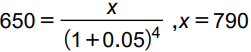
Soru 10
Which of the following represents that second order interest rate risk ?
Seçenekler
A
Default risk
B
Convexity
C
Duration
D
Market risk
E
Call risk
Açıklama:
Duration is a first order interest rate risk measure, which uses first-order derivatives. However, convexity uses second-order derivatives and represents a second order
interest rate risk.
interest rate risk.
Soru 11
Which of the following is not a characteristic of a bond?
Seçenekler
A
Par value
B
Call feature if it is callable
C
Equity ownership
D
Form of the bond (bearer or registered)
E
Maturity
Açıklama:
There are some elements that determine the characteristics of the bonds. These are (Williams,
2011, p. 176);
• Par value,
• Form of the bond (Bearer or registered)
• Payment method (Coupon or discount)
• Coupon payment frequency (annually, semiannually, quarterly or monthly)
• Maturity,
• Call feature if it is callable,
• Sinking fund if it is a sinking fund bond,
• Creditworthiness of the issuer.
2011, p. 176);
• Par value,
• Form of the bond (Bearer or registered)
• Payment method (Coupon or discount)
• Coupon payment frequency (annually, semiannually, quarterly or monthly)
• Maturity,
• Call feature if it is callable,
• Sinking fund if it is a sinking fund bond,
• Creditworthiness of the issuer.
Soru 12
LIBOR (London Interbank Offered Rate) and Prime Rate are two most common reference points used as a benchmark for ............... in ...............?
Seçenekler
A
a specific index - index-linked bonds
B
a specific index - Eurobonds
C
floating rate - index-linked bonds
D
floating rate - floating-rate bonds
E
floating rate - Eurobonds
Açıklama:
One of the most widely used benchmarks for floating rate is the LIBOR (London Interbank Offered Rate), which is the borrowing rate in the London Interbank Market. Another reference rate is the Prime Rate, which is the interest rate that banks charge their most creditworthy customers.
Soru 13
What is the dirty price of a bond?
Seçenekler
A
The price that includes the accrued interest at the settlement date
B
The price that excludes the accrued interest at the settlement date
C
The price that excludes the coupon payments
D
The price that the bond was initially sold
E
The sum of all coupon payments
Açıklama:
Dirty price of a bond is the price that includes 38the accrued interest at the settlement date.
Soru 14
1. Length of the call provision
2. Interest rate
3. Coupon rate of the bond
4. Changes in the exchange rates
Which of the factors above fundementally determine the call risk?
2. Interest rate
3. Coupon rate of the bond
4. Changes in the exchange rates
Which of the factors above fundementally determine the call risk?
Seçenekler
A
1 - 2
B
1- 3
C
2 - 3
D
2 - 4
E
3 - 4
Açıklama:
Two factors fundamentally determine the call risk. First of these factors is the length of the call provision. The call risk increases as the length of call provision increases. The second factor is the coupon rate of the bond. While other things are the same, call risk of a bond with a lower coupon rate is lower than call risk of a bond with a higher coupon rate 41(Robinson and Wrightsman, 1980, p. 157).
Soru 15
Which of the following cannot be a reason to prefer bonds over stocks in an investment portfolio?
Seçenekler
A
Risk diversification
B
Coupon payments
C
Risk aversion
D
Dividend payments
E
Steady income
Açıklama:
Investors may prefer bonds over stocks in order to diversify and minimize risks as bonds are considered less risky investment tools. Bonds provide steady income since they are decidedly more predictable when compared to stocks and may also offer coupon payments. However, dividend payments cannot be a reason to choose bonds over stocks, since dividend payments are a characteristic of stocks only and bond-owners do not receive dividend payments. (Bonds are debt instruments and therefore do not give ownership rights such as voting rights, asset rights, and dividend rights.)
Soru 16
What is the main factor that determines the coupon rate of the corporate bonds?
Seçenekler
A
Creditworthiness of the issuer.
B
Reference rate
C
Government's borrowing needs
D
Expected inflation
E
The specific index that the bond is linked to
Açıklama:
The main factor that determines the coupon rate of the corporate bonds is creditworthiness of the issuer.
Soru 17
What is the price of a 3-year zero-coupon bond which has $1,000 par value, if the required return is 9%?
Seçenekler
A
$766,41
B
$772.18
C
$778,84
D
$784,32
E
$790,56
Açıklama:
VB = P / (1+i)n
VB = $1000/(1,09)3 = $772.18
VB = $1000/(1,09)3 = $772.18
Soru 18
Credit rating agencies provide information about the ............... and ............... of the bond?
Seçenekler
A
default risk - market risk
B
default risk - downgrade risk
C
downgrade risk - inflation risk
D
downgrade risk - currency risk
E
inflation risk - currency risk
Açıklama:
Besides the default risk, credit rating agencies provide information about the downgrade risk of the bonds.
Soru 19
Which of the following evaluates the effects of yield changes on the price of the bond?
Seçenekler
A
Convexity
B
Duration
C
Modified duration
D
Yield to maturity (YTM)
E
Yield to Call (YTC)
Açıklama:
While duration or Macaulay duration reflects the sensitivity of a bond to the interest rate changes, modified duration evaluates the effects of yield changes on the price of the bond.
Soru 20
Calculate the duration of a 2-year bond which has $1,000 par value
and makes interest payment annually with the coupon rate of 5%.
and makes interest payment annually with the coupon rate of 5%.
Seçenekler
A
1.80
B
1.85
C
1.90
D
1.95
E
2.00
Açıklama:
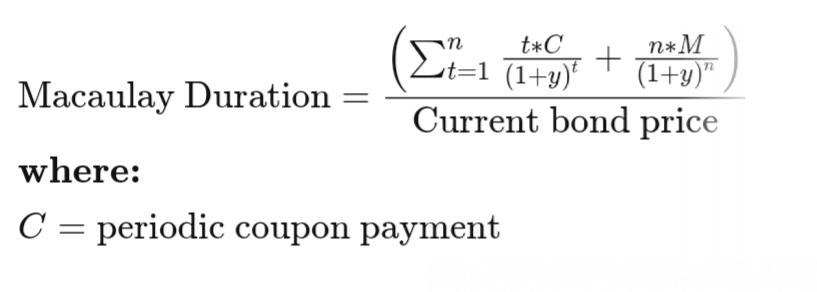 When the formula is applied to question given in which par value is 100, maturity is 2 years and the rate is 5%, the duration equals to 1.95 .
Soru 21
If a company prefers debt financing, for a long term, what is the best way to get funds?
Seçenekler
A
Issuing Bonds will be a long term financing for a company.
B
A company needs debt financing, should go the Bank.
C
A firm can borrow money from its employees.
D
Ask to finance office to reduce tax.
E
Ask to angel investors.
Açıklama:
Market conditions and company specific conditions affect the financing decision of the company. If the company prefers debt financing, and the financing need is long term, then issuing bonds is a suitable alternative for the company. Bond is one of the oldest financial instruments, and it is preferred not only by companies but also by the governments.
Soru 22
How is a bond used in finance?
Seçenekler
A
A financial instrument is a monetary contract between finance and company.
B
Bond is a long-term financial instrument issued by companies or governments, which provides interest and principal payments to the holders on specific dates.
C
Treasuries are issued by the federal government to finance its budget deficits.
D
The most common basic financial instruments are bond and most bank loans.
E
It is issued by the bank to finance its budget deficits. ...
Açıklama:
Bond is a long-term financial instrument issued by companies or governments, which provides interest and principal payments to the holders on specific dates. It is issued to satisfy long term financing needs, and is suitable for companies especially which do not want to lose management of the company by issuing stocks.
Soru 23
What means the principal?
Seçenekler
A
The most commonly used area for a company refers to the original sum of money borrowed in a loan or put into a company’s spending.
B
When you take out a loan, your payments are primarily broken up into two parts - principal and interest.
C
It is the amount that the issuer agrees to repay on the maturity date.
D
The loan principal is the amount you borrow.
E
Principal is someone that holds the highest rank, or is a sum of money.
Açıklama:
The principal, which is also referred to as par value, redemption value or maturity value, is the amount that the issuer agrees to repay on the maturity date.
Soru 24
What does a straight bond mean?
Seçenekler
A
A straight bond are a bond that pays interest at non-regular intervals.
B
A straight bond is a bond that pays interest at non-regular intervals.
C
To calculate the value of a bond, add the present value of the interest payments plus the present value of the principal you receive at maturity.
D
Straight coupon bonds is, which provide the holder to receive periodic interest payments and principal on a specified date.
E
A straight bond is government bonds can be purchased directly from the Treasury.
Açıklama:
The most common type of bonds traded in the markets is straight coupon bonds, which provide the holder to receive periodic interest payments and principal on a specified date. The interest payments of these bonds are generally made annually or semiannually, and neither the issuer nor the investor have the right of demanding early repayment.
Soru 25
What kind of bond is a government bond?
Seçenekler
A
This type of bonds are Bank bond, Broker bond, or Dealer bond.
B
As investors sell these risky assets, they seek safety and move into Treasury bonds.
C
Different strategies are necessary for high-yield corporate bonds.
D
With government bonds, interest is paid out periodically and the only interest paid at maturity is the amount earned since the last interest payment.
E
This type of bond is issued by the governments and public sector bodies, in order to fund the ongoing operations and the fiscal deficit.
Açıklama:
This type of bond is issued by the governments and public sector bodies, in order to fund the ongoing operations and the fiscal deficit.
Soru 26
Which borrowing instrument does a government generally issue?
Seçenekler
A
Treasury bills, treasury notes and government (treasury) bonds
B
Corporate bonds are debt securities issued governments.
C
Municipal Bonds
D
Packaged Debt Securities
E
Savings Bonds
Açıklama:
Governments mainly have three borrowing instruments:
- treasury bills which satisfy short-term financing needs,
- treasury notes that are mid-term debt instruments,
- government (treasury) bonds which are issued to satisfy long-term financing needs.
Soru 27
What are Treasury notes used for?
Seçenekler
A
Treasury notes that are issued for satisfyihg only short-term financial needs.
B
Treasury notes that used in short-term, mid-term and long-term debt instruments for financial needs.
C
Treasury notes which are issued to satisfy long-term financing needs.
D
Treasury notes have maturities of a year or less.
E
It is risk cover instrument issued by the central bank on behalf of the government to curb temporary liquidity shortfalls.
Açıklama:
Treasury bills which satisfy short-term financing needs, use for mid-term debt instruments,and for long-term financing needs.
Soru 28
What does floating rate bond mean?
Seçenekler
A
Floating rate bond pensions, or insurance policies increase or decrease according to the rise or fall of prices.
B
Floating rate bond gives us the nominal coupon.
C
Floating rate bond whose interest amount fluctuates with the market interest rates.
D
Floating rate funds are superior to other types of bond funds and guaranteed investments.
E
Treasury services is a function of an investment bank which provides transaction, investment, and information services.
Açıklama:
The coupon rate of these bonds change depending on a reference rate. The coupon rate of each period is the sum of quoted margin and the current reference rate. The quoted margin is expressed as “basis point”. The reference rate or benchmark of a floating-rate bond is an interest rate or an interest rate index.
Soru 29
How can you calculate the accrued interest (AI) formula?
Seçenekler
A
AI) Coupon payment x (Months since last coupon payments / Days separating coupon payments)
B
AI) Coupon payment x (Days separating coupon payments / Days since last coupon payments)
C
AI) Coupon payment x (Days separating coupon payments / Months since last coupon payments)
D
(AI) Coupon payment x (Days since last coupon payments / Days separating coupon payments)
E
AI) Coupon per value x (Days since last coupon payments / Days separating coupon payments)
Açıklama:
If the bond price will be calculated at a date between two coupon periods, accrued interest must be calculated. The price of a bond including accrued interest is called dirty or full price. In other words, dirty price is equal to sum of clean price and accrued interest. The price without accrued interest is called clean or flat price. The clean price is calculated by subtracting the accrued interest from the dirty price. The accrued interest (AI) can be calculated by the following formula:
(AI) Cupon paymenit x (Days since last cupon payments / Days separatign cupon payments)
(AI) Cupon paymenit x (Days since last cupon payments / Days separatign cupon payments)
Soru 30
What means Default Risk?
Seçenekler
A
Default risk is a type of risk that some bonds are exposed.
B
Default risk can be defined as the risk that the rating of the issuer or instrument will be downgraded by a rating agency or more rating agencies, due to the deterioration in the creditworthiness of the borrower.
C
Investors desire to reinvest their income generated from their investments. In this case, they are faced with the default risk that arises from the possibility of reinvesting their money at lower rates.
D
Default risk can be defined as the potential loss occurs due to the changes in the exchange rates.
E
Default risk is the risk that the borrower will not meet the obligation at the agreed time.
Açıklama:
Default risk is the risk that the borrower will not meet the obligation at the agreed time. For bonds, default risk refers that the issuer will fail to make interest payments and/or principal at the determined dates. When the issuers default, the bondholders can sue for bankruptcy, if the issuers do not file for bankruptcy.
Soru 31
What means duration?
Seçenekler
A
Duration is a first order interest rate risk measure and it reflects the sensitivity of the bond to changes in interest rate rates.
B
This type of risk is associated with the unanticipated changes in the future value of money.
C
Zero-coupon bonds do not make payments until the maturity, but coupon bonds provide cash flows before the maturity.
D
Duration uses second-order derivatives and represents a second order interest rate risk.
E
Duration of bonds can be considered as a component of credit risk.
Açıklama:
Duration is a first order interest rate risk measure and it reflects the sensitivity of the bond to changes in interest rate rates.
Soru 32
Which of the following is NOT a coupon payment frequency?
Seçenekler
A
Weekly
B
Monthly
C
Quarterly
D
Semi-annually
E
Annually
Açıklama:
The correct choice is A.
Soru 33
Which of the following is 'the amount that the issuer agrees to repay on the maturity date?
Seçenekler
A
Coupon payment
B
Maturity
C
Par value
D
Sinking fund
E
Zero coupon
Açıklama:
The correct choice is C.
Soru 34
Which of the following refers to a specified date of the payment to the bond holder?
Seçenekler
A
Principal value
B
Payment method
C
Coupon payment frequency
D
Maturity
E
Creditworthiness of the issuer
Açıklama:
The correct choice is D.
Soru 35
In which of the following the issuer of the bonds knows the names of the holders and payments are made directly to the holders?
Seçenekler
A
Bearer bonds
B
Straight coupon bonds
C
Registered bonds
D
Zero-coupon bonds
E
Corporate bonds
Açıklama:
The correct choice is C.
Soru 36
Which of the following is the most common type of bonds?
Seçenekler
A
Registered bonds
B
Straight coupon bonds
C
Debenture bonds
D
Guaranteed bonds
E
Floating-rate bonds
Açıklama:
The correct choice is B.
Soru 37
Holders of which of the following do NOT receive coupon payments?
Seçenekler
A
Discounted bonds
B
Registered bonds
C
Government bonds
D
Corporate bonds
E
Floating-rate bonds
Açıklama:
The correct choice is A.
Soru 38
Which of the following can be redeemed before the maturity date?
Seçenekler
A
Index-linked bonds
B
Puttable bonds
C
Convertible bonds
D
Eurobonds
E
Callable bonds
Açıklama:
The correct choice is E.
Soru 39
Which of the following is the possibility that the issuer of a bond will buy back the bond before its maturity date?
Seçenekler
A
Downgrade risk
B
Credit risk
C
Call risk
D
Market risk
E
Reinvestment risk
Açıklama:
The correct choice is C.
Soru 40
Which of the following is the risk that refers to a situation in which the issuer fails to make interest payments and/or principal at the determined dates?
Seçenekler
A
Call risk
B
Downgrade risk
C
Reinvestment risk
D
Default risk
E
Purchasing power risk
Açıklama:
The correct choice is D.
Soru 41
Which of the following risks is associated with the unanticipated changes in the future value of money?
Seçenekler
A
Call risk
B
Purchasing power risk
C
Reinvestment risk
D
Market risk
E
Downgrade risk
Açıklama:
The correct choice is B.
Soru 42
Which of the following is true about bonds?
Seçenekler
A
Bonds are suitable if the company prefers long term debt financing.
B
Bonds are one of the recent financial instruments.
C
Bonds are mostly preferred only by the companies.
D
Bonds are not suitable for risk averse investors.
E
Bonds are more risky than stocks for investors.
Açıklama:
Companies need funds to finance their investment and operations, and they have different choices to satisfy their financing requirements: by debt, equity or hybrid financing. Each of these alternatives has its own advantages and disadvantages, and companies may choose one of them or a combination of them. Market conditions and company specific conditions affect the financing decision of the company. If the company prefers debt financing, and the financing need is long term, then issuing bonds is a suitable alternative for the company. Bond is one of the oldest financial instruments, and it is preferred not only by companies but also by the governments. Bond is a less risky investment alternative than stocks for investors, and it is suitable especially for risk averse investors. It makes regular payments and they are paid before the stockholders in the event of liquidation.
Soru 43
Which of the following is one of the bonds investors/holders?
Seçenekler
A
governments
B
municipalities
C
financial companies
D
Real sector companies
E
individuals evaluating their savings
Açıklama:
There are two main participants of the bond markets. The first group is the borrowers. Borrowers are the bond issuers such as governments, municipalities, financial and real sector companies. The second group is the bond investors or holders. They are the institutions or individuals who want to evaluate their savings in the bond markets. By purchasing bonds, they lend their savings to the borrowers in need of funds.
Soru 44
Most of the bonds make regular payments to the holders, which is called________.
Seçenekler
A
par value
B
coupon payment
C
maturity
D
the principal
E
registered bond
Açıklama:
Most of the bonds make regular payments to the holders, which is called coupon or interest payment. The amount of the payments is initially specified as an annual percentage of the principal (fixed-rate bonds) or as a floating rate, which depends on an external measure such as LIBOR (London Interbank Offered Rate), inflation, currency and gold (Brown, 2006, p. 3). Coupon payments can be made annually, semi-annually, quarterly or monthly. Most of the floating-rate bonds pay coupons quarterly or monthly, while the fixed-rate bonds generally pay coupons annually or semi-annually.
Soru 45
Which of the following do not have to make payment until maturity but pay the taxes of interest earned each year?
Seçenekler
A
Bearer bonds
B
Registered bonds
C
Straight coupon bonds
D
Discounted bonds
E
Government bonds
Açıklama:
Holders of zero-coupon( discounted) bonds do not receive coupon payments. They buy the bond at a discounted price, and they receive the par value at the maturity. The difference between the discounted price and the par value becomes the interest payment of the bondholders. The reason why companies issue zero coupon bonds is that they do not have to make payment until the maturity date, and the reason investors prefer this type of bond is that there is no risk of reinvesting at a lower rate. Yet, there is disadvantage for the holders of the zero-coupon bonds. Although they are not paid until maturity, they pay the taxes of interest earned each year
Soru 46
- debenture bonds
- secured bonds
- guaranteed bonds
Seçenekler
A
I,III
B
Only II
C
I,II,III
D
I,II
E
Only III
Açıklama:
Based on the guaranteed they carry, bonds are classified as debenture bonds, secured bonds and guaranteed bonds. While the payments of debenture bonds depending on the general credit strength of the issuer, the payments of secured bonds are secured by a pledge asset of the issuer, and the payments of secured bonds guaranteed bonds are guaranteed by another corporation or corporations.
Soru 47
A bond denominated in Japanese Yen and sold in Germany is called as _________.
Seçenekler
A
a Yen Eurobond
B
a callable bond
C
a floating-rate bond
D
A puttable bond
E
a quoted margin
Açıklama:
Eurobond is a bond denominated in a currency that is different from the currency of the country where the bond is issued. They are typically issued by governments, large corporations and international institutions (Pilbeam, 1998, p. 324). For example, a bond denominated in US dollars and sold in London is a Eurobond. Eurobonds are named with the currency in which the bond is issued. Therefore, a bond denominated in Japanese Yen and sold in Germany is called Yen Eurobond.
Soru 48
- the economic outlook
- monetary policy of the country
- inflationary expectations
- the level of capital inflows
Seçenekler
A
I,II
B
I,II,III,IV
C
I,II,IV
D
Only I
E
III,IV
Açıklama:
The factors that affect the discount rate can be sorted as: the economic outlook, monetary policy of the country, government’s borrowing needs, inflationary expectations, the level of economic activity, the level of capital inflows, the credit rating of the bond determined credit rating agencies, the capital structure of the company, company conditions. The effects of these factors may be different depending on the type of bond.
Soru 49
Which of the below is the coupon rate of bond regardless of its time to maturity and market price?
Seçenekler
A
Yield to call
B
Yield to maturity
C
Nominal yield
D
Current yield
E
The dirty price
Açıklama:
Nominal yield of a bond is the coupon rate of the bond, and it does not take into consideration the bond’s time to maturity or market price of the bond.
Soru 50
- For the bonds sold at par value, YTM is equal to the coupon rate.
- For the bonds sold at a discount price, YTM will be lower than the coupon rate.
- For the bonds sold at a premium price, YTM will be lower than the coupon rate.
Seçenekler
A
Only II
B
II,III
C
Only I
D
I,III
E
I,II,III
Açıklama:
There is a relation between the price and yield measures of the bonds. If a bond is sold at par value, then the coupon rate, current yield and YTM are equal. If the bond is sold at a discounted price, then the coupon rate will be lower than the current yield, and the current yield will be lower than the YTM. Finally, if the bond is sold at a premium price, then the coupon rate will be greater than the current yield, and the current yield will be greater than the YTM.
Soru 51
Which of the following can be described as the risk that the issuer will buy back the bond before the maturity date?
Seçenekler
A
Currency risk
B
Reinvestment risk
C
Downgrade risk
D
Default risk
E
Call risk
Açıklama:
Call risk is a type of risk that some bonds are exposed to. Call risk is the possibility that the issuer will buy back the bond before the maturity date. The bondholders undertake this risk if the bond carries a call provision. The call risk increases especially when the interest rates tend to decrease because the issuer will use the call provision in order to issue new bonds with a lower coupon rate. Yet, if the coupon rate of the bond is low and the interest rates are less volatile, the call risk will be low.
Soru 52
Which of the following is a fixed-income security and a type of debt instrument?
Seçenekler
A
Risk
B
Bond
C
Interest
D
Funds
E
Investors
Açıklama:
Bond is a fixed-income security and a type of debt instrument. Bond is a long-term financial instrument issued by companies or governments, which provides interest and principal payments to the holders on specific dates. There are two main participants of the bond markets. The first group is the borrowers. The second group is the bond investors or holders.
Soru 53
There are some elements that determine the characteristics of the bonds. Which of the following is not one of them?
Seçenekler
A
Par value
B
Form of the bond
C
Maturity
D
Payment method
E
Splitability
Açıklama:
There are some elements that determine the characteristics of the bonds. These are ;
- Par value,
- Form of the bond (Bearer or registered)
- Payment method (Coupon or discount)
- Coupon payment frequency (annually, semiannually, quarterly or monthly)
- Maturity,
- Call feature if it is callable,
- Sinking fund if it is a sinking fund bond,
- Creditworthiness of the issuer.
Soru 54
Which of the following is a bond type that the owner is the person who holds it?
Seçenekler
A
Bearer bond
B
Registered bond
C
Government bond
D
Straight coupon bond
E
Discounted bond
Açıklama:
Bonds are divided into two categories in terms of ownership: bearer bonds and registered bonds. Bearer bond is a bond type that the owner is the person who holds it. They have coupons that are presented to a bank for payment. The issuer of the bearer bonds does not know the holder of the bond and who receives the cash flows of the bond.
Soru 55
Coupon rates of ……………………………….. are lower than the coupon rates of the company bonds, since the return of the bondholders are considered as risk-free return.
Which of the following completes the sentence above?
Which of the following completes the sentence above?
Seçenekler
A
Bearer bonds
B
Registered bonds
C
Government bonds
D
Straight coupon bonds
E
Discounted bonds
Açıklama:
Coupon rates of government bonds are lower than the coupon rates of the company bonds, since the return of the bondholders are considered as risk-free return.
Soru 56
Which of the following is the present value of future cash flows expected from the asset?
Seçenekler
A
The estimated value of a bond
B
Index-linked bonds
C
The value of a financial asset
D
The present value of money
E
The dirty price of a bond
Açıklama:
The value of a financial asset is the present value of future cash flows expected from the asset. For this reason, determination of price of an asset requires an estimation of expected cash flows and an appropriate discount factor, which refers to the required rate of return or required yield.
Soru 57
How is the current yield of a bond calculated?
Seçenekler
A
By multiplying the current price of the bond to the coupon payment
B
By multiplying the current price of the bond to the coupon payment
C
By dividing the current price of the bond to the coupon payment
D
By dividing the coupon payment to the current price of the bond
E
By subtracting the coupon payment from the current price of the bond
Açıklama:
The current yield of a bond is calculated by dividing the coupon payment to the current price of the bond
Soru 58
Which of the following is the rate of return that the investor will obtain if he buys the bond at a certain price and holds until the maturity?
Seçenekler
A
YTM
B
YTC
C
Coupon payment
D
Nominal yield
E
Yield of a bond
Açıklama:
YTM is the rate of return that the investor will obtain if he buys the bond at a certain price and holds until the maturity.
Soru 59
Which of the following is the rate that equals the present value of the expected cash flows of the bond to the price plus accrued coupon payments?
Seçenekler
A
Nominal Yield
B
Current Yield
C
Yield to Maturity
D
Coupon payment
E
Yield to Call
Açıklama:
Sometimes, those in need of funds may issue bonds that give the issuer the right to call back. In this case, yield to call is an appropriate measure to evaluate the return of the bond. YTC is the rate that equals the present value of the expected cash flows of the bond to the price plus accrued coupon payments.
Soru 60
Which of the following can be defined as the potential loss occurs due to the changes in the exchange rates?
Seçenekler
A
Reinvestment Risk
B
Currency Risk
C
Downgrade Risk
D
Default Risk
E
Call Risk
Açıklama:
Currency Risk (Foreign Exchange Risk): In general terms, currency risk can be defined as the potential loss occurs due to the changes in the exchange rates. The bondholders undertake currency risk when they invest in a bond which pays the coupons and principal in a foreign currency.
Soru 61
Which of the following is a measure of interest rate sensitivity of bond and gives the weighted average time to receive the cash flows of the bond?
Seçenekler
A
Lower rated bonds
B
Default risk
C
Convexity
D
Duration
E
Downgrade
Açıklama:
Duration is a measure of interest rate sensitivity of bond and gives the weighted average time to receive the cash flows of the bond.
Ünite 3
Soru 1
I. Dividend
II. Capital gain
III. Interest
Which of above is among the motivations of stockholders to buy stocks?
II. Capital gain
III. Interest
Which of above is among the motivations of stockholders to buy stocks?
Seçenekler
A
I only
B
II only
C
I and II
D
II and III
E
I, II and III
Açıklama:
Motivations of stockholders may be different. Some of them buy stocks in order to receive dividends and some of them buy to gain from the difference between buying and selling prices.
Soru 2
All of the followings are shareholders’ rights, except…
Seçenekler
A
Right to demand information
B
Right to vote
C
Right to preemption
D
Right to work
E
Right to dividend
Açıklama:
Holding a stock does not give the right to work by any means.
Soru 3
“… is a legal term and refers to the minimum amount of money that the stockholders have to pay per share. “
Which of the following would best fill the blank space above?
Which of the following would best fill the blank space above?
Seçenekler
A
Future value
B
Par value
C
Historical value
D
Real value
E
Maturity value
Açıklama:
Par or face value is a legal term and refers to the minimum amount of money that the stockholders have to pay per share.
Soru 4
I. Common stocks
II. Preferred stocks
III. Non-voting stocks
Which of the above is among the types of stocks?
II. Preferred stocks
III. Non-voting stocks
Which of the above is among the types of stocks?
Seçenekler
A
I only
B
II only
C
I and II
D
II and III
E
I, II and III
Açıklama:
All of them are among the types of stocks
Soru 5
Which of the following can be said for A type common stocks?
Seçenekler
A
May give privilege in dividend distribution
B
Has always high risk
C
Has limited ownership status
D
May only be traded in organized markets
E
May be expected to generate high returns
Açıklama:
A type of common stocks may give privilege in dividend distribution and participating management
Soru 6
Which of the following model tells us if the underlying ratio greater than 1 this indicates that the stock is overvalued?
Seçenekler
A
MV/BV
B
Regression model
C
Discounted dividend model
D
Price-Earnings ratio model
E
Gordon dividend discount model
Açıklama:
If the MV/BV ratio greater than 1 this indicates that the stock is overvalued, and if the MV/BV ratio less than 1 this indicates that the stock is undervalued.
Soru 7
Suppose investors expect a %15 increase in dividends annually for a stock which paid 7 TL dividend. If the desired rate of return is %20 find the fair value of the stock.
Seçenekler
A
147
B
152
C
159
D
161
E
168
Açıklama:
P=(7*1.15)/0.05=161
Soru 8
I. Shows relative changes
II. Shows the changes in statistical data
III. Usually calculated on a base value such as 100
Which of above is among the main properties of indices?
II. Shows the changes in statistical data
III. Usually calculated on a base value such as 100
Which of above is among the main properties of indices?
Seçenekler
A
I only
B
II only
C
I and II
D
II and III
E
I, II and III
Açıklama:
The main properties of the index are as follows:
- Shows relative changes,
- Shows the changes in statistical data,
- Usually calculated on a base value such as 100.
Soru 9
Which of the following stock market is older than the others?
Seçenekler
A
Borsa İstanbul
B
New York Stock Exchange
C
Tokyo Stock Exchange
D
London Stock Exchange
E
Frankfurt Stock Exchange
Açıklama:
The New York Stock Exchange (NYSE) is one of the oldest and largest stock markets in the world. NYSE is an American stock exchange which was founded in 1792.
Soru 10
“… is a measure of risk that reflects the variability in price or return of a financial variable. “
Which of the following would best fill the blank space above?
Which of the following would best fill the blank space above?
Seçenekler
A
Liquidity
B
Volume
C
Volatility
D
Capitalization
E
Price
Açıklama:
Volatility is a measure of risk that reflects the variability in price or return of a financial variable.
Soru 11
Which one of the following refers to the right of existing stockholders to purchase new stocks issued in the event of capital increases in proportion to their shares in the existing capital ?
Seçenekler
A
Right to dividend
B
Right to demand information
C
Right to vote
D
Right to preemption
E
Right to liquidation surplus
Açıklama:
Right to preemption refers to the right of existing stockholders to purchase new stocks issued in the event of capital increases in proportion to their shares in the existing capital.
Soru 12
According to the right to demand information of stockholders, which of the following information cannotbe reached by stockholders?
Seçenekler
A
Profit situation
B
Loss situation
C
Annual reports
D
Balance sheet
E
Company's trade secrets
Açıklama:
Stockholders have the right to review the profit and loss situation, annual reports and balance sheet within the one year following the general assembly meeting. However, none of the stockholders has the right to learn the company’s trade secrets.
Soru 13
Which one of the following refers to that the investor expects to get from the investment in a specified period that obtained by discounting the cash flows?
Seçenekler
A
Intrinsic(Real) value
B
Par(Face) value
C
Book value
D
Going concern value
E
Issuance value
Açıklama:
The intrinsic value is obtained by discounting the cash flows that the investor expects to get from the investment in a specified period.
Soru 14
Which of the following is not one of the features of preferred stocks?
Seçenekler
A
They provide a priority right on profit.
B
The dividends of preferred stocks are generally fixed.
C
The ownership status of preferred stockholders is limited.
D
The holders have voting rights and take risks associated with the company.
E
The dividends of preferred stockholders have to be fully paid before the dividend payments of common stockholders.
Açıklama:
The ownership status of preferred stockholders is limited with respect to common stockholders. While common stockholders right to vote and take risks,preferred stockholders have not right to vote normally. Preferred stockholders can vote only for decisions that affect their right attached to the stock.
Soru 15
- Expected cash flows
- Timing of the cash flows
- Discount rate
- Macroeconomic factors
Seçenekler
A
Only a
B
b and c
C
a,b and c
D
a and d
E
c and d
Açıklama:
Caculating the real value of stock, there are three key elements; expected cash flows, timing of the cash flows and the discount rate.
Soru 16
Suppose investors expect a %20 increase in dividends annually for a stock which 10 TL dividend. What should be dividend of stock after seven year?
Seçenekler
A
34.8374
B
35.8318
C
36.7456
D
32.4567
E
35.7896
Açıklama:
10(1+0.2)7 =35,8318
Soru 17
Amazon company paid 2.75 TL per share, and it is expected to grow yearly at a constant rate of 6%. If the minimum return rate is 12% what should be the price of Amazon stocks?
Seçenekler
A
48.583
B
48.580
C
47.535
D
45.628
E
49.020
Açıklama:
[2.75X(1+0.06)] : [0.12-0.06]=48.583
Soru 18
Payout ratio of an Intel company is 80%, expected return of the stock is 25% and expected future growth rate of the stock is 19%, what should be the price of earnings ratio of the Intel company?
Seçenekler
A
13.45
B
12.89
C
13.67
D
13.33
E
14.25
Açıklama:
0.80:(0.25-0.19)=13.33
Soru 19
Which one of the following measurement express to that numerically and refer to a particular situation at a given time?
Seçenekler
A
Covariance
B
Regression
C
Standard deviation
D
Expected cash fLows
E
Index
Açıklama:
Indices can be expressed numerically and refer to a particular situation at a given time.
Soru 20
Which one of the following stock market is one of the most important financial centers of Asia region and is considered one of the largest stock markets in the world ?
Seçenekler
A
New York Stock Exchange
B
Hong Kong Stock Exchange
C
Tokyo Stock Exchange
D
Frankfurt Stock Exchange
E
Shanghai Stock Exchange
Açıklama:
The Hong Kong Stock Exchange is one of largest stock markets located in Asia.
Soru 21
Which of the followings refers to the proportion of net profit that is paid to the stockholders?
Seçenekler
A
Dividend
B
Capital Liability
C
Intrinsic Value Preferred Stock
D
Stock Index
E
Volatility Spillover
Açıklama:
DEFINITION AND PROPERTIES OF STOCKS
Dividend refers to the proportion of net profit that is paid to the stockholders.
Dividend refers to the proportion of net profit that is paid to the stockholders.
Soru 22
Which of the following rights and liabilities of stockholders refers to the right of existing stockholders to purchase new stocks issued in the event of capital increases in proportion to their shares in the existing capital?
Seçenekler
A
Right to dividend
B
Right to preemption
C
Right to liquidation surplus
D
Right to vote and right to participate in management
E
Right to demand information
Açıklama:
Rights and Liabilities of Stockholders
Right to preemption refers to the right of existing stockholders to purchase new stocks issued in the event of capital increases in proportion to their shares in the existing capital.
Right to preemption refers to the right of existing stockholders to purchase new stocks issued in the event of capital increases in proportion to their shares in the existing capital.
Soru 23
Which of the following rights and liabilities of stockholders refers to the right of the stockholders to receive information about all types of company operations?
Seçenekler
A
Right to dividend,
B
Right to preemption,
C
Right to liquidation surplus,
D
Right to vote and right to participate in management
E
Right to demand information
Açıklama:
Rights and Liabilities of Stockholders
Right to demand information refers to the right of the stockholders to receive information about all types of company operations.
Right to demand information refers to the right of the stockholders to receive information about all types of company operations.
Soru 24
Which of the following features of common stocks is not true?
Seçenekler
A
Holders of common stocks are the residual owners of the company since they have voting rights and take risks associated with the company.
B
In event of liquidation, they can be paid only if there is a surplus after the debt holders and preferred stockholders take their claims.
C
The financial liability of common stockholders are limited to the amount of share they have.
D
Common stocks provide a priority right on profit and company’s assets in case of liquidation in respect to common stockholders.
E
Common stockholders can receive dividends only if all of the obligations of the company are met and the dividend distribution is declared by the board of directors.
Açıklama:
TYPES OF STOCKS
Preferred stocks provide a priority right on profit and company’s assets in case of liquidation in respect to common stockholders.
Preferred stocks provide a priority right on profit and company’s assets in case of liquidation in respect to common stockholders.
Soru 25
Which of the following features of common stocks is true?
Seçenekler
A
Common stocks provide a priority right on profit and company’s assets in case of liquidation in respect to common stockholders.
B
Common stocks are referred to as hybrid securities.
C
The dividends of common stocks have to be fully paid before the dividend payments of common stockholders.
D
There are two types of common stocks: cumulative and non-cumulative.
E
Holders of common stocks are the residual owners of the company since they have voting rights and take risks associated with the company.
Açıklama:
TYPES OF STOCKS
Holders of common stocks are the residual owners of the company since they have voting rights and take risks associated with the company; The others are the features of preferred stocks.
Holders of common stocks are the residual owners of the company since they have voting rights and take risks associated with the company; The others are the features of preferred stocks.
Soru 26
Which of the followings is not among the macroeconomic factors?
Seçenekler
A
Inflation
B
Interest rate
C
Growth
D
Profitability
E
Liquidation
Açıklama:
STOCK VALUATION
Macroeconomic factors such as inflation, interest rate, growth and company based factors such as dividend, profitability and capital structure affect the supply and demand of stocks.
Macroeconomic factors such as inflation, interest rate, growth and company based factors such as dividend, profitability and capital structure affect the supply and demand of stocks.
Soru 27
In which of the following models; the present value of a stock is calculated by discounting the future dividends or net cash flows obtained from operations of the company?
Seçenekler
A
The Discounted Dividend Model
B
The Constant Dividend Model
C
Constant Growth (Gordon) Dividend Discount Model
D
Price-Earnings Ratio Model
E
Market to Book Value Model
Açıklama:
The discounted dividend model (DDM) is one of the basic and oldest models used in stock valuation. In this technique, the present value of a stock is calculated by discounting the future dividends or net cash flows obtained from operations of the company (Korkmaz and Ceylan, 2007, p. 250).
Soru 28
Which of the following models is suitable especially for stable companies and the companies in the maturity stage?
Seçenekler
A
The Discounted Dividend Model
B
The Constant Dividend Model
C
Constant Growth (Gordon) Dividend Discount Model
D
Price-Earnings Ratio Model
E
Market to Book Value Model
Açıklama:
STOCK VALUATION
In the constant dividend model, it is assumed that the growth is provided by internal funds of the company, and therefore the dividends paid to the stockholders does not change over the time (Dt = D) (Kasper, 1997, p. 38). This model is suitable especially for stable companies and the companies in the maturity stage.
In the constant dividend model, it is assumed that the growth is provided by internal funds of the company, and therefore the dividends paid to the stockholders does not change over the time (Dt = D) (Kasper, 1997, p. 38). This model is suitable especially for stable companies and the companies in the maturity stage.
Soru 29
Which of the followings is the main function of stock markets?
Seçenekler
A
To support economic growth by creating a safe marketplace.
B
To allow the market trend to be compared with past trends and other markets.
C
To bring the companies and the investors together.
D
To show relative changes.
E
To provide information about the structure and volatility of the capital markets.
Açıklama:
STOCK INDICES
The main function of stock markets is to bring the companies and the investors together.
The main function of stock markets is to bring the companies and the investors together.
Soru 30
Which of the followings is a measure of risk that reflects the variability in price or return of a financial variable?
Seçenekler
A
Price-Earnings Ratio
B
Stock Index
C
Intrinsic Value
D
Volatility
E
Dividend
Açıklama:
MAJOR STOCK MARKETS
Volatility is a measure of risk that reflects the variability in price or return of a financial variable.
Volatility is a measure of risk that reflects the variability in price or return of a financial variable.
Soru 31
Which of the following refers to the proportion of net profit that is paid to the stockholders?
Seçenekler
A
Dividend
B
Stock investment
C
Capital gain
D
Preferred stock
E
Stockholder
Açıklama:
Dividend refers to the proportion of net profit that is paid to the stockholders.
Soru 32
Which of the following refers to the right of existing stockholders to purchase new stocks issued in the event of capital increases in proportion to their shares in the existing capital?
Seçenekler
A
Right to dividend
B
Right to preemption
C
Right to liquidation surplus
D
Right to demand information
E
Secrecy liability
Açıklama:
Right to preemption refers to the right of existing stockholders to purchase new stocks issued in the event of capital increases in proportion to their shares in the existing capital.
Soru 33
What does face value mean?
Seçenekler
A
To accounting value reflected in the financial statements.
B
Estimated based on the assumption that the company will continue its operations into the foreseeable future.
C
A legal term and refers to the minimum amount of money that the stockholders have to pay per share.
D
The value that remains after all the assets of the company are sold, and the liabilities including preferred stocks are paid of.
E
It is the price that stock is traded in the market.
Açıklama:
Par or face value is a legal term and refers to the minimum amount of money that the stockholders have to pay per share.
Soru 34
Which of the following refers to accounting value reflected in the financial statements?
Seçenekler
A
Intrinsic value
B
Book value
C
Face value
D
Market value
E
Liquidation value
Açıklama:
Book value refers to accounting value reflected in the financial statements.
Soru 35
Which of the following is not one of features of common stocks?
Seçenekler
A
The financial liability of common stockholders are limited to the amount of share they have.
B
Common stockholders can receive dividends only if all of the obligations of the company are met and the dividend distribution is declared by the board of directors.
C
Holders of common stocks are the residual owners of the company since they have voting rights and take risks associated with the company.
D
In event of liquidation, they can be paid only if there is a surplus after the debt holders.
E
Common stocks provide a priority right on profit and company’s assets in case of liquidation in respect to preferred stockholders.
Açıklama:
Preferred stocks provide a priority right on profit and company’s assets in case of liquidation in respect to common stockholders.
Soru 36
X Company paid $ 5 per share, and it is expected to grow yearly at a constant rate of 3%. If the rate of return of similar companies is 10%, what should be the price of TED stocks?
Seçenekler
A
$73.571
B
$71.500
C
$50.000
D
$65.765
E
$52.332
Açıklama:
P=5*(1+0.03)/(0.10-0.03)=$73.571
Soru 37
If payout ratio of a company is 50%, expected return of the stock is 12% and expected future growth rate of the stock is 5%, what will be the P/E ratio?
Seçenekler
A
1.235
B
2.941
C
4.356
D
5.350
E
7.143
Açıklama:
Price−Earnings Ratio=Payout Ratio/ (k − g)
P/E ratio=0.50/(0.12-0.05)=7.143
P/E ratio=0.50/(0.12-0.05)=7.143
Soru 38
If the stock price of a company is $12, its book value is $1,000,000 and the number of outstanding stocks is 500,000, what will be the market-to-book value ratio?
Seçenekler
A
2
B
4
C
5.2
D
6
E
8
Açıklama:
MV/BV= Market Capitalization/ Book Value=(12*500,000)/1,000,000=6
Soru 39
Which of the major stock markets can be defined as the financial center of the world and it is the largest stock market of Europe?
Seçenekler
A
The New York Stock Exchange
B
Tokyo Stock Exchange
C
NASDAQ
D
The Hong Kong Stock Exchange
E
London Stock Exchange
Açıklama:
London Stock Exchange is an old stock market, which was founded in 1895. LSE is located in London, which is the financial center of the world, and it is the largest stock market of Europe.
Soru 40
Which country's market is traded on NASDAQ Composite?
Seçenekler
A
USA
B
Japan
C
Germany
D
UK
E
India
Açıklama:
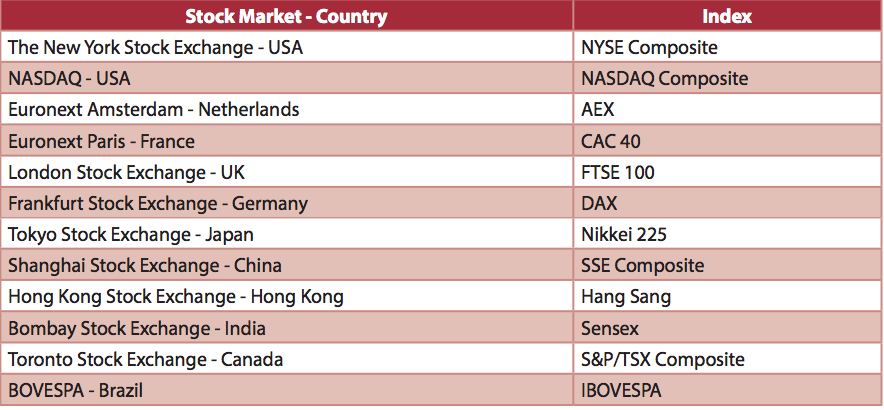
Soru 41
....................refers to the proportion of net profit that is paid to the stockholders.
Which of the following should be at the dotted place?
Which of the following should be at the dotted place?
Seçenekler
A
Stock
B
Dividend
C
Capital gain
D
Stock investment
E
Liquidation
Açıklama:
It should be dividend
Soru 42
There are many factors affecting the return that will be gained from stock investments.
Which of following is not one of them?
Which of following is not one of them?
Seçenekler
A
interest rates
B
inflation
C
money supply
D
economic growth
E
Passive activity
Açıklama:
Passive activity is not one of them
Soru 43
The investors who buy the shares issued by the company are considered as shareholders and this provides some rights to them.
Which of following is not one of them?
Which of following is not one of them?
Seçenekler
A
Right to dividend
B
Right to preemption
C
Right to liquidation surplus
D
Right to vote but not right to participate in management
E
Secrecy liability
Açıklama:
It should be Right to vote and right to participate in management
Soru 44
The stockholders may participate in the general assembly through the right to vote and have a say in many operations of the company.
Which of the followings are not one of these operations?
Which of the followings are not one of these operations?
Seçenekler
A
Decisions to accept but not amend the articles of association of the company
B
Decisions such as capital increase, bond issuance, dividend distribution, changing
the type of the company, merger and liquidation,
the type of the company, merger and liquidation,
C
Appointment and replacement of senior executives such as board members, CEO
and auditors
and auditors
D
Release of the operations of the board of directors and auditors
E
Approval of annual reports
Açıklama:
Decisions to accept but not amend the articles of association of the company is not correct.There is tight to amend.
Soru 45
The companies may issue one or more types of stocks that each has its own rights and features. One of these stock types is ................... ...................... is the basic type and the most traded one in the financial markets.
Which of following should be at dotted place?
Which of following should be at dotted place?
Seçenekler
A
Common stocks
B
Preferred stocks
C
Non-voting stocks
D
Voting stocks
E
İndividual stocks
Açıklama:
It should be common stocks
Soru 46
Which of followings are not one of features of common stocks?
Seçenekler
A
Holders of common stocks are the residual owners of the company since they have
voting rights and take risks associated with the company
voting rights and take risks associated with the company
B
In event of liquidation, they can be paid only if there is a surplus after the debt
holders and preferred stockholders take their claims.
holders and preferred stockholders take their claims.
C
The financial liability of common stockholders are limited to the amount of share they have.
D
Common stockholders can't receive dividends only if all of the obligations of the company are met and the dividend distribution is not declared by the board of directors.
E
Common stockholders can receive dividends only if all of the obligations of
the company are met and the dividend distribution is declared by the board of
directors.
the company are met and the dividend distribution is declared by the board of
directors.
Açıklama:
Common stockholders can receive dividends only if all of the obligations of
the company are met and the dividend distribution is declared by the board of
directors
the company are met and the dividend distribution is declared by the board of
directors
Soru 47
Which of the following is not one of the Features of preferred stocks ?
Seçenekler
A
Preferred stocks provide a priority right on profit and company’s assets in case of liquidation in respect to common stockholders.
B
The dividends of preferred stocks are generally fixed. Due to the first and second
features, preferred stocks are referred to as hybrid securities. Yet, the company is not
obligated to pay dividends if the earnings are not adequate.
features, preferred stocks are referred to as hybrid securities. Yet, the company is not
obligated to pay dividends if the earnings are not adequate.
C
As it is in common stocks, the preferred stocks represent ownership of the company
D
The dividends of preferred stockholders have to be fully paid before the dividend
payments of common stockholders
payments of common stockholders
E
There are one type preferred stock and the name of this cumulative
Açıklama:
There are two types of preferred stocks: cumulative and non-cumulative
Soru 48
........................is a security that provides its holder the rights of other stocks with the exception of voting right. This type of shares are generally presented with the code A.
Which of the following should be at the dotted place?
Which of the following should be at the dotted place?
Seçenekler
A
Common stock
B
Preferred stock
C
Voting stock
D
Non-voting stock
E
Cumulative stock
Açıklama:
It should be non-voting stock
Soru 49
.............................. is a measure of risk that reflects the variability in price or return of a financial variable.
Which of the following should be at the dotted place?
Which of the following should be at the dotted place?
Seçenekler
A
Stock market
B
Volatility
C
Indice
D
Regression
E
Dividend
Açıklama:
It should be volatility
Soru 50
........................... can be expressed numerically and refer to a particular situation at a given time. They are the tools that allow complex events to be reduced to numbers and provide approximate information about events and their consequences.
Which of the following should be at the dotted place?
Which of the following should be at the dotted place?
Seçenekler
A
Non-voting systems
B
Indices
C
Volatilities
D
Stock markets
E
Dividends
Açıklama:
It should be Indices
Soru 51
Which of the following statements is not correct?
Seçenekler
A
Stock represents a share in the ownership of the company.
B
Issuing stock is a type of equity financing from the perspective of a company.
C
Stock is a security that provides rights such as the right to vote and to demand information.
D
Stock investments provide capital gain, dividend, and interest payments.
E
Dividend payments refer to the proportion of net profit that is paid to the stockholders.
Açıklama:
Stock investments provide two types of return: dividend and capital gain. They do not provide interest payments to holders.
Soru 52
............... refers to the right of existing stockholders to purchase new stocks issued
in the event of capital increases in proportion to their shares in the existing capital?
in the event of capital increases in proportion to their shares in the existing capital?
Seçenekler
A
Right to dividend
B
Right to preemption
C
Right to liquidation surplus
D
Right to participate in the management
E
Right to demand information
Açıklama:
Right to preemption refers to the right of existing stockholders to purchase new stocks issued in the event of capital increases in proportion to their shares in the existing capital. In other words, in the capital increase the current stockholders have the right of purchasing newly issued stocks in proportion to their existing shares before the stocks are sold to new investors.
Soru 53
............... is the value that remains after all the assets of the company are sold, and the liabilities including preferred stocks are paid off?
Seçenekler
A
Going Concern Value
B
Book Value
C
Liquidation Value
D
Market Value
E
Intrinsic (Real) Value
Açıklama:
Liquidation value is the value that remains after all the assets of the company are sold, and the liabilities including preferred stocks are paid off. Liquidation value per share is calculated by dividing this amount to the number of common stocks (Chaturvedi, 2009, p. 94).
Soru 54
Which of the following statements is not correct?
Seçenekler
A
Holders of common stocks are the residual owners of the company.
B
The dividend payments are usually stipulated for preferred stocks.
C
A non-voting stock is a security that provides its holder the rights of other stocks with the exception
of voting right.
of voting right.
D
Preferred stocks always provide a guarantee of receiving fixed dividend payments.
E
The financial liability of common stockholders is limited to the amount of share they have.
Açıklama:
Preferred stocks typically provide a guarantee of receiving fixed dividend payments.
Soru 55
I. Capital Structure
II. Profitability
III. Inflation
IV. Interest rate
Which of the above affect the price of stocks?
II. Profitability
III. Inflation
IV. Interest rate
Which of the above affect the price of stocks?
Seçenekler
A
I and II
B
I and III
C
I, II and III
D
I, III and IV
E
I, II, III and IV
Açıklama:
Macroeconomic factors such as inflation, interest rate, growth and company based factors such as
dividend, profitability and capital structure affect the supply and demand of stocks.
dividend, profitability and capital structure affect the supply and demand of stocks.
Soru 56
What is the number of outstanding stocks of a company if its book value is $5,000,000, the stock price is $16 and the market-to-book value ratio is 4?
Seçenekler
A
125,000
B
750,000
C
1,250,000
D
7,500,000
E
12,500,000
Açıklama:
Number of stocks = (4 x 5,000,000) / 16
= 1,250,000
= 1,250,000
Soru 57
What is the P/E ratio of a company if the payout ratio is 75%, the expected return of the stock is 18% and the expected future growth rate of the stock is 6%?
Seçenekler
A
4.75
B
5.25
C
5.75
D
6.25
E
6.75
Açıklama:
P/E = 0.75 / (0.18 - 0.06)
= 6.25
= 6.25
Soru 58
Which of the following statements is not correct?
Seçenekler
A
Indices are used as measurement tools in many areas and considered as indicators.
B
Indices can be expressed numerically and refer to a particular situation at a given time.
C
Indices give the opportunity of making comparisons between the old and new situations.
D
Indices reflect the news about the market only as a whole.
E
Stock market indices provide information to investors about the price movements of secondary market securities.
Açıklama:
Indices reflect the news about both the market as a whole and the individual companies or sectors.
Soru 59
............... is a measure of risk that reflects the variability in price or return of a financial variable?
Seçenekler
A
Speculation
B
Arbitrage
C
Volatility
D
PE ratio
E
Index
Açıklama:
Volatility is a measure of risk that reflects the variability in price or return of a financial variable.
Soru 60
Which of the following is the largest stock market in Europe?
Seçenekler
A
FRA
B
LSE
C
ISE
D
SWX
E
EEX
Açıklama:
LSE is located in London, which is the financial center of the world, and it is the largest stock market in Europe.
Ünite 4
Soru 1
Which of the following is not a derivative insturement?
Seçenekler
A
Forward contracts
B
Tresuary bills
C
Futures contracts
D
Swaps
E
Call options
Açıklama:
Derivative instruments whose performance is determined by underlying assets are generally classified as forward, futures, swap, and option contracts.
Soru 2
What is the main role of a clearinghouse in derivative markets?
Seçenekler
A
To determine the value of the underlying assets
B
To reinvest in financial markets in order to add value to the derivative instruments
C
To liquidate the losing party's assets in case of default
D
To provide a guarantee to the winning party
E
To regulate the derivative markets
Açıklama:
The clearinghouse of the exchange provides a guarantee to the winning party that if the counterparty refuses to pay, the clearinghouse will pay instead.
Soru 3
The OTC contracts are less ............... and less ............... than exchange-traded derivative contracts?
Seçenekler
A
lucrative - risky
B
lucrative - transparent
C
liquid - transparent
D
liquid - risky
E
lucrative - liquid
Açıklama:
The OTC contracts are customized contracts, and they are less liquid than exchange-traded derivative contracts. They are also relatively less transparent.
Soru 4
What is the main difference between a futures contract and a forward contract?
Seçenekler
A
Futures contracts are standardized.
B
Forward contracts are standardized.
C
Forward contracts require the existence of a legally recognized forward exchange.
D
Futures contracts does not require an intermediary.
E
Forward contracts are contingent claims.
Açıklama:
Futures contracts are the same as forward contracts except that futures contracts are organized, regulated and managed by an exchange. In other words, futures contracts are standardized.
Soru 5
If a quote on a UK government bond 3.80% BEY, then what is the MMY?
Seçenekler
A
3.65%
B
3.70%
C
3.75%
D
3.80%
E
3.85%
Açıklama:
MMY = BEY*(360/365)
MMY = (3.8%)*(360/365) = 3.75%
MMY = (3.8%)*(360/365) = 3.75%
Soru 6
Employee stock options (ESOs) are issued by companies for their employees and grant the employees the right to buy the company's stock at a specified price for a limited period of time. Based on this definition, it is possible to say that ESOs are an example of ...............?
Seçenekler
A
Put options
B
Swaps
C
Futures contract
D
Contingent claims
E
Forward contracts
Açıklama:
A contingent claim is a derivative that provides a buyer of option the right to buy or sell an underlying asset at a price previously agreed upon on a specified future date. Unlike forward commitment contracts, contingent claims give the holder of the contract the right, not the obligation to buy or sell an underlying asset.
Soru 7
What is the difference between an American option and a European option?
Seçenekler
A
American options are short to medium term investment tools, whereas European options are used for long term investments.
B
American options are traded in stock exchanges whereas European options are traded only in OTC markets.
C
American options are drafted in the form of a regular put option, whereas the European options are an example of call options.
D
American options are standardized whereas European options are not.
E
American options can be exercised any time up to the expiration date, while European options are exercised only on the expiration date.
Açıklama:
Options can also be divided into two types according to the time when options can be exercised: American options and European options. American options can be exercised any time up to the expiration date, while European options are exercised only on the expiration date.
Soru 8
Which of the following is defined as customized contracts which is less liquid than exchange-traded derivative contracts?
Seçenekler
A
Derivatives
B
The OTC Contracts
C
Futures
D
Options
E
CDOs
Açıklama:
The OTC contracts are customized contracts, and they are less liquid than exchange-traded derivative contracts.
Soru 9
Which of the following shows the result of spot price at expiration minus forward price?
Seçenekler
A
Payoff to long forward
B
Payoff to short forward
C
Payoff to short option
D
Payoff to long option
E
Payoff to long futures
Açıklama:
Payoff to long forward = Spot price at expiration − forward price
Soru 10
Which of the following statements is true?
Seçenekler
A
A futures contract can be defined as an OTC contract between two parties who agree to exchange cash flows on regular dates, where one party pays a variable payment, and the other party pays either a fixed or variable amount calculated on a different basis.
B
A swap contract an agreement made through an organized exchange to buy or to sell a fixed amount of an underlying commodity or financial asset on a future date (or within a range of dates) at an agreed price.
C
An CDO in which a buyer and a seller commits each other to do a transaction on a specific underlying asset at a future date at a previously determined fixed price.
D
A forward contracts are contingent claim contracts that provide the right but not the obligation to buy an asset at a specific price at a later date in the future.
E
Put option contracts grand their buyers the right but not obligation to sell the underlying asset.
Açıklama:
Put option contracts grand their buyers the right but not obligation to sell the underlying asset.
Options are contingent claim contracts that provide the right but not the obligation to buy an asset at a specific price at a later date in the future.
A swap contract can be defined as an OTC contract between two parties who agree to exchange cash flows on regular dates, where one party pays a variable payment, and the other party pays either a fixed or variable amount calculated on a different basis.
Futures contracts are the same as forward contracts except that futures contracts are organized, regulated and managed by an exchange.
It is an OTC contract in which a buyer and a seller commits each other to do a transaction on a specific underlying asset at a future date at a previously determined fixed price.
Options are contingent claim contracts that provide the right but not the obligation to buy an asset at a specific price at a later date in the future.
A swap contract can be defined as an OTC contract between two parties who agree to exchange cash flows on regular dates, where one party pays a variable payment, and the other party pays either a fixed or variable amount calculated on a different basis.
Futures contracts are the same as forward contracts except that futures contracts are organized, regulated and managed by an exchange.
It is an OTC contract in which a buyer and a seller commits each other to do a transaction on a specific underlying asset at a future date at a previously determined fixed price.
Soru 11
Which of the following statements is false?
Seçenekler
A
Almost all multinational corporations use options as a tool to manage their exposure to currency risk, and exchange rates are the underlying assets in their case.
B
A call option is in the money, if the market price is above the strike price.
C
A put option is in the money, if the market price is below the strike price.
D
A call or put option is at the money, if the market price is equal to the strike price.
E
A call option is out of the money, if the market price is above the strike price.
Açıklama:
A call option is in the money, if the market price is above the strike price. A call option is out of the money, if the market price is below the strike price. A call or put option is at the money, if the market price is equal to the strike price. A put option is in the money, if the market price is below the strike price. A put option is out of the money, if the market price is above the strike price.
Almost all multinational corporations use options as a tool to manage their exposure to currency risk, and exchange rates are the underlying assets in their case.
Almost all multinational corporations use options as a tool to manage their exposure to currency risk, and exchange rates are the underlying assets in their case.
Soru 12
Which of the following can be defined as a derivative security?
Seçenekler
A
Franchising
B
Treasury bill
C
Forfating
D
Swap
E
Preferred stock
Açıklama:
A swap contract can be defined as an OTC contract between two parties who agree to exchange cash flows on regular dates, where one party pays a variable payment, and the other party pays either a fixed or variable amount calculated on a different basis. Since swap is an OTC contract, it contains terms and conditions such as the identity of the underlying asset, dates of payments, and the procedure of payment that are agreed upon and written in the contract. In currency swap trades, one party trades swaps currency for a fixed interest rate and where another party trades another currency for a floating interest. Traders usually exchange only the difference in interest payments. In swap trades, the principal traded is called notional.
Soru 13
Suppose the risk-free rate is 12%, S0 = 120, and t (time period) is 3 month. What is the forward price?
Seçenekler
A
112.25
B
123.45
C
150.48
D
168.60
E
207.36
Açıklama:
T = 3/12 = 0.25
F0(T) = S0(1+ r)^T = 120*(1+0.12)^0.25=123.45
F0(T) = S0(1+ r)^T = 120*(1+0.12)^0.25=123.45
Soru 14
"_ _ _ _ _ _ _ can be exercised any time up to the expiration date, while _ _ _ _ _ _ _ are exercised only on the expiration date."
Which of the following describes correctly the spaces above?
Which of the following describes correctly the spaces above?
Seçenekler
A
American Options - European Options
B
European Options - American Options
C
Asian Options - American Options
D
Asian Options - European Options
E
American Options - Canadian Options
Açıklama:
American Options can be exercised any time up to the expiration date, while European Options are exercised only on the expiration date.
Soru 15
What is the initial value of swaps at the beginning of the contract?
Seçenekler
A
$1
B
$100
C
$0
D
Nominal value
E
Book value
Açıklama:
Similar to futures and forward contracts, swap contracts do not require money exchange at the beginning of the contract, the initial value of a swap contract is zero.
Soru 16
Which of the following is the floating rate used in swap contracts?
Seçenekler
A
FIBOR
B
EURIBOR
C
LIBOR
D
3-month maturity treasury bill
E
Royalty interest
Açıklama:
LIBOR stands for London Interbank Offered Rate, which is the floating rate used in swap contracts.
Soru 17
Which of the following is the most popular type of swap that for fixed-for-floating interest rate swap and was introduced to the market in the 1980s?
Seçenekler
A
Credit Default Swap
B
Currency Swap
C
Plain Vanilla Swap
D
Variance Swap
E
Total Return Swap
Açıklama:
Later in 1981, the first official swap was traded between the World Bank and International Business Machines. Since then, investment banks started providing swap services and the volume and liquidity started to grow and “plain vanilla” swaps were introduced. Plain vanilla swaps are the most famous swap contracts that pursue the conventions of the International Swaps and Derivatives Association Butler. Plain vanilla swap for fixed-for-floating interest rate swap is the most popular type of swap that was introduced to the market in the 1980s.
Soru 18
Adam enters into a futures contract with Eve to sell 100 bitcoins in 60 days with a future value of $5,300. At the settlement date, bitcoin price drops to $4,900. What is the payoff to the party with short position?
Seçenekler
A
$80,000
B
$40,000
C
0
D
-$40,000
E
-$80,000
Açıklama:
The payoff for futures contracts is: spot price at expiration - the forward price
VT= ST - F0(T)
VT= 100 x $4,900 - 100 x $5,300
VT= -$40,000
Therefore the payoff for the party with short position is $40,000, since it will be exactly opposite to the payoff to the long position.
VT= ST - F0(T)
VT= 100 x $4,900 - 100 x $5,300
VT= -$40,000
Therefore the payoff for the party with short position is $40,000, since it will be exactly opposite to the payoff to the long position.
Soru 19
1. Price of underlying asset
2. Strike price
3. Volatility
4. Interest rate
Which of the factors above are used as main variables in the Black-Scholes option pricing model?
2. Strike price
3. Volatility
4. Interest rate
Which of the factors above are used as main variables in the Black-Scholes option pricing model?
Seçenekler
A
1-2
B
1-3
C
1-2-3
D
1-2-4
E
1-2-3-4
Açıklama:
The main variables used in the Black-Scholes model include:
• Price of underlying asset, which is a current market price of the asset
• Strike price, which is a price at which an option can be exercised
• Volatility, which is a measure of how much the security prices will move in the subsequent periods. Volatility is the trickiest input in the option-pricing model as the historical volatility is not the most reliable input for this model
• Time until expiration, which is a time between calculation and option’s exercise date
• Interest rate, which is therisk-freeinterest rate.
• Price of underlying asset, which is a current market price of the asset
• Strike price, which is a price at which an option can be exercised
• Volatility, which is a measure of how much the security prices will move in the subsequent periods. Volatility is the trickiest input in the option-pricing model as the historical volatility is not the most reliable input for this model
• Time until expiration, which is a time between calculation and option’s exercise date
• Interest rate, which is therisk-freeinterest rate.
Soru 20
Company X wants to transform 5 million USD floating rate debt into a fixed rate TRY loan. On trade date, Company X exchanges 5 million USD with Company Y in return for 32.5 million TRY. During the life of the transaction, Company X pays a fixed rate in TRY to Company Y in return for USD six-month LIBOR. The USD interest is calculated on 5 million USD, while the TRY interest payments are computed on the 32.5 million TRY amount. At maturity, the notional dollar amounts are exchanged again. Company X receives their original 5 million USD and Company Y receives 32.5 million TRY.
What is the transaction above an example of?
What is the transaction above an example of?
Seçenekler
A
Call option
B
Put option
C
Swap
D
Futures contract
E
Forward contract
Açıklama:
A swap contract can be defined as an OTC contract between two parties who agree to exchange cash flows on regular dates, where one party pays a variable payment, and the other party pays either a fixed or variable amount calculated on a different basis.
Soru 21
- Forward contracts
- Futures contracts
- Swap contracts
- Option contracts
Seçenekler
A
I and II
B
I and III
C
II and IV
D
I, II and III
E
I, II, III and IV
Açıklama:
It is clear that with globalization, a change process has started in the national economies. Because of this change process, the integration between the economic units has accelerated and the risks to which financial markets are exposed have increased considerably. The inadequacy of traditional instruments in managing these risks paved the way for the development of derivative instruments.
Derivative instruments whose performance is determined by underlying assets are generally classified as forward, futures, swap, and option contracts.
As also understood from the information given, the answer is E. All of them are classified as derivative instruments whose performance is determined by underlying assets.
Derivative instruments whose performance is determined by underlying assets are generally classified as forward, futures, swap, and option contracts.
As also understood from the information given, the answer is E. All of them are classified as derivative instruments whose performance is determined by underlying assets.
Soru 22
- A derivative as defined by Security and Exchange Commission (SEC) is: “a type of financial instrument whose value is derived from another underlying product”.
- By derivative product, we mean those financial instruments that derive its value from the performance of an underlying (asset).
- In other words, a derivative is a legal contract that involves two parties, a buyer and a seller who agree to do something for each other.
- Derivative contracts are recognized by the legal system as commercial contracts and they set the right and obligations of each involved party.
Seçenekler
A
I and II
B
I and III
C
II and IV
D
I, II and III
E
I, II, III and IV
Açıklama:
A derivative as defined by Security and Exchange Commission (SEC) is: “a type of financial instrument whose value is derived from another underlying product”. By derivative product, we mean those financial instruments that derive its value from the performance of an underlying (asset). In other words, a derivative is a legal contract that involves two parties, a buyer and a seller who agree to do something for each other. Derivative contracts are recognized by the legal system as commercial contracts and they set the right and obligations of each involved party. For instance, let’s assume that there are two parties, A and B. In the contract, Party A agrees to sell an APPLE stock (AAPL) to party B for $200 after 3 months from now. Here, our underlying asset is AAPL and Party A is obligated to sell this stock to party B after 3 months. The value of this contract is based on the performance of AAPL. If the value of the stock rises from $191to $200, this contract will be valuable for Party B who is buying the underlying asset for $191. If AAPL price increases to $200 and Party A refuses to sell the stock to Party B, Party B can refer to the related authorities (lawyers, judges, and juries) to step in and resolve this issue.
As also understood from the information given, the answer is E. All of the statements related to derivatives in the options are correct.
As also understood from the information given, the answer is E. All of the statements related to derivatives in the options are correct.
Soru 23
- There are two types of derivatives: forward commitments, and contingent claims.
- Forward commitments contracts (such as forward contracts, futures contracts, and swaps) provide a buyer or seller the ability to lock in a price to buy or sell an underlying asset.
- Contingent claims (such as option) provide a buyer or a seller the right to buy or sell an underlying asset at a price previously fixed..
- There are two categories of markets where derivatives are created: Exchange-traded derivatives markets and Over-the-counter derivatives markets (OTC).
- Exchange-traded derivatives are standardized such that its terms and conditions are precisely specified by the Exchange.
- OTC is the customizable contract that can be customized by the involving parties.
Seçenekler
A
I and II
B
I, III and IV
C
II, IV, V and VI
D
I, III, IV, V and VI
E
I, II, III, IV, V and VI
Açıklama:
There are two types of derivatives: forward commitments, and contingent claims. Forward commitments contracts (such as forward contracts, futures contracts, and swaps) provide a buyer or seller the ability to lock in a price to buy or sell an underlying asset whereas contingent claims (such as option) provide a buyer or a seller the right to buy or sell an underlying asset at a price previously fixed. Derivatives are useful instruments in financial markets through which a risk can be transferred from one party to another. Investors use derivatives to hedge risk arising from unexpected changes in the market value of an underlying asset. Moreover, derivatives are helpful in creating trading strategies. Derivatives are more liquid than the underlying asset and less costly in terms of participating in deals and transactions.
Derivatives are high leverage contracts that require a small amount of capital to initiate a derivative related contract.
There are two categories of markets where derivatives are created: Exchange-traded derivatives markets and Over-the-counter derivatives markets (OTC). Exchange-traded derivatives are standardized such that its terms and conditions are precisely specified by the exchange where OTC is the customizable contract that can be customized by the involving parties. In other words, derivatives exchange-trade standardizes every term and condition of contracts except their prices. For example, suppose an exchange introduces a standardized contract for metal Gold. It specifies the quality of gold, the quantity of gold, expiration date, and the location where the gold should be delivered. Normally, the price of a derivative contract is defined by buyers and sellers (long and short parties). Chicago Mercantile Exchange (CME) is an example of exchangetraded derivatives markets in which contracts such as futures and options are traded. CME is responsible for the clearing and settlement process. Clearing is the procedure by which an exchange settles a transaction and registers the buy and sell parties’ identities. The settlement is the procedure by which an exchange transfers money from one party to another. Since futures contracts are standardized contracts, it makes derivatives more liquid in comparison to OTC markets contracts. Moreover, the price process in the exchange-traded derivatives is more transparent in comparison to OTC markets.
As also understood from the information given, the answer is E. All of the statements related to derivatives and derivative markets in the options are correct.
Derivatives are high leverage contracts that require a small amount of capital to initiate a derivative related contract.
There are two categories of markets where derivatives are created: Exchange-traded derivatives markets and Over-the-counter derivatives markets (OTC). Exchange-traded derivatives are standardized such that its terms and conditions are precisely specified by the exchange where OTC is the customizable contract that can be customized by the involving parties. In other words, derivatives exchange-trade standardizes every term and condition of contracts except their prices. For example, suppose an exchange introduces a standardized contract for metal Gold. It specifies the quality of gold, the quantity of gold, expiration date, and the location where the gold should be delivered. Normally, the price of a derivative contract is defined by buyers and sellers (long and short parties). Chicago Mercantile Exchange (CME) is an example of exchangetraded derivatives markets in which contracts such as futures and options are traded. CME is responsible for the clearing and settlement process. Clearing is the procedure by which an exchange settles a transaction and registers the buy and sell parties’ identities. The settlement is the procedure by which an exchange transfers money from one party to another. Since futures contracts are standardized contracts, it makes derivatives more liquid in comparison to OTC markets contracts. Moreover, the price process in the exchange-traded derivatives is more transparent in comparison to OTC markets.
As also understood from the information given, the answer is E. All of the statements related to derivatives and derivative markets in the options are correct.
Soru 24
- Any participant that wants to engage in exchange-traded derivative needs to deposit cash usually called margin bond or performance bonds that secures that there will not be any default.
- The other attribute of clearing houses is that there are daily settlements and any party, which is in the profit as a result of the performance of the underlying asset, the clearinghouse deducts money from the losing party and adds them to the winner party.
- In the over-the-counter derivatives markets, investors directly trade legal derivative contracts without involving an intermediary.
- The over-the-counter derivatives markets are also called informal derivative markets because the engaged parties are not obligated to carry out their promises.
- Though both buyer and seller of OTC contracts informally agree to buy or sell derivative contracts, there is still the possibility of a default.
- The OTC contracts are customized contracts, and they are less liquid than exchange-traded derivative contracts and also relatively less transparent.
Seçenekler
A
I and II
B
III, IV and VI
C
II, III, IV and VI
D
I, II, III, IV and V
E
I, II, III, IV, V and VI
Açıklama:
Recommended Revision
Page 88
The other attribute of cleaning houses is that…
The other attribute of clearing houses is that…
When two parties get involved in a contract on an exchange-traded market, ultimately, one party will make a profit and the other party will lose money. Hence, the clearinghouse of the exchange provides a guarantee to the winning party that if the counterparty refuses to pay, the clearinghouse will pay instead.
Exchange-traded derivatives also provide credit guarantee and ensure that there will not be any credit risk.
Any participant that wants to engage in exchange-traded derivative needs to deposit cash usually called margin bond or performance bonds that secures that there will not be any default. The other attribute of clearing houses is that there are daily settlements and any party, which is in the profit as a result of the performance of the underlying asset, the clearinghouse deducts money from the losing party and adds them to the winner party. In the over-the-counter derivatives markets, investors directly trade legal derivative contracts without involving an intermediary. Such markets are also called informal derivative markets because the engaged parties are not obligated to carry out their promises. Though both buyer and seller of OTC contracts informally agree to buy or sell derivative contracts, there is still the possibility of a default. It is worth mentioning that the market makers make a profit through the bid-ask spread as they fulfill the needs of both buyer and seller through buying from a seller at one price and selling to a buyer at a higher price.
The OTC contracts are customized contracts, and they are less liquid than exchange-traded derivative contracts. They are also relatively less transparent.
As also understand from the information given, the answer is E. All of the statements related to derivative markets are correct.
Page 88
The other attribute of cleaning houses is that…
The other attribute of clearing houses is that…
When two parties get involved in a contract on an exchange-traded market, ultimately, one party will make a profit and the other party will lose money. Hence, the clearinghouse of the exchange provides a guarantee to the winning party that if the counterparty refuses to pay, the clearinghouse will pay instead.
Exchange-traded derivatives also provide credit guarantee and ensure that there will not be any credit risk.
Any participant that wants to engage in exchange-traded derivative needs to deposit cash usually called margin bond or performance bonds that secures that there will not be any default. The other attribute of clearing houses is that there are daily settlements and any party, which is in the profit as a result of the performance of the underlying asset, the clearinghouse deducts money from the losing party and adds them to the winner party. In the over-the-counter derivatives markets, investors directly trade legal derivative contracts without involving an intermediary. Such markets are also called informal derivative markets because the engaged parties are not obligated to carry out their promises. Though both buyer and seller of OTC contracts informally agree to buy or sell derivative contracts, there is still the possibility of a default. It is worth mentioning that the market makers make a profit through the bid-ask spread as they fulfill the needs of both buyer and seller through buying from a seller at one price and selling to a buyer at a higher price.
The OTC contracts are customized contracts, and they are less liquid than exchange-traded derivative contracts. They are also relatively less transparent.
As also understand from the information given, the answer is E. All of the statements related to derivative markets are correct.
Soru 25
- Forward
- Futures
- Swaps
- Options
Seçenekler
A
I and II
B
I and III
C
I, II and III
D
II, III and IV
E
I, II, III and IV
Açıklama:
There are three different types of forward commitments: Forward, Futures, and Swaps contracts, so the answer is C. Options are contingent claim contracts.
Soru 26
- They are customized contracts so to suit both involving parties’ needs i.e. grade, time, and place of delivery.
- There is no specific location or address to trade forward contracts.
- Any type of commodities can be traded via forward contracts.
- There are three different types of forward commitments: Forward, Futures, and Swaps contracts
Seçenekler
A
I and II
B
I and III
C
III and IV
D
I, II and III
E
I, II, III and IV
Açıklama:
Forward commitments can be defined by Pirie (2017) as:
“contracts entered into at one point in time that require both parties to engage in a transaction at a later point in time (the expiration) on terms agreed upon at the start. The parties establish the identity and quantity of the underlying, the manner in which the contract will be executed or settled when it expires, and the fixed price at which the underlying will be exchanged. This fixed price is called the ``forward price”.
To explain this definition, let us recall our previous example in which we assumed that both parties A and B sign a contract that states Party A will sell an APPLE stock (AAPL) to Party B, and Party B commits to buy the stock after 3 months. This type of contract is called a forward contract. In forward contracts, both involving parties agree to do something for one another after 3 months. Both sides of the forward contract agree on the underlying asset (AAPL) at a later point in time (3 months). They have established the identity of underlying (AAPL) and its quantity (1 stock) at a fixed price regardless of what it will cost at the expiration date. Both parties on the manner in which the contract will be executed or will be settled when it expires (whether to deliver the underlying asset physically or pay in cash). In brief, forward commitments have the following characteristics:
As also understood from the information given, the answer is E. All of the statements related to forward commitments in the options are correct.
“contracts entered into at one point in time that require both parties to engage in a transaction at a later point in time (the expiration) on terms agreed upon at the start. The parties establish the identity and quantity of the underlying, the manner in which the contract will be executed or settled when it expires, and the fixed price at which the underlying will be exchanged. This fixed price is called the ``forward price”.
To explain this definition, let us recall our previous example in which we assumed that both parties A and B sign a contract that states Party A will sell an APPLE stock (AAPL) to Party B, and Party B commits to buy the stock after 3 months. This type of contract is called a forward contract. In forward contracts, both involving parties agree to do something for one another after 3 months. Both sides of the forward contract agree on the underlying asset (AAPL) at a later point in time (3 months). They have established the identity of underlying (AAPL) and its quantity (1 stock) at a fixed price regardless of what it will cost at the expiration date. Both parties on the manner in which the contract will be executed or will be settled when it expires (whether to deliver the underlying asset physically or pay in cash). In brief, forward commitments have the following characteristics:
- They are customized contracts so to suit both involving parties’ needs i.e. grade, time, and place of delivery.
- There is no specific location or address to trade forward contracts.
- Any type of commodities can be traded via forward contracts.
As also understood from the information given, the answer is E. All of the statements related to forward commitments in the options are correct.
Soru 27
- Futures contracts are the same as forward contracts except that futures contracts are organized, regulated and managed by an Exchange, in other words, futures contracts are standardized.
- A futures contract is an agreement made through an organized exchange to buy or to sell a fixed amount of an underlying commodity or financial asset on a future date (or within a range of dates) at an agreed price.
- Unlike forward contracts, futures contracts require the existence of a legally recognized futures exchange that provides, manages and organizes these contracts.
- On the exchange, not all types of derivatives are allowed, only certain contracts are authorized for trading.
- Futures contracts can be accessed through both physical locations as well as through an electronic system.
- The derivative exchange has a mechanism that offers the two parties a guarantee against any default.
- An organized Exchange has a Clearing house through which it settles daily the losses and gains of futures contracts and protects itself against loss.
Seçenekler
A
I, II and III
B
III, IV and V
C
I, II, III, IV and VI
D
II, III, IV, V and VII
E
I, II, III, IV, V, VI and VII
Açıklama:
Futures contracts are the same as forward contracts except that futures contracts are organized, regulated and managed by an exchange. In other words, futures contracts are standardized. A futures contract as defined by Chisholm (2011) is:
“an agreement made through an organized exchange to buy or to sell a fixed amount of an underlying commodity or financial asset on a future date (or within a range of dates) at an agreed price”.
Unlike forward contracts, futures contracts require the existence of a legally recognized futures exchange that provides, manages and organizes these contracts. On the exchange, not all types of derivatives are allowed, only certain contracts are authorized for trading. Futures contracts can be accessed through both physical locations as well as through an electronic system. The derivative exchange has a mechanism that offers the two parties a guarantee against any default. An organized Exchange has a Clearing house through which it settles daily the losses and gains of futures contracts and protects itself against loss.
As also understood from the information given, the answer is E. All of the statements related to futures contracts in the options are correct.
“an agreement made through an organized exchange to buy or to sell a fixed amount of an underlying commodity or financial asset on a future date (or within a range of dates) at an agreed price”.
Unlike forward contracts, futures contracts require the existence of a legally recognized futures exchange that provides, manages and organizes these contracts. On the exchange, not all types of derivatives are allowed, only certain contracts are authorized for trading. Futures contracts can be accessed through both physical locations as well as through an electronic system. The derivative exchange has a mechanism that offers the two parties a guarantee against any default. An organized Exchange has a Clearing house through which it settles daily the losses and gains of futures contracts and protects itself against loss.
As also understood from the information given, the answer is E. All of the statements related to futures contracts in the options are correct.
Soru 28
- A swap contract can be defined as an over-the-counter derivatives markets (OTC) contract between two parties who agree to exchange cash flows on regular dates, where one party pays a variable payment, and the other party pays either a fixed or variable amount calculated on a different basis.
- Since swap is an OTC contract, it contains terms and conditions such as the identity of the underlying asset, dates of payments, and the procedure of payment that are agreed upon and written in the contract.
- In currency swap trades, one party trades swaps currency for a fixed interest rate and where another party trades another currency for a floating interest.
- Traders usually exchange only the difference in interest payments.
- In swap trades, the principal traded is called notional.
Seçenekler
A
I and II
B
I and III
C
III, IV and V
D
II, III, IV and V
E
I, II, III, IV and V
Açıklama:
A swap contract can be defined as an OTC contract between two parties who agree to exchange cash flows on regular dates, where one party pays a variable payment, and the other party pays either a fixed or variable amount calculated on a different basis. Since swap is an OTC contract, it contains terms and conditions such as the identity of the underlying asset, dates of payments, and the procedure of payment that are agreed upon and written in the contract. In currency swap trades, one party trades swaps currency for a fixed interest rate and where another party trades another currency for a floating interest. Traders usually exchange only the difference in interest payments. In swap trades, the principal traded is called notional.
As also understood from the information given, the answer is E. All of the statements related to sawps in the options are correct.
As also understood from the information given, the answer is E. All of the statements related to sawps in the options are correct.
Soru 29
- A contingent claim is a derivative that provides a buyer of option the right to buy or sell an underlying asset at a price previously agreed upon on a specified future date.
- Unlike forward commitment contracts, contingent claims give the holder of the contract the right, not the obligation to buy or sell an underlying asset.
- Its payoff also depends on the performance of the underlying asset.
- Options are contingent claim contracts that provide the right but not the obligation to buy an asset at a specific price at a later date in the future.
Seçenekler
A
I and II
B
I and III
C
III and IV
D
I, II and III
E
I, II, III and IV
Açıklama:
A contingent claim is a derivative that provides a buyer of option the right to buy or sell an underlying asset at a price previously agreed upon on a specified future date. Unlike forward commitment contracts, contingent claims give the holder of the contract the right, not the obligation to buy or sell an underlying asset. Its payoff also depends on the performance of the underlying asset.
Options are contingent claim contracts that provide the right but not the obligation to buy an asset at a specific price at a later date in the future.
As also understood from the information given, the answer is E. All of the statements related to contingent claims in the options are correct.
Options are contingent claim contracts that provide the right but not the obligation to buy an asset at a specific price at a later date in the future.
As also understood from the information given, the answer is E. All of the statements related to contingent claims in the options are correct.
Soru 30
- Almost all multinational corporations use options as a tool to manage their exposure to currency risk, and exchange rates are the underlying assets in their case.
- Options are contingent claim contracts that provide the right but not the obligation to buy an asset at a specific price at a later date in the future.
- Based on the right to exercise a buy or sell, options contracts can be divided into two: call options and put options.
- A call option is the right to buy an underlying asset, while a put option is the right to sell an underlying asset.
- Options can also be divided into two types according to the time when options can be exercised: American Options and European Options.
- American Options can be exercised any time up to the expiration date, while European Options are exercised only on the expiration date.
Seçenekler
A
I and II
B
III, IV and V
C
II, IV, V and VI
D
I, II, III, IV and VI
E
I, II, III, IV, V and VI
Açıklama:
Options are contingent claim contracts that provide the right but not the obligation to buy an asset at a specific price at a later date in the future. In other words, the buyer pays a sum amount of money, known as premium, to the writer of a contract to receive the right to either buy or sell an underlying asset at a specific price at a later date in the future. In options, one side of the contract has the option to carry out the terms and the other side of contracts has obligation. Option contracts convey most of the characteristics of forward, and futures contract as options can be traded on the OTC markets. They can be customized as well as they can be traded on options exchanges as regulated standardized contracts. The customized options contracts are subject to default risk like forward contract, whereas standardized options are protected by clearing house of options exchange. With an option contract, the biggest money that a buyer may lose on the deal is the option premium of the deal, while the loss that the writer of option may face is virtually unlimited.
Almost all multinational corporations use options as a tool to manage their exposure to currency risk, and exchange rates are the underlying assets in their case.
Options are contingent claim contracts that provide the right but not the obligation to buy an asset at a specific price at a later date in the future. In other words, the buyer pays a sum amount of money, known as premium, to the writer of a contract to receive the right to either buy or sell an underlying asset at a specific price at a later date in the future. In options, one side of the contract has the option to carry out the terms and the other side of contracts has obligation. Option contracts convey most of the characteristics of forward, and futures contract as options can be traded on the OTC markets. They can be customized as well as they can be traded on options exchanges as regulated standardized contracts. The customized options contracts are subject to default risk like forward contract, whereas standardized options are protected by clearing house of options exchange. With an option contract, the biggest money that a buyer may lose on the deal is the option premium of the deal, while the loss that the writer of option may face is virtually unlimited.
Almost all multinational corporations use options as a tool to manage their exposure to currency risk, and exchange rates are the underlying assets in their case.
Based on the right to exercise a buy or sell, options contracts can be divided into two: call options and put options. A call option is the right to buy an underlying asset, while a put option is the right to sell an underlying asset. Additionally, options can also be divided into two types according to the time when options can be exercised: American Options and European Options. American Options can be exercised any time up to the expiration date, while European Options are exercised only on the expiration date.
As also understood from the information given, the answer is E. All of the statements related to option contracts in the options are correct.
Almost all multinational corporations use options as a tool to manage their exposure to currency risk, and exchange rates are the underlying assets in their case.
Options are contingent claim contracts that provide the right but not the obligation to buy an asset at a specific price at a later date in the future. In other words, the buyer pays a sum amount of money, known as premium, to the writer of a contract to receive the right to either buy or sell an underlying asset at a specific price at a later date in the future. In options, one side of the contract has the option to carry out the terms and the other side of contracts has obligation. Option contracts convey most of the characteristics of forward, and futures contract as options can be traded on the OTC markets. They can be customized as well as they can be traded on options exchanges as regulated standardized contracts. The customized options contracts are subject to default risk like forward contract, whereas standardized options are protected by clearing house of options exchange. With an option contract, the biggest money that a buyer may lose on the deal is the option premium of the deal, while the loss that the writer of option may face is virtually unlimited.
Almost all multinational corporations use options as a tool to manage their exposure to currency risk, and exchange rates are the underlying assets in their case.
Based on the right to exercise a buy or sell, options contracts can be divided into two: call options and put options. A call option is the right to buy an underlying asset, while a put option is the right to sell an underlying asset. Additionally, options can also be divided into two types according to the time when options can be exercised: American Options and European Options. American Options can be exercised any time up to the expiration date, while European Options are exercised only on the expiration date.
As also understood from the information given, the answer is E. All of the statements related to option contracts in the options are correct.
Soru 31
While transacting on the futures market, it is required that both involving parties must deposit a minimum sum of money as an initial margin in their margin account, typically less than 10% of the futures price to cover possible future losses.
It can be said that both the long and the short parties are engaged in a zero-sum game, meaning that one participant’s gains are the other party’s losses.
Similar to futures and forward contracts, swap contracts do not require money exchange at the beginning of the contract, the initial value of a swap contract is zero.
Option exchanges are considered to be a zero-sum game in efficient markets. The gain or loss on one side of an agreement precisely counterbalances the gain or loss on the opposite side of the agreement.
Which of the statements above related to derivative instruments are correct?
It can be said that both the long and the short parties are engaged in a zero-sum game, meaning that one participant’s gains are the other party’s losses.
Similar to futures and forward contracts, swap contracts do not require money exchange at the beginning of the contract, the initial value of a swap contract is zero.
Option exchanges are considered to be a zero-sum game in efficient markets. The gain or loss on one side of an agreement precisely counterbalances the gain or loss on the opposite side of the agreement.
Which of the statements above related to derivative instruments are correct?
Seçenekler
A
I and II
B
I and III
C
II and III
D
I, II and IV
E
I, II, III and IV
Açıklama:
While transacting on the futures market, it is required that both involving parties must deposit a minimum sum of money as an initial margin in their margin account, typically less than 10% of the futures price to cover possible future losses.
It can be said that both the long and the short parties are engaged in a zero-sum game, meaning that one participant’s gains are the other party’s losses.
Similar to futures and forward contracts, swap contracts do not require money exchange at the beginning of the contract, the initial value of a swap contract is zero.
Option exchanges are considered to be a zero-sum game in efficient markets. The gain or loss on one side of an agreement precisely counterbalances the gain or loss on the opposite side of the agreement.
As also understood from the information given, the answer is E. All of the statements related to derivative instruments in the options are correct
It can be said that both the long and the short parties are engaged in a zero-sum game, meaning that one participant’s gains are the other party’s losses.
Similar to futures and forward contracts, swap contracts do not require money exchange at the beginning of the contract, the initial value of a swap contract is zero.
Option exchanges are considered to be a zero-sum game in efficient markets. The gain or loss on one side of an agreement precisely counterbalances the gain or loss on the opposite side of the agreement.
As also understood from the information given, the answer is E. All of the statements related to derivative instruments in the options are correct
Soru 32
- The value of a forward contract is positive to the short party if F0(T) > ST and negative if F0(T) < ST at expiration.
- The value of a swap at the start of contract is typically zero, and the swap price is determined through replication.
- The swap price is simply the present value (PV) of all net cash flow payments from the swap.
- Throughout the life of a swap contract, the value of a swap also changes.
- Swap rates are locked in for the future like in the case of a forward rate agreement. It is the same as locking in multiple forward rate agreements for different periods at different forward prices.
Seçenekler
A
I and II
B
III and IV
C
II, III and IV
D
I, III, IV and V
E
I, II, III, IV and V
Açıklama:
The value of a forward contract is positive to the short party if F0(T) > ST and negative if F0(T) < ST at expiration.
The value of a swap at the start of contract is typically zero, and the swap price is determined through replication.
The swap price is simply the present value (PV) of all net cash flow payments from the swap.
Throughout the life of a swap contract, the value of a swap also changes.
Swap rates are locked in for the future like in the case of a forward rate agreement. It is the same as locking in multiple forward rate agreements for different periods at different forward prices.
As also understood from the information given, the answer is E. All of the statements related to pricing and valuation of forward contracts in the options are correct.
The value of a swap at the start of contract is typically zero, and the swap price is determined through replication.
The swap price is simply the present value (PV) of all net cash flow payments from the swap.
Throughout the life of a swap contract, the value of a swap also changes.
Swap rates are locked in for the future like in the case of a forward rate agreement. It is the same as locking in multiple forward rate agreements for different periods at different forward prices.
As also understood from the information given, the answer is E. All of the statements related to pricing and valuation of forward contracts in the options are correct.
Soru 33
what is mean by type of derivatives?
Seçenekler
A
Derivative instruments whose performance is determined by underlying assets are generally classified as forward, futures, swap, and option contracts.
B
A derivative is an agreement between two or more parties.
C
A derivative is determinate into arbitrage trading and transform of risk.
D
A derivative is determinate into price fluctuations and earn money without physical statement.
E
Derivative instruments are an underlying asset or group of assets-a benchmark.
Açıklama:
Derivative instruments whose performance is determined by underlying assets are generally classified as forward, futures, swap, and option contracts. The point to be considered here is that there is no need to buy and sell the assets on which the derivative instruments are based. In this context, the underlying assets have an important role in increasing the application efficiency of the derivative instruments.
Soru 34
What is meant by derivative instrument?
Seçenekler
A
A derivative is an agreement between two or more parties.
B
Derivatives are useful instruments in financial markets through which a risk can be transferred from one party to another.
C
Conduct the transaction through your trading account.
D
Derivative financial instruments are stated at their own value in the balance sheet.
E
Arrange for the requisite margin amount.
Açıklama:
Derivatives are useful instruments in financial markets through which a risk can be transferred from one party to another. Investors use derivatives to hedge risk arising from unexpected changes in the market value of an underlying asset. Moreover, derivatives are helpful in creating trading strategies. Derivatives are more liquid than the underlying asset and less costly in terms of participating in deals and transactions.
Soru 35
What is the role of a clearing house?
Seçenekler
A
Forward contracts play a significant role in managing risks, there are still some associated problems.
B
Its main role is to make certain that the banking and client of banking honor their contract obligations.
C
The main role of clearing house off contracts except that futures contracts are organized, regulated and managed by an exchange.
D
The Clearing house requires investors to deposit an initial margin, which is then used in the marking-to-market or settling of changes in the value of contracts on a day to day basis.
E
The Clearing House is a banking contracts a company that is owned by the largest commercial banks.
Açıklama:
The Clearing house requires investors to deposit an initial margin, which is then used in the marking-to-market or settling of changes in the value of contracts on a day to day basis.
Soru 36
How can it be defined swap?
Seçenekler
A
A swap is a agreement along many parties to exchange the stocks.
B
A swap is a derivative contract through which two parties exchange the dept from two different financial instruments.
C
In forward markets, swap transactions are defined as the exchange of debts and receivables with the same interest types.
D
In swap transactions, it is aimed to minimize the risk arising from changes.
E
A swap contract can be defined as an OTC contract between two parties who agree to exchange cash flows on regular dates, where one party pays a variable payment, and the other party pays either a fixed or variable amount calculated on a different basis.
Açıklama:
A swap contract can be defined as an OTC contract between two parties who agree to exchange cash flows on regular dates, where one party pays a variable payment, and the other party pays either a fixed or variable amount calculated on a different basis.
Soru 37
What does contingent claim mean?
Seçenekler
A
A contingent claim is a derivative that provides a buyer of option the right to buy or sell an underlying asset at a price previously agreed upon on a specified future date.
B
Options are contingent claim contracts that provide the right but not the obligation to buy an asset at a specific price at a later date in the future.
C
Contingent claim is an option that the right to buy an underlying asset.
D
Contingent contracts convey most of the characteristics of forward.
E
Contingent claim is a contract between two or more parties whose value is based on an agreed-upon underlying financial asset
Açıklama:
A contingent claim is a derivative that provides a buyer of option the right to buy or sell an underlying asset at a price previously agreed upon on a specified future date. Unlike forward commitment contracts, contingent claims give the holder of the contract the right, not the obligation to buy or sell an underlying asset. Its payoff also depends on the performance of the underlying asset.
Soru 38
How does an option work?
Seçenekler
A
Call option is the right to buy an underlying asset.
B
In options, one side of the contract has the option to carry out the terms and the other side of contracts has obligation.
C
Call option is the right to buy an underlying asset.
D
Call options are financial contracts that give the option buyer the right.
E
Option is a right and an obligation to buy or sell an underlying stock (or other assets) at a predetermined price and deliverable at a predetermined time.
Açıklama:
Options are contingent claim contracts that provide the right but not the obligation to buy an asset at a specific price at a later date in the future. In other words, the buyer pays a sum amount of money, known as premium, to the writer of a contract to receive the right to either buy or sell an underlying asset at a specific price at a later date in the future. In options, one side of the contract has the option to carry out the terms and the other side of contracts has obligation.
Soru 39
How does a put option work?
Seçenekler
A
A Put option is in the money, if the market price is above the strike price.
B
A put option is out of the money, if the market price is below the strike price.
C
A put option contracts grand their buyers the right but not obligation to sell the underlying asset to observe the meaning of put options.
D
A put option is at the money, if the market price is equal to the strike price.
E
A put option is in the money, if the market price is below the strike price.
Açıklama:
A put option contracts grand their buyers the right but not obligation to sell the underlying asset. To observe the meaning of put options.
Soru 40
What affect option prices?
Seçenekler
A
The intrinsic value of a option price is equal to the underlying price minus the strike price.
B
All options lose value, as they get closer to expiration.
C
Start by adding the net proceeds to the costs in order to find the gross (total) proceeds from the stock issuance.
D
The process of obtaining the theoretical actual value of options is called option pricing.
E
The real reason that calls trade higher than puts is due to the cost of carry for the stock.
Açıklama:
The option-pricing models are mathematical formulas or calculation processes that use certain variables to calculate the theoretical value of an option. In the option pricing models, the output is the theoretical actual value of an option. If the model works well, the market price (option premium) of the option will be equal to its theoretical actual value. Option-pricing models provide us with the real value of an option.
Soru 41
What is binominal option pricing model?
Seçenekler
A
Option pricing model used to determine the fair price or theoretical value for a call or a put option based on six variables such as volatility.
B
Formulate your investment objective.
C
Determine your risk-reward payoff.
D
İt is identified the underlying asset to trade, to stablish option parameters.
E
Under the binomial model, we consider that the price of the underlying asset will either go up or down in the period.
Açıklama:
The simplest method to price the options is to use a binomial option-pricing model. Under the binomial model, we consider that the price of the underlying asset will either go up or down in the period. Given the possible prices of the underlying asset and the strike price of an option, we can calculate the payoff of the option under these scenarios, then discount these payoffs and find the value of that option as of today.
Soru 42
What is formula of pay off the short forward which uses in banking?
Seçenekler
A
A short position in a forward contract whereby an investor agrees to buy the underlying asset on a specified future date for a preset price.
B
To calculate the forward rate, divide the spot rate by the ratio of interest rates and adjust for the time until expiration.
C
Payoff to short forward = Forward price - spot price at expiration
D
Payoff to long forward = Spot piece at expiration - forward price
E
Forward Contract. A long position in a forward contract whereby an investor agrees to buy the underlying asset on a specified future date for a preset price.
Açıklama:
The payoff from a forward contract at expiration date is calculated as follows:
Payoff to long forward = Spot price at expiration − forward price
Payoff to short forward = Forward price − spot price at expiration
Payoff to long forward = Spot price at expiration − forward price
Payoff to short forward = Forward price − spot price at expiration
Soru 43
A type of derivatives are standardized such that its terms and conditions are precisely specified defined as…………………………?
Seçenekler
A
Exchange-traded derivatives
B
Over-the-counter derivatives
C
Forfaiting
D
Factoring
E
Volatility
Açıklama:
Exchange-traded derivatives are standardized such that its terms and conditions are precisely specified by the exchange where OTC is the customizable contract that can be customized by the involving parties.
Soru 44
Which type of derivative defined as an agreement made through an organized exchange to buy or to sell a fixed amount of an underlying commodity or financial asset on a future date (or within a range of dates) at an agreed price?
Seçenekler
A
Forward
B
Futures
C
Swap
D
Option
E
Swaption
Açıklama:
Futures contracts are the same as forward contracts except that futures contracts are organized, regulated and managed by an exchange. In other words, futures contracts are standardized. A futures contract as defined by Chisholm (2011) is: “an agreement made through an organized exchange to buy or to sell a fixed amount of an underlying commodity or financial asset on a future date (or within a range of dates) at an agreed price”.
Soru 45
Which of the following is false for forward contracts?
Seçenekler
A
They are customized contracts so to suit both involving parties’ needs.
B
There is no specific location or address to trade forward contracts.
C
Any type of commodities can be traded via forward contracts.
D
It is an OTC contract in which a buyer and a seller commits each other to do a transaction on a specific underlying asset at a future date at a previously determined fixed price.
E
The derivative exchange has a mechanism that offers the two parties a guarantee against any default.
Açıklama:
In brief, forward commitments have the following characteristics: • They are customized contracts so to suit both involving parties’ needs i.e. grade, time, and place of delivery. • There is no specific location or address to trade forward contracts. • Any type of commodities can be traded via forward contracts.Forward Contracts It is an OTC contract in which a buyer and a seller commits each other to do a transaction on a specific underlying asset at a future date at a previously determined fixed price.
Soru 46
"The Clearing house requires investors to deposit an initial margin, which is then used in the marking-to-market or settling of changes in the value of contracts on a day to day basis."
Which of the following is the derivative mentioned in the above sentence?
Which of the following is the derivative mentioned in the above sentence?
Seçenekler
A
Swap
B
Put option
C
Forward
D
Futures
E
Call option
Açıklama:
Unlike forward contracts, futures contracts require the existence of a legally recognized futures exchange that provides, manages and organizes these contracts. On the exchange, not all types of derivatives are allowed, only certain contracts are authorized for trading. Futures contracts can be accessed through both physical locations as well as through an electronic system. The derivative exchange has a mechanism that offers the two parties a guarantee against any default. An organized Exchange has a Clearing house through which it settles daily the losses and gains of futures contracts and protects itself against loss.
Soru 47
Which of the following swap types defined as "plain vanilla" swap?
Seçenekler
A
for fixed-for-floating interest rate swap
B
for floating-for-fixed interest rate swap
C
for fixed-for-fixed interest rate swap
D
for floating-for-floating interest rate swap
E
for fixed-for-floating-for-fixed interest rate swap
Açıklama:
Plain vanilla swaps are the most famous swap contracts that pursue the conventions of the International Swaps and Derivatives Association Butler. Plain vanilla swap for fixed-for-floating interest rate swap is the most popular type of swap that was introduced to the market in the 1980s.
Soru 48
Which of the following is not one of the differences between futures and swaps?
Seçenekler
A
Swaps slightly more default risk than futures contracts which a performance bond is not required in swaps contracts.
B
The counterparty in swaps contracts are generally a commercial or investment bank, whereas in futures contracts have the clearinghouse.
C
Futures contracts are daily marked-to-market and the entire gain or loss is settled from day to day, whereas the settlement in swaps contracts are longer payments is longer.
D
The riskiness of a swaps contracts increases somewhere over the riskiness of futures contracts.
E
Swaps are traded in OTC, while future contracts are traded on the exchange.
Açıklama:
In comparison to futures contracts, swaps contracts are more prone to default risk in the following aspects: First, a performance bond is not required in swaps contracts, whereas a margin is required in futures contracts, and this tends to give swaps slightly more default risk than futures contracts. Second, the counterparty in swaps contracts are generally a commercial or investment bank, whereas in futures contracts the clearinghouse is considered the counterparty and commercial or investment bank are more prone to default than a clearinghouse. Third, futures contracts are daily marked-to-market and the entire gain or loss is settled from day to day, whereas the settlement in swaps contracts are longer payments is longer i.e. six months. The riskiness of a swaps contracts falls somewhere between the riskiness of futures contracts and the forward contracts.
Soru 49
If a quote on a U.S. Treasury bond 5.60% BEY (Bond Equivalent Yield), then what is the MMY (Money Market Yield)?
Seçenekler
A
5.57%
B
5.40%
C
5.52%
D
6.75%
E
4.32%
Açıklama:
MMY = BEY*(360/365)
MMY= 0.056*(360/365)=0.05523 = %5.52
MMY= 0.056*(360/365)=0.05523 = %5.52
Soru 50
Which of the following sentence is ture?
Seçenekler
A
A call option is in the money, if the market price is below the strike price.
B
A call option is out of the money, if the market price is above the strike price.
C
A put option is in the money, if the market price is above the strike price.
D
A call or put option is at the money, if the market price is equal to the strike price.
E
A put option is out of the money, if the market price is below the strike price
Açıklama:
A call option is in the money, if the market price is above the strike price. A call option is out of the money, if the market price is below the strike price. A call or put option is at the money, if the market price is equal to the strike price. A put option is in the money, if the market price is below the strike price. A put option is out of the money, if the market price is above the strike price.
Soru 51
Suppose the risk-free rate is 12%, S= $75, and t (time period) is 3 month. What is the forward price?
Seçenekler
A
$105.37
B
$76.32
C
$77.16
D
$118.01
E
$84
Açıklama:
3/12=0.25
75*(1.12^0.25)=77.155
75*(1.12^0.25)=77.155
Soru 52
Which of the following is not used when option pricing with Black-Scholes model?
Seçenekler
A
Price of underlying asset
B
Strike price
C
Volatility
D
Time until expiration
E
Delta
Açıklama:
The main variables used in the Black-Scholes model include:
• Price of underlying asset, which is a current market price of the asset
• Strike price, which is a price at which an option can be exercised
• Volatility, which is a measure of how much the security prices will move in the subsequent periods. Volatility is the trickiest input in the option-pricing model as the historical volatility is not the most reliable input for this model
• Time until expiration, which is a time between calculation and option’s exercise date
• Interest rate, which is the risk-free interest rate.
• Price of underlying asset, which is a current market price of the asset
• Strike price, which is a price at which an option can be exercised
• Volatility, which is a measure of how much the security prices will move in the subsequent periods. Volatility is the trickiest input in the option-pricing model as the historical volatility is not the most reliable input for this model
• Time until expiration, which is a time between calculation and option’s exercise date
• Interest rate, which is the risk-free interest rate.
Soru 53
All of the following is can be said about derivatives, except...
Seçenekler
A
Derivatives are traded in spot markets
B
Derivatives can be used to hedge risk
C
Derivatives are helpful in creating trading strategies
D
Derivatives are more liquid than the underlying asset
E
Derivatives are less costly than the underlying asset
Açıklama:
Derivatives are traded in future, not spot, markets.
Soru 54
All of the following is true about exchange traded markets, except...
Seçenekler
A
It is the place future contracts are sold
B
It makes derivatives more liquid
C
Price process in the exchange traded markets is more transparent
D
In exchange traded markets, contracts sold are customizable
E
In exchange traded markets, clearinghouse provides a payment guarantee
Açıklama:
It is the OTC markets where contracts sold are customizable not standardized.
Soru 55
I. They are customized contracts to suit both involving parties' needs
II. There is no specific location or address to trade forward contracts
III. Any type of commodities can be traded via forward contracts
Which of above is/are among the characteristics of forward commitments?
II. There is no specific location or address to trade forward contracts
III. Any type of commodities can be traded via forward contracts
Which of above is/are among the characteristics of forward commitments?
Seçenekler
A
I only
B
II only
C
I and II
D
II and III
E
I, II and III
Açıklama:
In brief, forward commitments have the following characteristics:
- They are customized contracts so to suit both involving parties’ needs i.e. grade, time, and place of delivery.
- There is no specific location or address to trade forward contracts.
- Any type of commodities can be traded via forward contracts.
Soru 56
Suppose two parties are engaged in a forward contract with $100 forward price. Which of the following can be said when the underlying asset's price exceeds $100 at the expiration date?
Seçenekler
A
The party holding long position loses money
B
The party holding short position makes money
C
The party holding short position loses money
D
Both parties make money since it is a win-win transaction
E
Nothing changes since it is a zero-sum game
Açıklama:
The party holding short position loses money, since it is obligated to sell an assets under its market value.
Soru 57
Which of the following is the risk raises when one of the agreement parties refuses to carry out his/her obligation to deliver the underlying asset on the expiration date at the location specified in the forward contract?
Seçenekler
A
Political risk
B
Counterparty risk
C
Liquidity risk
D
Operational risk
E
Interest rate risk
Açıklama:
Counterparty risk raises when one of the agreement parties refuses to carry out his/her obligation to deliver the underlying asset on the expiration date at the location specified in the forward contract.
Soru 58
All of the following is true about futures contracts, except...
Seçenekler
A
They require the existence of a legally recognized exchange
B
They can only be accessed through physical locations
C
Not all types of derivatives are allowed in the place they traded
D
A guarantee mechanism is provided in the place they traded
E
The place they traded has a clearing house
Açıklama:
Futures contracts can be accessed through both physical locations as well as through an electronic system.
Soru 59
Which of the following is a contingent claim?
Seçenekler
A
Future
B
Forward
C
Option
D
Swap
E
All of above
Açıklama:
Options are contingent claim contracts that provide the right but not the obligation to buy an asset at a specific price at a later date in the future.
Soru 60
I. Expected future price of the underlying asset
II. Any benefits received while holding the asset
III. Any costs that occur while holding the asset
Which of the above should be put into consideration while pricing an underlying asset?
II. Any benefits received while holding the asset
III. Any costs that occur while holding the asset
Which of the above should be put into consideration while pricing an underlying asset?
Seçenekler
A
I only
B
II only
C
I and II
D
II and III
E
I, II and III
Açıklama:
Underlying assets price calculation includes all of three factors given in the question.
Soru 61
I. Arbitrage pricing model
II. Binominal pricing model
III. Black-Scholes pricing model
Which of above is/are among the option pricing models?
II. Binominal pricing model
III. Black-Scholes pricing model
Which of above is/are among the option pricing models?
Seçenekler
A
I only
B
II only
C
I and II
D
II and III
E
I, II and III
Açıklama:
Binomial Option Pricing Model and Black Scholes Option Pricing Model are commonly used models for option pricing.
Ünite 5
Soru 1
Which of the following is not a non-depository financial institution?
Seçenekler
A
Insurance companies
B
Pension funds
C
Finance companies
D
Credit unions
E
Investment banks
Açıklama:
Credit unions are depository financial institutions.
Soru 2
Which of the following market failures is the main reason for indirect finance?
Seçenekler
A
Natural monopolies
B
Network extarnalities
C
Asymmetric information
D
Public goods
E
Moral hazard
Açıklama:
Asymetric information is the main reason for indirect finance, since the funds of savers are transferred to borrowers thorugh financial intermediaries in indirect finance model.
Soru 3
Efficiencies in gathering information on the riskiness of lending to a particular firm and subsequent monitoring, risk spreading across a large number of borrowers and low transaction costs due to standardized securities are achieved because of .....................?
Seçenekler
A
Economies of scope
B
Risk diversification
C
Profit maximization
D
Economies of scale
E
Capital budgeting
Açıklama:
Commercial banks are able to provide lending to companies at a relatively low rate of return because of the economies of scale they can enjoy compared with the primary investor. These economies of scale include:
• Efficiencies in gathering information on the riskiness of lending to a particular firm and subsequent monitoring
• Risk spreading across a large number of borrowers
• Low transaction costs due to standardized securities
• A regular flow of liquidity through deposits or borrowings.
• Efficiencies in gathering information on the riskiness of lending to a particular firm and subsequent monitoring
• Risk spreading across a large number of borrowers
• Low transaction costs due to standardized securities
• A regular flow of liquidity through deposits or borrowings.
Soru 4
Retail banking mainly covers ............... and includes financial services such as ...............?
Seçenekler
A
individuals - overnight loans
B
businesses - revolving facilities
C
individuals - mortgages
D
businesses - credit cards
E
individuals - term loans
Açıklama:
Business lines in the commercial banking industry can be classified as Retail Banking and Corporate Banking. Retail banking mainly covers individuals and includes financial services such as credit cards and consumer loans as well as mortgages. It also covers very small enterprises, such as those of physicians or home services. Corporate banking transactions cover large businesses and include financial services like overnight loans, short-term loans, revolving facilities, term loans, committed lines of credit or large commercial and industrial loans.
Soru 5
A collateralized debt obligation (CDO) is a finance product that is backed by a pool of loans and other assets and sold to institutional investors.
Which of the following terms can be used to describe all CDOs?
Which of the following terms can be used to describe all CDOs?
Seçenekler
A
Weighted Average Coupon (WAC)
B
Asset-backed securty (ABS)
C
Mortgage-backed security (MBS)
D
Collatarized mortgage obligation (CMO)
E
Catastrophe bond (CAT)
Açıklama:
An asset-backed security (ABS) is a financial security such as a bond or note, which is collateralized by a pool of assets such as loans, leases, credit card debt, royalties, or receivables. CDOs are an example of ABSs as the definition of the term CDO, given in the question, indicates.
Soru 6
What is the primary source of funds for commercial banks?
Seçenekler
A
Deposits
B
Loans
C
Excess reserves
D
Credit card payments
E
Transaction fees
Açıklama:
The primary source of funds for commercial banks are deposits, whereas the primary use of funds is loans. Besides deposits, other liabilities or sources of funds for commercial banks include borrowings from other financial institutions.
Soru 7
Financial institutions, such as banks, mutual funds, and corporations, extend loans to one another for a specified term in ................
Which of the following is the most appropriate term to fill in the blank above?
Which of the following is the most appropriate term to fill in the blank above?
Seçenekler
A
Over-the-counter markets
B
Stock exchanges
C
Capital markets
D
Third markets
E
The interbank money market
Açıklama:
The interbank money market is a market, in which banks extend loans to one another for a specified term. Most interbank loans are for maturities of one week or less, the majority being overnight. Such loans are made at the interbank rate.
Soru 8
What is the equity capital of a commercial bank that has a net worth of 2,6 bn USD and whose total assets add up to 5,8 bn USD?
Seçenekler
A
2,0 bn USD
B
2,6 bn USD
C
3,2 bn USD
D
3,8 bn USD
E
4,2 bn USD
Açıklama:
Equity Capital (Net worth) = Total Assets - Total Liabilities. Therefore, if the net worth of the bank is 2,6 bn USD, the eqity capital of the banks also equals to 2.6 bn USD.
Soru 9
Which of the following is not an asset of a commercial bank?
Seçenekler
A
Investments in securities
B
Revolving credits
C
Consumer loans
D
Repos
E
Borrowed loans in the interbank markets
Açıklama:
Lent loans in the interbank markets are assets for a bank whereas the borrowed loans in the interbank markets are liabilities.
Soru 10
Which of the following is measured using gap and duration analysis methods?
Seçenekler
A
Interest rate risk
B
Liquidity risk
C
Operational risk
D
Credit risk
E
Systemic risk
Açıklama:
Commercial banks use the Gap analysis and Duration analysis to measure interest rate risk. Changes in market interest rates affect only interest rate-sensitive assets and liabilities. The main logic behind these concepts is the fact that interestearning assets and interest-bearing liabilities exhibit different sensitivities to changes in market rates.
Soru 11
Which of the following refers as covering individuals and includes financial services such as credit cards and consumer loans as well as mortgages?
Seçenekler
A
Retail banking
B
Commercial banking
C
Investment banking
D
Corporate banking
E
Development banking
Açıklama:
Retail banking mainly covers individuals and includes financial services such as credit cards and consumer loans as well as mortgages.
Soru 12
Which of the following refers as covering large businesses and include financial services like overnight loans, short-term loans, revolving facilities, term loans, committed lines of credit or large commercial and industrial loans?
Seçenekler
A
Retail banking
B
Corporate banking
C
Investment banking
D
Development banking
E
Participation banking
Açıklama:
Corporate banking transactions cover large businesses and include financial services like overnight loans, short-term loans, revolving facilities, term loans, committed lines of credit or large commercial and industrial loans.
Soru 13
Which of the following refers as a financial security such as a bond or note, which is collateralized by a pool of assets such as loans, leases, credit card debt, royalties, or receivables?
Seçenekler
A
Futures
B
Forward
C
Asset-backed securities
D
Options
E
Swaps
Açıklama:
An asset-backed security (ABS) is a financial security such as a bond or note, which is collateralized by a pool of assets such as loans, leases, credit card debt, royalties, or receivables.
Soru 14
"_ _ _ _ _ _ _ is a market, in which banks extend loans to one another for a specified term."
Which of the following completes the above sentence?
Which of the following completes the above sentence?
Seçenekler
A
Secondary market
B
Derivatives market
C
The interbank money market
D
Global capital market
E
Primary market
Açıklama:
The interbank money market is a market, in which banks extend loans to one another for a specified term. Most interbank loans are for maturities of one week or less, the majority being overnight. Such loans are made at the interbank rate.
Soru 15
Which of the following is equal to excess of assets over liabilities?
Seçenekler
A
Equity capital
B
Net working capital
C
Current assets
D
Operating revenue
E
Earning before interests and taxes
Açıklama:
Equity capital or net worth of a commercial bank is the excess of assets over liabilities.
Soru 16
Which of the following is not one of the most important assets of a commercial bank?
Seçenekler
A
Loans
B
Securities
C
Cash assets
D
Fixed assets
E
Duration
Açıklama:
The most important assets of a commercial bank can be categorized as follows:
• Loans
• Securities
• Cash Assets
• Fixed Assets
• Loans
• Securities
• Cash Assets
• Fixed Assets
Soru 17
Which of the following is not one of the main sources of revenue?
Seçenekler
A
Granting loans
B
Carrying out foreign exchange
C
Providing financial services
D
Servicing deposit accounts
E
Providing credit cards and debit card
Açıklama:
A commercial bank can earn profit if its revenues exceed its expenses. The main sources of revenue in the form of interest revenue, commissions and fees for a commercial bank are as follows:
• Granting loans
• Investing in marketable securities
• Providing credit cards and debit cards
• Servicing deposit accounts
• Providing financial advice
• Providing wealth management services
• Carrying out foreign exchange
The expenses of a commercial bank in the form of interest expense and costs arise mainly from the following:
• Collecting deposits
• Borrowings
• Providing financial services
• Granting loans
• Investing in marketable securities
• Providing credit cards and debit cards
• Servicing deposit accounts
• Providing financial advice
• Providing wealth management services
• Carrying out foreign exchange
The expenses of a commercial bank in the form of interest expense and costs arise mainly from the following:
• Collecting deposits
• Borrowings
• Providing financial services
Soru 18
Which of the following statements is true?
Seçenekler
A
Liquidity risk, which arises from the different maturity structure of the banks’ assets and liabilities.
B
Interest rate risk, which is the risk that a bank may not be able to meet its cash needs by selling assets or raising funds at a reasonable cost.
C
Operational risk, which is the risk of changes in the economic value of the bank’s assets due to unexpected changes in the creditworthiness of counterparties.
D
Credit risk, which includes the risk of damages caused by human and technological factors.
E
Risk management in commercial banking necessitates that the risks are identified, assessed and controlled.
Açıklama:
Interest rate risk, which arises from the different maturity structure of the banks’ assets and liabilities.
Liquidity risk, which is the risk that a bank may not be able to meet its cash needs by selling assets or raising funds at a reasonable cost.
Credit risk, which is the risk of changes in the economic value of the bank’s assets due to unexpected changes in the creditworthiness of counterparties.
Operational risk, which includes the risk of damages caused by human and technological factors.
Risk management in commercial banking necessitates that the risks are identified, assessed and controlled.
Liquidity risk, which is the risk that a bank may not be able to meet its cash needs by selling assets or raising funds at a reasonable cost.
Credit risk, which is the risk of changes in the economic value of the bank’s assets due to unexpected changes in the creditworthiness of counterparties.
Operational risk, which includes the risk of damages caused by human and technological factors.
Risk management in commercial banking necessitates that the risks are identified, assessed and controlled.
Soru 19
Which of the following is the difference between the average duration of the assets and the average duration of the liabilities of a commercial bank?
Seçenekler
A
Duration gap
B
Identification of risks
C
Control of risks
D
Spread
E
Convexity
Açıklama:
Duration gap is the difference between the average duration of the assets and the average duration of the liabilities of a commercial bank.
Soru 20
Which of the following refers as granted to finance purchase of autos, houses, home improvements, household appliances or durable consumer goods?
Seçenekler
A
Consumer loan
B
Spot credit
C
Vault cash
D
Credit card
E
Spread
Açıklama:
Consumer loans are granted to finance purchase of autos, houses, home improvements, household appliances or durable consumer goods.
Soru 21
In which of the following does a saver lend money to parties seeking funds without a financial intermediary?
Seçenekler
A
Direct finance
B
Indirect Finance
C
Commercial banks
D
Investment trusts
E
Government
Açıklama:
In the case of direct finance, a saver lends money to parties seeking funds without a financial intermediary such as a bank.
Soru 22
Even if savers lend their funds, there is a likelihood that the borrower may act immorally and engage in a behavior such as lax management of the loan that increases risk after the loan is made. This kind of problem, which stems from asymmetric information is called _____.
Which of the following best fills in the blank above?
Which of the following best fills in the blank above?
Seçenekler
A
potential borrowers
B
pooling savings
C
Asymmetric information
D
adverse selection
E
moral hazard
Açıklama:
Even if savers lend their funds, there is a likelihood that the borrower may act immorally and engage in a behavior such as lax management of the loan that increases risk after the loan is made. This kind of problem, which stems from asymmetric information is called moral hazard.
Soru 23
How do Commercial banks create money or credit against deposits?
Seçenekler
A
Through customer funds
B
Through the Central Bank
C
through IMF
D
through the money multiplier.
E
through the World Bank
Açıklama:
Commercial banks create money or credit against deposits through the money multiplier.
Soru 24
What is an asset-backed security (ABS)?
Seçenekler
A
a financial security such as a bond or note, which is collateralized by a pool of assets
B
excess reserves held in the Central Bank and currency in ATMs
C
short-term borrowings in the interbank money market
D
reserves held by commercial banks above the reserves held to meet reserve requirements of the Central Bank
E
large denomination time deposits
Açıklama:
An asset-backed security (ABS) is a financial security such as a bond or note, which is collateralized by a pool of assets such as loans, leases, credit card debt, royalties, or receivables.
Soru 25
Savers may make deposits for daily transactions and hold those funds in the form of _____.
Which of the following best fills in the blank above?
Which of the following best fills in the blank above?
Seçenekler
A
loans
B
time deposits
C
demand deposits
D
credit
E
reserves
Açıklama:
Savers may make deposits for daily transactions and hold those funds in the form of demand deposits, which allow them to access those funds immediately on demand.
Soru 26
How is equity capital or net worth of a commercial bank calculated?
Seçenekler
A
Equity Capital (Net worth) =Total Liabilities / Total Assets
B
Equity Capital (Net worth) = Total Assets / Total Liabilities
C
Equity Capital (Net worth) = Total Assets x Total Liabilities
D
Equity Capital (Net worth) = Total Assets - Total Liabilities
E
Equity Capital (Net worth) = Total Assets + Total Liabilities
Açıklama:
Equity capital or net worth of a commercial bank is the excess of assets over liabilities.
Equity Capital (Net worth) = Total Assets - Total Liabilities
Equity Capital (Net worth) = Total Assets - Total Liabilities
Soru 27
Which of the following is not categorized among the most important assets of a commercial bank?
Seçenekler
A
Loans
B
employees
C
Securities
D
cash assests
E
fixed assets
Açıklama:
The most important assets of a commercial bank can be categorized as follows:
• Loans
• Securities
• Cash Assets
• Fixed Assets
• Loans
• Securities
• Cash Assets
• Fixed Assets
Soru 28
Which of the following constitute the most significant portion of commercial banks’ assets.
Seçenekler
A
Loans granted by commercial banks to businesses and individuals
B
loans extended through repurchase agreements
C
loans in the interbank market
D
investments in securities such as government bonds
E
reserve deposits with the Central Bank
Açıklama:
Loans granted by commercial banks to businesses and individuals constitute the most significant portion of commercial banks’ assets
Soru 29
which of the following is not one of the main sources of revenue of commercial banks?
Seçenekler
A
Granting loans
B
Investing in marketable securities
C
Providing credit cards and debit cards
D
Providing financial services
E
Providing wealth management services
Açıklama:
The main sources of revenue in the form of interest revenue, commissions and fees for a commercial bank are as follows:
• Granting loans
• Investing in marketable securities
• Providing credit cards and debit cards
• Servicing deposit accounts
• Providing financial advice
• Providing wealth management services
• Carrying out foreign exchange
• Granting loans
• Investing in marketable securities
• Providing credit cards and debit cards
• Servicing deposit accounts
• Providing financial advice
• Providing wealth management services
• Carrying out foreign exchange
Soru 30
One of the risks that commercial banks face is _____, which is the risk that a bank may not be able to meet its cash needs by selling assets or raising funds at a reasonable cost.
Which of the following best fills in the blank above?
Which of the following best fills in the blank above?
Seçenekler
A
Interest rate risk
B
Asset risk
C
Liquidity risk
D
Credit risk
E
Operational risk
Açıklama:
The most important types of risks, which commercial banks face, can be classified as follows:
• Interest rate risk, which arises from the different maturity structure of the banks’ assets and liabilities.
• Liquidity risk, which is the risk that a bank may not be able to meet its cash needs by selling assets or raising funds at a reasonable cost.
• Credit risk, which is the risk of changes in the economic value of the bank’s assets due to unexpected changes in the creditworthiness of counterparties.
• Operational risk, which includes the risk of damages caused by human and technological factors
• Interest rate risk, which arises from the different maturity structure of the banks’ assets and liabilities.
• Liquidity risk, which is the risk that a bank may not be able to meet its cash needs by selling assets or raising funds at a reasonable cost.
• Credit risk, which is the risk of changes in the economic value of the bank’s assets due to unexpected changes in the creditworthiness of counterparties.
• Operational risk, which includes the risk of damages caused by human and technological factors
Soru 31
What are commercial banks?
Seçenekler
A
A commercial bank is a type of financial institution that accepts deposits, offers checking account services, makes various loans, and savings accounts to individuals and small businesses.
B
Commercial bank mainly covers individuals and includes financial services such as credit cards and consumer loans as well as mortgages.
C
Commercial bank transactions cover large businesses and include financial services like overnight loans, short-term loans, revolving facilities, term loans, committed lines of credit or large commercial and industrial loans.
D
Commercial bank transactions cover large businesses and include financial services like overnight loans, short-term loans, revolving facilities, term loans, committed lines of credit or large commercial and industrial loans.
E
Commercial banks help companies or governments raise capital through debt and equity financing.
Açıklama:
Commercial banks are financial firms, which collect deposits from savers and channel those deposits to borrowers in the form of loans. In other words, commercial banks are depository financial institutions, which specialize in making commercial loans.
Soru 32
What are the two main types of asymmetric information problems?
Seçenekler
A
Accurate information and imperfect information.
B
Asymmetric information may lead to adverse selection problems and moral hazard problems.
C
In some circumstances, asymmetric information may have near fraudulent consequences.
D
A safe and trustworthy information about client.
E
The existence of asymmetric information in financial markets is the main reason for indirect finance.
Açıklama:
Symmetric information exists if one party in a financial transaction has information not possessed by the other party. Asymmetric information may lead to adverse selection problems or moral hazard problems.
Soru 33
How many types of commercial banks are there?
Seçenekler
A
Commercial banking industry can be classified as Central Banks and Retail Banks
B
Commercial banking industry can be classified as Commercial Banks and Shadow Banks.
C
Commercial banking industry can be classified as Retail Banking and Corporate Banking.
D
Commercial banking industry can be classified as Investment Banks and Cooperative Banks.
E
Commercial banking industry can be classified as Cooperative Banks and Credit Unions.
Açıklama:
Business lines in the commercial banking industry can be classified as Retail Banking and Corporate Banking. Retail banking mainly covers individuals and includes financial services such as credit cards and consumer loans as well as mortgages.
Soru 34
What is the primary source of funds for commercial banks?
Seçenekler
A
The primary source of funds for commercial banks is loans.
B
The most important income of a commercial bank is the revenues from interest.
C
The primary source of funds for commercial banks are that is given credit.
D
The primary source of funds for commercial banks are deposits.
E
The primary source of funds for commercial banks are issued bonds.
Açıklama:
The primary source of funds for commercial banks are deposits, whereas the primary use of funds is loans. Besides deposits, other liabilities or sources of funds for commercial banks include borrowings from other financial institutions.
Soru 35
What kind of service do the bank deposits offer to their customers?
Seçenekler
A
Funds are being released early, but not necessarily on the first day that they show pending in the account.
B
Every deposit must be verified and authorized before it becomes available for use.
C
The most common reason banks put a hold on deposits in your account is to ensure that a check clears.
D
The deposit itself is a liability owed by the bank to the depositor.
E
Bank deposits may offer savers interest revenue as well as liquidity and safety against theft.
Açıklama:
The most important source of funds and liability item for commercial banks is deposits. Bank deposits may offer savers interest revenue as well as liquidity and safety against theft. Savers may make deposits for daily transactions and hold those funds in the form of demand deposits, which allow them to access those funds immediately on demand. Demand deposits may also enable savers to write checks against them. Checkable accounts do not pay any interest to the deposit holders. On the other hand, time deposits offer interest payment to the savers, as the deposit holders must keep their deposits in the bank for a certain period. Time deposit holders can access those funds only at maturity.
Soru 36
What are the important assets of commercial banks?
Seçenekler
A
The important assets of commercial banks are loans, securities , cash assets and fixed assets
B
The main category of assets commercial banks hold is loans.
C
Carrying out foreign exchange.
D
The important assets of commercial banks are bills and securities discounted.
E
The important assets of commercial banks include corporations, pension funds, other financial institutions, governments, and hedge funds.
Açıklama:
Assets are items of value owned by businesses at a certain point of time. Those assets include notes and coins, balances with the Central Bank, inter-bank loans, advances, investments, premises and computers. The most important assets of a commercial bank can be categorized as follows:
- Loans
- Securities
- Cash Assets
- Fixed Assets
Soru 37
What is revolving line of credit used?
Seçenekler
A
Revolving credit stands in until you can pay off your dept.
B
Revolving credits are widely used by businesses to finance their short-term working capital needs.
C
For best credit scoring results, it is generally recommended to keep revolving debt.
D
With revolving credit, a bank allows you to continuously borrow money up to a certain client.
E
Banks also make loans to firm in the form of credit.
Açıklama:
Revolving credits are widely used by businesses to finance their short-term working capital needs. These credits are self-liquidating working capital loans, which can be withdrawn and repaid at different points of time within a certain limit.
Soru 38
What is mean of liquidity risk?
Seçenekler
A
Liquidity risk, which arises from the different maturity structure of the banks’ assets and liabilities.
B
Liquidity risk, which is the risk of changes in the economic value of the bank’s assets due to unexpected changes in the creditworthiness of counterparties.
C
Liquidity risk, which is the risk that a bank may not be able to meet its cash needs by selling assets or raising funds at a reasonable cost.
D
Liquidity risk, which includes the risk of damages caused by human and technological factors.
E
Risk for liquidity is theoretically defined as the logical development and execution of a plan to deal with potential losses.
Açıklama:
Liquidity risk, which is the risk that a bank may not be able to meet its cash needs by selling assets or raising funds at a reasonable cost.
Soru 39
What analysis does a commercial bank use to measure interest rate risk?
Seçenekler
A
Banks can lower their risk costs through analytics-aided techniques.
B
Analytics relies on the application of statistics, computer programming, and operations research.
C
Financial analytics is the creation of ad hoc analysis to answer specific business questions and forecast possible future financial scenarios.
D
A commercial bank use the gap analysis and duration analysis to measure interest rate risk.
E
Data analytics help a commercial bank to optimize its performance.
Açıklama:
A commercial bank use the Gap analysis and Duration analysis to measure interest rate risk. Changes in market interest rates affect only interest rate-sensitive assets and liabilities. The main logic behind these concepts is the fact that interest- earning assets and interest-bearing liabilities exhibit different sensitivities to changes in market rates.
Soru 40
Effective risk management is vital for commercial banks to strengthen their profitability. What means Effective risk management for a Bank.
Seçenekler
A
Risk management in commercial banks involve identify the risk.
B
Risk management in commercial bank involves analyze the risk and evaluate the risk.
C
Risk management in commercial bank try to find the treat the risk.
D
Risk management in commercial bank are four main strategies avoid it, reduce it, transfer it, and accept it.
E
Risk management in commercial banks involve some processes which are identification of risks, measurement of risks, pricing of risks and control of risks.
Açıklama:
Effective risk management is vital for commercial banks to strengthen their profitability, to ensure solvency and guarantee survival. Risk management in commercial banks involve the following processes:
- Identification of risks
- Measurement of risks
- Pricing of risks
- Control of risks
Soru 41
All of the following is true about commercial banks, except...
Seçenekler
A
They bring small amount of money together
B
They induce adverse selection problems
C
They help diminishing asymmetric information problem
D
They reduce moral hazard problem
E
They transform maturity of funds
Açıklama:
Commercial banks reduce not induce adverse selection problems.
Soru 42
Which of the following is a depository institution?
Seçenekler
A
Commercial banks
B
Insurance companies
C
Pension funds
D
Mutual funds
E
Investment banks
Açıklama:
Depository institutions include commercial banks, savings banks and savings and loans associations as well as credit unions. Non-depository institutions include insurance companies, pension funds, mutual funds, finance companies and investment banks.
Soru 43
Which of the following is the main reason for indirect finance?
Seçenekler
A
Moral hazard
B
Market inefficiency
C
Adverse selection
D
Asymmetric information
E
Irrational investors
Açıklama:
The existence of asymmetric information in financial markets is the main reason for indirect finance.
Soru 44
I. Retail banking
II. Corporate banking
III. Investment banking
Which of the above is/are among the commercial banking classification?
II. Corporate banking
III. Investment banking
Which of the above is/are among the commercial banking classification?
Seçenekler
A
I only
B
II only
C
I and II
D
II and III
E
I, II and III
Açıklama:
Business lines in the commercial banking industry can be classified as Retail Banking and Corporate Banking.
Soru 45
Which of the following is the primary source of commercial banks?
Seçenekler
A
Deposits
B
Bonds
C
Commercial papers
D
Stocks
E
Derivatives
Açıklama:
The primary source of funds for commercial banks are deposits.
Soru 46
Which of the following is where banks extend loans to one another for a specified term?
Seçenekler
A
Stock markets
B
Interbank money markets
C
Bond markets
D
Capital markets
E
Future markets
Açıklama:
Interbank money market is a market, in which banks extend loans to one another for a specified term.
Soru 47
I. Loans
II. Securities
III. Cash
Which of the above is/are among the assets of commercial banks?
II. Securities
III. Cash
Which of the above is/are among the assets of commercial banks?
Seçenekler
A
I only
B
II only
C
I and II
D
II and III
E
I, II and III
Açıklama:
The most important assets of a commercial bank can be categorized as follows:
- Loans
- Securities
- Cash Assets
- Fixed Assets
Soru 48
I. Collecting deposits
II. Borrowings
III. Providing financial services
Which of the is/are among the main source of the expenses of a commercial bank?
II. Borrowings
III. Providing financial services
Which of the is/are among the main source of the expenses of a commercial bank?
Seçenekler
A
I only
B
II only
C
I and III
D
II and III
E
I, II and III
Açıklama:
The expenses of a commercial bank in the form of interest expense and costs arise mainly from the following:
• Collecting deposits
• Borrowings
• Providing financial services
• Collecting deposits
• Borrowings
• Providing financial services
Soru 49
Which of the following has the largest share as a source of revenues for commercial banks?
Seçenekler
A
Commisions
B
Service fees
C
Interest income
D
Trading profits
E
None of above
Açıklama:
Interest income has the largest share as a source of revenues for commercial banks.
Soru 50
I. Strest test
II. Gap analysis
III. Duration analysis
Which of the above is/are among the tools commercial banks mainly use to measure interest rate risk?
II. Gap analysis
III. Duration analysis
Which of the above is/are among the tools commercial banks mainly use to measure interest rate risk?
Seçenekler
A
I only
B
II only
C
I and II
D
II and III
E
I, II and III
Açıklama:
Commercial banks use the Gap analysis and Duration analysis to measure interest rate risk.
Soru 51
We can classify financial intermediaries or financial institutions as depository institutions and non-depository institutions.
Which of the following is not one of depository institutions?
Which of the following is not one of depository institutions?
Seçenekler
A
commercial banks
B
Savings banks
C
Savings and loans associations
D
Pension funds
E
Credit unions
Açıklama:
Pension fund are an example of Non-depository institution.
Soru 52
We can classify financial intermediaries or financial institutions as depository institutions and non-depository institutions.
Which of the following is not one of the Non-depository institutions?
Which of the following is not one of the Non-depository institutions?
Seçenekler
A
Insurance companies
B
Pension funds
C
Mutual funds
D
Investment banks
E
Savings banks
Açıklama:
Saving banks are an example of Depository institutions
Soru 53
............................are financial firms, which collect deposits from savers and channel those deposits to borrowers in the form of loans.
Which of the following should be at the dotted place?
Which of the following should be at the dotted place?
Seçenekler
A
Commercial banks
B
Saving banks
C
Savings and loans associations
D
Credit unions
E
Pension funds
Açıklama:
It should be commercial banks
Soru 54
Commercial banks are able to provide lending to companies at a relatively low rate of return because of the economies of scale they can enjoy compared with the primary investor.
Which of the following is not one of these economies of scale?
Which of the following is not one of these economies of scale?
Seçenekler
A
Efficiencies in gathering information on the riskiness of lending to a particular firm
and subsequent monitoring
and subsequent monitoring
B
Risk spreading across a large number of borrowers
C
Low transaction costs due to standardized securities
D
A irregular flow of liquidity through deposits
E
A regular flow of liquidity through deposits or borrowings.
Açıklama:
A irregular flow of liquidity through deposits is not correct
Soru 55
In the case of...................., a financial intermediary issues its own financial instruments called securities using funds of savers.................. enables funds of savers to be transferred to borrower through financial intermediaries.
Which of the following should be at the dotted place?
Which of the following should be at the dotted place?
Seçenekler
A
Corporate finance
B
Direct finance
C
Indirect finance
D
Asymmetric finance
E
Moral finance
Açıklama:
It should be ındirect finance
Soru 56
Business lines in the commercial banking industry can be classified as ......................... and Corporate Banking. ............................. . mainly covers individuals and includes financial services such as credit cards and consumer loans as well as mortgages. It also covers very small enterprises, such as those of physicians or home services.
Which of following should be at dotted place?
Which of following should be at dotted place?
Seçenekler
A
Direct Banking
B
Retail Banking
C
Indirect banking
D
Financial banking
E
Deposit banking
Açıklama:
It should be retail banking
Soru 57
......................... is financial security such as a bond or note, which is collateralized by a pool of assets such as loans, leases, credit card debt, royalties, or receivables.
Which of the following should be at the dotted place?
Which of the following should be at the dotted place?
Seçenekler
A
Reserve security
B
Excess security
C
Interbank security
D
An asset-backed security
E
Commercial security
Açıklama:
It should be an asset-backed security
Soru 58
..................................... are reserves held by commercial banks above the reserves held to meet reserve requirements of the Central Bank.
Which of the following should be at the dotted place?
Which of the following should be at the dotted place?
Seçenekler
A
Deposit reserves
B
Asset-backed reserves
C
Money reserves
D
Excess reserves
E
Interbank reserves
Açıklama:
It should be Excess reserves
Soru 59
Assets are items of value owned by businesses at a certain point of time. Those assets include some terms.
Which of following is not one of those?
Which of following is not one of those?
Seçenekler
A
Balances with the Central Bank
B
Inter-bank loans
C
Advances
D
Investments
E
Balances with the inflation
Açıklama:
Balances with the inflation is not one of them
Soru 60
Which of the following is not the most important asset of a commercial bank?
Seçenekler
A
Loans
B
Securities
C
Cash assets
D
Fixed assets
E
Continuous assets
Açıklama:
Continuous assets is not one of them
Soru 61
The roots of modern banking date back to .............. B.C.
Which of the following best completes the sentence above?
Which of the following best completes the sentence above?
Seçenekler
A
The fifth century
B
The sixth century
C
The seventh century
D
The eighth century
E
The ninth century
Açıklama:
The roots of modern banking date back to the sixth century B.C.
Soru 62
.................mainly covers individuals and includes financial services such as credit cards and consumer loans as well as mortgages. It also covers very small enterprises, such as those of physicians or home services.
Which of the following best completes the sentence above?
Which of the following best completes the sentence above?
Seçenekler
A
Commercial bank
B
Corporate Banking
C
Retail Banking
D
Depository institution
E
Non-depository institution
Açıklama:
Retail banking mainly covers individuals and includes financial services such as credit cards and consumer loans as well as mortgages. It also covers very small enterprises, such as those of physicians or home services.
Soru 63
Which of the following is one of the borrowed capital items on a balance sheet?
Seçenekler
A
Government bonds
B
Customer loans
C
Share capital
D
Derivatives
E
Corporate bonds
Açıklama:
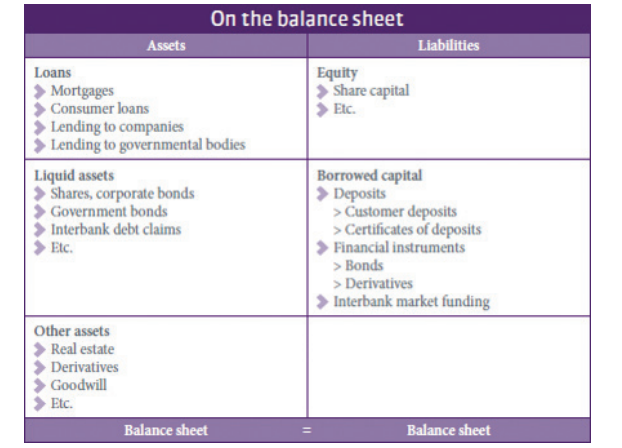
Soru 64
Which of the following is one of the liquid assets on a balance sheet?
Seçenekler
A
Share capital
B
Goodwill
C
Real estate
D
Mortgages
E
Interbank debt claims
Açıklama:
Soru 65
Which of the following is not one of the most important assets of a commercial bank?
Seçenekler
A
Computers
B
Loans
C
Securities
D
Cash Assets
E
Fixed Assets
Açıklama:
The most important assets of a commercial bank can be categorized as follows:
- Loans • Securities • Cash Assets • Fixed Assets
Soru 66
Which of the following is an example to fixed assets?
Seçenekler
A
Bankers
B
Land
C
Computer
D
Money
E
Government bonds
Açıklama:
Last but not the least, banks maintain some fixed assets like land and buildings to carry out their operations.
Soru 67
Which of the following is not one of the main sources of revenue?
Seçenekler
A
Granting loans
B
Investing in marketable securities
C
Servicing deposit accounts
D
Providing advice for personal problems
E
Carrying out foreign exchange
Açıklama:
A commercial bank can earn profit if its revenues exceed its expenses. The main sources of revenue in the form of interest revenue, commissions and fees for a commercial bank are as follows: • Granting loans • Investing in marketable securities • Providing credit cards and debit cards • Servicing deposit accounts • Providing financial advice • Providing wealth management services • Carrying out foreign exchange
Soru 68
Which of the following is not one of the most important types of risks, which
commercial banks face?
commercial banks face?
Seçenekler
A
Interest rate risk
B
Liquidity risk
C
Customer risk
D
Credit risk
E
Operational risk
Açıklama:
The most important types of risks, which commercial banks face, can be classified as follows:
- Interest rate risk, which arises from the different maturity structure of the banks’ assets and liabilities.
- Liquidity risk, which is the risk that a bank may not be able to meet its cash needs by selling assets or raising funds at a reasonable cost.
- Credit risk, which is the risk of changes in the economic value of the bank’s assets due to unexpected changes in the creditworthiness of counterparties.
- Operational risk, which includes the risk of damages caused by human and technological factors
Soru 69
............is an investment position intended to offset potential losses that may be incurred by a companion investment.
Which of the following best completes the sentence above?
Which of the following best completes the sentence above?
Seçenekler
A
Credit
B
Derivative
C
Hedge
D
Deposit
E
Loan
Açıklama:
A hedge is an investment position intended to offset potential losses that may be incurred by a companion investment.
Soru 70
. . . . . . . . .is the inability of the bank to meet its financial obligations when they become due.
Which of the following best completes the sentence above?
Which of the following best completes the sentence above?
Seçenekler
A
Liquidity risk
B
Interest rate risk
C
Credit risk
D
Operational risk
E
Gap analysis
Açıklama:
Liquidity risk is the inability of the bank to meet its financial obligations when they become due
Soru 71
Which of he following can not be categorized to the most important assets of a commercial bank?
Seçenekler
A
Cash Assets
B
Credit Cards
C
Securities
D
Loans
E
Fixed Assets
Açıklama:
Assets are items of value owned by businesses at a certain point of time. Those assets include notes and coins, balances with the Central Bank, inter-bank loans, advances, investments, premises and computers. The most important assets of a commercial bank can be categorized as follows:
• Loans
• Securities
• Cash Assets
• Fixed Assets
• Loans
• Securities
• Cash Assets
• Fixed Assets
Soru 72
Which of the following are widely used by businesses to finance their short-term working capital needs and are self-liquidating working capital loans, which can be withdrawn and repaid at different points of time within a certain limit?
Seçenekler
A
Balances
B
Investments in securities
C
Repos
D
Loans in the interbank market
E
Revolving credits
Açıklama:
Revolving credits are widely used by businesses to finance their short-term working capital needs. These credits are self-liquidating working capital loans, which can be withdrawn and repaid at different points of time within a certain limit. Hence, the balance of the loan fluctuates over time and interest rate applied to the loan may vary over time due to changing market conditions. Interest accumulates based on the fluctuating balance of the loan and is paid at the end of every quarter (end of March, June, September, December).
Soru 73
Which of the following are offered for a specific amount for a specific time charging a fixed interest?
Seçenekler
A
Balances
B
Spot credits
C
Repos
D
Loans in the interbank market
E
Revolving credits
Açıklama:
Another common type of loan made by commercial banks are spot credits or term loans, which are offered for a specific amount for a specific time charging a fixed interest. Term loans are generally used for a specific purpose like purchase of machinery.
Soru 74
Which of the funds lent are returned with interest at the maturity of the loan?
Seçenekler
A
Balances
B
Spot credits
C
Repos
D
Loans in the interbank market
E
Revolving credits
Açıklama:
Banks also offer loans in the interbank market. The funds lent are returned with interest at the maturity of the loan. Repurchase agreements (repos) are another way of providing short term loans. Banks purchase Treasury securities to sell them back at a later date by the repo agreement. The bank provides short-term financing to the customers and the securities of the customer provides security for the funds lent by the bank through the repo transaction.
Soru 75
Which categorie of assets include government bonds and Treasury bills?
Seçenekler
A
Repos
B
Loans in the interbank market
C
Investments in securities
D
Revolving credits
E
Time deposits
Açıklama:
Another category of assets includes investments in securities such as government bonds and Treasury bills. Banks own some assets in cash as a medium of Exchange in daily operations. Banks hold some vault cash at their offices to meet withdrawal demands. They also maintain some reserve deposits with the Central Bank as well as deposits with other commercial banks which are called correspondent balances. Last but not the least, banks maintain some fixed assets like land and buildings to carry out their operations.
Soru 76
Which of the following mainly covers individuals and includes financial services such as credit cards and consumer loans as well as mortgages?
Seçenekler
A
Repos
B
Loans in the interbank market
C
Retail banking
D
Investments in securities
E
Revolving credits
Açıklama:
Retail banking mainly covers individuals and includes financial services such as credit cards and consumer loans as well as mortgages.
Soru 77
Which of the following arises from the different maturity structure of the banks’ assets and liabilities?
Seçenekler
A
Operational risk
B
Interest rate risk
C
Asset Risk
D
Liquidity risk
E
Credit risk
Açıklama:
Interest rate risk, which arises from the different maturity structure of the banks’ assets and liabilities.
Soru 78
Which of the following is the risk that a bank may not be able to meet its cash needs by selling assets or raising funds at a reasonable cost.?
Seçenekler
A
Operational risk
B
Operational risk
Interest rate risk
Interest rate risk
C
Damage Risk
D
Liquidity risk
E
Credit risk
Açıklama:
Liquidity risk, which is the risk that a bank may not be able to meet its cash needs by selling assets or raising funds at a reasonable cost.
Soru 79
Which of the following is the risk of changes in the economic value of the bank’s assets due to unexpected changes in the creditworthiness of counterparties?
Seçenekler
A
Operational risk
B
Interest rate risk
C
Damage Risk
D
Liquidity risk
E
Credit risk
Açıklama:
Credit risk, which is the risk of changes in the economic value of the bank’s assets due to unexpected changes in the creditworthiness of counterparties.
Soru 80
Which of the following includes the risk of damages caused by human and technological factors?
Seçenekler
A
Operational risk
B
Interest rate risk
C
Damage Risk
D
Liquidity risk
E
Credit risk
Açıklama:
Operational Risk
Within the scope of operational risk, damages and losses may arise mainly due to the following reasons:
Within the scope of operational risk, damages and losses may arise mainly due to the following reasons:
- Infidelity of human resources
- IT crashes
- Human errors
- Software breakdowns
- Fraud
- Electronic theft
- Adverse natural events
- Robberies
- Inadequacy of the procedures, control systems and organizational procedures
Ünite 6
Soru 1
Which of the following is the most important participants in the direct market of financial system?
Seçenekler
A
Investment banks
B
Commercial banks
C
Universal banks
D
Participation banks
E
Insurance companies
Açıklama:
In the direct market, investment banks are the most important participants.
Soru 2
Which of the following investment bank sell their firm to Bank of America by the end of 2008?
Seçenekler
A
JP Morgan
B
Merrill Lynch
C
Bear Stearns
D
Lehman Brothers
E
Goldman Sachs
Açıklama:
Merrill Lynch, presumably to avoid a bankruptcy filing, agreed to sell their firm to Bank of America at a significant discount to historical prices by the end of 2008
Soru 3
All of the following is true about investment banks, except…
Seçenekler
A
They sometimes act as “market makers” in equity markets
B
They assits companies in managing their risks
C
They usually earns their income from fees
D
They are mostly involved in money market
E
They handle the issue of new securities on behalf of companies
Açıklama:
Investment-banking firms are mostly involved in security market operations.
Soru 4
I. Originating securities
II. Underwriting securities
III. Placing securities with investors
Which of above is a part of investment banks’ job in raising dept and equity financing for corporations or governments?
II. Underwriting securities
III. Placing securities with investors
Which of above is a part of investment banks’ job in raising dept and equity financing for corporations or governments?
Seçenekler
A
I only
B
II only
C
I and II
D
II and III
E
I, II and III
Açıklama:
The main business of investment banking is raising debt and equity financing for corporations or governments. This involves originating the securities, underwriting them, and then placing them with investors.
Soru 5
Which one of the following must be presented to investors by law?
Seçenekler
A
Securities’ hard copy
B
Poison pills
C
Tombstones
D
Prospectus
E
None of above
Açıklama:
By law, investors must be presented with a prospectus before they can invest in a new security.
Soru 6
I. Private placement
II. Firm commitment
III. Best efforts
Which of above is among the practices where securities are sold to a limited number of investors?
II. Firm commitment
III. Best efforts
Which of above is among the practices where securities are sold to a limited number of investors?
Seçenekler
A
I only
B
II only
C
I and II
D
II and III
E
I, II and III
Açıklama:
In a private placement, securities are sold to a limited number of investors rather than to the public as a whole.
Soru 7
Acquiring corporations require help in locating attractive corporations to pursue, soliciting stockholders to sell their stocks in a process called…
Seçenekler
A
IPO
B
Syndicate
C
Tender offer
D
Leveraged buyout
E
Private placement
Açıklama:
Acquiring corporations require help in locating attractive corporations to pursue, soliciting stockholders to sell their stocks in a process called a tender offer
Soru 8
“… is just a temporary loan until permanent financing is obtained. “
Which of the following would best fill the blank space above?
Which of the following would best fill the blank space above?
Seçenekler
A
Leveraged buyout
B
Bridge financing
C
Tender offer
D
Public offering
E
Security placing
Açıklama:
Bridge financing is just a temporary loan until permanent financing is obtained.
Soru 9
I. Valuation
II. Strategy
III. Impetuosity
Which of above can be thought as the key aspects of the advisory services by an investmen banking firm?
II. Strategy
III. Impetuosity
Which of above can be thought as the key aspects of the advisory services by an investmen banking firm?
Seçenekler
A
I only
B
II only
C
I and II
D
II and III
E
I, II and III
Açıklama:
Valuation, strategy, and tactics are the key aspects of the advisory services offered by an investment-banking firm. Impetuosity is opposite of tactics
Soru 10
Which of the following means selling one or more of existing divisions that suffered recent losses?
Seçenekler
A
Divestiture
B
Spin off
C
Carve-out
D
Asset stripping
E
Bridge financing
Açıklama:
An investment-banking firm might recommend that a corporation engage in a divestiture, in which it sells one or more of its existing divisions that suffered recent losses.
Soru 11
Which of the following are institutions that are allowed to accept deposits, make loans, underwrite securities, engage in brokerage activities, and sell and manufacture many other financial services such as insurance?
Seçenekler
A
Commercial banks
B
Investment banks
C
Universal banks
D
Factoring
E
Credit rating agency
Açıklama:
Universal banks are institutions that are allowed to accept deposits, make loans, underwrite securities, engage in brokerage activities, and sell and manufacture many other financial services such as insurance.
Soru 12
Which of the following bank is forced by Fed into the arms of JP Morgan to avoid a bankruptcy?
Seçenekler
A
Lehman Brothers
B
Goldman Sachs
C
Bear Stearns
D
Merrill Lynch
E
Morgan Stanley
Açıklama:
Goldman Sachs and Morgan Stanley turned into bank-holding companies; the US Federal Reserve (Fed) forced Bear Stearns into the arms of JP Morgan to avoid a bankruptcy; Lehman Brothers filed for bankruptcy protection after the Fed and Treasury Department ignored its requests for government support; and Merrill Lynch, presumably to avoid a similar bankruptcy filing, agreed to sell their firm to Bank of America at a significant discount to historical prices.
Soru 13
Which of the following acts as a marketing tool as the firm tries to persuade investors to apply for shares?
Seçenekler
A
Investment bank
B
Originator
C
Prospectus
D
Syndicate
E
Universal bank
Açıklama:
The prospectus acts as a marketing tool as the firm tries to persuade investors to apply for shares.
Soru 14
Which of the following is not the most important types of offering in the sale of new securities?
Seçenekler
A
Initial public offering
B
Secondary common stock offering
C
Bond offering
D
Unseasoned offering
E
Option offering
Açıklama:
The most important types of offering in the sale of new securities can be classified as initial public offering or unseasoned offering, secondary common stock offering or seasoned offering, and bond offering.
Soru 15
Which of the following is referred when an investment-banking firm buys the securities from the issuer and takes the risk of selling the securities to investors at a lower price?
Seçenekler
A
Public offering
B
Originator
C
Tombstones
D
Underwriting
E
Underpricing
Açıklama:
When an investment-banking firm buys the securities from the issuer and takes the risk of selling the securities to investors at a lower price, it is referred to as an underwriter.
Soru 16
Which of the following statements is true?
Seçenekler
A
Resisted acquisitions are called tender offer.
B
Acquiring corporations require help in locating attractive corporations to pursue, soliciting stockholders to sell their stocks in a process called a hostile.
C
Investment banking firms may suggest steps their customers should take to avoid a merger or takeover known as poison pills.
D
An issue may be under subscribed, and that means there are more offers to buy than there are securities available.
E
A thombstones is a group of investment banking firms, each of which buys a portion of the security issue.
Açıklama:
Resisted acquisitions are called hostile.
Acquiring corporations require help in locating attractive corporations to pursue, soliciting stockholders to sell their stocks in a process called a tender offer.
Investment banking firms may suggest steps their customers should take to avoid a merger or takeover known as poison pills.
An issue may also be oversubscribed, and that means there are more offers to buy than there are securities available.
A syndicate is a group of investment banking firms, each of which buys a portion of the security issue.
Acquiring corporations require help in locating attractive corporations to pursue, soliciting stockholders to sell their stocks in a process called a tender offer.
Investment banking firms may suggest steps their customers should take to avoid a merger or takeover known as poison pills.
An issue may also be oversubscribed, and that means there are more offers to buy than there are securities available.
A syndicate is a group of investment banking firms, each of which buys a portion of the security issue.
Soru 17
Which of the following is not one of the examples of poison pills?
Seçenekler
A
A potential target adds to its charter a provision where, if another company acquires one third of the shares, other shareholders have the right to sell their shares to that company for twice the recent average share price.
B
A potential target grants to its key employees stock options that vest (i.e., can be exercised) in the event of a takeover. This is liable to create an exodus of key employees immediately after a takeover, leaving an empty shell for the new owner.
C
A potential target adds to its charter provisions making it impossible for a new owner to get rid of existing directors for one or two years after an acquisition.
D
A potential target changes the voting structure so that shares owned by management have more votes than those owned by others.
E
A potential target issues shares that manually are converted to prefer shares when there is a change in control.
Açıklama:
1. A potential target adds to its charter a provision where, if another company acquires one third of the shares, other shareholders have the right to sell their shares to that company for twice the recent average share price. 2. A potential target grants to its key employees stock options that vest (i.e., can be exercised) in the event of a takeover. This is liable to create an exodus of key employees immediately after a takeover, leaving an empty shell for the new owner. 3. A potential target adds to its charter provisions making it impossible for a new owner to get rid of existing directors for one or two years after an acquisition. 4. A potential target issues preferred shares that automatically are converted to regular shares when there is a change in control. 5. A potential target adds a provision where existing shareholders have the right to purchase shares at a discounted price during or after a takeover. 6. A potential target changes the voting structure so that shares owned by management have more votes than those owned by others.
Soru 18
Which of the following can be defined as just a temporary loan until permanent financing is obtained?
Seçenekler
A
Poison pills
B
Underwriting
C
Leveraged buyout
D
Bridge financing
E
Tender offer
Açıklama:
Bridge financing is just a temporary loan until permanent financing is obtained.
Soru 19
Which of the following terms are the key aspects of the advisory services offered by an investment-banking firm?
Seçenekler
A
Valuation, strategy, and tactics
B
Valuation, strategy, and spin-off
C
Carve-out, spin-off, and financing
D
Strategy, financing, and spin-off
E
Asset stripping, valuation, and financing
Açıklama:
Valuation, strategy, and tactics are the key aspects of the advisory services offered by an investment-banking firm.
Soru 20
I. Bringing new securities to market
II. Deal making in the mergers and acquisitions
III. Advising corporations
Which of the above choices is/are distinctive primary market functions of investment-banking firms in financial structure?
II. Deal making in the mergers and acquisitions
III. Advising corporations
Which of the above choices is/are distinctive primary market functions of investment-banking firms in financial structure?
Seçenekler
A
Only I
B
Only II
C
I and II
D
I and III
E
I,II and III
Açıklama:
Investment-banking firms have three distinctive primary market functions in financial structure and these are as follows:
• bringing new securities to market,
• deal making in the mergers and acquisitions,
• advising corporations.
• bringing new securities to market,
• deal making in the mergers and acquisitions,
• advising corporations.
Soru 21
Which of the following statements about investment banks is not true?
Seçenekler
A
They take advantage of economies of scale as they pool the funds of many investors together.
B
They help their clients deal with asymmetric information and adverse selection problems in financial markets.
C
They advise their clients on bringing new securities to the market as well as M&A transactions.
D
They are a key participant in indirect credit market.
E
They usually earn their income from fees charged to clients rather than from commissions on stock trades.
Açıklama:
There are two fundamental ways that new financial claims can be brought to the market:
direct or indirect financing. In the indirect credit market, commercial banks are the most important
participants; in the direct market, investment banks are the most important participants.
direct or indirect financing. In the indirect credit market, commercial banks are the most important
participants; in the direct market, investment banks are the most important participants.
Soru 22
............... are institutions that are allowed to accept deposits, make loans, underwrite securities, engage in brokerage activities, and sell and manufacture many other financial services such as insurance?
Seçenekler
A
Commercial banks
B
Investment banks
C
Universal banks
D
Industrial banks
E
Exchange banks
Açıklama:
Universal banks are institutions that are allowed to accept deposits, make loans, underwrite securities, engage in brokerage activities, and sell and manufacture many other financial services such as insurance.
Soru 23
Company A buys the services of Investment Bank X to sell 1 million additional shares and raise additional funding with a desire to capitalize on its high share price after a strong quarter. This transaction is an example of ...............?
Seçenekler
A
An IPO
B
A seasoned offering
C
An unseasoned offering
D
Bond offering
E
An ICO
Açıklama:
A secondary common stock offering or seasoned offering is an offering of common stock that had been issued in the past by the corporation.
Soru 24
What is it called when an investment-banking firm agrees to buy the securities from the issuer at a particular price and then attempts to sell them in the market for a slightly higher price?
Seçenekler
A
A firm commitment
B
A best efforts practice
C
Standby underwriting
D
A back stop
E
A market out clause
Açıklama:
In the case of a firm commitment public offering, the investment-banking firm agrees to buy the securities from the issuer at a particular price and then attempts to sell them in the market for a slightly higher price.
Soru 25
Gross spread divided by the IPO price equals to gross spread ratio.
Company A receives $12 per share for its initial public offering whereas the underwriters sell the stock to the public at $14 per share. What is the gross spread ratio in this example?
Company A receives $12 per share for its initial public offering whereas the underwriters sell the stock to the public at $14 per share. What is the gross spread ratio in this example?
Seçenekler
A
13%
B
14%
C
15%
D
16%
E
17%
Açıklama:
The fee earned from underwriting a security is the difference between the price paid to the issuer and the price at which the investment-banking firm reoffers the security to the public. This difference is called the gross spread, or the underwriter discount.
Therefore gross spread in this example is $2 ($14-$12). Gross spead ratio equals to 14% ($2/$14).
Therefore gross spread in this example is $2 ($14-$12). Gross spead ratio equals to 14% ($2/$14).
Soru 26
I. The type of the security
II. The size of the offering
III. The risk taken by the investment-banking firm
IV. Underwriting costs
Which of the above affects the size of the gross spread?
II. The size of the offering
III. The risk taken by the investment-banking firm
IV. Underwriting costs
Which of the above affects the size of the gross spread?
Seçenekler
A
I and II
B
I and III
C
I, II and III
D
I, II and IV
E
I, II, III and IV
Açıklama:
Numerous factors affect the size of the gross spread. Two major factors are the type of security and the size of the offering. The risk taken by the investment-banking firm and underwriting costs also affect the size of the gross spread.
Soru 27
Company A is going public and wants to (1) offer its shares at market price and (2) numerous small and large investors to participate in the IPO process rather than a few favored clients of the investment-banking firm they are working with. What type of an offering process would you recommend to Company A?
Seçenekler
A
A bought deal
B
A rights offering
C
An auction process
D
A private placement
E
An unseasoned offering
Açıklama:
Auctions potentially overcome two of the problems with a traditional IPO. First, the price
that clears the market should be the market price if all potential investors have participated
in the bidding process. Second, the situations where investment-banking firms offer IPOs only
to their favored clients are avoided.
that clears the market should be the market price if all potential investors have participated
in the bidding process. Second, the situations where investment-banking firms offer IPOs only
to their favored clients are avoided.
Soru 28
After Carl Icahn bought a 10% percent stake in Netflix, the company adopted a plan to flood the market with new shares if an investor acquires 10% or more of Netflix's shares without approval from Netflix's board. This defensive move of the company is an example of ...............?
Seçenekler
A
A hostile takeover
B
A poison pill
C
A takeover bid
D
A hostile bid
E
A white squire
Açıklama:
Investment banking firms may suggest steps their customers should take to avoid a merger or takeover. These are known as poison pills.
Soru 29
............... is where a corporation is acquired by issuing debt and then taken private?
Seçenekler
A
A club deal
B
Bridge financing
C
Mezzanine financing
D
An LBO
E
An IBO
Açıklama:
An LBO is where a corporation is acquired by issuing debt and then taken private.
Soru 30
Investment Bank A advises Company X to sell its logistics division, which suffered significant loses recently, in order to both improve the company's profitability and prevent further investigations of competition authorities prior to its merger with Company Y. This is an example of ...............?
Seçenekler
A
A divestiture
B
A spin-off
C
Asset stripping
D
A carve-out
E
A split-up
Açıklama:
Alternatively, an investment banking firm might recommend that a corporation engages in a divestiture, in which it sells one or more of its existing divisions that suffered recent losses.
Soru 31
I. Bringing new securities to markets
II. Deal making in the mergers and acquisitions
III. Advising corporations
IV. Taking in deposits and lending them out
Which of the above are the primary functions of investment banks?
II. Deal making in the mergers and acquisitions
III. Advising corporations
IV. Taking in deposits and lending them out
Which of the above are the primary functions of investment banks?
Seçenekler
A
I, IV
B
II, III
C
I, II, III
D
II, III, IV
E
I, II, III, IV
Açıklama:
Investment-banking firms are best known as intermediaries that help corporations raise funds.
Despite its name, an investment bank is not a bank in the ordinary sense; that means, it is not a financial intermediary that takes in deposits and then lends them out.
Despite its name, an investment bank is not a bank in the ordinary sense; that means, it is not a financial intermediary that takes in deposits and then lends them out.
Soru 32
What is the term for structures that investment banks form when it is a big risk for them to undertake selling of securities?
Seçenekler
A
Syndicate
B
Investment Fund
C
Corporation
D
Conglomeration
E
Commission
Açıklama:
A syndicate is a group of investment banking firms, each of which buys a portion of the security issue.
One way that helps investment banks to reduce the risk is by forming a syndicate.
One way that helps investment banks to reduce the risk is by forming a syndicate.
Soru 33
Which of the below is the term that can also be used instead of initial public offering?
Seçenekler
A
Seasoned offering
B
Bond offering
C
Secondary common stock offering
D
Unseasoned offering
E
Low-risk offering
Açıklama:
An initial public offering (IPO) or unseasoned offering is a common stock offering issued by corporations that had not previously issued common stock to the public.
The most important types of offering in the sale of new securities can be classified as initial public offering or unseasoned offering, secondary common stock offering or seasoned offering, and bond offering.
The most important types of offering in the sale of new securities can be classified as initial public offering or unseasoned offering, secondary common stock offering or seasoned offering, and bond offering.
Soru 34
Which of the below cannot be said about public offerings?
Seçenekler
A
A problem investment banking firms face with initial public offerings is how to price them.
B
The reputation of the investment-banking firm is never at stake when it attempts to place the stock of the issuing firm.
C
In secondary common stock offerings, there is no prior market price on which to base the offering price.
D
If securities are priced too high, there may not be sufficient demand for them as expected.
E
For traditional bond offerings, the gross spread mostly is even lower than for a secondary common stock offering.
Açıklama:
The most important types of offering in the sale of new securities can be classified as initial public offering or unseasoned offering, secondary common stock offering or seasoned offering, and bond offering.
The reputation of the investment-banking firm is at stake when it attempts to place the stock of the issuing firm.
The reputation of the investment-banking firm is at stake when it attempts to place the stock of the issuing firm.
Soru 35
- Investment banks' main job is marketing securities and dealing with the securities markets.
- Investment bankers act as intermediaries between corporations or governments and the general public when corporations or governments want to raise capital.
- In the indirect credit market, investment banks are the most important participants;
Seçenekler
A
Only I
B
Only II
C
I and II
D
II and III
E
I, II and III
Açıklama:
- Investment banks' main job is marketing securities and dealing with the securities markets.
- Investment bankers act as intermediaries between corporations or governments and the general public when corporations or governments want to raise capital.
- In the indirect credit market, commercial banks are the most important participants;
Soru 36
Which of the following is true for investment banking?
Seçenekler
A
Investment-banking firms are best known as intermediaries that help corporations raise funds.
B
An investment bank is a bank in the ordinary sense.
C
Investment banking firms can not assist companies in managing their risks.
D
Investment banking firms earn their income from commissions on stock trades.
E
In the indirect credit market, investment banks are the most important participants.
Açıklama:
Investment-banking firms are best known as intermediaries that help corporations raise funds.
Soru 37
- Bringing new securities to market
- Deal making in the mergers and acquisitions
- Advising corporations
Seçenekler
A
Only I
B
Only II
C
I and III
D
II and III
E
I, II and III
Açıklama:
Investment-banking firms have three distinctive primary market functions in financial structure and these are as follows: • bringing new securities to market, • deal making in the mergers and acquisitions, • advising corporations.
Soru 38
- Originating the securities
- Underwriting securities
- Placing securities with investors.
Seçenekler
A
Only II
B
I and II
C
II and III
D
I and III
E
I, II and III
Açıklama:
The main business of investment banking is raising debt and equity financing for corporations or governments. This involves originating the securities, underwriting them, and then placing them with investors. When a corporation has an intention to borrow or raise funds, it may decide to issue long-term debt or equity instruments.
Soru 39
Which of the following is defined as a group of investment banking firms, each of which buys a portion of the security issue?
Seçenekler
A
A syndicate
B
The prospectus
C
Unseasoned offering
D
Tombstones
E
The originator
Açıklama:
A syndicate is a group of investment banking firms, each of which buys a portion of the security issue.
Soru 40
Which of the following offering is defined as a common stock offering issued by corporations that had not previously issued common stock to the public?
Seçenekler
A
Initial public offering
B
Secondary common stock offering
C
Bond offering
D
The auction process
E
Deal making in mergers
Açıklama:
An IPO is a common stock offering issued by corporations that had not previously issued common stock to the public
Soru 41
- One firm acquires ownership of another firm by buying its shares.
- It happens when two businesses come together to form one new company.
- Resisted acquisitions are called hostile.
Seçenekler
A
Only I
B
Only II
C
I and III
D
II and III
E
I, II and III
Açıklama:
- In an acquisition, one firm acquires ownership of another firm by buying its shares.
- Mergers happens when two businesses come together to form one new company.
- Resisted acquisitions are called hostile.
Soru 42
Which of the following is true for investment banks dealing with mergers and acquisitions?
Seçenekler
A
Investment bankers only serve target corporations.
B
Target corporations may hire investment bankers to help avoid undesired takeover attempts.
C
Target corporations require help in soliciting stockholders to sell their stocks in a process called a tender offer.
D
Target corporations require help in locating attractive corporations to pursue.
E
Target corporations require help in raising the required capital to complete the transaction.
Açıklama:
Target corporations may hire investment bankers to help avoid undesired takeover attempts.
Soru 43
Which of the following terms is defined as checking the validity of all the important information the corporation provided for the potential buyers?
Seçenekler
A
Poison pills
B
Due diligence
C
An LBO
D
Bridge financing
E
Tender offer
Açıklama:
Due diligence is checking the validity of all the important information the corporation provided for the potential buyers. The potential buyers want to make sure that if a corporation is purchased, they get what they are promised.
Soru 44
- Valuation
- Strategy
- Tactics
Seçenekler
A
Only I
B
I and II
C
II and III
D
I and III
E
I, II and III
Açıklama:
Valuation, strategy, and tactics are the key aspects of the advisory services offered by an investment-banking firm.
Soru 45
The fee earned from underwriting a security is the difference between the price paid to the issuer and the price at which the investment-banking firm reoffers the security to the public. Which of the below is the term used for this difference?
Seçenekler
A
Gross difference
B
Gross domestic product
C
Gross spread
D
Gross sale
E
Gross value
Açıklama:
Numerous factors affect the size of the gross spread. Two major factors are the type of security and the size of the offering (Fabozzi et al., 2014, pp. 277-280).
This difference is called the gross spread, or the underwriter discount.
This difference is called the gross spread, or the underwriter discount.
Soru 46
I. Mutual funds II. Pension funds III. Commercia banks IV. Insurance companies
Which of the above can buy when securities are sold to a limited number of investors rather than to the public as a whole?
Which of the above can buy when securities are sold to a limited number of investors rather than to the public as a whole?
Seçenekler
A
I, II
B
II, III
C
III, IV
D
I, II, III
E
I, II, III, IV
Açıklama:
In a private placement, securities are sold to a limited number of investors rather than to the public as a whole.
The buyers of private placements must be large enough to purchase large amounts of securities at once. This means that the usual buyers are mutual funds, commercial banks, pension funds, and insurance companies. (Mishkin & Eakins, 2018, pp. 575-576).
The buyers of private placements must be large enough to purchase large amounts of securities at once. This means that the usual buyers are mutual funds, commercial banks, pension funds, and insurance companies. (Mishkin & Eakins, 2018, pp. 575-576).
Soru 47
Which of the below is the term used when the sales agents have not been able to generate enough interest in the security among their clients to sell all of the securities by the issue date?
Seçenekler
A
Fully subscribed
B
Overwritten
C
Underwritten
D
Undersubscribed
E
Oversubscribed
Açıklama:
The aim in an IPO is to fully subscribe the issue. A fully subscribed issue is one where all of the securities available for sale have been spoken for before the issue date. An issue may also be oversubscribed, and that means there are more offers to buy than there are securities available.
Issues of securities may also be undersubscribed. That means the sales agents have not been able to generate enough interest in the security among their clients to sell all of the securities by the issue date.
Issues of securities may also be undersubscribed. That means the sales agents have not been able to generate enough interest in the security among their clients to sell all of the securities by the issue date.
Soru 48
Which of the below is not true for investment banks regarding Mergers and Acquisitions?
Seçenekler
A
They find merger partners.
B
They underwrite any new securities to be issued by the merged corporations.
C
They assess the value of target corporations.
D
They recommend terms of the merger agreement.
E
They only assist acquiring corporations.
Açıklama:
Investment banking firms may suggest steps their customers should take to avoid a merger or takeover. These are known as poison pills.
They even assist target corporations in preventing a merger (for example, writing restrictive provisions into a potential target firm’s securities contracts) (Cornett & Saunders, 2014, p. 504).
They even assist target corporations in preventing a merger (for example, writing restrictive provisions into a potential target firm’s securities contracts) (Cornett & Saunders, 2014, p. 504).
Soru 49
Which of the examples for poison pills below is not accurate?
Seçenekler
A
A potential target issues preferred shares that automatically are converted to regular shares when there is a change in control.
B
A potential target changes the voting structure so that shares owned by others have more votes than those owned by management.
C
A potential target grants to its key employees stock options that vest in the event of a takeover.
D
A potential target adds to its charter provisions making it impossible for a new owner to get rid of existing directors for one or two years after an acquisition.
E
A potential target adds a provision where existing shareholders have the right to purchase shares at a discounted price during or after a takeover
Açıklama:
Investment banking firms may suggest steps their customers should take to avoid a merger or takeover. These are known as poison pills.
A potential target changes the voting structure so that shares owned by management have more votes than those owned by others.
A potential target changes the voting structure so that shares owned by management have more votes than those owned by others.
Soru 50
After a target corporation is acquired, some of its individual divisions may be sold. Which of the below is the term used for it?
Seçenekler
A
Bridge financing
B
Carve-out
C
Asset stripping
D
Divestiture
E
Leveraged buy-out
Açıklama:
Investment banks also commonly serve as sole advisors as well as makers of mergers. They assess potential synergies that might result from combining two businesses, and they attempt to determine whether the synergies would be worthwhile for the potential acquirer after considering the premium that the acquirer will likely have to pay to obtain controlling interest in the target corporation.
After a target corporation is acquired, some of its individual divisions may be sold. This process is referred to as asset stripping (Madura, 2015, pp. 645-646).
After a target corporation is acquired, some of its individual divisions may be sold. This process is referred to as asset stripping (Madura, 2015, pp. 645-646).
Soru 51
Which of the following acts as a marketing tool as the firm tries to persuade investors to apply for shares?
Seçenekler
A
Syndicate
B
Prospectus
C
Firm commitment
D
Due Diligence
E
Originator
Açıklama:
The prospectus acts as a marketing tool as the firm tries to persuade investors to apply for shares.
Soru 52
Which of the following is a common stock offering issued by corporations that had not previously issued common stock to the public?
Seçenekler
A
Seasoned offering
B
Public offering
C
Bond offering
D
Secondary common stock offering
E
Initial public offering
Açıklama:
An initial public offering (IPO) or unseasoned offering is a common stock offering issued by corporations that had not previously issued common stock to the public.
Soru 53
Which of the following is an offering of common stock that had been issued in the past by the corporation?
Seçenekler
A
Unseasoned offering
B
Public offering
C
Bond offering
D
Secondary common stock offering
E
Initial public offering
Açıklama:
A secondary common stock offering or seasoned offering is an offering of common stock that had been issued in the past by the corporation (Fabozzi et al., 2014, pp. 274-275).
Soru 54
Sometimes the financing takes the form of a/an __________ in which the securities are sold to a tiny number of large institutional investors, such as life insurance companies or pension funds, and the investment-banking firm receives a fee.
Seçenekler
A
Public offering
B
Syndicate
C
Firm commitment
D
Originator
E
Private placement
Açıklama:
There are several different types of arrangement between the investment banking firm and the corporation in security offerings. Sometimes the financing takes the form of a private placement in which the securities are sold to a tiny number of large institutional investors, such as life insurance companies or pension funds, and the investment-banking firm receives a fee. On other occasions, it takes the form of a public offering, where securities are offered to the public. A public offering might be a best efforts or firm commitment practice.
Soru 55
The fee earned from underwriting a security is the difference between the price paid to the issuer and the price at which the investment-banking firm reoffers the security to the public. What is this difference called?
Seçenekler
A
bought deal
B
gross spread
C
firm commitment
D
due diligence
E
levered buyout
Açıklama:
The fee earned from underwriting a security is the difference between the price paid to the issuer and the price at which the investment-banking firm reoffers the security to the public. This difference is called the gross spread, or the underwriter discount. Numerous factors affect the size of the gross spread. Two major factors are the type of security and the size of the offering (Fabozzi et al., 2014, pp. 277-280).
Soru 56
Acquiring corporations require help in locating attractive corporations to pursue, soliciting stockholders to sell their stocks in a process. What is this process called?
Seçenekler
A
bought deal
B
gross spread
C
tender offer
D
due diligence
E
levered buyout
Açıklama:
Investment bankers serve both acquirers and target corporations. Acquiring corporations require help in locating attractive corporations to pursue, soliciting stockholders to sell their stocks in a process called a tender offer, and raising the required capital to complete the transaction. Target corporations may hire investment bankers to help avoid undesired takeover attempts (Mishkin & Eakins, 2018, pp. 577-578).
Soru 57
Which of the following is not a step in poison pills?
Seçenekler
A
A potential target adds to its charter provisions making it impossible for a new owner to get rid of existing directors for one or two years after an acquisition.
B
A potential target grants to its key employees stock options that vest in the event of an underwriting.
C
A potential target adds a provision where existing shareholders have the right to purchase shares at a discounted price during or after a takeover.
D
A potential target changes the voting structure so that shares owned by management have more votes than those owned by others.
E
A potential target issues preferred shares that automatically are converted to regular shares when there is a change in control.
Açıklama:
Investment banking firms may suggest steps their customers should take to avoid a merger or takeover. These are known as poison pills. Examples of poison pills are (Hull, 2012, p. 36):
- A potential target adds to its charter a provision where, if another company acquires one third of the shares, other shareholders have the right to sell their shares to that company for twice the recent average share price.
- A potential target grants to its key employees stock options that vest (i.e., can be exercised) in the event of a takeover. This is liable to create an exodus of key employees immediately after a takeover, leaving an empty shell for the new owner.
- A potential target adds to its charter provisions making it impossible for a new owner to get rid of existing directors for one or two years after an acquisition.
- A potential target issues preferred shares that automatically are converted to regular shares when there is a change in control.
- A potential target adds a provision where existing shareholders have the right to purchase shares at a discounted price during or after a takeover.
- A potential target changes the voting structure so that shares owned by management have more votes than those owned by others.
Soru 58
Investment banking firms may suggest that some of a target corporation’s divisions will not be compatible with the acquirer’s operations. Thus, after a target corporation is acquired, some of its individual divisions may be sold. What is this process called?
Seçenekler
A
divestiture
B
spin off
C
carve-out
D
soft dollars
E
asset stripping
Açıklama:
Investment banking firms may suggest that some of a target corporation’s divisions will not be compatible with the acquirer’s operations. Thus, after a target corporation is acquired, some of its individual divisions may be sold. This process is referred to as asset stripping (Madura, 2015, pp. 645-646).
Soru 59
What is the process called in which the corporation would sell one of its units to new stockholders through an IPO?
Seçenekler
A
divestiture
B
spin off
C
carve-out
D
soft dollars
E
asset stripping
Açıklama:
Investment banking firms commonly suggest that the corporation could benefit from revising its ownership structure. It may recommend a carve-out, in which the corporation would sell one of its units to new stockholders through an IPO. The proceeds of the IPO go to the parent company.
Soru 60
What is the portion of the fee or commission allocated to research and advising services called?
Seçenekler
A
divestiture
B
spin off
C
carve-out
D
soft dollars
E
asset stripping
Açıklama:
Investment-banking firms are making increasing inroads into traditional bank service areas such as small-business lending and the trading of loans. In performing these functions, investment banking firms normally act as agents for a fee. Fees charged are often based on the total bundle of services performed for the client by the corporation. The portion of the fee or commission allocated to research and advising services is called soft dollars.
Ünite 7
Soru 1
Which of the following is not one of the types of financial crisis?
Seçenekler
A
Money crisis
B
Banking crisis
C
External debt crisis
D
Systemic financial crisis
E
Economic crisis
Açıklama:
Although it is a controversial issue what the concept of crisis refers to, there is a consensus on that there exists four types of financial or economic crises in general:
• money crisis
• banking crisis
• external debt crisis
• systemic financial crisis
• money crisis
• banking crisis
• external debt crisis
• systemic financial crisis
Soru 2
Which of the following is the first recorded speculative balloon?
Seçenekler
A
The Tulip Madness
B
1929 Great Depression
C
1980 Global Debt Crisis
D
2008-2009 Global Financial and Economic Crisis
E
2010 European Sovereign Debt Crisis
Açıklama:
The Tulip Madness is often seen as the first recorded speculative balloon.
Soru 3
_ _ _ _ _ _ _ arises when the actual or potential bank failures prevent banks from fulfilling their obligations, or when the government is forced to intervene to prevent this failure.
Fill in the blank above correctly with one of the choices below.
Fill in the blank above correctly with one of the choices below.
Seçenekler
A
Economic crisis
B
External debt crisis
C
Money crisis
D
Systematic financial crisis
E
Banking crisis
Açıklama:
A banking crisis arises when the actual or potential bank failures prevent banks from fulfilling their obligations, or when the government is forced to intervene to prevent this failure. An external debt crisis occurs if an entity cannot pay the foreign debts, whether it is a government or private sector.
Soru 4
Which of the following is not one of the cause of financial crisis?
Seçenekler
A
Current account deficits
B
Excessive borrowing of government
C
Budget excess
D
Excessive borrowing of businesses
E
High uncertainty, usually following economic downturns or stock market crashes
Açıklama:
Financial crises are usually caused by the following factors (Mishkin and Eakins, 2012):
• Mismanagement of financial liberalization
• Asset Price bubbles or booms, meaning market prices of assets realized above economic values
• High uncertainty, usually following economic downturns or stock market crashes
• Current account deficits
• Budget deficits
• Excessive borrowing of government
• Excessive borrowing of businesses
• Vulnerability or fragility of banking industry
• Mismanagement of financial liberalization
• Asset Price bubbles or booms, meaning market prices of assets realized above economic values
• High uncertainty, usually following economic downturns or stock market crashes
• Current account deficits
• Budget deficits
• Excessive borrowing of government
• Excessive borrowing of businesses
• Vulnerability or fragility of banking industry
Soru 5
Britain has lost its leadership position in the economy as a result of which the economic crisis?
Seçenekler
A
The Tulip Madness
B
Great Depression
C
1980 Global Debt Crisis
D
2008-2009 Global Financial and Economic Crisis
E
2010 European Sovereign Debt Crisis
Açıklama:
Ultimately, the panic in 1873 turned into an international economic crisis in many parts of the world, including the USA and Europe. In some countries, including Britain, it continued to the mid-1890s and was named “Long (Great) Depression”. At the end of this process, Britain lost its leadership position in the economy.
Soru 6
_ _ _ _ _ _ _ is a type of financial fraud based on the principle of continuous fund raising from newcomers to the system.
Fill in the blank above correctly with one of the choices below.
Fill in the blank above correctly with one of the choices below.
Seçenekler
A
Ponzi finance
B
Mezzazine finance
C
External debt
D
Internal debt
E
Capital
Açıklama:
Ponzi finance is a type of financial fraud based on the principle of continuous fund raising from newcomers to the system.
Soru 7
With which of the following events the broke out in the US real estate market in the second half of 2007 became global crisis in 2008?
Seçenekler
A
Increasing of house prices
B
Enron’s bankruptcy
C
Bankruptcy of Lehman Brothers
D
Debt crisis in Ireland
E
FED's late decisions
Açıklama:
The financial crisis which broke out in the US real estate market in the second half of 2007 became global crisis in 2008 with the bankruptcy of “Lehman Brothers” in September 2008.
Soru 8
Which of the following crisis in Turkey was a turning point for Turkish economy that was no longer protectionist and independent, but it was an open economy, which depended on foreign credits?
Seçenekler
A
1929 crisis
B
1946 crisis
C
1980 crisis
D
1994 crisis
E
2000 crisis
Açıklama:
1946 was a turning point for Turkish economy. In 1946, Turkish economy was no longer protectionist and independent, but it was an open economy, which depended on foreign credits (Boratav, 2015: 96). In 1946, the first big devaluation in the history of Turkey was carried out. This decision caused cost inflation to increase. Imports were increasing rapidly, thus the foreign trade deficit was also rising. There was a temporary recession and contraction in the markets. Industrial projects were adjourned. The Government ruled by Recep Peker resigned and it was replaced by Hasan Saka on 10 September, 1947. The economy was again in a bad condition in 1948. In the general elections held in 1950, the Democrat Party came to power with 53% of the votes. New lands were opened to agriculture. Due to the good climatic conditions, productivity in agriculture also increased export prices. During this period, foreign aid also increased and the 1946 crisis was overcome. This crisis was largely a result of World War II.
Soru 9
Which period is called the “Debt Decade” in the economic literature?
Seçenekler
A
After 1929
B
After 2008
C
After 1982
D
After World War II
E
After the Tulip Madness
Açıklama:
From the beginning of the 1980s, a number of developing countries began to experience a debt crisis. The Mexican moratorium in August 1982 gave a start to the period which is called the “Debt Decade” in the economic literature. This country was followed by some other Latin American countries such as Brazil, Chile and Argentina, and some African countries.
Soru 10
Which of the following is not one of the macroeconomic problems which stock prices cause them?
Seçenekler
A
Diminshing credits
B
Closure of workplace
C
Bankruptcy of banks
D
Increasing money supply
E
Firing of workers
Açıklama:
Declines in stock prices led to significant macroeconomic problems such as:
• diminishing credits,
• closure of workplaces,
• firing of workers,
• bankruptcy of banks,
• declining money supply,
• other economically detrimental events.
• diminishing credits,
• closure of workplaces,
• firing of workers,
• bankruptcy of banks,
• declining money supply,
• other economically detrimental events.
Soru 11
Which of the following is not one of the types of financial crises?
Seçenekler
A
money crisis
B
Internal debt crisis
C
banking crisis
D
external debt crisis
E
systemic financial crisis
Açıklama:
Although it is a controversial issue what the concept of crisis refers to, there is a consensus on that there exists four types of financial or economic crises in general:
• money crisis
• banking crisis
• external debt crisis
• systemic financial crisis
• money crisis
• banking crisis
• external debt crisis
• systemic financial crisis
Soru 12
Which financial crisis in history was an indirect consequence of the bankruptcy of the East India Company, and took place in England in 1772 in connection with the bombing of the Bengal Balloon?
Seçenekler
A
The 1772 credit crisis
B
The Tulip Madness
C
1796-1797 panic
D
Long (Great) Depression
E
1929 Great Depression
Açıklama:
The 1772 credit crisis is the first of financial panics. This crisis was an indirect consequence of the bankruptcy of the East India Company, and it took place in England in 1772 in connection with the bombing of the Bengal Balloon.
Soru 13
Which of the following was the most devastating financial collapse ever seen in US history to that date?
Seçenekler
A
The 1772 credit crisis
B
The 1929 Wall Street Depression or the Great Depression
C
1980 Global Debt Crisis
D
2008-2009 Global Financial and Economic Crisis
E
2010 European Sovereign Debt Crisis
Açıklama:
The 1929 Wall Street Depression (October 1929) or the Great Depression was the most devastating financial collapse ever seen in US history to that date when its consequences were taken into account.
Soru 14
During Turkey’s currency crisis in _____, output fell 6 percent, inflation rose to three digit levels, the Central Bank lost half of its reserves, and the exchange rate (against the U.S. dollar) depreciated by more than half in the first three months of the year.
Which of the following best fills in the blank above?
Which of the following best fills in the blank above?
Seçenekler
A
1964
B
1980
C
1994
D
2000
E
2001
Açıklama:
During Turkey’s currency crisis in 1994, output fell 6 percent, inflation rose to three digit levels, the Central Bank lost half of its reserves, and the exchange rate (against the U.S. dollar) depreciated by more than half in the first three months of the year.
Soru 15
Which of the following is one of the main objectives of imposing financial regulations?
Seçenekler
A
to restrict competition
B
to ensure deposits
C
to assess of risk management
D
to supervise capital requirements
E
to protect the consumers
Açıklama:
The main objectives of imposing financial regulations are as follows (Llewellyn, 1999): • to sustain systemic stability,
• to maintain the safety and soundness of financial institutions,
• to protect the consumers.
• to maintain the safety and soundness of financial institutions,
• to protect the consumers.
Soru 16
Which of the following is not one of the differences of Basel II from Basel I?
Seçenekler
A
BaselII includes a“moresophisticated”measurement framework for evaluating capital adequacy.
B
In Basel II, an explicit weight is assigned to operational risk.
C
Basel II is more risk-sensitive than Basel 1.
D
The Basel II regulatory framework was able to maintain the adequate capital
E
Basel II allows a greater use of internal models for risk assessment
Açıklama:
The proclaimed features of Basel II and its differences from Basel I are the following (Moosa, 2015).:
• BaselIIincludes a “moresophisticated”measurement framework for evaluating capital adequacy;
• Basel II is not only about capital adequacy, but also about improving risk management in the finance industry by providing the correct incentives for better corporate governance and fostering transparency;
• In Basel II, an explicit weight is assigned to operational risk;
• Basel II is more risk-sensitive than Basel 1;
• Basel II allows a greater use of internal models for risk assessment and the calculation of regulatory capital
• BaselIIincludes a “moresophisticated”measurement framework for evaluating capital adequacy;
• Basel II is not only about capital adequacy, but also about improving risk management in the finance industry by providing the correct incentives for better corporate governance and fostering transparency;
• In Basel II, an explicit weight is assigned to operational risk;
• Basel II is more risk-sensitive than Basel 1;
• Basel II allows a greater use of internal models for risk assessment and the calculation of regulatory capital
Soru 17
Which of the following is not one of the effects of financial crisis?
Seçenekler
A
Economic downturn
B
Deterioration of cash flows
C
Decrease in company failures
D
Decline of lending
E
Rises in debt burdens
Açıklama:
The effects of the financial crisis, in general, may include:
• Economic downturn
• Deterioration of cash flows
• Decline of lending
• Deterioration in the balance sheets of financial institutions
• Deterioration in the balance sheets of businesses
• Currency crises
• Rises in debt burdens
• Bank failures
• Company failures
• Increased volatility in financial markets
• Rises in inflation and interest rates
• Rises in unemployment
• Economic downturn
• Deterioration of cash flows
• Decline of lending
• Deterioration in the balance sheets of financial institutions
• Deterioration in the balance sheets of businesses
• Currency crises
• Rises in debt burdens
• Bank failures
• Company failures
• Increased volatility in financial markets
• Rises in inflation and interest rates
• Rises in unemployment
Soru 18
What is the first recorded speculative balloon in history?
Seçenekler
A
The bankruptcy of the South Sea Company
B
The Tulip Madness
C
The 1796-1797 panic
D
The Long (Great) Depression
E
The Great Depression
Açıklama:
The Tulip Madness is often seen as the first recorded speculative balloon.
Soru 19
_____ is a type of financial fraud based on the principle of continuous fund raising from newcomers to the system.
Which of the following best fills in the blank above?
Which of the following best fills in the blank above?
Seçenekler
A
Financial balloon
B
Asset depreciation
C
Loan fraud
D
Ponzi finance
E
credit fraud
Açıklama:
Ponzi finance is a type of financial fraud based on the principle of continuous fund raising from newcomers to the system.
Soru 20
When was Basel III Accord released?
Seçenekler
A
1980
B
1994
C
1998
D
2008
E
2010
Açıklama:
Basel III Accord released in December 2010, the new Basel Accord is expected to be a stringent reference in prudential regulation in the global banking system.
Soru 21
Which of the following is not one of the financial or economic crisis in general?
Seçenekler
A
Money crisis
B
Internal debt crisis
C
Banking crisis
D
External debt crisis
E
Systemic financial crisis
Açıklama:
Although it is a controversial issue what the concept of crisis refers to, there is a consensus on that there exists four types of financial or economic crises in general:
• money crisis
• banking crisis
• external debt crisis
• systemic financial crisis
• money crisis
• banking crisis
• external debt crisis
• systemic financial crisis
Soru 22
When did two famous stock market balloons burst out?
Seçenekler
A
1720
B
1730
C
1740
D
1750
E
1760
Açıklama:
The first two famous stock market balloons are:• the South Sea Company (UK), which was based in the UK, and • the Mississippi Company (Project), which was based in France. These two balloons suddenly burst out in 1720 and thousands of unsuspecting investors went bankrupt.
Soru 23
Which of the following caused the Roaring Twenties to come to an end?
Seçenekler
A
The Tulip Madness
B
The bankruptcy of the South Sea Company
C
The 1796-1797 panic
D
Henry Ford’s mass production
E
The Great Depression
Açıklama:
On October 29 1929, -also known as ‘The Black Tuesday’-, the price of shares went down for a full month at an unprecedented rate. With the collapse of 1929, the Roaring Twenties came to an end.
Soru 24
I. The crisis in South Asia
II. The Mexican Crisis
III. European debt crisis in Greece
Which of the crises mentioned above emerged before 2000?
II. The Mexican Crisis
III. European debt crisis in Greece
Which of the crises mentioned above emerged before 2000?
Seçenekler
A
I and III
B
I and II
C
II and III
D
Only I
E
I,II, and III
Açıklama:
Some of the debt crises from past to today are as follows (Yavuz et al, 2013; Ulusoy, 2012):• The crisis in Southeast Asia in 1990s,• The Mexican crisis in 1994, • The crisis in Russia in 1998 -which is a classic bad management crisis-, • The crisis in Argentina in 2000,• European debt crisis that started in Greece, Portugal and Ireland in 2010 and later included Italy and Spain.
Soru 25
When did Lehman brothers go bankrupt?
Seçenekler
A
2006
B
2007
C
2008
D
2009
E
2010
Açıklama:
The financial crisis which broke out in the US real estate market in the second half of 2007 became global crisis in 2008 with the bankruptcy of “Lehman Brothers” in September 2008.
Soru 26
When was Economic Depression Tax Law accepted?
Seçenekler
A
1929
B
1930
C
1931
D
1932
E
1933
Açıklama:
On 30 November 1930, the “Economic Depression Tax Law” was accepted.
Soru 27
When was the first devaluation in Turkish history carried out?
Seçenekler
A
1944
B
1945
C
1946
D
1947
E
1948
Açıklama:
In 1946, the first big devaluation in the history of Turkey was carried out.
Soru 28
Which of the following did not happen during Turkey's currency crisis in 1994?
Seçenekler
A
Output fell 6 percent
B
Inflation rose to three digit levels
C
The Central Bank lost half of its reserves
D
The exchange rate depreciated by more than half in the first three months of the year
E
Turkey's external debt due was 256 million dollars
Açıklama:
During Turkey’s currency crisis in 1994, output fell 6 percent, inflation rose to three-digit levels, the Central Bank lost half of its reserves, and the exchange rate (against the U.S. dollar) depreciated by more than half in the first three months of the year.
Soru 29
Which of the following country was not in Basel I ?
Seçenekler
A
Canada
B
Italy
C
Belgium
D
Spain
E
Japan
Açıklama:
The Basel Committee consists of senior representatives of bank supervisory authorities and central banks from Belgium, Canada, France, Germany, Italy, Japan, Luxembourg, Netherlands, Sweden, Switzerland, United Kingdom and the United States.
Soru 30
When was Basel III Accord released?
Seçenekler
A
2010
B
2011
C
2012
D
2013
E
2014
Açıklama:
Basel III Accord released in December 2010, the new Basel Accord is expected to be a stringent reference in prudential regulation in the global banking system.
Soru 31
I. Current account deficits
II. Mismanagement of financial liberalization
III. Asset price bubbles or booms
IV. Rises in debt burdens
Which of the above are causes of financial crises?
II. Mismanagement of financial liberalization
III. Asset price bubbles or booms
IV. Rises in debt burdens
Which of the above are causes of financial crises?
Seçenekler
A
I and II
B
I and III
C
I, II and III
D
I, II and IV
E
II, III and IV
Açıklama:
Current account deficits, mismanagement of financial liberalization, and asset price bubbles or booms are causes of financial crises, whereas rises in debt burdens are an example of outcomes of financial crises.
Soru 32
What is the name of the period in Dutch history between the years 1585-1702 when the Netherlands became one of the world’s leading countries of science, commerce, and art?
Seçenekler
A
The Tulip Madness
B
Dutch Golden Age
C
The Bengal Balloon
D
FirstStadtholderless Period
E
Keukenhof
Açıklama:
Dutch Golden Age: The name given in Dutch history between the years 1585-1702. In this period, the Netherlands became one of the world’s leading countries of science, commerce and art.
Soru 33
Which of the following statements is not true?
Seçenekler
A
The Tulip Madness occurred in a time when the Netherlands lived in the Golden Age.
B
18. Century is called the era of stock market balloons.
C
The 1772 credit crisis was an indirect consequence of the bankruptcy of the Mississippi Company.
D
Companies and institutions that influenced sovereignty and commercial factors were the main causes of the bankruptcy of the East India Company.
E
The panic in 1873 turned into an international economic crisis in many parts of the world, including the USA and Europe.
Açıklama:
The 1772 credit crisis is the first of these panics. This crisis was an indirect consequence of the bankruptcy of the East India Company, and it took place in England in 1772 in connection with the bombing of the Bengal Balloon.
Soru 34
............... was the most devastating financial collapse ever seen in US history to that date, and initiated a ten-year economic slowdown affecting all western industrialized countries?
Seçenekler
A
The Bengal Balloon
B
The 1929 Wall Street Depression
C
The 1772 Credit Crisis
D
The Tulip Madness
E
The 1796 Panic
Açıklama:
The 1929 Wall Street Depression (October 1929) or the Great Depression was the most devastating financial collapse ever seen in US history to that date when its consequences were taken into account. The financial collapse caused by the Great Depression initiated a ten-year economic
slowdown affecting all western industrialized countries.
slowdown affecting all western industrialized countries.
Soru 35
Which of the following statements is not true?
Seçenekler
A
During the period of 1923-29, there was excessive mobility in the US finance sector.
B
One of the reasons for the Great Depression was the excessive financial strength of the companies
in the US.
in the US.
C
Following a tight monetary policy and economic activity aggravated the intensity of the 1929 crises.
D
The over-regulation of the banking and financial sectors was one of the causes of the Great Depression.
E
The 1929 Crisis caused unemployment, economic contraction, and stagnation.
Açıklama:
Another reason for the downturn in the financial sector was the lack of supervision and the necessary laws in the sector. There was no banking law to determine how much of the reserves of the banks could be given as loans. In other words, under-regulation (not over-regulation) was one of the causes of the 1929 crises.
Soru 36
I. Baker’s plan
II. Brady’s plan
III. Debt-equity changes
IV. Legal and political regulations
Which of the above are solutions to the global debt crisis?
II. Brady’s plan
III. Debt-equity changes
IV. Legal and political regulations
Which of the above are solutions to the global debt crisis?
Seçenekler
A
I and II
B
I and III
C
I, II and III
D
I, II and IV
E
I, II, III and IV
Açıklama:
The effects of the crisis were the rise in interest rates, an increase in recession in the economies, and the sudden capital outflows. There were various solutions to the global debt crisis: Baker’s plan, Brady’s plan, legal and political regulations and debt-equity changes.
Soru 37
Which of the following statements is false?
Seçenekler
A
The crisis began in the real sector in the US, then leaped to the financial sector and spread the whole economy over time.
B
With the impact of low-interest rates, financial institutions took more risks and started to market mortgage loans to low-income households.
C
Non-objective behaviors of the credit rating agencies were another factor that escalated the 2008 financial crisis.
D
Regulatory supervisory agencies were late in taking measures against to change the risk environment during the housing crises.
E
The 2008 financial crises and the increases in oil and food prices led to significant inflationary effects.
Açıklama:
The global crisis in the US began in the financial sector, then leaped to the real sector and spread the whole economy over time. Unrequited debt led to the bankruptcy of financial institutions, consumer confidence was shaken in the market and the financial crisis was transmitted to the real sector as demand in the real sector contracted.
Soru 38
Which of the following caused serious increases in public deficits and debt stocks in European Union (EU) countries and became a threat of sustainability of public finances in many member states in 2010?
Seçenekler
A
The Mexican moratorium
B
The Debt Decade
C
The subprime mortgage crises
D
The oil crises
E
The Dot-com bubble
Açıklama:
The financial crisis which broke out in the US real estate market in the second half of 2007 became a global crisis in 2008 with the bankruptcy of “Lehman Brothers” in September 2008. The crisis has brought a serious recession in the economies of almost all countries worldwide and finally in Europe. The global crisis resulted in serious increases in public deficits and debt stocks in the European Union (EU) countries and became a threat to sustainability of public finances in many member states.
Soru 39
............... is the primary global standard-setter for the prudential regulation of banks and provides a forum for regular cooperation on banking supervisory matters?
Seçenekler
A
Bank for International Settlement
B
The Basel Committee
C
World Bank
D
Internation Money Fund
E
International Finance Corporation
Açıklama:
The Basel Committee on Banking Supervision (BCBS) is the primary global standard setter for the prudential regulation of banks and provides a forum for regular cooperation on banking supervisory matters.
Soru 40
I. Capital requirements
II. Disclosure requirements
III. Restrictions on competition
IV. Assessment of risk management
Which of the above are used in the regulatory frameworks of financial institutions?
II. Disclosure requirements
III. Restrictions on competition
IV. Assessment of risk management
Which of the above are used in the regulatory frameworks of financial institutions?
Seçenekler
A
I and II
B
I and III
C
I, II and III
D
I, II and IV
E
I, II, III and IV
Açıklama:
Regulatory frameworks in regarding financial institutions utilize:
• Disclosure requirements (disclosure of financial statements and relevant information)
• Deposit insurance
• Capital requirements
• Supervision
• Assessment of risk management
• Restrictions on competition
• Disclosure requirements (disclosure of financial statements and relevant information)
• Deposit insurance
• Capital requirements
• Supervision
• Assessment of risk management
• Restrictions on competition
Soru 41
Which of the followings is not one of the types of financial or economic crises in general?
Seçenekler
A
Money crisis
B
Banking crisis
C
Global pandemic crisis
D
External debt crisis
E
Systemic financial crisis
Açıklama:
GLOBAL CRISES
Global pandemic crisis
Global pandemic crisis
Soru 42
Which of the followings is the common feature of all types of financial crises?
Seçenekler
A
Entity cannot pay the foreign debts, whether it is a government or private sector.
B
Actual or potential bank failures prevent banks from fulfilling their obligations.
C
Leads to a depreciation of the foreign exchange reserves or a significant rise in interest rates
D
Have significant fluctuations in financial asset prices (or exchange rate) and unsustainable economic imbalances.
E
Governments are forced to intervene to prevent failure.
Açıklama:
GLOBAL CRISES
The common feature of all types of financial crises is that they have significant fluctuations in financial asset prices (or exchange rate) and unsustainable economic imbalances.
The common feature of all types of financial crises is that they have significant fluctuations in financial asset prices (or exchange rate) and unsustainable economic imbalances.
Soru 43
Which of the followings is a cause of financial crises?
Seçenekler
A
Mismanagement of financial liberalization
B
Economic downturn
C
Deterioration of cash flows
D
Decline of lending
E
Currency crises
Açıklama:
GLOBAL CRISES
Financial crises are usually caused by the following factors (Mishkin and Eakins, 2012):
• Mismanagement of financial liberalization • Asset Price bubbles or booms, meaning market prices of assets realized above
economic values
• High uncertainty, usually following
economic downturns or stock market
crashes
• Current account deficits
• Budget deficits
• Excessive borrowing of government
• Excessive borrowing of businesses
• Vulnerability or fragility of banking
industry
Financial crises are usually caused by the following factors (Mishkin and Eakins, 2012):
• Mismanagement of financial liberalization • Asset Price bubbles or booms, meaning market prices of assets realized above
economic values
• High uncertainty, usually following
economic downturns or stock market
crashes
• Current account deficits
• Budget deficits
• Excessive borrowing of government
• Excessive borrowing of businesses
• Vulnerability or fragility of banking
industry
Soru 44
Which of the followings is an effect of financial crises?
Seçenekler
A
Mismanagement of financial liberalization
B
Economic downturn
C
Current account deficits
D
Budget deficits
E
Excessive borrowing of government
Açıklama:
GLOBAL CRISES
Economic downturn
Economic downturn
Soru 45
When was the panic turned into an international economic crisis in many parts of the world, including the USA and Europe?
Seçenekler
A
1819
B
1824
C
1873
D
1947
E
1957
Açıklama:
Financial Crises and Panics Before the 1929 Great Depression
1873
1873
Soru 46
Which of the followings is a type of financial fraud based on the principle of continuous fund raising from newcomers to the system?
Seçenekler
A
Contagion
B
Moratorium
C
Supervision
D
Great depression
E
Ponzi finance
Açıklama:
Crises After 1980
Ponzi finance is a type of financial fraud based on the principle of continuous fund raising from newcomers to the system.
Ponzi finance is a type of financial fraud based on the principle of continuous fund raising from newcomers to the system.
Soru 47
Which of the followings is not one of the causes of global financial and economic crises occurred between 2008 and 2009?
Seçenekler
A
Increased demand leading to an increase in housing prices
B
The lack of transparency
C
Non-objective behaviors of the credit rating agencies
D
Diminishing credits
E
The reemergence of the financial crisis in the real economy
Açıklama:
2008-2009 Global Financial and Economic Crisis
Diminishing credits
Diminishing credits
Soru 48
When was the “Economic Depression Tax Law” was accepted in Turkey?
Seçenekler
A
1929
B
1930
C
1931
D
1932
E
1933
Açıklama:
CRISES IN TURKEY
On 30 November 1930, the “Economic Depression Tax Law” was accepted.
On 30 November 1930, the “Economic Depression Tax Law” was accepted.
Soru 49
Which of the following consequences happened during Turkey’s currency crisis in 1994?
Seçenekler
A
The Central Bank lost half of its reserves.
B
Output fell 10 percent.
C
Inflation rose to 5- digit levels.
D
Foreign trade deficit increased.
E
The factories in the country had come to the point of closure.
Açıklama:
Crises After 1990
During Turkey’s currency crisis in 1994, output fell 6 percent, inflation rose to three- digit levels, the Central Bank lost half of its reserves, and the exchange rate (against the U.S. dollar) depreciated by more than half in the first three months of the year.
During Turkey’s currency crisis in 1994, output fell 6 percent, inflation rose to three- digit levels, the Central Bank lost half of its reserves, and the exchange rate (against the U.S. dollar) depreciated by more than half in the first three months of the year.
Soru 50
Which of the followings a term used to describe the capital adequacy of a bank?
Seçenekler
A
Tier 1
B
The Basel Committee
C
Basel I
D
Basel II
E
Basel III
Açıklama:
International Financial Regulations
Tier 1: A term used to describe the capital adequacy of a bank. Tier I capital is core capital; this includes equity capital and disclosed reserves.
Tier 1: A term used to describe the capital adequacy of a bank. Tier I capital is core capital; this includes equity capital and disclosed reserves.
Soru 51
Which of the followings is defined as financial distortions that have significant effects on the real economy by preventing the efficient functioning of financial markets?
Seçenekler
A
Money crisis
B
Banking crisis
C
External debt crisis
D
Systemic financial crisis
E
Currency crises
Açıklama:
INTRODUCTION
Systemic financial crises are defined as financial distortions that have significant effects on the real economy by preventing the efficient functioning of financial markets (IMF, 1998, p.74-75).
Systemic financial crises are defined as financial distortions that have significant effects on the real economy by preventing the efficient functioning of financial markets (IMF, 1998, p.74-75).
Soru 52
Which of the followings is a term used to describe the capital adequacy of a bank?
Seçenekler
A
Tier 1
B
Tier 2
C
Basel I
D
Basel II
E
Basel III
Açıklama:
International Financial Regulations
Tier 2: A term used to describe the capital adequacy of a bank. Tier II capital is secondary bank capital that includes items such as undisclosed reserves, general loss reserves, subordinated debt of five years.
Tier 2: A term used to describe the capital adequacy of a bank. Tier II capital is secondary bank capital that includes items such as undisclosed reserves, general loss reserves, subordinated debt of five years.
Soru 53
Which of the followings is a main objective of imposing financial regulations?
Seçenekler
A
To sustain systemic stability
B
To protect the employees
C
To avoid political crisis
D
To decrease oil prices
E
To support agriculture
Açıklama:
The main objectives of imposing financial regulations are as follows (Llewellyn, 1999):
- to sustain systemic stability,
- to maintain the safety and soundness of
financial institutions, - to protect the consumers.
Soru 54
When was Turkey experienced both an economic and financial crisis at the same time facing the due date of the debt rollover problems?
Seçenekler
A
Crises Prior to 1990
B
1994 and 1997-1998 Crises
C
November 2000 Crisis
D
February 2001 Crisis
E
July 2011 Crisis
Açıklama:
February 2001 Crisis
In this process, Turkey experienced both an economic and financial crisis at the same time facing the due date of the debt rollover problems. The payments system collapsed and the securities and money markets transactions stopped, especially because the state banks could not fulfill their obligations in the money markets (BDDK, 2009, p.3).
In this process, Turkey experienced both an economic and financial crisis at the same time facing the due date of the debt rollover problems. The payments system collapsed and the securities and money markets transactions stopped, especially because the state banks could not fulfill their obligations in the money markets (BDDK, 2009, p.3).
Soru 55
Which of the following crisis turned into a currency crisis on February 19, 2001 and took on the character of twin crises?
Seçenekler
A
Money crisis
B
Banking crisis
C
External debt crisis
D
Systemic financial crisis
E
Worker crisis
Açıklama:
February 2001 Crisis
The crisis that started in the banking sector on November 22, 2000 turned into a currency crisis on February 19, 2001 and took on the character of twin crises.
The crisis that started in the banking sector on November 22, 2000 turned into a currency crisis on February 19, 2001 and took on the character of twin crises.
Soru 56
Which of the followings was the main reason for the 1994 and 1998 crises?
Seçenekler
A
Vulnerability or fragility of banking industry
B
Excessive borrowing of government
C
Structural problems, especially financial markets, which could not be resolved permanently
D
Current account deficits
E
Budget deficits
Açıklama:
1994 and 1997-1998 Crises
The main reasons for the 1994 and 1998 crises were (BDDK, 2010).:
The main reasons for the 1994 and 1998 crises were (BDDK, 2010).:
- existence of the unsustainable debt burden in an economic atmosphere, where there was high and volatile inflation and unstable growth performance
- structural problems, especially financial markets, which could not be resolved permanently
Soru 57
Which of the following "deadly Ds" cannot be associated with financial crisis?
Seçenekler
A
Economic downturns
B
Revenues down
C
Debt
D
Downgrade
E
Discrimination
Açıklama:
2010 European Sovereign Debt Crisis
Financial crises are associated with four deadly D (economic downturns, revenues down, debt, downgrade). They are generally followed by banking crises, sharp economic collapses and downturns in public revenues.
Financial crises are associated with four deadly D (economic downturns, revenues down, debt, downgrade). They are generally followed by banking crises, sharp economic collapses and downturns in public revenues.
Soru 58
Which of the followings was the reason for the start of the 2008-2009 Global Financial and Economic Crisis?
Seçenekler
A
Debt crisis that broke out in Greece and threatened the future of other Eurozone countries
B
Housing loans given with low interest rates, which were not paid back to the banks when the due dates came.
C
Rise in interest rates, increase in recession in the economies and the sudden capital outflows.
D
The lack of and alternative energy sources caused western economies to experience a significantly expensive cost.
E
Oil crisis having made the debt service of oil-importing countries troublesome.
Açıklama:
2008-2009 Global Financial and Economic Crisis
The reason for the start of the crisis was that housing loans given with low interest rates, which were not paid back to the banks when the due dates came.
The reason for the start of the crisis was that housing loans given with low interest rates, which were not paid back to the banks when the due dates came.
Soru 59
Which of the followings is an effect of financial crisis?
Seçenekler
A
Current account deficits
B
Deterioration of cash flows
C
Budget deficits
D
Excessive borrowing of government
E
Vulnerability or fragility of banking industry
Açıklama:
GLOBAL CRISES
Deterioration of cash flows
Deterioration of cash flows
Soru 60
Which of the followings is a cause of financial crisis?
Seçenekler
A
Economic downturn
B
Deterioration of cash flows
C
Decline of lending
D
Current account deficits
E
Increased volatility in financial markets
Açıklama:
GLOBAL CRISES
Current account deficits
Current account deficits
Soru 61
When does the financial crisis occur, according to Mishkin?
Seçenekler
A
A financial crisis occurs when an increase in asymmetric information from a disruption and to prevents the financial system from channeling funds efficiently from savers to households and firms with productive investment opportunities.
B
The financial crisis was primarily caused by deregulation in the financial industry.
C
Financial crisis is the breakdown of trust that occurred between banks.
D
When the stock market crashes, too many people cannot get the loans they need.
E
The first step to overcoming financial crisis is to identify the primary problem that is causing arising problems.
Açıklama:
According to Mishkin (2012), “a financial crisis occurs when an increase in asymmetric information from a disruption in the financial system prevents the financial system from channeling funds efficiently from savers to households and firms with productive investment opportunities”.
Soru 62
- Century is called the era of stock market balloons. In which countries were occurred the first two stock market balloons?
Seçenekler
A
The first two famous stock market balloons are in UK and in United States.
B
The first two famous stock market balloons are in UK and in France.
C
The first two famous stock market balloons are in Germany and in France.
D
The first two famous stock market balloons are in United States and in France
E
The first two famous stock market balloons are in UK and in Germany.
Açıklama:
- Century is called the era of stock market balloons. The first two famous stock market balloons are:
- the South Sea Company (UK), which was based in the UK, and
- the Mississippi Company (Project), which was based in France.
Soru 63
What were the consequences of the Great Depression in 1929?
Seçenekler
A
Although consumer spending decreased a lot during the depression period, investment current deficits did not decrease much.
B
Generally, high uncertainty is not encountered even if there are economic crises or stock market crashes.
C
The 1929 Crisis was the cause of unemployment, economic contraction, and stagnation.
D
The result of the Great Depression was only economic decline and cash flows were disturbed.
E
Despite the speculative market and the government's excessive borrowing, the American public has started an investment spree.
Açıklama:
The 1929 Crisis was the cause of unemployment, economic contraction, and stagnation.
Soru 64
When the president decided to intervene, it was too late and what was the result of this failed intervention?
Seçenekler
A
Housing prices have fallen due to the government's wrong decision.
B
Major causes of the Great Depression were the stock market crash in 1929, bank failures.
C
President Herbert Hoover, widely shamed for not doing enough to combat the crisis.
D
The government refused to print money and followed a tight monetary policy, and economic activity ceased when the money was not available on the market, and the real sector shrank.
E
It's estimated that 4,000 banks failed during the one year of 1933 alone.
Açıklama:
A demonstration of government inexperience was the government’s insisting on adhering to the gold standard. The government refused to print money and followed a tight monetary policy, and economic activity ceased when the money was not available on the market, and the real sector shrank. This means more unemployment, less income.
Soru 65
Who was the president of United States during the Great Depression?
Seçenekler
A
Calvin Coolidge
B
Franklin D. Roosevelt
C
Warren G. Harding
D
Henry S. Truman
E
Herbert Hoover
Açıklama:
According to the advocates of this idea, President Hoover did not approve the state intervention of the economy according to the liberal economy concept, which was prevailing in the 1920s.
Soru 66
What happened in Mexico during the 1980 crisis.
Seçenekler
A
The world debt crisis emerged on 12 August 1982 when Mexico declared a moratorium.
B
The financial crisis was primarily caused by deregulation in the financial industry.
C
Banks then demanded more mortgages to support the profitable sale of these derivatives.
D
That permitted banks to engage in hedge fund trading with derivatives.
E
To increase in recession in the economies and the sudden capital outflows.
Açıklama:
The world debt crisis emerged on 12 August 1982 when Mexico declared a moratorium. Following this incident, many developing countries, mainly Latin American countries, declared moratorium and thus the world recognized the existence of the global debt crisis.
Soru 67
What happened in the oil crisis of 1973?
Seçenekler
A
The members of the Organization of Arab Petroleum Exporting Countries proclaimed an oil embargo.
B
Peace was made between Israel and Arab countries.
C
In October 1973, with the start of the Arab- Israeli War, Arab states stopped oil shipments to the US and Western European countries.
D
The debt crisis threatened the international financial system and a number of plans were devised, namely Brady and Baker plans.
E
Diminishing credits and closure of workplace.
Açıklama:
In October 1973, with the start of the Arab- Israeli War, Arab states stopped oil shipments to the US and Western European countries. Shortly after that, OPEC increased oil prices dramatically. The oil demand that grew in 1973 and the lack of and alternative energy sources caused western economies to experience a significantly expensive cost. This development caused inflation and balance of payments problems around the world as the crisis increased developed countries’ production costs very rapidly. As a result, inflationary pressures in developing countries increased steadily and the crisis began to be felt more deeply.
Soru 68
Why is it called a Ponzi finance?
Seçenekler
A
A Ponzi scheme is a form of investment model that lures investors.
B
A Ponzi scheme is an investment fraud that pays existing investors with funds collected from bank.
C
It's a pyramid scheme.
D
Ponzi finance is a type of financial fraud based on the principle of continuous fund raising from new debts.
E
High investment returns with little or no risk.
Açıklama:
Weaker production structures and increasing costs emanating from the actions of the OPEC further increased the balance of payment deficits of the undeveloped and developing countries. On the other hand, some of these countries applied to Ponzi finance and thus tried to pay back its existing debts through new debts. When the signs of the international debt crisis emerged, the debtors (lenders) made some arrangements in lending policies (such as floating interest rates) to guarantee their receivables as well as to encourage borrower countries to set up and mobilize effective external debt management mechanisms to repay their debts.
Soru 69
What was the cause of the 2008 financial crisis?
Seçenekler
A
Developed economies are also not transparent enough and it is also necessary to redefine the definition and criteria of “transparency”.
B
One of the most important examples of this was the conflict of interest between rating agencies and companies.
C
The liquidity risk must also be measured. Customers of ratings agencies are not aware of this narrow scope of rating services.
D
It started to market the mortgage loans for low-income households in order to earn more profits and was the lack of transparency.
E
Consumer spending and investment dropped, causing steep declines in industrial output.
Açıklama:
With the impact of low interest rates, financial institutions took more risks and started to market the mortgage loans for low-income households in order to earn more profits and another reason for this crisis was the lack of transparency according to Mehrez and Kaufmann.
Soru 70
What are the main forms of damage in crisis?
Seçenekler
A
Financial crises include stock market crashes and the bursting of other financial bubbles, currency crises, and sovereign defaults.
B
Some financial assets suddenly lose a large part of their nominal value.
C
Governments increased their spending due to their support for reducing the effects of the global crisis.
D
Decreases in revenues led to increased budget deficits and huge budget deficits increased the level of public debt.
E
The damage was in three main forms, rising public debts, fragile banking sector, a great amount of liquidity overhang, which will need to be withdrawn.
Açıklama:
Although the most painful period of the crisis was relatively short, just as a severe heart attack, it lasted for long enough to cause permanent damage to the industrialized countries that were at the center of the crisis. In this framework, the damage was in three main forms:
- rising public debts,
- fragile banking sector,
- a great amount of liquidity overhang, which will need to be withdrawn.
Soru 71
What happened in the 2001 crisis in Turkey?
Seçenekler
A
The payments system collapsed and the securities and money markets transactions stopped, especially because the state banks could not fulfill their obligations in the money markets.
B
The crisis in Turkey didn’t lead to diminishing credits and closure of workplaces.
C
The crisis in Turkey caused bankruptcy of banks.
D
Rising public debts.
E
The banking sector was very fragile.
Açıklama:
In this process, Turkey experienced both an economic and financial crisis at the same time facing the due date of the debt rollover problems. The payments system collapsed and the securities and money markets transactions stopped, especially because the state banks could not fulfill their obligations in the money markets.
Soru 72
What are the purpose of financial regulations?
Seçenekler
A
The two major types of regulation are economic and social regulation.
B
Purpose of financial regulations are disclosure requirements, deposit insurance, capital requirements, supervision, assessment of risk management.
C
The major categories of financial institutions include central banks, retail and commercial banks, internet banks, credit unions, savings, and loans associations.
D
The global financial crisis of 2008 revealed very serious deficiencies in financial market.
E
Regulation, is a form of government supporting in economic activity and interference with the working of the banking system.
Açıklama:
Since we are faced with asymmetric information problems in financial markets, regulations became a fact of life. Regulation is concerned with changing the behavior of regulated institutions. Regulatory frameworks in regarding financial institutions utilize:
- Disclosure requirements (disclosure of financial statements and relevant information)
- Deposit insurance
- Capital requirements
- Supervision
- Assessment of risk management
- Restrictions on competition
The main objectives of imposing financial regulations are as follows: - to sustain systemic stability,
- to maintain the safety and soundness of financial institutions,
- to protect the consumers.
Soru 73
Financial crises are usually caused by the.........
Seçenekler
A
Deterioration of cash flows
B
Deterioration in the balance sheets of financial institutions
C
Economic downturn
D
Deterioration in the balance sheets of businesses
E
Mismanagement of financial liberalization
Açıklama:
Financial crises are usually caused by the following factors :
• Mismanagement of financial liberalization
• Asset Price bubbles or booms, meaning market prices of assets realized above economic values
• High uncertainty, usually following economic downturns or stock market crashes
• Current account deficits
• Budget deficits
• Excessive borrowing of government
• Excessive borrowing of businesses
• Vulnerability or fragility of banking industry
• Mismanagement of financial liberalization
• Asset Price bubbles or booms, meaning market prices of assets realized above economic values
• High uncertainty, usually following economic downturns or stock market crashes
• Current account deficits
• Budget deficits
• Excessive borrowing of government
• Excessive borrowing of businesses
• Vulnerability or fragility of banking industry
Soru 74
Which of the following choices below are effects of the financial crisis
Seçenekler
A
Budget deficits
B
Vulnerability or fragility of banking industry
C
Excessive borrowing of government
D
Economic downturn
E
High uncertainty, usually following economic downturns or stock market crashes
Açıklama:
The effects of the financial crisis, in general, may include:
• Economic downturn
• Deterioration of cash flows
• Decline of lending
• Deterioration in the balance sheets of financial institutions
• Deterioration in the balance sheets of businesses
• Currency crises
• Rises in debt burdens
• Bank failures
• Company failures
• Increased volatility in financial markets
• Rises in inflation and interest rates
• Rises in unemployment
• Economic downturn
• Deterioration of cash flows
• Decline of lending
• Deterioration in the balance sheets of financial institutions
• Deterioration in the balance sheets of businesses
• Currency crises
• Rises in debt burdens
• Bank failures
• Company failures
• Increased volatility in financial markets
• Rises in inflation and interest rates
• Rises in unemployment
Soru 75
What is the main objective behind the introduction of the Basel II
Seçenekler
A
to narrow the gap between regulatory capital requirements and the economic capital produced by Governments and central banks.
B
to narrow the gap between regulatory capital requirements and the economic capital produced by the banks’ own internal models.
C
to narrow the gap between regulatory capital requirements and the economic capital
D
global standard setter for the prudential regulation of banks and provides a forum for regular cooperation on banking supervisory matters.
E
to provides a forum for regular cooperation between Governments and central banks.
Açıklama:
The main objective behind the introduction
of the Basel II Accord was to narrow the gap
between regulatory capital requirements and
the economic capital produced by the banks’
own internal models.
of the Basel II Accord was to narrow the gap
between regulatory capital requirements and
the economic capital produced by the banks’
own internal models.
Soru 76
Which of the following choices for The 21 February 2001 crisis?
Seçenekler
A
was a currency crisis
B
was mainly caused by high Decrease in the current account deficit.
C
was mainly caused by high increases in the current account deficit.
D
which was also a foreign currency crisis, was mainly caused by high Decrease in the current account deficit.
E
which was also a foreign currency crisis, was mainly caused by high increases in the current account deficit.
Açıklama:
The 21 February 2001 crisis, which was also a foreign currency crisis, was mainly caused by high increases in the current account deficit.
Soru 77
How based the Economic policies between 1930-1939,in Turkey ?
Seçenekler
A
Based on more construction and production
B
Based on inflation and production
C
Based on protectionism and growth rate
D
Based on protectionism and statism
E
Based on more construction and statism
Açıklama:
In this context, between 1930-1939, the economic policies implemented in Turkey were based on protectionism and statism.
Soru 78
During Turkey’s currency crisis in 1994...........
Seçenekler
A
output fell 6 percent, inflation rose to threedigit levels, the Central Bank lost half of its reserves
B
Foreign trade deficit increased
C
Turkey in August agreed to implement a stabilization program with the IMF practices.
D
To overcome this bottleneck, high-interest loans were borrowed from the outside.
E
The factories in the country had come to the point of closure as they could not provide imported inputs.
Açıklama:
During Turkey’s currency crisis in 1994,output fell 6 percent, inflation rose to threedigit levels, the Central Bank lost half of its reserves, and the exchange rate (against the U.S. dollar) depreciated by more than half in the first three months of the year.
Soru 79
What was the main cause of the crisis on February 21, 2001?
Seçenekler
A
mainly caused by high increases in the current account deficit.
B
It was due to the devaluation of the national currency.
C
Rising inflation and unemployment
D
Growth of foreign borrowing
E
Reduce exports
Açıklama:
The 21 February 2001 crisis, which was also
a foreign currency crisis, was mainly caused
by high increases in the current account
deficit.
a foreign currency crisis, was mainly caused
by high increases in the current account
deficit.
Soru 80
The Stability and Growth Pact, the Maastricht Treaty, and the European Union focused on......
Seçenekler
A
government debt and budget deficit ratios ignoring the “excessive” debt ratios in the private sector and this situation triggered crisis in the financial sector.
B
Improving government oversight and this situation triggered crisis in the financial sector.
C
Accurate financial and monetary analysis
D
private sector was the main cause of the debt crisis
E
The prices of the products of the state-owned enterprises in the domestic market were raised.
Açıklama:
The Stability and Growth Pact, the Maastricht
Treaty, and the European Union focused
on the government debt and budget deficit
ratios ignoring the “excessive” debt ratios in
the private sector and this situation triggered
crisis in the financial sector.
Treaty, and the European Union focused
on the government debt and budget deficit
ratios ignoring the “excessive” debt ratios in
the private sector and this situation triggered
crisis in the financial sector.
Soru 81
what is The reason for the start of the crisis?
Seçenekler
A
increase in regulatory requirements
B
Unrequited debt led to the bankruptcy of financial institutions
C
consumer confidence was shaken in the market
D
the financial crisis was transmitted to the real sector as demand in the real sector contracted
E
that housing loans given with low interest rates,which were not paid back to the banks when the due dates came.
Açıklama:
The reason for the start of the crisis was that housing loans given with low interest rates, which were not paid back to the banks when the due dates came.
Soru 82
What is the meaning of Ponzi finance?
Seçenekler
A
Ponzi finance means changing in the structure of international credits.
B
Ponzi finance is a complex commercial contracts that can be called derivatives, to calculate and analyze the resulting risk of bankruptcy.
C
Ponzi finance is the produced resources reduced and the dependence on external financing increased.
D
Ponzi finance is a claim that shows us that developed economies are also not transparent enough and it is also necessary to redefine the definition.
E
Ponzi finance is a type of financial fraud based on the principle of continuous fund raising from newcomers to the system.
Açıklama:
Ponzi finance is a high net worth individual who provides financial backing for small startups or entrepreneurs, typically in exchange for ownership equity in the company.