Busıness Law (ENG) - Tüm Sorular
Ünite 1
Soru 1
Which of the followings is among the origins of Continental Law system?
Seçenekler
A
Swiss law.
B
Roman law.
C
Greek law.
D
British law.
E
American law.
Açıklama:
Page 4.
There are two highly dominant legal systems in the World. One is the Continental Law system, having its origins in Roman law and the other one is the Anglo-Saxon Law system derived from the Common Law in England. The Continental Law system keeps the legislation as the foremost source of law, where as in Anglo-Saxon system the previous judgments are binding and form the main source of law. After the development of the United States, this country highly affected the law system and it was named as the Anglo-American law system. Turkey is a Continental Law country. Therefore, the correct option is B.
There are two highly dominant legal systems in the World. One is the Continental Law system, having its origins in Roman law and the other one is the Anglo-Saxon Law system derived from the Common Law in England. The Continental Law system keeps the legislation as the foremost source of law, where as in Anglo-Saxon system the previous judgments are binding and form the main source of law. After the development of the United States, this country highly affected the law system and it was named as the Anglo-American law system. Turkey is a Continental Law country. Therefore, the correct option is B.
Soru 2
Which of the followings is among the characteristics of the Anglo-Saxon Law system?
Seçenekler
A
Precedents are binding for all court decisions.
B
It is based on Roman law.
C
Its primary source of law is the constitution.
D
Turkish Republic adopted Anglo-Saxon law system.
E
It is principally the same as the Continental law.
Açıklama:
Page 4.
There are two highly dominant legal systems in the World. One is the Continental Law system, having its origins in Roman law and the other one is the Anglo-Saxon Law system derived from the Common Law in England. The Continental Law system keeps the legislation as the foremost source of law, where as in Anglo-Saxon system the previous judgments are binding and form the main source of law. After the development of the United States, this country highly affected the law system and it was named as the Anglo-American law system. Turkey is a Continental Law country. Therefore, the correct option is A.
There are two highly dominant legal systems in the World. One is the Continental Law system, having its origins in Roman law and the other one is the Anglo-Saxon Law system derived from the Common Law in England. The Continental Law system keeps the legislation as the foremost source of law, where as in Anglo-Saxon system the previous judgments are binding and form the main source of law. After the development of the United States, this country highly affected the law system and it was named as the Anglo-American law system. Turkey is a Continental Law country. Therefore, the correct option is A.
Soru 3
Which of the followings is not within the scope of business law?
Seçenekler
A
Sale of goods.
B
Consumer credit agreements.
C
Labor relations.
D
Carriage of goods.
E
Extradition procedures.
Açıklama:
Page 4.
Business law touches everyday lives through every contractual relation. Contractual relations, as the cornerstone of all commercial transactions, have resulted in the development of specific bodies of law within the scope of business law regulating:
(1) sale of goods-i.e., implied terms and conditions, the effects of performance, and breach of such contracts and remedies available to the parties;
(2) the carriage of goods, including both national and international rules governing insurance, bills of lading, charter parties, and arbitrations;
(3) consumer credit agreements; and
(4) labor relations determining contractual rights and obligations between employers and employees and the regulation of trade unions.
Therefore, the correct option is E.
Business law touches everyday lives through every contractual relation. Contractual relations, as the cornerstone of all commercial transactions, have resulted in the development of specific bodies of law within the scope of business law regulating:
(1) sale of goods-i.e., implied terms and conditions, the effects of performance, and breach of such contracts and remedies available to the parties;
(2) the carriage of goods, including both national and international rules governing insurance, bills of lading, charter parties, and arbitrations;
(3) consumer credit agreements; and
(4) labor relations determining contractual rights and obligations between employers and employees and the regulation of trade unions.
Therefore, the correct option is E.
Soru 4
Since she was founded, how many constitutions has Turkish Republic had?
Seçenekler
A
2
B
3
C
4
D
5
E
6
Açıklama:
Page 6.
In the Turkish legal history two different constitutions followed the 1924 Constitution: the 1961 Constitution and the 1982 Constitution. Therefore, the correct option is B.
In the Turkish legal history two different constitutions followed the 1924 Constitution: the 1961 Constitution and the 1982 Constitution. Therefore, the correct option is B.
Soru 5
I. Constitution,
II. Codes and Statutes,
III. International Treaties,
IV. Precedents.
Which of the ones listed above is among the primary sources of Turkish legal system?
II. Codes and Statutes,
III. International Treaties,
IV. Precedents.
Which of the ones listed above is among the primary sources of Turkish legal system?
Seçenekler
A
I & II.
B
Only I.
C
I, II & III.
D
Only II.
E
II & IV.
Açıklama:
Page 7.
It can be stated that there are two groups of sources in Turkish Law. One involves the primary sources and the other involves the secondary sources. Primary sources include the written laws, the customary law and the judge as a law-maker. Secondary sources include the doctrine and the precedents, in other words, judicial decisions. They are not binding; the judge is free to use them according to his/her discretion. In our legal system, previous court decisions are not binding; but, most certainly, a judge in a lower court, may use especially the higher court decisions in similar cases. Therefore, the precedents are not binding in the Turkish legal system. However, the only exception to this rule is what is called the “unification of judgment.” Therefore, the correct option is C.
It can be stated that there are two groups of sources in Turkish Law. One involves the primary sources and the other involves the secondary sources. Primary sources include the written laws, the customary law and the judge as a law-maker. Secondary sources include the doctrine and the precedents, in other words, judicial decisions. They are not binding; the judge is free to use them according to his/her discretion. In our legal system, previous court decisions are not binding; but, most certainly, a judge in a lower court, may use especially the higher court decisions in similar cases. Therefore, the precedents are not binding in the Turkish legal system. However, the only exception to this rule is what is called the “unification of judgment.” Therefore, the correct option is C.
Soru 6
I. Customary law,
II. Doctrine,
III. International treaties,
IV. Constitution.
Which of the ones stated above is among the secondary sources of Turkish Law?
II. Doctrine,
III. International treaties,
IV. Constitution.
Which of the ones stated above is among the secondary sources of Turkish Law?
Seçenekler
A
I & II.
B
Only I.
C
II & III.
D
Only II.
E
I & IV.
Açıklama:
Page 7.
It can be stated that there are two groups of sources in Turkish Law. One involves the primary sources and the other involves the secondary sources. Primary sources include the written laws, the customary law and the judge as a law-maker. Secondary sources include the doctrine and the precedents, in other words, judicial decisions. They are not binding; the judge is free to use them according to his/her discretion. In our legal system, previous court decisions are not binding; but, most certainly, a judge in a lower court, may use especially the higher court decisions in similar cases. Therefore, the precedents are not binding in the Turkish legal system. However, the only exception to this rule is what is called the “unification of judgment.” Therefore, the correct option is D.
It can be stated that there are two groups of sources in Turkish Law. One involves the primary sources and the other involves the secondary sources. Primary sources include the written laws, the customary law and the judge as a law-maker. Secondary sources include the doctrine and the precedents, in other words, judicial decisions. They are not binding; the judge is free to use them according to his/her discretion. In our legal system, previous court decisions are not binding; but, most certainly, a judge in a lower court, may use especially the higher court decisions in similar cases. Therefore, the precedents are not binding in the Turkish legal system. However, the only exception to this rule is what is called the “unification of judgment.” Therefore, the correct option is D.
Soru 7
Which of the following sources of Turkish law is not binding?
Seçenekler
A
Presidential Decrees.
B
Constitution.
C
Doctrine.
D
Codes and Statutes.
E
By-Laws.
Açıklama:
Page 7.
Secondary sources include the doctrine and the precedents, in other words, judicial decisions. They are not binding; the judge is free to use them according to his/her discretion. In our legal system, previous court decisions are not binding; but, most certainly, a judge in a lower court, may use especially the higher court decisions in similar cases. Therefore, the precedents are not binding in the Turkish legal system. However, the only exception to this rule is what is called the “unification of judgment.” Therefore, the correct option is C.
Secondary sources include the doctrine and the precedents, in other words, judicial decisions. They are not binding; the judge is free to use them according to his/her discretion. In our legal system, previous court decisions are not binding; but, most certainly, a judge in a lower court, may use especially the higher court decisions in similar cases. Therefore, the precedents are not binding in the Turkish legal system. However, the only exception to this rule is what is called the “unification of judgment.” Therefore, the correct option is C.
Soru 8
Which of the followings is an example of public corporate bodies?
Seçenekler
A
CNN Turkey.
B
Google.
C
Anadolu University.
D
Yapı & Kredi Bank.
E
Bilkent University.
Açıklama:
Page 8.
A public corporate body is a public institution having legal personality. Examples of public corporate bodies include universities, municipalities, and Turkish Radio and Television (TRT). Anadolu University is a public university. Therefore, the correct option is C.
A public corporate body is a public institution having legal personality. Examples of public corporate bodies include universities, municipalities, and Turkish Radio and Television (TRT). Anadolu University is a public university. Therefore, the correct option is C.
Soru 9
Which of the followings is one of the examples of rebuttable presumption?
Seçenekler
A
Presumption of legal person.
B
Presumption of liability.
C
Presumption of status.
D
Presumption of innocence.
E
Presumption of records.
Açıklama:
Page 9.
Rebuttable presumption is a presumption which the contrary may be proved with any kind of proof. The most important examples of rebuttable presumption include presumption of innocence (in criminal law), presumption of ownership (in law of property) and presumption of good faith (in private law in general). Therefore, the correct option is D.
Rebuttable presumption is a presumption which the contrary may be proved with any kind of proof. The most important examples of rebuttable presumption include presumption of innocence (in criminal law), presumption of ownership (in law of property) and presumption of good faith (in private law in general). Therefore, the correct option is D.
Soru 10
I. Discretion,
II. Majority,
III. Not to be interdicted.
Which of the ones stated above is among those necessary to have ful capacity as a legal person?
II. Majority,
III. Not to be interdicted.
Which of the ones stated above is among those necessary to have ful capacity as a legal person?
Seçenekler
A
Only I.
B
I & II.
C
Only II.
D
II & III.
E
I, II & III.
Açıklama:
Page 13.
In order to have full capacity there are three requirements. Firstly a person should attain majority; secondly, this person should be capable of making fair judgements; and lastly, he/she should not be restricted. Therefore, the correct option is E.
In order to have full capacity there are three requirements. Firstly a person should attain majority; secondly, this person should be capable of making fair judgements; and lastly, he/she should not be restricted. Therefore, the correct option is E.
Soru 11
Which of the following is FALSE about business law?
Seçenekler
A
It may be relevant to starting and managing a business.
B
It is relevant to issues such as selling and buying, and the related contracts.
C
Business law is mainly used among merchants who are real people.
D
Transferring a business may be a subject of business law as well.
E
Intellectual property can also be regarded as an important topic in business law.
Açıklama:
Business law is mainly used among merchants: and a merchant may be a real person or a legal person. The legal person merchants are business associations or in other words the companies.
Soru 12
Which of the following is NOT among the business law resulted in contractual relations?
Seçenekler
A
Sales of goods
B
Carriage of goods
C
Consumer credit agreements
D
Labor relations
E
Production of goods
Açıklama:
Contractual relations, as the cornerstone of all commercial transactions, have resulted in the development of specific bodies of law within the scope of business law regulating:
(1) sale of goods-i.e., implied terms and conditions, the effects of performance, and breach of such contracts and remedies available to the parties;
(2) the carriage of goods, including both national and international rules governing insurance, bills of lading, charter parties, and arbitrations;
(3) consumer credit agreements; and
(4) labor relations determining contractual rights and obligations between employers and employees and the regulation of trade unions.
(1) sale of goods-i.e., implied terms and conditions, the effects of performance, and breach of such contracts and remedies available to the parties;
(2) the carriage of goods, including both national and international rules governing insurance, bills of lading, charter parties, and arbitrations;
(3) consumer credit agreements; and
(4) labor relations determining contractual rights and obligations between employers and employees and the regulation of trade unions.
Soru 13
Which of the following is among the primary sources in Turkish law?
Seçenekler
A
The customary law
B
The doctrine
C
The precedents
D
Judicial decisions
E
The spoken law
Açıklama:
It can be stated that there are two groups of sources in Turkish Law. One involves the primary sources and the other involves the secondary sources. Primary sources include the written laws, the customary law and the judge as a law-maker. Secondary sources include the doctrine and the precedents, in other words, judicial decisions. They are not binding; the judge is free to use them according to his/her discretion. In our legal system, previous court decisions are not binding; but, most certainly, a judge in a lower court, may use especially the higher court decisions in similar cases. Therefore, the precedents are not binding in the Turkish legal system. However, the only exception to this rule is what is called the “unification of judgment.”
Soru 14
Which of the following is TRUE about presidential decrees?
Seçenekler
A
They may be be in conflict with the existing codes and statutes.
B
Fundamental rights of the individuals can be regulated by presidential decrees.
C
They are issued by the vice president.
D
They can regulate political rights of individual.
E
They cannot be issued on subjects that are regulated with a code or a statute.
Açıklama:
Presidential decrees are issued by the President. In the new presidential system the executive power belongs to the President. There is also a vice President appointed by the President. But the prime minister and the council of ministers no longer exist in the new system. The president has an authority to issue presidential decrees. But the presidential decrees should not be in conflict with the existing codes and statutes. Also it is not possible to issue presidential decrees on the subjects that should primarily be regulated with a code or a statute. Fundamental rights and liberties and the political rights of the individuals cannot be regulated by presidential decrees.
Soru 15
Which of the following is an example of public law legal persons?
Seçenekler
A
Cooperatives
B
Bar associations
C
Corporation
D
General Partnership
E
Limited Liability Company
Açıklama:
Public Law Legal Persons are the legal entities that are vested with public authority as some sort of a public duty is served by these entities. Public administrations and public institutions and public enterprises are public legal persons organized under public law. In that regard, the State (devlet), municipalities (belediye), village administrations (muhtarlık), universities, trade and industry chambers and bar associations bear public law legal personalities.
Soru 16
A person who is capable of making fair judgements but is not of full age is deemed to have _______ .
Which of the following completes the sentence correctly?
Which of the following completes the sentence correctly?
Seçenekler
A
full capacity
B
limited incapacity
C
limited capacity
D
full incapacity
E
the concept of majority
Açıklama:
In order to have full capacity there are three requirements. Firstly a person should attain majority; secondly, this person should be capable of making fair judgements; and lastly, he/she should not be restricted.
Persons of limited incapacity are the persons having discretion, who are able to make fair judgements, but they either are not of full age or are interdicted. In other words, interdicted persons and minors who are able to make fair judgements are in this group. As a rule, persons of this group act through their statutory representatives. They are under parental authority or guardianship.
Persons of limited incapacity are the persons having discretion, who are able to make fair judgements, but they either are not of full age or are interdicted. In other words, interdicted persons and minors who are able to make fair judgements are in this group. As a rule, persons of this group act through their statutory representatives. They are under parental authority or guardianship.
Soru 17
Which of the following is TRUE about by-laws?
Seçenekler
A
Only president ministries may issue by-laws.
B
By-laws are independent upon a code.
C
By-laws may include provisions contrary to presidential decrees.
D
By-laws contain more concrete and specific rules.
E
Public corporate bodies lack authority to issue by-laws.
Açıklama:
President ministries and public corporate bodies may issue by-laws. Every valid by-law is dependent upon a code, a statute or presidential decree. By-laws contain more concrete and specific rules and they can not contain provisions contrary to the codes, statutes and presidential decrees.
Soru 18
For an international treaty to become a source of law in Turkey, it should _____ .
Which of the following completes the sentece correctly?
Which of the following completes the sentece correctly?
Seçenekler
A
become a party to this international treaty
B
be approved by Turkish citizens
C
determine all the qualities of a code or statute
D
be represented by the highest ranked authority
E
be discussed in the Turkish Grand National Assembly
Açıklama:
For an international treaty to become a source of law in Turkey, it should, first of all, become a party to this international treaty. In order to become a party, the international treaty should be concluded on behalf of the Turkish Republic by an authorized person. After Turkey becomes a party to the international treaty, this treaty should, as a rule, be approved by the Turkish Grand National Assembly by enacting a law. This process is named as ratification; and after ratification, the international treaty enjoys all the qualities of a code or statute.
Soru 19
In private law matters, a judge must look for the existing customary law principles _____ .
Which of the following completes the sentence correctly?
Which of the following completes the sentence correctly?
Seçenekler
A
whenever s/he wants to lay down a rule
B
when the written laws are silent
C
in case of a need for urgent decisions
D
as long as s/he uses the doctrine as guidance
E
when there are more provisions available
Açıklama:
In cases where no provision exists, the judge should decide according to the existing customary law; and in the absence of customary law principles, the judge should decide, where necessary, according to the rules he would himself lay down as if he were the legislator. The judge may also use the doctrine and the precedents (court decisions) as guidance.
When the above mentioned article is taken into account, a judge should first use the written sources of law and while using them he/she should understand the provisions not only with the letter but with the spirit as well. In private law matters, when the written laws are silent, in other words, when there are no provisions applicable, the judge must look for the existing customary law principles; and when they are silent as well, if the judge thinks that there is a necessity for a rule, he/she should lay down that rule then and decide accordingly. However, this provision as a whole is not applicable in public law, especially in criminal law. In criminal law, there is a very important principle: “there is neither crime nor punishment without a written law”.
When the above mentioned article is taken into account, a judge should first use the written sources of law and while using them he/she should understand the provisions not only with the letter but with the spirit as well. In private law matters, when the written laws are silent, in other words, when there are no provisions applicable, the judge must look for the existing customary law principles; and when they are silent as well, if the judge thinks that there is a necessity for a rule, he/she should lay down that rule then and decide accordingly. However, this provision as a whole is not applicable in public law, especially in criminal law. In criminal law, there is a very important principle: “there is neither crime nor punishment without a written law”.
Soru 20
Which of the following gives the reason for Kelsen's importance in the discussion of the written laws?
Seçenekler
A
He made a classification of norms.
B
He put "constitution" at the bottom of the hierarchy.
C
He developed "pure theory of law" -the most influential one in the 20th century.
D
He argued that the legal system should be free from norms.
E
He developed a pyramid showing the needs for law enaction.
Açıklama:
As it comes to the classification of the written laws, the famous legal philosopher Kelsen should be remembered since he was the first jurist who made a classification showing the hierarchy of the written laws as well. The most influential legal theory of the 20th century in the Continental Europe is considered to be Kelsen’s “pure theory of law”. According to this theory, the typical legal system is founded upon a system of norms. The written laws form a part of a hierarchical system of norms, with each layer gaining authority from the previous. All the norms could be traced back through a chain of validity which is shown by a pyramid known as the Kelsen’s pyramid. At the top of this pyramid is the “Grundnorm,” namely the “Constitution” in our system. Then, the codes and statutes follow the constitution. International treaties, presidential decrees and by-laws are the other written sources in the Turkish legal system.
Soru 21
The principle of national sovereignty in Turkey was first brought by:
Seçenekler
A
1876 Constitution.
B
1921 Constitution.
C
1924 Constitution.
D
1961 Constitution.
E
1982 Constitution.
Açıklama:
Turkish Republic was founded in 1923; but even before the foundation of the Republic, the Turkish Grand National Assembly was opened in 1920. Following the opening of the Grand National Assembly, the first constitution was enacted. The 1921 Constitution brought the principle of national sovereignty. As in the 1921 Constitution, the Turkish Grand National Assembly was deemed the “sole representative of the nation." Then, 1924 Constitution was enacted.
Soru 22
"An organization or an economic system where goods and services are exchanged for one another or for money" is the definition for:
Seçenekler
A
Business.
B
Business law.
C
Commercial enterprise.
D
Business entity.
E
Economy.
Açıklama:
A question to be answered is “What does ‘business’ mean?” According to the dictionary, business has two di erent meanings. One of them is “a person’s regular occupation, profession or trade”, the other one is “commercial activity”. In a business dictionary, it is defined as an organization or an economic system where goods and services are exchanged for one another or for money.
Soru 23
When was the law merchant developed?
Seçenekler
A
In the 20th century.
B
In the 19th century.
C
In the 16th century.
D
In the 14th century.
E
In the 11th century.
Açıklama:
The law merchant was developed in the 11th century. Its main aim was to protect the foreign merchants not under the jurisdiction and protection of the local law. It also aimed to help the traders to negotiate contracts, partnerships, trademarks and various aspects of buying and selling by themselves. Especially sales contract. It spread hugely first around Europe and then around the whole world since traders kept going from place to place.
Soru 24
From a civil lawyer’s perspective, the scope of business law can be as extensive as covering all of these laws except:
Seçenekler
A
Areas of law in relation to computers and the internet.
B
Areas of law in relation to consumer protection.
C
Criminal law.
D
Company law.
E
Fiscal law.
Açıklama:
In any case, from a civil lawyer’s perspective, the scope of business law can be as extensive as covering contract law, commercial law, company law, competition law, labor law, fiscal law and even evolving with new areas of law developing in relation to consumer protection, computers and the Internet, all of which are already very broad areas of law on their own.
Soru 25
In Turkey, in a legal dispute, the primary source of law that the judge should use to take a decision is:
Seçenekler
A
The customary law principles.
B
The written sources of law.
C
The judge should decide according to the rules he would himself lay down as if he were the legislator.
D
Previous court decisions.
E
The doctrine.
Açıklama:
Based on the Article 1 of the Turkish Civil Code, a judge should first use the written sources of law and while using them he/she should understand the provisions not only with the letter but with the spirit as well. In private law matters, when the written laws are silent, in other words, when there are no provisions applicable, the judge must look for the existing customary law principles; and when they are silent as well, if the judge thinks that there is a necessity for a rule, he/she should lay down that rule then and decide accordingly. However, this provision as a whole is not applicable in public law, especially in criminal law. In criminal law, there is a very important principle: “there is neither crime nor punishment without a written law”.
Soru 26
"A legal inference as to the existence or truth of a fact not certainly known but drawn from the known or proved based on the existence of some other fact" is the definition for:
Seçenekler
A
Capacity.
B
Decree.
C
Custom.
D
Presumption.
E
Incapacity.
Açıklama:
Presumption is a concept that is highly used not only in civil law, but also in the whole private and public law fields. A presumption is a legal inference as to the existence or truth of a fact not certainly known but drawn from the known or proved based on the existence of some other fact.
Soru 27
Which of the followings is an example of Private Law Legal Persons?
Seçenekler
A
Foundations.
B
Municipalities.
C
Banking Regulation and Supervision Authority.
D
Turkish Airlines.
E
Social Security Institution.
Açıklama:
Associations and foundations are examples of non-profit making private law legal persons. The other alternatives are examples of public law legal persons.
Soru 28
Which of the following is not one of the requirements that must be fulfilled for a custom to have legal validity and to be considered as a part of the customary law?
Seçenekler
A
It should have the characteristic of antiquity.
B
There should be interruptions in the observance of the custom.
C
The members of the society should believe consciously or unconsciously in the rightness of the custom.
D
A custom may not be applied if it is in conflict with the written laws.
E
Until a court applies a custom and gives it the sanction of state authority, it shall not be considered as a part of the customary law.
Açıklama:
For a custom to have legal validity and to be considered as a part of the customary law, certain requirements must be fulfilled. Firstly, of all a custom must exist for a long period of time; it should have the characteristic of antiquity. Secondly, the custom should have the characteristic of continuity. There should be no interruptions in the observance of the custom. Thirdly, the members of the society should believe consciously or unconsciously in the rightness of the custom. Fourthly, a custom may not be applied if it is in conflict with the written laws; therefore, customs must be in agreement with the written laws. Lastly, there is a need for a state sanction. Until a court applies a custom and gives it the sanction of state authority, it shall not be considered as a part of the customary law.
Soru 29
The process of the approval of a treaty by the Turkish Grand National Assembly by enacting a law, after Turkey becomes a party to the international treaty is called:
Seçenekler
A
Ratification.
B
Rebuttable presumption.
C
Discretion.
D
Codification.
E
Mediation.
Açıklama:
For an international treaty to become a source of law in Turkey, it should, first of all, become a party to this international treaty. In order to become a party, the international treaty should be concluded on behalf of the Turkish Republic by an authorized person. After Turkey becomes a party to the international treaty, this treaty should, as a rule, be approved by the Turkish Grand National Assembly by enacting a law. This process is named as ratification; and after ratification, the international treaty enjoys all the qualities of a code or statute.
Soru 30
Persons of limited incapacity:
Seçenekler
A
Do not have discretion.
B
Are not able to make fair judgements.
C
Act through their statutory representatives.
D
Have the capacity to enter into legal transactions.
E
Do not have full tortuous liability.
Açıklama:
Persons of limited incapacity are the persons having discretion, who are able to make fair judgements, but they either are not of full age or are interdicted. As a rule, persons of this group act through their statutory representatives. Persons of limited incapacity do not have the capacity to enter into legal transactions. Their parents or guardians act on behalf of them. Persons of limited incapacity have full tortuous liability, which, in other words, means that they are responsible for all their tortuous acts.
Soru 31
When was the law merchant developed?
Seçenekler
A
10th century
B
11th century
C
12th century
D
13th century
E
14th century
Açıklama:
The law merchant was developed in the 11th century with an aim to protect the foreign merchants which were not under the jurisdiction and protection of the local law. The correct option is B.
Soru 32
Where was the modern concept of business law developed first?
Seçenekler
A
Switzerland
B
U.S.A.
C
England
D
France
E
Sweden
Açıklama:
The modern concept of business law developed especially in England and the United States of America, respectively. The correct option is C.
Soru 33
Which constitution brought the principle of sovereignty to Turkey?
Seçenekler
A
The 1921 Constitution
B
The 1924 Constitution
C
The 1964 Constitution
D
The 1980 Constitution
E
The 1982 Constitution
Açıklama:
Turkish Republic was founded in 1923; but even before the foundation of the Republic, the Turkish Grand National Assembly was opened in 1920. Following the opening of the Grand National Assembly, the first constitution was enacted. The 1921 Constitution brought the principle of national sovereignty. The correct option is A.
Soru 34
- Rules laid down by himself
- Existing customary law principles
- Written sources of law
Seçenekler
A
I-II-III
B
I-III-II
C
II-III-I
D
III-I-II
E
III-II-I
Açıklama:
As mentioned above, Turkey is a Continental Law country. Therefore, the main sources of law are the written sources. Actually, article 1 of the Turkish Civil Code states that the law is applied with its letter and spirit to all legal disputes for which it contains a provision. When the above mentioned article is taken into account, a judge should first use the written sources of law and while using them he/she should understand the provisions not only with the letter but with the spirit as well. In private law matters, when the written laws are silent, in other words, when there are no provisions applicable, the judge must look for the existing customary law principles; and when they are silent as well, if the judge thinks that there is a necessity for a rule, he/she should lay down that rule then and decide accordingly. The correct option is E.
Soru 35
Which option below includes secondary sources of law?
Seçenekler
A
written laws-doctrine
B
doctrine-customary law
C
customary law-precedents
D
precedents-doctrine
E
customary law-written law
Açıklama:
There are two groups of sources in Turkish Law. One involves the primary sources and the other involves the secondary sources. Primary sources include the written laws, the customary law and the judge as a law-maker. Secondary sources include the doctrine and the precedents, in other words, judicial decisions. The correct option is D.
Soru 36
- Change from parliamentary to presidential system
- The concept of "statutory decrees" was introduced
- The Council of Ministers was terminated
Seçenekler
A
Only I
B
I and II
C
I and III
D
II and III
E
I, II and III
Açıklama:
A very important amendment in the Constitution is realized in Turkey after the referendum in 16 April 2017. According to these amendments, some of the written sources are changed with the elections made on 24 June 2018. Instead of the parliamentary system presidential system is introduced in Turkey. There is no longer the Council of Ministers; therefore, the concept of “statutory decrees” is changed and a new concept is brought as the “presidential decrees”. Again there is no longer “regulations”, since the regulations are issued by the council of ministers. The correct option is C.
Soru 37
Which ones below are the presumptions accepted in case a person's corpse cannot be found?
Seçenekler
A
Presumption of Death & Presumption of Innocence
B
Presumption of Innocence & Presumption of Absence
C
Presumption of Absence & Presumption of Death
D
Presumption of Death & Presumption of Good Faith
E
Presumption of Good Faith & Presumption of Innocence
Açıklama:
The natural way for a person’s personality to end is death. This point is also regulated in article 28 of the Civil Code: “Personality..... ends with death”. A person is declared legally dead only if the corpse of that person is actually found and identified. When there is no corpse, this situation is not regarded as “normal” death. At this point, there are two important presumptions under which a person can still be declared dead despite the absence of a corpse. These presumptions which presume death are called the presumption of death and presumption of absence. The correct option is C.
Soru 38
If a person is missing for a lengthy period of time without any sign of life, how many years should pass before the application to the court?
Seçenekler
A
1
B
2
C
3
D
4
E
5
Açıklama:
A declaration of absence can be filed in two different situations. In the first case, it is highly probable that a person is dead because he or she has disappeared in extremely life-threatening circumstances. In that case, the next of kin (the next of kin may be any person deriving rights from his or her death) has to wait for one year and then apply to the court. The second case is about a person who has been missing for a lengthy period of time without any sign of life. This is a situation in which a person has disappeared without any reason. In that case, five years should pass since the last sign of life before the application to the court. The correct option is E.
Soru 39
- A person should attain majority
- A person should be capable of making fair judgements
- A person should not be restricted
Seçenekler
A
Legal person
B
Person of full capacity
C
Real person
D
Person of limited capacity
E
Person of full incapacity
Açıklama:
There are four groups of persons based on their capacity to act: persons of full capacity, limited capacity, limited incapacity, and full incapacity. In order to have full capacity there are three requirements. Firstly a person should attain majority; secondly, this person should be capable of making fair judgements; and lastly, he/she should not be restricted. The correct option is B.
Soru 40
- Spouse
- Father
- Mother
Seçenekler
A
Only I
B
I and II
C
I and III
D
II and III
E
I, II and III
Açıklama:
According to the Civil Code, when a person dies leaving behind a child and a spouse, the legal heirs of that person shall be the child and the spouse. If this person does not have a child or grandchildren but has a mother and father together with a spouse, the legal heir of that person shall be the spouse and the parents. The correct option is E.
Soru 41
Which of the following is about the system of rules and customs and usages generally recognized and adopted by merchants as the law for the regulation of their commercial transactions and the resolution of their dispute?
Seçenekler
A
The law merchant
B
Continental law
C
Kelsen’s pyramid
D
The Grand National Assembly
E
Constitution
Açıklama:
The origins of business law may be found in the law merchant or, in other words, lex mercatoria. The law merchant is a system of rules and customs and usages generally recognized and adopted by merchants as the law for the regulation of their commercial transactions and the resolution of their disputes. The law merchant was developed in the 11th century.
The origins of business law may be found in the law merchant - lex mercatoria. Therefore the correct answer is A.
The origins of business law may be found in the law merchant - lex mercatoria. Therefore the correct answer is A.
Soru 42
Which of the following legal systems forms the main source of law in Turkey?
Seçenekler
A
Anglo American law
B
Continental Law
C
Roman law
D
Common Law
E
Anglo-Saxon Law
Açıklama:
The modern concept of business law developed especially in England and the United States of America, respectively. Therefore, it can easily be stated that business law first completed its development in Anglo American law and then it spread to the Continental Law countries. There are two highly dominant legal systems in the World. One is the Continental Law system, having its origins in Roman law and the other one is the Anglo-Saxon Law system derived from the Common Law in England. The Continental Law system keeps the legislation as the foremost source of law, where as in Anglo-Saxon system the previous judgments are binding and form the main source of law. After the development of the United States, this country highly affected the law system and it was named as the Anglo-American law system. Turkey is a Continental Law country.
Turkey is a Continental Law country, therefore the correct answer is B.
Turkey is a Continental Law country, therefore the correct answer is B.
Soru 43
Which of the following does business law NOT regulate?
Seçenekler
A
Sale of goods, for example; implied terms and conditions, the effects of performance, and breach of such contracts and remedies available to the parties.
B
The carriage of goods, including both national and international rules governing insurance, bills of lading, charter parties, and arbitrations.
C
Environmental regulations.
D
Consumer credit agreements.
E
Labor relations determining contractual rights and obligations between employers and employees and the regulation of trade unions.
Açıklama:
Business law touches everyday lives through every contractual relation. Contractual relations, as the cornerstone of all commercial transactions, have resulted in the development of specific bodies of law within the scope of business law regulating: Sale of goods-i.e., implied terms and conditions, the effects of performance, and breach of such contracts and remedies available to the parties, the carriage of goods, including both national and international rules governing insurance, bills of lading, charter parties, and arbitrations, consumer credit agreements and labor relations determining contractual rights and obligations between employers and employees and the regulation of trade unions.
Business law regulates the sale of goods, implied terms and conditions, the effects of performance, and breach of such contracts and remedies available to the parties, the carriage of goods, including both national and international rules governing insurance, bills of lading, charter parties, and arbitrations, consumer credit agreements and labor relations determining contractual rights and obligations between employers and employees and the regulation of trade unions. Answer C is not related to the question, therefore C is the correct answer.
Business law regulates the sale of goods, implied terms and conditions, the effects of performance, and breach of such contracts and remedies available to the parties, the carriage of goods, including both national and international rules governing insurance, bills of lading, charter parties, and arbitrations, consumer credit agreements and labor relations determining contractual rights and obligations between employers and employees and the regulation of trade unions. Answer C is not related to the question, therefore C is the correct answer.
Soru 44
According to a civil lawyer's perspective which of the following is considered to be in the scope of business law?
Seçenekler
A
Company law - competition law labor law
B
Commercial law, labor law, fiscal law
C
Commercial law, competition law, contract law
D
Contract law, company law, labor law
E
All of the above
Açıklama:
According to a civil lawyer’s perspective, the scope of business law can be as extensive as covering contract law, commercial law, company law, competition law, labor law, fiscal law and even evolving with new areas of law developing in relation to consumer protection, computers and the Internet, all of which are already very broad areas of law on their own.
The scope of business law can be as extensive as covering contract law, commercial law, company law, competition law, labor law, fiscal law. Therefore the correct answer is E.
The scope of business law can be as extensive as covering contract law, commercial law, company law, competition law, labor law, fiscal law. Therefore the correct answer is E.
Soru 45
How many different constitutions followed the 1924 Constitution in the Turkish legal history?
Seçenekler
A
1
B
2
C
3
D
4
E
5
Açıklama:
In the Turkish legal history two different constitutions followed the 1924 Constitution: the 1961 Constitution and the 1982 Constitution.
The 1924 Constitution was followed by the 1961 Constitution and the 1982 Constitution. Therefore the correct answer is B.
The 1924 Constitution was followed by the 1961 Constitution and the 1982 Constitution. Therefore the correct answer is B.
Soru 46
In the hierarchy of written laws which of the following occupies the highest place?
Seçenekler
A
Public law
B
Criminal law
C
Turkish Grand National Assembly
D
The Constitution
E
Kelsen’s pyramid
Açıklama:
In the hierarchy of written laws, the Constitution occupies the highest place. It is regarded as the most important binding source; and no other source of law can be contrary to the Constitution. The Constitution primarily defines the form and the ideology of the State, lays down the main rights and obligations of the individuals and the State. It also regulates the principal organs of the government and the three powers, namely the legislative, executive and judicial powers.
The Constitution occupies the highest place in the hierarchy of written laws. It is regarded as the most important binding source; and no other source of law can be contrary to the Constitution.Therefore the correct answer is D.
The Constitution occupies the highest place in the hierarchy of written laws. It is regarded as the most important binding source; and no other source of law can be contrary to the Constitution.Therefore the correct answer is D.
Soru 47
Which of the following does the Constitution primarily NOT define?
Seçenekler
A
The principal organs of the government.
B
The supremacy of the President.
C
The three powers; the legislative, executive and judicial powers.
D
The main rights and obligations of the individuals and the State.
E
The form and the ideology of the State.
Açıklama:
The Constitution primarily defines the form and the ideology of the State, lays down the main rights and obligations of the individuals and the State. It also regulates the principal organs of the government and the three powers, namely the legislative, executive and judicial powers.
The Constitution does not define the supremacy of the President. Therefore the correct answer is B.
The Constitution does not define the supremacy of the President. Therefore the correct answer is B.
Soru 48
Which of the following is the place where codes and statutes are enacted?
Seçenekler
A
The Grand National Assembly
B
The Presidential Palace
C
The Ministry of Justice
D
The Prime Minister
E
The Supreme Court
Açıklama:
Codes and statutes are enacted by the Grand National Assembly and they are applied as a rule until they are abrogated or changed by another code or statute.
The Grand National Assembly is the place where the codes and statutes are enacted. Therefore the correct answer is A.
The Grand National Assembly is the place where the codes and statutes are enacted. Therefore the correct answer is A.
Soru 49
Which of the following is the right definition for the term 'legal person'?
Seçenekler
A
A person who has been missing for a long time.
B
A person who is declared legally dead.
C
A baby who breaths at least once on its own.
D
A child completely separated from the mother’s body.
E
A non-human entity that is treated as a person for limited legal purposes.
Açıklama:
In addition to real persons (individuals), there are also other entities some of which act like the individuals. Legal person refers to a non-human entity that is treated as a person for limited legal purposes.
Legal person refers to a non-human entity that is treated as a person for limited legal purposes. Therefore the correct answer is E.
Legal person refers to a non-human entity that is treated as a person for limited legal purposes. Therefore the correct answer is E.
Soru 50
If someone was involved in a plane crash but the corpse was not found, how would this case be considered according to the article 31 of the Civil Code?
Seçenekler
A
Alive birth
B
Legal person
C
Missing person
D
Death presumption
E
A declaration of absence
Açıklama:
The presumption of death is regulated in article 31 of the Civil Code. According to this provision, the death of a person is deemed proven, even if no one has seen the corpse, if that person has disappeared in circumstances in which his death may be considered certain. A plane crash is an example of death presumption. If a person was on the plane and a crash had occurred, even if the corpse could not be found, this person is presumed to have died. The result of death presumption is similar to that of a normal death. There is no need for a special court decision.
A plane crash is an example of death presumption. If a person was on the plane and a crash had occurred, even if the corpse could not be found, this person is presumed to have died. Therefore the correct answer is D.
A plane crash is an example of death presumption. If a person was on the plane and a crash had occurred, even if the corpse could not be found, this person is presumed to have died. Therefore the correct answer is D.
Soru 51
Which of the alternatives below is true regarding the law merchant?
Seçenekler
A
It was developed in the 19th century.
B
It spread hugely first around China and India.
C
Its aim was to provide extra protection only for local merchants, as they did not receive sufficient protection from the local law.
D
Law merchant forms the basis of criminal law.
E
It aimed to help the traders to negotiate contracts and various aspects of buying and selling by themselves.
Açıklama:
The law merchant was developed in the 11th century. Its main aim was to protect the foreign merchants not under the jurisdiction and protection of the local law. It also aimed to help the traders to negotiate contracts, partnerships, trademarks and various aspects of buying and selling by themselves. Especially sales contract. It spread hugely first around Europe and then around the whole world.
Soru 52
What does the concept of "a legal person merchant" refer to?
Seçenekler
A
A person who owns a business.
B
A person who arbitrates disputes between a merchant and his client.
C
A business association.
D
A person who arbitrates disputes between large companies.
E
A public institution which arbitrates disputes between large companies.
Açıklama:
Business law is mainly used among merchants: and a merchant may be a real person or a legal person. The legal person merchants are business associations or in other words the companies.
Soru 53
The legal system in Turkey is:
Seçenekler
A
Common Law system.
B
Continental Law system.
C
Anglo-Saxon Law system.
D
Germanic Law system.
E
Scandinavian Law system.
Açıklama:
There are two highly dominant legal systems in the World. One is the Continental Law system, having its origins in Roman law and the other one is the Anglo-Saxon Law system derived from the Common Law in England. Turkey is a Continental Law country.
Soru 54
The legislation power in Turkey belongs to:
Seçenekler
A
The president.
B
The Turkish Grand National Assembly.
C
Ministry of Justice.
D
The Constitutional Court.
E
Presidency of the Council of State.
Açıklama:
Since codification is important in Turkey, as is the case with other Continental Law countries, the main source of law constitutes the written laws. The legislation power belongs to the Turkish Grand National Assembly. In general, legislation means both enacting new laws, abrogating the old ones and amending the existing laws when necessary.
Soru 55
The primary source of law that should be used if there is a legal gap is:
Seçenekler
A
Customary law.
B
Constitution.
C
Civil Code.
D
Doctrine.
E
Judge as a law-maker
Açıklama:
The last primary source of law is the judge as a law-maker. When the written laws are silent, a judge trying to solve a case shall try to find a customary law rule; but if the customary law is also silent, this means that there is a legal gap. At this point, the judge has to decide whether this is a real legal gap or not. If it is a real legal gap, this means that there is a need for a regulation which is not provided by the law-maker. Therefore, the judge has to lay down a legal rule himself/herself and decide the case accordingly. If it is not a real legal gap, the judge has to dismiss the case.
Soru 56
Which of the following alternatives is true regarding customary law?
Seçenekler
A
For a custom to have legal validity, the members of the society should believe consciously or unconsciously in the rightness of the custom.
B
For a custom to have legal validity and to be considered as a part of the customary law, a custom must not have existed for a period of time longer than 50 years.
C
Customary law can not be used in commercial cases.
D
For a custom to have legal validity, it shall also be applicable to criminal cases.
E
If a custom has been present long enough, it shall be considered as a part of the customary law even if it is not given the sanction of state authority.
Açıklama:
For a custom to have legal validity and to be considered as a part of the customary law, certain requirements must be fulfilled.First of all, a custom must exist for a long period of time; it should have the characteristic of antiquity. Secondly, the custom should have the characteristic of continuity; it must be continuously observed. Thirdly, the members of the society should believe consciously or unconsciously in the rightness of the custom. Fourthly, a custom may not be applied if it is in conflict with the written laws. Lastly, there is a need for a state sanction. Until a court applies a custom and gives it the sanction of state authority, it shall not be considered as a part of the customary law.
Soru 57
According to article 28 of the Civil Code, the personality of a real person begins:
Seçenekler
A
When his/her birth his registered at Population and Civil Registry Department.
B
As soon as he/she is born, even if the baby is not born alive.
C
As soon as it is understood that he/she does not lack capacity to act.
D
As soon as he/she is born and it is an alive birth.
E
From the moment the baby is first conceived.
Açıklama:
The personality of a real person begins with birth. According to article 28 of the Civil Code: “The personality right begins with the birth of the living child...” From this provision, it is understood that there are two requirements for the beginning of personality: 1. Alive birth 2. Whole birth. From the concept “whole birth,” it should be understood that the child is completely separated from the mother’s body; and from the concept “alive birth,” it should be understood that after separating from the mother’s body, the baby breaths at least once on its own.
Soru 58
Persons of limited incapacity:
Seçenekler
A
Are not able to make fair judgements.
B
Always have the capacity to enter into legal transactions.
C
Are not responsible for their tortuous acts.
D
Can not be a “donee” in a donation contract.
E
Act through their statutory representatives.
Açıklama:
Persons of limited incapacity are the persons having discretion, who are able to make fair judgements, but they either are not of full age or are interdicted. As a rule, persons of this group act through their statutory representatives. They are under parental authority or guardianship.Persons of limited incapacity do not have the capacity to enter into legal transactions. Their parents or guardians act on behalf of them.
Soru 59
What is the difference between a person with full capacity and a person with limited capacity?
Seçenekler
A
A person with full capacity should have completed 18 years of age while a person with limited capacity should be younger than 18 years old.
B
A person with limited capacity should be interdicted and a person with full capacity should not be interdicted.
C
A person with limited capacity has limited capacity on specific legal transactions but a person with full capacity may enter into any kind of transaction.
D
A person with limited capacity has discretion while a person with full capacity does not.
E
A person with full capacity is responsible for all his/her tortuous acts while a person with limited capacity is not responsible for any of his/her tortuous acts.
Açıklama:
In order to have full capacity there are three requirements. Firstly a person should attain majority; secondly, this person should be capable of making fair judgements; and lastly, he/she should not be interdicted.A person of limited capacity also has all of these three requirements, but his/her capacity is limited only for certain legal transactions. In other words, for the persons of limited capacity, capacity is the rule and incapacity is the exception that is only limited to specific transactions.
Soru 60
What kind of person can not create a legal efect by his/her actions?
Seçenekler
A
A person with discretion.
B
A person with full capacity.
C
A person with limited capacity.
D
A person with full incapacity.
E
A person with limited incapacity.
Açıklama:
The last group in capacity to act involves the persons of full incapacity. They are the ones who do not have discretion, who are not able to make fair judgements. They should be either under parental authority or guardianship. Their statutory representative represents them in their legal transactions. These persons cannot create a legal effect by their actions. If they enter into a transaction, this transaction shall be completely null and void.
Soru 61
According to the Turkish Civil Code, which of the following can be a reason to acquire majority before the age 18?
Seçenekler
A
being a student
B
being recruited for the army
C
having a disability
D
running a business
E
getting married
Açıklama:
A person attains majority with the completion of age 8. In two exceptional situations, persons may acquire majority before completing 18 years of age. First of all, marriage confers majority. In Turkish law, the normal marriage age is the completion of 17 years of age with the consent of the parents; and the extraordinary marriage age is the completion of 16 years of age with the court decision. If a person gets married before the completion of 18 years of age in the above mentioned circumstances, this person would acquire majority. The second way is the court decision. A minor who has completed his/ her 15 years of age may, upon his/her application and with the consent of his/her parents, be declared by the court to be of full age. However, to grant this decision there should be a valid ground for this application. The correct answer is E.
Soru 62
Which of the following is not among reasons for which a person may be interdicted?
Seçenekler
A
mental disability
B
mental disorder
C
habitual drunkenness
D
habitual gambling
E
imprisonment for 6 months
Açıklama:
Not to be interdicted: There are some grounds stated in the Turkish Civil Code in which a person may be interdicted. In CC articles 404-408, they are listed as mental disability, mental disorder, habitual drunkenness, habitual gambling. One year or more imprisonment. These are actually some of the examples among the ones that are named in the mentioned articles. Under these situations, a person is interdicted. The correct answer is E.
Soru 63
Interdicted persons and minors who are able to make fair judgements have ______.
Seçenekler
A
full capacity
B
limited capacity
C
full incapacity
D
limited incapacity
E
without capacity
Açıklama:
Persons of limited incapacity are the persons having discretion, who are able to make fair judgements, but they either are not of full age or are interdicted. In other words, interdicted persons and minors who are able to make fair judgements are in this group. As a rule, persons of this group act through their statutory representatives. They are under parental authority or guardianship. The correct answer is D.
Soru 64
Married persons have _______.
Seçenekler
A
full capacity
B
limited capacity
C
full incapacity
D
limited incapacity
E
without capacity
Açıklama:
A person of limited capacity also has all of these three requirements, but his/her capacity is limited only for certain legal transactions. In other words, for the persons of limited capacity, capacity is the rule and incapacity is the exception that is only limited to specific transactions. These are married persons and the persons to whom a quasi guardian is appointed. The correct answer is B.
Soru 65
I. Persons with full capacity II. Persons with limited capacity III.Persons with full incapacity IV. Persons with limited incapacity Which group do(es) not have the capacity to enter into legal transactions?
Seçenekler
A
I and III
B
II and III
C
III and IV
D
IV and I
E
I and II
Açıklama:
Persons of limited incapacity do not have the capacity to enter into legal transactions. These persons cannot create a legal effect by their actions. If they enter into a transaction, this transaction shall be completely null and void. The correct answer is C.
Soru 66
Which of the following is a non-profit making private law legal person
Seçenekler
A
General Partnership
B
Limited Partnership
C
Corporation (Joint Stock Company)
D
Cooperatives
E
Foundations
Açıklama:
Private Law Legal Persons are established by a legal transaction subject to private law rules; and the types of private law legal persons are exhaustively listed in the law. Private law legal persons may be classified based on whether or not they have an income generating purpose. Accordingly, associations and foundations are legal persons with non-income generating purposes subject to private law rules and companies are income generating legal persons. The correct answer is E.
Soru 67
Which of the following is a profit making private law legal person?
Seçenekler
A
City Administrations
B
Municipalities
C
Energy Market Regulatory Authority
D
Competition Authority
E
Limited Liability Company
Açıklama:
Private Law Legal Persons are established by a legal transaction subject to private law rules; and the types of private law legal persons are exhaustively listed in the law. Private law legal persons may be classified based on whether or not they have an income generating purpose. Accordingly, associations and foundations are legal persons with non-income generating purposes subject to private law rules and companies are income generating legal persons. The correct answer is E.
Soru 68
Which of the following is a public law legal person?
Seçenekler
A
City Administrations
B
Associations (societies)
C
Limited Liability Company
D
Corporation (Joint Stock Company)
E
Foundations
Açıklama:
Public Law Legal Persons are the legal entities that are vested with public authority as some sort of a public duty is served by these entities. Public administrations and public institutions and public enterprises are public legal persons organized under public law. In that regard, the State (devlet), municipalities (belediye), village administrations (muhtarlık), universities, trade and industry chambers and bar associations bear public law legal personalities. The correct answer is A.
Soru 69
In private law matters, when the written laws are silent, the judge must look for the existing customary law principles; and when they are silent as well, and if the judge thinks that there is a necessity for a rule, what should the judge do?
Seçenekler
A
should lay down that rule
B
should look for the constitution
C
should look for the international treaties
D
should issue by-laws
E
should issue codes and statues
Açıklama:
In private law matters, when the written laws are silent, in other words, when there are no provisions applicable, the judge must look for the existing customary law principles; and when they are silent as well, if the judge thinks that there is a necessity for a rule, he/she should lay down that rule then and decide accordingly. The correct answer is A.
Soru 70
Which of the following is/ are issued by President ministries and public corporate bodies?
Seçenekler
A
Presidential Decrees
B
By-Laws
C
Codes and Statutes
D
Customary Law
E
The Doctrine and The Precedents
Açıklama:
President ministries and public corporate bodies may issue by-laws. Every valid by-law is dependent upon a code, a statute or presidential decree. By-laws contain more concrete and specific rules and they can not contain provisions contrary to the codes, statutes and presidential decrees. The correct answer is B.
Ünite 2
Soru 1
I. Single member limited liability company,
II. Single share holder joint stock company,
III. Creation of web sites,
IV. Public corporate bodies.
Which of the ones listed above is among the capital stock companies to which corporate governance regarding good management and internal and independent audit are to be applied?
II. Single share holder joint stock company,
III. Creation of web sites,
IV. Public corporate bodies.
Which of the ones listed above is among the capital stock companies to which corporate governance regarding good management and internal and independent audit are to be applied?
Seçenekler
A
Only I.
B
I & III.
C
I & II.
D
I, II & III.
E
Only IV.
Açıklama:
Page 20.
The TCC has introduced significant new issues to commercial business life some of which can be listed as corporate governance regarding good management and internal and independent audit that are to be applied to all capital stock companies; creation of web sites, information society services and access rights of information; and single share holder (one-man) joint stock company and single member limited liability company. Therefore, the correct option is D.
The TCC has introduced significant new issues to commercial business life some of which can be listed as corporate governance regarding good management and internal and independent audit that are to be applied to all capital stock companies; creation of web sites, information society services and access rights of information; and single share holder (one-man) joint stock company and single member limited liability company. Therefore, the correct option is D.
Soru 2
Instead of amending the provisions of the former law, the legislature decided to pass a completely new law for a modern and contemporary legal environment for the commercial business life in Turkish Republic.
Which of the followings may not be considered among the reasons for this approach?
Which of the followings may not be considered among the reasons for this approach?
Seçenekler
A
International markets and global trade.
B
Developments related to corporate compliance and other company matters.
C
Increasing demand and pressure from stock market.
D
Technological developments and the Internet.
E
Candidacy and negotiation process with EU.
Açıklama:
Page 20.
Rather than merely amending out-of-date provisions of the old Law (dating from 1950’s), the legislature decided to pass a completely new law for a modern and contemporary legal environment for the commercial business life in Turkey. Recent developments in Turkish economic laws such as candidacy and negotiation process with the EU; technological developments and the Internet; international markets and global trade; new economic laws affecting commercial business; developments in transportation; developments related to corporate compliance and other company matters and the reforms in the commercial codes in several European states. Therefore, the correct option is C.
Rather than merely amending out-of-date provisions of the old Law (dating from 1950’s), the legislature decided to pass a completely new law for a modern and contemporary legal environment for the commercial business life in Turkey. Recent developments in Turkish economic laws such as candidacy and negotiation process with the EU; technological developments and the Internet; international markets and global trade; new economic laws affecting commercial business; developments in transportation; developments related to corporate compliance and other company matters and the reforms in the commercial codes in several European states. Therefore, the correct option is C.
Soru 3
I. Continuity,
II. Departmentalization,
III. Generating an income,
IV. Independence.
Which of the ones listed above is among the essential elements of a commercial enterprise?
II. Departmentalization,
III. Generating an income,
IV. Independence.
Which of the ones listed above is among the essential elements of a commercial enterprise?
Seçenekler
A
I & IV.
B
I, III & IV.
C
II & IV.
D
I, II & III.
E
Only IV.
Açıklama:
Page 21.
Commercial Enterprise is simply defined in Article 11/1 of the TCC by way of a reference to a benchmark with the turnover threshold of a craftsman’s business. The definition provides three essential elements that should be required for a commercial enterprise. Accordingly, in the light of the definition of the law, the essential elements of a commercial enterprise can be listed as follows:
i. to generate an income that will be above the craftsman’s turnover to be announced:
ii. continuity: The commercial business should be continuous, not temporary.
iii. independence: This criterion qualifies a commercial enterprise from a “branch” which is not an independent unit.
Therefore, the correct option is B.
Commercial Enterprise is simply defined in Article 11/1 of the TCC by way of a reference to a benchmark with the turnover threshold of a craftsman’s business. The definition provides three essential elements that should be required for a commercial enterprise. Accordingly, in the light of the definition of the law, the essential elements of a commercial enterprise can be listed as follows:
i. to generate an income that will be above the craftsman’s turnover to be announced:
ii. continuity: The commercial business should be continuous, not temporary.
iii. independence: This criterion qualifies a commercial enterprise from a “branch” which is not an independent unit.
Therefore, the correct option is B.
Soru 4
Which of the followings may be considered an example of the criterion of independence, which is among the essential elements of a commercial enterprise?
Seçenekler
A
ETİ.
B
FOX TV Turkey.
C
Vakıfbank Yunus Emre Branch.
D
Yapı Kredi Yayınları.
E
Cinemaximum, Eskişehir.
Açıklama:
Page 21.
Independence: This criterion qualifies a commercial enterprise from a “branch” which is not an independent unit. A branch or a commercial representative do not qualify as a commercial enterprise due to the lack of this criterion. Therefore, the criterion for independence is significant for defining a business unit as a commercial enterprise. Accordingly, a commercial enterprise has a legal capacity that is much broader than a branch which has a limited scope of activities. Therefore, the correct option is A.
Independence: This criterion qualifies a commercial enterprise from a “branch” which is not an independent unit. A branch or a commercial representative do not qualify as a commercial enterprise due to the lack of this criterion. Therefore, the criterion for independence is significant for defining a business unit as a commercial enterprise. Accordingly, a commercial enterprise has a legal capacity that is much broader than a branch which has a limited scope of activities. Therefore, the correct option is A.
Soru 5
I. Written agreement,
II. Acquisition of only the credits,
III. Notification to Competition Authority,
IV. Acquisition of only the debts.
Which of the ones listed above is among the important points in the acquisition process of a commercial enterprise?
II. Acquisition of only the credits,
III. Notification to Competition Authority,
IV. Acquisition of only the debts.
Which of the ones listed above is among the important points in the acquisition process of a commercial enterprise?
Seçenekler
A
I & II.
B
II & III.
C
I & III.
D
II & IV.
E
II & IV.
Açıklama:
Page 22.
The following are some important points relevant to the acquisition process of a commercial enterprise:
a. A commercial enterprise is to be acquired with all its credits and debts,
b. Pursuant to the TCC, it is possible to acquire a commercial enterprise with all the elements therein without,
c. The acquisition needs to be agreed with a written agreement,
d. In some cases, depending on the nature and turnover threshold of the acquisition, the agreement may need to be notified to the Competition Authority.
Therefore, the correct option is C.
The following are some important points relevant to the acquisition process of a commercial enterprise:
a. A commercial enterprise is to be acquired with all its credits and debts,
b. Pursuant to the TCC, it is possible to acquire a commercial enterprise with all the elements therein without,
c. The acquisition needs to be agreed with a written agreement,
d. In some cases, depending on the nature and turnover threshold of the acquisition, the agreement may need to be notified to the Competition Authority.
Therefore, the correct option is C.
Soru 6
I. The debts are transferred to the acquiring party as of the announcement date of the acquisition to the creditors, II. Merchant transferring the commercial enterprise shall no longer be liable for the debts, III. Merchant transferring the commercial enterprise continues to be a Merchant in terms of legal matters. Which of the ones listed above is among the legal consequences of acquisition of a commercial enterprise?
Seçenekler
A
Only I.
B
I & II.
C
Only III.
D
II & III.
E
I & III.
Açıklama:
Page 22.
The following are the legal consequences of acquisition of a commercial enterprise:
• The merchant who transfers his commercial enterprise leaves his commercial business and loses his status of being a Merchant.
• All the elements (assets) which are assigned to the commercial enterprise are considered to have transferred unless the parties agree otherwise.
• The acquisition of the commercial enterprise shall be subject to a sales agreement thus the agreement will be subject to the relevant provisions of TCO.
• The debts of the commercial enterprise subject to acquisition will be transferred to the acquiring party effective as of the date of announcement of the acquisition to the creditors or at the date of the announcement in the Trade Registry.
• Together with the acquiring party, the merchant who is transferring the commercial enterprise shall continue to be jointly liable from the debts for two years.
Therefore, the correct option is A.
The following are the legal consequences of acquisition of a commercial enterprise:
• The merchant who transfers his commercial enterprise leaves his commercial business and loses his status of being a Merchant.
• All the elements (assets) which are assigned to the commercial enterprise are considered to have transferred unless the parties agree otherwise.
• The acquisition of the commercial enterprise shall be subject to a sales agreement thus the agreement will be subject to the relevant provisions of TCO.
• The debts of the commercial enterprise subject to acquisition will be transferred to the acquiring party effective as of the date of announcement of the acquisition to the creditors or at the date of the announcement in the Trade Registry.
• Together with the acquiring party, the merchant who is transferring the commercial enterprise shall continue to be jointly liable from the debts for two years.
Therefore, the correct option is A.
Soru 7
Which of the followings refers to the interest payable where the debtor fails to pay debts back in time?
Seçenekler
A
Capital interest.
B
Compound interest.
C
Ordinary interest.
D
Interest for delay.
E
Simple interest.
Açıklama:
Page 23.
Interest for delay is the interest payable where the debtor fails to pay debts back in time. Pursuant to Article 10 TCC, unless otherwise provided, interest for delay is to be charged starting from the due date of the debt, and if there is not a specific date for delay, then from the date of notification of the debtor (by the creditor). Therefore, the correct option is D.
Interest for delay is the interest payable where the debtor fails to pay debts back in time. Pursuant to Article 10 TCC, unless otherwise provided, interest for delay is to be charged starting from the due date of the debt, and if there is not a specific date for delay, then from the date of notification of the debtor (by the creditor). Therefore, the correct option is D.
Soru 8
Which of the followings refers to the interest calculated over the sum reached by the addition of a certain interest on the initial capital?
Seçenekler
A
Contractual interest.
B
Commercial interest.
C
Simple interest.
D
Capital interest.
E
Compound interest.
Açıklama:
Page 23.
Simple interest applies only for the capital and its is calculated for a certain period of time whereas compound interest is the interest calculated over the sum reached by the addition of a certain interest on the initial capital. Therefore, the correct option is E.
Simple interest applies only for the capital and its is calculated for a certain period of time whereas compound interest is the interest calculated over the sum reached by the addition of a certain interest on the initial capital. Therefore, the correct option is E.
Soru 9
Which of the followings refers to the interest payable to the creditor for being deprived of the amount of money that she/he lent to the debtor?
Seçenekler
A
Contractual interest.
B
Simple interest.
C
Capital interest.
D
Contractual interest
E
Compound interest
Açıklama:
Page 23.
Capital interest is the interest payable to the creditor for being deprived of the amount of money that she/he lent to the debtor. Therefore, the correct option is C.
Capital interest is the interest payable to the creditor for being deprived of the amount of money that she/he lent to the debtor. Therefore, the correct option is C.
Soru 10
Which of the followings is not among the examples of unfair competition?
Seçenekler
A
Using provisions containing false or missing information.
B
Announcing its trade name or net value of the credit.
C
Causing and benefiting from confusion deliberately created with a competitors’ business.
D
Using incomplete or incorrect information on the contractual formulations
E
Promoting a competitors’ business, products, prices or activities.
Açıklama:
Page 30.
Pursuant to Article 55/1 TCC the listed acts are major examples of unfair competition: a) in addition to other unlawful acts, the advertisement and sale methods that are against the principle of honesty and especially
1. degrading a competitors’ business, products, prices or activities with false and misleading declarations,
2. providing false or misleading information on himself/herself, his/her commercial enterprise, logos, products, goods, activities, prices, sales campaigns, business relations or by this way letting a third party lead in competition,
3. despite the fact that he/she does not hold a diploma or a certificate acting as if he/she holds such degrees in order to cause an image that he/she has an exceptional capability,
4. causing and benefiting from confusion deliberately created with a competitors’ business, products or works,
5. providing false or misleading information about himself/herself, his/her commercial enterprise, products, goods, activities, prices, or by providing degrading information about competitors, or compare with others, goods, products or prices or letting a third party lead in competition,
6. more than once, selling some selected products below the supply prices and notably declaring these in its advertisements, and misleading its customers concerning its own, or its competitors’ talents, by selling these products at their supply prices,
7. misleading customers as to the real value of products using bundling practices,
8. restricting the choice of customers using aggressive sale tactics, and/or
9. using provisions containing false or missing information as to the price, payment conditions, contract period, consumers’ right in an instalment sale, or consumer loan agreements,
10. not anoouncing its trade name explicitly in the sales with instalments or in similar legal transactions or overall or total sales price or not announcing the additional cost in Turkish Liras in sales with instalments or the annual ratios,
11. announcing its trade name or net value of the credit or the total costs or the effective annual interest in consumer credits,
12. within the framework of its enterprise, using incomplete or incorrect information on the contractual formulations where subject, price, payment conditions, contract period, withdrawal or termination right or the right of the consumer to pay before the due date.
Therefore, the correct option is E.
Pursuant to Article 55/1 TCC the listed acts are major examples of unfair competition: a) in addition to other unlawful acts, the advertisement and sale methods that are against the principle of honesty and especially
1. degrading a competitors’ business, products, prices or activities with false and misleading declarations,
2. providing false or misleading information on himself/herself, his/her commercial enterprise, logos, products, goods, activities, prices, sales campaigns, business relations or by this way letting a third party lead in competition,
3. despite the fact that he/she does not hold a diploma or a certificate acting as if he/she holds such degrees in order to cause an image that he/she has an exceptional capability,
4. causing and benefiting from confusion deliberately created with a competitors’ business, products or works,
5. providing false or misleading information about himself/herself, his/her commercial enterprise, products, goods, activities, prices, or by providing degrading information about competitors, or compare with others, goods, products or prices or letting a third party lead in competition,
6. more than once, selling some selected products below the supply prices and notably declaring these in its advertisements, and misleading its customers concerning its own, or its competitors’ talents, by selling these products at their supply prices,
7. misleading customers as to the real value of products using bundling practices,
8. restricting the choice of customers using aggressive sale tactics, and/or
9. using provisions containing false or missing information as to the price, payment conditions, contract period, consumers’ right in an instalment sale, or consumer loan agreements,
10. not anoouncing its trade name explicitly in the sales with instalments or in similar legal transactions or overall or total sales price or not announcing the additional cost in Turkish Liras in sales with instalments or the annual ratios,
11. announcing its trade name or net value of the credit or the total costs or the effective annual interest in consumer credits,
12. within the framework of its enterprise, using incomplete or incorrect information on the contractual formulations where subject, price, payment conditions, contract period, withdrawal or termination right or the right of the consumer to pay before the due date.
Therefore, the correct option is E.
Soru 11
As being a country of civil law (continental law), Turkey has been influenced from the ........... Commercial Law in many areas of private law.
Which of following should be at dotted place?
Which of following should be at dotted place?
Seçenekler
A
Swiss
B
German
C
French
D
American
E
Italian
Açıklama:
ıt should be swiss
Soru 12
The TCC has introduced significant new issues to commercial business life some of which
can be listed as .......................... regarding good management and internal and independent audit that are to be applied to all capital stock companies.
What should be at dotted place according to text?
can be listed as .......................... regarding good management and internal and independent audit that are to be applied to all capital stock companies.
What should be at dotted place according to text?
Seçenekler
A
Corporate governance
B
Commercial enterprise
C
Insurance governance
D
Transport governance
E
Commercial governance
Açıklama:
ıt should be Corporate governance.
Soru 13
The TCC has introduced significant new issues to commercial business life some of which
can be listed as corporate governance regarding good management and internal and independent audit that are to be applied to all capital stock companies.
Which of following is not one of them?
can be listed as corporate governance regarding good management and internal and independent audit that are to be applied to all capital stock companies.
Which of following is not one of them?
Seçenekler
A
creation of web sites
B
information society services
C
access rights of information
D
single share holder
E
Double share holder
Açıklama:
Double share holder is not one of them
Soru 14
TCC is divided into................chapters.
Which of following should be at dotted place?
Which of following should be at dotted place?
Seçenekler
A
2
B
3
C
4
D
5
E
6
Açıklama:
ıt should be 6
Soru 15
The first book of TCC regulates matters related to .................................. such as consequences and liabilities of a commercial enterprise.
Which of following should be at dotted place?
Which of following should be at dotted place?
Seçenekler
A
Commercial enterprise
B
Commercial companies
C
Commercial business
D
Insurance law
E
Transport business
Açıklama:
ıt should be commercial business
Soru 16
Which of following are not essential elements of a commercial enterprise?
Seçenekler
A
Contunity
B
Temporary
C
Dependent
D
To generate outcame
E
Semi dependent
Açıklama:
It should be contunity
Soru 17
Which of following following is not one of asset of a commercial enterprise?
Seçenekler
A
Human resources
B
Merchant
C
Machines,equipments
D
Tengible property
E
Non enterprise premises
Açıklama:
ıt should be non enterprise premises
Soru 18
.................................... is the interest payable to the creditor for being deprived of the amount of money that she/he lent to the debtor.
Which of following should be at dotted place?
Which of following should be at dotted place?
Seçenekler
A
Capital interest
B
Interest for delay
C
Simple interest
D
Compaund interest
E
Contractual interest
Açıklama:
It should be capital interest
Soru 19
......................................is the interest which is based on an agreement between the parties whereas statutory interest is the interest rate which applies where the parties have not agreed otherwise.
Which of following should be at dotted place?
Which of following should be at dotted place?
Seçenekler
A
Capital interest
B
Simple interest
C
Contractual interest
D
Compaund interest
E
Commercial interest
Açıklama:
ıt should be contractual interest
Soru 20
Which of followings are not the legal consequences of acquisition of a commercial enterprise?
Seçenekler
A
The merchant who transfers his commercial enterprise increases his commercial business
B
All the elements (assets) which are assigned to the commercial enterprise are considered
to have transferred unless the parties agree otherwise
to have transferred unless the parties agree otherwise
C
The acquisition ofthe commercialenterprise shall be subject to a sales agreement thus
the agreement will be subject to the relevant provisions of TCO
the agreement will be subject to the relevant provisions of TCO
D
The debts of the commercial enterprise subject to acquisition will be transferred to
the acquiring party effective as of the date of announcement of the acquisition to the
creditors or at the date of the announcement in the Trade Registry. As it was stated above, the debts will be transferred to the acquiring party without a need for a separate agreement on the debts
the acquiring party effective as of the date of announcement of the acquisition to the
creditors or at the date of the announcement in the Trade Registry. As it was stated above, the debts will be transferred to the acquiring party without a need for a separate agreement on the debts
E
Together with the acquiring party, the merchant who is transferring the commercial enterprise shall continue to be jointly liable from the debts for two years. This legal obligation aims to minimize the risks arising from the transfer of the commercial enterprise without getting the consent of the creditor.
Açıklama:
The merchant who transfers his commercial enterprise increases his commercial business is not correct
Soru 21
In which book (sub-section) of Turkish Commercial Code is Commercial Enterprise regulated?
Seçenekler
A
Book 1: (Articles 1 - 123)
B
Book 2:(Articles 124 - 644)
C
Book 3: (Articles 645 - 849)
D
Book 4: (Articles 850 - 930)
E
Book 5: (Articles 931 - 1400)
Açıklama:
Commercial Enterprise within that context is one of the main legal concepts regulated in the first book (sub-section) of Turkish Commercial Code No.6102 (“TCC”) which is enacted in 2011 and became effective in 2012.
Soru 22
Why a commercial representative or a branch does not qualify as a commercial enterprise?
Seçenekler
A
Because it has a limited scope of activities.
B
Because it has a broad legal capacity.
C
Because it generates an income below a certain threshold announced by the President.
D
Because it is temporary.
E
Because it lacks the "independence" criterion.
Açıklama:
One of the essential elements of a commercial enterprise, "independence" qualifies a commercial enterprise from a “branch” which is not an independent unit. A branch or a commercial representative do not qualify as a commercial enterprise due to the lack of this criterion. Therefore, the criterion for independence is significant for defining a business unit as a commercial enterprise.
Soru 23
“Natural and legal persons who produce, market and sell goods or services in the market, and units which can decide independently and do constitute an economic whole” is the definition for:
Seçenekler
A
Commercial enterprise
B
Undertaking
C
Human resources
D
Tenancy
E
Intangible Property Rights
Açıklama:
The term “undertaking” which is quite a close concept to enterprise is defined in Competition Law No.4054 (Article 3) as “natural and legal persons who produce, market and sell goods or services in the market, and units which can decide independently and do constitute an economic whole”.
Soru 24
Which of the following is true regarding the acquisition process of a commercial enterprise?
Seçenekler
A
A commercial enterprise is to be acquired with all its credits but not its debts.
B
The merchant who transfers his commercial enterprise does not lose his status of being a merchant.
C
The debts of the commercial enterprise subject to acquisition will be transferred to the acquiring party only if a separate agreement on the debts is signed in advance.
D
It is possible to acquire a commercial enterprise with all the elements therein without a need to separately conclude agreements for each of the elements concerned.
E
It is not necessary for the acquisition to be agreed with a written agreement.
Açıklama:
One important point relevant to the acquisition process of a commercial enterprise, is that pursuant to the TCC, it is possible to acquire a commercial enterprise with all the elements therein without a need to separately conclude agreements or registrations for each of the elements concerned.
Soru 25
"The interest calculated over the sum reached by the addition of a certain interest on the initial capital" is the definition for:
Seçenekler
A
Simple interest
B
Compund interest
C
Contractual interest
D
Commercial interest
E
Statutory interest
Açıklama:
Simple interest applies only for the capital and its is calculated for a certain period of time whereas compound interest is the interest calculated over the sum reached by the addition of a certain interest on the initial capital.
Soru 26
Which of the following alternatives is true regarding legal consequences of being a merchant?
Seçenekler
A
A merchant who produces, sells goods or provides services has to issue an invoice only if the requesting party is a merchant.
B
The merchant can request from the court a decrease in the interest or in the fine arising from commercial business.
C
Within 100 days following the commencement of the commercial enterprise all merchants are under the obligation to have and get it registered and use a trade name.
D
All debts of a merchant are considered to be commercial even if the merchant clearly states that the transaction concerned is not related to his/her commercial business.
E
A merchant has the right to request payment for services or goods provided within the scope of commercial business and claim interest for the advance payments made.
Açıklama:
The right to request payment and interest: A merchant has the right to request payment for services or goods provided within the scope of commercial business and claim interest for the advance payments made (Article 20 TCC).
Soru 27
"To act as a diligent businessman" indicates the expectation that:
Seçenekler
A
A merchant has to foresee legal and economic circumstances and foresee future.
B
The merchant has to keep necessary books and keep documents as required by the law.
C
A merchant has to get his/ her enterprise and trade name registered in the Trade Registry within fifteen days following the commencement of the enterprise.
D
A merchant must claim interest for the advance payments made.
E
A merchant has to issue an invoice regardless of the fact that the requesting party is a merchant or not.
Açıklama:
To act diligently indicates an expectation that a merchant has to foresee legal and economic circumstances and foresee future. Pursuant to the case law, to act diligently indicates a type of a behaviour from the merchant that he/she should reasonably foresee the future and act reasonably cautiously by taking into account the nature of commercial business (Article 18/2 TCC).
Soru 28
"Misleading customers as to the real value of products using bundling practices" is an example of:
Seçenekler
A
Relative commercial case.
B
The right to lien.
C
Unfair competition.
D
Dependent auxilliary.
E
Freedom to trade.
Açıklama:
In addition to other unlawful acts, the advertisement and sale methods that are against the principle of honesty and especially misleading customers as to the real value of products using bundling practices is a major example of unfair competition.
Soru 29
In unfair competition cases, when must the claimant bring a cause of action ?
Seçenekler
A
Within five years from the date of the existence of the right to take an action and six months from the date when he/she learns about the damages.
B
Within five years from the date of the existence of the right to take an action and one year from the date when he/she learns about the damages.
C
Within three years from the date of the existence of the right to take an action and six months from the date when he/she learns about the damages.
D
Within three years from the date of the existence of the right to take an action and one year from the date when he/she learns about the damages.
E
Within three years from the date of the existence of the right to take an action and two years from the date when he/she learns about the damages.
Açıklama:
In unfair competition cases, the claimant must bring a cause of action within three years from the date of the existence of the right to take an action and one year from the date when he/she learns about the damages. In cases of criminal offences arising out of unfair competition, statute of limitations is five years.
Soru 30
Which of these people or istitutions can not bring a legal action in the case of unfair trading?
Seçenekler
A
A competitor whose economic interests are damaged by unfair competition.
B
Consumer associations.
C
A customer who has experienced prospective damages.
D
Chambers of commerce.
E
Public institutions.
Açıklama:
Customers have the standing to sue only where their economic interests are injured. For customers to have a cause of action, there must be actual damages. Prospective damages are not sufficient.
Soru 31
Matters such as consequences and liabilities of a commercial enterprise are regulated under which book of the Turkish Commercial Code?
Seçenekler
A
Book 1: (Articles 1 - 123)
B
Book 2:(Articles 124 - 644)
C
Book 3: (Articles 645 - 849)
D
Book 4: (Articles 850 - 930)
E
Book 5: (Articles 931 - 1400)
Açıklama:
The first book of TCC regulates matters related to commercial business such as consequences and liabilities of a commercial enterprise; types of merchants and acting merchants; bankruptcy, trade registry, interest in commercial business; transfer of commercial enterprise; commercial litigation; consequences and liabilities of being a merchant; trademark and trade name, commercial books and unfair competition/trading.
Soru 32
Why does a branch or a commercial representative not qualify as a commercial enterprise?
Seçenekler
A
Because a branch is considered to be temporary and not continuous.
B
Because a branch has a legal capacity that is much broader than a commercial enterprise.
C
Because a branch can never generate an income above the threshold level announced by the President.
D
Because a branch is not an independent unit.
E
Because a branch's generated income will always be under the level of the turnover of a craftsman’s enterprise.
Açıklama:
The independence criterion qualifies a commercial enterprise from a “branch” which is not an independent unit. A branch or a commercial representative do not qualify as a commercial enterprise due to the lack of this criterion.
Soru 33
Which of the following alternatives is true regarding the acquisition of a commercial enterprise?
Seçenekler
A
The merchant who transfers his commercial enterprise does not lose his status of being a Merchant.
B
Together with the acquiring party, the merchant who is transferring the commercial enterprise shall continue to be jointly liable from the debts for two years.
C
A commercial enterprise is to be acquired only with its credits and not its debts.
D
The debts will be transferred to the acquiring party only if a separate agreement on the debts is made in advance.
E
Even though the acquisition of a commercial enterprise is agreed with a written agreement, the acquisition of an immovable property which is included within the assets of the commercial enterprise must be registered or agreed separately.
Açıklama:
Together with the acquiring party, the merchant who is transferring the commercial enterprise shall continue to be jointly liable from the debts for two years. This legal obligation aims to minimize the risks arising from the transfer of the commercial enterprise without getting the consent of the creditor.
Soru 34
The interest calculated over the sum reached by the addition of a certain interest on the initial capital is called:
Seçenekler
A
Contractual interest.
B
Commercial interest.
C
Compound interest.
D
Capital interest.
E
Simple interest.
Açıklama:
Simple interest applies only for the capital and its is calculated for a certain period of time whereas compound interest is the interest calculated over the sum reached by the addition of a certain interest on the initial capital.
Soru 35
"To act as a diligent businessman" indicates the expectation that:
Seçenekler
A
A merchant registered in the Trade Registry has to get registered with the relevant chambers.
B
A merchant has to keep necessary books and keep documents as required by the law.
C
A merchant has to get his/her enterprise and trade name registered in the Trade Registry within 3 months following the commencement of the enterprise.
D
A merchant has to foresee legal and economic circumstances and foresee future.
E
A merchant has to issue an invoice regardless of the fact that the requesting party is a merchant or not.
Açıklama:
To act diligently indicates an expectation that a merchant has to foresee legal and economic circumstances and foresee future. Pursuant to the case law, to act diligently indicates a type of a behaviour from the merchant that he/she should reasonably foresee the future and act reasonably cautiously by taking into account the nature of commercial business (Article 18/2 TCC).
Soru 36
Which of these individuals will not be considered a merchant?
Seçenekler
A
An individual who runs a commercial enterprise, despite the fact that he/she is prohibited from trading due to requirements of his/her profession.
B
An individual who runs a commercial enterprise despite the fact that he/she is prohibited from trading due to a prohibition rising from a court decision.
C
An individual who only partially operates a commercial enterprise on his behalf.
D
An individual who operates a commercial business owned by his/her own non-adult (below the age of 18) child.
E
An individual who has not factually started to operate a commercial enterprise but who announces through media, that he/she has opened and started to operate a commercial enterprise.
Açıklama:
If a commercial business is owned by a person who is below the age of 18 (nonadult), but is operated either by the parent or by a guardian, then the parent or the guardian will not be considered a merchant (Article 13 TCC).
Soru 37
Misleading customers as to the real value of products using bundling practices is an example of:
Seçenekler
A
Benefiting from the right to bundling.
B
Rivalry.
C
Compulsory provisions.
D
Benefiting from the right to lien.
E
Unfair competition.
Açıklama:
In addition to other unlawful acts, the advertisement and sale methods that are against the principle of honesty and especially misleading customers as to the real value of products using bundling practices is an example of unfair competition.
Soru 38
Which of the following can not take legal actions in cases of unfair competition?
Seçenekler
A
A competitor whose economic interests are damaged by unfair competition.
B
A customer who has experienced prospective damages from unfair competition.
C
Chambers of commerce.
D
Chambers of craftsmen.
E
Public institutions.
Açıklama:
Customers have the standing to sue only where their economic interests are injured. For customers to have a cause of action, there must be actual damages. Prospective damages are not sufficient.
Soru 39
All matters regulated in the Turkish Commercial Code are defined as:
Seçenekler
A
Commercial business.
B
Partnerships.
C
Transactions.
D
Commercial provisions.
E
Commercial standards.
Açıklama:
All matters regulated in the TCC are defined to be commercial business (Art.3 TCC). Pursuant to Article 3, without any exception and regardless of any relevance to a commercial enterprise all matters regulated in the TCC are defined as commercial business.
Soru 40
In cases of criminal offences arising out of unfair competition, statute of limitations is :
Seçenekler
A
6 months.
B
1 year.
C
3 years.
D
5 years.
E
7 years.
Açıklama:
In unfair competition cases, the claimant must bring a cause of action within three years from the date of the existence of the right to take an action and one year from the date when he/she learns about the damages. In cases of criminal offences arising out of unfair competition, statute of limitations is five years.
Soru 41
Which of the following is not among the 6 chapters of Turkish Commercial Code (TCC)?
Seçenekler
A
The Book on Commercial Enterprise
B
The Book on Commercial Companies
C
The Book on Aviation Management
D
The Book on Valuable Papers
E
The Book on Transport (Carriage) Operations
Açıklama:
TCC is divided into six chapters:
• Book 1: (Articles 1 - 123) on Commercial Enterprise
• Book 2:(Articles 124 - 644) onCommercial Companies
• Book 3: (Articles 645 - 849) on Valuable Papers (Negotiable Instruments)
• Book 4: (Articles 850 - 930) on Transport (Carriage) Operations
• Book 5: (Articles 931 - 1400) on Maritime Law
• Book 6:(Articles 1401 - 1520) on Insurance Law
The correct answer is C.
• Book 1: (Articles 1 - 123) on Commercial Enterprise
• Book 2:(Articles 124 - 644) onCommercial Companies
• Book 3: (Articles 645 - 849) on Valuable Papers (Negotiable Instruments)
• Book 4: (Articles 850 - 930) on Transport (Carriage) Operations
• Book 5: (Articles 931 - 1400) on Maritime Law
• Book 6:(Articles 1401 - 1520) on Insurance Law
The correct answer is C.
Soru 42
Which of the following is an essential element of a commercial enterprise?
Seçenekler
A
The enterprise should generate an income below the craftsman’s turnover.
B
The threshold should be below the level of the turnover of an enterprise.
C
The commercial business should be continuous.
D
A commercial enterprise should be dependent.
E
The enterprise should lack the will/purpose to generate an income.
Açıklama:
Accordingly, in the light of the definition of the law, the essential elements of a commercial enterprise can be listed as follows:
i. to generate an income that will be above the craftsman’s turnover to be announced: There should be a will/purpose of the enterprise to generate an income which shall be above a certain threshold to be announced by the Pesident. The criterion here is that the threshold would be above the level of the turnover of a craftsman’s enterprise. The threshold for a craftsman’s enterprise is announced by a presidential decree (Art.11/2).
ii. continuity: The commercial business should be continuous, not temporary.
iii. independence: This criterion qualifies a commercial enterprise from a “branch” which is not an independent unit. A branch or a commercial representative do not qualify as a commercial enterprise due to the lack of this criterion. Therefore, the criterion for independence is significant for defining a business unit as a commercial enterprise. Accordingly, a commercial enterprise has a legal capacity that is much broader than a branch which has a limited scope of activities.
The correct answer is C.
i. to generate an income that will be above the craftsman’s turnover to be announced: There should be a will/purpose of the enterprise to generate an income which shall be above a certain threshold to be announced by the Pesident. The criterion here is that the threshold would be above the level of the turnover of a craftsman’s enterprise. The threshold for a craftsman’s enterprise is announced by a presidential decree (Art.11/2).
ii. continuity: The commercial business should be continuous, not temporary.
iii. independence: This criterion qualifies a commercial enterprise from a “branch” which is not an independent unit. A branch or a commercial representative do not qualify as a commercial enterprise due to the lack of this criterion. Therefore, the criterion for independence is significant for defining a business unit as a commercial enterprise. Accordingly, a commercial enterprise has a legal capacity that is much broader than a branch which has a limited scope of activities.
The correct answer is C.
Soru 43
Which of the following is not among acts which may constitute unfair competition?
Seçenekler
A
predatory exploitation of another’s services or achievements
B
complying with general business conditions
C
revealing production and business secrets unlawfully
D
lodging an unjustified lawsuit only to offend
E
aiming to distort a competitor’s commercial reputation
Açıklama:
Examples of acts which may constitute unfair competition
• Advertisement and sales methods and other illegal acts, which violate the rule of good faith,
• Inducement breach or termination of contract,
• Unauthorized utilization of others’ business products.
• discrediting others or their merchandise, products, works, activities or business transactions by wrong, misleading, unnecessarily offending statements,’’
• Revealing production and business secrets unlawfully,
• Not complying with general business conditions,
• Using general business terms and conditions, which violate the rule of good faith,
• acts or statements aiming to distort a competitor’s commercial reputation,
• lodging an unjustified lawsuit only to offend,
• predatory exploitation of another’s services or achievements
The correct answer is B.
• Advertisement and sales methods and other illegal acts, which violate the rule of good faith,
• Inducement breach or termination of contract,
• Unauthorized utilization of others’ business products.
• discrediting others or their merchandise, products, works, activities or business transactions by wrong, misleading, unnecessarily offending statements,’’
• Revealing production and business secrets unlawfully,
• Not complying with general business conditions,
• Using general business terms and conditions, which violate the rule of good faith,
• acts or statements aiming to distort a competitor’s commercial reputation,
• lodging an unjustified lawsuit only to offend,
• predatory exploitation of another’s services or achievements
The correct answer is B.
Soru 44
Which of the following is an example for of acts which may constitute unfair competition?
Seçenekler
A
authorized utilization of others’ business products
B
predatory exploitation of another’s services or achievements
C
revealing production and business informations lawfully
D
complying with general business conditions,
E
using general business terms and conditions without violating the rule of good faith
Açıklama:
Examples of acts which may constitute unfair competition:
• Advertisement and sales methods and other illegal acts, which violate the rule of good faith,
• Inducement breach or termination of contract,
• Unauthorized utilization of others’ business products.
• discrediting others or their merchandise, products, works, activities or business transactions by wrong, misleading, unnecessarily offending statements,’’
• Revealing production and business secrets unlawfully,
• Not complying with general business conditions,
• Using general business terms and conditions, which violate the rule of good faith,
• acts or statements aiming to distort a competitor’s commercial reputation,
• lodging an unjustified lawsuit only to offend,
• predatory exploitation of another’s services or achievements
The correct answer is B.
• Advertisement and sales methods and other illegal acts, which violate the rule of good faith,
• Inducement breach or termination of contract,
• Unauthorized utilization of others’ business products.
• discrediting others or their merchandise, products, works, activities or business transactions by wrong, misleading, unnecessarily offending statements,’’
• Revealing production and business secrets unlawfully,
• Not complying with general business conditions,
• Using general business terms and conditions, which violate the rule of good faith,
• acts or statements aiming to distort a competitor’s commercial reputation,
• lodging an unjustified lawsuit only to offend,
• predatory exploitation of another’s services or achievements
The correct answer is B.
Soru 45
Which of the following is not among the (civil law) legal actions which may be taken before the courts in an unfair trading situation ,as listed in Article 56 TCC,?
Seçenekler
A
Legal action for a declaratory relief
B
Legal action on the termination of the practices constituting unfair competition
C
Legal action for restitution of the unlawful situation
D
Legal action for damages situation
E
Legal action for precautionary measures
Açıklama:
Civil Law Claims The (civil law) legal actions which may be taken before the courts in an unfair trading situation are listed in Article 56 TCC:
Legal action for a declaratory relief (TCC Article 56/1(a))
Legal action on the termination of the practices constituting unfair competition (Injunction) (TCC Article 56/1(b))
Legal action for restitution of the unlawful situation (TCC Article 56/1(c))
Legal action for damages situation (TCC Article 56/1(e))
The correct answer is E.
Legal action for a declaratory relief (TCC Article 56/1(a))
Legal action on the termination of the practices constituting unfair competition (Injunction) (TCC Article 56/1(b))
Legal action for restitution of the unlawful situation (TCC Article 56/1(c))
Legal action for damages situation (TCC Article 56/1(e))
The correct answer is E.
Soru 46
Which of the following is the effectiveness date of the Turkish Commercial Code?
Seçenekler
A
2004
B
2006
C
2008
D
2010
E
2012
Açıklama:
It is true that Commercial Law qualifies for one of the most significant areas of law in any jurisdiction. Commercial Enterprise within that context is one of the main legal concepts regulated in the first book (sub-section) of Turkish Commercial Code No.6102 (“TCC”) which is enacted in 2011 and became effective in 2012. TCC is the primary legislation that focuses on commercial transactions, and therefore plays a vital role in business life.
The correct answer is E.
The correct answer is E.
Soru 47
When was Commercial Code No.6102 (“TCC”) enacted and when did it become effective?
Seçenekler
A
2006-2008
B
2008-2010
C
2010-2012
D
2011-2012
E
2014-2015
Açıklama:
Commercial Law qualifies for one of the most significant areas of law in any jurisdiction. Commercial Enterprise within that context is one of the main legal concepts regulated in the first book (sub-section) of Turkish Commercial Code No.6102 (“TCC”) which is enacted in 2011 and became effective in 2012. TCC is the primary legislation that focuses on commercial transactions, and therefore plays a vital role in business life.
The correct answer is D.
The correct answer is D.
Soru 48
Which of the following is an "Interest as to its Nature"
Seçenekler
A
compound interest
B
contactual interest
C
statutory interest
D
capital interest
E
simple interest
Açıklama:
Interest as to its Nature Capital interest is the interest payable to the creditor for being deprived of the amount of money that she/he lent to the debtor. Interest for delay is the interest payable where the debtor fails to pay debts back in time. Pursuant to Article 10 TCC, unless otherwise provided, interest for delay is to be charged starting from the due date of the debt, and if there is not a specific date for delay, then from the date of notification of the debtor (by the creditor). The correct answer is D.
Soru 49
Which of the following is an "Interest as to its Calculation"?
Seçenekler
A
compound interest
B
capital interest
C
interest for delay
D
contactual interest
E
statutory interest
Açıklama:
Interest as to its Calculation Simple interest applies only for the capital and its is calculated for a certain period of time whereas compound interest is the interest calculated over the sum reached by the addition of a certain interest on the initial capital. The correct answer is A.
Soru 50
Which of the following is not among the legal consequences of being a merchant?
Seçenekler
A
The right to request the decrease in the payment
B
To issue an invoice
C
The right to request payment and interest
D
Obligation to have and use a trade name:
E
To keep books and documents:
Açıklama:
Not to request the decrease in the payment and penalty: The merchant cannot request from the court a decrease in the interest or in the fine arising from commercial business (Article 22 TCC) where as these can be requested from the court by non-merchant persons under certain circumstances (Articles 121, 182, 525 TCC). The correct answer is A.
Ünite 3
Soru 1
Which one is negative consideration?
Seçenekler
A
Building a structure
B
Giving some money
C
Restraint of trade
D
Building a house
E
Sculpturing
Açıklama:
If the debtor is obliged to refrain from doing something, the consideration is a negative consideration. Restraint of trade is including of refrain from doingsomething. So it is a negative consideration.
Soru 2
According to article 49 of the Code of Obligations, any person who unlawfully causes loss or damage to another, whether willfully or negligently, is obliged to provide compensation.
Which one is anacted with this article?
Which one is anacted with this article?
Seçenekler
A
Contractual liability
B
Divisible consideration
C
Unjust enrichment
D
Contracts
E
Tortuous liability
Açıklama:
According to article 49 of the Code of Obligations, any person who unlawfully causes
loss or damage to another, whether willfully or negligently, is obliged to provide compensation. This liability is named as tortuous liability .
loss or damage to another, whether willfully or negligently, is obliged to provide compensation. This liability is named as tortuous liability .
Soru 3
Which one is a gain acquired in an unjustifiable manner out of the property of another person?
Seçenekler
A
Tort
B
Tortuous liability
C
Contractual liability
D
Unjust enrichment
E
Contract
Açıklama:
Third source of an obligation is unjust enrichment. It is a gain acquired in an unjustifiable manner out of the property of another person. According to article 77 of the Code of Obligations, a person who has enriched himself without just cause at the expense of another is obliged to make restitution.
Soru 4
Which one is not told about offer?
Seçenekler
A
The offer must be definite
B
The offer must be certain
C
The offer must be seriously declared
D
The offer must be communicated to the offeree
E
The offer is related with unjust enrichment
Açıklama:
The offer is not related with unjust enrichment. The offer is one step in order to conclude an contract.
Soru 5
A declares B that he wants to sell his bicycle for 500 TL. B wants to buy the bicycle, but he declares that he shall only pay 350 TL.
Which one can not be told about this situation?
Which one can not be told about this situation?
Seçenekler
A
There are two decrations of intention
B
B accepted the offer of A
C
The declaration of intention belonging to B is a new offer
D
A have a chance to accept the offer of B or have a new offer
E
A contract is not form between A and B
Açıklama:
A declaration of intention that requests a change or addition to the terms of the offer shall not be regarded as an acceptance, but a “counteroffer”. A counter-offer is considered to be a new offer. This declaration of intention of B is changing one of the essential terms of the sales contract, namely the price, therefore it shall not be considered as an acceptance, but a counter-offer. This time A may accept this offer or make another offer. So, B didn't accept the offer.
Soru 6
Which one is the example of an unilateral contracts?
Seçenekler
A
Sales contract
B
Donation contract
C
Lease contract
D
Marriage contract
E
Employment contract
Açıklama:
In unilateral contracts, only one of the parties is under the burden of fulfilling a consideration while the other party does not owe any consideration. The best example is a donation contract
Soru 7
Which one is one of the example of unequal bilateral contracts?
Seçenekler
A
Donation contract
B
Sales contract
C
Rental contract
D
Employment contract
E
Contract of agency
Açıklama:
Bilateral contracts are also classified into two groups: Equal bilateral contracts and unequal bilateral contracts. In equal bilateral contracts,there are mutual promises between the two parties and they involve an exchange of equivalent mutual obligations. Examples to equal bilateral contracts are sales contract, rental contract and employment contract. On the other hand, in unequal bilateral contracts, the parties are both under an obligation, but their obligation is not mutual, and in other words one obligation is not exchanged for theother. Contract of agency and loan contracts can be given as examples.
Soru 8
According to law, parties to a contract as a rule are free to choose the form of their contract and they may conclude the contract in oral, written and official form. Which one is directly related with this rule?
Seçenekler
A
Freedom of form
B
Freedom to enter into a contract
C
Freedom to withdraw a contract
D
Freedom to choose the other party of a contract
E
Freedom to choose the type and subjectmatter of a contract
Açıklama:
Accordint to freedom of form, parties to a contract as a rule are free to choose the form of their contract and they may conclude the contract in oral, written and official form.
Soru 9
Which one is not a type of sub-freedoms of contractual freedom?
Seçenekler
A
Freedom to enter into a contract
B
Freedom to act unlawfull contract
C
Freedom of form
D
Freedom to withdraw a contract
E
Freedom to choose the type and subjectmatter of a contract
Açıklama:
Contractual freedom may be summarized as five different types of sub-freedoms:
1. Freedom to enter into a contract
2. Freedom to choose the other party of a contract
3. Freedom of form
4. Freedom to withdraw a contract
5. Freedom to choose the type and subjectmatter of a contract.
Freedom to act unlawfull contract is not a type of sub-freedoms of contractual freedom. Actually anybody cannot act an unlawfull contract legally.
1. Freedom to enter into a contract
2. Freedom to choose the other party of a contract
3. Freedom of form
4. Freedom to withdraw a contract
5. Freedom to choose the type and subjectmatter of a contract.
Freedom to act unlawfull contract is not a type of sub-freedoms of contractual freedom. Actually anybody cannot act an unlawfull contract legally.
Soru 10
Hence according to Article 28 of the Code of Obligations, in the case of an evident disproportion in the relative considerations passing between the contracting parties due to one party taking advantage of the distress, the inexperience or the improvidence of the other party, the prejudiced party may within one year rescind the contract and demand restitution of the consideration already given.
Which one is anacted with this article of Code?
Which one is anacted with this article of Code?
Seçenekler
A
Unconscionable contract
B
Torts
C
Unfair competition
D
Unjust enrichment
E
Default of the creditor
Açıklama:
In an equal bilateral contract, the considerations of the parties are mutual, but these
mutual considerations are not required to be equal in value. But when an apparent disproportion in the mutual considerations is due to one party taking advantage of the circumstances, this shall not be allowed. That in the case of an evident disproportion
in the relative considerations passing between the contracting parties due to one party taking advantage of the distress, the inexperience or the improvidence of the other party is anacted as unconscionable contracts in the obligation law. So, in this article unconscionable contracts is anacted.
mutual considerations are not required to be equal in value. But when an apparent disproportion in the mutual considerations is due to one party taking advantage of the circumstances, this shall not be allowed. That in the case of an evident disproportion
in the relative considerations passing between the contracting parties due to one party taking advantage of the distress, the inexperience or the improvidence of the other party is anacted as unconscionable contracts in the obligation law. So, in this article unconscionable contracts is anacted.
Soru 11
............... can be defined as a declaration of intention to which the legal order binds legal
effects and is directed to a specific legal result?
effects and is directed to a specific legal result?
Seçenekler
A
A contract
B
A legal transaction
C
A legal event
D
An obligation
E
Consideration
Açıklama:
A legal transaction can be defined as a declaration of intention to which the legal order binds legal
effects. A legal transaction is directed to a specific legal result.
effects. A legal transaction is directed to a specific legal result.
Soru 12
Which of the following statement is not true?
Seçenekler
A
The creditor is the party who is entitled to request the consideration.
B
In an employment contract, only the employee is the creditor.
C
The debtor is the party who is bound to perform a certain act given as consideration.
D
Both parties in a sales contract are debtors.
E
Consideration is an act, which the debtor is obliged to perform as the content of his/her obligation.
Açıklama:
Similarly in an employment contract the parties are named as the employer and employee and again both of them are creditors. Employee is under the liability to do the work; whereas
employer is under the liability to pay the wage.
employer is under the liability to pay the wage.
Soru 13
I. Unlawful act
II. Damage
III. Assent
IV. Fault
Which of the above are elements of torts?
II. Damage
III. Assent
IV. Fault
Which of the above are elements of torts?
Seçenekler
A
I and II
B
I and III
C
I, II and III
D
I, II and IV
E
I, II, III and IV
Açıklama:
According to article 49 of the Code of Obligations, any person who unlawfully causes loss or damage to another, whether willfully or negligently, is obliged to provide compensation. This liability is named as tortuous liability. For a person to have tortuous liability, first of all there must be an act. This may be a positive act (for example to fire a gun to another person) or an act of omission (for example a nurse on a night shift sleeping and not giving the medicine and care to the patients). An act of omission can only be a basis for liability if there is duty to act. Secondly this act must be an unlawful act. Unlawfulness is the avoidance of the compulsory legal rules that safeguard a person in his/her person and/or property. Thirdly the person who is committing this unlawful act should have fault. Fault is either a willful act or a negligent act. For a person to have fault, being able to make fair judgments is a necessity. Fourthly there must be damage. Damage is the loss either given to a person or to his property or both. Lastly, for tortuous liability there should be a proximate causal relation between the unlawful act and the damages. In other words, the damage must be result of the unlawful act.
Soru 14
Which of the following is not true?
Seçenekler
A
Offer is the first intention that is declared and aimed to conclude a contract.
B
The offer must include all the essential terms of the contract.
C
The display of merchandise is an offer regardless of an indication of price.
D
An offer must be made with the real intention of the offeror.
E
The offeror may set a time limit for his/her offer.
Açıklama:
According to article 8/II of the Code of Obligations, the display of merchandise with an indication
with its tariff or price lists and the like does generally constitute an offer unless otherwise is estimated clearly and easily.
with its tariff or price lists and the like does generally constitute an offer unless otherwise is estimated clearly and easily.
Soru 15
James enters into a contract with Emma to sell his house for $120.000. James drafts a digital contract but does not include the price in the document. Both parties sign the document electronically. What can you say about this contract?
Seçenekler
A
İt is a valid contract since all the requirements are met.
B
It is not a valid contract since the price is not included.
C
It is not a valid contract since the parties have not met in person.
D
It is not a valid contract since the sale of immovable properties requires signatures written by hand.
E
It is not a valid contract since the sale of immovable properties can be only be concluded in official form.
Açıklama:
Contract for sales of an immovable property should be concluded in official form only by the
land registrar. The deed should be drawn by the land registrar. Therefore, if there is a form of validity prescribed by law, the parties have to follow this form, if not their contract shall be null and void.
land registrar. The deed should be drawn by the land registrar. Therefore, if there is a form of validity prescribed by law, the parties have to follow this form, if not their contract shall be null and void.
Soru 16
In ............... parties want to enact a contract, but they do not want others to understand the type of their contract?
Seçenekler
A
Duress
B
Relative simulation
C
Defective intention
D
Fraud
E
An unconscionable contract
Açıklama:
In the relative simulation, parties want to enact a contract, but they do not want others to understand the type of contract. Therefore they hide the contract they have actually concluded behind a fictitious contract.
Soru 17
I. A false representation of facts
II. Wilful misinterpretation
III. A misleading conduct
IV. A causal relation between the fraud and the contact
Which of the above are elements of fraud as an example of defective intentions?
II. Wilful misinterpretation
III. A misleading conduct
IV. A causal relation between the fraud and the contact
Which of the above are elements of fraud as an example of defective intentions?
Seçenekler
A
I and II
B
I and III
C
I, II and III
D
I, III and IV
E
I, II, III and IV
Açıklama:
There are certain requisites to be fulfilled to be able to talk about fraud. These are:
• First of all, there must be a false representation of fact which leads to a false impression or causes an already existing false impression to continue. A false representation may be either made knowingly or carelessly.
• Secondly, the misrepresentation must be made willfully, with the intention of deceiving the other party. Statements with the aim of advertising cannot be taken as a fraud. Also, statements of value or opinion cannot amount to fraud as well.
• Thirdly, for fraud to take place there must be a misleading conduct. Fraud may be carried out by an action, a misstatement, or by merely keeping silent. So, silence is also considered fraud when speaking is necessary.
• Lastly, there must be a causal relation between the fraud and the contract. That is to say the defrauded party would never have consented to that contract if he had not been deceived.
• First of all, there must be a false representation of fact which leads to a false impression or causes an already existing false impression to continue. A false representation may be either made knowingly or carelessly.
• Secondly, the misrepresentation must be made willfully, with the intention of deceiving the other party. Statements with the aim of advertising cannot be taken as a fraud. Also, statements of value or opinion cannot amount to fraud as well.
• Thirdly, for fraud to take place there must be a misleading conduct. Fraud may be carried out by an action, a misstatement, or by merely keeping silent. So, silence is also considered fraud when speaking is necessary.
• Lastly, there must be a causal relation between the fraud and the contract. That is to say the defrauded party would never have consented to that contract if he had not been deceived.
Soru 18
Which of the following is always true?
Seçenekler
A
For the debtor to be in default, the creditor has to draw notice.
B
Even if the debtor is in default, he still has to perform the delayed performance.
C
The debtor in default has to pay interest.
D
A debtor in default is liable even from an accidental loss.
E
When the debtor is in default, the creditor is entitled to set an appropriate time limit for subsequent performance.
Açıklama:
In pecuniary debts, the most important result is to pay interest, named as default interest. The debtor in default definitely has to pay interest even if he/she does not have fault being in default and the other party is not suffering from any loss due to late performance. For other options, there are exceptions. :
A: But where a deadline for performance of the obligation has been set by agreement or as a result of a duly exercised right, there is no need to draw notice, the debtor shall fall into default automatically.
B: The creditor may not require the delayed performance anymore, or it may have become impossible for the debtor to perform.
D: A debtor in default is liable even from an accidental loss and damages unless he/she
proves that the default has occurred through no fault of his/her own or the object of performance
would still have suffered the loss or damage to the detriment of the creditor even if the performance had taken place promptly on the due date.
E: In bilateral contracts when the debtor is in default, the creditor is entitled to set an appropriate
time limit for subsequent performance or to ask the court to set such a time limit. But there are some exceptions regulated in the Code of Obligations for setting an additional time limit.
A: But where a deadline for performance of the obligation has been set by agreement or as a result of a duly exercised right, there is no need to draw notice, the debtor shall fall into default automatically.
B: The creditor may not require the delayed performance anymore, or it may have become impossible for the debtor to perform.
D: A debtor in default is liable even from an accidental loss and damages unless he/she
proves that the default has occurred through no fault of his/her own or the object of performance
would still have suffered the loss or damage to the detriment of the creditor even if the performance had taken place promptly on the due date.
E: In bilateral contracts when the debtor is in default, the creditor is entitled to set an appropriate
time limit for subsequent performance or to ask the court to set such a time limit. But there are some exceptions regulated in the Code of Obligations for setting an additional time limit.
Soru 19
Which of the following discharges a preexisting obligation, by constituting a new obligation in the place of the old one?
Seçenekler
A
Extinction
B
Merger
C
Release
D
Novation
E
Set-off
Açıklama:
Novation: It constitutes a new obligation in the place of an old one. The preexisting obligation is discharged and a new obligation is created.
Soru 20
Which of the following is a unilateral contract?
Seçenekler
A
Recognition of a child
B
An employment contract
C
A donation contract
D
Will
E
A contract of agency
Açıklama:
An employment contract and a contract of agency are bilateral contracts whereas wills and recognition of a child are examples of unilateral legal transactions, but they are not contracts. A donation contract is a unilateral contract.
Soru 21
What year the Code of Obligations is taken from Switzerland by way of reception?
Seçenekler
A
1926
B
1927
C
1928
D
1929
E
1930
Açıklama:
The Code of Obligations is taken from Switzerland by way of reception in 1926.
Soru 22
Which of the following is not included in the general provisions part of the Code of Obligations?
Seçenekler
A
Sources of obligations
B
Different types of contracts
C
Conclusion of contracts
D
Defective intentions
E
Form of contracts
Açıklama:
Regulation of different types of contracts is under the specific part of Code of Obligations
Soru 23
Which is the party who is entitled to request the consideration element of an obligation?
Seçenekler
A
Merchant
B
Commercial enterprise
C
Creditor
D
Debtor
E
Consideration
Açıklama:
Creditor is the party who is entitled the request the consideration element of an obligation.
Soru 24
Which is the party who is bound to perform a certain act given as consideration elenment of an obligation?
Seçenekler
A
Merchant
B
Commercial enterprise
C
creditor
D
Debtor
E
Consideration
Açıklama:
Debtor is the party who is bound to perform a certain act given as consideration element of an obligation.
Soru 25
Which one is given exactly Turkish Code of Obligation sources?
Seçenekler
A
Contracts
B
Torts
C
Unjust enrichment
D
Contracts and torts
E
Contracts, torts and unjust enrichment
Açıklama:
Contracts, torts and unjust enrichment are sources of Turkish Code of Obligation.
Soru 26
Which is not a type of sub-freedoms of contractual freedom?
Seçenekler
A
Freedom of speech
B
Freedom to enter into a contract
C
Freedom to choose the other party of a contract
D
Freedom of form
E
Freedom to witdraw a contract
Açıklama:
Freedom of speech is a general freedom not a type of sub-freedoms of contractual freedom.
Soru 27
Which mistake is the mistaken paty had in mind a subject matter other than the subject matter of the contract entered into?
Seçenekler
A
Mistake as to nature of the contracts
B
Mistake as to the identity of the subject matter of the contracts
C
Mistake as to the identity of the other party
D
Mistake as to the quantity
E
Mistake as to requisite circumstances of the aimed contract
Açıklama:
Mistake as to the identity of the subject matter of the contract is the mistaken party had in mind a subject matter other than the subject matter to the contract entered into.
Soru 28
Which is a false representation of fact with the intension of including the other party to conclude a contract?
Seçenekler
A
Mistake
B
Duress
C
Fraud
D
Debtor
E
Creditor
Açıklama:
Fraud is a false representation of fact with the intension of including the other party to conclude a contract.
Soru 29
Which of the following is not a way to discharge an obligation regulated in the Code of Obligations?
Seçenekler
A
Novation
B
Merger
C
Impossibility
D
Duplication
E
Set-Off
Açıklama:
Duplication is not a way to discharge an obligation.
Soru 30
Which of the following contract is a unilateral contract?
Seçenekler
A
Contract of agency
B
Sales Contract
C
Rental Contract
D
Employment Contract
E
Loan Contract
Açıklama:
Loan contract isa unilateral contract.
Soru 31
What kind of consideration is refraining from doing something?
Seçenekler
A
Positive and divisible.
B
Negative and divisible.
C
Only divisible.
D
Negative and indivisible.
E
Positive and indivisible.
Açıklama:
If the debtor is obliged to refrain from doing something, the consideration is a negative consideration. Also refraining from doing something is always indivisible.
Soru 32
Which of these elements must be present for a person to have tortuous liability?
Seçenekler
A
A lawful act.
B
Damage.
C
Unjust enrichment.
D
Contract.
E
A legal transaction.
Açıklama:
For a person to have tortuous liability, there must be damage. Damage is the loss either given to a person or to his property or both.
Soru 33
Recognition of a child is:
Seçenekler
A
A multilateral legal transaction.
B
A divisible consideration.
C
A bilateral legal transaction.
D
A contract.
E
A unilateral legal transaction.
Açıklama:
Unilateral legal transactions: These legal transactions are formed by the assent of a single person. In other words, in unilateral legal transactions, there is only one intention declared. The legal order binds effect only to this single declaration of intention. One example to that is recognition of a child.
Soru 34
A declaration of intention that requests a change or addition to the terms of the offer is considered:
Seçenekler
A
Acceptance.
B
Conclusion.
C
Counter-offer.
D
Tort.
E
Unilateral legal transaction.
Açıklama:
A declaration of intention that requests a change or addition to the terms of the offer shall not be regarded as an acceptance, but a “counteroffer”. A counter-offer is considered to be a new offer.
Soru 35
Which of the alternatives is not a sub-freedom of contractual freedom?
Seçenekler
A
Freedom to withdraw a contract without a just cause and not compensate the damages of the other party.
B
Freedom to choose the other party of a contract.
C
Freedom to enter into a contract.
D
Freedom to choose the form of a contract.
E
Freedom to choose the type and subject matter of a contract.
Açıklama:
Freedom to withdraw a contract: Even if a person concludes a contract, this person as a rule may not be forced to continue with this contract and by taking all the risks 52 Law of Contracts may withdraw this contract. Of course if the withdrawal does not have a just cause the person withdrawing the contract shall have to compensate the damages of the party resulting from the withdrawal of the contract.
Soru 36
In a situation where (A) wants to sell an apartment to (B) but to avoid extra procedural costs he pretends to be giving the apartment as a gift to (B), we have to do with:
Seçenekler
A
Absolute simulation.
B
Relative simulation.
C
Mistake.
D
Fraud.
E
Duress.
Açıklama:
In relative simulation, parties want to enact a contract, but they do not want others to understand the type of their contract. Therefore they hide the contract they have actually concluded behind a fictitious contract.
Soru 37
I. Creditor
II. Debtor
III. Transaction
IV. Consideration
Which of the above are the elements of obligation?
II. Debtor
III. Transaction
IV. Consideration
Which of the above are the elements of obligation?
Seçenekler
A
I and II
B
I, II and III
C
I, II and IV
D
II, III and IV
E
III and IV
Açıklama:
Creditor
Debtor
Consideration
Debtor
Consideration
Soru 38
Which of the following is true about the unilateral legal transactions?
Seçenekler
A
They are formed by the assent of a single person.
B
There are at least two intentions declared.
C
There are several declarations of intentions.
D
The assents of the parties must be declared in accordance with each other.
E
The assents of more than two persons are declared towards a common legal interest.
Açıklama:
They are formed by the assent of a single person.
Soru 39
If a person wants to buy a certain book and goes to a library and declares his intention to buy it, but he shows accidentally another book with a similar title, thinking that it is the book he had in mind, this situation is called:
Seçenekler
A
Mistake as to nature of the contract.
B
Mistake as to the quantity.
C
Mistake as to requisite circumstances of the aimed contract.
D
Mistake as to the identity of the other party.
E
Mistake as to the identity of the subject-matter of the contract.
Açıklama:
Mistake as to the identity of the subject-matter of the contract: If the mistaken party had in mind a subject-matter other than the subject-matter of the contract entered into, there is a material mistake as to the identity of the subject-matter.
Soru 40
If the person (A) lends 5000 liras in cash to person (B) and the parties fail to determine the place of performance, where must the debt be paid?
Seçenekler
A
At the place where A is resident at the time of performance.
B
At the place where B is resident at the time of performance.
C
At the place where A lent the money to B.
D
At the place where A was resident at the time the obligation arose.
E
At the place where B was resident at the time the obligation arose.
Açıklama:
The parties are free to determine the place of performance. But if they fail to do so, the Code of Obligations brings a complementary provision to fill the gap. According to article 89:
- Pecuniary debts must be paid at the place where the creditor is resident (domiciled), at the time of performance.
- Pecuniary debts must be paid at the place where the creditor is resident (domiciled), at the time of performance.
Soru 41
Which of the following alternatives is true regarding default?
Seçenekler
A
For the debtor to be in default, the creditor has to draw a notice even if a deadline for performance of the obligation has been previously set by agreement.
B
For the default of the debtor “fault” is not a requirement.
C
A debtor in default is not liable from an accidental loss and damages even if the default has occurred through fault of his/her own.
D
It is not possible for the creditor to be in default.
E
A debtor can be in default even if the obligation is not due, in case the creditor changes his mind and requests the performance in advance.
Açıklama:
It should be mentioned that for the default of the debtor “fault” is not a requirement, it is only important for some of the results of default.
Soru 42
In a rental contract when the lessee buys the house he has rented, the obligation of paying rental money is discharged. What is the reason for this discharge?
Seçenekler
A
Impossibility.
B
Discharge by Agreement.
C
Merger.
D
Set-off.
E
Novation.
Açıklama:
The obligation is deemed to be discharged by merger where the capacities of creditor and debtor are united. In other words where the creditor and the debtor become identical, the obligation is discharged by merger.In a rental contract when the lessee buys the house he has rented, the obligation of paying rental money is discharged by merger.
Soru 43
What are three sources of obligations according to Turkish Code of Obligations?
Seçenekler
A
Positive consideration and Divisible consideration
B
Contracts, Torts and Unjust Enrichment
C
Debtor, Consideration and Creditor
D
Recurring consideration and Non-recurring consideration
E
Contracts and Considerations
Açıklama:
Contracts, Torts and Unjust Enrichment
Soru 44
If the debtor is obliged to refrain from doing something, the consideration is a ................
Which of the following is true to complete the sentence?
Which of the following is true to complete the sentence?
Seçenekler
A
recurring consideration
B
non-recurring consideration
C
divisible consideration
D
positive consideration
E
negative consideration
Açıklama:
negative consideration
Soru 45
What are the parties who are concluding a contract named as?
Seçenekler
A
Declaration and intention
B
Offer and acceptance
C
Intention and expression
D
Offeror and offeree
E
Conclusion
Açıklama:
Offeror and offeree
Soru 46
Which of the following is true about the unilateral contracts?
Seçenekler
A
The parties are both under an obligation, but their obligation is not mutual, and in other words one obligation is not exchanged for the
other.
other.
B
Only one of the parties is under the burden of fulfilling a consideration while the other party does not owe any consideration.
C
There are mutual promises between the two parties and they involve an exchange of equivalent mutual obligations.
D
Contract of agency and loan contracts can be given as examples.
E
Sales contract, rental contract and employment contract can be given as examples.
Açıklama:
Only one of the parties is under the burden of fulfilling a consideration while the other party does not owe any consideration.
Soru 47
I. Official form
II. Digital form
III. Oral form
IV. Written form
Which of the above are forms of a contract?
II. Digital form
III. Oral form
IV. Written form
Which of the above are forms of a contract?
Seçenekler
A
I, II and III
B
II, III and IV
C
II and III
D
III and IV
E
I, III and IV
Açıklama:
Official form
Oral form
Written form
Oral form
Written form
Soru 48
Which of the following cannot be considered among the types of sub-freedom of contractual freedom ?
Seçenekler
A
Freedom to enter into a contract
B
Freedom to choose the other party of a contract
C
Freedom to withdraw a contract
D
Freedom to choose a contract may not be against the compulsory provisions of law
E
Freedom to choose the type and subjectmatter of a contract
Açıklama:
Freedom to choose a contract may not be against the compulsory provisions of law
Soru 49
What is the situation exemplified below is called?
(A) is indebted to many people and he is afraid that there will be a seizure in his house soon. In order to prevent the seizure of his antique carpet for payment of debt, s/he pretends to be selling it to his friend (B).
(A) is indebted to many people and he is afraid that there will be a seizure in his house soon. In order to prevent the seizure of his antique carpet for payment of debt, s/he pretends to be selling it to his friend (B).
Seçenekler
A
Absolute simulation
B
Relative simulation
C
Fictitious contract
D
Declaration of intentions
E
Defective intention
Açıklama:
Absolute simulation
Soru 50
Novation is one of the ways to discharge an obligation regulated in the Code of Obligations. Which of the following is true about novation?
Seçenekler
A
The obligation is deemed to be discharged by merger where the capacities of creditor and debtor are united.
B
It constitutes a new obligation in the place of an old one. The preexisting obligation is discharged and a new obligation is created.
C
No particular form is required for the discharge of an obligation by agreement even if the obligation itself could not be assumed without satisfying a certain form requirement.
D
It takes place only if the debtor notifies the creditor of his/her intention to exercise his/ her right to set-of.
E
An obligation is deemed to be discharged where its performance is made impossible by circumstances not attributed to the debtor.
Açıklama:
It constitutes a new obligation in the place of an old one. The preexisting obligation is discharged and a new obligation is created.
Ünite 4
Soru 1
- Joint Stock Company
- Commandite Company
- Limited Liability Company
- Cooperative Company
Seçenekler
A
I and II
B
II and III
C
III and IV
D
I, II and III
E
I, III and IV
Açıklama:
Corporate forms of Companies are that:
- Joint Stock Company
- Limited Liability Company
- Cooperative Company
Soru 2
Which of the following is the most common type of active companies as of 2017 in Turkey?
Seçenekler
A
Limited Company
B
Joint Stock Corporation
C
Cooperative
D
Collective Company
E
Comandite Company
Açıklama:
The most common type of active companies as of 2017 in Turkey is limited company.
Soru 3
Which of the following has no legal personality?
Seçenekler
A
Ordinary Partnership
B
Limited Company
C
Joint Stock Corporations
D
Collective Companies
E
Comandite Companies
Açıklama:
Ordinary Partnerships have no legal personality different from Commercial Companies.
Soru 4
Which of the following is defined as a type of company which can be established only by persons (individuals) for the purposes of operating a commercial enterprise under a commercial title?
Seçenekler
A
Collective (Liability) Company
B
Limited Company
C
Joint Stock Company
D
Cooperative
E
Comandite Company
Açıklama:
According to Article 211 TCC, a collective company is a type of company which can be established only by persons (individuals) for the purposes of operating a commercial enterprise under a commercial title.
Soru 5
How many partners are required at least to establish a Collective Company?
Seçenekler
A
1
B
2
C
3
D
5
E
7
Açıklama:
Collective Company is established by at least two individuals as partners.
Soru 6
Which of the following is defined as a company which is established to operate a commercial enterprise under a trade name, where the liability of one or more shareholders are not limited against the creditors and where the liability of others is limited with the capital subscribed?
Seçenekler
A
Collective company
B
Comandite Company
C
Limited Company
D
Joint Stock Company
E
Cooperative
Açıklama:
Pursuant to Article 304 TCC, a comandite company is a company which is established to operate a commercial enterprise under a trade name, where the liability of one or more shareholders are not limited against the creditors and where the liability of others is limited with the capital subscribed.
Soru 7
Which of the following is a defined capital company which is established for operating a commercial enterprise in any subject which is not prohibited by law and where the liability of the shareholders is limited with the amount of capital undertaken?
Seçenekler
A
Joint Stock Corporation
B
Collective Company
C
Cooperative
D
Comandite Company
E
Limited Company
Açıklama:
Joint Stock Corporation is a capital company which is established for operating a commercial enterprise in any subject which is not prohibited by law and where the liability of the shareholders is limited with the amount of capital undertaken. The consent of Ministry of Trade is required at the establishment stage who then have the authority to supervise the activities of the company (Article
333 TCC).
333 TCC).
Soru 8
Which of the following of organs of joint stock company is the decision making organ of a joint stock company where each shareholder has the right and duty to participate and vote either personally or through a proxy?
Seçenekler
A
General Assembly
B
Board of Directors
C
Board of supervisior
D
Board of Discipline
E
Control Committee
Açıklama:
General Assembly is the decision making organ of a joint stock company where each shareholder has the right and duty to participate and vote either personally or through a proxy.
Soru 9
Which organ of a joint stock company is defined as the representative organ which can be composed of one or more persons as Directors to be assigned by the AoA. Board of Directors is the organ to whom the General Assembly may delegate partially or fully the authority of the management of the company?
Seçenekler
A
Board of Discipline
B
Board of Directors
C
Board of Supervisors
D
Supervisors
E
General Assembly
Açıklama:
The Board of Directors is the representative organ of the joint stock company which can be composed of one or more persons as Directors to be assigned by the AoA. Board of Directors is the organ to whom the General Assembly may delegate partially or fully the authority of the management of the company.
Soru 10
How much money is the minimum capital of the limited liability company?
Seçenekler
A
1.000 TL
B
10.000 TL
C
50.000 TL
D
100.000 TL
E
150.000
Açıklama:
The minimum capital of the limited liability company cannot be less than 10.000TL (Article 580 TCC).
Soru 11
Which of the following company types has the highest number of active companies as of 2017 in Turkey?
Seçenekler
A
Cooperatives
B
Limited company
C
Branches
D
Commercial enterprises
E
Collective companies
Açıklama:
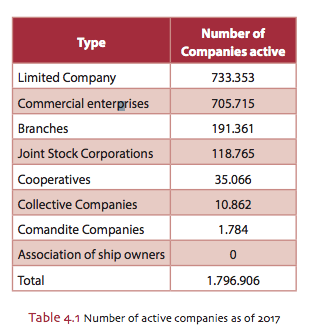
Soru 12
Which of the following is true for a commercial company?
Seçenekler
A
All partners have the right to represent the company.
B
It is not a legal personality.
C
There are no formal requirements upon establishment.
D
It is not subject to any formal contract.
E
Only the authorized organs or persons can represent a company
Açıklama:
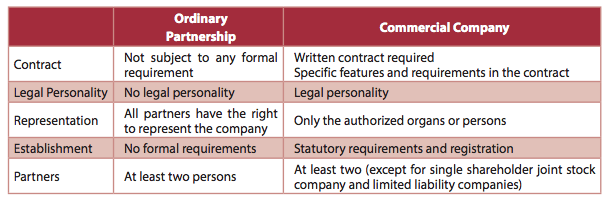
Soru 13
Which of the following is NOT one of the statutory requirements to be complied with by all the companies at the stage of establishment?
Seçenekler
A
Profit making purpose
B
To operate with a trade name
C
Profits to share
D
Legal personality
E
Registration with the Commercial Registry
Açıklama:
There are some common statutory requirements to be complied with by all the companies at the stage of establishment. These can be listed as follows:
• Legal personality: All companies regardless of the number of its partners or the nature of liability of the shareholders have a legal personality separate from the personality of the founder partners.
• Profit making purpose: Commercial companies are established for profit making purposes which is a distinctive feature of commercial companies compared to associations and foundations.
• To operate with a trade name: All companies should have and operate under a trade name to be registered with the commercial registry.
• Registration with the Commercial Registry: All companies should get the foundation and the required info with the Commercial Registry.
• Legal personality: All companies regardless of the number of its partners or the nature of liability of the shareholders have a legal personality separate from the personality of the founder partners.
• Profit making purpose: Commercial companies are established for profit making purposes which is a distinctive feature of commercial companies compared to associations and foundations.
• To operate with a trade name: All companies should have and operate under a trade name to be registered with the commercial registry.
• Registration with the Commercial Registry: All companies should get the foundation and the required info with the Commercial Registry.
Soru 14
Which of the following is NOT one of the essential requirements for a collective company?
Seçenekler
A
List of profits
B
establishment with a separate legal personality,
C
to operate a commercial enterprise,
D
under a written Articles of Association
E
a trade name
Açıklama:
In the light of the above, the essential requirements for a collective company can be listed as follows:
• establishment with a separate legal personality,
• by at least two individuals as partners,
• whose liability is not limited towards the creditors of the Company,
• to operate a commercial enterprise,
• with a trade name,
• under a written Articles of Association
• establishment with a separate legal personality,
• by at least two individuals as partners,
• whose liability is not limited towards the creditors of the Company,
• to operate a commercial enterprise,
• with a trade name,
• under a written Articles of Association
Soru 15
There are certain principles applicable to the joint stock corporations. Which of the following explains the principle on limited liability of shareholders?
Seçenekler
A
A joint stock corporation is managed by those who hold the majority of the votes.
B
In order for the protection of the creditors interests, the property and the capital of the company should be protected.
C
The state has certain authority on the joint stock corporations.
D
The shareholders are not directly liable for the debts of the company.
E
It is important to inform the public on the relevant issues about the company.
Açıklama:
Principle on Limited Liability of the Shareholders: The shareholders are not directly liable for the debts of the company. The shareholders are liable with the share capital that they have undertaken to subscribe. If a shareholder concerned has already paid his share of capital, then his liability ends. A creditor to whom the company owes, cannot apply to the shareholders who have not yet paid the share capital he has undertaken.
Soru 16
There is not a _____ requirement to establish a comandite company.
Which of the following best fills in the blank above as regards the establishment of a comandite company?
Which of the following best fills in the blank above as regards the establishment of a comandite company?
Seçenekler
A
minimum capital
B
minimum profit
C
maximum liabilities
D
maximum debt
E
asset
Açıklama:
There is not a minimum capital requirement to establish a comandite company. The capital subscribed by the partners is not divided into shares.
Soru 17
What are the two capital systems that TCC has set forth for all the joint stock companies?
Seçenekler
A
basic and joint
B
basic and registered
C
single shareholder and joint
D
single shareholder and registered
E
single shareholder and joint
Açıklama:
There is a minimum capital requirement for joint stock corporations. TCC has set forth two capital systems for all the joint stock companies, namely basic capital and registered capital.
Soru 18
Which of the following is not one of the essential requirements for a joint stock company during auditing process?
Seçenekler
A
trade name
B
capital is certain and divided into shares
C
at least one or more individual or legal entity partner(s)
D
with a liability limited with the subscribed capital
E
at least 100.000TL worth shares of the company.
Açıklama:
the essential requirements for a joint stock company can be listed as follows:
• establishment with a separate legal personality, • for any economic purpose, • with a trade name, • under a written Articles of Association, • whose capital is certain and divided into shares, • by at least one or more individual or legal entity partner(s), • with a liability limited with the subscribed capital, • whose liability is not limited towards the creditors of the Company and • at least one partner whose liability is limited with certain amount of capital • capital cannot belessthan 50.000TL and 100.000TL in joint stock corporations where shares are traded publicly (where the minimum capital requirement can be increased by the Ministry of Customs and Industry)
• establishment with a separate legal personality, • for any economic purpose, • with a trade name, • under a written Articles of Association, • whose capital is certain and divided into shares, • by at least one or more individual or legal entity partner(s), • with a liability limited with the subscribed capital, • whose liability is not limited towards the creditors of the Company and • at least one partner whose liability is limited with certain amount of capital • capital cannot belessthan 50.000TL and 100.000TL in joint stock corporations where shares are traded publicly (where the minimum capital requirement can be increased by the Ministry of Customs and Industry)
Soru 19
Which of the following concepts is not regulated in Turkish Company Law?
Seçenekler
A
Merger
B
Trustee
C
conversion
D
total spin off
E
partial spin off
Açıklama:
See "Merger Division and Conversion” section.
Soru 20
Which of the following is the most recently regulated concept in the new TCC?
Seçenekler
A
Trade registry
B
Commercial companies
C
Commandite company
D
Mergers and acquisitions
E
Single shareholder joint stock company
Açıklama:
There is not a minimum number of shareholders set forth in the TCC and joint stock corporations mostly have many shareholders. On the other hand, the TCC had introduced a new type of a joint stock corporation which was not possible before the TCC was enacted. Single shareholder joint stock company is a new concept for Turkish company law and this can be possible either from the date of establishment or after establishment during the course of activities.
Soru 21
According to the 'Turkish Commercial Code' (TCC) which of the following is introduced as a new model of company?
Seçenekler
A
Corporate Forms of Companies
B
Single-member limited liability company
C
Limited Liability Company
D
Cooperative Company
E
Collective Company
Açıklama:
One of the most significant introductions of the TCC is that it introduces single-shareholder company/incorporation and single-member limited liability company as the two new models of companies.
TCC introduces single-member limited liability company as a new model of company. Therefore the correct answer is B.
TCC introduces single-member limited liability company as a new model of company. Therefore the correct answer is B.
Soru 22
According to the fundamentals of corporate governance under the TCC (Turkish Commercial Code) which of the following does corporate governance principles NOT aim to maintain?
Seçenekler
A
Transparency
B
Fairness
C
Accountability
D
Partnership
E
Responsibility.
Açıklama:
Corporate governance principles aim to maintain; transparency, fairness, accountability and responsibility. Therefore the correct answer is D.
Soru 23
What is required in financial statements, boards of directors’ annual reports, independent audits, transactional auditors and all audit reports of individual companies and group of companies?
Seçenekler
A
Accountability
B
Representation
C
Partnership
D
Fairness
E
Transparency
Açıklama:
Transparency is required in financial statements, boards of directors’ annual reports, independent audits, transactional auditors and all audit reports of individual companies and group of companies.
Financial statements, boards of directors’ annual reports, independent audits, transactional auditors and all audit reports of individual companies and group of companies all require transparency. Therefor the correct answer is E.
Financial statements, boards of directors’ annual reports, independent audits, transactional auditors and all audit reports of individual companies and group of companies all require transparency. Therefor the correct answer is E.
Soru 24
According to the fundamentals of corporate governance under the TCC (Turkish Commercial Code) which of the following is provided with exclusive authority to regulate corporate governance?
Seçenekler
A
The Capital Markets Board
B
The founding partners
C
The public
D
The group of shareholders
E
The Board of Directors
Açıklama:
According to the fundamentals of corporate governance under the TCC (Turkish Commercial Code) the Capital Markets Board has been provided with exclusive authority to regulate corporate governance.
The Capital Markets Board has been provided with exclusive authority to regulate corporate governance. Therefore the correct answer is A.
The Capital Markets Board has been provided with exclusive authority to regulate corporate governance. Therefore the correct answer is A.
Soru 25
Which of the following is NOT a company type in Turkey?
Seçenekler
A
Joint Stock Company
B
Limited Liability Company
C
Wholly Foreign-Owned Enterprise
D
Commandite Company
E
Non-corporate forms of Companies
Açıklama:
According to TCC (Turkish Commercial code) companies are separate legal persons who are incorporated with the aim to make profit and who are independent of their directors and shareholders. Wholly Foreign-Owned Enterprise is not a type of company in Turkey, such kind of business or this type of company does not exist in TCC.
Wholly Foreign-Owned Enterprise is not a type of company in Turkey, therefore the correct answer is C.
Wholly Foreign-Owned Enterprise is not a type of company in Turkey, therefore the correct answer is C.
Soru 26
Which of the following is NOT one of the common statutory requirements to be complied with by all the companies at the stage of establishment?
Seçenekler
A
Legal personality
B
Profit making purpose
C
Real personality
D
Registration with the Commercial Registry
E
To operate with a trade name
Açıklama:
There are some common statutory requirements to be complied with by all the companies at the stage of establishment. These can be listed as follows: Legal personality: All companies regardless of the number of its partners or the nature of liability of the shareholders have a legal personality separate from the personality of the founder partners. Profit making purpose: Commercial companies are established for profit making purposes which is a distinctive feature of commercial companies compared to associations and foundations. To operate with a trade name: All companies should have and operate under a trade name to be registered with the commercial registry. Registration with the Commercial Registry: All companies should get the foundation and the required info with the Commercial Registry.
There are some common statutory requirements to be complied with by all the companies at the stage of establishment. These are legal personality, profit making purpose, registration with the commercial registry and operating with a trade name. Being a real person is not one of the common statutory requirements to be complied with so the correct answer is C.
There are some common statutory requirements to be complied with by all the companies at the stage of establishment. These are legal personality, profit making purpose, registration with the commercial registry and operating with a trade name. Being a real person is not one of the common statutory requirements to be complied with so the correct answer is C.
Soru 27
Which of the following principles applicable to the joint stock corporations requires supervision by the Capital Markets Board in case of public joint stock corporations; the Ministry’s authority regarding a legal action for dissolution?
Seçenekler
A
Principle on Majority Management
B
The Principle on the Protection of Capital
C
Principle on Limited Liability of the Shareholders:
D
The Principle on Informing the Public
E
The Principle of State Supervision
Açıklama:
In addition to the auditing of the Company by the auditors, also the State has certain authority on the joint stock corporations. As well as its authority on the auditing and supervision, the State also has some other functions such as the requirement of consent in the establishment; supervision by the Capital Markets Board in case of public joint stock corporations; the Ministry’s authority regarding a legal action for dissolution.
Applying the Principle of State Supervision requires supervision by the Capital Markets Board in case of public joint stock corporations; the Ministry’s authority regarding a legal action for dissolution, therefore the correct answer is E.
Applying the Principle of State Supervision requires supervision by the Capital Markets Board in case of public joint stock corporations; the Ministry’s authority regarding a legal action for dissolution, therefore the correct answer is E.
Soru 28
Which of the following explains the non transferrable duties of the General Assembly correctly?
Seçenekler
A
Amendment of the TCC (Turkish Commercial Code).
B
The sales of the significant portion of the property of the Company.
C
Decide on the merger, acquisition and changing of the type.
D
Apart from the exceptions in the Law, termination of the Company.
E
Other issues left to the authority of the General Assembly.
Açıklama:
The authority of the General Assembly which cannot be transferred to other organs are listed explicitly in Article 408/2 of TCC. The non transferrable duties of the General Assembly are; amendment of the AoA, appointment and termination of the Board of Directors and the accountants; decision on the period of their duties and their numeration; appointment and termination of duties of the accountants based on the reasons other than those listed in the Law, based on the end of year financial tables, annual reports of the Board of Directors, decisions on the declarations of reserves, interest and income shares; usage of the reserve shares, apart from the exceptions in the Law, termination of the Company, the sales of the significant portion of the property of the Company, decide on the merger, acquisition and cha
Amendment of the TCC (Turkish Commercial Code) is not one of the non transferrable duties of the General Assembly, therefore A is the correct answer.
Amendment of the TCC (Turkish Commercial Code) is not one of the non transferrable duties of the General Assembly, therefore A is the correct answer.
Soru 29
The essential requirements for a joint stock company capital must be above _______ TL.
Seçenekler
A
10.000
B
25.000
C
35.000
D
50.000
E
100.000
Açıklama:
The essential requirements for a joint stock company capital can not be less than 50.000 TL and 100.000TL in joint stock corporations where shares are traded publicly (where the minimum capital requirement can be increased by the Ministry of Customs and Industry).
The essential requirements for a joint stock company capital must be above 50.000 TL, therefore the correct answer is D.
The essential requirements for a joint stock company capital must be above 50.000 TL, therefore the correct answer is D.
Soru 30
Which of the following is the correct phrase to complete the statement below?
'In terms of their personal assets, ____________ can go public and offer shares traded publicly.'
'In terms of their personal assets, ____________ can go public and offer shares traded publicly.'
Seçenekler
A
a limited liability company
B
cooperatives
C
a joint stock company
D
a commandite Company
E
a Wholly Foreign-Owned Enterprise
Açıklama:
Joint stock corporations and limited liability companies are the mostly preferred types among the business cycles. Yet there are some basic differences between joint stock companies and limited liability companies in terms of their personal assets. A joint stock company can go public and offer shares traded publicly where as a limited liability company cannot offer its shares to the public.
A joint stock company can go public and offer shares traded publicly.
A joint stock company can go public and offer shares traded publicly.
Soru 31
The process by which a new or existing business registers as a company is called:
Seçenekler
A
Conversion
B
Spin-off
C
Merger
D
Acquisition
E
Incorporation
Açıklama:
Incorporation is the process by which a new or existing business registers as a company. A company is a legal entity with a separate identity from those who own or run it. A business cannot operate as a company until it has been incorporated under the TCC.
Soru 32
Which of the following is true regarding the principle of corporate governance in Turkish Commercial Code?
Seçenekler
A
It is a principle which applies only to publicly traded companies.
B
The publicly held companies are not obliged to publish corporate governance reports.
C
Secrecy is required in boards of directors’ annual reports.
D
Transparency is required in financial statements.
E
Privileged shares have been expanded.
Açıklama:
Corporate governance should not be understood as a principle which applies only to publicly traded companies but it applies to all capital companies.Also transparency is required in both financial statements and boards of directors’ annual reports.
Soru 33
What is a key difference between a commercial company and an ordinary partnership?
Seçenekler
A
There is not key any difference, the concepts are interchangeable.
B
A commercial company has legal personality while an ordinary partnership does not have legal personality.
C
During the operation of an ordinary partnership the statutory meetings, changes in the shareholders need to be notified with the relevant authorities while in a commercial company this is not obligatory.
D
In a partnership only the authorized organs have the right for representation while in a company all the company shareholders have the right to represent the company.
E
There are no formal requirements for the establishment of a commercial company but there are statutory requirements in the case of the establishment of an ordinary partnership.
Açıklama:
A commercial company has legal personality while an ordinary partnership does not have legal personality.Besides, in the case of an ordinary partnership there are no formal requirements for its establishment but there are statutory requirements in the case of the establishment of a commercial company.
Soru 34
Which of the following is not true about a company?
Seçenekler
A
A company is a legal entity with a separate identity from those who own or run it
B
Companies are separate legal persons who are dependent of their directors
and shareholders.
and shareholders.
C
A business cannot operate as a company until it has been incorporated under the
TCC
TCC
D
Establishing your business as a company means there are certain legal requirements to be met under the TCC
E
Companies are separate legal persons who are incorporated with the aim to make profit
Açıklama:
Incorporation is the process by which a new or existing business registers as a company. A company is a legal entity with a separate identity from those who own or run it. A business cannot operate as a company until it has been incorporated under the TCC. Establishing your business as a company means there are certain legal requirements to be met under the TCC. Companies are separate legal persons who are incorporated with the aim to make profit and who are independent of their directors and shareholders.
Soru 35
Which of the following is not a type of company under Turkish commercial law?
Seçenekler
A
Collective
B
Comandite
C
Joint stock corporation
D
Limited liability
E
Commercial companies
Açıklama:
Pursuant to Article 124/1 TCC, the types of companies with a legal personality under Turkish commercial law are listed exhaustively and there are five different types of companies. These are collective, comandite, joint stock corporation, limited liability and cooperatives. From this exhaustive list, the types joint stock corporation and limited liability company are the most common types preferred in business life in Turkey.
Soru 36
Which of the following is true about the statutory requirements of companies?
Seçenekler
A
Only commercial companies have a personality separate from the personality of
the founder partners.
the founder partners.
B
Commondite companies are established for profit making purposes
C
Some companies should have and operate under a trade name to be registered with the commercial registry
D
To invest a capital in the company is not a duty for the shareholders
E
Only commercial companies should get the foundation and the required info with the Commercial Registry.
Açıklama:
There are some common statutory requirements to be complied with by all the companies at the stage of establishment. These can be listed as follows:
• Legal personality: All companies regardless of the number of its partners or the nature of liability of the shareholders have a legal personality separate from the personality of the founder partners.
• Profit making purpose: Commercial companies are established for profit making purposes which is a distinctive feature of commercial companies compared to associations and foundations.
• To operate with a trade name: All companies should have and operate under a trade name to be registered with the commercial registry.
• Registration with the Commercial Registry: All companies should get the
foundation and the required info with the Commercial Registry.
• Legal personality: All companies regardless of the number of its partners or the nature of liability of the shareholders have a legal personality separate from the personality of the founder partners.
• Profit making purpose: Commercial companies are established for profit making purposes which is a distinctive feature of commercial companies compared to associations and foundations.
• To operate with a trade name: All companies should have and operate under a trade name to be registered with the commercial registry.
• Registration with the Commercial Registry: All companies should get the
foundation and the required info with the Commercial Registry.
Soru 37
Which of the following is true for companies?
Seçenekler
A
A company is a business association formed for the purpose of making profit.
B
A company is a business association formed by at least three or more parties
C
Not every company is required to have an Articles of Association
D
“Articles of Association (AoA) can contain rules that are against the law.
E
AoA of a company does not have to be in a written form
Açıklama:
A company is a business association formed by two or more parties who bring together their capital to achieve common purposes of making and sharing profit. The parties (shareholders/partners) establishing the company enter into a contract titled “Articles of Association (AoA)”. Every company is required to have an AoA which is legally binding on the company and all of its shareholders and which can be regarded as its internal rules, prepared by the shareholders. The AoA cannot contain rules that are against the law. AoA of a company must be in a written form and should bear the signatures of all the shareholders, authenticated by the notary public.
Soru 38
Which of the following is a consequence of incorporation as a company?
Seçenekler
A
A company’s property belongs only to its directors, management or shareholders
no to the legal personality created by the establishment of the company
no to the legal personality created by the establishment of the company
B
Foreconomic assets or movables subscribed, the company as the owner may conclude transactions on the assets defined.
C
A company is not responsible for its own debts and liabilities but its shareholders are
D
The shareholders and, as a general rule, directors are liable from the total amount of debts of the company.
E
Registration in the statutory registries do not remove the good faith (prevails the good faith arguments)
Açıklama:
The legal consequences of being incorporated under a separate legal personality and the liabilities of shareholders at the establishment stage can be listed as follows:
• A company’s property belongs not to its directors, management or shareholders but to the legal personality created by the establishment of the company.
• A company is responsible for its own debts and liabilities. The shareholders and, as a general rule, directors are not liable from the total amount of debts of the company. However, the directors have several liabilities arising from company law.
• Theimmovable property, the dateregistered in the land title and the intellectual property rights and other assets from the date they are registered in the relevant registries and the movable property when it is transferred to a trustful person will be considered as a property capital invested in the company. Registration in the statutory registries removes the good faith. (prevails the good faith arguments)
• The agreements made on the subscription of an immovable property or some similar rights like ownership rights on the property are valid without a requirement of statutory form.
• Foreconomic assets or movables subscribed, the company as the owner may conclude transactions on the assets defined.
• Where the ownership on immovable property or other similar rights are subscribed as capital, than there has to be a registration in the Land Title in order for the company to carry out transactions on such property.
• In cases of registration in the LandTitle and in other registries, the registrations shall be made promptly. The company has the right to unilaterally request for that.
• The Company may request from each shareholder to comply with their undertakings and and it is entitled to take a legal action before the courts and where delays cause losses, then can claim compensation. For claims, there should be a formal in advance warning. In companies in person, the partners can also take such legal actions.
• For the protection of the rights undertaken, the founders can request an injunction from the court
against the partners.
• A company’s property belongs not to its directors, management or shareholders but to the legal personality created by the establishment of the company.
• A company is responsible for its own debts and liabilities. The shareholders and, as a general rule, directors are not liable from the total amount of debts of the company. However, the directors have several liabilities arising from company law.
• Theimmovable property, the dateregistered in the land title and the intellectual property rights and other assets from the date they are registered in the relevant registries and the movable property when it is transferred to a trustful person will be considered as a property capital invested in the company. Registration in the statutory registries removes the good faith. (prevails the good faith arguments)
• The agreements made on the subscription of an immovable property or some similar rights like ownership rights on the property are valid without a requirement of statutory form.
• Foreconomic assets or movables subscribed, the company as the owner may conclude transactions on the assets defined.
• Where the ownership on immovable property or other similar rights are subscribed as capital, than there has to be a registration in the Land Title in order for the company to carry out transactions on such property.
• In cases of registration in the LandTitle and in other registries, the registrations shall be made promptly. The company has the right to unilaterally request for that.
• The Company may request from each shareholder to comply with their undertakings and and it is entitled to take a legal action before the courts and where delays cause losses, then can claim compensation. For claims, there should be a formal in advance warning. In companies in person, the partners can also take such legal actions.
• For the protection of the rights undertaken, the founders can request an injunction from the court
against the partners.
Soru 39
Which of the following is a measure which needs to be taken in terms of the transparency and supervision of all the transactions to be concluded in a company?
Seçenekler
A
The contents of contracts, plans, and reports are defined in the Law
B
Audits will be conducted by any stakeholders rather than independent auditors
C
Only some spin-off-related documents will be posted on the company’s web site
D
Mergers and acquisitions are only regulated in the Competition Law
E
The data provided by the Competition Authority reflects an overview of the mergers
Açıklama:
The transactions to be concluded, the followingmeasures need to be taken:
a. The contents of contracts, plans, and reports are defined in the Law.
b. Audits will be conducted by expert, independent auditors.
c. All spin-off-related documents will be posted on the company’s web site.
a. The contents of contracts, plans, and reports are defined in the Law.
b. Audits will be conducted by expert, independent auditors.
c. All spin-off-related documents will be posted on the company’s web site.
Soru 40
Which of the following is not an essential requirement for a collective company
Seçenekler
A
Being established with a separate legalpersonality,
B
Being established by at least two individuals as partners,
C
Liability is limited towards the creditors of the Company,
D
Operating a commercial enterprise
E
Having a trade name,
Açıklama:
In the light of the above, the essential requirements for a collective company can be listed as follows:
• establishment with a separate legal personality,
• by at least two individuals as partners,
• whose liability is not limited towards the creditors of the Company,
• to operate a commercial enterprise,
• with a trade name,
• under a written Articles of Association
• establishment with a separate legal personality,
• by at least two individuals as partners,
• whose liability is not limited towards the creditors of the Company,
• to operate a commercial enterprise,
• with a trade name,
• under a written Articles of Association
Soru 41
Which of the following is not a principle applicable to the joint stock corporations?
Seçenekler
A
Majority management
B
Limited liability of the shareholders
C
The Protection of Capital
D
The Principle of State Supervision
E
Priority to management in decision making
Açıklama:
There are certain principles applicable to the joint stock corporations. These principles can be summarised as follows:
a. Principle on Majority Management
b. Principle on Limited Liability of the Shareholders
c. The Principle on the Protection of Capital
d. The Principle of State Supervision
e. The Principle on Informing the Public
f. The Principle on Equal Treatment
a. Principle on Majority Management
b. Principle on Limited Liability of the Shareholders
c. The Principle on the Protection of Capital
d. The Principle of State Supervision
e. The Principle on Informing the Public
f. The Principle on Equal Treatment
Soru 42
Which of the following is one of the essential requirements for a joint stock company?
Seçenekler
A
Not under a written Articles of Association,
B
Being established by at least three or more individual or legal entity partner(s),
C
Being established by at least two partners whose liability is not limited with a ceratin amount of capital
D
Being established with a capital certain and divided into shares
E
Capital cannot be more than 50.000 TL
Açıklama:
In the light of the above, the essential requirements for a joint stock company can be listed as follows:
• establishment with a separate legal personality,
• for any economic purpose,
• with a trade name,
• under a written Articles of Association,
• whose capital is certain and divided into shares,
• by at least one or more individual or legal entity partner(s),
• with a liability limited with the subscribed capital,
• whose liability is not limited towards thecreditors of the Company and
• at least one partner whose liability islimited with certain amount of capital
• capital cannot belessthan 50.000TL and 100.000TL in joint stock corporations
where shares are traded publicly (wherethe minimum capital requirement can
be increased by the Ministry of Customs and Industry
• establishment with a separate legal personality,
• for any economic purpose,
• with a trade name,
• under a written Articles of Association,
• whose capital is certain and divided into shares,
• by at least one or more individual or legal entity partner(s),
• with a liability limited with the subscribed capital,
• whose liability is not limited towards thecreditors of the Company and
• at least one partner whose liability islimited with certain amount of capital
• capital cannot belessthan 50.000TL and 100.000TL in joint stock corporations
where shares are traded publicly (wherethe minimum capital requirement can
be increased by the Ministry of Customs and Industry
Soru 43
Which of the following is one of the limitations on the decisions of the General Assembly?
Seçenekler
A
The General Assembly Meeting via electronic platforms is not possible with the new TCC.
B
The General Assembly does not refrain from taking decisions concerning the rights with privileges.
C
The General Assembly should be sensitive to the minority rights more than the individual rights
D
The General Assembly of a joint stock company cannot take a decision on the rights of a third party
E
A contract made between the Company and a third party can be declared void by the General Assembly
Açıklama:
There are certain limitations on the decisions of the General Assembly which can be listed as in the following:
• Third Parties’ Rights: The General Assembly of a joint stock company cannot take a decision on the rights of a third party. Thus a contract made between the Company and a third party cannot be declared void by the General Assembly.
• The exclusive jurisdiction of the other organs and persons: Those duties which
are given to the Board of Managers or to other organs by the Law cannot beperformed by the General Assembly. For example, although the accountants are to be appointed by the General Assembly, the General Assembly can perform this duty but cannot replace the accountants’ financial supervision duties.
• The General Assembly should also be sensitive and refrain from violation of minority rights and the individual rights of the shareholders.
• The General Assembly should also protect and refrain from taking decisions concerning the rights with privileges.
• General Assembly Meeting via electronic platforms is also possible with the new TCC.
• Third Parties’ Rights: The General Assembly of a joint stock company cannot take a decision on the rights of a third party. Thus a contract made between the Company and a third party cannot be declared void by the General Assembly.
• The exclusive jurisdiction of the other organs and persons: Those duties which
are given to the Board of Managers or to other organs by the Law cannot beperformed by the General Assembly. For example, although the accountants are to be appointed by the General Assembly, the General Assembly can perform this duty but cannot replace the accountants’ financial supervision duties.
• The General Assembly should also be sensitive and refrain from violation of minority rights and the individual rights of the shareholders.
• The General Assembly should also protect and refrain from taking decisions concerning the rights with privileges.
• General Assembly Meeting via electronic platforms is also possible with the new TCC.
Soru 44
The contract entered by the parties establishing a company, which is legally binding and is required to be submitted to the Trade Registry by the founding partners at the establishment stage is called:
Seçenekler
A
Company Law Directive.
B
Shareholders Agreement.
C
Legal Personality.
D
Articles of Association.
E
Statutory requirements.
Açıklama:
The parties (shareholders/partners) establishing the company enter into a contract titled “Articles of Association (AoA)”. Every company is required to have an AoA which is legally binding on the company and all of its shareholders and which can be regarded as its internal rules, prepared by the shareholders. The AoA cannot contain rules that are against the law. AoA of a company must be in a written form and should bear the signatures of all the shareholders, authenticated by the notary public.
Soru 45
One of the legal consequences of being incorporated as a company is:
Seçenekler
A
The shareholders are liable from the total amount of debts of the company.
B
Where the ownership on immovable property or other similar rights are subscribed as capital, it is not necessary to be a registration in the Land Title in order for the company to carry out transactions on such property.
C
The company can not request from the shareholders to comply with their undertakings and it is not entitled to take a legal action before the courts.
D
The founders can not request an injunction from the court against the partners.
E
For economic assets or movables subscribed, the company as the owner may conclude transactions on the assets defined.
Açıklama:
The legal consequences of being incorporated under a separate legal personality and the liabilities of shareholders at the establishment stage can be listed as follows: The shareholders and, as a general rule, directors are not liable from the total amount of debts of the company; the agreements made on the subscription of an immovable property or some similar rights like ownership rights on the property are valid without a requirement of statutory form ;for economic assets or movables subscribed, the company as the owner may conclude transactions on the assets defined; where the ownership on immovable property or other similar rights are subscribed as capital, than there has to be a registration in the Land Title in order for the company to carry out transactions on such property; the Company may request from each shareholder to comply with their undertakings and and it is entitled to take a legal action before the courts.
Soru 46
What is the main difference between a collective company and a commandite company?
Seçenekler
A
Shareholders at a collective company have unlimited liability towards the creditors of the company but at a commandite company at least one of the shareholders has unlimited liability and at least one other shareholder has limited liability.
B
A collective company is established by at least two individuals as partners but a commandite company is established by at least 5 individuals as partners.
C
In a collective company shareholders can be either individuals or legal entities, but in a commandite company shareholders can only be legal entities.
D
There is a minimum capital requirement for shareholders in a collective company but there is not a minimum capital requirement for shareholders in a commandite company.
E
In a collective company a shareholder cannot transfer his/her shares without the consent of the other partners but in a commandite company the shareholders can transfer these shares like the shares in joint stock corporation.
Açıklama:
Pursuant to Article 304 TCC, a commandite company is a company which is established to operate a commercial enterprise under a trade name, where the liability of one or more shareholders are not limited against the creditors and where the liability of others is limited with the capital subscribed. According to Article 211 TCC, a collective company is a type of company which can be established only by persons (individuals) for the purposes of operating a commercial enterprise under a commercial title. Shareholders’ liability is joint and unlimited with all their property and this principle is an obligatory rule which the parties cannot agree otherwise.
Soru 47
Which of the following alternatives is true regarding joint stock corporations?
Seçenekler
A
There is a minimum capital requirement of 800.000TL for joint stock corporations set forth in the Turkish Commercial Code.
B
A joint stock company is compelled by law to offer its shares traded publicly.
C
The shareholders are liable with the share capital that they have undertaken to subscribe.
D
Single shareholder joint stock company is not possible under the Turkish Commercial Code.
E
There is not a minimum capital requirement for joint stock corporations.
Açıklama:
There are certain principles applicable to the joint stock corporations. Principle on Limited Liability of the Shareholders: The shareholders are not directly liable for the debts of the company. The shareholders are liable with the share capital that they have undertaken to subscribe. If a shareholder concerned has already paid his share of capital, then his liability ends. A creditor to whom the company owes, cannot apply to the shareholders who have not yet paid the share capital he has undertaken.
Soru 48
One of the limitations on the decisions of the General Assembly is:
Seçenekler
A
It cannot authorize the Board of Directors to take decisions on the acquisition of the Company’s own shares.
B
It cannot take a decision on the rights of a third party.
C
It cannot appoint and terminate the Board of Directors.
D
It cannot decide on the termination of the Company.
E
It cannot sell significant portions of the property of the Company.
Açıklama:
There are certain limitations on the decisions of the General Assembly, one of which is Third Parties’ Rights: The General Assembly of a joint stock company cannot take a decision on the rights of a third party. Thus a contract made between the Company and a third party cannot be declared void by the General Assembly.
Soru 49
The members of the Board of Directors of the Joint Stock Company:
Seçenekler
A
Must always be at least seven in number .
B
Must all have a university degree.
C
Can hold their meetings via electronic media.
D
Can always get engaged in a business which competes with the Company in the areas of business without needing the consent of the General Assembly.
E
Can not be legal entities.
Açıklama:
Subject to an explicit description in the AoA on the mode of meetings, the meetings of the Board of Directors can be held via electronic media or some of the members of the Board may attend the Board meetings in this way. This is one of the new provisions which provides a significant change in the way that the Board Meetings are held.
Soru 50
In the Turkish Law System, all kinds of cooperatives are subject to Law No.:
Seçenekler
A
1091
B
1218
C
332
D
397
E
1163
Açıklama:
Cooperatives are defined among the types of companies in the TCC. Based on the specific nature and the usage of cooperatives in practice, the legislator had regulated cooperatives with a special law. Therefore, all kinds of cooperatives are subject to Law No.1163. For the areas not regulated in this special law, one should refer to the general provisions of TCC. The rules in the TCC which relate to the legal consequences arising from the status of operating as a merchant apply to the cooperatives.
Ünite 5
Soru 1
Which of the following refers to the act of using a court to help settle a disagreement?
Seçenekler
A
Jurisdiction
B
Legal action
C
Trial
D
Justice
E
Court
Açıklama:
A legal action, legal proceedings or a lawsuit is defined as the act of using a court to help settle a disagreement. It can also be defined as a process to have a court of law to settle an argument. The correct answer is B.
Soru 2
Which of the following refers to a judicial examination and determination of facts and legal issues arising between parties to a civil, criminal or in some cases administrative action?
Seçenekler
A
Legal action
B
Trial
C
Jurisdiction
D
Court
E
Justice
Açıklama:
Trial is a judicial examination and determination of facts and legal issues arising between parties to a civil, criminal or in some cases administrative action. The correct answer is B.
Soru 3
How many member does The President of the Republic of Turkey appoint from the Court of Cassation for the Constitutional Court?
Seçenekler
A
3
B
4
C
5
D
6
E
7
Açıklama:
The President of the Republic of Turkey appoints three members from the Court of Cassation, two from the Council of State, three from academicians in the fields of law, economics and political sciences who are not members of the Council, and appoints four members from senior officials, self-employed lawyers, first class judges and public prosecutors or rapporteurs having served at least five years at the Constitutional Court. The correct answer is A.
Soru 4
How many members does the Turkish Grand National Assembly (TGNA) appoint from the presidents and members of the Court of Accounts for the Constitutional Court?
Seçenekler
A
2
B
3
C
4
D
5
E
6
Açıklama:
Turkish Grand National Assembly (TGNA) appoints two members from the presidents and members of the Court of Accounts, and one member from among self-employed lawyers to be nominated by the heads of the Bar Associations. The correct answer is A.
Soru 5
How many members does The Turkish Grand National Assembly (TGNA) appoint for the Constitutional Court in total?
Seçenekler
A
2
B
3
C
4
D
5
E
6
Açıklama:
The Court consists of 15 members who are selected by the Parliament and the President of the Republic. Turkish Grand National Assembly (TGNA) appoints two members from the presidents and members of the Court of Accounts, and one member from among self-employed lawyers to be nominated by the heads of the Bar Associations. The correct answer is B.
Soru 6
Which of the following is responsible for auditing the revenues, expenditures and property of public administrations on behalf of the Turkish Grand National Assembly?
Seçenekler
A
The Court of Accounts
B
The Court of Cassation
C
The Council of State
D
The Constitutional Court
E
The Court of Jurisdictional Disputes
Açıklama:
The Court of Accounts is regulated in Article 160 of the Turkish Constitution. According to this provision, the Court of Accounts shall be charged with auditing, on behalf of the Grand National Assembly of Turkey, revenues, expenditures, and assets of the public administrations financed by central government budget and social security institutions, with taking final decisions on the accounts and acts of the responsible officials, and with exercising the functions prescribed in laws in matters of inquiry, auditing and judgment. The correct answer is A.
Soru 7
Which of the following is not among the functions of the Council of Judges and Public Prosecutors?
Seçenekler
A
The delegation of temporary powers
B
Promotion and allocation of posts
C
The imposition of disciplinary sanction
D
Admission of judges and public prosecutors into the profession
E
Examining the constitutionality of laws
Açıklama:
The functions of the Council of Judges and Public Prosecutors are listed below:
•to appoint members of the Court of Cassation, Council of State and Court of Jurisdictional Disputes
• to take final decisions on proposals by the Ministry of Justice concerning the abolition of a court or an office of judge or public prosecutor, or changes in the jurisdiction of a court
• admission of judges and public prosecutors into the profession
• appointments, transfers to other posts, the delegation of temporary powers,
• promotion and allocation of posts,
• decisions concerning those whose continuation in the profession is found to be unsuitable,
• the imposition of disciplinary sanction, and
• removal from office.
The correct answer is C.
•to appoint members of the Court of Cassation, Council of State and Court of Jurisdictional Disputes
• to take final decisions on proposals by the Ministry of Justice concerning the abolition of a court or an office of judge or public prosecutor, or changes in the jurisdiction of a court
• admission of judges and public prosecutors into the profession
• appointments, transfers to other posts, the delegation of temporary powers,
• promotion and allocation of posts,
• decisions concerning those whose continuation in the profession is found to be unsuitable,
• the imposition of disciplinary sanction, and
• removal from office.
The correct answer is C.
Soru 8
Which of the following courts' main duty is to function as the last instance court for reviewing decisions and judgments given by lower civil and criminal courts?
Seçenekler
A
The Constitutional Court
B
The Civil Courts of Peace
C
The Court of Cassation
D
The Court of Jurisdictional Disputes
E
The Council of State
Açıklama:
The main duty of the Court of Cassation is to function as the last instance court for reviewing decisions and judgments given by lower civil and criminal courts. Thus the court has power to review the judgments of lower civil and criminal courts which are district court of appeals. The correct answer is C.
Soru 9
Which of the following courts is regulated in article 158 of the constitution as an independent court that is established to finalise the jurisdictional disputes that may occur between the courts of different jurisdictional areas?
Seçenekler
A
The Court of Jurisdictional Disputes
B
The Constitutional Court
C
The Court of Cassation
D
The Council of State
E
The Civil Courts of Peace
Açıklama:
The Court of Jurisdictional Disputes is regulated in article 158 of the constitution as an independent court that is established to finalise the jurisdictional disputes that may occur between the courts of different jurisdictional areas. The correct answer is A.
Soru 10
Which of the following is among the duties of the Ministry of Justice?
Seçenekler
A
To plan and establish any and all types and degrees of judicial institutions such as penal execution and correction institutions
B
To conduct the appellate review of the decisions given by the lower administrative courts
C
To function as the last instance court for reviewing decisions and judgments of lower civil and criminal courts
D
To finalise the jurisdictional disputes that may occur between the courts of different jurisdictional areas
E
To review the constitutionality of laws in both form and substance and to review constitutional amendments in form only
Açıklama:
The duties of the Ministry of Justice have been set forth in Article 2 of the Law No. 2992 (29.03.1984) on Organization and Duties of the Ministry of Justice. These are:
-to establish and organize courts as foreseen in the laws,
-to plan and establish any and all types and degrees of judicial institutions such as penal execution and correction institutions as well as execution and bankruptcy offices, and to provide supervision and control as to their administrative functions,
- to submit proposals in matters such as abolishing of courts or changing of judicial locality,
- to carry out actions regarding the use of authority granted by laws to the Ministry of Justice concerning initiation of a public proceedings,
- to carry out duties assigned to the Ministry by the Laws of Attorneys and Public Notaries,
- to carry out services regarding keeping judicial records,
- to carry out duties assigned to the Ministry by the Turkish Commercial Law and Trade Registry Regulation,
- to carry out functions regarding foreign countries on judicial services,
..
The correct answer is A.
-to establish and organize courts as foreseen in the laws,
-to plan and establish any and all types and degrees of judicial institutions such as penal execution and correction institutions as well as execution and bankruptcy offices, and to provide supervision and control as to their administrative functions,
- to submit proposals in matters such as abolishing of courts or changing of judicial locality,
- to carry out actions regarding the use of authority granted by laws to the Ministry of Justice concerning initiation of a public proceedings,
- to carry out duties assigned to the Ministry by the Laws of Attorneys and Public Notaries,
- to carry out services regarding keeping judicial records,
- to carry out duties assigned to the Ministry by the Turkish Commercial Law and Trade Registry Regulation,
- to carry out functions regarding foreign countries on judicial services,
..
The correct answer is A.
Soru 11
Which of the below is NOT true about the judiciary?
Seçenekler
A
It is the system of courts that interprets and applies the law in the name of the state.
B
It provides a mechanism for the resolution of disputes.
C
It consists of a group of independent but interrelated elements (courts) comprising a unified whole.
D
It is defined as the organizational system and principles of court that administer the justice and constitute the judicial branch of government.
E
It is the organization that is the governing authority of a political unit.
Açıklama:
Government is the organization that is the governing authority of a political unit.
Soru 12
What is also called as district courts of appeals?
Seçenekler
A
Specific courts
B
Supreme courts
C
Intermediate appellate courts
D
Ordinary courts
E
Courts of first instance
Açıklama:
Intermediate appellate courts, which are also called as district courts of appeals, review some cases that have been decided by courts of first instance (if they are not a final decision).
Soru 13
Which of the below is NOT one of the basic concepts regarding judiciary?
Seçenekler
A
the legislature
B
the judge
C
the court
D
the trial
E
the legal action
Açıklama:
The basic concepts regarding judiciary can be stated as the judge, the court, the trial and the legal action.
Soru 14
Which of the below is true regarding the judge?
Seçenekler
A
Ordinary jurisdiction judges are selected from among the graduates of either law schools or faculties of political science and faculties of social sciences.
B
“Judge class” will be the most appropriate are split into two levels.
C
Turkish judicial system allows non-professional judges to render or take part in a judicial decision.
D
All of the public prosecutors can be considered as judge.
E
In Turkish judicial system, the concept “judge” does not describe an occupational group.
Açıklama:
Administrative jurisdiction judges are selected from among the graduates of either law schools or faculties of political science and faculties of social sciences, which include law courses in their programs at a sufficient level.
“Judge class” will be the most appropriate are split into four levels.
Turkish judicial system does not allow non-professional judges to render or take part in a judicial decision.
In Turkish judicial system, the concept “judge” is used to describe an occupational group.
“Judge class” will be the most appropriate are split into four levels.
Turkish judicial system does not allow non-professional judges to render or take part in a judicial decision.
In Turkish judicial system, the concept “judge” is used to describe an occupational group.
Soru 15
Which of the below is true about The Auxiliary Judiciary Personnel?
Seçenekler
A
Prosecutors have powers and competences in civil and criminal, and administrative jurisdictions.
B
They serve as civil servant and have the same rights with the other civil servants.
C
They have the duty to investigate the facts promptly after being informed about a crime.
D
They must gather and secure evidence both in favour of and against the suspect.
E
If they believe that there is sufficient suspicion of a crime, they are obliged by law to file indictments.
Açıklama:
Auxiliary personnel working in the judicial system are mainly assigned in courts, public prosecution offices and other judicial institutions as clerks or mid-level managers. It is also exceptionally possible for them to hold certain high-level positions. They can also be assigned as “expert” in certain areas that require expertise. Auxiliary judiciary personnel serve as civil servant and have the same rights with the other civil servants.
Soru 16
What is the judicial examination and determination of facts and legal issues arising between parties to a civil, criminal or in some cases administrative action called?
Seçenekler
A
Jurisdiction
B
Prosecution Service
C
Legal action
D
Trial
E
Court
Açıklama:
Trial is a judicial examination and determination of facts and legal issues arising between parties to a civil, criminal or in some cases administrative action.
Soru 17
Which of the below is NOT one of the functions of the council of judges and public prosecutors?
Seçenekler
A
to respect and observe the independence of the judiciary
B
admission of judges and public prosecutors into the profession
C
the imposition of disciplinary sanction, and removal from office
D
promotion and allocation of posts
E
appointments, transfers to other posts, the delegation of temporary powers
Açıklama:
It is the duty of all governmental and other institutions to respect and observe the independence of the judiciary and the governing bodies of the judiciary must be independent of the executive and legislative powers.
Soru 18
Which of the is NOT one of the higher courts with separate jurisdictions in Turkey?
Seçenekler
A
the Constitutional Court
B
the Court of Cassation
C
the Court of Accounts
D
the Council of State
E
the Court of Jurisdictional Disputes
Açıklama:
Turkish judicial system, there are four higher courts with separate jurisdictions: the Constitutional Court, the Court of Cassation, the Council of State and the Court of Jurisdictional Disputes. In addition to those, the two supreme authorities with judicial powers, namely the Court of Accounts and the Supreme Election Board, are also considered as supreme courts.
Soru 19
How many members is The Plenary of the Constitutional Court composed of?
Seçenekler
A
Twelve
B
Thirteen
C
Fourteen
D
Fifteen
E
Sixteen
Açıklama:
The Plenary of the Constitutional Court is composed of fifteen members including the President of the Court. It shall convene with the participation of the whole members under the chairmanship of the President or a vice-president determined by the President. As a rule, the Plenary shall take decisions by absolute majority. However, annulment of constitutional amendments, dissolution of political parties, or their deprivation from state aid, shall be decided with a two-thirds majority of members attending the meeting.
Soru 20
Which fo the below has the power to deliver final judgments on disputes between ordinary and administrative courts related to their jurisdiction and judgments.
Seçenekler
A
Council of State
B
The Court of Jurisdictional Disputes
C
The Administrative Judiciary
D
The Committees of Presidents
E
The Court of Cassation
Açıklama:
The Court of Jurisdictional Disputes has the power to deliver final judgments on disputes between ordinary and administrative courts related to their jurisdiction and judgments.
Soru 21
From which of the following fields can a judge in of administrative jurisdiction be selected?
Seçenekler
A
International relations.
B
Communicative sciences.
C
Economics.
D
Political sciences.
E
Faculty of education.
Açıklama:
Ordinary jurisdiction judges are selected from among graduates of law faculties and administrative jurisdiction judges are selected from among the graduates of either law schools or faculties of political science and faculties; of social sciences, which include law courses in their programs at a sufficient level. Therefore, the correct option is D.
Soru 22
I. All public prosecutors,
II. Justice inspectors,
III. All the rapporteurs in the supreme courts.
Which of the ones listed above is considered as judges?
II. Justice inspectors,
III. All the rapporteurs in the supreme courts.
Which of the ones listed above is considered as judges?
Seçenekler
A
I & II.
B
Only II.
C
II & III.
D
Only III.
E
I & III.
Açıklama:
As well as the judges at benches, the persons in the following positions are considered as “judge”:
- All of the public prosecutors,
- Almost all of the middle level and senior bureaucrats assigned in the central organization of the Ministry of Justice, the CoJP and justice inspectors,
- President and members of supreme courts and the public prosecutors assigned in these courts,
- Most of the judges assigned as rapporteurs in the supreme courts.
Therefore, the correct option is A.
- All of the public prosecutors,
- Almost all of the middle level and senior bureaucrats assigned in the central organization of the Ministry of Justice, the CoJP and justice inspectors,
- President and members of supreme courts and the public prosecutors assigned in these courts,
- Most of the judges assigned as rapporteurs in the supreme courts.
Therefore, the correct option is A.
Soru 23
Which of the followings is principally in charge of tenure, appointment and promotion of judges and prosecutors?
Seçenekler
A
Court of Cassation.
B
Council of Judges and Prosecutors.
C
Council of State.
D
Constitutional Court.
E
Court of Accounts.
Açıklama:
The different status of the public prosecutors from other countries might be very confusing. Public prosecution in Turkey is a duty carried out by persons from judge class. In this regard, the public prosecutors have tenure of judges, and their appointments, promotions and discipline provisions are finalized by the CoJP as for the judges. Therefore, the correct option is B.
Soru 24
I. Impartiality,
II. Security of tenure,
III. Principle of separation,
IV. Independence.
Which of the ones stated above is directly related to the principle of the rule of law?
II. Security of tenure,
III. Principle of separation,
IV. Independence.
Which of the ones stated above is directly related to the principle of the rule of law?
Seçenekler
A
II & III.
B
I & III.
C
I & II.
D
II & IV.
E
I & IV.
Açıklama:
The separation of powers, particularly between the political branches of government and the judiciary, is a core precept of the rule of law. Central to this principle is that the judiciary must be, structurally and in practice, independent. Thus, according to the universally accepted principle of independence of the courts, the independence of the judiciary is be guaranteed by the State and enshrined in the Constitution or the law of the country. It is the duty of all governmental and other institutions to respect and observe the independence of the judiciary. In accordance with international standards on the independence of the judiciary, the governing bodies of the judiciary must be independent of the executive and legislative powers. Therefore, the correct option is E.
Soru 25
Which of the followings presides over the Council of Judges and Prosecutors?
Seçenekler
A
A judge member elected by and among the members of CoJP.
B
Minister of Justice.
C
Deputy Minister of Justice.
D
Attorney General.
E
A prosecutor member elected by and among the members of CoJP.
Açıklama:
The Plenary Assembly consists of thirteen members. The President of the Council is the Minister of Justice. Therefore, the correct option is B.
Soru 26
"The Council of Judges and Prosecutors is independent in the exercise of its duties and authorities. No organ, authority, office or individual can give orders or instructions to the Council."
Which of the followings can be considered to be contradicting with the principle stated above?
Which of the followings can be considered to be contradicting with the principle stated above?
Seçenekler
A
The President of the Council is the Minister of Justice.
B
Seven members are appointed by the Grand National Assembly of Turkey.
C
Deputy Minister of the Ministry of Justice is an ex-officio member of the Council.
D
Four members are appointed by the President of the Republic.
E
No members of the council are elected by judges and prosecutors at the bench.
Açıklama:
The separation of powers, particularly between the political branches of government and the judiciary, is a core precept of the rule of law. Central to this principle is that the judiciary must be, structurally and in practice, independent. Thus, according to the universally accepted principle of independence of the courts, the independence of the judiciary is be guaranteed by the State and enshrined in the Constitution or the law of the country. It is the duty of all governmental and other institutions to respect and observe the independence of the judiciary. In accordance with international standards on the independence of the judiciary, the governing bodies of the judiciary must be independent of the executive and legislative powers.
An institution is established in article 159 of the Constitution and called as the Council of Judges and Prosecutors. The Council of Judges and Prosecutors (CoJP) is an administratively and financially independent council performing its duties by considering the principle of independence of courts and the security of tenure of judges and prosecutors within the framework of the principles of fairness, impartiality, accuracy, honesty, consistency, equality, competence and qualification. The CoJP shall be established and shall exercise its functions in accordance with the principles of the independence of the courts and the security of the tenure of judges.
The Plenary Assembly consists of thirteen members and the President of the Council is the Minister of Justice, who is a member of the executive branch. Therefore, the correct option is A.
An institution is established in article 159 of the Constitution and called as the Council of Judges and Prosecutors. The Council of Judges and Prosecutors (CoJP) is an administratively and financially independent council performing its duties by considering the principle of independence of courts and the security of tenure of judges and prosecutors within the framework of the principles of fairness, impartiality, accuracy, honesty, consistency, equality, competence and qualification. The CoJP shall be established and shall exercise its functions in accordance with the principles of the independence of the courts and the security of the tenure of judges.
The Plenary Assembly consists of thirteen members and the President of the Council is the Minister of Justice, who is a member of the executive branch. Therefore, the correct option is A.
Soru 27
Which of the followings is one of the duties of Council of Judges and Prosecutors?
Seçenekler
A
Appointing members of the Constitutional Court.
B
Allocation of powers.
C
Inspection of judges.
D
Admission of judges and public prosecutors into the profession.
E
Prosecution of the members of the Court of Cassation.
Açıklama:
The functions of the Council of Judges and Public Prosecutors are listed below:
• to appoint members of the Court of Cassation, Council of State and Court of Jurisdictional Disputes
• to take final decisions on proposals by the Ministry of Justice concerning the abolition of a court or an office of judge or public prosecutor, or changes in the jurisdiction of a court
• admission of judges and public prosecutors into the profession
• appointments, transfers to other posts, the delegation of temporary powers,
• promotion and allocation of posts,
• decisions concerning those whose continuation in the profession is found to be unsuitable,
• the imposition of disciplinary sanction,
• removal from office.
Therefore, the correct option is D.
• to appoint members of the Court of Cassation, Council of State and Court of Jurisdictional Disputes
• to take final decisions on proposals by the Ministry of Justice concerning the abolition of a court or an office of judge or public prosecutor, or changes in the jurisdiction of a court
• admission of judges and public prosecutors into the profession
• appointments, transfers to other posts, the delegation of temporary powers,
• promotion and allocation of posts,
• decisions concerning those whose continuation in the profession is found to be unsuitable,
• the imposition of disciplinary sanction,
• removal from office.
Therefore, the correct option is D.
Soru 28
All members of which of the following institutions are appointed by Council of Judges and Prosecutors?
Seçenekler
A
Constitutional Court.
B
Court of Cassation.
C
Council of State.
D
Court of Accounts.
E
The Supreme Election Board.
Açıklama:
The Council of Judges and Public Prosecutors is the competent body to take decisions on civil, criminal and administrative judiciary.The council’s main power is to make decisions and carry out the operations on acceptance into profession, appointments, promotions and disciplinary procedures with regard to judges and public prosecutors. The council also has the power to elect all members of the Court of Cassation and ¾ of the members of the Council of State. Therefore, the correct option is B.
Soru 29
Three-fourths of the members of which of the following institutions is appointed by Council of Judges and Prosecutors?
Seçenekler
A
Court of Cassation.
B
Constitutional Court.
C
Council of State.
D
Court of Accounts.
E
Supreme Election Board
Açıklama:
The Council of Judges and Public Prosecutors is the competent body to take decisions on civil, criminal and administrative judiciary.The council’s main power is to make decisions and carry out the operations on acceptance into profession, appointments, promotions and disciplinary procedures with regard to judges and public prosecutors. The council also has the power to elect all members of the Court of Cassation and ¾ of the members of the Council of State. Therefore, the correct option is C.
Soru 30
Council of Judges and Prosecutors consists of thirteen members and functions as a Plenary Session. Into how many chambers are the members of the Council allocated?
Seçenekler
A
2
B
3
C
4
D
5
E
6
Açıklama:
The CoJP shall be established and shall exercise its functions in accordance with the principles of the independence of the courts and the security of the tenure of judges. It consists of thirteen members and functions as a Plenary Session and two Chambers (as the first and the second chambers of the CoJP). Therefore, the correct option is A.
Soru 31
Which of the following is not true about the judiciary in Turkey?
Seçenekler
A
The judiciary is the system of courts that interprets and applies the law in the name of the state
B
Judiciary consists of a group of independent but interrelated elements comprising a unified whole
C
The Turkish Judiciary refers to the courts which are responsible for the inforcement and the interpretation of Turkish laws
D
The Turkish Judiciary refers to the courts which are responsible for the enforcement rather than the interpretation of laws
E
Under seperation of powers doctrine, the judiciary shares power with executive and legislative branches of government
Açıklama:
The judiciary is the system of courts that interprets and applies the law in the name of the state. The judiciary also provides a mechanism for the resolution of disputes. As judiciary consists of a group of independent but interrelated elements (courts) comprising a unified whole, it can be considered as a system. Thus, the judiciary, which is also known as the judicial system, is defined as the organizational system and principles of court that administer the justice and constitute the judicial branch of government. Government is the organization that is the governing authority of a political unit. Judiciary is the branch of government that is endowed with the authority to interpret and apply the law, adjudicate legal disputes and otherwise administer the justice. The Turkish Judiciary refers to the courts which are responsible for the enforcement and the interpretation of Turkish laws. It comprises a system of courts and some administrative bodies, as well as the judges and other judicial officials who preside over them. Under seperation of powers doctrine, the judiciary shares power with executive and legislative branches of government.
Soru 32
Which of the following is true for the "courts of first instance"?
Seçenekler
A
Courts of first instance handle the cases at the first step
B
The minority of the cases are dealt by courts of first instance
C
Courts of first instance review some cases decided by courts of intermediate appellate courts
D
Courts of first instance are not trial courts and they do not hear new evidence
E
Courts of first instance are the nation’s highest appellate courts
Açıklama:
Courts of first instance handle the cases at the first step. With a very few exceptions, the majority of the cases are dealt by courts of first instance as trial courts. Each court has jurisdiction over a certain geographic area, and may hear cases only within that jurisdiction. Intermediate appellate courts, which are also called as district courts of appeals, review some cases that have been decided by courts of first instance (if they are not a final decision). They are also trial courts and they hear new evidence. They decide whether the lower court (court of first instance) correctly applied the law in the relevant case.
Soru 33
Which of the following is not one of the concepts regarding judiciary?
Seçenekler
A
The judge
B
The court
C
The trial
D
The legal action
E
The candidate judge
Açıklama:
The basic concepts regarding judiciary can be stated as the judge, the court, the trial and the legal -action.
Soru 34
Which of the following positions is not considered as “judge” as well as the judges?
Seçenekler
A
Masters of the bench
B
All of the public prosecutors
C
Almost all of the middle level and senior bureaucrats assigned in the central
organization of the Ministry of Justice
organization of the Ministry of Justice
D
President and members of supreme courts
E
Most of the judges assigned as rapporteurs in the supreme courts
Açıklama:
As well as the judges at benches, the persons in the following positions are considered as “judge”:
- All of the public prosecutors,
- Almost all of the middle level and senior bureaucrats assigned in the central organization of the Ministry of Justice, the CoJP and justice inspectors,
- President and members of supreme courts and the public prosecutors assigned in these courts,
- Most of the judges assigned as rapporteurs in the supreme courts.
- All of the public prosecutors,
- Almost all of the middle level and senior bureaucrats assigned in the central organization of the Ministry of Justice, the CoJP and justice inspectors,
- President and members of supreme courts and the public prosecutors assigned in these courts,
- Most of the judges assigned as rapporteurs in the supreme courts.
Soru 35
Which of the following is true for ordinary jurisdiction judges and administrative jurisdiction judges?
Seçenekler
A
Ordinary jurisdiction judges are not supposed to have law courses at their faculties
B
Administrative jurisdiction judges are selected from among the graduates of all faculties
C
Ordinary jurisdiction judges are selected from among the graduates of law faculties
D
Administrative juristiction judges have more power compared to ordinary juristiction judges
E
Personal rights of ordinary jurisdiction judges are differemt from those of administrative juristiction judges
Açıklama:
Judges are split into two categories as ordinary jurisdiction judges and administrative jurisdiction judges while starting the profession in line with the segregation in the judicial system. Ordinary jurisdiction judges are selected from among the graduates of law faculties; and administrative jurisdiction judges are selected from among the graduates of either law schools or faculties of political science and faculties of social sciences, which include law courses in their programs at a sufficient level.The recruitment, trainings, personal rights and other issues for judges and prosecutors are arranged completely in parallel with each other. Although it is not very common, the transition between two professions is also possible. As it is emphasized above, those involved in both professions are defined as “judge class.”
Soru 36
"The most appropriate method for guaranteeing judicial independence and impartiality together with the security of tenure of judges and public prosecutors is........................"
Which of the following statement most appropriately completes the sentence above?
Which of the following statement most appropriately completes the sentence above?
Seçenekler
A
to respect the role and independence of the judiciary and should respect and enforce court decisions
B
the establishment of a special institution, namely a judicial council, which should be endowed with constitutional guarantees for its composition, powers and autonomy
C
not to harbour preconceptions about the matter put before them, and that they must not act in ways that promote the interests of one of the parties
D
an administratively and financially independent council performing its duties by considering the principle of independence of courts
E
the duty of all governmental and other institutions to respect and observe the independence of the judiciary and the governing bodies of the judiciary
Açıklama:
The most appropriate method for guaranteeing judicial independence and impartiality together with the security of tenure of judges and public prosecutors is the establishment of a special institution, namely a judicial council, which should be endowed with constitutional guarantees for its composition, powers and autonomy and that such a Council should have a decisive influence on the appointment and promotion of judges and disciplinary measures against them
Soru 37
Which of the following is not a function of the Council of Judges andPublic Prosecutors?
Seçenekler
A
to appoint members of the Court of Cassation, Council of State and Court of
Jurisdictional Disputes
Jurisdictional Disputes
B
to take final decisions on proposals by the Ministry of Justice concerning the abolition of a court
C
to observe the independence of the judiciary and the governing bodies of the judiciary
D
admission of judges and public prosecutors into the profession
E
appointments, transfers to other posts, the delegation of temporary powers,
Açıklama:
The functions of the Council of Judges and Public Prosecutors are listed below:
• to appoint members of the Court of Cassation, Council of State and Court of Jurisdictional Disputes
• to take final decisions on proposals by the Ministry of Justice concerning the abolition of a court or an office of judge or public prosecutor, or changes in the jurisdiction of a court
• admission of judges and public prosecutors into the profession
• appointments, transfers to other posts, the delegation of temporary powers,
• promotion and allocation of posts,
• decisions concerning those whose continuation in the profession is found to be unsuitable,
• the imposition of disciplinary sanction, and
• removal from office.
• to appoint members of the Court of Cassation, Council of State and Court of Jurisdictional Disputes
• to take final decisions on proposals by the Ministry of Justice concerning the abolition of a court or an office of judge or public prosecutor, or changes in the jurisdiction of a court
• admission of judges and public prosecutors into the profession
• appointments, transfers to other posts, the delegation of temporary powers,
• promotion and allocation of posts,
• decisions concerning those whose continuation in the profession is found to be unsuitable,
• the imposition of disciplinary sanction, and
• removal from office.
Soru 38
Which of the following is a fucntion of the Plenary of the Constitutional Court?
Seçenekler
A
carrying out abstract and concrete review of the constitutionality of norms,
B
establishing and organize courts as foreseen in the laws,
C
carrying out other functions assigned by laws
D
carrying out functions regarding foreign countries on judicial services
E
carrying out services regarding keeping judicial records,
Açıklama:
The Plenary of the Constitutional Court;
• carries out abstract and concrete review of the constitutionality of norms,
• tries, for offences relating to their offices, the President of the Republic, the Speaker of the TGNA,
• the deputies of the President of the Republic, the ministers, presidents and
members of the High Judicial Organs and the Chief of Staff and the Commanders of Land, Air and Naval Forces,
• decides on the cases related to the dissolution of political parties,
• carries out the financial audit of political parties,
• reviews and decides on the individual applications referred to the Plenary by the Section,
• reviews the decisions of the Parliament with regard to the annulment of the
parliamentary immunity or disqualification from membership,
• elects the President and Vice-President of the Court of Jurisdictional Disputes from among the judges of the Constitutional Court.
• carries out abstract and concrete review of the constitutionality of norms,
• tries, for offences relating to their offices, the President of the Republic, the Speaker of the TGNA,
• the deputies of the President of the Republic, the ministers, presidents and
members of the High Judicial Organs and the Chief of Staff and the Commanders of Land, Air and Naval Forces,
• decides on the cases related to the dissolution of political parties,
• carries out the financial audit of political parties,
• reviews and decides on the individual applications referred to the Plenary by the Section,
• reviews the decisions of the Parliament with regard to the annulment of the
parliamentary immunity or disqualification from membership,
• elects the President and Vice-President of the Court of Jurisdictional Disputes from among the judges of the Constitutional Court.
Soru 39
"The “district courts of appeals” are ...................." Which of the following most appropriately completes the sentence above?
Seçenekler
A
elected by the Plenary Assembly of the Court of Cassation from among its own members, for a term of four years
B
consist of the Prime President, first deputy presidents, heads of chambers and their members and the General Prosecutor.
C
to function as the last instance court for reviewing decisions and judgments given by lower civil and criminal courts
D
the regional courts established to evaluate the appeal applications against the decisions of the ordinary judiciary first instance courts
E
have the power to deliver final judgments on disputes between ordinary and administrative courts
Açıklama:
The “district courts of appeals” are the regional courts established to evaluate the appeal applications against the decisions of the ordinary judiciary first instance courts. The legal framework for district courts of justice is the Law No. 5235 relating to the Establishment, Functions, and Competencies of First Instance and Regional Courts of Justice which enabled the establishment of district courts of appeals which began operating in 2016 according to the decision of the Ministry of Justice. These courts have the authority to examine files coming from the First Instance Courts in terms of form and substance. District Courts of Appeal may either uphold or quash the decision of the First Instance Courts. In the latter situation, it may either send the case file to the relevant Court of First Instance or retry the case itself.
Soru 40
"First Instance Courts of Ordinary Jurisdiction are ........."
Which of the following best completes the sentence above?
Which of the following best completes the sentence above?
Seçenekler
A
divided into three categories: criminal courts of general jurisdiction, severe criminal courts and the criminal judgeships of the peace
B
the courts assigned to deal with all types of cases outside the jurisdiction of the administrative courts
C
specialized criminal courts such as juvenile criminal courts, criminal
courts for intellectual and industrial property rights
courts for intellectual and industrial property rights
D
replaced by criminal judgeships of peace in 2014 by the Law No. 6545.
E
decided by the Council of Judges and Prosecutors considering the borders
of the city centers and districts
of the city centers and districts
Açıklama:
First Instance Courts of Ordinary Jurisdiction are the courts assigned to deal with all types of cases outside the jurisdiction of the administrative courts. Both for civil and criminal cases, first instance courts are basic judicial authorities to settle disputes. First Instance Courts of Ordinary Jurisdiction are split into two categories as criminal law courts and civil law courts. Some of these courts are courts of general jurisdiction and others are specialized courts
Soru 41
Which of the following is not considered a judge?
Seçenekler
A
A prosecutor of Court of Cassation.
B
The President.
C
A member of supreme court.
D
The Minister of Treasury and Finance.
E
The Chief Public Prosecutor of the High Court of Appeals.
Açıklama:
As well as the judges at benches, the persons in the following positions are considered as “judge”: all of the public prosecutors, almost all of the middle level and senior bureaucrats assigned in the central organization of the Ministry of Justice, the CoJP and justice inspectors, President and members of supreme courts and the public prosecutors assigned in these courts.
Soru 42
Which of the following statements is true regarding the public prosecutors?
Seçenekler
A
Prosecutors working in administrative jurisdictions are named as public prosecutors.
B
If the public prosecutors believe that there is sufficient suspicion of a crime, they are obliged by law to file indictments.
C
The transition from the profession of a prosecutor to a judge is impossible and illegal.
D
Chief and deputy-chief prosecutors of the High Court of Appeals are elected by the Council’s plenary.
E
Prosecutors working in criminal jurisdictions are not named as public prosecutors.
Açıklama:
The recruitment, trainings, personal rights and other issues for judges and prosecutors are arranged completely in parallel with each other. The transition between two professions is possible.Prosecutors have powers and competences in civil, criminal and administrative jurisdictions. Only those working in civil and criminal jurisdictions are named as “public prosecutors”. Throughout the investigation, the judicial police are under the command of public prosecutors. If the public prosecutors believe that there is sufficient suspicion of a crime, they are obliged by law to file indictments.
Soru 43
In a criminal trial, the government is represented by :
Seçenekler
A
The Minister of Justice.
B
The defendant.
C
A counsel.
D
Auxiliary Personnel.
E
The prosecutor.
Açıklama:
In a criminal trial, the plaintiff is the government, and the defendant is an individual accused of a crime. A party in a civil trial may be presented by counsel or may represent himself. In a criminal trial, the government is represented by the prosecutor who seeks to prove the guilt of the criminal defendant.
Soru 44
In which article of the Constitution is the independence of the Turkish courts stipulated?
Seçenekler
A
In article 138.
B
In article 140.
C
In article 4.
D
In article 159.
E
In article 158.
Açıklama:
The independence of the Turkish courts is stipulated in article 138 of the Constitution as follows: “Judges shall be independent in the discharge of their duties; they shall give judgment in accordance with the Constitution, laws, and their personal conviction conforming with the law. No organ, authority, office or individual may give orders or instructions to courts or judges relating to the exercise of judicial power, send them circulars, or make recommendations or suggestions. No questions shall be asked, debates held, or statements made in the Legislative Assembly relating to the exercise of judicial power concerning a case under trial. Legislative and executive organs and the administration shall comply with court decisions; these organs and the administration shall neither alter them in any respect, nor delay their execution.”
Soru 45
Which of the following is not a function of the Council of Judges and Public Prosecutors?
Seçenekler
A
To appoint members of the Court of Cassation and Court of Jurisdictional Disputes.
B
Admission of judges and public prosecutors into the profession.
C
To take final decisions on proposals by the Ministry of Justice concerning the abolition of a court or an office of a judge or a public prosecutor.
D
To appoint chief and deputy-chief prosecutors of the High Court of Appeals.
E
Taking decisions concerning those judges and prosecutors whose continuation in the profession is found to be unsuitable.
Açıklama:
Chief and deputy-chief prosecutors of the High Court of Appeals-Court of Cassation are appointed by the President of the Republic. The functions of the Council of Judges and Public Prosecutors are: to appoint members of the Court of Cassation, Council of State and Court of Jurisdictional Disputes, to take final decisions on proposals by the Ministry of Justice concerning the abolition of a court or an office of judge or public prosecutor, admission of judges and public prosecutors into the profession, decisions concerning those whose continuation in the profession is found to be unsuitable.
Soru 46
The final decision maker in civilian administrative judiciary is:
Seçenekler
A
The Court of Cassation.
B
The Court of Jurisdictional Disputes.
C
The Constitutional Court.
D
The Court of Accounts.
E
The Council of State.
Açıklama:
As a result of this multipartite structure, Turkish judicial system has 2 main types of jurisdictional fields and, thus, supreme courts are: The Court of Cassation as the final decision maker in ordinary judiciary, the Council of State as the final decision maker in administrative judiciary.
Soru 47
Which of the following is true regarding the Constitutional Court?
Seçenekler
A
Its basic function is to resolve the disputes between the other supreme courts.
B
Citizens can not individually apply to the Constitutional Court.
C
Its members do not assume any official or private functions, apart from their main functions.
D
The Constitutional Court has the power to review constitutional amendments in both form and substance.
E
All the members of the Constitutional Court are selected by Turkish Grand National Assembly.
Açıklama:
The Constitutional Court elects a president and two deputy presidents from its members for a term of four years by secret ballot and by absolute majority of the total number of its members. The members of the Constitutional Court do not assume any official and private functions, apart from their main functions.
Soru 48
The court which is outside the area of jurisdiction of the Court of Jurisdictional Disputes is:
Seçenekler
A
The Court of Cassation.
B
The Constitutional Court.
C
The Court of Accounts.
D
The Council of State
E
The Court of Jurisdictional Disputes.
Açıklama:
The Court of Jurisdictional Disputes is regulated in article 158 of the constitution as an independent court that is established to finalise the jurisdictional disputes that may occur between the courts of different jurisdictional areas. It does not have district and first instance courts. Its decisions are binding for the supreme, district and first instance courts except for the Constitutional Court. The Constitutional Court is outside the area of jurisdiction of this court.
Soru 49
Which of the following alternatives is true about the Court of Cassation?
Seçenekler
A
The Chief Public Prosecutor at the Court of Cassation is appointed for a term of four years.
B
The Court of Cassation was founded in 1926.
C
The Court of Cassation reviews the decisions of lower courts under 3 Civil and 2 Criminal Chambers.
D
The Court of Cassation is the final decision maker in administrative judiciary.
E
The Deputy Chief Public Prosecutor can not be re-elected at the end of his/her term of office.
Açıklama:
An important unit of the Court of Cassation is the Chief Public Prosecutor’s Office. The Chief Public Prosecutor and the Deputy Chief Public Prosecutor at the Court of Cassation are appointed by the President of the Republic for a term of four years from among five candidates nominated for each office by the Plenary Assembly of the Court of Cassation from among its own members by secret ballot. They may be re-elected at the end of their term of office.
Soru 50
One of the two categories into which first instance administrative courts are split is:
Seçenekler
A
The Court of Accounts.
B
Criminal law courts.
C
Tax courts.
D
The district courts of appeals.
E
Civil law courts.
Açıklama:
First instance administrative courts are split into two categories as administrative courts and tax courts. Tax courts deal with the tax disputes and administrative courts deal with all the other administrative disputes.
Soru 51
"According to article 9 of the Turkish Constitution, judicial power shall be exercised by .......... and ........ courts on behalf of the Turkish Nation." Which of the following terms complete the given sentence correctly?
Seçenekler
A
impartial- cooperative
B
impartial-independent
C
independent-reasonable
D
competent - impartial
E
lawful - competent
Açıklama:
According to article 9 of the Turkish Constitution, judicial power shall be exercised by impartial and independent courts on behalf of the Turkish Nation.
Soru 52
Which of the following can be described as an organizational system and principles of court that administer the justice and constitute the judicial branch of government?
Seçenekler
A
The judiciary
B
The Audit Court
C
Prime Minister
D
Presidency of the Turkish Republic
E
Grand National Assembly of Turkey
Açıklama:
The judiciary, which is also known as the judicial system, is defined as the organizational system and principles of court that
administer justice and constitute the judicial branch of government.
administer justice and constitute the judicial branch of government.
Soru 53
Which of the following is a public officer appointed to decide cases in a law court?
Seçenekler
A
Lawyer
B
Prosecutor
C
Judge
D
Arbitrator
E
Mediator
Açıklama:
A judge is a public officer appointed to decide cases in a law court. Judges are the public officials who preside over civil, criminal and administrative trials in relevant courts. Turkish Constitution has adopted the principle of professional judge.
Soru 54
"The principle of the .......... constitutes a fundamental guarantee of the right to a fair trial. This principle means that no one can be tried other than by an ordinary, pre-established, competent tribunal or judge. " Which of the following is the right term to complete the sentence?
Seçenekler
A
Free trial
B
Natural judge
C
Rule of law
D
Predictability
E
Equality
Açıklama:
The principle of the natural judge constitutes a fundamental guarantee of the right to a fair trial. This principle means that no one can be tried other than by an ordinary, pre-established, competent tribunal or judge.
Soru 55
Which of the following is the final decision maker in the civilian administrative judiciary of Turkey?
Seçenekler
A
The Court of Cassation
B
The Council of State
C
Constitutional Court
D
Court of Jurisdictional Disputes
E
Audit Courts
Açıklama:
As a result of the existing multipartite structure, the Turkish judicial system has 2 different types of jurisdictional fields, and thus, supreme courts are; The Court of Cassation and The Council of State. The Council of State acts as the final decision maker in the civilian administrative judiciary.
Soru 56
Which principle requires courts to conclude trials as quickly as possible and at minimum cost?
Seçenekler
A
Freedom of contract
B
Equality
C
Rule of law
D
Natural judge
E
Procedural economy
Açıklama:
In article 141 of the Turkish Constitution, a general principle for the entire judiciary is regulated under the provision “It is the duty of the judiciary to conclude trials as quickly as possible and at minimum cost.”. This principle is called the principle of
the procedural economy and it is valid in all the branches of the judiciary.
the procedural economy and it is valid in all the branches of the judiciary.
Soru 57
The judicial system in Turkey has a multipartite structure at the levels of first instance courts, ....... courts and supreme courts.
Which of the following is the right term to complete the sentence?
Which of the following is the right term to complete the sentence?
Seçenekler
A
Multipartite
B
District
C
Constitutional
D
Audit
E
Cassation
Açıklama:
The judicial system in Turkey has a multipartite structure at the levels of first instance courts, district courts and supreme courts.
Soru 58
"The main and the traditional duty of the .............. is to examine the constitutionality, in respect of both form and the substance of laws, presidential decrees and the Rules of Procedure of the Turkish Grand National Assembly and to examine and verify Constitutional amendments only with regard to their form."
Which of the following completes the sentence correctly?
Which of the following completes the sentence correctly?
Seçenekler
A
Court of Cassation
B
Court of Accounts
C
The Council of State
D
Constitutional Court
E
District Court
Açıklama:
The main and the traditional duty of the constitutional court is to examine the constitutionality, in respect of both form and substance of laws, presidential decrees and the Rules of Procedure of the Turkish Grand National Assembly and to examine and verify Constitutional amendments only with regard to their form.
Soru 59
Which of the following is not one of the duties of Ministry of Justice?
Seçenekler
A
To establish and organize courts as foreseen in the laws
B
To plan and establish any and all types and degrees of judicial institutions
C
To carry out services regarding keeping judicial records
D
To carry out functions regarding foreign countries on judicial services
E
To function as the last instance court for reviewing decisions and judgments given by lower courts
Açıklama:
To function as the last instance court for reviewing decisions and judgments given by lower civil and criminal courts is the main duty of the Court of Cassation.
Soru 60
Which of the following institutions is the highest tribunal of administrative jurisdiction?
Seçenekler
A
Court of Cassation
B
Court of Accounts
C
Ministry of Justice
D
Constitutional Court
E
The Council of State
Açıklama:
The Council of State is the highest tribunal of administrative jurisdiction, with the power to review the decisions and judgments of all administrative courts. The Council of State is a supreme court established as a court of last resort to conduct the appellate review of the decisions given by the courts of the administrative judiciary and to make decisions on certain administrative issues
as the final decision making authority.
as the final decision making authority.
Ünite 6
Soru 1
Which field of social sciences studies the role of the government in the national economy?
Seçenekler
A
Sociology
B
Public finance
C
Physcology
D
Mathematics
E
International relations
Açıklama:
Public finance is a field of social sciences which studies the role of the government in the national economy.
Soru 2
Which of the following can be described as the spending made by the government of a country on collective needs and wants?
Seçenekler
A
Public interest
B
Public security
C
Public expenditure
D
Fiscal law
E
State revenues
Açıklama:
Public expenditure can be defined as the spending made by the government of a country on collective needs and wants.
Soru 3
................ is defined as the total income of the government and the other public authorities from all sources. It is an
important tool of the fiscal policy of the government and is the opposite factor of government spending.
Which of the following completes the sentence correctly?
important tool of the fiscal policy of the government and is the opposite factor of government spending.
Which of the following completes the sentence correctly?
Seçenekler
A
Public revenue
B
Public expenditure
C
Fiscal law
D
Tax law
E
Administrative law
Açıklama:
Governments need to perform different functions in the field of political, social and economic activities to maximise social and economic welfare. In order to perform such duties and functions, the government requires a large number of resources. These resources are called as public revenues.
Soru 4
Which of the following is the most important revenue of governments in modern economies?
Seçenekler
A
Credits
B
Taxes
C
Tariffs
D
Customs
E
Donations
Açıklama:
In modern economies, taxes are the most important source of governmental revenue. Taxes differ from other sources of revenue in that they are compulsory levies and are unrequited i.e., they are generally not paid in exchange for some specific things, such as a particular public service, the sale of public property, or the issuance of public debt.
Soru 5
Tax law falls in the domain of ................ and it is concerned with legal aspects of taxation rather than its financial, political or economic aspects. Which of the following completes the sentence correctly?
Seçenekler
A
Constitutional law
B
Public law
C
Commercial law
D
Private international law
E
Labour law
Açıklama:
Tax law falls in the domain of public law and it is concerned with legal aspects of taxation rather than its financial, political or economic aspects.
Soru 6
Which code regulates the Turkish taxation system, rights, burdens, ways of implementing mandates and carrying out duties ?
Seçenekler
A
Commercial Code
B
Code on Law of Obligations
C
Code on Civil Law
D
Code of Labour Law
E
Tax Procedures (TP) Code
Açıklama:
In Turkish taxation system, rights, burdens, ways of implementing mandates and carrying out duties along with principals of accrual are regulated by the Tax Procedures (TP) Code No. 213. This Law comprises procedural and formal provisions of
all tax laws.
all tax laws.
Soru 7
Which of the following canbe subject to personal income tax?
Seçenekler
A
A company
B
A natural person
C
A business partnership
D
A charity foundation
E
A legal association
Açıklama:
Income of individuals are subject to personal income tax. The term “individuals” means real-natural persons. In the application of income tax, partnerships are not deemed to be separate entities and each partner is taxed individually on his/her share of profit.
Soru 8
Which of the following has the wrong information on real estate tax?
Seçenekler
A
Tax base for the real estate tax is the tax value of the building or land according to the Real Estate Tax (RET) Law.
B
Unlike personal income tax, the corporations' tax is paid at one standard rate of %20.
C
The buildings and lands in Turkey and within the municipality frontiers are subject to real estate tax.
D
Lands and buildings of Turkish citizens in other countries are subject to real estate tax in Turkey.
E
Real estate tax liability begins following the budget year in the case of acquiring real estate, change in situation of real estate property or end of exemption.
Açıklama:
Tax objects of real estate tax are the buildings and lands in Turkey and within the municipality frontiers.
Soru 9
Real persons who are the recipients of income are liable for .....................
Which of the following completes the sentence correctly?
Which of the following completes the sentence correctly?
Seçenekler
A
Real estate tax
B
Corporations tax
C
Inheritance tax
D
Motor vehicle tax
E
Income tax
Açıklama:
Real persons who are the recipients of income are liable for income tax. Nationality does not, in principle, make any difference for income tax liability. Hence foreigners, as well as Turkish nationals, shall be subjected to income tax when they receive income.
Soru 10
Which of the following is not one of the taxes on expenditure?
Seçenekler
A
Value added tax
B
Special consumption tax
C
Stamp tax
D
Special communication tax
E
Personal income tax
Açıklama:
Personal income tax is a direct tax collected by the central government. It is considered as a personal and ordinary tax. As personal income tax has progressive tax rates, it is considered in accordance with ability to pay principle. This tax is not one of the taxes on expenditure.
Soru 11
National economy consists of two main sectors which of following is one of them?
Seçenekler
A
General economic sector
B
Public sector
C
Goverment sector
D
Fiscal sector
E
General sector
Açıklama:
public sector is one of them
Soru 12
..............................in the national economy includes mainly the economical activities of the government and the other public authoritie.
Which of following should be at dotted place?
Which of following should be at dotted place?
Seçenekler
A
Public sector
B
Government sector
C
Fiscal sector
D
General sector
E
General economic sector
Açıklama:
It should be public sector
Soru 13
Public economics studies the role of the governments in the national economies.
The government provides plenty of goods and services.
Which of followings is not one of them?
The government provides plenty of goods and services.
Which of followings is not one of them?
Seçenekler
A
Security
B
Justice
C
Health
D
Education
E
Special requirements for all people
Açıklama:
Special requirements for all people is not one them
Soru 14
...................................is a field of social sciences which studies the role of the government in the national economy, in other words, it studies how the governments raise and spend money for the provision of the public goods and services together with the effects of these activities on the economy and on the society.
Which of following should be at dotted place?
Which of following should be at dotted place?
Seçenekler
A
Public finance
B
Public sector
C
Fiscal finance
D
Economic finance
E
Social finance
Açıklama:
It should be public finance
Soru 15
Fiscal law consist of two branches which of following is one of them?
Seçenekler
A
General tax law
B
private revenue law
C
public revenue law
D
Private expenditure law
E
Revenue and expenditure law
Açıklama:
ıt hsould be public revenue law
Soru 16
................................... can be defined as the rules and procedures relating to making and management of the public expenditure.
Which of following should be at dotted place ?
Which of following should be at dotted place ?
Seçenekler
A
Public expenditure law
B
Private revenue law
C
Public revenue law
D
revenue and expenditure law
E
General tax law
Açıklama:
It should be public expenditure law
Soru 17
........................................ is a body of rules under which the government or another public authority has a claim on taxpayers requiring them to transfer to the government or the relevant authority part of their income or property. Which of following should be at dotted place?
Seçenekler
A
Tax law
B
Private revenue law
C
Private expenditure law
D
revenue and expenditure law
E
Private public law
Açıklama:
It should be tax law
Soru 18
..........................can be defined as the spending made by the government of a country on collective needs and wants.
Which of following should be at dotted place?
Which of following should be at dotted place?
Seçenekler
A
Public expenditure law
B
Tax law
C
Public revenue law
D
Private expenditure law
E
General tax law
Açıklama:
It should public expenditure law
Soru 19
........................................ is defined as the total income of the government and
the other public authorities from all sources. It is an important tool of the fiscal policy of the government and is the opposite factor of government spending.
Which of following should vbe at dotted place?
the other public authorities from all sources. It is an important tool of the fiscal policy of the government and is the opposite factor of government spending.
Which of following should vbe at dotted place?
Seçenekler
A
Public revenue
B
Public expenditure
C
Private expenditure
D
Private revenue
E
Revenue and expenditure
Açıklama:
It should be public revenue.
Soru 20
An individual’s income may consist of one or more income elements.
Which of following is not one of them ?
Which of following is not one of them ?
Seçenekler
A
Business profits
B
Agricultural profits
C
Salaries and wages
D
Income from dependent professional services
E
Income from immovable property and rights
Açıklama:
Income from dependent professional services is not one of them
Soru 21
What is the name given to the spending made by the government of a country on collective needs and wants?
Seçenekler
A
Tax
B
Public finance
C
Public services
D
Public expenditure
E
Fiscal law
Açıklama:
Public expenditure can be defined as the spending made by the government of a country on collective needs and wants.
All the administrative units must make public expenditures within the budget appropriations allocated to them, in other words, their expenditures should not exceed the amounts released. Also, such expenditure should conform with the provisions of the legislation on public expenditure.
All the administrative units must make public expenditures within the budget appropriations allocated to them, in other words, their expenditures should not exceed the amounts released. Also, such expenditure should conform with the provisions of the legislation on public expenditure.
Soru 22
"Governments need to perform different functions in the field of political, social and economic activities to maximise social and economic welfare. In order to perfom such duties and functions, the government requires large amount of resources."
What is defined above?
What is defined above?
Seçenekler
A
Public debt
B
Public borrowing
C
Public revenue
D
State debt
E
State resources
Açıklama:
Governments need to perform different functions in the field of political, social and economic activities to maximise social and economic welfare. In order to perfom such duties and functions, the government requires large amount of resources. These resources are called as the public revenues. Public revenue is defined as the total income of the government and the other public authorities from all sources. It is an important tool of the fiscal policy of the government and is the opposite factor of government spending. Revenues earned by the government are received from various sources. Today public revenue in the modern state can be divided into two major sources: taxes and public borrowing.
Soru 23
What is the power of the state to demand enforced contributions for public purposes?
Seçenekler
A
Fines
B
Taxation
C
Donations
D
Exportation
E
Public procurement
Açıklama:
Taxation is generally defined as the power of the state to demand enforced contributions for public purposes. It is an inherent power of the sovereign, exercised through the legislature, to impose burdens upon subjects and objects within its jurisdiction for the purpose of raising revenues to carry out the legitimate objects of government. It is also defined as the act of levying a tax, i.e. the process or means by which the sovereign, through its law-making body, raises income to defray the necessary expenses of government. It is a method of apportioning the cost of government among those who, in some measure, are privileged to enjoy its benefits and must therefore bear its burdens.
Soru 24
Which of the following about the power to impose taxes is true?
Seçenekler
A
It is an unlimited power.
B
It is an arbitrary power.
C
It has no limits.
D
This power is judiciary.
E
It is recognized as a traditional right of the government.
Açıklama:
The power to impose taxes is generally recognized as a traditional right of the government. This power is neither an unlimited nor an arbitrary power. The right of the government or other public authorities has certain limits. These limits are set by the power that is qualified to do so under constitutional law. In a democratic system, this power is the legislature, not the executive or the judiciary. The constitutions of some countries may allow the executive to impose quasi-legislative measures especially in time of emergency. Under certain circumstances the executive may be given a limited power to alter provisions of tax laws of course again within the limits set by the legislature.
Soru 25
Which of the following is NOT a basic concept of taxation?
Seçenekler
A
Tax system
B
Tax rate
C
Taxable event
D
Tax exemption
E
Object of taxation
Açıklama:
Tax System Tax system is defined as the legal system for assessing and collecting taxes. It is a system created to administer, collect, integrate, improve, change and manage methodically the local tax law and national tax legislation.
The essential elements of a tax must be provided in an enabling law. Such elements like taxpayer, taxable event, object of taxation, tax base, tax rates, and tax exemptions, which must be explicitly included in a tax law, are called as the basic concepts of taxation.
The essential elements of a tax must be provided in an enabling law. Such elements like taxpayer, taxable event, object of taxation, tax base, tax rates, and tax exemptions, which must be explicitly included in a tax law, are called as the basic concepts of taxation.
Soru 26
"It is is any transaction that results in a tax consequence for the party who executes it."
What is defined above?
What is defined above?
Seçenekler
A
Taxpayer
B
Taxable event
C
Tax object
D
Tax base
E
Tax rate
Açıklama:
Taxable event is any event or transaction that results in a tax consequence for the party who executes the event. Taxable events generally result in the tax liability of the relevant person. Taxable event in corporations tax is the obtainment of corporate profits/earnings, whereas the taxable event in the motorvehicle tax is the registration of the relevant motor vehicles in the traffic or the civilian air-vehicle register.
Soru 27
Which of the following is true about personal income tax?
Seçenekler
A
It is an indirect tax collected by the central government.
B
It does not have progressive tax rates.
C
Partnerships are deemed to be separate entities.
D
An individual’s income may only consist of one kind of profit.
E
Many rules and provisions of it are also applied to corporations.
Açıklama:
Despite the fact that each is governed by a different legislation, many rules and provisions of the PIT Law are also applied to corporations, especially, in terms of income elements and determination of net income.
Personal Income Tax Personal income tax is a direct tax collected by the central government. It is considered as personal, and ordinary tax. As personal income tax has progressive tax rates, it is considered in accordance with ability to pay principle.
An individual’s income may consist of one or more income elements.
Personal Income Tax Personal income tax is a direct tax collected by the central government. It is considered as personal, and ordinary tax. As personal income tax has progressive tax rates, it is considered in accordance with ability to pay principle.
An individual’s income may consist of one or more income elements.
Soru 28
Which of the following is subject to unlimited liability for income tax?
Seçenekler
A
Turkish citizens who live abroad and work for an institution or a company.
B
Non-residents that do not have sources of income in Turkey.
C
Foreigners that reside in Turkey for more than three months of the year.
D
Any person whose domicile is in Turkey and has worldwide income.
E
Foreigners who stay in Turkey for six months or more for a specific job or business or particular purposes, specified in the PIT Law.
Açıklama:
Real persons who are the recipients of income are liable for income tax. Nationality does not, in principle, make any difference for income tax liability. Hence foreigners as well as Turkish national shall be subjected to income tax when they receive income.
In general, residency criterion is applied in determining tax liability for individuals. This criterion requires that an individual whose domicile is in Turkey is liable to pay tax for his worldwide income (unlimited liability). Any person who resides in Turkey more than six months in one calendar year is assumed as a resident of Turkey. However, foreigners who stay in Turkey for six months or more by the reason of a specific job or business or particular purposes, which are specified in the PIT Law, are not treated as resident. Therefore, unlimited tax liability is not applicable for them.
In addition to residency criterion, within a limited scope, nationality criterion also applies regardless of their residency status. Turkish citizens who live abroad and work for government or a governmental institution or a company, and whose headquarter is in Turkey, are considered as unlimited liable taxpayers. Accordingly, they are subject to PIT on their worldwide income. Non-residents are only liable to pay tax on their income derived from the incomes in Turkey (limited liability).
In general, residency criterion is applied in determining tax liability for individuals. This criterion requires that an individual whose domicile is in Turkey is liable to pay tax for his worldwide income (unlimited liability). Any person who resides in Turkey more than six months in one calendar year is assumed as a resident of Turkey. However, foreigners who stay in Turkey for six months or more by the reason of a specific job or business or particular purposes, which are specified in the PIT Law, are not treated as resident. Therefore, unlimited tax liability is not applicable for them.
In addition to residency criterion, within a limited scope, nationality criterion also applies regardless of their residency status. Turkish citizens who live abroad and work for government or a governmental institution or a company, and whose headquarter is in Turkey, are considered as unlimited liable taxpayers. Accordingly, they are subject to PIT on their worldwide income. Non-residents are only liable to pay tax on their income derived from the incomes in Turkey (limited liability).
Soru 29
Which of the following is true about the PIT law?
Seçenekler
A
Only Turkish nationals, in principle, are liable for income tax.
B
The progressive tax is set as 18% for the first bracket and 45% for the top bracket.
C
There are several tax exemptions provided in the PIT Law such as the tax exemption for members of the Grand Assembly.
D
No expenses or expenditures may be deducted from the relevant gross income when determining the net amount of income on the actual basis.
E
For business profits and agricultural profits, income is prescribed in PIT Law on accrual basis.
Açıklama:
Real persons who are the recipients of income are liable for income tax. Nationality does not, in principle, make any difference for income tax liability. Hence foreigners as well as Turkish national shall be subjected to income tax when they receive income.
In order to determine net amount of income on the actual basis, some expenses and expenditures stated in PIT Law may be deducted from the relevant gross income.
Today the progressive tax is set as 15% for the first bracket and %35 for the top bracket.
There are several tax exemptions provided in the PIT Law such as the tax exemption for artisans (small traders and craftsmen) and a partial exemption for rents obtained from house lettings.
For business profits and agricultural profits, income is prescribed in PIT Law on accrual basis and for the other five items of income on a cash basis.
In order to determine net amount of income on the actual basis, some expenses and expenditures stated in PIT Law may be deducted from the relevant gross income.
Today the progressive tax is set as 15% for the first bracket and %35 for the top bracket.
There are several tax exemptions provided in the PIT Law such as the tax exemption for artisans (small traders and craftsmen) and a partial exemption for rents obtained from house lettings.
For business profits and agricultural profits, income is prescribed in PIT Law on accrual basis and for the other five items of income on a cash basis.
Soru 30
Which of the following is FALSE about real estate tax?
Seçenekler
A
The buildings and lands in Turkey and within the municipality frontiers are subject to real estate tax.
B
Real estate tax liability begins following three budget years in the case of acquiring real estate, change in situation of real estate property or end of exemption.
C
The taxpayer is the owner of the building or land, the owner of any usufruct over the building or land, or if neither of these exists, any person that uses the building or land is considered as its owner.
D
Tax base for the real estate tax is the tax value of the building or land according to the Real Estate Tax (RET) Law No. 1319.
E
Real estate taxes are calculated annually by related municipality based on the tax values of land or buildings at rates varying from 0,1% to 0,3%. These rates are increased by 100% within the frontiers of metropolitan municipality.
Açıklama:
The buildings and lands in Turkey and within the municipality frontiers are subject to real estate tax.
Real estate tax liability begins following the budget year in the case of acquiring real estate, change in situation of real estate property or end of exemption.
The taxpayer is the owner of the building or land, the owner of any usufruct over the building or land, or if neither of these exists, any person that uses the building or land is considered as its owner.
Tax base for the real estate tax is the tax value of the building or land according to the Real Estate Tax (RET) Law No. 1319.
Real estate taxes are calculated annually by related municipality based on the tax values of land or buildings at rates varying from 0,1% to 0,3%. These rates are increased by 100% within the frontiers of metropolitan municipality.
Real estate tax liability begins following the budget year in the case of acquiring real estate, change in situation of real estate property or end of exemption.
The taxpayer is the owner of the building or land, the owner of any usufruct over the building or land, or if neither of these exists, any person that uses the building or land is considered as its owner.
Tax base for the real estate tax is the tax value of the building or land according to the Real Estate Tax (RET) Law No. 1319.
Real estate taxes are calculated annually by related municipality based on the tax values of land or buildings at rates varying from 0,1% to 0,3%. These rates are increased by 100% within the frontiers of metropolitan municipality.
Soru 31
What is the number of the Public Financial Management and Control Law?
Seçenekler
A
213
B
4735
C
5018
D
6086
E
4749
Açıklama:
The legislation in Turkey regarding public expenditure consists of the Public Financial Management and Control Law No 5018, the Law No 6085 On Turkish Court of Accounts and also the related fiscal year Budget Law.
Soru 32
When was the Ministry of Finance and the Undersecreteriat of Treasury of the Prime Ministry unified under one institution which is the Ministry of Treasury and Finance?
Seçenekler
A
2016
B
2017
C
2018
D
2019
E
2020
Açıklama:
With the Presidential Decree No:1 on the Organization of the Presidency of the Republic published on 10th July 2018 of the Offical Gazette No 30474, the Ministry of Finance and the Undersecreteriat of Treasury of the Prime Ministry are unified under one institution which is the Ministry of Treasury and Finance.
Soru 33
Which of the following is not one of the basic concepts of taxation?
Seçenekler
A
Tax object
B
Tax rate
C
Tax base
D
Tax exemption
E
Tax bill
Açıklama:
As a requirement of the principle of “the legality of taxation”, all the essential elements of a tax such as the taxpayer, taxable event, tax object, tax base, tax rates, and tax exemptions, which are alo called as “the basic concepts of taxation”, must be explicitly included in a tax law.
Soru 34
.............is defined as the measure upon which the assessment or determination of tax liability is based.
Which of the following best completes the sentence below?
Which of the following best completes the sentence below?
Seçenekler
A
Tax object
B
Tax base
C
Tax rate
D
Tax exemption
E
Taxable event
Açıklama:
Tax base is defined as the measure upon which the assessment or determination of tax liability is based.
Soru 35
What is the number of the Tax Procedures Code?
Seçenekler
A
4735
B
213
C
5018
D
6085
E
5520
Açıklama:
In Turkish taxation system, rights, burdens, ways of implementing mandates and carrying out duties along with principals of accrual are regulated by the Tax Procedures (TP) Code No. 213.
Soru 36
Which of the following is not one of the elements of which an individual’s income may consist?
Seçenekler
A
Business profits
B
Agricultural profits
C
Salaries and wages
D
Taxes
E
Income from independent professional services
Açıklama:
An individual’s income may consist of one or more income elements listed below: 1. Business profits: The profit arising from commercial or industrial activities. 2. Agricultural profits: The income derived from agricultural activities. 3. Salaries and wages: The income derived from dependent personal services 4. Income from independent professional services: The income derived from any activity performed by a person who is selfemployed, and based on professional and scientific expertise rather than capital. 5. Income from immovable property and rights: The income derived especially from the rental of real property, which includes land buildings, and permanent leasehold rights as well as letting of some goods such as ships, boats, aircraft and other types of transportation vehicles, which are also regarded as immovable property in the application of the PIT Law, and earnings derived from the letting of copyrights by people other than the author himself or his legal heirs 6. Income from capital investment: The interest or dividend income and other profits derived from capital in cash or capital in kind. 7. Other income and earnings without considering the source of income: capital gains and non-recurring income
Soru 37
What is the rate of a non personal tax that is applied to all corporations?
Seçenekler
A
%10
B
%25
C
%20
D
%25
E
%30
Açıklama:
But, unlike personal income tax, it is considered as a non personal tax as a single tax rate of 20% is applied to all corporations - regardless of their corporate income.
Soru 38
Which of the following is in List 2 of Special Consumption Tax?
Seçenekler
A
Helicopters
B
Mobile phones
C
Cigarettes
D
Natural Gas
E
Furs
Açıklama:
There are mainly four product groups that are subject to SCT at different tax amounts or rates. • List (I) is related to petroleum products, natural gas, lubricating oil, solvents and derivatives of solvents, • List (II) is related to land, air and sea vehicles (cars and other vehicles, motorcycles, planes, helicopters, yachts etc.), • List (III) is related to alcoholic beverages and cola soda pops, cigarettes and other tobacco products, • List (IV) is related to other consumption goods (caviar, furs, mobile phones, white goods and other electrical household machines etc.).
Soru 39
What is the general BITT rate?
Seçenekler
A
%2
B
%3
C
%4
D
%5
E
%6
Açıklama:
The tax base for BITT is the total amount of Money collected by the banks and insurance companies from their customers. The general BITT rate is 5% and some specific transactions are taxed at 1%.
Soru 40
What is the tax rate for the services regarding the transmission of radio and television broadcasts on satellite platforms and cable medium?
Seçenekler
A
%5
B
%10
C
%15
D
%20
E
%25
Açıklama:
15% for the services regarding the transmission of radio and television broadcasts on satellite platforms and cable medium
Soru 41
In the fiscal year, what percentage increase in the year can be increased according to the difference between the shares specified in the budget law and the estimated income?
Seçenekler
A
%2
B
%3
C
%4
D
%5
E
%7
Açıklama:
Within the fiscal year, in line with the principles of the Article 1 of Law No 4749 and fiscal sustainability, net debt utilization can be made up to the difference between the allocations mentioned in the budget law and estimated revenues. This limit can only be increased by up to 5% within the year by taking into account the development and requirements of debt management.
Soru 42
In addition to the limit increase during the year, according to the difference between the shares specified in the budget law and estimated revenues, a 5% limit increase can be made by whose decision?
Seçenekler
A
Minister of Interior
B
Minister of Finance
C
President of the Republic
D
Minister of Labor
E
Minister of Foreign Affairs
Açıklama:
the Article 1 of Law No 4749 and fiscal sustainability, net debt utilization can be made up to the difference between the allocations mentioned in the budget law and estimated revenues. This limit can only be increased by up to 5% within the year by taking into account the development and requirements of debt management. When
even this amount is not sufficient, there can be an additional 5% increase only through the decision of the President of the Republic upon the proposal of the Minister and opinion of the Undersecretariat.
even this amount is not sufficient, there can be an additional 5% increase only through the decision of the President of the Republic upon the proposal of the Minister and opinion of the Undersecretariat.
Soru 43
Which of the following is not a feature of the taxes?
Seçenekler
A
They are compulsory income
B
They are non-refundable
C
Taxpayers are dependent on any benefit
D
They are generally not paid for certain things
E
Taxation is generally defined as the power of the state to demand enforced contributions for public purposes
Açıklama:
While taxes are presumably collected for the welfare of taxpayers as a whole, the individual taxpayer’s liability is independent of any specific benefit received.
Soru 44
Which of the following concepts is not used when defining the tax?
Seçenekler
A
Power of state
B
Power of the sovereign
C
To prevent income injustice
D
Raises income to defray the necessary expenses of government
E
Ensuring general well-being
Açıklama:
Taxes are not related to the prevention of income injustice.
Soru 45
Which aspects of tax are tax law related to?
Seçenekler
A
With legal aspects of taxation
B
With the its financial aspects
C
With the its economic aspects
D
With the its environmental aspects
E
With the its historical aspects
Açıklama:
Tax law is concerned only with legal aspects of taxation, not with the its financial, economic or other aspects.
Soru 46
What is the name of the law on taxation of institutions?
Seçenekler
A
Personal Income Tax Law
B
Corporations Tax Law
C
Turkish Commercial Code
D
Capital Market Law
E
Constitution
Açıklama:
The rules concerning the taxation of corporations are contained in the new Corporations Tax (CT) Law No. 5520 dated 2006.
Soru 47
Which of the following documents is not covered by the stamp tax?
Seçenekler
A
Contracts
B
The buildings
C
Notes payable
D
Letters of credit
E
Letters of guarantee
Açıklama:
The buildings and lands in Turkey and within the municipality frontiers are subject to real estate tax.
Soru 48
What is the name of the tax type collected from buildings and lands?
Seçenekler
A
Real estate tax
B
Personal income tax
C
Corporate income tax
D
Inheritance and gift tax
E
Value added tax
Açıklama:
The buildings and lands in Turkey and within the municipality frontiers are subject to real estate tax.
Soru 49
I. Value added tax
II. Special consumption tax
III. Inheritance and gift tax
IV. Special communication tax
Which of the taxes given above or which are indirect taxes?
II. Special consumption tax
III. Inheritance and gift tax
IV. Special communication tax
Which of the taxes given above or which are indirect taxes?
Seçenekler
A
I - III
B
I - II
C
II - III
D
II - IV
E
III - IV
Açıklama:
Unlike many other taxes on expenditure such as value added tax and special consumption tax, stamp tax, banking and insurance transactions tax and fees are indirect taxes imposed on the expenditures relating to legal transactions.
Soru 50
Which of the following is an example of the direct tax type?
Seçenekler
A
Value added tax
B
Special consumption tax
C
Stamp tax
D
Insurance transactions tax
E
Special communication tax
Açıklama:
Unlike many other taxes on expenditure such as value added tax and special consumption tax, stamp tax, banking and insurance transactions tax and fees are indirect taxes imposed on the expenditures relating to legal transactions.
Soru 51
Which of the following is one of the branches of fiscal law?
Seçenekler
A
Public revenue law
B
Criminal law
C
Civil law
D
Common law
E
Statuate law
Açıklama:
Fiscal law consists of two branches: public revenue law and public expenditure law.
Soru 52
According to the PFMC Law, which of the following organisation can assure the head of the spending agency on the soundness of the internal control system?
Seçenekler
A
External audit
B
Internal audit
C
Board of Directors
D
CEO
E
CFO
Açıklama:
Internal audit organisation can assure the head of the spending agency on the soundness of the internal control system.
Soru 53
Which of the following is defined as the total income of the government and the other public authorities from all sources?
Seçenekler
A
Public revenue
B
Public expenditure
C
Gross Domestic Product
D
Trade Deficit
E
Balance of trade
Açıklama:
Public revenue is defined as the total income of the government and the other public authorities from all sources.
Soru 54
Which of the followings is not one of the purposes of taxation?
Seçenekler
A
Promote the general welfare
B
Regulation
C
Control
D
Finance government's multifarious activities.
E
Donating
Açıklama:
The primary purpose of taxation (the revenue or fiscal purpose of taxation) on the part of the government is to provide funds or property with which to promote the general welfare and the protection of its citizens and to enable it to finance its multifarious activities. Taxation may also be employed for purposes of regulation or control (the non-revenue or regulatory purpose of taxation). Taxation is often employed as a devise for regulation by means of which certain effects or conditions envisioned by the government may be achieved.
Soru 55
- Legal
- Financial
- Economic
Seçenekler
A
I
B
I and II
C
II and III
D
I and III
E
I, II and III
Açıklama:
Tax law is concerned only with legal aspects of taxation, not with the its financial, economic or other aspects.
Soru 56
Which of the following is defined as the things with an economic value indicating the ability to pay of the to pay such as income, property and expenditure?
Seçenekler
A
Tax object
B
Tax event
C
Tax base
D
Tax rate
E
Tax exemption
Açıklama:
Tax object is defined as the things with an economic value indicating the ability to pay of the to pay such as income, property and expenditure.
Soru 57
Which of the following is defined as the proportion of income, spending or asset value that is taxed?
Seçenekler
A
Tax rate
B
Tax base
C
Tax object
D
Taxable event
E
Tax system
Açıklama:
Tax rate is defined as the proportion of income, spending or asset value that is taxed.
Soru 58
Which of the following is not true for taxable events?
Seçenekler
A
Taxable event is any event or transaction that results in a tax consequence for the party who executes the event.
B
Taxable events generally result in the tax liability of the relevant person.
C
Taxable event in corporations tax is the obtainment of corporate profits.
D
The registration of the relevant motor vehicles in the traffic is a taxable event.
E
Taxable event is defined as the measure upon which the assessment or determination of tax liability is based.
Açıklama:
Tax base is defined as the measure upon which the assessment or determination of tax liability is based.
Soru 59
Which of the following is not true for personal income tax?
Seçenekler
A
Personal income tax is a direct tax collected by the central government.
B
It is considered as personal, and ordinary tax.
C
As personal income tax has progressive tax rates, it is considered in accordance with ability to pay principle.
D
Income of individuals are subject to personal income tax.
E
It is a tax on property collected by the municipalities.
Açıklama:
Real estate tax is a special tax on property collected by the municipalities.
Soru 60
Which of the following is a tax on expenditure?
Seçenekler
A
Value Added Tax
B
Motor vehicle tax
C
Inheritance and gift tax
D
Corporations tax
E
Personal income tax
Açıklama:
Value Added Tax Value added tax is one of the most important taxes in the Turkish Taxation System. VAT can be considered as an indirect tax levied on consumption spending on goods and services.
Soru 61
"The Republic of Turkey is a state governed by the rule of law." is stated in which article of Turkish Constitution?
Seçenekler
A
Article 1.
B
Article 2.
C
Article 3.
D
Article 4.
E
Article 5.
Açıklama:
As it is stated in the Article 2 of Turkish Constitution with the title “Characteristics of the Republic”, e Republic of Turkey is a state governed by the rule of law. According to this provision, not only the citizens but also the governing bodies are bound by the authority of law, the powers of the government are duely limited and the government with its all o icials and agents as a whole is held accountable under the law while all the governmental activities should be lawfully operated.
Soru 62
What has the Public Financial Management and Control (PFMC) law changed in the financial management control framework for the public sector in Turkey?
Seçenekler
A
The spending agencies have less authority to execute the budget.
B
The spending agency now does not have the authority to authorize payments.
C
Previously budget officers, who worked in spending agencies, were part of the financial service units within each spending agency, but now they will be employees of Ministry of Treasury and Finance.
D
The PFMC Law does not require each public administration to establish an internal audit unit within its administration, like it was before.
E
According to the PFMC Law stating the financial control framework of the public expenditure, processing controls are made in two different levels: the internal control system and internal audit.
Açıklama:
The law has delegated certain authorities and responsibilities to the spending agencies. The spending agency now has the authority to authorize payments. Previously budget officers, who worked in spending agencies, were employees of Ministry of Treasury and Finance; now they will be part of the financial service units within each spending agency. According to the PFMC Law stating the financial control framework of the public expenditure including the payment, processing controls are made in two different levels namely that of the internal control system and internal audit.
Soru 63
Which of the following is not a responsibility of Ministry of Treasury and Finance of Turkey?
Seçenekler
A
To find the cash required for the expenditures of the State.
B
To issue government bonds.
C
To carry out the domestic borrowing operations of the State.
D
To create a database for Turkey’s foreign debts.
E
To print and circulate banknotes.
Açıklama:
The institution which is authorized for public borrowing and debt is the Ministry of Treasury and Finance. In article 217 on the duties of the Ministry of Treasury and Finance it is clearly stated that to carry out treasury operations; to find the cash that is required for the expenditures of the State; to carry out the domestic borrowing operations of the State; to issue government bonds, treasury bills and other domestic borrowing instruments; to create a database for Turkey’s foreign debts is the authority and duty of the Ministry of Treasury and Finance. To print and circulate banknotes is the responsibility of the Central Bank.
Soru 64
The legislation dealing with public debt operations and management in Turkey is:
Seçenekler
A
Law No. 4749
B
Law No. 197
C
Law No. 7338
D
Law No. 6802
E
Law No. 492
Açıklama:
The related legislation for public debt operations and management in Turkey is the Law No. 4749. This law sets the procedures and principles related with domestic and external borrowing, the financial claims and State External and Domestic Debt arising from such borrowing and guarantees etc.
Soru 65
The principle of “the legality of taxation” implies that:
Seçenekler
A
Tax law is concerned only with legal aspects of taxation, not with the its financial, economic or other aspects.
B
The power to impose taxes is neither an unlimited nor an arbitrary power.
C
Taxation may be employed both to provide funds and for purposes of regulation or control.
D
Levying or imposition of any tax or other fiscal duty must depend on a legislative act.
E
Taxation is an inherent power of the sovereign.
Açıklama:
In article 73 of Turkish Constitution 1982, the principle of legality of taxation is clearly stated with the following provision: “Taxes,fees, duties, and other such financial obligations shall be imposed, amended, or revoked by law”. So levying or imposition of the tax (taxation) must depend on a legislative act.
Soru 66
The proportion of income, spending or asset value that is taxed is called:
Seçenekler
A
Tax base.
B
Tax rate.
C
Tax object.
D
Taxable event.
E
Tax exemption.
Açıklama:
Tax rate is defined as the proportion of income, spending or asset value that is taxed. It is generally expressed as a percentage of the value of income or property to be paid as a tax.
Soru 67
The personal income tax for the top bracket in Turkey is:
Seçenekler
A
15%
B
20%
C
35%
D
40%
E
55%
Açıklama:
In line with the rule of taxing annual income as an aggregate, the Personal Income Tax Law adheres to progressive taxation. Today the progressive tax is set as 15% for the first bracket and %35 for the top bracket.
Soru 68
In the Turkish Taxation System, the duty imposed on expenditures related to legal transactions is called:
Seçenekler
A
Stamp tax.
B
Value added tax.
C
Special consumption tax.
D
Special communication tax.
E
Inheritance and gift tax.
Açıklama:
In the Turkish Taxation System, stamp tax is a duty imposed on the expenditures relatied to legal transactions.
Soru 69
Which of these taxes is a progressive tax in the Turkish taxation system?
Seçenekler
A
Special communication tax.
B
Stamp tax.
C
Corporate income tax.
D
Value added tax.
E
Inheritance and gift tax.
Açıklama:
Inheritance and gift tax is a general tax on property, collected by the State. It is the second progressive tax (along with personal income tax) in the Turkish taxation system.The value of the assets received is subject to progressive tax rates ranging from 10% to 30% and 1% to 10% respectively.
Soru 70
Which of the following sentences is true regarding inheritance and gift tax in the Turkish taxation system?
Seçenekler
A
Resident foreigners are subject to inheritance and gift tax on worldwide assets received from foreign citizens.
B
Turkish citizens are not subject to inheritance and gift tax on worldwide assets received.
C
Nonresident foreigners are subject to inheritance and gift tax on assets located in Turkey.
D
Resident foreigners are not subject to inheritance and gift tax on assets located in Turkey received from resident foreigners.
E
Resident foreigners are not subject to inheritance and gift tax on assets located in Turkey received from nonresidents.
Açıklama:
Turkish citizens are subject to inheritance and gift tax on worldwide assets received. Resident foreigners are subject to inheritance and gift tax on worldwide assets received from Turkish citizens and on assets located in Turkey received from resident foreigners or nonresidents. Nonresident foreigners are subject to inheritance and gift tax on assets located only in Turkey.
Soru 71
"In a state governed by the rule of law the activities of the public authorities in the field of public finance ..............."
Which of the following most appropriately completes the sentence above?
Which of the following most appropriately completes the sentence above?
Seçenekler
A
collection of public revenues or making of the public expenditure must be in strict adherence to due process of law
B
the government with its all officials and agents as a whole is not held accountable under the law
C
Public finance studies the role of the government in the private sector
D
the government is responsible for raising the necessary sources to meet rising expenditure of private sector
E
all arbitrary exercise of power in the area of finance is acceptable
Açıklama:
In a state governed by the rule of law the activities of the public authorities in the field of public finance whether in regards collection of public revenues or making of the public expenditure must be in strict adherence to due process of law.
Soru 72
Which of the following is not true for "public expenditure"?
Seçenekler
A
Public expenditure is defined as the spending made by the government on collective needs and wants
B
All the administrative units must make public expenditures within the budget appropriations
C
The expenditures of the administrative units should not exceed the amounts released by the government
D
All administrative units could demand more budget allocations when needed in some cases
E
Expenditures of the state units should conform with the provisions of the legislation on public expenditure
Açıklama:
Public expenditure can be defined as the spending made by the government of a country on collective needs and wants. All the administrative units must make public expenditures within the budget appropriations allocated to them, in other words, their expenditures should not exceed the amounts released. Also, such expenditure should conform with the provisions of the legislation on public expenditure.
Soru 73
Which of the following is not true for "public revenue"?
Seçenekler
A
The resources that governments use to perform their duties are called as the public revenues
B
Public revenue is defined as the total income of the government and the other public authorities from all sources.
C
Public revenue is an important tool of the fiscal policy of the government
and is the opposite factor of government spending
and is the opposite factor of government spending
D
Revenues earned by the government are received from only one source
E
Public revenue in modern states can be divided into two major sources; taxes and public borrowing
Açıklama:
Governments need to perform different functions in the field of political, social and economic activities to maximise social and economic welfare. In order to perfom such duties and functions, the government requires large amount of resources. These resources are called as the public revenues. Public revenue is defined as the total income of the government and the other public authorities from all sources. It is an important tool of the fiscal policy of the government and is the opposite factor of government spending. Revenues earned by the government are received from various sources. Today public revenue in the modern state can be divided into two major sources: taxes and public borrowing
Soru 74
According to Law No 4749, the Minister of Treasury and Finance is not authorized............in the name of Republic of Turkey.
Seçenekler
A
to obtain Domestic and Foreign State Debt
B
to provide Treasury Reimbursement Guarantee
C
to provide Treasury Counter -Guarantee
D
to make amendments in the conditions of treasury guarantees
E
to ban the foreign financing facility through Transfer of Foreign Debt
Açıklama:
According to Law No 4749, in the name of the Republic of Turkey, the Minister of Treasury and Finance is authorized to obtain Domestic and Foreign State Debt, to provide Treasury Reimbursement Guarantee, Treasury Counter - Guarantee and to make amendments in conditions of such guarantees, to receive grants, to make available the foreign financing facility used through Transfer of Foreign Debt, Onlending of Foreign Debt and Allocation of Foreign Debt and to create new financial liabilities, to manage these debts and liabilities and to manage the Treasury Claims stemming from these
Soru 75
Which of the following is true for "taxes"?
Seçenekler
A
Taxes are generally paid in exchange for some specific things
B
Taxes do not differ from other sources of revenue
C
Taxes are presumably collected for the welfare of taxpayers
D
Individual taxpayer’s liability is not independent of any specific benefit received.
E
Taxes are the voluntary proportional contributions from persons
Açıklama:
As compulsory, unrequited payments to government taxes are the enforced proportional contributions from persons and property levied by the law-making body of the State by virtue of its sovereignty for the support of the government and all public needs. In modern economies taxes are the most important source of governmental revenue. Taxes differ from other sources of revenue in that they are compulsory levies and are unrequited i.e., they are generally not paid in exchange for some specific things, such as a particular public service, the sale of public property, or the issuance of public debt. While taxes are presumably collected for the welfare of taxpayers as a whole, the individual taxpayer’s liability is independent of any specific benefit received.
Soru 76
"As a requirement of the principle of “the legality of taxation”, all the essential elements of a tax .............." Which of the following best completes the sentence above?
Seçenekler
A
have to be the real person rather than a legal entity
B
must be explicitly included in a tax law
C
should delagate the taxation power from legislative to executive
D
should be considered as a legal system for assessing rather than collecting taxes
E
do not need to be transparent within a country
Açıklama:
As a requirement of the principle of “the legality of taxation”, all the essential elements of a tax such as the taxpayer, taxable event, tax object, tax base, tax rates, and tax exemptions, which are alo called as “the basic concepts of taxation”, must be explicitly included in a tax law.
Soru 77
"The constitutional principle of legality of taxation requires that ...................."
Which of the following most appropriately completes the sentence above?
Which of the following most appropriately completes the sentence above?
Seçenekler
A
the essential elements of a tax cannot be provided in an enabling law
B
some elements like taxpayer and taxable event should not be explicitly included
in a tax law
in a tax law
C
personal freedom can be restricted except by law when necessary
D
some tax can be levied except without the authority of a law
E
any tax with all of its essential elements must have a firm basis in law
Açıklama:
The constitutional principle of legality of taxation requires that any tax with all of its essential elements must have a firm basis in law. That clearly means no tax can be levied except under authority of a law. As fundamental rights and personal freedom cannot be restricted except by law and as any act of the administration, including any administrative act of tax assessment and collection requires a firm basis in law. Also the essential elements of a tax must be provided in an enabling law. Such elements like taxpayer, taxable event, object of taxation, tax base, tax rates, and tax exemptions, which must be explicitly included in a tax law, are called as the basic concepts of taxation.
Soru 78
Which of the following is not one of the elements that an individual’s income may consist of?
Seçenekler
A
Business profits
B
Income whose source is not known
C
Agricultural profits
D
Salaries and wages
E
Income from immovable property and rights
Açıklama:
An individual’s income may consist of one or more income elements listed below:
1. Business profits: The profit arising from commercial or industrial activities.
2. Agricultural profits: The income derived from agricultural activities.
3. Salaries and wages: The income derived from dependent personal services
4. Income from independent professional services: The income derived from any
activity performed by a person who is selfemployed, and based on professional and scientific expertise rather than capital.
5. Income from immovable property and rights: The income derived especially from the rental of real property, which includes land buildings, and permanent leasehold rights as well as letting of some goods such as ships, boats, aircraft and other types of transportation vehicles, which are also regarded as immovable property in the application of the PIT Law, and earnings derived from the letting of copyrights by people other than the author himself or his legal heirs
6. Income from capital investment: The interest or dividend income and other
profits derived from capital in cash or capital in kind.
7. Other income and earnings without considering the source of income: capital
gains and non-recurring income
1. Business profits: The profit arising from commercial or industrial activities.
2. Agricultural profits: The income derived from agricultural activities.
3. Salaries and wages: The income derived from dependent personal services
4. Income from independent professional services: The income derived from any
activity performed by a person who is selfemployed, and based on professional and scientific expertise rather than capital.
5. Income from immovable property and rights: The income derived especially from the rental of real property, which includes land buildings, and permanent leasehold rights as well as letting of some goods such as ships, boats, aircraft and other types of transportation vehicles, which are also regarded as immovable property in the application of the PIT Law, and earnings derived from the letting of copyrights by people other than the author himself or his legal heirs
6. Income from capital investment: The interest or dividend income and other
profits derived from capital in cash or capital in kind.
7. Other income and earnings without considering the source of income: capital
gains and non-recurring income
Soru 79
"Real estate tax is a special tax ......................" Which of the following best completes the sentence above?
Seçenekler
A
on interest related income of banks
B
on property collected by the municipalities
C
on income collected by the central government
D
on income of landlords
E
on expenses specific on corporations
Açıklama:
Real estate tax is a special tax on property collected by the municipalities.
Soru 80
Which of the following is not one of the product groups that are subject to SCT at different tax amounts or rates?
Seçenekler
A
Petroleum products
B
Vehicles
C
Beverages
D
other consumption goods
E
Money transfer costs
Açıklama:
There are mainly four product groups that are subject to SCT at different tax amounts or rates.
• List (I) is related to petroleum products, natural gas, lubricating oil, solvents and derivatives of solvents,
• List (II) is related to land, air and sea vehicles (cars and other vehicles, motorcycles, planes, helicopters, yachts etc.),
• List (III) is related to alcoholic beverages and cola soda pops, cigarettes and other tobacco products,
• List (IV) is related to other consumption goods (caviar, furs, mobile phones, white goods and other electrical household machines etc.).
• List (I) is related to petroleum products, natural gas, lubricating oil, solvents and derivatives of solvents,
• List (II) is related to land, air and sea vehicles (cars and other vehicles, motorcycles, planes, helicopters, yachts etc.),
• List (III) is related to alcoholic beverages and cola soda pops, cigarettes and other tobacco products,
• List (IV) is related to other consumption goods (caviar, furs, mobile phones, white goods and other electrical household machines etc.).
Ünite 7
Soru 1
Which of the following is not one of private sources of labour law?
Seçenekler
A
Internal regulations
B
Establishment practices
C
Statutes
D
Individual employment contracts
E
Collective labour agreements
Açıklama:
The private sources refer to the binding sources that are unique to labour law. Accordingly, collective labour agreements, individual employment contracts, internal regulations, establishment practices and employer’s right of direction constitute the scope of the private sources. Statutes are not private sources but official sources.
Soru 2
Which of the following is defined as “a contract where one party (the employee) undertakes to subordinately perform work and the other to pay remuneration”?
Seçenekler
A
Employee
B
Social security law
C
Labour law
D
Employer’s representative
E
Employment contract
Açıklama:
Article 8 of the Turkish Labour Act No. 4857 defines employment contract as “a contract where one party (the employee) undertakes to subordinately perform work and the other to pay remuneration.”
Soru 3
Which of the following is false related with labour law?
Seçenekler
A
An employee can be a real person
B
An employee may be a legal person
C
An employer may be a real person
D
An employer can be legal person
E
An employee works under an employment contract
Açıklama:
Article 2/I defines an employee as a real person who works under an employment
contract. So, an employee can not be a legal person. But an employer can be a real person or legal person.
contract. So, an employee can not be a legal person. But an employer can be a real person or legal person.
Soru 4
Which of the following is one of employer's obligation arising out of an employment contract?
Seçenekler
A
Obligation to perform work
B
Obligation of loyalty
C
Obligation of non-competition
D
Obligation of equal treatment
E
Obligation to comply with orders and instructions
Açıklama:
One of the obligations of the employer arising out of an employment contract is the obligation to treat employees equally. This is employer's obligation. Other ones are employee's obligaions.
Soru 5
Which of the following is regulated as one of insured persons?
Seçenekler
A
Village and district headmen and independent workers
B
The spouse of the employer who works in the establishment without pay
C
Work performed within the household and among relatives up to third degree kinship without any third-party participation
D
Domestic workers; except those who are insured pursuant to additional article 9/II
and those who work 10 or more days under the same person
and those who work 10 or more days under the same person
E
Persons performing their military service as privates and the students of reserve officer
school
school
Açıklama:
According to article 4/I there are three groups that are categorized as “insured
persons” and are within the coverage of both the short-term and the long-term social insurance schemes:
• Persons working for one or more employers under an employment contract (Article 4/I(a))
• Village and district headmen and independent workers (Article 4/I(b))
• Public servants (Article 4/I(c))
persons” and are within the coverage of both the short-term and the long-term social insurance schemes:
• Persons working for one or more employers under an employment contract (Article 4/I(a))
• Village and district headmen and independent workers (Article 4/I(b))
• Public servants (Article 4/I(c))
Soru 6
Which of the following is one of examples of non-insured persons?
Seçenekler
A
Persons employed in foreign missions of public administrations as specified in article
6/I(l)
6/I(l)
B
Independent workers or public servants who are under the age of 18.
C
Persons who are assigned duties in youth and sports activities as specified in article
6/I(m)
6/I(m)
D
Independent workers specified in article 6/I(k) with low income. (Article 6/I(k))
E
Independent workers who continue working while receiving old-age pensions
Açıklama:
Independent workers or public servants who are under the age of 18 is regulated as non-insured persons in article 6 of the Act No. 5510.
Soru 7
Which of the following shows normal weekly maximum hours of work of employee according to article 63 of the Labour Act?
Seçenekler
A
30 hours
B
45 hours
C
50 hours
D
60 hours
E
75 hours
Açıklama:
According to article 63 of the Labour Act, the normal weekly hours of work of employees shall be maximum 45 hours.
Soru 8
Which of the following is defined as “real or legal persons or institutions and organizations without legal personalities that employ employees.” in article 2/I of the Turkish Labour Act No. 4857?
Seçenekler
A
Employee
B
Employer
C
Employer’s Representative
D
Subcontractor
E
Establishment
Açıklama:
Employer is defined in article 2/I of the Turkish Labour Act No. 4857 as “real or legal
persons or institutions and organizations without legal personalities that employ employees.”
persons or institutions and organizations without legal personalities that employ employees.”
Soru 9
Which of the following is defined as "a real person who works under an employment contract" according to Article 2/I of Turkish Labour Act No. 4857?
Seçenekler
A
Employee
B
Employer
C
Principal employer
D
Subcontractor
E
Employer’s Representative
Açıklama:
Article 2/I defines an employee as a real person who works under an employment
contract.
contract.
Soru 10
Which of the following is defined as a real person who works under an employment contract?
Seçenekler
A
Employee
B
Employer
C
Subcontractor
D
Employment contract
E
Mediator
Açıklama:
Employee: Article 2/I defines an employee as a real person who works under an employment contract.
Soru 11
Which of the following is defined as “real or legal persons or institutions and organizations without legal personalities that employ employees.”
Seçenekler
A
Employer
B
Employee
C
Arbitrator
D
Mediator
E
Employer’s Representative
Açıklama:
Employer is defined in article 2/I of the Turkish Labour Act No. 4857 as “real or legal persons or institutions and organizations without legal personalities that employ employees.”
Soru 12
Which of the following is defined as a contract where one party (the employee) undertakes to subordinately perform work and the other to pay remuneration?
Seçenekler
A
Employment contract
B
Agency agreement
C
Collateral agreement
D
Mediation agreement
E
Arbitration agreement
Açıklama:
Article 8 of the Turkish Labour Act No. 4857 defines employment contract as “a contract where one party (the employee) undertakes to subordinately perform work and the other to pay remuneration.”
Soru 13
Which of the following is defined as the persons who act on behalf of the employer and take part in the management of the work, establishment and the enterprise?
Seçenekler
A
Employee
B
Employer
C
Employer’s representative
D
Arbitrator
E
Mediator
Açıklama:
Employer’s representative is defined in article 2/IV as “persons who act on behalf of the employer and take part in the management of the work, establishment and the enterprise.”
Soru 14
- Domestic work
- Apprentices
- Sportsmen
- Persons under rehabilitation
Seçenekler
A
I and II
B
I and III
C
II and III
D
I, III and IV
E
I, II, III, IV
Açıklama:
Domestic work, Apprentices, Sportsmen an Persons under rehabilitation is not applicable to the employment relationships.
Soru 15
Which of the following is defined as “a contract where one party (employee) undertakes to subordinately perform work and the other to pay (employer) remuneration.”?
Seçenekler
A
Employment contract
B
Employee
C
Employer
D
Employers' representative
E
Temporary employer
Açıklama:
Article 8 of the Turkish Labour Act No. 4857 defines an employment contract as “a contract where one party (employee) undertakes to subordinately perform work and the other to pay (employer) remuneration.”
Soru 16
Which age of the following is that it is not possible to employ a children under of it?
Seçenekler
A
10
B
11
C
12
D
15
E
17
Açıklama:
According to article 71 of the Turkish Labour Act, children under the age of 15 shall not be put to employment.
Soru 17
- Underground work
- Civil aviation
- Underwater work
- The night work of industrial activities
Seçenekler
A
I and II
B
II and III
C
I and IV
D
II and IV
E
I, III and IV
Açıklama:
Children under the age of 18 shall not be employed in underground and underwater work, as well as in the night work of industrial activities.
Soru 18
Which of the following refers to the type of employment relationship where an employee is transferred to another establishment in the same holding or corporate group to satisfy a temporary need and thus, for a temporary period of time?
Seçenekler
A
Gang Contracts
B
Professional temporary work
C
Unprofessional temporary work
D
Marketing Contracts
E
Distance Work
Açıklama:
Unprofessional temporary work refers to the type of employment relationship where an employee is transferred to another establishment in the same holding or corporate group to satisfy a temporary need and thus, for a temporary period of time.
Soru 19
Which type of the following contracts defined as the employment contracts where a gang leader concludes an employment contract with the employer, representing the entirety of a gang of employees?
Seçenekler
A
Gang Contracts
B
Distance Work
C
Temporary Work
D
Professional Temporary Work
E
Unprofessional Temporary Work
Açıklama:
Gang contracts are employment contracts where a gang leader concludes an employment contract with the employer, representing the entirety of a gang of employees.
Soru 20
Which of the following is one of the official national sources of labor law?
Seçenekler
A
Internal regulations
B
Collective labor agreements
C
Statutes
D
Establishment practices
E
Employment contracts
Açıklama:
National sources consist of official sources and private sources. The former refers to the sources of legislation that are adopted by the competent legislative authorities; whereas the latter consists of sources unique to labour law.
Official sources are the legal sources of labour law that are adopted by the competent authorities with legislative power. The official sources consist of the Constitution, statues, by-laws and other legislative instruments of minor significance in the field of labour law such as regulations.
Official sources are the legal sources of labour law that are adopted by the competent authorities with legislative power. The official sources consist of the Constitution, statues, by-laws and other legislative instruments of minor significance in the field of labour law such as regulations.
Soru 21
Which of the following defines the general and common
rules laid down unilaterally by the employer on working conditions and the functioning of the establishment?
rules laid down unilaterally by the employer on working conditions and the functioning of the establishment?
Seçenekler
A
Internal regulations
B
Establishment practices
C
Employment contracts
D
Collective labor agreements
E
Employer's right of direction
Açıklama:
General and common rules laid down unilaterally by the employer on working conditions and the functioning of the establishment are called international regulations. Internal regulations have the force of an individual employment contract and therefore, are in the same level in the hierarchy of norms.
Soru 22
Which of the following is within the scope of application of the Turkish
Labour Act No. 4857?
Labour Act No. 4857?
Seçenekler
A
Air transport activities
B
Maritime activities
C
Subcontractor
D
Domestic work
E
Sportsmen
Açıklama:
The scope of the Turkish Labour Act is regulated in article 4 in a negative manner, where the article provides the types of work to which the Labour Act is not applicable. In this respect, the Turkish Labour Act is not applicable to the employment relationships concerning the various activities or persons. Subcontractor is not one of them. It is a common practice where an employer (principal employer) delegates certain tasks within an establishment organization to another employer (subcontractor) who puts his/her own employees to work in the establishment of the principal employer under the labor law..
Soru 23
What is the age limit for work under the labor law?
Seçenekler
A
12
B
15
C
16
D
18
E
21
Açıklama:
According to article 71 of the Turkish Labour Act, children under the age of 15 shall not be put to employment. However, children who are 14 years old or above and have completed their mandatory elementary education can be employed in light work that does not hinder their physical, mental and moral development and for those continuing their education, their schooling. Furthermore, children under the age of 18 shall not be employed in underground and underwater work, as well as in the night work of industrial activities.
Soru 24
What is continuous work?
Seçenekler
A
Work that exceeds 15 days
B
Work that exceeds 30 days
C
Work that exceeds 1 year
D
A work contract that has a specific end date
E
A work contract that does not have a specific end date
Açıklama:
Work that continues for a period of maximum 30 workdays is called discontinuous work; whereas
work that exceeds 30 workdays is continuous work. According to article 10 of the Labour Act,
articles 3, 8, 12, 13, 14, 15, 17, 23, 24, 25, 26, 27, 28, 29, 30, 31, 34, 53, 54, 55, 56, 57, 58, 59, 75, 80, and transitional article 6 shall not be applied to discontinuous work. The provisions of the Turkish Code of Obligations shall be applied to such work regarding issues regulated in these articles of the Labour Act.
work that exceeds 30 workdays is continuous work. According to article 10 of the Labour Act,
articles 3, 8, 12, 13, 14, 15, 17, 23, 24, 25, 26, 27, 28, 29, 30, 31, 34, 53, 54, 55, 56, 57, 58, 59, 75, 80, and transitional article 6 shall not be applied to discontinuous work. The provisions of the Turkish Code of Obligations shall be applied to such work regarding issues regulated in these articles of the Labour Act.
Soru 25
I. Mutual Agreement
II. Death
III. Expiration of definite duration
Which of the above is/are (a) means of ending of employment other than termination?
II. Death
III. Expiration of definite duration
Which of the above is/are (a) means of ending of employment other than termination?
Seçenekler
A
Only I
B
Only III
C
I and II
D
II and III
E
I, II and III
Açıklama:
An employment relationship can end either termination of a party or by means other than termination. Ending of the employment relationship by means other than
termination are mutual agreement, death and expiration of definite duration.
termination are mutual agreement, death and expiration of definite duration.
Soru 26
Although termination by the employee, in principle, does not grant him/her the right to severance allowance, there are exceptions to this rule. Which of the following is not one of those exceptions?
Seçenekler
A
Termination by the employee for the purpose of performing compulsory military service
B
Termination by the woman employee within one year following the date of her marriage
C
Termination by trade union officers with a view to perform their union duties
D
Termination by the employee to comply with family duties
E
Death of the employee
Açıklama:
Although termination by the employee, in principle, does not grant him/her the right to severance allowance, there are exceptions to this rule. Accordingly, in the following cases, termination by the employee will award him/her the right to claim severance allowance if otherconditions are met:
✓ Termination by the employee with a just cause
✓ Termination by the employee for the purpose of performing compulsory military service
✓ Termination by the employee with the objective of receiving old-age pensions or invalidity pension
✓ Termination by the woman employee within one year following the date of her marriage
✓ Termination by trade union officers with a view to perform their union duties
✓ Death of the employee. In case the employment relationship ends due to the death of the employee, severance allowance of the deceased employee shall be paid to his/her heirs.
✓ Termination by the employee with a just cause
✓ Termination by the employee for the purpose of performing compulsory military service
✓ Termination by the employee with the objective of receiving old-age pensions or invalidity pension
✓ Termination by the woman employee within one year following the date of her marriage
✓ Termination by trade union officers with a view to perform their union duties
✓ Death of the employee. In case the employment relationship ends due to the death of the employee, severance allowance of the deceased employee shall be paid to his/her heirs.
Soru 27
Which of the following is one of the partially insured persons according to social security law?
Seçenekler
A
Persons working for one or more employers under an employment contract
B
Village and district headmen
C
Public servants
D
Apprentices
E
Independent workers
Açıklama:
According to article 4/I there are three groups that are categorized as “insured
persons” and are within the coverage of both the short-term and the long-term social insurance
schemes:
• Persons working for one or more employers under an employment contract (Article 4/I(a))
• Village and district headmen and independent workers (Article 4/I(b))
• Public servants (Article 4/I(c))
Persons who are partially insured under article 5 of the Act No. 5510 consist of persons who, although are not engaged in an activity that awards them the status of a fully insured person, ensures insurance with regard to various insurance schemes due to the high possibility that they may encounter social risksPersons who are partially insured under article 5 of the Act No. 5510 consist of persons who, although are not engaged in an activity that awards them the status of a fully insured person, ensures insurance with regard to various insurance schemes due to the high
possibility that they may encounter social risks.
Candidate apprentices, apprentices and students of vocational training in enterprises who are subject to the Act No. 3308 on Vocational Training, shall benefit from insurance for occupational hazards and diseases and sickness insurance.
persons” and are within the coverage of both the short-term and the long-term social insurance
schemes:
• Persons working for one or more employers under an employment contract (Article 4/I(a))
• Village and district headmen and independent workers (Article 4/I(b))
• Public servants (Article 4/I(c))
Persons who are partially insured under article 5 of the Act No. 5510 consist of persons who, although are not engaged in an activity that awards them the status of a fully insured person, ensures insurance with regard to various insurance schemes due to the high possibility that they may encounter social risksPersons who are partially insured under article 5 of the Act No. 5510 consist of persons who, although are not engaged in an activity that awards them the status of a fully insured person, ensures insurance with regard to various insurance schemes due to the high
possibility that they may encounter social risks.
Candidate apprentices, apprentices and students of vocational training in enterprises who are subject to the Act No. 3308 on Vocational Training, shall benefit from insurance for occupational hazards and diseases and sickness insurance.
Soru 28
What is the age requirement for being entitled to old-age pensions?
Seçenekler
A
58 for women, 60 for men
B
60 for both
C
65 for both
D
There is no age requirement, minimum 7200 days of premium must be declared.
E
There is no age requirement, minimum 9000 days of premium must be declared.
Açıklama:
The age requirement for being entitled to old-age pensions for women is 58; whereas the age requirement for men is 60. However, there is a gradual increase in the age requirement starting from 2036. By 2048, the age requirement to be entitled to old-age pensions will be 65 for both women and men.
Soru 29
Which of the following can not be taken into account in calculating the days of premium declaration?
Seçenekler
A
Periods spent in recruitment in the army as a private or in the reserve officer schools
B
Periods spent as a PhD student
C
Periods spent in legal internship as a recondition for becoming licensed attorneys
D
Voluntary assistantship of medical doctors
E
Periods spent in strikes and lock-outs
Açıklama:
Although the days of declaration of premiums are in relation to the days
spent in employment, articles 41, 46 and provisional article 4 of the Act No. 5510 present various cases which may be indebted as service periods under the long-term social security schemes. Although the periods referred to in these articles are periods spent outside employment, they can still be taken into account in calculating the days of premium declaration, provided that the individual pays the relevant premiums corresponding to those periods.
These periods are as follows:
• Periods spent in legal unpaid maternity leave and up to two years after the birth of the child during which the mother does not actively work. This possibility is limited to three births.
• Periods spent in recruitment in the army as a private or in the reserve officer schools
• Unpaid leaves of civil servants
• Periods spent in doctoral education or specialization in medicine, provided that the individual is not otherwise insured under the social security system
• Periods spent in legal internship as a precondition for becoming licensed attorneys
• Periods spent in detention or arrest, provided that the individual is acquitted from all accusations
• Periods spent in strikes and lock-outs
• Voluntary assistantship of medical doctors
• The inactive period of civil servants who resigned from their posts in order to run for
elections
• The remaining hours of part-time workers to be deemed full-time workers
• The period spent as an official student abroad over the age of 18, provided that they are sent under the 1416 numbered Act and have successfully completed their education and their compulsory service upon returning
• The successful education period in the higher education institutions of those who were later appointed to specified positions either in the Turkish Armed Forces or the Turkish National Police, provided that the education was received at their own expenses
• Periods set forth in provisional article 4 of the 5510 numbered Act
spent in employment, articles 41, 46 and provisional article 4 of the Act No. 5510 present various cases which may be indebted as service periods under the long-term social security schemes. Although the periods referred to in these articles are periods spent outside employment, they can still be taken into account in calculating the days of premium declaration, provided that the individual pays the relevant premiums corresponding to those periods.
These periods are as follows:
• Periods spent in legal unpaid maternity leave and up to two years after the birth of the child during which the mother does not actively work. This possibility is limited to three births.
• Periods spent in recruitment in the army as a private or in the reserve officer schools
• Unpaid leaves of civil servants
• Periods spent in doctoral education or specialization in medicine, provided that the individual is not otherwise insured under the social security system
• Periods spent in legal internship as a precondition for becoming licensed attorneys
• Periods spent in detention or arrest, provided that the individual is acquitted from all accusations
• Periods spent in strikes and lock-outs
• Voluntary assistantship of medical doctors
• The inactive period of civil servants who resigned from their posts in order to run for
elections
• The remaining hours of part-time workers to be deemed full-time workers
• The period spent as an official student abroad over the age of 18, provided that they are sent under the 1416 numbered Act and have successfully completed their education and their compulsory service upon returning
• The successful education period in the higher education institutions of those who were later appointed to specified positions either in the Turkish Armed Forces or the Turkish National Police, provided that the education was received at their own expenses
• Periods set forth in provisional article 4 of the 5510 numbered Act
Soru 30
Under which of the following institutions does International Labour Organisation (ILO) function?
Seçenekler
A
Council of Europe.
B
United Nations.
C
European Union.
D
NATO.
E
Customs Union.
Açıklama:
International Labour Organisation (ILO) is a special agency of the United Nations with the objective of realizing social justice and improving working conditions of the workers around the world. Therefore, the correct option is B.
Soru 31
Which of the followings is not among the private sources - the binding sources - that are unique to labour law?
Seçenekler
A
Statutes.
B
Individual Employment Contracts.
C
Collective Labour Agreements.
D
Establishment Practices.
E
Internal Regulations.
Açıklama:
The private sources refer to the binding sources that are unique to labour law. Accordingly, collective labour agreements, individual employment contracts, internal regulations, establishment practices and employer’s right of direction constitute the scope of the private sources. Therefore, the correct option is A.
Soru 32
Which of the followings is not subject to the Labour Act, but benefit from the provisions of the Act on Occupational Health and Safety?
Seçenekler
A
Employer.
B
Employee.
C
Trainees.
D
Subcontractors.
E
Employer’s sepresentative.
Açıklama:
Apprentices and trainees shall be distinguished from employees. The former is a student learning the relevant art or profession and apprenticeship is a part of their education. Trainees, on the other hand, are qualified with the relevant theoretical information and seek to improve their practical skills. Neither group qualifies as an employee and are not considered within employee count of the establishment. They are not subject to the Labour Act, but benefit from the provisions of the Act on Occupational Health and Safety, as well as the social insurance for occupational hazards and diseases. Therefore, the correct option is C.
Soru 33
In which of the following group is a Chief Executive Officer considered?
Seçenekler
A
Employees.
B
Apprentices.
C
Employers.
D
Employer’s representative.
E
Subcontractor.
Açıklama:
Apart from the very high level positions, such as CEOs who generally work under a proxy agreement, employer’s representative’s relationship with the employer is based on an employment contract. Therefore, the employer’s representative is an employee vis-à-vis the employer; whereas an employer’s representative vis-à-vis other employees. Therefore, the correct option is D.
Soru 34
I. Delegated with a task related to the production of goods and services,
II. Employees of the subcontractor shall work exclusively in the principal employer’s establishment,
III. Subcontractor shall only be an employee,
IV. Only a part of the principal employer’s work shall be delegated to the subcontractor.
Which of the ones listed above is among the criteria that shall be met in order to deem a relationship principal employer-subcontractor relationship?
II. Employees of the subcontractor shall work exclusively in the principal employer’s establishment,
III. Subcontractor shall only be an employee,
IV. Only a part of the principal employer’s work shall be delegated to the subcontractor.
Which of the ones listed above is among the criteria that shall be met in order to deem a relationship principal employer-subcontractor relationship?
Seçenekler
A
I & II.
B
Only II.
C
I, II & III.
D
II, III & IV.
E
I, II & IV.
Açıklama:
According to article 2/VI of the Labour Act, there are five criteria that shall be met in order to deem a relationship principal employer-subcontractor relationship.
• Both the principal employer and the subcontractor shall be employers.
• The subcontractor shall be delegated with a task that is related to the production of goods and services rendered in the principal employer’s establishment.
• The work performed by the employees of the subcontractor shall be executed in the establishment of the principal employer.
• Only a part of the principal employer’s work shall be delegated to the subcontractor.
• The employees of the subcontractor delegated to the principal employer’s work shall work exclusively in the principal employer’s establishment.
Therefore, the correct option is E.
• Both the principal employer and the subcontractor shall be employers.
• The subcontractor shall be delegated with a task that is related to the production of goods and services rendered in the principal employer’s establishment.
• The work performed by the employees of the subcontractor shall be executed in the establishment of the principal employer.
• Only a part of the principal employer’s work shall be delegated to the subcontractor.
• The employees of the subcontractor delegated to the principal employer’s work shall work exclusively in the principal employer’s establishment.
Therefore, the correct option is E.
Soru 35
I. Sportsmen,
II. Maritime activities,
III. Domestic work,
Which of the ones listed above are among the exceptions concerning the scope and application of Turkish Labour Act?
II. Maritime activities,
III. Domestic work,
Which of the ones listed above are among the exceptions concerning the scope and application of Turkish Labour Act?
Seçenekler
A
Only I.
B
I, II & III.
C
II & III.
D
Only III.
E
I & III.
Açıklama:
The scope of the Turkish Labour Act is regulated in article 4 in a negative manner, where the article provides the types of work to which the Labour Act is not applicable. In this respect, the Turkish Labour Act is not applicable to the employment relationships concerning the following activities or persons:
• Maritime and air transport activities.
• Establishments or enterprises of less than 50 (inclusive) employees where agricultural and forestry work is carried out.
• Any construction work related to agriculture that fall within the ambit of family economy.
• Handcraft activities that are performed within the household and by the members of a family and their relatives up to third degree (inclusive) kinship.
• Domestic work
• Apprentices
• Sportsmen
• Persons under rehabilitation
• Establishments of three employees which fall within the definition of article 2 of the Act No. 507 on Tradesmen and Craftsmen.
Therefore, the correct option is B.
• Maritime and air transport activities.
• Establishments or enterprises of less than 50 (inclusive) employees where agricultural and forestry work is carried out.
• Any construction work related to agriculture that fall within the ambit of family economy.
• Handcraft activities that are performed within the household and by the members of a family and their relatives up to third degree (inclusive) kinship.
• Domestic work
• Apprentices
• Sportsmen
• Persons under rehabilitation
• Establishments of three employees which fall within the definition of article 2 of the Act No. 507 on Tradesmen and Craftsmen.
Therefore, the correct option is B.
Soru 36
Which of the followings falls within the scope of the Maritime Labour Act?
Seçenekler
A
Planes.
B
Sea vehicles.
C
Railway vehicles.
D
Motor Vehicles.
E
Cargo vehicles.
Açıklama:
The Scope of Application of the Maritime Labour Act No. 854: The Maritime Labour Act is applicable to seamen working under an employment contract in ships of a hundred or more gross tons carrying the Turkish flag on seas, lakes and rivers, as well as to their employers. Therefore, the correct option is B.
Soru 37
I. Gang contracts,
II. Contracts for distance work,
III. Contracts subject to Press and Media Labour Act,
IV. Contracts with an indefinite time limit.
Employment contracts are not subject to a special form unless otherwise set forth in the law. Which of the ones stated above constitutes an exception to the previous statement?
II. Contracts for distance work,
III. Contracts subject to Press and Media Labour Act,
IV. Contracts with an indefinite time limit.
Employment contracts are not subject to a special form unless otherwise set forth in the law. Which of the ones stated above constitutes an exception to the previous statement?
Seçenekler
A
I & II.
B
II & III.
C
I, II & III.
D
II, III & IV.
E
II & III.
Açıklama:
According to article 8 of the Turkish Labour Act, employment contracts are not subject to a special form unless otherwise set forth in the law. The employment contracts that form an exception to this rule and shall be concluded in writing are as follows:
• Fixed term employment contracts with a duration of one year or longer
• On call employment contracts
• Employment contracts for distance work
• Employment contracts for temporary work
• Gang contracts
• Employment contracts concluded with the legal representatives of a child or young worker
• All employment contracts subject to the Maritime Labour Act
• All employment contracts subject to Press and Media Labour Act
Therefore, the correct option is C.
• Fixed term employment contracts with a duration of one year or longer
• On call employment contracts
• Employment contracts for distance work
• Employment contracts for temporary work
• Gang contracts
• Employment contracts concluded with the legal representatives of a child or young worker
• All employment contracts subject to the Maritime Labour Act
• All employment contracts subject to Press and Media Labour Act
Therefore, the correct option is C.
Soru 38
I. Gender,
II. Religion,
III. Nationality,
IV. Age.
Which of the ones listed above is among the limitations imposed on the freedom to conclude an employment contract?
II. Religion,
III. Nationality,
IV. Age.
Which of the ones listed above is among the limitations imposed on the freedom to conclude an employment contract?
Seçenekler
A
Only II.
B
I, II & III.
C
Only IV.
D
I, III & IV.
E
II & III.
Açıklama:
A limitation is imposed on the freedom to conclude an employment contract with regard to various groups by prohibiting the formation of an employment relationship with such groups either in full or concerning various activities. Such groups and relevant activities are as follows:
Limitations in terms of age,
Limitations in terms of gender,
Limitations in terms of nationality.
Therefore, the correct option is D.
Limitations in terms of age,
Limitations in terms of gender,
Limitations in terms of nationality.
Therefore, the correct option is D.
Soru 39
Which of the followings is a special type of part-time employment regulated in Labour Act?
Seçenekler
A
On Call Employment Contracts.
B
Employment Contracts of Indefinite Duration.
C
Employment Contracts of Definite Duration.
D
Employment Contracts for Discontinuous Work.
E
Employment Contracts for Continuous Work.
Açıklama:
On call employment relationship is a special type of part-time employment regulated in article 14 of the Labour Act. It is a flexible form of employment where the employer calls the employee to work when the services of that employee is needed. With a view to overcome any possible abuses of the employer’s powers and to hinder any arbitrary acts of the employer, the Labour Act ensures the employee working under an on call employment contract various guarantees. Therefore, the correct option is A.
Soru 40
"Labour law deals with the legal relationship between...." which of the following fills in the blank correctly?
Seçenekler
A
employees and employers
B
employees and customers
C
employers and customers
D
self-employed people
E
public servants
Açıklama:
Labour law deals with the legal relationship between employees and employers.
Soru 41
Which of the following is one of the international sources of labour law?
Seçenekler
A
Constitution
B
Conventions and recommendations of the ILO
C
Collective Labour Agreements
D
Individual Employment Contracts
E
Statutes
Açıklama:
Among the international sources of labour law, the most common and significant documents consist of the conventions and recommendations of the International Labour Organisation (ILO) which is a special agency of the United Nations with the objective of realizing social justice and improving working conditions of the workers around the world.
Soru 42
Which of the following is one of the national "official" sources of labour law?
Seçenekler
A
Establishment Practices
B
Internal Regulations
C
Statutes
D
Individual Employment Contracts
E
Collective Labour Agreements
Açıklama:
The official sources consist of the Constitution, statues, by-laws and other legislative instruments of minor significance in the field of labour law such as regulations.
Soru 43
".......is a general, repetitious and de facto provision of an interest to the employees unilaterally by the employer creating an objective expectation on the part of the employees to repeat. " which of the following fills in the blank correctly?
Seçenekler
A
Constitution
B
Statute
C
Establishment Practice
D
By-Law
E
Collective Labour Agreement
Açıklama:
An establishment practice is a general, repetitious and de facto provision of an interest to the employees unilaterally by the employer creating an objective expectation on the part of the employees to repeat.
Soru 44
What is "a real person who works under an employment contract" called?
Seçenekler
A
Employer
B
Subcontractor
C
Principal employer
D
Employee
E
Employer’s Representative
Açıklama:
Employee: Article 2/I defines an employee as a real person who works under an employment contract.
Soru 45
What is "a person who acts on behalf of the employer and takes part in the management of the work, establishment and the enterprise" called?
Seçenekler
A
Employee
B
Employer
C
Subcontractor
D
Principal employer
E
Employer’s Representative
Açıklama:
Employer’s representative is defined in article 2/IV as “persons who act on behalf of the employer and take part in the management of the work, establishment and the enterprise.”
Soru 46
Which of the following is permitted to be put to employment?
Seçenekler
A
a mentally ill 14-year old
B
a non-national without a work permit
C
a woman for a position in underground work
D
a disabled 13-year old
E
a healthy 18-year-old
Açıklama:
Limitations in terms of age: According to article 71 of the Turkish Labour Act, children under the age of 15 shall not be put to employment. However, children who are 14 years old or above and have completed their mandatory elementary education can be employed in light work that does not hinder their physical, mental and moral development and for those continuing their education, their schooling. Furthermore, children under the age of 18 shall not be employed in underground and underwater work, as well as in the night work of industrial activities. Limitations in terms of gender: According to article 72 of the Turkish Labour Act, women shall not be employed in underground and underwater work. Furthermore, employment of women in night shifts is subject to special regulations that shall be set forth in a by-law to be prepared by the Ministry of Labour and Social Security pursuant to article 73/II of the Labour Act. It should be noted that the work of pregnant and nursing women are subject to special conditions. Limitations in terms of nationality: Employment of non-nationals in Turkey, as a rule, is subject to an obtainment of work permits, unless otherwise set forth by law. Furthermore, the condition to be a national of Republic of Turkey is laid down for various occupations.
Soru 47
".....is a type of distance work where the employee performs his/her obligation to work via the means of communication technologies." which of the following fills in the blank correctly?
Seçenekler
A
Unprofessional Temporary Work
B
Teleworking
C
Professional Temporary Work
D
On Call Employment
E
Full-time work
Açıklama:
Teleworking is a type of distance work where the employee performs his/her obligation to work via the means of communication technologies.
Soru 48
Which of the following is one of the Short-Term Social Insurance Schemes?
Seçenekler
A
Invalidity insurance
B
Old-age insurance
C
Death insurance
D
Maternity insurance
E
Voluntary insurance
Açıklama:
The short-term social insurance schemes consist of insurance for occupational hazards and diseases, sickness insurance and maternity insurance.
Soru 49
Which of the following, deals with the relationship between employees and employers?
Seçenekler
A
Labour law
B
Law of obligations
C
Commercial law
D
Criminal law
E
Constitutional law
Açıklama:
Labour law deals with the legal relationship between employees and employers. Not all groups of workers constitute the subjects of labour law. The subjects of labour law are only the groups of workers who work subordinately under an employment contract, namely employees.
Soru 50
Which of the following is an official source of the Turkish labour law?
Seçenekler
A
Collective labour agreements
B
Individual employment contracts
C
Internal regulations
D
Establishment practices
E
Statutes
Açıklama:
Official sources of the labour law are the legal sources of labour law that are adopted by the competent authorities with legislative power. The official sources consist of the Constitution, statutes, by-laws and other legislative instruments of minor significance in the field of labour law such as regulations.
Soru 51
Which of the following can be explained as "a general, repetitious and de facto provision of an interest to the employees unilaterally by the employer creating an objective expectation on the part of the employees to repeat" ?
Seçenekler
A
Internal regulations
B
Establishment practices
C
Individual employment contract
D
Collective labour agreements
E
Employer's right of direction
Açıklama:
An establishment practice is a general, repetitious and de facto provision of an interest to the employees unilaterally by the employer creating an objective expectation on the part of the employees to repeat.
Soru 52
It is a common practice where an employer (principal employer) delegates certain tasks within an establishment organization toanother employer (.....) who puts his/ her own employees to work in the establishment of the principal employer. What is the term used for this employer that is delegated by the principal employer?
Seçenekler
A
Employee
B
Employer
C
Subcontractor
D
Employer's representative
E
Establishment
Açıklama:
It is a common practice where an employer (principal employer) delegates certain tasks within an establishment organization to another employer (subcontractor) who puts his/her own employees to work in the establishment of the principal employer.
Soru 53
"A limitation is imposed on the freedom to conclude an employment contract with regard to various groups by prohibiting the formation of an employment relationship with such groups either in full or concerning various activities." Which of the following is one of these limitations in Turkish labour law?
Seçenekler
A
Children under the age of 18 shall not be put to employment
B
Women shall not be employed in underground and underwater work
C
Employment of non-nationals in Turkey can work freely without any work permit
D
Women are not allowed to work during their pregnancy
E
Employment of non-nationals is forbidden in Turkey
Açıklama:
There are 3 main limitations regarding individual employment contracts; age, gender and nationality. According to article 71 of the Turkish Labour Act, children under the age of 15 shall not be put to employment. According to article 72 of the Turkish Labour Act, women shall not be employed in underground and underwater work. Furthermore, employment of women in night shifts is subject to special regulations. Employment of non-nationals in Turkey, as a rule, is subject to an obtainment of work permits, unless otherwise set forth by law. Furthermore, the condition to be a national of Republic of Turkey is laid down for various occupations.
Soru 54
Which of the following is one of the groups that the law imposes to conclude employment contracts with?
Seçenekler
A
Persons with disabilities
B
Non-nationals
C
Pregnant women
D
Women
E
New graduates
Açıklama:
Pursuant to article 30 of the Labour Act, private sector employers with fifty or more employees are under the obligation to employ three percent of their total number of employees from persons with disabilities. With regard to public sector employers with fifty or more workers, this quota for employing persons with disabilities is four percent.
Soru 55
What is the maximum number of days to call a work as "discontinuous work"?
Seçenekler
A
15
B
20
C
30
D
45
E
60
Açıklama:
Work that continues for a period of maximum 30 workdays is called discontinuous work; whereas work that exceeds 30 workdays is continuous work.
Soru 56
Unless otherwise agreed upon by the parties, an employment contract is deemed to have been concluded for ..........
What is the correct answer to complete the sentence?
What is the correct answer to complete the sentence?
Seçenekler
A
15 days
B
An indefinite duration
C
A definite duration
D
1 year
E
2 years
Açıklama:
Employment contracts of definite and indefinite duration are governed in articles 11 and 12 of the Turkish Labour Act. Unless otherwise agreed upon by the parties, an employment contract is deemed to have been concluded for an indefinite duration. However, mutual agreement of the parties on a fixed term is not sufficient to deem an employment contract of definite duration.
Soru 57
In which type of employment relationship, the employee performs his/her work outside the employer’s establishment but within his/her work organization either from home or via communication technologies?
Seçenekler
A
Part-time employment
B
Full-time employment
C
Distance work
D
Trial period
E
Temporary work
Açıklama:
Employment relationships that are built on distance work are another form of flexible employment. In this type of employment
relationship, the employee performs his/her work outside the employer’s establishment but within his/her work organization either from home or via communication technologies. According to article 14/IV of the Labour Act, employment contracts that establish distance work shall be concluded in writing.
relationship, the employee performs his/her work outside the employer’s establishment but within his/her work organization either from home or via communication technologies. According to article 14/IV of the Labour Act, employment contracts that establish distance work shall be concluded in writing.
Soru 58
What is the total number for weekly hours of work of employees?
Seçenekler
A
45
B
60
C
30
D
70
E
80
Açıklama:
According to article 63 of the Labour Act, the normal weekly hours of work of employees shall be maximum 45 hours. Hours spent in work that exceed the normal weekly hours of work are called overtime work. According to article 41 of the Labour Act, overtime work can be requested from the employee for various reasons such as the nature of the work or with the objective of increasing production. However, the total number of hours spent in overtime work shall not exceed 270 hours in a year.
Ünite 8
Soru 1
Which of the followings refers to the dispute resolution method conducted voluntarily with the participation of an impartial and independent third person with a special training, bringing the parties together to discuss and negotiate?
Seçenekler
A
Mediation.
B
Simulation.
C
Conversion.
D
Insurance.
E
Labour.
Açıklama:
Page 18.
According to Article 2/1/b of the Mediation Law, mediation is a dispute resolution method conducted voluntarily with the participation of an impartial and independent third person who has gone through a special training and who, by applying systematic techniques, is bringing the parties together to discuss and negotiate; ensuring mutual understanding between the parties and the development of a communication process in order for them to produce their own solutions, and who may suggest a resolution in case it becomes apparent that the parties may not find a mutual solution. Therefore, the correct option is A.
According to Article 2/1/b of the Mediation Law, mediation is a dispute resolution method conducted voluntarily with the participation of an impartial and independent third person who has gone through a special training and who, by applying systematic techniques, is bringing the parties together to discuss and negotiate; ensuring mutual understanding between the parties and the development of a communication process in order for them to produce their own solutions, and who may suggest a resolution in case it becomes apparent that the parties may not find a mutual solution. Therefore, the correct option is A.
Soru 2
Which of the following statements is correct regarding the mediation process in Turkish Republic?
Seçenekler
A
Mediation is a voluntary process in all jurisdictions.
B
Parties are free to refer to terminate mediation proceedings.
C
Parties may be forced to refer to mediation even if one party wishes so.
D
Parties may not decide upon referring to mediation while court proceedings are pending.
E
Parties may never refer to courts despite a prior written mediation agreement.
Açıklama:
Page 181.
In many jurisdictions, mediation is a voluntary process. This is in line with the principle of freedom of will which is a fundamental principle in civil and commercial law. According to Article 3/1 of the Mediation Law, the parties are free to refer to, continue, terminate or withdraw from mediation proceedings. Therefore, the parties may not refer to or be forced to refer to mediation unless both of the parties wish so. The parties may mutually decide upon referring to mediation after a dispute has arisen between them, even while the court proceedings are pending; or they may enact a mediation agreement for a potential dispute that might arise, in the future, in connection with an existing legal relation between them. In practice, usually a prior mediation agreement exists as a part of a main contract between the parties, in order to enable those parties to resort to mediation in case of a dispute that might arise out of that contract. However, despite a prior written mediation agreement, the parties may always refer to courts. Therefore, the correct option is B.
In many jurisdictions, mediation is a voluntary process. This is in line with the principle of freedom of will which is a fundamental principle in civil and commercial law. According to Article 3/1 of the Mediation Law, the parties are free to refer to, continue, terminate or withdraw from mediation proceedings. Therefore, the parties may not refer to or be forced to refer to mediation unless both of the parties wish so. The parties may mutually decide upon referring to mediation after a dispute has arisen between them, even while the court proceedings are pending; or they may enact a mediation agreement for a potential dispute that might arise, in the future, in connection with an existing legal relation between them. In practice, usually a prior mediation agreement exists as a part of a main contract between the parties, in order to enable those parties to resort to mediation in case of a dispute that might arise out of that contract. However, despite a prior written mediation agreement, the parties may always refer to courts. Therefore, the correct option is B.
Soru 3
"It is not possible for the parties to refer to mediation for all kinds of disputes. Mediation Law stipulates that only private law disputes arising out of matters that the parties may freely dispose of, including those that carry a foreign element, can be subject to mediation."
In accordance with the statement above, which of the followings may not be a matter of mediation?
In accordance with the statement above, which of the followings may not be a matter of mediation?
Seçenekler
A
Disputes regarding copyright infringements.
B
Disputes reagarding labor.
C
Disputes regarding divorce.
D
Disputes regarding properties.
E
Disputes regarding individuals.
Açıklama:
Page 182.
It is not possible for the parties to refer to mediation for all kinds of disputes. According to Article 1/2 of the Mediation Law, only private law disputes arising out of matters that the parties may freely dispose of, including those that carry a foreign element, can be subject to mediation. Therefore, the disputes arising out of subject matters related with public policy can not be referred to mediation. For example, spouses may not refer to mediation for divorce; or disputes concerning affiliation of a child to one of his/her parents may not be subject to mediation. Therefore, the correct option is C.
It is not possible for the parties to refer to mediation for all kinds of disputes. According to Article 1/2 of the Mediation Law, only private law disputes arising out of matters that the parties may freely dispose of, including those that carry a foreign element, can be subject to mediation. Therefore, the disputes arising out of subject matters related with public policy can not be referred to mediation. For example, spouses may not refer to mediation for divorce; or disputes concerning affiliation of a child to one of his/her parents may not be subject to mediation. Therefore, the correct option is C.
Soru 4
In the mediation in labor law disputes, what is the maximum period which the mediator has to finalize the submission to mediation, including the time extension?
Seçenekler
A
3 weeks.
B
4 weeks.
C
5 weeks.
D
6 weeks.
E
2 months.
Açıklama:
Page 182.
The mediator shall finalize the submission to mediation within three weeks following his/her appointment. He/she may extend this period only for an additional one week if necessary. Therefore, the correct option is B.
The mediator shall finalize the submission to mediation within three weeks following his/her appointment. He/she may extend this period only for an additional one week if necessary. Therefore, the correct option is B.
Soru 5
What kind of outcome does it lead if a party to a labor dispute ignores the mediation negotiations and does not attend them?
Seçenekler
A
Negotiation proceedings shall come to an end immediately.
B
Dispute shall be transferred to the court automatically.
C
Mediation negotiations shall be continued by a different mediator.
D
Mediation negotiations shall be postponed to a later date and/or a different venue.
E
Non-attendance will be penalized at the end of the court proceedings.
Açıklama:
Page 182.
A party to a labor dispute may not just ignore the mediation negotiations even though he/ she is not willing to find a solution through mediation, because his/her non-attendance to the negotiations will be penalized at the end of the court proceedings. Therefore, the correct option is E.
A party to a labor dispute may not just ignore the mediation negotiations even though he/ she is not willing to find a solution through mediation, because his/her non-attendance to the negotiations will be penalized at the end of the court proceedings. Therefore, the correct option is E.
Soru 6
I. Both parties,
II. Mediator
III. Judge,
IV. Lawyers of both parties.
Which of the signatures of the actors of mediation process listed above is necessary for a mediation settlement to be enforced as a court order without the approval from a court?
II. Mediator
III. Judge,
IV. Lawyers of both parties.
Which of the signatures of the actors of mediation process listed above is necessary for a mediation settlement to be enforced as a court order without the approval from a court?
Seçenekler
A
I &II.
B
II & III.
C
I & IV.
D
I, II & IV.
E
I, II & III.
Açıklama:
Page 183.
If the settlement agreement is signed only by the parties, that agreement needs an approval from the court in order to be enforced as a court judgment. A settlement agreement bearing the signatures of the parties, their lawyers and the mediator, may be enforced as a court judgment without any approval from a court. Therefore, the correct option is D.
If the settlement agreement is signed only by the parties, that agreement needs an approval from the court in order to be enforced as a court judgment. A settlement agreement bearing the signatures of the parties, their lawyers and the mediator, may be enforced as a court judgment without any approval from a court. Therefore, the correct option is D.
Soru 7
Concerning the international commercial affairs, which of the followings refers to the specially established mechanism for the final and binding determination of disputes, concerning a contractual or other relationship, by independent arbitrators, in accordance with rules chosen by the parties?
Seçenekler
A
Mediation.
B
Liability.
C
Simulation.
D
Arbitration.
E
Conversion.
Açıklama:
Page 184.
In an international commercial relationship, usually the parties are from different countries and different legal cultures, speaking different native languages. Contracting parties from one country are generally unwilling to submit to the national courts of the other party. There is often a distrust of foreign courts, and moreover a hesitation for their suitability for certain types of international contractual relationships. Therefore, arbitration, as an alternative dispute resolution method, flourished and bloomed for the resolution of international commercial disputes. Arbitration is a specially established mechanism for the final and binding determination of disputes, concerning a contractual or other relationship, by independent arbitrators, in accordance with rules chosen by the parties. Therefore, the correct option is D.
In an international commercial relationship, usually the parties are from different countries and different legal cultures, speaking different native languages. Contracting parties from one country are generally unwilling to submit to the national courts of the other party. There is often a distrust of foreign courts, and moreover a hesitation for their suitability for certain types of international contractual relationships. Therefore, arbitration, as an alternative dispute resolution method, flourished and bloomed for the resolution of international commercial disputes. Arbitration is a specially established mechanism for the final and binding determination of disputes, concerning a contractual or other relationship, by independent arbitrators, in accordance with rules chosen by the parties. Therefore, the correct option is D.
Soru 8
Which of the following elements, on which both parties cannot agree, is the main reason to lead an ad hoc arbitration?
Seçenekler
A
Arbitrators.
B
Negotiation procedures.
C
Venue.
D
Length of the procedures.
E
Arbitration institution.
Açıklama:
Page 185.
When parties are silent and have not selected an institutional arbitration, the arbitration will be ad hoc. While agreeing on ad hoc arbitration, the parties may agree on the arrangements for initiating the procedure, selecting the arbitrators, determining the procedural rules etc. Therefore, the correct option is E.
When parties are silent and have not selected an institutional arbitration, the arbitration will be ad hoc. While agreeing on ad hoc arbitration, the parties may agree on the arrangements for initiating the procedure, selecting the arbitrators, determining the procedural rules etc. Therefore, the correct option is E.
Soru 9
According to the Turkish International Arbitration Law, which of the followings is not among the elements that make arbitration international?
Seçenekler
A
Both parties being located in differents states.
B
Either party being located outside Turkish Republic.
C
Both parties being located outside Turkish Republic.
D
Shareholder of either party bringing foreign capital.
E
Transfer of the goods or capital within the same state.
Açıklama:
Page 189.
The foreign element is defined in Article 2 in a very broad manner. Accordingly, the existence of any of the following circumstances demonstrates that the dispute has a foreign element and, under such circumstances, arbitration is considered as international:
1. where the parties to the arbitration agreement have their domiciles or habitual residences or places of business in different States;
2. where one of the following is situated outside the State in which the parties have their domiciles or habitual residences or places of business;
a. the place of arbitration, which is determined in, or pursuant to, the arbitration agreement; or
b. a place where a substantial part of the obligations arising from the underlying contract is performed or a place where the dispute has the closest connection;
3. where a shareholder of the company which is a party to the underlying contract that constitutes the basis for the arbitration agreement has brought foreign capital into Turkey in accordance with the laws concerning the encouragement of foreign capital or where a loan and/or guarantee agreement needs to be signed for the execution of the underlying contract;
4. where, in accordance with the underlying contract or with the underlying legal relationship, the movement of capital or of goods shall be made from one country to another.
Therefore, the correct option is E.
The foreign element is defined in Article 2 in a very broad manner. Accordingly, the existence of any of the following circumstances demonstrates that the dispute has a foreign element and, under such circumstances, arbitration is considered as international:
1. where the parties to the arbitration agreement have their domiciles or habitual residences or places of business in different States;
2. where one of the following is situated outside the State in which the parties have their domiciles or habitual residences or places of business;
a. the place of arbitration, which is determined in, or pursuant to, the arbitration agreement; or
b. a place where a substantial part of the obligations arising from the underlying contract is performed or a place where the dispute has the closest connection;
3. where a shareholder of the company which is a party to the underlying contract that constitutes the basis for the arbitration agreement has brought foreign capital into Turkey in accordance with the laws concerning the encouragement of foreign capital or where a loan and/or guarantee agreement needs to be signed for the execution of the underlying contract;
4. where, in accordance with the underlying contract or with the underlying legal relationship, the movement of capital or of goods shall be made from one country to another.
Therefore, the correct option is E.
Soru 10
Which of the followings is correct concerning the appointment of the arbitrators?
Seçenekler
A
Two arbitrators shall be appointed when parties cannot determine the arbitrators.
B
Parties may select only one arbitrator per dispute.
C
The number of the arbitrators appointed has to be odd.
D
All the arbitrators shall be appointed by the local court of first instance.
E
The number of the arbitrators appointed has to be even.
Açıklama:
Page 190.
The parties are free to determine the number of arbitrators. However, the number shall be odd. If the number of arbitrators is not determined by the parties, three arbitrators shall be appointed (Article 7A). The parties are also free to determine how the arbitrators will be appointed. Article 7B will be applicable if the parties did not make any agreement on the method of appointment of the arbitrators. Accordingly, in an arbitration with a sole arbitrator, if the parties are unable to agree on the arbitrator, he shall be appointed, upon request of a party, by the civil court of first instance. In an arbitration with three arbitrators, each party shall appoint one arbitrator and the two arbitrators thus appointed shall appoint the third arbitrator. If a party fails to appoint the arbitrator within thirty days of receipt of a request to do so from the other party, or if the two arbitrators fail to agree on the third arbitrator within thirty days of their appointment, the appointment shall be made, upon request of a party, by the civil court of first instance. The third arbitrator appointed shall be the chairman of the arbitral tribunal. In an arbitration with more than three arbitrators, the arbitrators who will appoint the last arbitrator shall be appointed by the parties in equal numbers in accordance with the procedure set forth above.
The parties are free to determine the number of arbitrators. However, the number shall be odd. If the number of arbitrators is not determined by the parties, three arbitrators shall be appointed (Article 7A). The parties are also free to determine how the arbitrators will be appointed. Article 7B will be applicable if the parties did not make any agreement on the method of appointment of the arbitrators. Accordingly, in an arbitration with a sole arbitrator, if the parties are unable to agree on the arbitrator, he shall be appointed, upon request of a party, by the civil court of first instance. In an arbitration with three arbitrators, each party shall appoint one arbitrator and the two arbitrators thus appointed shall appoint the third arbitrator. If a party fails to appoint the arbitrator within thirty days of receipt of a request to do so from the other party, or if the two arbitrators fail to agree on the third arbitrator within thirty days of their appointment, the appointment shall be made, upon request of a party, by the civil court of first instance. The third arbitrator appointed shall be the chairman of the arbitral tribunal. In an arbitration with more than three arbitrators, the arbitrators who will appoint the last arbitrator shall be appointed by the parties in equal numbers in accordance with the procedure set forth above.
Soru 11
When was The Law on Mediation of Civil Law Disputes published?
Seçenekler
A
2010
B
2011
C
2012
D
2013
E
2014
Açıklama:
The Law on Mediation of Civil Law Disputes (“Mediation Law”) was published in the Official Gazette dated June 22, 2012.
Soru 12
Which of the below is NOT a criteria to become a mediator?
Seçenekler
A
Only Turkish citizens can be mediators.
B
They should be graduates of law faculties.
C
They must possess at least three year experience in his/her profession.
D
They should not be condemned due to an intentional crime.
E
They finish the mediation training and pass the written exam.
Açıklama:
They must possess at least five year experience in his/her profession.
Soru 13
According to which Article of the Mediation Law, if the parties conclude a settlement agreement as a result of the mediation proceedings, they will need the approval of the court in order to enforce it?
Seçenekler
A
Article 9
B
Article 14
C
Article 15
D
Article 33
E
Article 18
Açıklama:
According to Article 18 of the Mediation Law, if the parties conclude a settlement agreement as a result of the mediation proceedings, they will need the approval of the court in order to enforce it.
Soru 14
Parties to an international contract usually come from different countries and so the national court of one party will be a foreign court for the other party. What Advantage of Arbitration is this?
Seçenekler
A
Enforcement
B
Neutrality
C
Expedition
D
Confidentiality
E
Flexibility
Açıklama:
Neutrality: Parties to an international contract usually come from different countries and so the national court of one party will be a foreign court for the other party. The court will have its own formalities, and its own rules and procedures developed to deal with domestic matters, not for international disputes. The court will also have its own language. On the other hand, a reference to arbitration means that the dispute will be determined in a neutral place of arbitration, rather than on the home ground of one party or the other. Each party will be given an opportunity to participate in the selection of the arbitrators who will be independent and impartial.
Soru 15
When parties are silent and have not selected an institutional arbitration, what will the arbitration will be?
Seçenekler
A
Confidential
B
Ad hoc
C
Institutional
D
Flexible
E
Enforcing
Açıklama:
When parties are silent and have not selected an institutional arbitration, the arbitration will be ad hoc.
Soru 16
When was The Turkish International Arbitration Law published?
Seçenekler
A
2001
B
2002
C
2003
D
2004
E
2005
Açıklama:
The Turkish International Arbitration Law was published in the Official Gazette on June 21, 2001 and entered into force on July 5, 2001.
Soru 17
Which Article of the Turkish International Arbitration Law provides a guarantee for a party of an arbitration agreement against the other party who ignores the arbitration agreement and initiates a lawsuit before a Turkish court?
Seçenekler
A
Article 4
B
Article 9
C
Article 18
D
Article 33
E
Article 5
Açıklama:
Article 5 of the Turkish International Arbitration Law provides a guarantee for a party of an arbitration agreement against the other party who ignores the arbitration agreement and initiates a lawsuit before a Turkish court.
Soru 18
Which Article will be applicable if the parties did not make any agreement on the method of appointment of the arbitrators?
Seçenekler
A
Article 7A
B
Article 7B
C
Article 7C
D
Article 7D
E
Article 7E
Açıklama:
Article 7B will be applicable if the parties did not make any agreement on the method of appointment of the arbitrators.
Soru 19
The arbitral tribunal shall state the costs of arbitration in its arbitral award. Which of the below do NOT the costs comprise of?
Seçenekler
A
the fees of the arbitrators
B
the arbitrators’ travel and other expenses
C
the costs of unsuccessful party
D
the witnesses’ travel and other expenses to the extent approved by the arbitral tribunal
E
the charges to be made for the applications, when necessary, to the courts
Açıklama:
The arbitral tribunal shall state the costs of arbitration in its arbitral award. The costs comprise of:
1. the fees of the arbitrators;
2. the arbitrators’ travel and other expenses;
3. the fees paid to the experts, and to the other persons whose assistance is sought and who are, collectively, appointed by the arbitral tribunal, and the costs for the site inspection;
4. the witnesses’ travel and other expenses to the extent approved by the arbitral tribunal;
5. if he/she is represented by a lawyer, the successful party’s attorney fees;
6. the charges to be made for the applications, when necessary, to the courts;
7. the notification expenses with respect to the arbitral proceedings (Article 16B).
1. the fees of the arbitrators;
2. the arbitrators’ travel and other expenses;
3. the fees paid to the experts, and to the other persons whose assistance is sought and who are, collectively, appointed by the arbitral tribunal, and the costs for the site inspection;
4. the witnesses’ travel and other expenses to the extent approved by the arbitral tribunal;
5. if he/she is represented by a lawyer, the successful party’s attorney fees;
6. the charges to be made for the applications, when necessary, to the courts;
7. the notification expenses with respect to the arbitral proceedings (Article 16B).
Soru 20
Which Article shows the arbitrators what to do in the event that one of the parties to the dispute does not actively attend the arbitration proceedings?
Seçenekler
A
Article 8A
B
Article 7D
C
Article 10C
D
Article 11C
E
Article 16B
Açıklama:
Article 11C
Soru 21
When was the Law on Mediation of Civil Law Disputes published in the Official Gazette?
Seçenekler
A
January 1, 2012
B
June 22, 2012
C
January 1, 2013
D
June 22, 2013
E
July 15, 2013
Açıklama:
The Law on Mediation of Civil Law Disputes (“Mediation Law”) was published in the Official Gazette dated June 22, 2012 and entered into force on June 22, 2013.
Soru 22
According to Article 20 of the Mediation Law which of the following may be a mediator?
Seçenekler
A
Not only Turkish citizens, who are graduates any of faculties, and who possess at least ten year experience in his/her profession
B
Only Turkish citizens, who are graduates of law faculties, and who possess at least five year experience in his/her profession
C
Not only Turkish citizens, who are graduates of law faculties, and who possess at least ten year experience in his/her profession
D
Only Turkish citizens, who are graduates any of faculties and who possess at least five year experience in his/her profession
E
Only Turkish citizens, who are graduates any of faculties and who possess at least ten year experience in his/her profession
Açıklama:
According to Article 20 of the Mediation Law, only Turkish citizens, who are graduates of law faculties, and who possess at least five year experience in his/her profession, may be a mediator.
Soru 23
- to reduce the workload of the judiciary
- low-cost resolution of civil law disputes
- effective resolution of civil law disputes
- contribution to social peace
Seçenekler
A
I and II
B
II and III
C
I and III
D
I, III and IV
E
I, II, III and IV
Açıklama:
The Mediation Law is expected to reduce the workload of the judiciary and allow rapid, low-cost and effective resolution of civil law disputes as well as possible contribution to social peace.
Soru 24
Which of the followings is not one of the advantages of the arbitration?
Seçenekler
A
Neutrality
B
Flexibility
C
Confidentiality
D
Public disclosure
E
Enforcement
Açıklama:
public disclosure is not one of them.
Soru 25
Each party will be given an opportunity to participate in the selection of the arbitrators who will be independent and impartial.
Which advantage of arbitration is related to this principle?
Which advantage of arbitration is related to this principle?
Seçenekler
A
Neutrality
B
Expert arbitrators
C
Flexibility
D
Confidentiality
E
Expedition
Açıklama:
To the term of Neutrality is related to tha the dispute will be determined in a neutral place of arbitration, rather than on the home ground of one party or the other. Each party will be given an opportunity to participate in the selection of the arbitrators who will be independent and impartial.
Soru 26
Which of the following explains "the Expedition" as a advantage of arbitration?
Seçenekler
A
Arbitration is quicker than national courts, especially those with a heavy burden of workload
B
At the end of the arbitration, the arbitral tribunal will issue its decision in the form of an award
C
Parties to an international contract usually come from different countries and so the national court of one party will be a foreign court for the other party
D
Particularly for disputes that are relevant with special sectors, parties are able to select arbitrators with expert knowledge on that sector
E
Provided that the parties are treated fairly, an arbitral proceeding may be tailored to meet the specific requirements of the dispute, rather than conducted in accordance with fixed national procedural law rules usually unfamiliar to one or both of the parties
Açıklama:
Expedition: Arbitration is quicker than national courts, especially those with a heavy burden of workload
Soru 27
Which of the following is one of the advantages of the arbitration?
Seçenekler
A
Confidentiality
B
Clearance
C
Specificity
D
Partiality
E
Tendency
Açıklama:
Confidentiality is one of the advantages of the arbitration.
Soru 28
Which of the following is defined as an agreement whereby two or more parties agree that a dispute which has arisen or may arise between them in connection with a particular legal relationship will finally be settled by one or more arbitrators?
Seçenekler
A
The arbitration agreement
B
The mediation agreement
C
Mediator selection agreement
D
The amicable agreement
E
administrative agreement
Açıklama:
The arbitration agreement is an agreement whereby two or more parties agree that a dispute which has arisen or may arise between them in connection with a particular legal relationship will finally be settled by one or more arbitrators.
Soru 29
- The arbitration agreement establishes an obligation to arbitrate between the parties
- The arbitration agreement imposes arbitration obligations between the parties, the arbitrator and third parties.
- An arbitration agreement vests the arbitrators with the necessary power to resolve those disputes that the parties agreed to entrust to the arbitral tribunal
- A valid arbitration agreement excludes the jurisdiction of national courts.
Seçenekler
A
I and II
B
II and III
C
II and IV
D
I, II and III
E
I, III and IV
Açıklama:
The arbitration agreement has three effects: First, the arbitration agreement establishes an obligation to arbitrate between the parties. Second, an arbitration agreement vests the arbitrators with the necessary power to resolve those disputes that the parties agreed to entrust to the arbitral tribunal. Third, a valid arbitration agreement excludes the jurisdiction of national courts.
Soru 30
When The Turkish International Arbitration Law was published in the Official Gazette?
and entered into force .
and entered into force .
Seçenekler
A
on January 1, 2001
B
on June 21, 2001
C
on July 5, 2001
D
on december 31, 2003
E
on december 31, 2005
Açıklama:
The Turkish International Arbitration Law was published in the Official Gazette on June 21, 2001 and entered into force on July 5, 2001.
Soru 31
"... is a dispute resolution method conducted voluntarily with the participation of an impartial and independent third person who has gone through a special training and who, by applying systematic techniques, is bringing the parties together to discuss and negotiate; ensuring mutual understanding between the parties and the development of a communication process in order for them to produce their own solutions, and who may suggest a resolution in case it becomes apparent that the parties may not find a mutual solution."
With which of the following should the blank in the sentence above be filled?
With which of the following should the blank in the sentence above be filled?
Seçenekler
A
Arbitration
B
Dispute resolution
C
Mediation
D
Litigation
E
Reconciliation
Açıklama:
According to Article 2/1/b of the Mediation Law, mediation is a dispute resolution method conducted voluntarily with the participation of an impartial and independent third person who has gone through a special training and who, by applying systematic techniques, is bringing the parties together to discuss and negotiate; ensuring mutual understanding between the parties and the development of a communication process in order for them to produce their own solutions, and who may suggest a resolution in case it becomes apparent that the parties may not find a mutual solution.
Soru 32
What happens if the mediation is terminated because one of the parties did not attend the first meeting?
Seçenekler
A
The non-attending party will be penalized at the highest limit if he/she is found wrong at the and of the proceedings.
B
If the non-attending party is the complainant, then he/she will not have the right to proceed with the litigation.
C
The attendance does not affect the court proceedings.
D
The non-attending party will be responsible of whole of the court costs even though he/she is found fully right at the end of the court proceedings.
E
The non-attending party will have to pay the lawyer of the other party.
Açıklama:
If the mediation is terminated because one of the parties did not attend the first meeting, the non-attending party will be responsible of whole of the court costs even though he/she is found fully right at the end of the court proceedings; and he will not be entitled to the reimbursement of the fees he/she paid to the attorneys.
Soru 33
Which of the following is not one of the requirements to become a mediator?
Seçenekler
A
Be a law school graduate
B
Have at least 5 years of experience in the profession
C
Be at least 35 years old
D
Be registered as a mediator
E
Have full capacity
Açıklama:
According to Article 20 of the Mediation Law, only Turkish citizens, who are graduates of law faculties, and who possess at least five year experience in his/her profession, may be a mediator. The mediator shall also have full capacity, not be condemned due to an intentional crime, and finish the mediation training and pass the written exam to be conducted by the Ministry of Justice. In order to be a mediator, one has to be registered as a mediator in the relevant central registry.
Soru 34
What is ad hoc arbitration?
Seçenekler
A
It is the arbitration made when parties have selected their institution.
B
It is the arbitration made when the institution is appointed according the international trade rules.
C
It is the arbitration made when parties are silent and have not selected an institutional arbitration.
D
It is the arbitration made when the national law of both parties force them for arbitration.
E
It is the arbitration made when the rules for the arbitration are set forth in advance in a contract.
Açıklama:
When parties are silent and have not selected an institutional arbitration, the arbitration will be ad hoc. While agreeing on ad hoc arbitration, the parties may agree on the arrangements for initiating the procedure, selecting the arbitrators, determining the procedural rules etc. Ad hoc arbitration is generally favored where the parties are unable to agree on the arbitration. When parties have opposing views as to which institution to choose, ad hoc arbitration is often the compromise. Another advantage of ad hoc arbitration is that it can be less expensive than institutional arbitration because fees of some institutions are very high.
Soru 35
I. The arbitration agreement establishes an obligation to arbitrate between the parties.
II. An arbitration agreement vests the arbitrators with the necessary power to resolve those disputes that the parties agreed to entrust to the arbitral tribunal.
III. A valid arbitration agreement excludes the jurisdiction of national courts.
Which of the above is/are the effect(s) of an arbitration agreeement?
II. An arbitration agreement vests the arbitrators with the necessary power to resolve those disputes that the parties agreed to entrust to the arbitral tribunal.
III. A valid arbitration agreement excludes the jurisdiction of national courts.
Which of the above is/are the effect(s) of an arbitration agreeement?
Seçenekler
A
Only I
B
Only III
C
I and III
D
II and III
E
I, II and III
Açıklama:
The arbitration agreement has three effects: First, the arbitration agreement establishes an obligation to arbitrate between the parties. Second, an arbitration agreement vests the arbitrators with the necessary power to resolve those disputes that the parties agreed to entrust to the arbitral tribunal. Third, a valid arbitration agreement excludes the jurisdiction of national courts.
Soru 36
Which of the information given below regarding the place of arbitration is wrong?
Seçenekler
A
The place of arbitration influences which law governs the arbitration procedure.
B
The place of arbitration determines which courts can exercise supervisory powers in relation to the arbitration.
C
The place of arbitration determines which courts can exercise supportive powers in relation to the arbitration.
D
Even if parties agree otherwise, the legal provisions on arbitration of the place of arbitration are applied.
E
Place of arbitration determines the competence and the procedure before the national courts to rule upon applications to set aside any arbitral award.
Açıklama:
Although it is not essential for the validity of an arbitration agreement, it is advisable to the parties drafting an arbitration agreement to determine the place of arbitration as well. The choice of the place of arbitration has significant legal consequences.
- It influences which law governs the arbitration procedure. Unless otherwise agreed upon by the parties, the legal provisions on arbitration of the place of arbitration are applied.
- It determines which courts can exercise supervisory and supportive powers in relation to the arbitration.
- It determines the competence and the procedure before the national courts to rule upon applications to set aside any arbitral award.
- It influences which law governs the arbitration procedure. Unless otherwise agreed upon by the parties, the legal provisions on arbitration of the place of arbitration are applied.
- It determines which courts can exercise supervisory and supportive powers in relation to the arbitration.
- It determines the competence and the procedure before the national courts to rule upon applications to set aside any arbitral award.
Soru 37
According to Turkish International Arbitration Law, how many arbitrators shall be appointed if the number of arbitrators is not determined by the parties?
Seçenekler
A
Parties must determine the number, if they won't agree no arbitrator will be appointed.
B
1
C
2
D
3
E
5
Açıklama:
The parties are free to determine the number of arbitrators. However, the number shall be odd. If the number of arbitrators is not determined by the parties, three arbitrators shall be appointed (Article 7A).
Soru 38
The arbitral tribunal shall state the costs of arbitration in its arbitral award. Which of the following is not one of those costs?
Seçenekler
A
The fees of the arbitrators
B
Both parties' attorney fees
C
The fees paid to the experts
D
The witnesses’ travel and other expenses
E
The arbitrators’ travel and other expenses
Açıklama:
The arbitral tribunal shall state the costs of arbitration in its arbitral award. The costs comprise of:
1. the fees of the arbitrators;
2. the arbitrators’ travel and other expenses;
3. the fees paid to the experts, and to the other persons whose assistance is sought
who are, collectively, appointed by the arbitral tribunal, and the costs for the site inspection;
4. the witnesses’ travel and other expenses to the extent approved by the arbitral tribunal;
5. if he/she is represented by a lawyer, the successful party’s attorney fees;
6. the charges to be made for the applications, when necessary, to the courts;
7. the notification expenses with respect to the arbitral proceedings (Article 16B).
1. the fees of the arbitrators;
2. the arbitrators’ travel and other expenses;
3. the fees paid to the experts, and to the other persons whose assistance is sought
who are, collectively, appointed by the arbitral tribunal, and the costs for the site inspection;
4. the witnesses’ travel and other expenses to the extent approved by the arbitral tribunal;
5. if he/she is represented by a lawyer, the successful party’s attorney fees;
6. the charges to be made for the applications, when necessary, to the courts;
7. the notification expenses with respect to the arbitral proceedings (Article 16B).
Soru 39
"If no application for setting aside of an arbitral award is made within the relevant time limit of thirty days, or denial of an application for setting aside becomes final and binding, the party who wants the enforcement of the award may apply to the court of first instance to obtain a certificate for the enforcebility of the award. This is called an ..."
With which of the following should the blank in the sentence above be filled?
With which of the following should the blank in the sentence above be filled?
Seçenekler
A
Exequator
B
Execution
C
Certification of award
D
Enforcement
E
Coersion
Açıklama:
If no application for setting aside of an arbitral award is made within the relevant time limit of 30
days, or denial of an application for setting aside becomes final and binding, the party who wants the enforcement of the award may apply to the court of first instance to obtain a certificate for the enforceability of the award. This is called an exequator. No court charges are applicable to the issuance of an exequator. In granting an exequator, the court of first instance shall, on its own motion, review whether the subject matter of the dispute is capable of settlement by arbitration under Turkish law, or the award is in conflict with the public policy.
days, or denial of an application for setting aside becomes final and binding, the party who wants the enforcement of the award may apply to the court of first instance to obtain a certificate for the enforceability of the award. This is called an exequator. No court charges are applicable to the issuance of an exequator. In granting an exequator, the court of first instance shall, on its own motion, review whether the subject matter of the dispute is capable of settlement by arbitration under Turkish law, or the award is in conflict with the public policy.
Soru 40
Which language shall be used during the arbitration?
Seçenekler
A
Only Turkish
B
Only English
C
Only the national languages of the parties
D
Any formal language of a state recognized by Turkey
E
Only the language determined by the arbitral tribunal
Açıklama:
The language of the arbitration shall be Turkish or any other language, which is the formal language of a state that is recognized by the Republic of Turkey. The parties are free to agree on the language or languages to be used in the arbitral proceedings. Failing such agreement, the arbitral tribunal shall determine the language or languages.
Soru 41
Which of the followings is one of the factors/reasons for the establishment of mediation process?
Seçenekler
A
To increase the number of lawsuits filed.
B
For effective resolution of civil law disputes.
C
To decrease the number of judges.
D
For better financial allocation of resources for law enforcement.
E
To reinforce the impartiality of courts and judges.
Açıklama:
The Mediation Law is expected to reduce the workload of the judiciary and allow rapid, low-cost and effective resolution of civil law disputes as well as possible contribution to social peace. Therefore, the correct option is B.
Soru 42
Which of the followings is correct regarding mediation process in civil law disputes?
Seçenekler
A
It is a compulsory process.
B
Parties have to refer to mediation by the request of one party.
C
Parties may not refer to mediation while the court proceedings are pending.
D
Parties may not refer to mediation for all kinds of disputes.
E
A prior written mediation agreement is binding regardless of either parties wishes.
Açıklama:
In many jurisdictions, mediation is a voluntary process. Therefore, the parties may not refer to or be forced to refer to mediation unless both of the parties wish so. The parties may mutually decide upon referring to mediation after a dispute has arisen between them, even while the court proceedings are pending; or they may enact a mediation agreement for a potential dispute that might arise, in the future, in connection with an existing legal relation between them. In practice, usually a prior mediation agreement exists as a part of a main contract between the parties, in order to enable those parties to resort to mediation in case of a dispute that might arise out of that contract. However, despite a prior written mediation agreement, the parties may always refer to courts. There is no legal consequence of referring to the court before trying mediation despite the existence of a mediation agreement. In other words, a prior mediation agreement is not binding upon the parties; there is no legal way to force an unwilling party to refer to or continue mediation. It is not possible for the parties to refer to mediation for all kinds of disputes. According to Article 1/2 of the Mediation Law, only private law disputes arising out of matters that the parties may freely dispose of, including those that carry a foreign element, can be subject to mediation. Therefore, the disputes arising out of subject matters related with public policy can not be referred to mediation. For example, spouses may not refer to mediation for divorce; or disputes concerning affiliation of a child to one of his/her parents may not be subject to mediation. Therefore, the correct option is D.
Soru 43
I. Experience of five years in their fields,
II. University degree,
III. Former conviction of a crime,
IV. Turkish citizenship.
Which of the ones listed above is a precondition to become a mediator?
II. University degree,
III. Former conviction of a crime,
IV. Turkish citizenship.
Which of the ones listed above is a precondition to become a mediator?
Seçenekler
A
I & IV.
B
III & IV.
C
I, II & IV.
D
I & III.
E
Only III.
Açıklama:
According to Article 20 of the Mediation Law, only Turkish citizens, who are graduates of law faculties, and who possess at least five year experience in his/her profession, may be a mediator. The mediator shall also have full capacity, not be condemned due to an intentional crime, and finish the mediation training and pass the written exam to be conducted by the Ministry of Justice. In order to be a mediator, one has to be registered as a mediator in the relevant central registry. Therefore, the correct option is A.
Soru 44
In which of the situations below may a mediator suggest a resolution?
Seçenekler
A
In case of a probable mishap in court proceedings.
B
By the order of a judge.
C
Once a resolution is signed by the lawyers of both parties.
D
By court order.
E
When parties cannot reach an agreement.
Açıklama:
The mediator may suggest a resolution to the dispute, only if it becomes apparent that the parties will not be able to agree upon a mutual solution. Therefore, the correct option is E.
Soru 45
Which of the followings is the binding characteristic among the advantages of arbitration?
Seçenekler
A
Neutrality.
B
Flexibility.
C
Confidentiality.
D
Expedition.
E
Enforcement.
Açıklama:
Enforcement: At the end of the arbitration, the arbitral tribunal will issue its decision in the form of an award. The outcome of the arbitral process will be a binding decision and not just a recommendation that the parties are free to accept or reject as they please. In its international enforceability, an award also differs from the court judgment, since the international treaties that govern the enforcement of an arbitral award have much greater international acceptance than do treaties for the reciprocal enforcement of judgments. Therefore, the correct option is E.
Soru 46
Which of the followings is the privacy characteristic among the advantages of arbitration?
Seçenekler
A
Neutrality.
B
Flexibility.
C
Confidentiality.
D
Expedition.
E
Enforcement.
Açıklama:
The privacy of arbitral proceedings and the confidentiality that surrounds the process are a powerful attraction to companies and institutions that may become involved in legal proceedings. There may be trade secrets or competitive practices to protect, or there may be a reluctance to have details of a commercial dispute being the subject of adverse publicity. Therefore, the correct option is C.
Soru 47
Which of the followings is the case-specific characteristic among the advantages of arbitration?
Seçenekler
A
Neutrality.
B
Flexibility.
C
Confidentiality.
D
Expedition.
E
Enforcement.
Açıklama:
Provided that the parties are treated fairly, an arbitral proceeding may be tailored to meet the specific requirements of the dispute, rather than conducted in accordance with fixed national procedural law rules usually unfamiliar to one or both of the parties. Therefore, the correct option is B.
Soru 48
I. Transfer of goods to another country,
II. Transfer of capital into Turkish Rebublic from another country,
III. Both parties to the arbitration agreement are located in Turkish Republic.
Under which of the circumstances listed above is arbitration considered international?
II. Transfer of capital into Turkish Rebublic from another country,
III. Both parties to the arbitration agreement are located in Turkish Republic.
Under which of the circumstances listed above is arbitration considered international?
Seçenekler
A
Only I.
B
I & II.
C
Only II.
D
II & III.
E
I & III.
Açıklama:
The foreign element is defined in Article 2 in a very broad manner. Accordingly, the existence of any of the following circumstances demonstrates that the dispute has a foreign element and, under such circumstances, arbitration is considered as international:
1. where the parties to the arbitration agreement have their domiciles or habitual residences or places of business in different States;
2. where one of the following is situated outside the State in which the parties have their domiciles or habitual residences or places of business;
a. the place of arbitration, which is determined in, or pursuant to, the arbitration agreement; or
b. a place where a substantial part of the obligations arising from the underlying contract is performed or a place where the dispute has the closest connection;
3. where a shareholder of the company which is a party to the underlying contract that constitutes the basis for the arbitration agreement has brought foreign capital into Turkey in accordance with the laws concerning the encouragement of foreign capital or where a loan and/or guarantee agreement needs to be signed for the execution of the underlying contract;
4. where, in accordance with the underlying contract or with the underlying legal relationship, the movement of capital or of goods shall be made from one country to another.
Therefore, the correct option is B.
1. where the parties to the arbitration agreement have their domiciles or habitual residences or places of business in different States;
2. where one of the following is situated outside the State in which the parties have their domiciles or habitual residences or places of business;
a. the place of arbitration, which is determined in, or pursuant to, the arbitration agreement; or
b. a place where a substantial part of the obligations arising from the underlying contract is performed or a place where the dispute has the closest connection;
3. where a shareholder of the company which is a party to the underlying contract that constitutes the basis for the arbitration agreement has brought foreign capital into Turkey in accordance with the laws concerning the encouragement of foreign capital or where a loan and/or guarantee agreement needs to be signed for the execution of the underlying contract;
4. where, in accordance with the underlying contract or with the underlying legal relationship, the movement of capital or of goods shall be made from one country to another.
Therefore, the correct option is B.
Soru 49
Which of the followings is not one of the obligations of the arbitrator?
Seçenekler
A
To respect confidentiality.
B
To resolve the dispute between the parties.
C
To retain his/her impartiality during the proceedings.
D
To act fairly and cause no unnecessary delay.
E
To act as a proxy during the proceedings.
Açıklama:
The obligations of the arbitrator are as follows:
- To resolve the dispute between the parties;
- To continue acting as an arbitrator until the end of the proceedings;
- To retain his/her impartiality and independence during the proceedings;
- To act fairly and cause no unnecessary delay;
- To respect confidentiality
Therefore, the correct option is E.
- To resolve the dispute between the parties;
- To continue acting as an arbitrator until the end of the proceedings;
- To retain his/her impartiality and independence during the proceedings;
- To act fairly and cause no unnecessary delay;
- To respect confidentiality
Therefore, the correct option is E.
Soru 50
I. Charges to be made for the applications,
II. Both attorneys' fees,
III. Notification expenses,
IV. Fees of the arbitrators.
Which of the expenses listed above is included within the arbitration procedures?
II. Both attorneys' fees,
III. Notification expenses,
IV. Fees of the arbitrators.
Which of the expenses listed above is included within the arbitration procedures?
Seçenekler
A
I ,II & III.
B
II, III & IV.
C
I, III & IV.
D
I, II & IV.
E
II & III.
Açıklama:
The arbitral tribunal shall state the costs of arbitration in its arbitral award. The costs comprise of:
1. the fees of the arbitrators;
2. the arbitrators’ travel and other expenses;
3. the fees paid to the experts, and to the other persons whose assistance is sought and who are, collectively, appointed by the arbitral tribunal, and the costs for the site inspection;
4. the witnesses’ travel and other expenses to the extent approved by the arbitral tribunal;
5. if he/she is represented by a lawyer, the successful party’s attorney fees;
6. the charges to be made for the applications, when necessary, to the courts;
7. the notification expenses with respect to the arbitral proceedings
Therefore, the correct option is C.
1. the fees of the arbitrators;
2. the arbitrators’ travel and other expenses;
3. the fees paid to the experts, and to the other persons whose assistance is sought and who are, collectively, appointed by the arbitral tribunal, and the costs for the site inspection;
4. the witnesses’ travel and other expenses to the extent approved by the arbitral tribunal;
5. if he/she is represented by a lawyer, the successful party’s attorney fees;
6. the charges to be made for the applications, when necessary, to the courts;
7. the notification expenses with respect to the arbitral proceedings
Therefore, the correct option is C.
Soru 51
According to Article 20 of the Mediation Law, which alternative is true regarding the conditions for a person to be a mediator?
Seçenekler
A
He/She must be a graduate of psychology faculty.
B
He/She must possess at least two years of experience in his/her profession.
C
He/She can be a citizen of any country, but must have a working permit in Turkey.
D
No further mediation training is required as long as the person is a graduate of the relevant faculty.
E
He/She should have full capacity.
Açıklama:
According to Article 20 of the Mediation Law, only Turkish citizens, who are graduates of law faculties, and who possess at least five year experience in his/her profession, may be a mediator. The mediator shall also have full capacity, not be condemned due to an intentional crime, and finish the mediation training and pass the written exam to be conducted by the Ministry of Justice.
Soru 52
Which of the following situations is not a relevant reason for the mediator to terminate mediation?
Seçenekler
A
If the mediator cannot reach the parties.
B
If the parties do not attend the negotiations.
C
If the mediator does not agree with either of the parties.
D
If a settlement is reached.
E
If it is understood that a settlement will not be reached as a result of negotiations.
Açıklama:
In the event that the mediator cannot reach the parties, or the parties do not attend the negotiations; or a settlement is reached, or it is understood that a settlement will not be reached as a result of negotiations, the mediator terminates mediation, and immediately informs the relevant mediation office.
Soru 53
Which of the following statements is true regarding the mediation procedure?
Seçenekler
A
The parties are entitled to agree upon the procedure to be adhered to, provided that such agreement does not contravene the mandatory provisions of law.
B
The mediator may later act as the lawyer of one of the parties in a subsequent lawsuit related with the dispute.
C
The parties may attend the mediation negotiations only accompanied by their lawyers.
D
The documents shared and information disclosed by the parties during the mediation proceeding can later be used before courts or arbitral tribunals.
E
If the parties conclude a settlement agreement between themselves and the agreement bears only the signatures of the parties, there is no need for the approval of the court to enforce it.
Açıklama:
With regards to the procedure, the parties are entitled to agree upon the procedure to be adhered to, provided that such agreement does not contravene the mandatory provisions of law. In the absence of an agreement between the parties, the mediator is to determine the procedure for the mediation having regard to the nature of the dispute, the wishes of the parties and the need for the expedient resolution of the dispute.
Soru 54
The expedition advantage of arbitration implies that:
Seçenekler
A
Parties are able to select arbitrators with expert knowledge on a specific sector.
B
Arbitration is quicker than national courts.
C
The outcome of the arbitral process will be a binding decision and not just a recommendation that the parties are free to accept or reject.
D
Each party is given the opportunity to select arbitrators who are independent and impartial.
E
An arbitral proceeding may be tailored to meet the specific requirements of the dispute, rather than conducted in accordance with fixed national procedural law rules.
Açıklama:
One of the main advantages of arbitration is expedition: arbitration is quicker than national courts, especially those with a heavy burden of workload.
Soru 55
UNCITRAL Model Law was introduced in:
Seçenekler
A
1958
B
1970
C
1985
D
1990
E
1993
Açıklama:
As a result of the development of established arbitration practice in the 1970s, it became clear that some uniformity was needed to reflect the commonly accepted standards for international arbitration. The benchmark event in this respect was the introduction of the UNCITRAL Model Law in 1985 to form a model and a source of inspiration for different countries in their adaptation of their national arbitration laws to the commonly accepted standards.
Soru 56
Which of the following alternatives is true about the arbitration agreement?
Seçenekler
A
A valid arbitration agreement includes the jurisdiction of national courts.
B
The invalidity of the main contract automatically means that the arbitration clause is also invalid.
C
It is possible to submit all kinds of disputes to arbitration.
D
The arbitration agreement establishes an obligation to arbitrate between the parties.
E
There are not any requirements as to the form of the arbitration agreements in any of the national arbitration laws.
Açıklama:
The arbitration agreement has three effects: First, the arbitration agreement establishes an obligation to arbitrate between the parties. Second, an arbitration agreement vests the arbitrators with the necessary power to resolve those disputes that the parties agreed to entrust to the arbitral tribunal. Third, a valid arbitration agreement excludes the jurisdiction of national courts.
Soru 57
The principle of separability implies that:
Seçenekler
A
The arbitration agreement must clearly indicate the parties’ consent to submit to arbitration certain disputes which have arisen or which may arise between them in respect of a defined legal relationship.
B
It is required that the subject matter of the dispute can be validly submitted to arbitration.
C
The parties to an arbitration must be capable of entering into an arbitration agreement in the name and on behalf of another person or entity.
D
The validity of the main contract and the validity of the arbitration clause are distinct from each other.
E
An arbitration agreement vests the arbitrators with the necessary power to resolve those disputes that the parties agreed to entrust to the arbitral tribunal.
Açıklama:
The validity of the main contract and the validity of the arbitration clause are distinct from each other. In other words, the invalidity of the main contract does not automatically mean that the arbitration clause is also invalid. This is called the principle of separability.
Soru 58
The Turkish International Arbitration Law entered into force on:
Seçenekler
A
June 21, 2001
B
July 5, 2001.
C
June 13, 1998.
D
July 21, 2003.
E
June 18, 2003.
Açıklama:
The Turkish International Arbitration Law was published in the Official Gazette on June 21, 2001 and entered into force on July 5, 2001. It is mostly inspired by the UNCITRAL Model Law and the relevant articles of the Swiss Private International Law.
Soru 59
Based on Turkish International Arbitration Law, what happens if one of the parties does not arbitrate and brings before the court a matter which is the subject of an arbitration agreement?
Seçenekler
A
The other party may make an objection as to the arbitration and must claim the existence of an arbitration agreement latest with his/her statement of defense before making any submission concerning the merits of the dispute.
B
If a certain arbitration agreement is outside the scope of application of the Turkish International Arbitration Law, a Turkish court should not consider the arbitration agreement between the parties, and should deal with the merits of the dispute.
C
The other party is not allowed to make an objection as to the arbitration and the judge will decide whether to dismiss the action and take the arbitration into consideration or not.
D
The lawsuit procedure will not be affected and it will continue as there was not an arbitration agreement, because the authority of court is higher than that of the agreement.
E
The other party may make an objection as to the arbitration only if the place of arbitration is a place inside Turkey.
Açıklama:
If one of the parties infringes his/her obligation to arbitrate and brings an action before the court a matter, which is the subject of an arbitration agreement, the other party may make an objection as to the arbitration pursuant to Article 5. The acceptance or denial by the court of that objection and disputes concerning the validity of the arbitration agreement are subject to the provisions of the Code of Civil Procedure concerning initial objections.
Soru 60
Based on the Turkish International Arbitration Law the number of arbitrators shall be:
Seçenekler
A
3
B
11
C
Equal to the number of parties.
D
Even.
E
Odd.
Açıklama:
The parties are free to determine the number of arbitrators. However, the number shall be odd. If the number of arbitrators is not determined by the parties, three arbitrators shall be appointed.
Soru 61
"............. is a dispute resolution method conducted voluntarily with the participation of an impartial and independent third person who is bringing the parties together to discuss and negotiate; ensuring mutual understanding between the parties and the development of a communication process in order for them to produce their own solutions, and who may suggest a resolution in case it becomes apparent that the parties may not find a mutual solution." Which of the following is the right term to complete the sentence?
Seçenekler
A
Arbitration
B
Mediation
C
Reconciliation
D
Civil law trial
E
Commercial law trial
Açıklama:
The given sentence explains mediation in Turkish law and is regulated in Article 2/1/b of the Mediation Law.
Soru 62
In which year The Law on Mediation of Civil Law Disputes has come into force?
Seçenekler
A
2002
B
2012
C
2013
D
2018
E
2019
Açıklama:
The Regulation on the Law on Mediation of Civil Law Disputes was published in the Official Gazette dated January 26, 2013 and
entered into force on June 22, 2013.
entered into force on June 22, 2013.
Soru 63
What are the required qualifications in order to become a mediator in Turkish law?
Seçenekler
A
Law degree, 5 years of work experience
B
Degree from social sciences, 5 years of work experience, Turkish nationality
C
Lawyer certificate, 5 years of work experience, Turkish nationality
D
Law degree, 5 years of work experience, Turkish nationality
E
Lawyer certificate, 5 years of work experience
Açıklama:
According to Article 20 of the Mediation Law, only Turkish citizens, who are graduates of law faculties, and who possess at least five year experience in his/her profession, may be a mediator. The mediator shall also have full capacity, not be condemned due to an intentional crime, and finish the mediation training and pass the written exam important to be conducted by the Ministry of Justice.
Soru 64
When the parties conclude a settlement agreement as a result of the mediation proceedings, how can they enforce the outcome?
Seçenekler
A
The agreement is directly enforced as a court order
B
The agreement can be enforced as a court order after the approval of the court
C
They are still required to go to court
D
They are required to go to arbitration
E
The agreement can be enforced after the approval of the local authority
Açıklama:
According to Article 18 of the Mediation Law, if the parties conclude a settlement agreement as a result of the mediation proceedings, they will need the approval of the court in order to enforce it. The settlement agreement approved by the court will be deemed as a court judgment and may be enforced accordingly.
Soru 65
Which of the following is not considered as an advantage of the arbitration?
Seçenekler
A
Neutrality
B
Expert arbitrators
C
Flexibility
D
Confidentiality
E
Loginess
Açıklama:
Arbitration is quicker than national courts, especially those with a heavy burden of workload. Therefore loginess cannot be attributed to arbitration and it is not an advantage.
Soru 66
Which of the following can be said as regards the UNCITRAL?
Seçenekler
A
It is the abbreviation for the United Nations Chamber of Secrets.
B
UNCITRAL Rules are exclusively used in institutional arbitration
C
UNCITRAL Rules only deal with the formation of the arbitration agreement
D
The UNCITRAL Model Law is binding for all UN member states.
E
UNCITRAL Rules for ad hoc arbitration is widely used
Açıklama:
UNCITRAL is the abbreviation for United Nations Commission on International Trade Law. In the early 1970s there was an increasing need for a neutral set of arbitration rules suitable for use in ad hoc arbitrations. The UNCITRAL Rules for ad hoc arbitration were prepared with the intention to be acceptable in developed and developing countries, and in common law and civil law jurisdictions. The UNCITRAL Rules have achieved international recognition and are widely used. The UNCITRAL Rules deal with every aspect of arbitration from the formation of the arbitral tribunal to rendering an arbitral award. It is not a binding legal material as it is, but there are many countries, which have transplanted the Model Law as their national arbitration laws; and there are many countries that have been influenced by its provisions.
Soru 67
The parties to a dispute may enter into a/an (I).............. for the resolution of that dispute. However, in practice, the arbitration agreement is usually in the form of a/an (II).............. as part of the main contract regulating the legal relationship between the parties. Which of the following are the right terms to complete the sentence?
Seçenekler
A
relationship, arbitration agreement
B
arbitration promise, an arbitration clause
C
contract, promise
D
arbitration agreement, arbitration clause
E
arbitration agreement, incorporation of UNCITRAL Rules
Açıklama:
The parties to a dispute may enter into a separate arbitration agreement for the resolution of that dispute. However, in practice, the arbitration agreement is usually in the form of an arbitration clause as part of a main contract regulating the main legal relationship between the parties. The arbitration clause provides that future disputes that might arise out of or in connection with the main contract shall be resolved through arbitration.
Soru 68
Assume that parties to a contract inserted an arbitration clause into their contract. After the conclusion of the contract a dispute arises.
Which of the following should be said on this issue?
Which of the following should be said on this issue?
Seçenekler
A
As well as arbitration, parties can go to state courts
B
Parties can only go to state courts
C
If a party goes to state court, the other party may make an objection as to the arbitration
D
Parties are required to try mediation first
E
Parties are not allowed to go to state courts before 3 weeks
Açıklama:
A valid arbitration agreement obliges the parties to resort to arbitration for the resolution of the dispute subject to the relevant arbitration agreement instead of national courts. If one of the parties infringes his/her obligation to arbitrate and brings an action before the court a matter, which is the subject of an arbitration agreement, the other party may make an objection as to the arbitration pursuant to Article 5.
Soru 69
The parties are free to determine the number of arbitrators. However, the number shall be odd. If the number of arbitrators is not determined by the parties, how many arbitrators shall be appointed?
Seçenekler
A
1
B
2
C
3
D
4
E
5
Açıklama:
The parties are free to determine the number of arbitrators. However, the number shall be odd. If the number of arbitrators is not determined by the parties, three arbitrators shall be appointed.
Soru 70
Which of the following can be said on international commercial arbitration procedure according to Turkish law?
Seçenekler
A
Turkish Code of Procedural Law applies to the procedure
B
The parties are free to agree on the procedure
C
The arbitral tribunal chooses the procedure
D
Turkish courts choose the procedure
E
Code of Law of Obligations applies to procedure
Açıklama:
The parties are free to agree on the procedure to be followed by the arbitral tribunal in conducting the proceedings. They may, in the determination of such procedure, make a reference to any other national law, or international or institutional arbitration rules. If there is no such agreement between the parties, the arbitral tribunal shall conduct the proceedings in accordance with the provisions of the Turkish International Arbitration Law (Article 8A).