Health Economıcs (ENG) - Tüm Sorular
Ünite 1
Soru 1
Which of the following best describes the difference between micro-level and macro-level choices in health economics?
Seçenekler
A
Micro-level choices focus on healthcare financing, while macro-level choices focus on individual behaviors.
B
Micro-level choices are made by patients and individuals, whereas macro-level choices are made by governments and institutions.
C
Micro-level choices involve health insurance policies, whereas macro-level choices involve lifestyle decisions.
D
Micro-level choices include public healthcare funding, while macro-level choices are about personal health investments.
E
Micro-level choices primarily impact population health, while macro-level choices only affect individuals.
Açıklama:
Micro-level choices are made by patients and individuals, whereas macro-level choices are made by governments and institutions.
Soru 2
Which of the following is not considered a significant factor influencing an individual’s decision to engage in health-related lifestyle choices such as diet, exercise, or substance use?
Seçenekler
A
Social influences
B
Psychological factors
C
Random chance
D
Perceived benefits versus risks
E
Personal preferences
Açıklama:
Individuals’ health-related lifestyle choices-such as diet, exercise, smoking, or substance use-are shaped by several key factors. The passage emphasizes that these decisions often result from the interaction of personal preferences, social influences, psychological factors, and the perceived balance of benefits versus risks. For example, some people adopt veganism for health, ethical, or cultural reasons, while others continue behaviors like smoking or alcohol consumption due to social and psychological influences. Since “random chance” is not mentioned as a factor in the passage and does not logically explain such decisions, the correct answer is C) Random chance.
Soru 3
Which of the following best describes the concept of opportunity cost in health economics?
Seçenekler
A
The total amount of money spent on healthcare services
B
The value of the next best alternative that is forgone when making a choice
C
The additional cost incurred when consuming one more unit of a good or service
D
The fixed cost associated with healthcare policies
E
The financial savings achieved through preventive care
Açıklama:
The value of the next best alternative that is forgone when making a choice best explaiins the opportunity cost in health economics.
Soru 4
How does self-interest influence decision-making in health economics?
Seçenekler
A
It ensures that all patients receive equal access to healthcare services.
B
It leads healthcare providers and patients to make decisions based on their personal benefits.
C
It eliminates inefficiencies in the healthcare market.
D
It prevents pharmaceutical companies from prioritizing profits over public health.
E
It ensures that public healthcare systems always operate efficiently.
Açıklama:
It leads healthcare providers and patients to make decisions based on their personal benefits.
Soru 5
What is the purpose of using the ceteris paribus assumption in health economics research?
Seçenekler
A
To compare variables while keeping other influencing factors constant
B
To ensure that healthcare decisions are always rational
C
To maximize the availability of medical resources
D
To account for all possible variables in economic analyses
E
To measure the financial impact of different healthcare policies
Açıklama:
The purpose of using the ceteris paribus assumption in health economics research is to compare variables while keeping other influencing factors constant.
Soru 6
Which of the following best describes the concept of bounded rationality in healthcare?
Seçenekler
A
Patients and doctors always make fully informed and rational decisions.
B
Decision-makers intend to be rational but are limited by cognitive abilities and emotional responses.
C
Patients have complete knowledge of their illnesses and treatment options.
D
Doctors always prioritize patients’ best interests without external influences.
E
Healthcare decisions are made solely based on financial factors, ignoring cognitive limitations.
Açıklama:
Decision-makers intend to be rational but are limited by cognitive abilities and emotional responses describes the concept of bounded rationality in healthcare.
Decision-makers intend to be rational but are limited by cognitive abilities and emotional responses.
Decision-makers intend to be rational but are limited by cognitive abilities and emotional responses.
Soru 7
Which of the following is an example of asymmetric information in healthcare?
Seçenekler
A
A patient choosing a hospital based on online reviews.
B
A doctor requesting unnecessary medical tests for financial gain.
C
A government regulating pharmaceutical prices.
D
A patient refusing medical treatment due to personal beliefs.
E
A health insurance company offering different premium packages.
Açıklama:
A doctor requesting unnecessary medical tests for financial gain s an example of asymmetric information in healthcare.
A doctor requesting unnecessary medical tests for financial gain is an example of asymmetric information in healthcare.
A doctor requesting unnecessary medical tests for financial gain is an example of asymmetric information in healthcare.
Soru 8
Which of the following is an example of a negative externality in healthcare?
Seçenekler
A
The spread of infectious diseases due to lack of vaccinations
B
A new hospital increasing employment opportunities in a city
C
Patients choosing organic food to improve their health
D
A government subsidizing healthcare for low-income families
E
An individual exercising regularly to maintain good health
Açıklama:
The spread of infectious diseases due to lack of vaccinations is an example of a negative externality in healthcare..
Soru 9
Which of the following best describes the "more is better" principle in healthcare demand?
Seçenekler
A
Consumers always prefer fewer medical services to avoid unnecessary interventions.
B
Consumers derive higher satisfaction from more services, assuming all else is equal.
C
Consumers prefer a fixed quantity of services regardless of additional benefits.
D
Consumers choose medical services based only on their price, not on quantity.
E
Consumers always prefer extreme choices rather than combinations of services.
Açıklama:
'Consumers derive higher satisfaction from more services, assuming all else is equal' describes the "more is better" principle in healthcare demand.
Soru 10
What happens when the price of dietitian sessions increases from $10 to $15 per minute, while the price of gym workouts remains the same?
Seçenekler
A
The budget line shifts outward, increasing the number of sessions consumed.
B
The demand for dietitian sessions increases as they become more valuable.
C
The budget line rotates inward, reducing the number of dietitian sessions consumed.
D
Consumers become indifferent to price changes due to perfect substitutes.
E
Consumers increase their consumption of both gym workouts and dietitian sessions.
Açıklama:
The budget line rotates inward, reducing the number of dietitian sessions consumed when the price of dietitian sessions increases from $10 to $15 per minute, while the price of gym workouts remains the same.
Soru 11
What is the focus of health economics?
Seçenekler
A
Choices in healthcare and economic trade-offs.
B
Only government healthcare policies.
C
Studying doctors’ salaries.
D
Marketing of healthcare products.
E
Only the pharmaceutical industry.
Açıklama:
Health economics analyzes how individuals and governments allocate resources and make trade-offs in healthcare.
Soru 12
What does opportunity cost mean in healthcare?
Seçenekler
A
Giving up one choice for another.
B
Always choosing the cheapest option.
C
Paying for unnecessary treatments.
D
Ignoring healthcare investments.
E
Making healthcare free for everyone.
Açıklama:
Opportunity cost refers to the benefits lost when choosing one option over another in healthcare decisions.
Soru 13
What influences demand for healthcare services?
Seçenekler
A
Income, insurance, and health needs.
B
Only hospital advertisements.
C
Fixed and unchanging needs.
D
Only government decisions.
E
The number of available doctors.
Açıklama:
Demand for healthcare depends on financial accessibility, individual needs, and insurance coverage.
Soru 14
What causes market failures in healthcare?
Seçenekler
A
Asymmetric information and monopolies.
B
Perfectly competitive markets.
C
Excessive government control.
D
Healthcare being free for all.
E
The abundance of hospitals.
Açıklama:
Market failures occur when inefficiencies, information imbalances, or monopolies prevent optimal healthcare distribution.
Soru 15
Why do externalities matter in healthcare?
Seçenekler
A
They affect people beyond the direct users.
B
They only impact hospitals.
C
They lower medical costs.
D
They improve pharmaceutical profits.
E
They only concern government regulations.
Açıklama:
Externalities occur when healthcare decisions impact others, such as vaccines reducing disease spread.
Soru 16
What is bounded rationality in healthcare?
Seçenekler
A
Limited knowledge affects decisions.
B
Patients always make logical choices.
C
Doctors always provide the best care.
D
Healthcare has unlimited resources.
E
Patients have full medical knowledge.
Açıklama:
Bounded rationality means decisions are made with incomplete knowledge or cognitive constraints.
Soru 17
Why is health insurance important?
Seçenekler
A
It spreads financial risks of illness.
B
It makes all treatments free.
C
It guarantees perfect health.
D
It is required by law everywhere.
E
It reduces competition in healthcare.
Açıklama:
Health insurance helps individuals manage healthcare costs by sharing risks among policyholders.
Soru 18
How does self-interest affect healthcare?
Seçenekler
A
Patients and providers act for personal benefit.
B
Doctors always act selflessly.
C
Governments always control prices.
D
Patients ignore costs in decisions.
E
Only pharmaceutical companies have self-interest.
Açıklama:
Self-interest influences decisions in healthcare, as individuals and providers seek their own benefits.
Soru 19
What is the role of marginal analysis?
Seçenekler
A
Evaluating small cost-benefit changes.
B
Always choosing the cheapest option.
C
Avoiding all healthcare spending.
D
Only looking at total costs.
E
Ignoring long-term effects.
Açıklama:
Marginal analysis assesses the additional benefits and costs of small changes in healthcare decisions.
Soru 20
How does asymmetric information affect healthcare?
Seçenekler
A
Doctors know more than patients.
B
Patients have perfect knowledge.
C
Everyone gets the best treatment.
D
Healthcare costs are always clear.
E
Government regulations eliminate all information gaps.
Açıklama:
Asymmetric information happens when doctors or insurers know more than patients, leading to potential inefficiencies.
Ünite 2
Soru 1
What does supply and demand refer to?
Seçenekler
A
A market mechanism balancing buyers and sellers.
B
A financial investment strategy.
C
Government healthcare regulation.
D
Hospital pricing policies.
E
Marketing strategy for medical services.
Açıklama:
Supply and demand determine the allocation of healthcare services.
Soru 2
What is the healthcare production function?
Seçenekler
A
How labor and capital create healthcare services.
B
A tax on hospital profits.
C
A rule for pricing medicines.
D
A way to measure patient satisfaction.
E
A government healthcare policy.
Açıklama:
It describes how resources combine to produce services.
Soru 3
What is producer optimum in healthcare?
Seçenekler
A
The best combination of inputs for efficiency.
B
The highest hospital revenue target.
C
Government-set treatment prices.
D
The most expensive medical equipment.
E
The minimum cost for health insurance.
Açıklama:
It ensures maximum output at the lowest cost.
Soru 4
What does marginal productivity refer to?
Seçenekler
A
Extra output from one more unit of input.
B
A healthcare advertising strategy.
C
Total profits from medical services.
D
The limit of medical resource use.
E
The price of a new treatment.
Açıklama:
It measures how additional input changes output.
Soru 5
What is marginal cost in healthcare?
Seçenekler
A
The cost of producing one more unit.
B
The total hospital budget.
C
The highest treatment price allowed.
D
A tax imposed on health services.
E
The revenue of insurance companies.
Açıklama:
It helps set prices and manage costs.
Soru 6
What is the shutdown point in healthcare?
Seçenekler
A
When revenue can’t cover costs.
B
The maximum number of doctors.
C
A law controlling hospital openings.
D
The highest cost for medication.
E
A policy on patient waiting times.
Açıklama:
It occurs when covering costs is no longer possible.
Soru 7
What does long-run production involve?
Seçenekler
A
Changes in all inputs over time.
B
Fixed hospital operating costs.
C
Immediate changes in staff size.
D
The price of expanding a clinic.
E
The number of available treatments.
Açıklama:
Long-run production adjusts all resources.
Soru 8
How is market supply in healthcare determined?
Seçenekler
A
By summing individual firm supply.
B
By government pricing laws.
C
By patient demand only.
D
By hospital advertising.
E
By drug company policies.
Açıklama:
Total supply comes from all healthcare providers.
Soru 9
What determines the equilibrium price?
Seçenekler
A
Where demand equals supply.
B
The highest price a hospital can charge.
C
The cost of medical licenses.
D
A fixed price set by insurers.
E
A tax on healthcare providers.
Açıklama:
It balances market demand and supply.
Soru 10
What is price elasticity in healthcare?
Seçenekler
A
How demand changes with price.
B
A government-set price limit.
C
A rule on hospital profit margins.
D
A patient care improvement strategy.
E
A new insurance pricing method.
Açıklama:
It measures price sensitivity in healthcare.
Soru 11
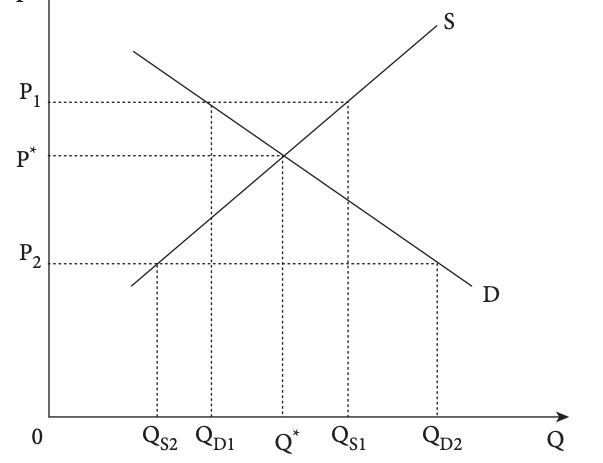
What does this figure illustrate?
Seçenekler
A
Interaction of Supply and Demand
B
The Effect of an Increase in Demand
C
The Effect of an Increase in Supply
D
The Effect of an Increase in Supply and a Decrease in Demand
E
The Allocative Efficiency in a Perfectly Competitive Market
Açıklama:
In the process of this interaction of the two sides of the market, prices alter until the market clears, in other words, the quantity demanded equals the quantity supplied. If the price is lower than the market-clearing level, a “shortage” or “excess demand” exists, while if the price is higher than the market-clearing level, a “surplus” or “excess supply” occurs. Figure illustrates this process. The correct answer is A.
Soru 12
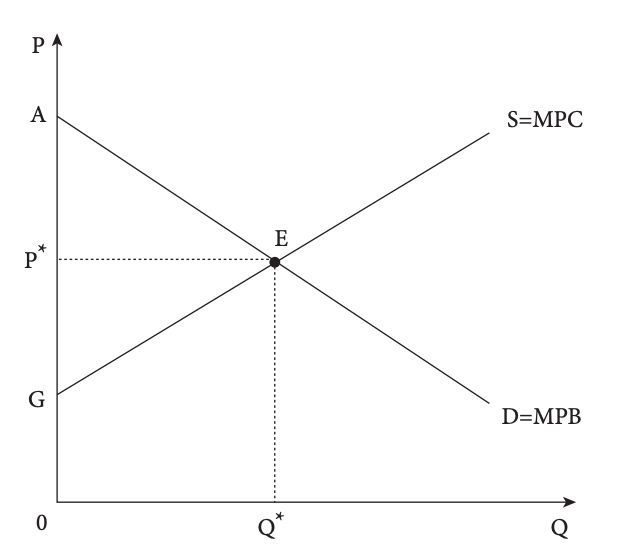
What does this figure illustrate?
Seçenekler
A
The Effect of an Increase in Supply
B
The Allocative Efficiency in a Perfectly Competitive Market
C
The Effect of an Increase in Demand
D
The Effect of an Increase in Supply and a Decrease in Demand
E
Interaction of Supply and Demand
Açıklama:
The allocative efficiency in a perfectly competitive market is represented in the Figure. The downward-sloped market demand curve, namely D, that denotes “marginal private benefit (MPB)”, is linked to the consumption of different quantities and reflects the diminishing marginal utility. The upward-sloped market supply curve, namely S, represents “marginal private cost (MPC)” and indicates that MPC increases as the production of extra units. Hence, S reflects the diminishing marginal productivity. MPC includes the variable costs of production incurred from hiring labor and purchasing materials. The correct answer is B.
Soru 13
Which of the following statements correctly explains what happens when the market price deviates from the equilibrium in the healthcare services market?
Seçenekler
A
A shortage occurs when the price is higher than the equilibrium price.
B
A surplus occurs when the price is lower than the market-clearing level.
C
A shortage or excess demand occurs if the price is lower than the market-clearing level, whereas a surplus or excess supply occurs if the price is higher than the market-clearing level.
D
The market always clears regardless of the price level.
E
Prices above equilibrium increase both supply and demand equally.
Açıklama:
In the healthcare services market a shortage or excess demand occurs if the price is lower than the market-clearing level, whereas a surplus or excess supply occurs if the price is higher than the market clearing level. The correct answer is C.
Soru 14
According to the relationship between price elasticity of demand and total revenue, which of the following is correct?
Seçenekler
A
If demand is elastic, an increase in price will increase total revenue.
B
If demand is inelastic, an increase in price will decrease total revenue.
C
If demand is unit elastic, a price change leads to a proportional change in total revenue.
D
If demand is elastic, a price increase reduces quantity demanded by a larger percentage, causing total revenue to fall.
E
If demand is perfectly inelastic, total revenue stays the same regardless of price changes.
Açıklama:
The price elasticity can imply what happens to the total revenue of a healthcare firm (or total expenditure for consumers) when a price change occurs. “Total revenue” equals the quantity multiplied by the price. The relation between total revenue and elasticity can be summarized as follows: • if demand is elastic, one percentage rise in the price declines the quantity demanded by more than that, decreasing total revenue; • if demand is unit elastic, one percentage rise in the price declines the quantity demanded by one percentage, causing no change in total revenue; • if demand is inelastic, one percentage rise in the price declines the quantity demanded by less than that, increasing total revenue. The correct answer is D.
Soru 15
Which of the following situations is most likely to result in more inelastic demand for a healthcare-related good or service?
Seçenekler
A
The good has many close substitutes available.
B
The good takes a large share of the consumer’s income.
C
The good is not considered a necessity by the consumer
D
The consumer has a long time to search for alternatives.
E
The consumer is highly loyal to a specific healthcare brand.
Açıklama:
The factors affecting the price elasticity can be listed as follows (Guinness & Wiseman, 2011: 59): • If closer substitutes exist, the price elasticity tends to be higher because individuals can simply switch among alternatives in case of a minor price change. • If a good takes a high portion of the income, the price elasticity tends to be higher. • Since individuals have more time to seek substitutes and alter their behavior, the price elasticity tends to be higher in the long run. • If the necessity of a good is higher for an individual, the price elasticity tends to be lower because an individual tries to buy whatever the price is. The price elasticity of insulin demand for diabetic patients can be given as an example. • If an individual is not required to directly pay for the good, the price elasticity tends to be more inelastic. The price elasticity in the case of employer-sponsored health insurance, can be given as an example. • The existence of brand loyalty can cause individuals to be unresponsive to changes in price, resulting in more inelastic demand. The correct answer is E.
Soru 16
Which of the following best defines the income elasticity of demand?
Seçenekler
A
The percentage change in quantity demanded in response to a percentage change in price.
B
The responsiveness of quantity demanded to changes in the availability of substitutes.
C
The percentage change in quantity demanded divided by the percentage change in income.
D
The rate at which healthcare costs increase over time.
E
The relationship between total revenue and the price elasticity of demand.
Açıklama:
“The income elasticity of demand” identifies the degree to which the demand changes for a change in income. Hence, the income elasticity is stated as the percentage change in quantity demanded divided by the percentage change in income, or EY= %ΔQD/%ΔY. If EY takes positive values, the good is described as a normal good since an increase in income makes the quantity demanded rise. On the contrary, if EY takes negative values, the good is described as an inferior good since an increase in income makes the quantity demanded fall. Income elasticity tends to be positive for most types of healthcare services demand. The correct answer is C.
Soru 17
What does it mean when demand is described as price elastic?
Seçenekler
A
A change in price leads to no change in quantity demanded.
B
The percentage change in quantity demanded is greater than the percentage change in price.
C
The percentage change in price is greater than the percentage change in quantity demanded.
D
Quantity demanded increases only when price decreases by more than 50%.
E
Consumers continue to buy the same quantity regardless of price changes.
Açıklama:
If the absolute value of the price elasticity is in the range of one to infinity (1<|EP|<∞), demand is called price “elastic”. This means the percentage change in the quantity demanded is higher than the percentage change in the price in absolute terms, or |%ΔQD|>|%ΔP|.
Soru 18
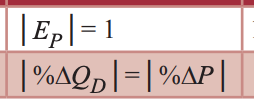
Which type of elasticity is formulated as in the picture?
Seçenekler
A
Unit Elastic
B
Elastic
C
Inelastic
D
Perfectly Inelastic
E
Perfectly Elastic
Açıklama:
In case of the percentage change in the quantity demanded equals the percentage change in the price in absolute terms, or |%ΔQD|=|%ΔP|, the absolute value of the price elasticity equals one (|EP|=1), and the price elasticity is called “unit elastic”.
Soru 19
Which economic model defines health as a commodity produced through the use of healthcare services and individuals’ own time, based on human capital and household production theories?
Seçenekler
A
The Health Insurance Model
B
The Production Possibility Frontier Model
C
The Utility Maximization Model
D
Grossman’s Model
E
The Law of Demand Model
Açıklama:
Grossman’s model is based on the theories of human capital and household production and defines health as a commodity produced by using healthcare services and consumers’ own time. The correct answer is D.
Soru 20
Which of the following best describes the long run average cost (LRAC) curve in relation to short run average cost (SRAC) curves?
Seçenekler
A
It is drawn as an envelope curve below the SRAC curves, each of which is tangent to it at some point.
B
It lies above all SRAC curves, showing increasing costs over time.
C
It represents the average fixed cost in the long run.
D
It is a horizontal line indicating constant returns to scale.
E
It equals the marginal cost curve in the short run.
Açıklama:
A long run average cost curve is drawn as an envelope below a series of short run average cost curves that are tangent to it.
Ünite 3
Soru 1
What is the primary aim of economic evaluation in healthcare?
Seçenekler
A
To prioritize private sector profitability over societal well-being.
B
To determine the most expensive healthcare option available.
C
To analyze healthcare services without considering their costs.
D
To compare different technologies and alternatives based on their costs and outcomes.
E
To focus solely on the financial performance of healthcare institutions.
Açıklama:
Economic evaluation involves comparing different technologies to analyze their outcomes and the costs of alternatives. The main aim of economic evaluation is to recognize, assess, compare, and measure the outcomes and costs of the options under consideration
The correct answer is "To compare different technologies and alternatives based on their costs and outcomes"
The correct answer is "To compare different technologies and alternatives based on their costs and outcomes"
Soru 2
What does the concept of "opportunity cost" refer to in health economics?
Seçenekler
A
The total amount of resources available for healthcare.
B
The expenses incurred by hospitals in providing medical services.
C
The amount of funding required for expanding healthcare programs.
D
The benefits forgone from the next best alternative use of resources.
E
The financial cost of implementing a new healthcare program.
Açıklama:
The concept of “opportunity cost” explains the fact that resources are scarce and that choices must be made about the best ways to allocate them. The cost of any preference or decision made is evaluated in terms of the worth set on the opportunity foregone. The opportunity cost means “the benefits forgone” in the best alternative programme where the resources can otherwise have been allocated.
"The benefits forgone from the next best alternative use of resources." This is the correct answer, option D
"The benefits forgone from the next best alternative use of resources." This is the correct answer, option D
Soru 3
Which of the following economic evaluation methods specifically incorporates individuals' preferences regarding health outcomes?
Seçenekler
A
Cost-Effectiveness Analysis (CEA)
B
Cost-Analysis Method (CAM)
C
Cost-Minimization Analysis (CMA)
D
Cost-Benefit Analysis (CBA)
E
Cost-Utility Analysis (CUA)
Açıklama:
CUA is a specific form of CEA that captures the preferences of individuals concerning the health outcomes of diverse programs and accordingly provides estimates of benefits.
Cost-Utility Analysis (CUA) specifically incorporates individuals' preferences regarding health outcomes
Cost-Utility Analysis (CUA) specifically incorporates individuals' preferences regarding health outcomes
Soru 4
Which of the following is an example of a direct healthcare cost?
Seçenekler
A
Pain and suffering caused by a medical procedure
B
Transportation costs to and from the hospital
C
Hospital, physician, and nursing expenses
D
Time spent by family members taking care of the patient
E
Loss of wages due to illness
Açıklama:
“Direct” means directly associated with the healthcare sector, which is doctors, patients and hospitals. Direct costs are resources utilized in the implementation, design, continuation or access of the interventions being evaluated. So, hospital, physician, and nursing expenses" is an example of a direct healthcare cost.
"Hospital, physician, and nursing expenses" is an example of a direct healthcare cost. The correct answer is option C
"Hospital, physician, and nursing expenses" is an example of a direct healthcare cost. The correct answer is option C
Soru 5
What is the primary objective of Cost-Minimization Analysis (CMA)?
Seçenekler
A
To select the least costly intervention when outcomes are identical
B
To measure the benefits of healthcare interventions in monetary terms
C
To compare interventions based on both cost and effectiveness
D
To assess the impact of healthcare interventions on quality of life
E
To determine the most cost-effective treatment when outcomes differ
Açıklama:
Cost-minimization analysis (CMA) compares the costs simply between the two interventions, which have identical outcomes. Thus, the aim is to determine the one with the lowest cost among the compared interventions. In other words, in CMA, the clinical effect of treatment alternatives is assumed to be equal, and the difference between the alternatives is only in cost. According to this analysis, it is assumed that whichever intervention is less costly will be chosen. Therefore, when the outcomes of two interventions are supposed to be the same, CMA should merely be used
The primary objective of Cost-Minimization Analysis (CMA) is to select the least costly intervention when outcomes are identical. so the correct answer is Option A.
The primary objective of Cost-Minimization Analysis (CMA) is to select the least costly intervention when outcomes are identical. so the correct answer is Option A.
Soru 6
How does WPT estimate the value of a health intervention?
Seçenekler
A
By comparing the costs of different healthcare providers
B
By determining the government’s healthcare budget allocations
C
By evaluating the effectiveness of medical treatments through clinical trials
D
By measuring direct costs such as medical fees and hospital expenses
E
By surveying individuals on the maximum amount they would pay for a risk reduction
Açıklama:
The WTP is an alternative approach that is used to estimate indirect costs and benefits. The second approach is known as WTP, which involves quantifying the importance an individual places on a particular good, service, or risk reduction. This involves estimating the maximum amount of money that an individual would pay to mitigate the risk of illness or death associated with that particular good, service, or risk reduction
WTP estimates the value of a health intervention by surveying individuals on the maximum amount they would pay for a risk reduction. son the correct answer is option E
WTP estimates the value of a health intervention by surveying individuals on the maximum amount they would pay for a risk reduction. son the correct answer is option E
Soru 7
How does CEA measure health outcomes?
Seçenekler
A
By calculating the financial return on investment in healthcare
B
By comparing the total net benefits of an intervention to its costs
C
In monetary terms, like cost savings for hospitals
D
By determining the total economic impact of an intervention
E
In natural health units, such as life years gained or cases diagnosed
Açıklama:
CEA assesses the alternative interventions’ outcomes and costs using clinical outcomes in “natural units”. It evaluates outcomes using natural, important The maximum net benefit of society will arise where the marginal social costs are equal to the marginal social benefits. The natural units can contain a scope of clinical situations like complications avoided, life years gained, cases diagnosed or symptom-free days.
CEA measures health outcomes In natural health units, such as life years gained or cases diagnosed, so the correct answer is Option E.
CEA measures health outcomes In natural health units, such as life years gained or cases diagnosed, so the correct answer is Option E.
Soru 8
Which of the following is a key measurement method used in CUA?
Seçenekler
A
NPV (Net Present Value)
B
ROI (Return on Investment)
C
WTP (Willingness to Pay)
D
CER (Cost-Effectiveness Ratio)
E
QALY (Quality-Adjusted Life Year)
Açıklama:
CUA is useful in evaluating the consequences of the treatment on individuals. The primary measurement methods used to evaluate outcomes are QALYs, HYEs, and DALYs in CUA
QALY (Quality-Adjusted Life Year) is a key measurement method used in CUA. So, the correct answer is E
QALY (Quality-Adjusted Life Year) is a key measurement method used in CUA. So, the correct answer is E
Soru 9
What does Cost-Utility Analysis (CUA) primarily focus on
Seçenekler
A
E) Determining the lowest-cost medical procedure available
B
Measuring the financial cost of healthcare interventions
C
Assessing the total societal economic impact of a disease
D
Evaluating the quality and quantity of life gained from an intervention
E
Comparing the direct costs of different treatments
Açıklama:
CUA is an economic evaluation method that concentrates on measuring patients’ preferences for a particular health condition. Through CUA, the quality of life years achieved can be evaluated.
Cost-Utility Analysis (CUA) primarily focus on evaluating the quality and quantity of life gained from an intervention. so the correct answer is option D
Cost-Utility Analysis (CUA) primarily focus on evaluating the quality and quantity of life gained from an intervention. so the correct answer is option D
Soru 10
What is the key difference between Cost-Effectiveness Analysis (CEA) and Cost- Benefit Analysis (CBA)?
Seçenekler
A
CEA evaluates interventions based on costs alone, while CBA includes effectiveness
B
CEA measures costs per health outcome, while CBA converts both costs and benefits into monetary terms
C
CEA measures health outcomes in monetary terms, while CBA uses natural health units
D
CEA considers all societal costs, while CBA focuses only on direct costs
E
CEA is used only for public healthcare decisions, while CBA applies only to private healthcare
Açıklama:
CBA is a technique of defining the project’s net benefits in monetary terms, whereas CEA represents the ratio of marginal cost to the marginal health effect, in other words, the ratio of incremental costs for each unit of incremental health effect.
The key difference between Cost-Effectiveness Analysis (CEA) and Cost- Benefit Analysis (CBA) is that CEA measures costs per health outcome, while CBA converts both costs and benefits into monetary terms.
The key difference between Cost-Effectiveness Analysis (CEA) and Cost- Benefit Analysis (CBA) is that CEA measures costs per health outcome, while CBA converts both costs and benefits into monetary terms.
Ünite 4
Soru 1
Historically which civilization established sanctuaries that were consecrated to the deity associated with healing and functioned as early medical facilities referred to as Asclepieia?
Seçenekler
A
Egypt civilization
B
Hellenic civilization
C
Roman civilization
D
Ottoman civilization
E
Persian civilization
Açıklama:
In antiquity, the Hellenic civilization established sanctuaries that were consecrated to Asclepius, the deity associated with healing, which functioned as early medical facilities referred to as Asclepieia.
The correct answer is Hellenic civilization. The correct answer is option B.
The correct answer is Hellenic civilization. The correct answer is option B.
Soru 2
In ancient Rome, the initial hospitals, characterized by a more systematic and organized approach, primarily catered to which of the following groups?
Seçenekler
A
Hospital workers
B
Small business people
C
Military personnel
D
Factory workers
E
Elderly people
Açıklama:
In ancient Rome, military medical facilities, referred to as valetudinaria, were instituted to provide care for injured soldiers. These establishments were characterized by a more systematic and organized approach, offering rest, nutrition, and medical care designed to facilitate rapid recovery and reintegration into service. While these initial hospitals primarily catered to military personnel, they marked a substantial progression in the realm of organized healthcare.
Military personnel is the correct answer. The correct option is C
Military personnel is the correct answer. The correct option is C
Soru 3
Which of the following developments marked the emergence of specialized institutions for mental health care in the Western world in the 18th and 19th centuries?
Seçenekler
A
The rise of new healthcare systems
B
The rise of new prisons
C
The rise of new techniques
D
The rise of clinics
E
The rise of asylums
Açıklama:
Which of the following developments marked the emergence of specialized institutions for mental health care in the Western world in the 18th and 19th centuries?
The correct answer is "the rise of asylums". The correct option is E.
The correct answer is "the rise of asylums". The correct option is E.
Soru 4
What challenge do healthcare facilities face in balancing financial stability with their commitment to providing high-quality patient care?
Seçenekler
A
Prioritizing profit over patient well-being
B
Reducing staff to cut operational expenses
C
Negotiating the equilibrium between fiscal viability and superior patient care
D
Eliminating financial considerations from healthcare management
E
Expanding their services without increasing costs
Açıklama:
Healthcare facilities are required to negotiate the equilibrium between fiscal viability and their commitment to offering superior patient care.
The correct answer is "Negotiating the equilibrium between fiscal viability and superior patient care" option C.
The correct answer is "Negotiating the equilibrium between fiscal viability and superior patient care" option C.
Soru 5
Which of the following statements accurately describes the impact of different hospital revenue models?
Seçenekler
A
Competitive healthcare markets discourage advancements in service quality.
B
Hospitals in monopolistic markets are more likely to offer lower prices due to lack of competition.
C
Bundled payments reduce the need for coordination among healthcare providers.
D
The capitation model ensures high-quality care by reimbursing hospitals for each service provided.
E
The fee-for-service model encourages higher service volumes but may lead to unnecessary treatments and reduces overall expenditures in healthcare
Açıklama:
In a fee - for - service framework, hospitals receive remuneration for every distinct service rendered. T his framework has the potential to promote increased quantities of care; however, it may simultaneously result in superfluous services and elevated overall expenditures in healthcare.
"The fee-for-service model encourages higher service volumes but may lead to unnecessary treatments and reduces overall expenditures in healthcare" this statement is true.
The correct option is E.
"The fee-for-service model encourages higher service volumes but may lead to unnecessary treatments and reduces overall expenditures in healthcare" this statement is true.
The correct option is E.
Soru 6
Which of the following best describes the role of general hospitals in the healthcare system?
Seçenekler
A
They provide a wide range of medical services, including emergency care, inpatient and outpatient treatment, and diagnostic assessments.
B
They focus exclusively on treating specific medical conditions.
C
They only offer surgical services and do not provide diagnostic evaluations.
D
They basically specialize in research rather than patient care.
E
They especially serve private patients and do not cater to the general public.
Açıklama:
General hospitals represent the predominant category of healthcare facilities, offering a comprehensive spectrum of services to address diverse medical ailments. These facilities typically offer critical medical interventions, surgical operations, inpatient care, outpatient services, and diagnostic assessments. General hospitals serve the wider community and are equipped to handle a broad array of diseases and injuries.
"They provide a wide range of medical services, including emergency care, inpatient and outpatient treatment, and diagnostic assessments." This is the correct answer. Option A
"They provide a wide range of medical services, including emergency care, inpatient and outpatient treatment, and diagnostic assessments." This is the correct answer. Option A
Soru 7
Which of the following statements accurately describes the role of rehabilitation hospitals?
Seçenekler
A
They provide emergency medical care and perform complex surgical procedures.
B
They focus on helping patients recover from severe injuries, illnesses, or surgeries through specialized therapies.
C
They primarily treat infectious diseases and provide preventive care services.
D
They operate only within military healthcare systems and do not serve civilians.
E
They specialize in short-term outpatient treatments rather than long-term rehabilitation programs.
Açıklama:
Rehabilitation hospitals focus on helping patients recover from severe injuries, illnesses, or surgeries. They offer physical, occupational, and speech therapy to aid in patient recovery.
Key Features:
- Physical, occupational, and speech therapy-
- Long-term rehabilitation programs
- Multidisciplinary care teams
"They focus on helping patients recover from severe injuries, illnesses, or surgeries through specialized therapies." This sentence describes the role of rehabilitation hospitals
Key Features:
- Physical, occupational, and speech therapy-
- Long-term rehabilitation programs
- Multidisciplinary care teams
"They focus on helping patients recover from severe injuries, illnesses, or surgeries through specialized therapies." This sentence describes the role of rehabilitation hospitals
Soru 8
Which of the following correctly distinguishes government hospitals from private hospitals?
Seçenekler
A
Government hospitals are privately owned, whereas private hospitals are fully funded by the government.
B
Government hospitals focus solely on basic procedures, whereas private hospitals specialize in emergency care.
C
Private hospitals are only for-profit institutions, while government hospitals operate without any funding.
D
Government hospitals primarily serve specific populations, such as veterans and low-income individuals, while private hospitals offer a wide range of medical services, often with a focus on personalized care.
E
Private hospitals do not provide any specialized medical services, unlike government hospitals.
Açıklama:
Government hospitals are funded and operated by government entities. They provide medical services to specific populations, such as veterans, active military personnel, and the indigent. These hospitals often focus on providing essential healthcare services and public health initiatives. On the other hand private hospitals are owned and operated by private organizations or individuals. They can be for-profit or non-profit and often provide a wide range of medical services. Private hospitals may offer higher levels of comfort and personalized care, often attracting patients seeking specialized or elective procedures.
"Government hospitals primarily serve specific populations, such as veterans and low-income individuals, while private hospitals offer a wide range of medical services, often with a focus on personalized care." this is the correct answer and the correct option is D
"Government hospitals primarily serve specific populations, such as veterans and low-income individuals, while private hospitals offer a wide range of medical services, often with a focus on personalized care." this is the correct answer and the correct option is D
Soru 9
Which of the following best describes the Balanced Scorecard approach in hospital management?
Seçenekler
A
It provides an integrated framework that evaluates hospital performance from financial, patient, internal business process, and learning and growth perspectives.
B
It is solely used to track revenue per treatment and cost per patient
C
It focuses exclusively on financial performance indicators such as cost management and profitability.
D
It eliminates the need for financial metrics by focusing only on clinical outcomes.
E
It prioritizes patient satisfaction over all other hospital management concerns.
Açıklama:
The Balanced Scorecard approach to hospital management encompasses multiple perspectives that collectively provide a comprehensive framework for evaluating and improving organizational performance. T hese perspectives - financial, patient, internal business processes, and learning and growth - form an integrated system that enables healthcare administrators to assess both tangible and intangible aspects of hospital operations, ensuring a balanced approach to achieving strategic objectives while maintaining high-quality patient care.
"It provides an integrated framework that evaluates hospital performance from financial, patient, internal business process, and learning and growth perspectives" This is the correct definition of Balanced Scorecard approach.
The correct answer is option A
"It provides an integrated framework that evaluates hospital performance from financial, patient, internal business process, and learning and growth perspectives" This is the correct definition of Balanced Scorecard approach.
The correct answer is option A
Soru 10
Which of the following strategies can hospitals use to address financial constraints while maintaining quality care?
Seçenekler
A
Relying solely on government funding without exploring alternative sources.
B
Avoiding technological advancements to minimize expenditures.
C
Reducing healthcare services to cut costs.
D
Eliminating financial audits to reduce administrative workload.
E
Implementing robust financial management, exploring alternative funding sources, improving operational efficiency, and optimizing revenue cycle management
Açıklama:
Financial constraint management in hospitals requires a comprehensive approach that balances cost control with quality care delivery. Modern healthcare facilities employ various strategic initiatives to address financial challenges while maintaining service excellence, ranging from improved financial management practices and alternative funding sources to operational efficiency enhancements and revenue cycle optimization.
"Implementing robust financial management, exploring alternative funding sources, improving operational efficiency, and optimizing revenue cycle management" This is the correct answer. Option E
"Implementing robust financial management, exploring alternative funding sources, improving operational efficiency, and optimizing revenue cycle management" This is the correct answer. Option E
Soru 11
Which of the following historical developments in hospital systems is most closely associated with the holistic approach to healthcare that included wards for various ailments, outpatient services, and educational programs for medical professionals?
Seçenekler
A
Islamic World and Bimaristans
B
Ancient Greece and Asclepieia
C
Ancient Egypt and Specialized Medical Practices
D
Medieval Christian Hospitals
E
Evolution in the Western World
Açıklama:
Islamic hospitals distinguished themselves through their holistic and allencompassing approach to healthcare. They incorporated dedicated wards for various ailments, outpatient services, and educational programs for aspiring medical professionals. The correct answer is A.
Soru 12
Which of the following historical hospital developments was characterized by a combination of spiritual and physical care, including the cultivation of herbal gardens and the preservation of medical manuscripts by monks and nuns?
Seçenekler
A
The Asclepieia in Ancient Greece
B
The Hôtel-Dieu in Medieval Christian Europe
C
The valetudinaria in Ancient Rome
D
The Bimaristans in the Islamic World
E
The pediatric hospitals in 19th-century France and England
Açıklama:
The Hôtel-Dieu in Paris is an example of monastic hospitals that were created by religious orders to serve the sick, impoverished, and itinerant individuals. These establishments were frequently integrated within monasteries and financed through philanthropic contributions. Care was administered by monks and nuns, underscoring the importance of both physical and spiritual well-being. The monastic model of healthcare encompassed the cultivation of herbal gardens for therapeutic plants and the safeguarding of medical manuscripts, which were vital for the continuity of medical wisdom. The correct answer is B.
Soru 13
Which of the following factors was most influential in the significant increase of hospital services after World War II?
Seçenekler
A
The development of X-ray technology
B
The introduction of Electronic Health Records (EHRs)
C
Government investment and public sector involvement
D
The rise of telemedicine
E
The emergence of antibiotics like penicillin
Açıklama:
The proliferation of hospital services following World War II was primarily driven by considerable public sector investment, particularly in nations such as Spain, where the establishment of a contemporary hospital framework was shaped by historical contexts and political factors. The correct answer is C.
Soru 14
Which of the following is a key way in which hospitals contribute to the economic vitality of their communities?
Seçenekler
A
By solely providing healthcare services
B
By focusing exclusively on administrative roles
C
By reducing local employment opportunities
D
By drawing in businesses and capital investments
E
By avoiding collaborations with academic bodies
Açıklama:
Hospitals serve a crucial function in the economic vitality of their respective communities by drawing in businesses and capital investments. The availability of superior healthcare facilities can significantly influence corporate location decisions, as enterprises strive to guarantee that their workforce has access to high-quality medical services. Additionally, hospitals regularly join forces with academic bodies and research organizations, enhancing creativity and facilitating the progress of groundbreaking medical technologies and treatment strategies. These collaborations can lead to the creation of new industries and high-paying jobs in biotechnology, pharmaceuticals, and medical devices. The correct answer is D.
Soru 15
Which of the following best defines a monopolistic market structure in the context of hospitals?
Seçenekler
A
A market where several hospitals compete for patients, leading to lower prices and more innovation.
B
A market where hospitals focus solely on providing general healthcare services without any specialized care.
C
A market where multiple hospitals collaborate to enhance service delivery and reduce costs.
D
A market where hospitals operate with minimal regulation and government intervention.
E
A market where a single hospital dominates the healthcare market, leading to higher prices and limited competition.
Açıklama:
In a monopolistic market structure, a solitary hospital monopolizes the landscape, encountering minimal to no competition. This scenario can engender inflated prices and a diminished impetus for operational efficiency, as patients are presented with limited choices. The correct answer is E.
Soru 16
Which of the following best defines an oligopolistic market structure in the context of hospitals?
Seçenekler
A
A market where a few hospitals have substantial market influence and compete with each other.
B
A market where a single hospital controls the entire healthcare system, limiting choices for patients.
C
A market where hospitals collaborate to avoid competition and standardize prices.
D
A market with numerous hospitals, all competing for patients, leading to reduced prices and high-quality care.
E
A market with numerous hospitals, all competing for patients, leading to reduced prices and high-quality care.
Açıklama:
Within an oligopolistic market framework, a restricted number of hospitals possess considerable market influence. This concentration of power can precipitate elevated pricing for healthcare services due to diminished competitive pressures. The correct answer is A.
Soru 17
What is the concept defined as a single financial transaction that covers all services related to a specific treatment or medical condition, fostering the integration of care and promoting economic efficiency?
Seçenekler
A
Fee - for - Service
B
Bundled Payments
C
Capitation
D
Pay-for-performance
E
Value-based care
Açıklama:
Bundled payments entail a singular financial transaction that encompasses all services pertinent to a designated treatment or medical condition. This framework fosters the integration of care and promotes economic efficiency; however, it necessitates meticulous oversight of resources and synergistic collaboration among healthcare providers. The correct answer is B.
Soru 18
What is the concept defined as a hospital that is affiliated with medical schools, provides medical education, conducts clinical research, and offers advanced medical treatments?
Seçenekler
A
Community hospital
B
Private hospital
C
Teaching hospital
D
Government hospital
E
Non-profit hospital
Açıklama:
Teaching hospitals are normally affiliated with medical schools, and therefore they are responsible for not only providing patient care but also medical education with respect to students, residents, and other health professionals. The correct answer is C.
Soru 19
What is the concept defined as a hospital that specializes in helping patients recover from severe injuries, illnesses, or surgeries through physical, occupational, and speech therapy?
Seçenekler
A
Community hospital
B
Private hospital
C
Government hospital
D
Rehabilitation hospital
E
Teaching hospital
Açıklama:
Rehabilitation hospitals focus on helping patients recover from severe injuries, illnesses, or surgeries. They offer physical, occupational, and speech therapy to aid in patient recovery. The correct answer is D.
Soru 20
What does the following ratio represent: "Number of Discharges (including deaths) / Number of Beds Available"?
Seçenekler
A
Readmission Rates
B
Average Length of Stay
C
Staffing Levels and Productivity
D
Bed Occupancy Rate
E
Bed Turnover Rate
Açıklama:
The bed turnover rate measures the number of times a hospital bed is used by different patients over a specific period. It indicates how frequently beds are being utilized and can reflect the hospital’s ability to manage patient admissions and discharges efficiently. Bed Turnover Rate = Number of Discharges(including deaths) /Number of Beds Available. The correct answer is E.
Ünite 5
Soru 1
What is an "Appeal" ?
Seçenekler
A
A formal request made to your health insurer or plan for a review of a decision that denies a benefit or payment, whether in full or in part.
B
A request for a benefit, which includes reimbursement for a healthcare expense, submitted by either you or your healthcare provider to your health insurer or plan for items or services you believe are covered.
C
A predetermined, fixed amount, such as $25, that you pay for a covered healthcare service, typically at the time you receive the service. The specific amount can vary depending on the type of covered healthcare service.
D
Typically a spouse or child, who is eligible for healthcare benefits under the member’s insurance policy.
E
Services provided for the initial outpatient treatment of an acute medical condition, typically within a hospital setting.
Açıklama:
An appeal is a formal request made to your health insurer or plan for a review of a decision that denies a benefit or payment, whether in full or in part. The answer is A.
Soru 2
What is a "Policy"?
Seçenekler
A
A health coverage provided either directly to you as an individual or through an employer, union, or other group sponsor that covers certain healthcare expenses is known as health insurance.
B
Services provided for an unforeseen illness or injury that is not life-threatening but necessitates immediate outpatient medical care and cannot be delayed.
C
The individual who has been granted healthcare coverage by the policyholder, such as their employer, or by any of their covered family members.
D
A health insurance benefit refers to a medical treatment or service specified by your health plan, such as a doctor consultation or an organ transplant.
E
Treatment provided to a patient who can return home after care without requiring an overnight stay in a hospital or other inpatient facility
Açıklama:
A policy is a health coverage provided either directly to you as an individual (individual plan) or through an employer, union, or other group sponsor (employer group plan) that covers certain healthcare expenses is known as health insurance. This coverage is also referred to as a “health insurance plan”, “policy”, “health insurance policy”, or simply “health insurance”.
The answer is A.
The answer is A.
Soru 3
What is a "Provider"?
Seçenekler
A
The duration of time that your insurance plan must cover you before you are eligible to claim a specific benefit.
B
Any individual, such as a doctor, nurse, or dentist, or institution, such as a hospital or clinic, that offers medical care.
C
It refers to specific conditions or services that your health plan does not cover.
D
The maximum amount you will need to pay each year for deductibles and coinsurance, as determined by the insurance company.
E
Services that typically encompass prenatal care, normal childbirth or delivery services, and routine care provided in a newborn nursery.
Açıklama:
Any individual, such as a doctor, nurse, or dentist, or institution, such as a hospital or clinic, that offers medical care is referred to as a healthcare provider or a provider. The answer is B.
Soru 4
What is a "insurance contract"?
Seçenekler
A
Healthcare coverage for an individual without any covered dependents.
B
It obligates a health insurer to cover some or all of your healthcare expenses in return for a premium payment.
C
The network of doctors, hospitals, and other healthcare professionals that have a contractual agreement with a health plan to provide medical services to its members.
D
The ongoing payment required for your health plan, usually paid monthly, quarterly, or yearly by you and/or your employer.
E
It might impose restrictions on the maximum dollar amount it will cover for a particular treatment or service within a single year, or for all benefits provided throughout the year.
Açıklama:
A health insurance contract obligates a health insurer to cover some or all of your healthcare expenses in return for a premium payment. This contract may also be referred to as a “policy” or “plan”. The answer is B.
Soru 5
I.Health insurance is a form of insurance that provides financial security to individuals when benefiting from health services.
II. These services often include a variety of health care expenses, such as doctor’s visits, medical tests, hospitalizations, surgical procedures, and prescription medications.
III. Health insurance functions by spreading out the risks associated with health care expenses among a small group of individuals.
Which of the given statements can be said to be true about health insurance?
II. These services often include a variety of health care expenses, such as doctor’s visits, medical tests, hospitalizations, surgical procedures, and prescription medications.
III. Health insurance functions by spreading out the risks associated with health care expenses among a small group of individuals.
Which of the given statements can be said to be true about health insurance?
Seçenekler
A
Only I
B
Only II
C
I and II
D
I and III
E
II and III
Açıklama:
Health insurance is a form of insurance that provides financial security to individuals when benefiting from health services. These services often include a variety of health care expenses, such as doctor’s visits, medical tests, hospitalizations, surgical procedures, and prescription medications. Health insurance functions by spreading out the risks associated with health care expenses among a large group of individuals. This collective pooling of risks ensures that the financial burden of healthcare is distributed across many people.
The answer is C.
The answer is C.
Soru 6
I. Expected utility theory posits that individuals make decisions by considering the expected value of outcomes weighted by their associated utilities.
II. Expected utility represents the anticipated value of utility for one among several alternatives, computed by adding the utility of each conceivable outcome and multiplying it by the probability of its occurrence.
III. The expected utility formula represents the multiplication of the utilities of all possible outcomes, divided by the average of the probabilities of those outcomes occurring.
Which of the given statements can be said to be true about expected utility?
II. Expected utility represents the anticipated value of utility for one among several alternatives, computed by adding the utility of each conceivable outcome and multiplying it by the probability of its occurrence.
III. The expected utility formula represents the multiplication of the utilities of all possible outcomes, divided by the average of the probabilities of those outcomes occurring.
Which of the given statements can be said to be true about expected utility?
Seçenekler
A
Only I
B
Only II
C
I and II
D
I and III
E
II and III
Açıklama:
Expected utility theory posits that individuals make decisions by considering the expected value of outcomes weighted by their associated utilities. Expected utility represents the anticipated value of utility for one among several alternatives, computed by adding the utility of each conceivable outcome and multiplying it by the probability of its occurrence. T he expected utility formula represents the weighted average of the utilities of all possible outcomes, where the weights are given by the probabilities of those outcomes occurring.
The answer is C.
The answer is C.
Soru 7
I. Risk aversion refers to the preference of individuals or entities to avoid uncertainty or risk.
II. A decision-maker is said to be risk-averse if, for any two outcomes with the same expected value, they prefer the outcome with more uncertainty (i.e., the one with more risk).
III. Formally, if U(X) is a utility function representing the decision-maker’s preferences over outcomes X, the decision-maker is riskaverse if U(X) is a concave function.
Which of the given statements can be said to be true about risk aversion?
II. A decision-maker is said to be risk-averse if, for any two outcomes with the same expected value, they prefer the outcome with more uncertainty (i.e., the one with more risk).
III. Formally, if U(X) is a utility function representing the decision-maker’s preferences over outcomes X, the decision-maker is riskaverse if U(X) is a concave function.
Which of the given statements can be said to be true about risk aversion?
Seçenekler
A
Only I
B
Only II
C
I and II
D
I and III
E
II and III
Açıklama:
Risk aversion refers to the preference of individuals or entities to avoid uncertainty or risk. A decision-maker is said to be risk-averse if, for any two outcomes with the same expected value, they prefer the outcome with less uncertainty (i.e., the one with less risk). Formally, if U(X) is a utility function representing the decision-maker’s preferences over outcomes X, the decision-maker is riskaverse if U(X) is a concave function.
The answer is D.
The answer is D.
Soru 8
Which of the given chacteristics is one of the characteristics of perfectly competitive markets?
Seçenekler
A
Different product
B
Few buyers and seller
C
High transaction costs
D
Asymmetric information
E
Free entry and exit to the market
Açıklama:
Characteristics of Perfectly Competitive Markets:
• Identical product • Many buyers and seller • Free entry and exit to the market • Symmetric information • Neither consumption nor production generates spillover benefits or costs • No transaction costs • Buyers maximize their utility, producers maximize their profits
The answer is E.
• Identical product • Many buyers and seller • Free entry and exit to the market • Symmetric information • Neither consumption nor production generates spillover benefits or costs • No transaction costs • Buyers maximize their utility, producers maximize their profits
The answer is E.
Soru 9
I. Adverse Selection occurs when consumers have better information about their own health than insurers do.
II. Adverse Selection will lead consumers to choose plans that offer the least advantage to them.
III. Conversely to adverse selection, insurers might benefit by excluding individuals who are at higher risk.
Which of the given statements can be said to be true about adverse selection?
II. Adverse Selection will lead consumers to choose plans that offer the least advantage to them.
III. Conversely to adverse selection, insurers might benefit by excluding individuals who are at higher risk.
Which of the given statements can be said to be true about adverse selection?
Seçenekler
A
Only I
B
Only II
C
I and II
D
I and III
E
II and III
Açıklama:
Adverse Selection occurs when consumers have better information about their own health than insurers do, leading them to choose plans that offer the most advantage to them. Conversely, insurers might benefit by excluding individuals who are at higher risk.
The answer is D.
The answer is D.
Soru 10
Which of the given properties is one of Social Health Insurance's property?
Seçenekler
A
Run by profit-driven entities
B
Market segmentation
C
Ambiguously defined earmarked resources
D
Voluntary membership
E
Payroll deduction of contributions
Açıklama:
Properties of Social Health Insurance:
• compulsory membership; • payroll deduction of contributions; • run by public bodies, either single or multiple organizations; • re-distributional policies; • clearly defined earmarked resources; • complex administration, relatively high costs; • can mobilize additional resources for the health sector.
The answer is E.
• compulsory membership; • payroll deduction of contributions; • run by public bodies, either single or multiple organizations; • re-distributional policies; • clearly defined earmarked resources; • complex administration, relatively high costs; • can mobilize additional resources for the health sector.
The answer is E.
Ünite 6
Soru 1
Which of the following factors has NOT been mentioned as a contributor to increased life expectancy in the past century?
Seçenekler
A
Advances in public health
B
Improvements in medical research
C
Developments in living standards
D
Expansion of alternative medicine
E
Decline in infant mortality
Açıklama:
Expansion of alternative medicine has NOT been mentioned as a contributor to increased life expectancy in the past century.
Soru 2
What was the percentage increase in the Turkish pharmaceutical market’s value from 2015 to 2022?
Seçenekler
A
100%
B
250%
C
525.6%
D
77.8%
E
10%
Açıklama:
The increase in the Turkish pharmaceutical market’s value from 2015 to 2022 is 525.6%.
Soru 3
What is the predicted compound annual growth rate (CAGR) for the global pharmaceutical market from 2023 to 2030?
Seçenekler
A
4.5%
B
6.12%
C
10.5%
D
8.3%
E
7.4%
Açıklama:
The predicted compound annual growth rate (CAGR) for the global pharmaceutical market from 2023 to 20306 is 12%.
Soru 4
Which of the following is a key factor influencing pharmaceutical companies’ decisions to invest in the discovery and development of new therapies?
Seçenekler
A
Marketing strategies
B
Labor and Resources
C
Advertising budget
D
Customer loyalty
E
Company size
Açıklama:
Labor and Resources: Highly specialized and skilled labour, sophisticated equipment, and materials are essential, contributing to the high fixed costs.
Labor and Resources s a key factor influencing pharmaceutical companies’ decisions to invest in the discovery and development of new therapies.
Labor and Resources s a key factor influencing pharmaceutical companies’ decisions to invest in the discovery and development of new therapies.
Soru 5
What is the primary function of National Pharmaceutical Policies (NPPs) according to the World Health Organization (WHO)?
Seçenekler
A
To regulate pharmaceutical advertising
B
To address pharmaceutical procurement, regulation, and distribution
C
To establish private pharmaceutical companies
D
To promote the use of over-the-counter medications
E
To increase pharmaceutical imports
Açıklama:
The World Health Organization (WHO) advocates for the development and implementation of national
pharmaceutical policies (NPPs) as a key strategy to improve access to essential medicines and ensure their
rational use. NPPs provide a framework for governments to address various aspects of pharmaceuticals,
including procurement, regulation, distribution, quality assurance, pricing, and promotion of rational drug
use (WHO, 2001). For this reason, access to medicine can indeed be examined from various dimensions.
The primary function of National Pharmaceutical Policies (NPPs) according to the World Health Organization (WHO) is to address pharmaceutical procurement, regulation, and distribution.
pharmaceutical policies (NPPs) as a key strategy to improve access to essential medicines and ensure their
rational use. NPPs provide a framework for governments to address various aspects of pharmaceuticals,
including procurement, regulation, distribution, quality assurance, pricing, and promotion of rational drug
use (WHO, 2001). For this reason, access to medicine can indeed be examined from various dimensions.
The primary function of National Pharmaceutical Policies (NPPs) according to the World Health Organization (WHO) is to address pharmaceutical procurement, regulation, and distribution.
Soru 6
Which of the following best describes the role of Health Technology Assessment (HTA) in controlling pharmaceutical expenditures?
Seçenekler
A
HTA ensures that pharmaceutical prices are lowered through direct price controls.
B
HTA evaluates the clinical and cost-effectiveness of new pharmaceuticals before they are approved for reimbursement.
C
HTA primarily focuses on determining the ceiling prices of pharmaceuticals without considering their clinical effectiveness.
D
HTA has no significant impact on pharmaceutical spending as it focuses only on regulatory approval.
E
HTA solely determines which drugs should be covered by private insurance policies.
Açıklama:
Health Technology Assessment has been the most important institutional regulation in recent years and serves as a way to use pharmaceutical expenditures more effectively through value-based payment. Some countries conduct health technology assessments to evaluate the clinical and cost-effectiveness of new pharmaceuticals before they are approved for reimbursement. HTA processes can affect which pharmaceuticals are covered and at what price, thereby affecting pharmaceutical spending.
HTA evaluates the clinical and cost-effectiveness of new pharmaceuticals before they are approved for reimbursement.
HTA evaluates the clinical and cost-effectiveness of new pharmaceuticals before they are approved for reimbursement.
Soru 7
What is the main purpose of internal reference pricing (IRP) in pharmaceutical pricing?
Seçenekler
A
To ensure that pharmaceutical prices are internationally competitive
B
To increase competition and control drug expenditures
C
To provide incentives for pharmaceutical companies to invest in research
D
To encourage the development of breakthrough therapies
E
To streamline regulatory processes for approval and reimbursement
Açıklama:
It is true that third-party payers, such as insurance companies or government health programs, utilize
an internal reference price (IRP) to calculate prescription reimbursement rates. It entails contrasting the
cost of one medication with that of other medications that address the same ailment or provide comparable
therapeutic outcomes. Payers can use this comparison to determine a reference price or benchmark for the
medication, which may affect the amount they are ready to reimburse. This approach is frequently used to
reduce healthcare costs and promote cost-effective prescription practices.
The main purpose of internal reference pricing (IRP) in pharmaceutical pricing is to increase competition and control drug expenditures.
an internal reference price (IRP) to calculate prescription reimbursement rates. It entails contrasting the
cost of one medication with that of other medications that address the same ailment or provide comparable
therapeutic outcomes. Payers can use this comparison to determine a reference price or benchmark for the
medication, which may affect the amount they are ready to reimburse. This approach is frequently used to
reduce healthcare costs and promote cost-effective prescription practices.
The main purpose of internal reference pricing (IRP) in pharmaceutical pricing is to increase competition and control drug expenditures.
Soru 8
Which of the following is TRUE about the pharmaceutical pricing and reimbursement system in Turkey?
Seçenekler
A
The Turkish Medicines and Medical Devices Agency (TMMDA) is responsible for setting pharmaceutical prices.
B
Since 2004, Türkiye has used the external reference price system, which relies on the prices of medications in five EU countries.
C
The Social Security Institution (Sosyal Güvenlik Kurumu) sets the prices of pharmaceutical products.
D
The TL/Euro exchange rate has no effect on the pharmaceutical prices in Türkiye.
E
Marketing authorization from the TMMDA is not necessary for pharmaceutical products sold in Türkiye.
Açıklama:
Since 2004, the external reference price system has served as the foundation for pharmaceutical prices
in Türkiye. The lowest manufacturer sales price in each of the five EU member states (source countries)-
France, Greece, Italy, Portugal, and Spain-is used as the reference price to calculate medicine pricing. The
price in the nation with the lowest manufacturer sales price is recognized as the reference price, though,
if the relevant product is made or imported in a country other than the reference countries in question
and the lowest manufacturer sales price in those countries is found to be lower than the reference country
prices.
Since 2004, Türkiye has used the external reference price system, which relies on the prices of medications in five EU countries.
in Türkiye. The lowest manufacturer sales price in each of the five EU member states (source countries)-
France, Greece, Italy, Portugal, and Spain-is used as the reference price to calculate medicine pricing. The
price in the nation with the lowest manufacturer sales price is recognized as the reference price, though,
if the relevant product is made or imported in a country other than the reference countries in question
and the lowest manufacturer sales price in those countries is found to be lower than the reference country
prices.
Since 2004, Türkiye has used the external reference price system, which relies on the prices of medications in five EU countries.
Soru 9
Which of the following economic evaluation methods compares the relative costs and outcomes of two or more policy alternatives, with the outcomes expressed in a single natural unit, such as life years gained or disease cases avoided?
Seçenekler
A
Cost-benefit analysis (CBA)
B
Cost-effectiveness analysis (CEA)
C
Cost-utility analysis (CUA)
D
Cost-minimization analysis (CMA)
E
Cost-consequence analysis (CCA)
Açıklama:
A type of comparative economic analysis known as cost-ei ectiveness analysis compares the relative costs and outcomes of two or more policy alternatives, with the latter evaluated in a single natural unit such as life years gained or disease cases avoided.
Cost-effectiveness analysis (CEA) compares the relative costs and outcomes of two or more policy alternatives, with the outcomes expressed in a single natural unit, such as life years gained or disease cases avoided.
Cost-effectiveness analysis (CEA) compares the relative costs and outcomes of two or more policy alternatives, with the outcomes expressed in a single natural unit, such as life years gained or disease cases avoided.
Soru 10
What is one of the limitations of using willingness to pay (WTP) methods in healthcare economic evaluations?
Seçenekler
A
They cannot be used to compare different health interventions.
B
They always favor individuals with higher income and wealth.
C
They are unaffected by the respondent's psychological biases.
D
They do not take into account the impact of social standing on willingness to pay.
E
They are universally accurate across all types of healthcare interventions.
Açıklama:
Willingness to pay estimates depends on the survey’s methodology and the wording of the questions. Furthermore, as a person’s willingness to pay is inextricably linked to their capacity to pay, factors like wealth, income, and social standing may have an impact on willingness to pay estimations. As a result, it has been suggested that financial assessments of health outcomes based on willingness to pay may result in assessments that inherently favor affluent people’s illnesses over those of the impoverished. Furthermore, each of the two methods-stated choice and revealed preference-has unique drawbacks.
Willingness to pay (WTP) methods always favor individuals with higher income and wealth.
Willingness to pay (WTP) methods always favor individuals with higher income and wealth.
Ünite 7
Soru 1
Which of the following best describes the scientific systems approach in the context of health systems?
Seçenekler
A
It emphasizes the isolated behavior of individual health components.
B
It applies linear forms of analysis to study health interventions.
C
It focuses on the interdependence and interactions within the system.
D
It limits solutions to direct medical interventions.
E
It excludes social and environmental factors from health analysis.
Açıklama:
Several key components are fundamental to a health system, supplementing others to lay the foundation
on which healthcare delivery services are built. These essential building blocks include service delivery, the
health workforce, health information, medical products and technologies, health financing, and governance.
The interaction between these elements and their interdependence, insofar as functioning is concerned, are
critical to the effectiveness of the system as a whole.
It focuses on the interdependence and interactions within the system.
on which healthcare delivery services are built. These essential building blocks include service delivery, the
health workforce, health information, medical products and technologies, health financing, and governance.
The interaction between these elements and their interdependence, insofar as functioning is concerned, are
critical to the effectiveness of the system as a whole.
It focuses on the interdependence and interactions within the system.
Soru 2
Which of the following is NOT one of the fundamental building blocks of a health system?
Seçenekler
A
Health workforce
B
Health information
C
Medical products and technologies
D
Universal health coverage
E
Governance
Açıklama:
Universal health coverage is NOT one of the fundamental building blocks of a health system.
Soru 3
Which of the following is a key characteristic of a tax-based healthcare financing system?
Seçenekler
A
Healthcare funding primarily comes from general taxation.
B
Mandatory health insurance contributions from employers and employees.
C
Healthcare services are financed mainly through private insurance.
D
Patients pay directly at the point of service for most healthcare expenses.
E
Healthcare costs are covered solely by regional governments.
Açıklama:
Tax-based systems are based on the fact that the funding of health care originates mainly from general taxation.
Healthcare funding primarily comes from general taxation.
Healthcare funding primarily comes from general taxation.
Soru 4
Which of the following is NOT one of the three essential functions of health system financing?
Seçenekler
A
Revenue generation
B
Pooling of funds
C
Regulation of healthcare prices
D
Purchasing health services
E
Risk-sharing mechanisms
Açıklama:
Regulation of healthcare prices is NOT one of the three essential functions of health system financing.
Soru 5
What is a key characteristic of social health insurance (SHI) as a revenue source for healthcare financing?
Seçenekler
A
It is voluntary and covers only specific healthcare services.
B
It relies on charitable donations from international organizations.
C
It requires mandatory contributions from employees and employers.
D
It primarily finances healthcare through direct out-of-pocket payments.
E
It is exclusively funded through government taxation.
Açıklama:
In a system with social health insurance, premiums are paid by workers, their employers, and sometimes the government to a specially created health services fund. They are normally compulsory and related to the income of the insured and are thus a stable and predictable source of health care finance.
It requires mandatory contributions from employees and employers.
It requires mandatory contributions from employees and employers.
Soru 6
Which of the following best describes the significance of health system indicators?
Seçenekler
A
They provide subjective assessments of healthcare systems based on individual opinions.
B
They are used to measure financial expenditure, health outcomes, accessibility, and quality of care.
C
They focus solely on comparing healthcare systems in developing countries.
D
They primarily track the number of hospitals and doctors in a country.
E
They are only relevant for evaluating private healthcare systems.
Açıklama:
By analyzing health system indicators, policymakers and health professionals can identify strengths
and weaknesses within a healthcare system, enabling them to make informed decisions to improve health
services and outcomes. This section delves into key health system indicators, including health expenditure
as a share of GDP, health expenditure per capita, and the distribution of the healthcare workforce, offering a
comprehensive overview of how these metrics are utilized to monitor and enhance health system performance.
They are used to measure financial expenditure, health outcomes, accessibility, and quality of care.
and weaknesses within a healthcare system, enabling them to make informed decisions to improve health
services and outcomes. This section delves into key health system indicators, including health expenditure
as a share of GDP, health expenditure per capita, and the distribution of the healthcare workforce, offering a
comprehensive overview of how these metrics are utilized to monitor and enhance health system performance.
They are used to measure financial expenditure, health outcomes, accessibility, and quality of care.
Soru 7
Which of the following countries has the highest per capita health expenditure?
Seçenekler
A
Germany
B
Switzerland
C
Norway
D
United States
E
Canada
Açıklama:
The United States stands out markedly, with per capita spending at approximately USD 12,555, significantly higher than any other nation, highlighting its extensive healthcare costs predominantly borne by government/compulsory mechanisms but with a notable proportion of voluntary contributions.
The United States has the highest per capita health expenditure.
The United States has the highest per capita health expenditure.
Soru 8
Which of the following best describes the Beveridge model of healthcare?
Seçenekler
A
It is funded through payroll contributions and relies on multiple insurance funds.
B
It is primarily financed through private insurance and out-of-pocket payments.
C
It is government-funded and government-provided, ensuring universal coverage.
D
It is based on a fully decentralized system where healthcare providers compete freely.
E
It is a mix of public and private insurance with a strong focus on competition.
Açıklama:
The Beveridge-type healthcare system, named after British economist and social reformer William Beveridge, represents a model of healthcare provision characterized by government-funded and governmentprovided services. This system aims to offer universal coverage to all residents, ensuring that everyone has access to healthcare services regardless of their ability to pay.
It is government-funded and government-provided, ensuring universal coverage.
It is government-funded and government-provided, ensuring universal coverage.
Soru 9
What is a key feature of the Bismarck healthcare model?
Seçenekler
A
It eliminates direct charges at the point of service through general taxation.
B
It relies on private healthcare providers with minimal government regulation.
C
It uses compulsory health insurance funded by payroll contributions.
D
It is entirely dependent on employer-sponsored private insurance.
E
It provides universal healthcare solely through state-owned hospitals.
Açıklama:
The Bismarck-type healthcare system, named after the German Chancellor Otto von Bismarck, represents a model of healthcare provision characterized by compulsory health insurance funded through payroll contributions. This system aims to provide comprehensive healthcare coverage to all citizens through a network of statutory health insurance funds.
It uses compulsory health insurance funded by payroll contributions.
It uses compulsory health insurance funded by payroll contributions.
Soru 10
Which country is an example of a Bismarck-type healthcare system?
Seçenekler
A
Sweden
B
The United Kingdom
C
The United States
D
Germany
E
Canada
Açıklama:
Germany is the archetypal example of the Bismarck model, with its well-established network of statutory health insurance funds and both a mixed system of public and private healthcare providers.
Germany is an example of a Bismarck-type healthcare system.
Germany is an example of a Bismarck-type healthcare system.
Ünite 8
Soru 1
Which of the following best defines human capital?
Seçenekler
A
The total number of workers in an economy, regardless of their skills or education.
B
A form of capital that includes education, health, knowledge, skills, and abilities, contributing to an individual’s productivity.
C
The financial assets and physical resources owned by individuals and businesses.
D
A measurement of physical labor without considering education or health factors.
E
The accumulation of machinery and infrastructure to improve economic output.
Açıklama:
Human capital is defined as a form of capital that involves attributes such as education, health,
knowledge, skills, and abilities, which contribute to an individual’s utility and productivity.
Human capital is a form of capital that includes education, health, knowledge, skills, and abilities, contributing to an individual’s productivity.
knowledge, skills, and abilities, which contribute to an individual’s utility and productivity.
Human capital is a form of capital that includes education, health, knowledge, skills, and abilities, contributing to an individual’s productivity.
Soru 2
According to human capital theory, how does investment in health contribute to economic growth?
Seçenekler
A
It solely increases the number of workers in the labor market.
B
It enhances individual productivity, labor force participation, and reduces healthcare costs.
C
It focuses only on the physical well-being of workers without considering education or training.
D
It replaces the need for investments in physical capital such as machinery and infrastructure.
E
It leads to immediate economic growth without requiring long-term investment strategies.
Açıklama:
Among the main implications of the theory of human capital is productivity. Investments in human capital contribute to higher levels of productivity as individuals become more skilled and efficient at their jobs, which can lead to overall economic growth and development.
It enhances individual productivity, labor force participation, and reduces healthcare costs.
It enhances individual productivity, labor force participation, and reduces healthcare costs.
Soru 3
According to the endogenous growth model, how does human capital contribute to economic growth?
Seçenekler
A
By solely increasing the amount of physical capital available in an economy.
B
By enhancing productivity through education, health, and knowledge accumulation.
C
By treating labor as a singular and unchanging factor in economic models.
D
By focusing only on technological advancements as the primary driver of growth.
E
By assuming that economic growth is determined exclusively by external factors.
Açıklama:
The evolution from exogenous to endogenous growth models emphasizes the importance of human
capital-encompassing health-as a fundamental driver of economic growth. Understanding how health
influences productivity allows for more comprehensive models that can better predict economic outcomes
and inform effective policy decisions aimed at fostering sustainable growth.
With the influence of endogenous growth models, studies aimed at determining the impact of health,
one of the most important elements of human capital, on the growth processes of countries have increased.
By enhancing productivity through education, health, and knowledge accumulation.
capital-encompassing health-as a fundamental driver of economic growth. Understanding how health
influences productivity allows for more comprehensive models that can better predict economic outcomes
and inform effective policy decisions aimed at fostering sustainable growth.
With the influence of endogenous growth models, studies aimed at determining the impact of health,
one of the most important elements of human capital, on the growth processes of countries have increased.
By enhancing productivity through education, health, and knowledge accumulation.
Soru 4
How do health expenditures contribute to economic growth according to Grossman (1972)?
Seçenekler
A
They serve only as consumption expenditures with no long-term economic impact.
B
They ensure that individuals gain utility from being healthy but do not affect productivity.
C
They function as both consumption and investment expenditures, increasing productivity and life expectancy.
D
They are primarily focused on reducing healthcare costs rather than fostering economic development.
E
They only affect the healthcare sector and do not influence other industries.
Açıklama:
According to Grossman (1972), health is both a consumption and an investment good. As a
consumption good, health represents the utility individuals gain from being healthy. As an investment
good, health determines the total time an individual can allocate to market and non-market activities.
In other words, health expenditures that increase the stock of health ensure that the returns from health
investments continue for a long time.
They function as both consumption and investment expenditures, increasing productivity and life expectancy.
consumption good, health represents the utility individuals gain from being healthy. As an investment
good, health determines the total time an individual can allocate to market and non-market activities.
In other words, health expenditures that increase the stock of health ensure that the returns from health
investments continue for a long time.
They function as both consumption and investment expenditures, increasing productivity and life expectancy.
Soru 5
Which of the following is a primary mechanism through which health influences economic growth?
Seçenekler
A
Increased government expenditure on healthcare reduces available funds for other investments.
B
Healthier individuals are more productive, leading to higher economic output and efficiency.
C
Health improvements only benefit the healthcare sector, with minimal impact on the overall economy.
D
Economic growth is solely determined by external factors such as technological advancements.
E
Increased life expectancy has no significant effect on economic growth.
Açıklama:
The reversal of the causal direction implies that health impacts economic growth through a couple of
channels, notably enhancing productivity.
Healthier individuals are more productive, leading to higher economic output and efficiency.
channels, notably enhancing productivity.
Healthier individuals are more productive, leading to higher economic output and efficiency.
Soru 6
Which of the following best describes the shift in economic development perspectives over time?
Seçenekler
A
Economic development has always been measured solely by GDP and per capita income.
B
The focus shifted from economic growth to development, incorporating social and environmental factors, and later to sustainable development.
C
Development theories in the 1970s emphasized only industrialization and ignored human well-being.
D
Sustainable development focuses only on economic growth while disregarding environmental and social concerns.
E
Income inequality and poverty rates have never been considered important indicators of development.
Açıklama:
Economic development encompasses positive changes in a country’s socio-economic structure, cultural
values, and environmental and demographic conditions, including economic growth. After the 2000s sustainable development became an important issue.
The focus shifted from economic growth to development, incorporating social and environmental factors, and later to sustainable development.
values, and environmental and demographic conditions, including economic growth. After the 2000s sustainable development became an important issue.
The focus shifted from economic growth to development, incorporating social and environmental factors, and later to sustainable development.
Soru 7
Which of the following health indicators is primarily used to assess the quality of maternal healthcare services and access to obstetric care?
Seçenekler
A
Life expectancy at birth
B
Infant mortality rate
C
Maternal mortality ratio
D
Under-five mortality rate
E
Immunization coverage
Açıklama:
The maternal mortality ratio is defined as the number of maternal deaths during a given time period per 100,000 live births due to complications related to pregnancy or childbirth. It reflects the quality of maternal healthcare services and access to obstetric care.
Maternal mortality ratio is primarily used to assess the quality of maternal healthcare services and access to obstetric care.
Maternal mortality ratio is primarily used to assess the quality of maternal healthcare services and access to obstetric care.
Soru 8
Which health indicator measures the probability of a child dying before reaching the age of five per 1,000 live births?
Seçenekler
A
Infant mortality rate
B
Maternal mortality ratio
C
Under-five mortality rate
D
Life expectancy at birth
E
Prevalence of malnutrition
Açıklama:
Under-Five Mortality Rate: This metric indicates the probability of a child dying before reaching the age of five per 1,000 live births. It is an important indicator of child health and the effectiveness of child healthcare interventions.
Under-five mortality rate measures the probability of a child dying before reaching the age of five per 1,000 live births.
Under-five mortality rate measures the probability of a child dying before reaching the age of five per 1,000 live births.
Soru 9
Which of the following best describes the relationship between health and economic growth in the context of sustainable development?
Seçenekler
A
Economic growth primarily depends on industrialization and is unrelated to health outcomes.
B
Poor health has minimal impact on economic productivity and workforce performance.
C
A healthy population contributes to economic growth by increasing workforce productivity and reducing absenteeism.
D
Economic development is solely determined by technological advancements, with no link to public health.
E
Healthcare improvements lead to economic stagnation due to increased public expenditure.
Açıklama:
Economic growth is fueled by a workforce that is more productive when they are well. People in good health are more productive at work and are less likely to miss work due to illness. Any country’s ability to develop economically sustainably depends on this increase in productivity.
A healthy population contributes to economic growth by increasing workforce productivity and reducing absenteeism. This describes the relationship between health and economic growth in the context of sustainable development
A healthy population contributes to economic growth by increasing workforce productivity and reducing absenteeism. This describes the relationship between health and economic growth in the context of sustainable development
Soru 10
How does improving health contribute to poverty reduction within sustainable development?
Seçenekler
A
By reducing excessive healthcare costs and preventing income loss due to illness-related work absences.
B
By increasing the demand for expensive medical treatments, which boosts the economy.
C
By shifting the focus from economic development to social welfare programs.
D
By limiting access to medical services to control population growth.
E
By promoting environmental sustainability at the expense of economic growth.
Açıklama:
Poverty can be significantly decreased as a result of improvements in health. Individuals and families may become impoverished as a result of excessive healthcare expenses and lost wages from missed employment, which are frequent consequences of poor health. Encouraging health can alleviate these financial strains and help achieve one of the main objectives of sustainable development-that is, to lessen poverty.
Reducing excessive healthcare costs and preventing income loss due to illness-related work absences contributes to poverty reduction within sustainable development.
Reducing excessive healthcare costs and preventing income loss due to illness-related work absences contributes to poverty reduction within sustainable development.